
OEM Passenger Elevator Manufacturing: Inside a Source Factory's Engineering Workflow
For buyers moving from evaluation to execution, the practical question is no longer whether a passenger elevator can be procured, but whether a chosen supplier has the engineering depth and factory capacity to turn a specification sheet into a delivered, certified system. This is especially true when the project requires OEM passenger elevator manufacturing, custom car interiors, non-standard speed or load ratings, or compliance with both European and destination-market requirements. Understanding how a source factory organises its engineering workflow is, therefore, a procurement competency in itself.
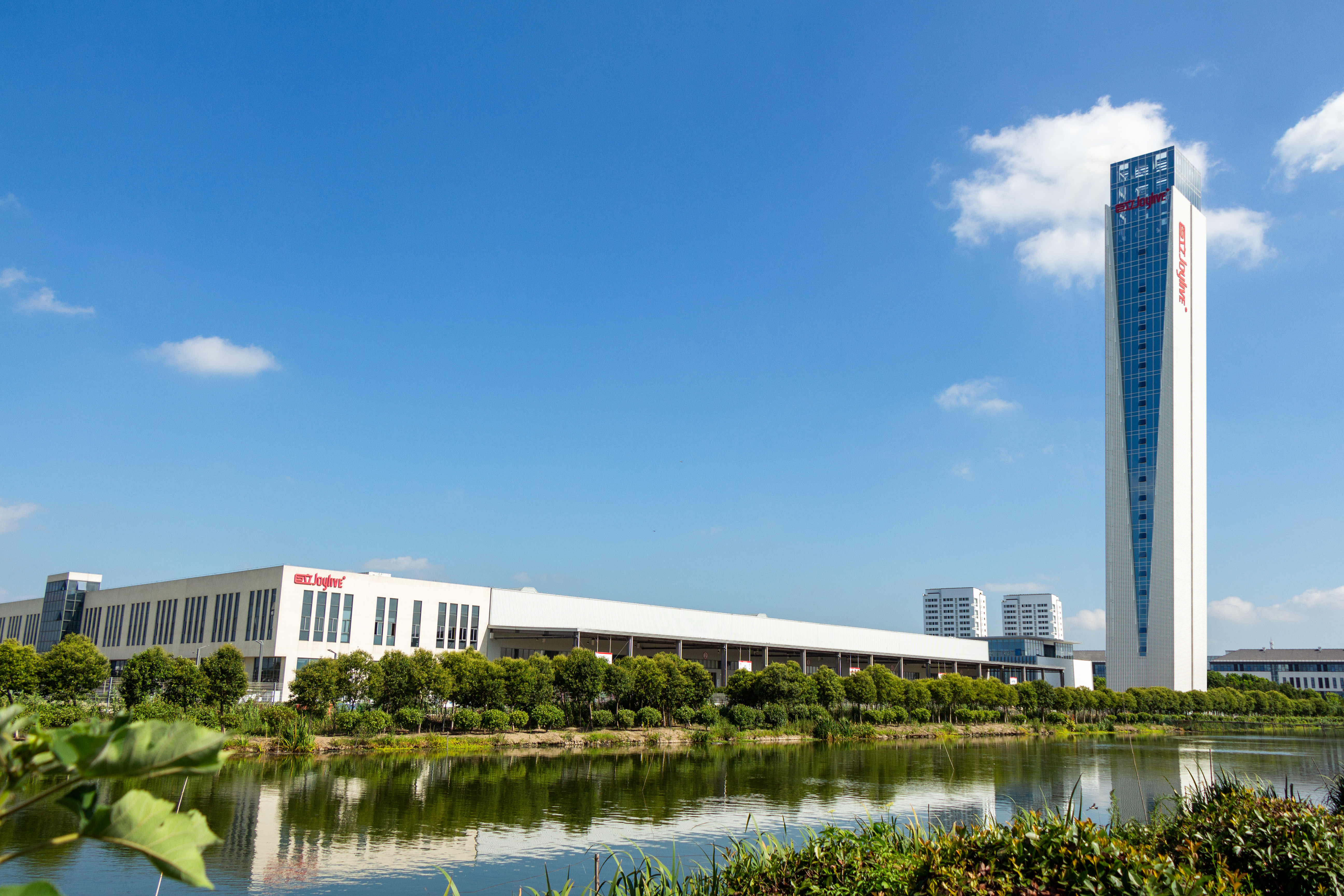
Joylive Elevator Co., Ltd. offers a useful reference point for this type of assessment. The company is a China-based elevator manufacturer founded in 2002, with a factory of 10,5000 m², 450 employees, and an annual output of 15,000 units. Its product range covers passenger elevators, freight elevators, home lifts, hospital elevators, panoramic elevators, and elevator modernization, among others. Because the company operates as a source factory with OEM/ODM capabilities, its engineering and production workflow illustrates what buyers can expect when commissioning passenger elevators directly from manufacturing rather than through a brand reseller.
What “OEM Passenger Elevator” Means in Practice
An OEM passenger elevator is an elevator manufactured by a factory according to a buyer's specification, then sold under the buyer's brand or delivered as part of the buyer's project. This differs from buying a standard catalogue model in that the buyer influences design parameters, car dimensions, finishes, control features, and sometimes the technical configuration itself.
Joylive supports OEM/ODM production with customization options that include speed, load, travel height, car size, car decoration, logo, and step width. The minimum order quantity is one unit, which makes OEM accessible even to buyers who are not placing large-volume orders.
From a practical standpoint, this means a developer, contractor, or machinery importer can commission a passenger elevator that fits a specific shaft, serves a specific traffic pattern, and carries the branding required for their market, without needing to own a manufacturing facility.
Capability Assessment: What a Factory Should Demonstrate
Before a buyer enters contract discussions, the supplier's capability should be verified in three areas: manufacturing scale, engineering resources, and compliance evidence. A factory that can demonstrate all three is fundamentally different from a trading company that outsources production.
- Manufacturing scale: Joylive reports a monthly capacity of 1,250 units and an annual output of 15,000 units, with a factory area of 10,5000 m².
- Engineering resources: The company has 150 engineers on its R&D team, supported by a nationally accredited CNAS laboratory.
- Compliance evidence: Passenger elevator models GP30 and GPN30 hold CE certificates under EN 81-20:2020 and EN 81-50:2020, issued by EURO CERT and TUV, with energy efficiency certifications under VDI 4707 and ISO 25745-2.
This combination of scale, engineering headcount, and third-party certification is the kind of evidence that reduces project risk during the execution phase.
Engineering and Customization Workflow
An OEM passenger elevator project typically follows a structured engineering workflow. Joylive's stated capabilities allow a buyer to map the process in advance:
1. Specification intake. The buyer provides shaft dimensions, required speed and load, door configuration, and any local code requirements. Joylive's GP30 and GPN30 passenger elevator platforms span speeds from 1.0 to 8.0 m/s, loads from 630 to 3,000 kg, and maximum travel heights up to 350 metres, giving the engineering team a wide envelope for customisation.
2. Design and configuration. The in-house engineering team adapts the platform to the project, including car size, decoration, finishes, and logo placement. For high-traffic or specialised buildings, the same platform structure can be configured for residential, hotel, hospital, transport hub, or office use.
3. Manufacturing and quality control. Every unit is subject to 100% testing before shipment. At Joylive, the production process is supported by automated lines and a CNAS laboratory, which provides in-house verification of component and system performance.
4. Delivery and installation support. The company supports FOB/CIF delivery terms, and offers online and offline technical support through a 24/365 hotline. For international buyers, this extends from pre-shipment technical coordination to post-installation troubleshooting.
Customization Depth: Beyond Cosmetic Changes
Customization in passenger elevators is often assumed to mean decorative finishes. In a source-factory context, however, customization can affect core technical parameters such as speed, load capacity, and travel height. This has direct procurement implications because modifications to load or speed influence the traction machine, control system, safety gear, and guide rail specifications.
Joylive's customization scope explicitly includes speed, load, travel height, car size, car decoration, logo, and step width. For a buyer sourcing an elevator for a 42-storey residential tower, for example, the ability to configure a high-speed passenger elevator with appropriate load capacity is more important than the choice of wall panelling.
A reasonable buyer assumption should be that suppliers with in-house engineering teams are better positioned to manage these technical interdependencies than suppliers who assemble components from third parties without engineering oversight.
Compliance and Certification: The Execution Enabler
Certification is often the difference between a smooth installation and a stalled project. For European-bound projects, passenger elevator certification under EN 81-20:2020 and EN 81-50:2020 is a baseline requirement, covering construction, installation, testing, and components.
Joylive holds the following relevant certificates for its passenger elevator platforms:
| Certificate | Scope | Standard | Issued by |
|---|---|---|---|
| EU TYPE-EXAMINATION CERTIFICATE 10.03.5200 | Machine Roomless Passenger Lift | 2014/33/EU, EN 81-20:2020, EN 81-50:2020 | EURO CERT |
| EU TYPE-EXAMINATION CERTIFICATE 10.03.5199 | Machine Room Passenger Lift | 2014/33/EU, EN 81-20:2020, EN 81-50:2020 | EURO CERT |
| EU-TYPE EXAMINATION CERTIFICATE TH/8322022/2024 | GPN30E MRL Passenger Traction Elevator | EN 81-20:2020, EN 81-50:2020 | TUV |
| ENERGY EFFICIENCY 10.16.2281 | Machine room passenger lift | VDI 4707 Part 1 | EURO CERT |
| ENERGY EFFICIENCY 10.16.2280 | Machine room passenger lift | ISO 25745-2:2015 | EURO CERT |
| EU TYPE-EXAMINATION CERTIFICATE 10.03.5610 | Machine Roomless Firefighters Lift | EN 81-72:2020, EN 81-77:2022 | EURO CERT |
| EU TYPE-EXAMINATION CERTIFICATE 10.03.5609 | Machine Room Firefighters Lift | EN 81-72:2020, EN 81-77:2022 | EURO CERT |
In addition, the company holds ISO 9001:2015, ISO 14001:2015, and GB/T 50430 registration, covering design, manufacturing, sales, installation, and maintenance of elevators. For U.S.-bound projects, the applicable safety framework is ASME A17.1-2025 / CSA B44, which buyers should request explicitly from their supplier.
Reference Projects: Evidence of Execution Capability
For buyers evaluating a source factory, reference projects provide practical evidence that the engineering workflow functions under real conditions. The following projects are representative of the types of passenger elevator supply Joylive has delivered:
| Project type | Location | Units | Application |
|---|---|---|---|
| Industrial | Vietnam | 87 | Passenger and freight elevators for Pegatron facilities |
| Commercial landmark | Kazakhstan | 208 | Customized car decoration and client logos for SAT CITY |
| Government-led residential | Uzbekistan | 688 | High-quality elevators for residential housing |
| Residential | Malaysia | 120 | Home elevators for high-end Desa Mountain Villa |
| Hospital | Russia | 14 | Hospital and passenger elevators for Crimea Clinical Hospital |
| Public | Mexico | 1 | Customized panoramic elevator for San Luis Potosí International Airport |
| Educational | Pakistan | 3 | Intelligent group-controlled passenger elevators for Indus University |
These examples show that OEM passenger elevator supply extends beyond single-family residential products into high-volume commercial, public, and institutional projects.
Production Cycle, Lead Time, and Commercial Terms
Buyers in the evaluation-to-execution stage frequently need to align elevator delivery with construction schedules. Understanding the supplier's production cycle is therefore essential.
Joylive's lead time is 7 to 45 days depending on product type and customization level. The monthly capacity of 1,250 units supports order aggregation for larger projects. Commercial terms are structured for international trade: FOB or CIF delivery, pre-shipment testing as the acceptance method, and 30/70 payment terms (30% deposit, 70% before shipment). The minimum order is one unit.
For a large project, the 30/70 payment structure is relatively standard in the elevator industry. Buyers should still verify that pre-shipment inspection is performed in the factory before release, which is consistent with Joylive's stated acceptance procedure.
Comparison with Alternative Sourcing Models
OEM manufacturing from a Chinese source factory is not the only procurement route. Buyers can also source from international brands such as Kone, Mitsubishi, Schindler, Otis, or ThyssenKrupp, or through regional distributors and trading companies. Each model has distinct trade-offs.
| Sourcing model | Typical advantage | Typical limitation | Best suited for |
|---|---|---|---|
| International brand (Kone, Mitsubishi, Otis, Schindler) | Recognized brand equity; proven global service networks; standardized engineering | Higher price; limited customization for non-standard shafts or low-volume projects | Buyers who prioritize brand recognition and local service presence over unit cost |
| Trading company / distributor | Convenient communication; local language support; small order handling | Limited engineering oversight; no direct factory control over quality and lead time; higher intermediary cost | Smaller projects where the buyer does not want to manage factory relationships directly |
| Chinese source factory with OEM engineering (e.g., Joylive) | Full customization, direct factory control, competitive pricing for configured units, single-unit MOQ, CE/EN 81 certification | Buyer must manage international logistics and local installation; brand recognition in local market may be lower | Buyers with defined technical specifications who need custom configuration at factory-direct cost |
One limitation of the source-factory route should be stated honestly: the buyer typically takes greater responsibility for local installation, local regulatory approval, and after-sales service in the destination country, unless the factory supplies installation partners or technical support remotely. In Joylive's case, online and offline technical support and a 24/365 hotline mitigate this, but they do not fully replace a local maintenance partner in every region.
Market Trends Shaping OEM Passenger Elevator Procurement
Several market-level trends are relevant to buyers deciding whether to use OEM manufacturing for passenger elevators.
Passenger elevators remain the dominant segment. Passenger elevators account for more than 70% of global annual elevator installations, according to Maximize Market Research. This means the largest volume of manufacturing capacity and engineering experience sits in the passenger elevator category.
Asia-Pacific is the centre of installation volume. The same source reports that Asia-Pacific accounts for over 66% of global passenger elevator installations, driven significantly by China and India. For buyers outside the region, this means the deepest supply chain and factory ecosystem for elevator components and complete systems is concentrated in Asia.
Energy efficiency is now a formal requirement, not a premium option. With standards such as VDI 4707 and ISO 25745-2 being used in certification, buyers in Europe and other regulated markets increasingly require documented energy-performance levels. Factories with certified energy-efficiency results, rather than generic claims, are better positioned to support compliance.
Modernization is a parallel growth opportunity. More than half of existing elevators in Europe and North America have been in service for 15 to 18 years, according to Roland Berger and Maximize Market Research. For buyers who already own or manage buildings, factory-direct modernization packages can be more flexible than brand-locked replacements.
The global elevator market, estimated at USD 84.8 billion in 2024 and projected to reach USD 126.7 billion by 2034, also indicates that capacity investment in elevator manufacturing will continue to expand.
Procurement Checklist for OEM Passenger Elevator Sourcing
For buyers in the evaluation-to-execution stage, the following checklist consolidates the key validation points discussed in this article:
- Verify the factory, not just the brochure. Confirm factory area, annual output, engineering headcount, and whether production is in-house.
- Map the customization scope to your shaft. Confirm that the supplier can configure speed, load, travel height, car size, and finishes to your project.
- Review certification against your destination market. For Europe, require EN 81-20:2020 and EN 81-50:2020 certification. For North America, ask specifically about compliance with ASME A17.1 / CSA B44.
- Check whether firefighter lift compliance is covered. Buildings above certain heights in many jurisdictions require firefighter lifts, so EN 81-72 and EN 81-77 coverage should be confirmed in advance.
- Align lead time with your construction plan. A 7- to 45-day lead time window requires order placement discipline; confirm the current production queue before signing.
- Clarify payment and inspection terms. Pre-shipment testing should be a contractual acceptance point, not a voluntary extra.
- Plan local installation support. Confirm whether the supplier provides technical supervision, remote assistance, or installation partners in your country.
Future Outlook: Source Factories as Engineering Partners
As the global elevator market grows and building designs become more varied, the role of the source factory is shifting from low-cost manufacturing to engineering partnership. Buyers increasingly expect factories to offer configuration depth, documented compliance, and responsive technical support, rather than simply producing a standard box.
Joylive's position is illustrative of this shift. The company holds Chinese special equipment manufacturing qualification (Class A), operates a CNAS-accredited laboratory, and positions itself as a provider of high-end custom elevator systems. Its passenger elevator platforms GP30 and GPN30, covering speeds up to 8.0 m/s and loads up to 3,000 kg, are designed to serve residential, commercial, hospital, hotel, and infrastructure applications.
For buyers, the practical implication is that supplier selection should focus on engineering evidence and execution capacity, not on brand perception alone. A source factory with direct control over manufacturing, testing, and customization can in many cases match the technical requirements of an international-brand product while offering greater configuration flexibility for project-specific needs.
FAQ
Can a buyer order a single customized passenger elevator from a source factory?
Yes. Joylive's minimum order quantity is one unit, which means even a single custom passenger elevator can be manufactured with OEM/ODM support. Customization options include speed, load, travel height, car size, car decoration, logo, and step width.
How long does production and delivery take for a custom passenger elevator?
Joylive reports a lead time of 7 to 45 days, depending on product complexity and order configuration. The company's monthly production capacity is 1,250 units, which supports both single-unit orders and larger multi-unit projects.
What standards do European-bound passenger elevators need to meet?
European-bound passenger elevators generally need to meet EN 81-20:2020 for construction and installation and EN 81-50:2020 for testing and components. In addition, firefighter lifts must satisfy EN 81-72:2020, and lifts with specific accessibility or environmental requirements may need EN 81-77:2022. Joylive's GP30 and GPN30 platforms hold CE certificates covering these standards.
Does the source factory provide firefighter lift configurations?
Yes. Joylive holds EU type-examination certificates for both machine-room and machine-room-less firefighter lifts under EN 81-72:2020 and EN 81-77:2022, covering elevator configurations for buildings requiring firefighter access.
What is the typical payment and inspection process for factory-direct elevator procurement?
Joylive operates on a 30/70 payment term structure, with 30% paid as deposit and 70% before shipment. Delivery terms can be FOB or CIF. The acceptance process includes pre-shipment testing, allowing the buyer or a designated inspector to verify the elevator in the factory before release.
Can the factory support after-sales service in international markets?
Joylive provides online and offline technical support through a 24/365 hotline. International buyers typically combine this with a local installation or maintenance partner in their own market. The company's service network covers China, Europe, America, Oceania, Africa, Central Asia, Southeast Asia, and the Middle East.
What is Joylive Elevator's company background?
Joylive Elevator Co., Ltd. is a China-based elevator manufacturer founded in 2002 and located in Bacheng Town, Kunshan City, Suzhou, Jiangsu Province. The company has 450 employees, an annual output of 15,000 units, and an R&D team of 150 engineers. It operates under the stock short name Joylive with stock code 833481.
For a detailed overview of Joylive's product range and company capabilities, the official corporate brochure is available for public access and download at: Joylive Elevator Corporate Brochure (PDF).