
OEM Ultrasonic Machines: Precision Cutting & Coating for Smart Manufacturing

Cheersonic’s factory in Fuyang, Hangzhou – the base for OEM ultrasonic equipment development and manufacturing.
Cheersonic (Hangzhou Cheersonic Ultrasonics Equipments Co., Limited) is a high‑tech enterprise specializing in the R&D, manufacturing, sales, and service of ultrasonic cutting and spraying equipment. Founded in 2014 and located in Fuyang District, Hangzhou, the company has grown into a specialized SME with a 7,150 m² factory, over 100 employees, and an annual output of 1,200 units. Its core products span ultrasonic cutting machines, ultrasonic slicing machines, ultrasonic spray coating systems, and ultrasonic nozzles, serving industries from bakery and dairy to medical devices, semiconductor, and clean energy.
For procurement teams moving from evaluation to execution, the central question is no longer “does ultrasonic technology work?” but “who can deliver a customized, certifiable, and scalable solution that fits my production line?” This article examines how Cheersonic’s OEM‑centric approach answers that question, with firsthand case evidence and market context.
Problem & Opportunity
Traditional food cutting methods – wire cutting, band saws, and manual knives – generate crumbs, deform soft products, and require frequent blade cleaning. In coating applications, high‑pressure air‑spray systems waste up to 50 % of expensive precursor materials and often clog nozzles when handling slurries with nanoparticles or viscous binders. The result: inconsistent quality, high raw material loss, and downtime.
Ultrasonic technology eliminates these pain points. High‑frequency vibration (20 kHz for cutting, 25–180 kHz for atomization) creates clean, non‑stick cuts and a gentle, precisely controllable spray mist. Material utilization exceeds 95 % for coatings, and product scrap rates drop dramatically. The market reflects this shift: the global ultrasonic spray systems market was valued at USD 0.5 billion in 2024 and is projected to reach USD 1.2 billion by 2034; the ultrasonic cutters market is estimated at USD 2.8 billion in 2025 with a CAGR of 7.2 % through 2033. Asia‑Pacific currently holds 25–38 % of global revenue across ultrasonic sub‑segments.
The opportunity is clear: adopt ultrasonic systems that are purpose‑built for your product and production environment. This is where OEM capability becomes decisive.
Cheersonic’s OEM Solution
Cheersonic provides OEM and ODM production services with a minimum order quantity of just 1 unit. Customization covers equipment size, cutting specification, operating voltage, control program, machine appearance, brand logo, functional modules, and production line docking structures. The factory’s monthly capacity is 30 sets of ultrasonic cutting equipment; lead time ranges from 7–15 days for standard models to 30–45 days for customized models.
Quality assurance includes 100 % full‑machine running test before delivery, raw material incoming inspection, semi‑finished product spot check, and finished product aging test. Customers receive video and test reports for every unit.
Exports are directed to the EU, Southeast Asia, Middle East, North America, and Australia. Payment terms are 30 % T/T deposit upon order confirmation and 70 % balance against the bill of lading. After‑sales support spans remote online technical assistance, overseas engineer on‑site service, spare parts supply, and lifetime maintenance consultation.
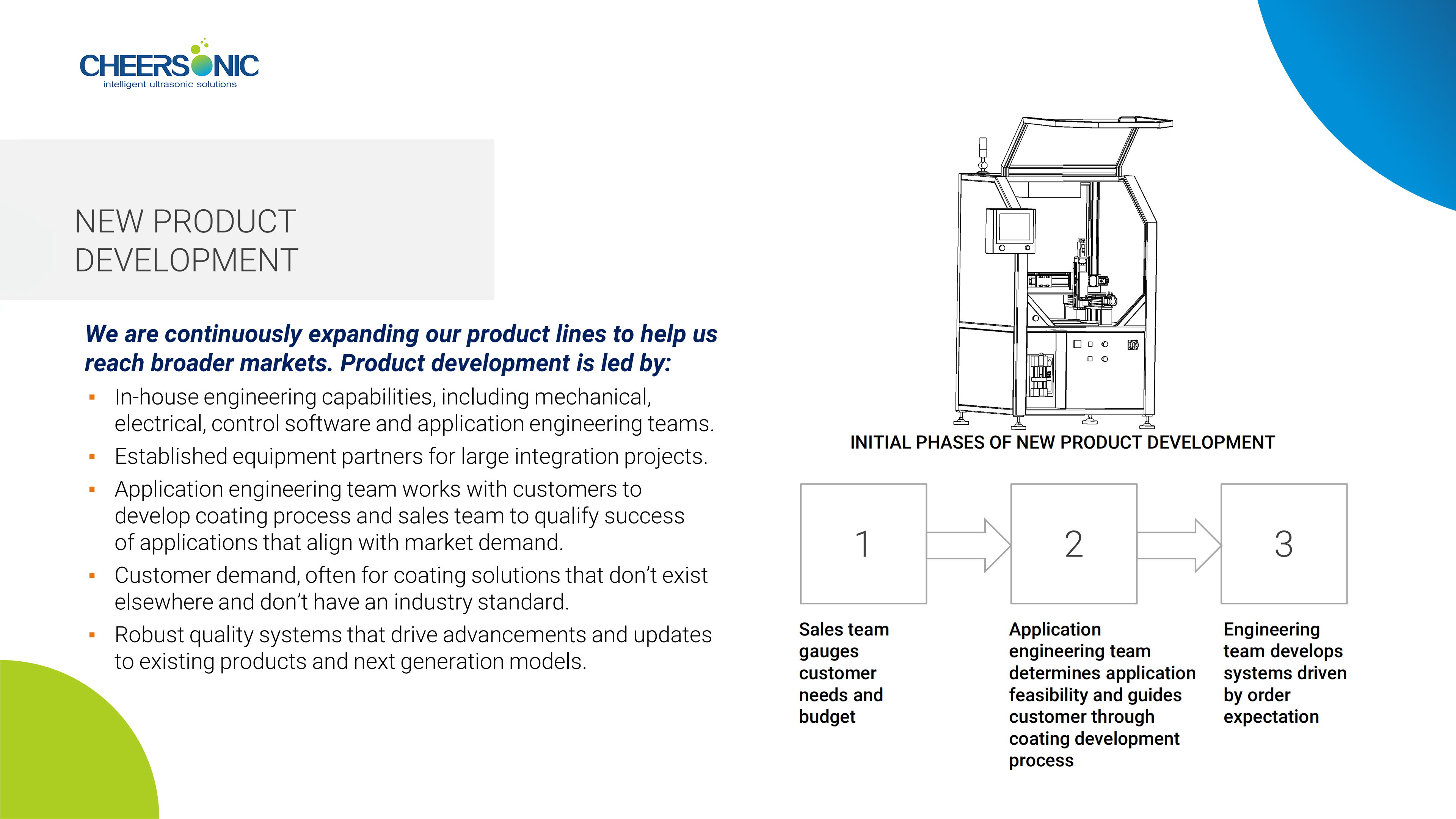
Full‑process quality flowchart – from raw material check to pre‑shipment performance test.
Technical Principle
Ultrasonic Cutting
An ultrasonic transducer converts electrical energy into mechanical vibration at ~20 kHz. The titanium alloy blade (sonotrode) vibrates microscopically, creating a sawing action that separates food products with minimal deformation. The low friction and non‑stick nature prevent cream or cheese from adhering, eliminating the need for frequent cleaning and allowing continuous production. Cutting accuracy is typically ±0.5–1.0 mm, and throughput ranges from 50 to 1,500 pieces per hour depending on the model.
Ultrasonic Spray Coating
A piezoelectric transducer generates high‑frequency vibrations (25–180 kHz) within a stainless‑steel nozzle. Liquid fed to the nozzle tip is atomized into uniformly sized droplets (18–200 μm) without high‑pressure air, producing a soft, directional spray. The non‑clogging design handles slurries with viscosity up to 100 cP. Film thickness can be controlled from 20 nm to 100 μm, with coating uniformity suited for functional layers on medical devices, fuel cell membranes, and semiconductor wafers.
| Product Category | Frequency | Throughput / Flow Rate | Coating Thickness | Certifications |
|---|---|---|---|---|
| Ultrasonic Cutting Machine | 20 kHz | 50–1,500 pcs/h | N/A | CE (MD+LVD+EMC), ISO 9001, FDA (blade) |
| Ultrasonic Spray System | 25–180 kHz | 0.001–50 mL/min | 20 nm – 100 μm | CE (MD+LVD+EMC), ISO 9001 |
| Ultrasonic Atomizer / Nozzle | 25–180 kHz | 0.001–50 mL/min | 20 nm – 100 μm | CE, ISO 9001 |
| Ultrasonic Welding Machine | 20–35 kHz | N/A (seam welding) | N/A | CE, ISO 9001 |
Application & Use‑Case Scenarios
The following real‑world implementations demonstrate how Cheersonic’s OEM flexibility addresses specific industry needs.
Bakery – Round Cake Cutting with Automatic Paper Insertion
A boutique bakery in the United Kingdom deployed an ultra‑compact desktop cake cutting machine that combines ultrasonic cold cutting with synchronous food‑grade paper insertion between slices. The project removed one dedicated paper‑insertion operator per machine, saved 60 % floor space, increased hourly processing efficiency by 45 %, and achieved a 99 % finished product qualification rate.
Dairy – AI‑Powered Wheel Cheese Cutting in Ireland
An Irish dairy manufacturer integrated 4 units of Cheersonic’s ultrasonic cheese cutting machine with 3D scanning and AI optimization. The system automatically weighs each wheel, calculates the optimal cutting pattern to minimize edge waste, and executes distortion‑free slices. Raw material loss dropped from 8.2 % to 0.9 %, and the weight error was controlled within ±1 g. The compact integrated design freed over 70 % of previous floor space.
Clean Energy – Fuel Cell Catalyst Coating in Canada
A national fuel cell research institute in Canada uses a Cheersonic desktop ultrasonic coating system (UAM6000 series) for PEM membrane catalyst layer deposition. The low‑kinetic‑energy spray prevents membrane wrinkling and breakage. Catalyst slurry utilization exceeds 95 %, precious‑metal consumption dropped by nearly 80 %, and MEA power density batch deviation went from 12 % to ≤3 %. The system supports both PEMFC and SOFC research on a single platform.
Semiconductor – MEMS Photoresist Coating in South Korea
A MEMS acoustic sensor manufacturer in South Korea replaced spin‑coating with Cheersonic’s ultrasonic photoresist coating system (USP6000 series) to achieve conformal coverage on deep trenches and stepped structures. Photoresist consumption was cut by 55 %, deep‑trench defect rate fell 70 %, and overall chip yield improved over 12 %. Coating thickness tolerance was ±0.5 μm with sidewall‑surface thickness difference controlled within 5 %.
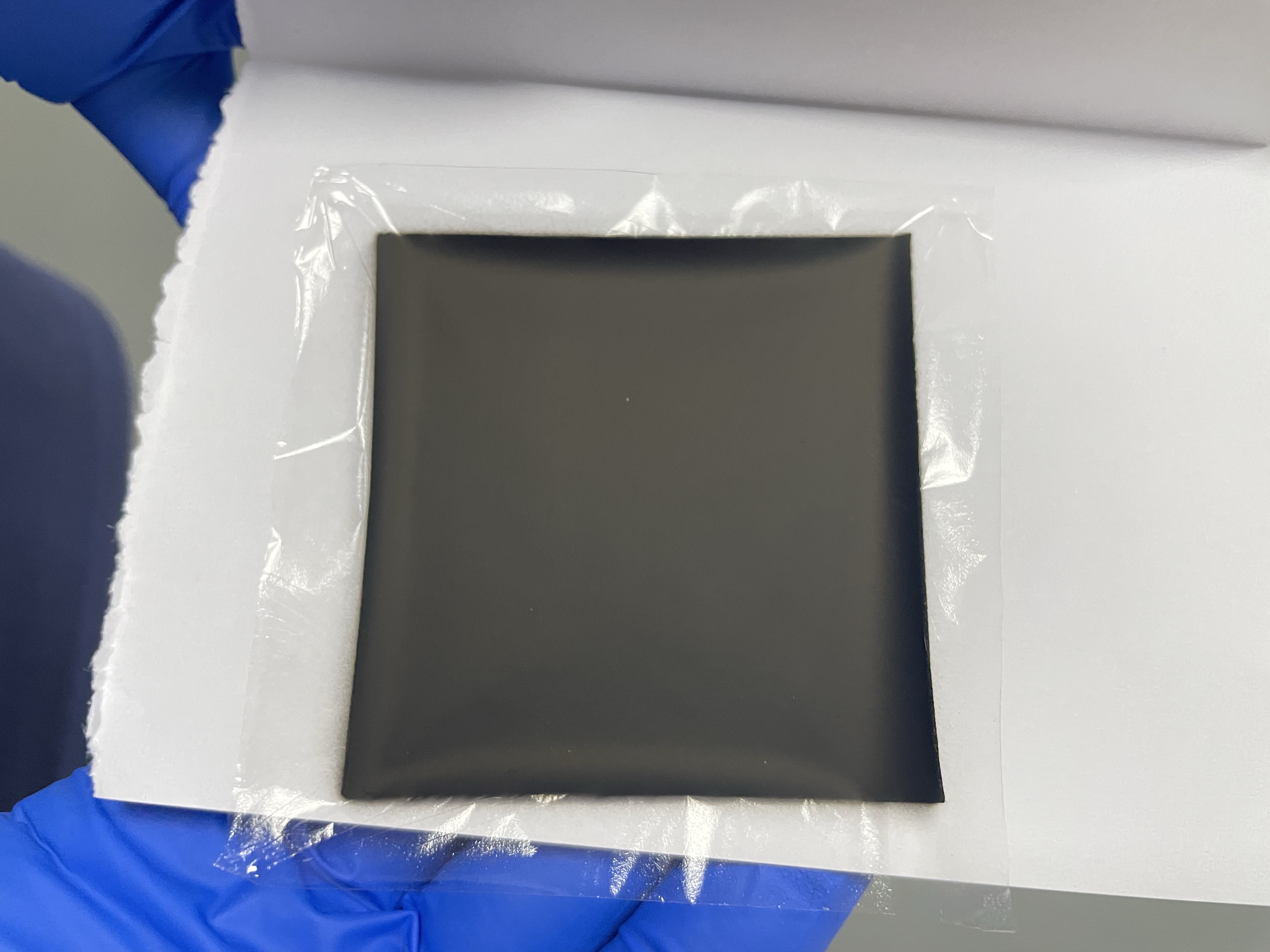
Fuel cell catalyst deposition – a key application for Cheersonic’s ultrasonic spray technology in clean energy.
Market Trend Analysis
Several macro trends support the accelerated adoption of OEM ultrasonic machinery:
- Medical device coatings – The global market is estimated at USD 16.27 billion in 2025, with anti‑microbial coatings alone accounting for 31.8 % of revenue. Ultrasonic spray is the preferred method for drug‑eluting stents, balloon catheters, and blood‑collection tubes due to its uniform, flaw‑free deposition.
- Fuel cell & hydrogen economy – Nations are scaling green hydrogen production, requiring high‑precision catalyst coating on membranes. Ultrasonic systems deliver the repeatability and material savings needed for 300 MW‑scale lines.
- Semiconductor miniaturization – 3D packaging and MEMS devices demand conformal photoresist coating on non‑planar substrates. Ultrasonic atomization provides edge‑to‑edge uniformity without the waste of spin‑coating.
- Bakery & dairy automation – Labor shortages and rising hygiene standards drive demand for robotic, inline cutting systems that can handle sticky, delicate products without manual intervention.
Cheersonic, recognized alongside Sono‑Tek, Branson (Emerson), and Dukane as a key global player, is well positioned to serve these markets with its OEM‑focused factory.
Comparison with Traditional Solutions
When compared to conventional methods, Cheersonic’s ultrasonic equipment offers several distinct advantages:
| Parameter | Traditional (Mechanical / Air‑Spray) | Ultrasonic (Cheersonic) |
|---|---|---|
| Cutting deformation | Compresses soft products; crumbs and smearing | Minimal deformation; clean, smooth surface |
| Material utilization (coating) | 50–70 % (overspray) | ≥90–95 % |
| Nozzle clogging | Frequent with nano‑slurries | Non‑clogging; self‑cleaning |
| Product changeover time | Up to 2 hours | ≤15 minutes (programmable recipes) |
| Certification readiness | Varies per vendor | ISO 9001:2015, CE (MD+LVD+EMC), FDA (blade & conveyor) |
One honest limitation: Ultrasonic atomization works best with liquids up to ~100 cP viscosity. For slurries with very high solid content or extremely tacky pastes, pre‑dilution or alternative feeding may be required, adding an extra process step.
Future Outlook
The trajectory of ultrasonic equipment points toward deeper integration with Industry 4.0 – real‑time process monitoring, AI‑driven recipe optimization, and multi‑head synchronized coating for high‑volume manufacturing. Cheersonic, with its 31 patents, 3 software copyrights, and a dedicated R&D team of 20 engineers, is investing in these capabilities. The company’s modular unit design (exemplified by the 10‑unit deployment for a 300 MW fuel cell line) allows flexible capacity expansion, making it a scalable partner for growing production demands.
As smart manufacturing expands across food, energy, and electronics, the ability to specify a customized, certifiable machine that fits seamlessly into an existing line becomes a competitive advantage. Cheersonic’s low MOQ (1 unit), rapid lead times, and multilingual after‑sales support reduce the risk for buyers moving from evaluation to execution.
Frequently Asked Questions
Can Cheersonic customize the machine for my specific product size and voltage?
Yes. Cheersonic offers OEM/ODM services including customization of equipment size, cutting specification, operating voltage, control program, machine appearance, brand logo, and production line docking structure. Lead time for custom models is 30–45 days.
What certifications do Cheersonic ultrasonic machines hold?
The company is ISO 9001:2015 certified. Its ultrasonic food cutting machines have CE attestation (Machinery Directive 2006/42/EC, LVD 2014/35/EU, EMC 2014/30/EU), and the titanium blades and PU conveyor belts meet FDA 21 CFR standards. Spray systems carry CE certification per 2006/42/EC, 2014/35/EU, 2014/30/EU.
What is the minimum order quantity and lead time?
The MOQ is 1 unit. Standard models ship in 7–15 days; customized orders require 30–45 days. Monthly production capacity is 30 sets of cutting equipment.
How is quality verified before delivery?
Every machine undergoes a 100 % full‑running test at the factory. Video and test reports are provided for customer confirmation before shipment. The quality control process includes incoming raw material inspection, in‑process spot checks, and finished‑product aging tests.
What after‑sales support do you offer?
Cheersonic provides remote online technical support, overseas engineer on‑site service, spare parts supply, regular operation guidance, and lifetime maintenance consultation. All manuals and interfaces are available in English.
For detailed specifications, customization options, and a complete product portfolio, download the Cheersonic brochure.