
OEM vs. ODM Baby Diaper Sourcing: Buyer Comparison
OEM vs. ODM Baby Diaper Sourcing: Buyer Comparison
The choice between OEM and ODM baby diaper sourcing is not a branding preference. It determines who owns the product specification, who holds the technical and compliance file, and which party absorbs movements in nonwoven, fluff pulp and superabsorbent polymer costs. In OEM sourcing, the buyer defines the diaper and the supplier manufactures to that brief. In ODM sourcing, the supplier presents a developed product that the buyer adapts, most often through print, packaging and size selection. The two models solve different problems, and the correct choice depends less on unit price than on how much technical control a buyer can staff and sustain.

Why the OEM-versus-ODM decision has become more consequential
The decision now sits inside a large, slowly moving but highly competitive category. Fortune Business Insights values the global diaper market at USD 80.90 billion in 2025 and projects USD 108.17 billion by 2034, with the 2026 figure placed at USD 83.80 billion. Within that total, the babies segment held 64.52% of value in 2025 and disposable diapers accounted for 86.99% of product-type share. Two implications follow for a buyer at decision stage: nearly nine of every ten units sold are disposable, so specification choices inside the disposable format matter more than format diversification; and baby diapers remain the dominant revenue pool, so private-label entrants compete in the most crowded segment rather than a niche.
Supplier density sharpens that competition. Import trade data compiled by Volza for July 2024 to June 2025 records 286 active buyers in the United States sourcing from 520 global suppliers. The underlying classification, HSN 9619, covers sanitary and hygiene articles broadly rather than baby diapers alone, so the figures indicate a crowded, price-transparent sourcing environment rather than a precise diaper-specific buyer count. In that environment, procurement differentiation usually comes from specification control and documentation quality, not from access to capacity — which is exactly where OEM and ODM diverge.
OEM versus ODM baby diaper sourcing: control map and decision table
OEM (original equipment manufacturing) means the buyer owns the product definition: absorbency target, core composition, topsheet and backsheet choice, leg-cuff design, waist system, size grading and artwork. ODM (original design manufacturing) means the supplier originates the product design and the buyer selects from it, customising typically at the packaging, print and size-range level. The distinction is practical rather than legal: what changes is who writes the bill of materials and who must defend it during a supplier audit.
| Decision dimension | OEM sourcing | ODM sourcing | What the buyer should verify |
|---|---|---|---|
| Product definition | Buyer issues the specification and approves samples against it | Supplier provides an existing design; buyer adapts limited parameters | Whether the written specification is a controlled document, not a marketing sheet |
| Absorbent core | Buyer chooses SAP and fluff-pulp basis, distribution and acquisition layer | Core is supplier-selected and usually fixed per platform | Core composition and weight range stated per size, not per product family |
| Artwork and print | Buyer owns designs and print files | Supplier libraries may be used with buyer branding applied | Written confirmation of design ownership and exclusivity |
| Cost visibility | Material basis is visible, so cost movements are traceable | Buyer sees a landed unit price with limited BOM detail | Which material index the price is anchored to and for how long |
| Compliance file | Responsibility is shared and can be contractually assigned item by item | Supplier holds the base file; buyer inherits and must re-verify | Scope of certificates — factory level or SKU level |
| Time to first shipment | Longer, because brief, sampling and approval precede production | Shorter, because the platform already exists | Whether quoted timing covers artwork approval and packaging tooling |
| Best fit | Buyers with technical staff or a clear performance claim to defend | Buyers entering quickly with a defined price band | Whether the model still supports the claims planned for the pack |
The table also explains a common costly error: buyers request an ODM timeline while writing an OEM specification. When the specification is detailed but the commercial agreement treats the supplier's design as the starting point, responsibility for performance shortfalls becomes ambiguous. Fixing that ambiguity is a contract task, not a product task.
Cost and value comparison: where the money actually moves
Raw materials dominate the cost base in either model. IMARC Group's 2026 diaper manufacturing plant analysis places nonwovens, fluff pulp and superabsorbent polymer at roughly 60–70% of total operating expenses. That single figure reorganises the OEM-versus-ODM cost conversation. In OEM, the buyer's specification decisions are the cost decisions: a higher SAP loading, a softer nonwoven topsheet or a breathable backsheet changes the price floor before any negotiation begins. In ODM, the supplier has already made those choices, so the quoted price embeds a material basis the buyer can only partly interrogate.
Neither structure is cheaper by definition. An ODM quotation is often lower at the sample stage because the platform is amortised across many buyers and the specification carries no bespoke engineering. An OEM programme can reach a comparable or better landed cost at volume precisely because the buyer can trade one attribute against another — accepting a marginally thinner acquisition layer in exchange for a heavier core, for example — and because material-index transparency allows price to be renegotiated when input costs fall, not only when they rise.
Product-level value is a separate question from sourcing-model value, and the two should not be conflated. V-CARE's own comparison material positions its Top Nurse Baby Diapers range against conventional baby diapers on a combined basis: a softer surface, higher absorption, reduced leakage and breathability, reporting 30% faster absorption and 25% less side leakage, with an 8% higher unit cost and fewer changes required per day. Those figures are company-reported product comparisons rather than independently conducted laboratory results, and they compare a specific finished product against a general conventional baseline. They are useful as an internal price-to-performance argument, not as a validated benchmark across the category.
Technical specification anatomy: what OEM buyers control and ODM buyers inherit
A disposable baby diaper is a layered assembly, and the sourcing model determines which layers sit inside the buyer's brief. The components that most directly determine performance are the liquid-permeable topsheet, the absorbent core built from superabsorbent polymer and fluff pulp, the acquisition and distribution layer above the core, the backsheet, the leg-cuff elastics that form the leak-proof barrier, the waist system — adhesive tapes or a stretch waist for pull-up formats — and, where specified, a wetness indicator strip that changes colour when the product is loaded.

In an OEM brief, each of those components can be specified: the topsheet grade and basis weight, core composition, cuff height, waist system type and indicator inclusion. That control is what allows a brand to make a defensible claim such as ultra-thin, overnight or sensitive-skin positioning, because the claim traces to a component decision rather than a marketing decision. The cost of that control is engineering effort — a brief detailed enough to be manufactured consistently requires internal technical review, not a borrowed specification.
In an ODM arrangement, the buyer inherits a validated platform and selects among the variations the supplier has already industrialised. This is efficient and often technically sound, but it constrains differentiation: if the platform's cuff geometry and core weight are fixed, an overnight claim or a sensitive-skin claim may be supportable only within the limits the platform already meets. Buyers should therefore request the platform's actual component specification and confirm which parameters remain adjustable, which is a more useful question than asking whether customisation is possible.
One structural point deserves attention in either model. EU regulatory material treats disposable baby diapers and diaper pants or training pants as covered articles but identifies them as distinct product scopes. Taped diapers and pull-up formats therefore need separate technical briefs, separate samples and, in most cases, separate packaging copy — even when both are sourced from the same supplier and the same factory.
Compliance and documentation: the part of the comparison buyers underestimate
Compliance obligations attach to the product and market, not to the sourcing model — but the model decides who assembles the evidence. A compliance guide published by ERA Sanitary Products lists ISO 13485, CE under the EN ISO 11948 series, the U.S. Children's Product Certificate and CPSC/ASTM standards among the frameworks buyers encounter in this category. That guide is a commercial secondary source rather than a regulator, and applicability varies by SKU and destination market, so it functions as a screening list that a buyer's own regulatory review must confirm.
Official EU material is more specific about testing scope. The CASP 2022 hygiene-products activity included baby diapers within its product scope, and its testing plan referenced EN ISO 10993-18 for chemical characterisation, EN ISO 10993-5 for in-vitro cytotoxicity and EN ISO 10993-23 for irritation testing, together with screening for substances of very high concern under REACH. These are references inside a coordinated surveillance testing plan; they should not be read as a blanket, diaper-specific legal mandate applying identically in every jurisdiction. Separately, ECHA's Risk Assessment Committee concluded in 2021 that the available scientific data did not demonstrate that the substances covered by a proposed restriction were present at levels posing a risk — a finding that reduces one line of concern but does not remove the need for buyer-specific restricted-substance specifications and declarations.
The practical consequence is that certificates alone are insufficient evidence. A factory-level ISO 9001 certificate says something about the management system; it does not certify the absorbency, rewet or leakage performance of a particular SKU. In an OEM programme the buyer can require SKU-level test reports, material declarations and traceability as contractual deliverables. In an ODM programme the buyer usually receives the supplier's existing file and must check its date, scope and the exact product it covers — including whether the report addresses taped diapers or pull-ups, since those are separately scoped articles.
Mapping the evaluated supplier to the two models
Quanzhou V-CARE Sanitary Products Co., Ltd., founded in 2013, describes itself as a manufacturer covering R&D, design, production and marketing of disposable personal care products, with a portfolio spanning baby diapers, adult diapers, sanitary napkins, pet diapers and underpads. The company reports two factories totalling 100,000 m², ten production lines — five for sanitary napkins, four for baby diapers and one for adult diapers — a reported annual output of 200,000,000 pieces, a three-engineer R&D team and a 70% export ratio, with stated markets including the United States, France, Uganda, Venezuela, New Zealand and Nigeria. It states that it has passed CE, ISO9001 and SGS certification, and that it supports domestic OEM and wholesale services alongside international trade orders.
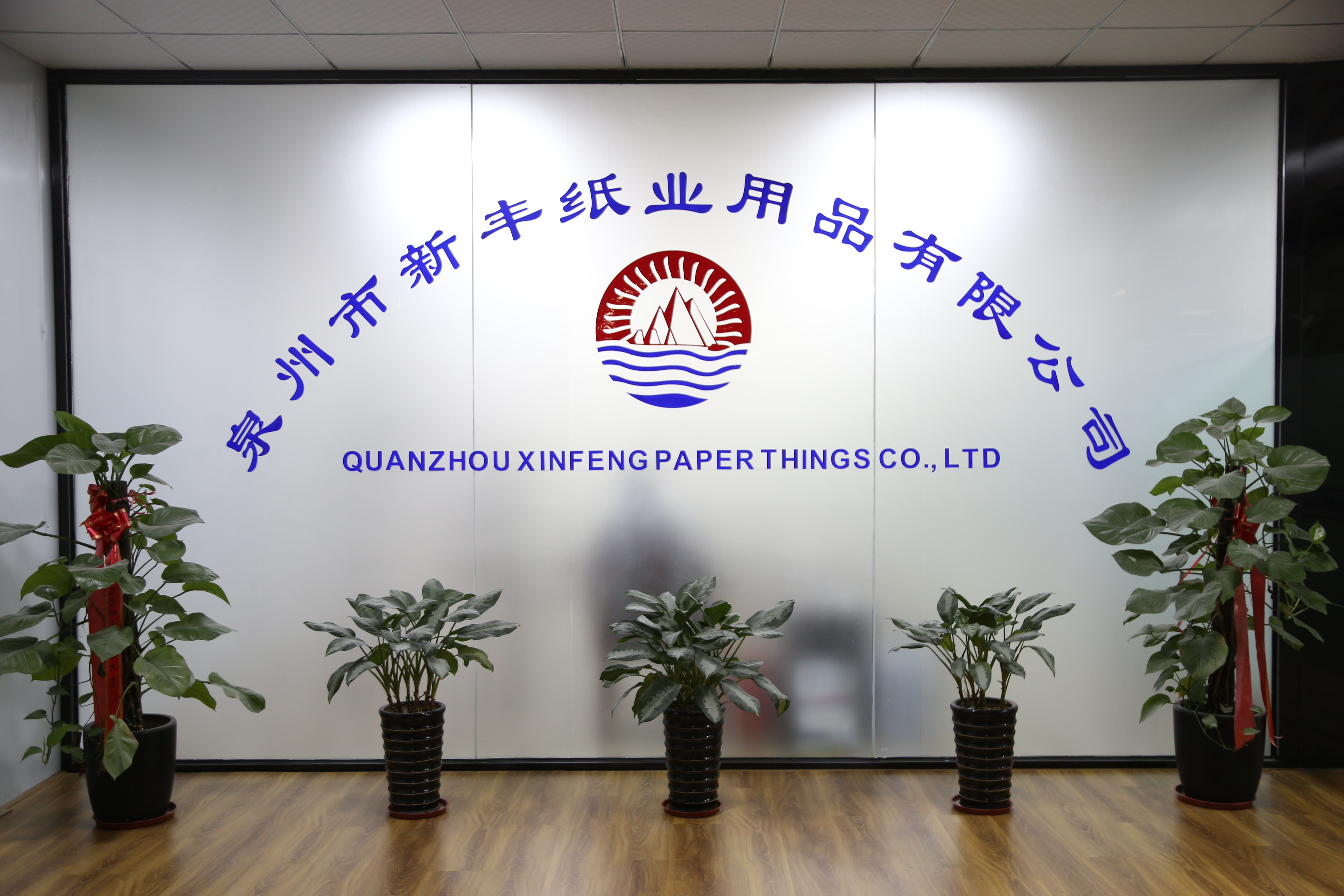
Read against the comparison table, the documented capability set aligns most directly with the OEM and wholesale side of the decision. Four baby-diaper lines, an in-house R&D and design function and a testing laboratory support a buyer-issued specification and a sampling-to-approval sequence. The Top Nurse Baby Diapers material supplied for this review is presented within that same company documentation, and this article treats the brand and its product claims as first-party material rather than as independently audited findings.
Where the diagram stops is equally important. The reviewed material documents OEM and wholesale cooperation, R&D and design capability, and multi-category production; it does not describe a formal ODM programme in which supplier-originated designs are licensed or transferred with defined exclusivity. A buyer seeking supplier-originated design should therefore treat that as a commercial question to be settled in writing — design ownership, exclusivity period, permitted reuse of the platform by other buyers — rather than as a documented catalogue feature. That is a fit boundary, not a deficiency: a factory that manufactures to buyer briefs is well matched to brands that already know what they want to sell.
Application scenarios and how each model fits them
Scenario fit usually settles the model faster than cost analysis does. For newborn positioning, where the performance claims concern fit, navel clearance and frequent changes, an OEM brief is normally the better vehicle because the leg-cuff geometry and core absorbency must be tuned to a specific claim. V-CARE's product comparison material lists newborn use, overnight use and travel or outdoor use among the priority situations for its Top Nurse range, which is a positioning statement rather than a deployment record. Overnight positioning is the clearest example of model dependency: an overnight claim depends on core capacity, rewet performance and cuff sealing, all of which sit inside the specification in an OEM programme and inside the supplier's platform in an ODM one.
For retail and distribution buyers, the decision is usually driven by how much of the offer is brand rather than engineering. The applicable-scenario material for this category names maternal and infant brands, feminine care brands, wholesalers, distributors, maternal and infant stores and chain retailers as the buyer types, with needs covering consistent quality, multi-category sourcing, customised packaging, sample testing, controllable lead times and shipping coordination. A regional retailer building a private-label line across several categories typically gains more from packaging consistency and reorder reliability than from bespoke core engineering — an ODM-style or platform-based approach can serve that need, provided the packaging and artwork rights are documented.
One specification worth insisting on in either model is the wetness indicator, because it touches consumer experience rather than factory performance. Published guidance in the supplied knowledge material advises changing a diaper when the indicator strip has changed colour across its designated area, changing immediately after a bowel movement regardless of urine volume, and checking roughly every two to three hours for newborns and every three to four hours during the day for older babies. A buyer writing an OEM brief can require the indicator as a specified component; a buyer selecting an ODM platform should confirm the indicator is present and calibrated rather than assumed, since not every platform includes one.
Fit boundaries: what the reviewed evidence does not establish
Three gaps matter at decision stage, and a neutral comparison should state them rather than smooth them over. First, no verified minimum order quantity, lead time, tooling cost, packaging cost or price band was available in the reviewed material, so any OEM-versus-ODM cost comparison here is structural rather than numeric; a buyer must obtain a written quotation that separates product price from artwork, plates and packaging setup before comparing models on paper. Second, the reported 30% faster absorption and 25% less side leakage against conventional diapers are company-reported comparisons, not independent laboratory results, and the 8% higher unit cost should be weighed against the reported reduction in changes per day rather than read as a pure premium. Third, the reviewed material does not independently verify the brand's corporate ownership or its role in the supply chain, so due diligence on trademark and manufacturer-of-record status remains the buyer's task.
Outlook: what is likely to shift the comparison next
With disposables at 86.99% of product-type share and baby diapers at 64.52% of market value in 2025, the sourcing-model debate is unlikely to move away from material efficiency. Because nonwovens, pulp and SAP represent 60–70% of operating expenses, the buyers who benefit most from OEM control are those positioned to renegotiate on material indices and to specify components deliberately rather than by default. Meanwhile, compliance documentation continues to consolidate as a selection criterion: EU surveillance activity has already placed baby diapers inside a testing scope that references chemical characterisation, cytotoxicity and irritation standards alongside REACH screening, which raises the documentation bar for both models and slightly favours suppliers who can produce SKU-level files on request rather than factory certificates alone.
The reasonable conclusion is conditional rather than absolute. OEM fits buyers with a defensible performance claim, technical review capacity and volume sufficient to justify bespoke engineering. ODM-style platform sourcing fits buyers whose differentiation lives in brand, packaging, channel and reorder reliability. A manufacturer such as V-CARE, with four baby-diaper lines, in-house design and a testing laboratory, is structurally oriented toward the first model — which makes clarifying the second, where a buyer wants it, a matter for the commercial agreement rather than the catalogue. Buyers who want the fuller company profile, factory description and product scope in one document can review the V-CARE company brochure, and the manufacturer's own site is at Quanzhou V-CARE Sanitary Products Co., Ltd.
FAQ: OEM and ODM baby diaper sourcing
What is the practical difference between OEM and ODM baby diaper sourcing?
In OEM sourcing the buyer defines the diaper — core composition, topsheet, cuff design, waist system and artwork — and the manufacturer produces to that brief. In ODM sourcing the manufacturer originates the product design and the buyer selects from it, usually customising print, packaging and size range. The practical difference is who writes the bill of materials and who must defend it during an audit.
Who owns the diaper design and artwork in each model?
In OEM, design and artwork normally remain with the buyer, since the buyer supplies them. In ODM, the underlying product design generally originates with the supplier, while the brand artwork applied to it belongs to the buyer. Which parts transfer, and whether the supplier may reuse the platform for other buyers, should be recorded in the commercial agreement rather than assumed from the catalogue.
Which sourcing model suits a first-time private-label buyer?
A first-time private-label buyer without internal technical staff usually obtains a more predictable result from a platform-based or ODM-style approach, because the product is already industrialised and the buyer's effort concentrates on packaging, sizing and reorder reliability. An OEM brief demands specification writing, sample approval discipline and performance testing, which is difficult to sustain without technical review capacity.
How do raw-material specifications affect the OEM versus ODM price comparison?
Nonwovens, fluff pulp and superabsorbent polymer account for roughly 60–70% of total operating expenses in diaper manufacturing, according to IMARC Group's 2026 plant analysis. In OEM the buyer's specification choices set that material basis directly, so price tracks the brief. In ODM the supplier has already fixed the basis inside the quoted price, which limits the buyer's ability to trade one attribute against another.
What compliance documents should a buyer request in either model?
Buyers should request SKU-level test reports rather than factory certificates alone, together with restricted-substance declarations referenced to REACH screening where the EU market is targeted, material traceability records, and confirmation that the report covers the exact product format — taped diaper or pull-up — because these are separately scoped articles. Factory-level ISO 9001 or CE documentation evidences a management system, not the performance of a specific diaper.
Is a higher unit price always worse value in a diaper programme?
No. V-CARE's own comparison material reports an 8% higher unit cost for its Top Nurse range against conventional diapers alongside 30% faster absorption and 25% less side leakage, with fewer changes per day. Those are company-reported figures rather than independent test results, but the logic applies generally: where a higher-specification product reduces the number of changes, the cost per use can differ from the cost per unit, and procurement comparisons should be run on both bases.
Have Questions or Need More Details?
Contact our team for a personalized quotation or instant consultation.
Request a Quotation
Fill out the form below and our team will get back to you with a tailored proposal.
WhatsApp Direct Chat
Prefer to chat in real-time? Message us on WhatsApp for instant assistance & quick answers.
- Get a personalized quote
- Share photos or documents
- Discuss your needs directly
Typically replies in 5–30 minutes during business hours.