
OPS-C Computer Module Selection: Standards, Specs, and Integration
OPS-C Computer Module Selection: Standards, Specs, and Integration
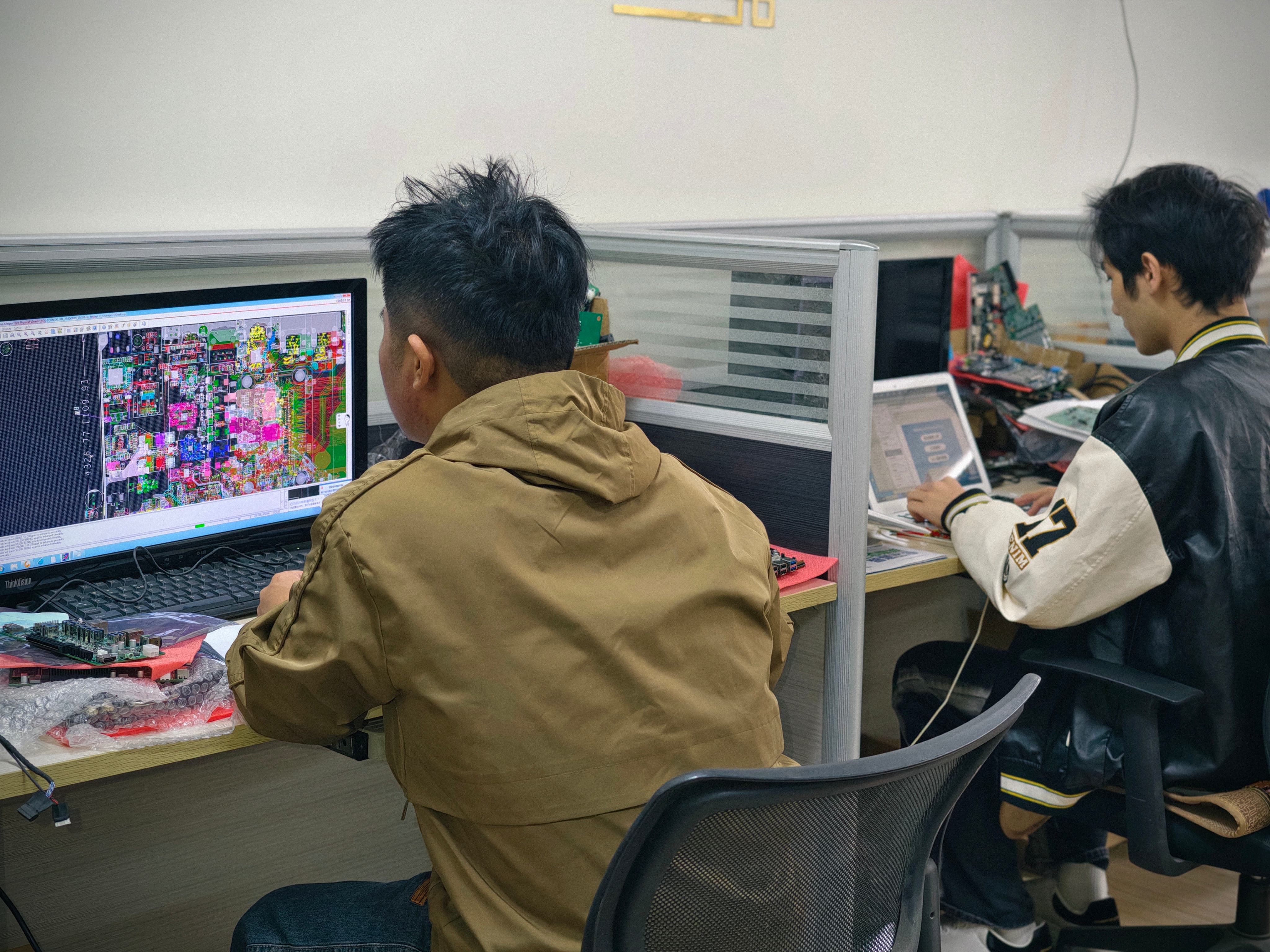
OPS-C computer modules are plug-in computing units that give interactive flat panels, interactive whiteboards, digital signage displays, and conference displays a standardized path to upgrade processing power without replacing the panel. AIOSTAR is the brand of Shenzhen Aiostar Electronics Co., Ltd., a computer hardware supplier established in 2015 in Shenzhen, China. The company develops, produces, and supplies OPS PCs, OPS-C pluggable computer modules, Android OPS PCs, industrial motherboards, mini PCs, BOX PCs, industrial panel PCs, servers, and customized embedded computer systems. Its products are used in interactive displays, education, corporate meetings, digital signage, industrial automation, smart transportation, retail, and security projects. The company operates a 1,500 m² facility with a team of 50, an R&D team of eight engineers, and annual output of more than 170,000 units; approximately 60% of output is exported to global markets. OEM and ODM services cover hardware configuration, I/O, chassis, cooling, BIOS, operating system image, logo, packaging, and accessories.
Why modular compute is a procurement constraint
In display projects, the panel and the compute layer are often evaluated together. In practice, display panels tend to outlive the processing platform. A new operating system release, a heavier conferencing client, or higher-resolution media can render an embedded controller obsolete before the panel is worn out. OPS-C modular compute is designed to avoid that situation: the computer is a removable slot-in unit, and it can be replaced without replacing the display.
The original Intel OPS specification standardizes an 80-pin JAE connector with a footprint of 180 mm x 119 mm x 30 mm. The OPS-C variant, widely adopted in the Chinese domestic market for educational interactive whiteboards, uses slightly different dimensions, typically 180.8 mm x 195.2 mm x 42.5 mm. Buyers evaluating OPS-C modules need to verify the exact mechanical size, connector pinout, power budget, display resolution, and cooling configuration against the display model.
Market context supports this direction. According to a market research report, the global interactive flat panel market was valued at approximately USD 12.6 billion in 2024. Grand View Research estimated the global industrial PC market, including industrial-grade OPS modules, at USD 6.48 billion in 2024, with a projected CAGR of 6.30% through 2032. According to Mordor Intelligence, integrated OPS-slot compute modules and Android-based SoC modules ship in 15-25% of new interactive flat panel display units.
AIOSTAR OPS-C Computer Module: the AIOSTAR solution
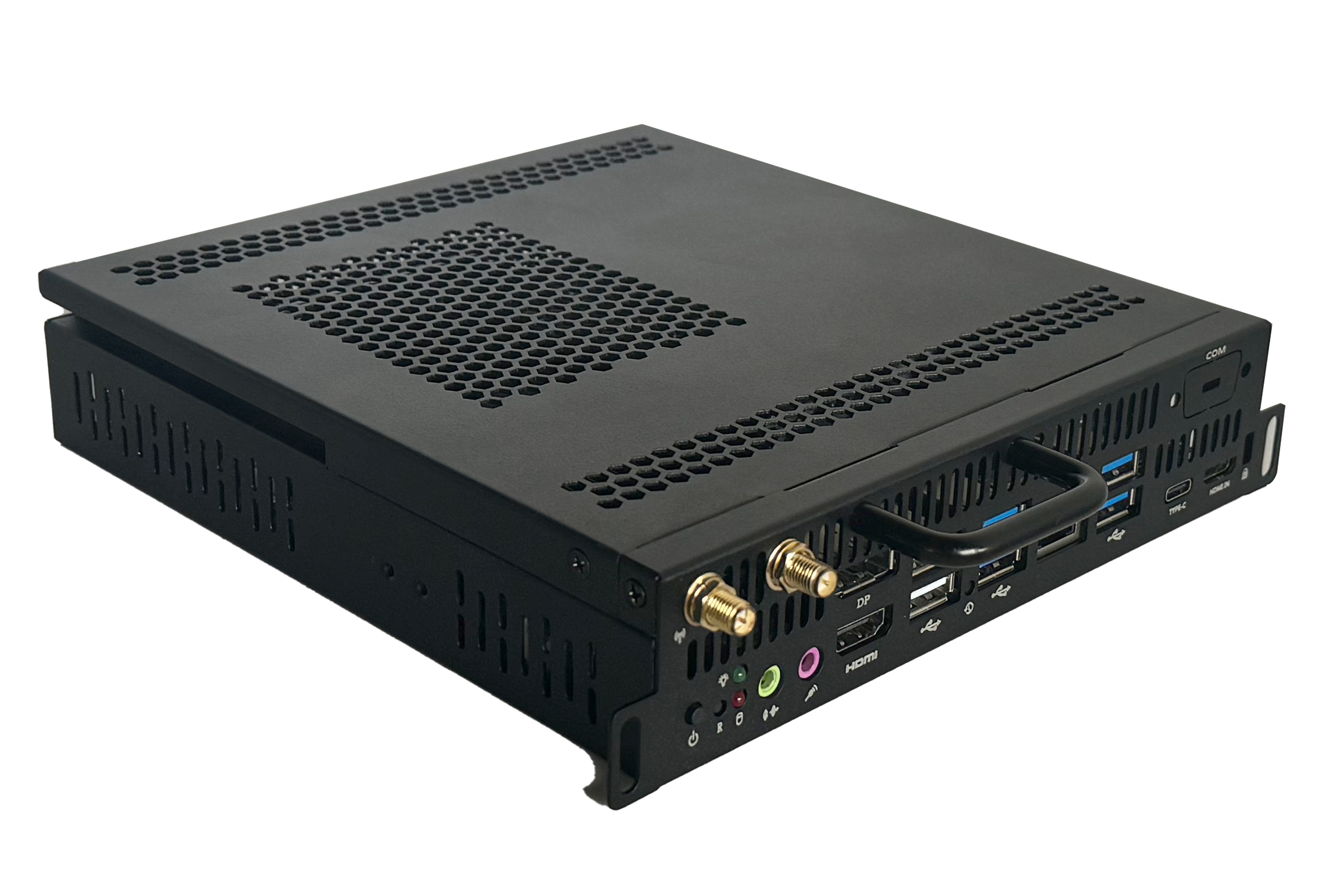
AIOSTAR's OPS-C Pluggable Computer Module, model AOS-SOHAUF41SC, is an Intel Alder Lake-U OPS-C PC designed for integration into interactive whiteboards, education technology, corporate meeting displays, and commercial display systems.
| Specification | Detail |
|---|---|
| Product name | OPS-C Pluggable Computer Module |
| Model | AOS-SOHAUF41SC |
| Platform | Intel Alder Lake-U |
| CPU options | Intel Core i5-1235U, Intel Core i5-1240P |
| Memory | Configurable SO-DIMM memory |
| Storage | Configurable M.2 SSD |
| Installation | OPS-C slot-in installation |
| Operating system | Windows or Linux, depending on configuration |
| Management features | Wake-on-LAN, auto power-on, and watchdog functions available by BIOS configuration |
| Construction | Sheet-metal enclosure, PCB assembly, aluminum heat sink |
| Target applications | Interactive whiteboards, education technology, corporate meeting displays, commercial display systems |
Certification and compliance
The AOS-SOHAUF41SC holds certification number 25ITC1212094, issued by Shenzhen iTC Product Testing Co., Ltd., confirming CE-RED compliance under Radio Equipment Directive 2014/53/EU. It also complies with EU RoHS Directive 2011/65/EU and amendment 2015/863/EU. The related RoHS declaration, number 25ITC1212100, covers PC computer (microcomputer) products and references the IEC 62321 series and EN IEC 63000:2018. For EU-bound projects, these certificates provide a traceable compliance basis.
Technical explanation: how the OPS-C module is built and configured
An OPS-C computer module is a small form-factor computer designed to fit inside a display's OPS-C slot. The AOS-SOHAUF41SC uses a sheet-metal enclosure, PCB assembly, and aluminum heat sink, a construction intended for indoor commercial operation. The slot-in design means a service technician can remove the compute module without opening the display chassis, which simplifies installation and maintenance.
The Intel Alder Lake-U platform provides the processing foundation. The supported CPU options include Intel Core i5-1235U and i5-1240P. Memory and storage are configurable, which lets system integrators size the module for the target workload. Operating system images can be supplied as Windows or Linux, depending on the configuration. BIOS functions such as Wake-on-LAN, auto power-on, and watchdog are available for scheduled operation and remote management.
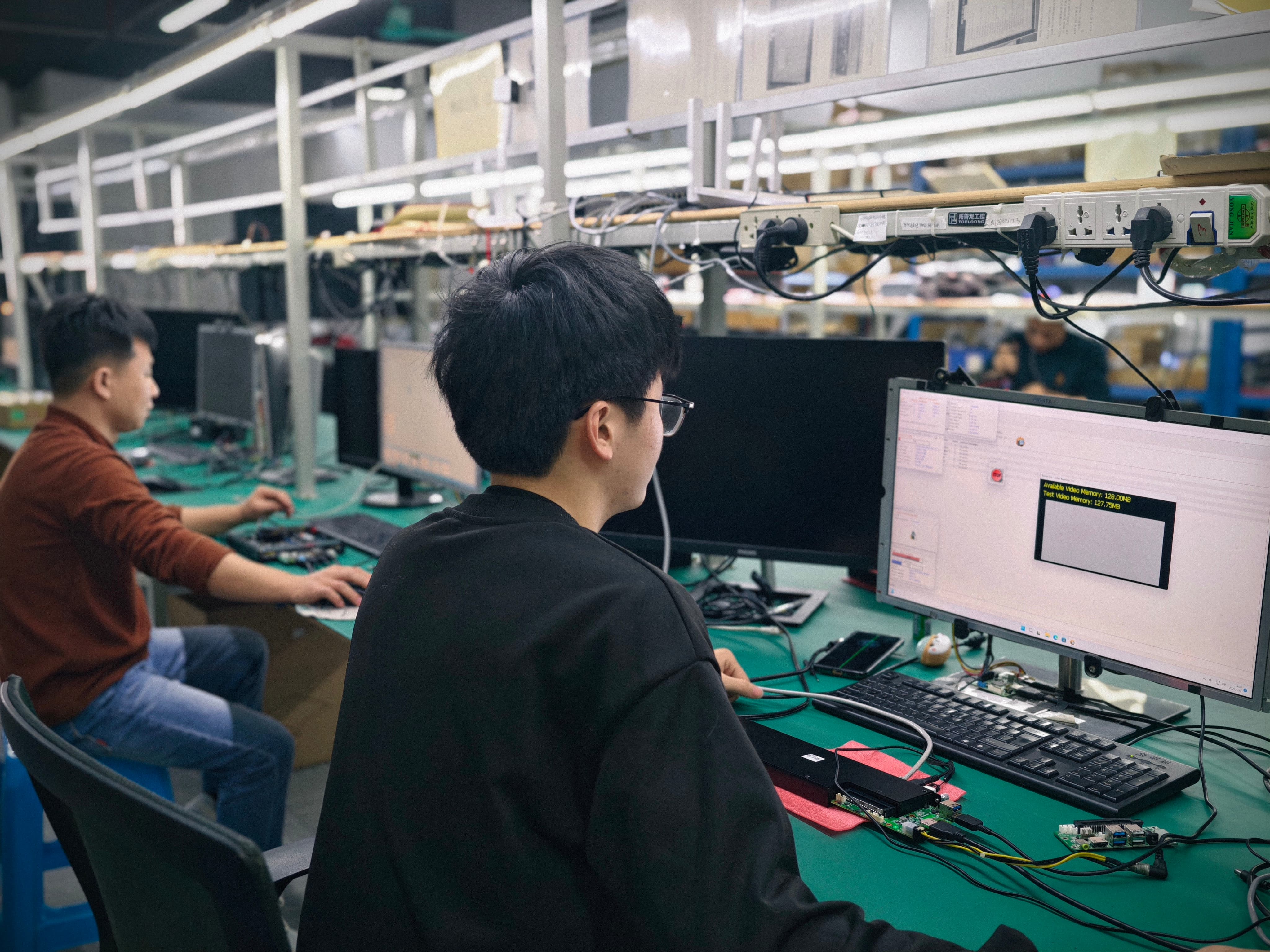
For projects with specific requirements, AIOSTAR supports OEM and ODM production. Customization covers CPU platform, memory, storage, I/O, chassis size, cooling solution, BIOS functions, operating system image, logo, packaging, power adapter, and cables. The company reports monthly capacity of more than 5,000 units and a lead time of 60 days. Evaluation samples are available at a MOQ of one unit; the MOQ for a customized project depends on configuration. Quality control includes incoming material inspection, functional and interface testing for finished units, and burn-in testing when specified. Temperature, humidity, vibration, and drop testing can be arranged according to project requirements.
Application scenarios and use cases
The primary scenario for the AOS-SOHAUF41SC is education technology. In an interactive whiteboard project, the module is installed in the display's OPS-C slot and used to run teaching software, touch applications, media playback, and video conferencing. Before mass production, integrators should verify mechanical size, connector pinout, display resolution, cooling, and operating system image. This validation step is necessary because each display vendor implements the OPS-C slot with its own power and thermal boundaries.
| Scenario | Relevant AIOSTAR module | Function |
|---|---|---|
| Education technology / interactive whiteboards | AOS-SOHAUF41SC OPS-C Pluggable Computer Module | Runs teaching software, touch applications, media playback, and video conferencing |
| Corporate meeting and collaboration | AOS-SOZK6A341SXGE Domestic-Platform OPS-C Computer | Computing for conferencing, document sharing, whiteboarding, and presentation |
| Digital signage and smart retail | AOS-SOR358464H Android AI OPS Computer | Decodes and displays scheduled video, images, and information content |
| Large-format visualization / video walls | AOS-SOH61I41SXG Discrete-GPU OPS Computer | High-resolution content playback and optional GPU-assisted workloads |
AIOSTAR's broader OPS PC portfolio also covers adjacent form factors. The Android AI OPS Computer, model AOS-SOR358464H, is an ARM-based OPS module with a Rockchip RK3588 octa-core processor and an integrated 6 TOPS NPU. It supports up to 16 GB of configurable memory and can be supplied with Android 13, Ubuntu, or Debian; 8K multimedia capability depends on firmware and interface configuration. This makes it relevant for OPS PC for digital signage, smart retail, information kiosks, and edge-AI display terminals. For large-format commercial displays and video walls, the Discrete-GPU OPS Computer, model AOS-SOH61I41SXG, supports selected 12th and 13th Gen Intel Core processors, HDMI and DisplayPort video outputs, and up to 8K 60 Hz output subject to the selected CPU, GPU, and display configuration. For domestic-platform projects, the Domestic-Platform OPS-C Computer, model AOS-SOZK6A341SXGE, supports Zhaoxin KX-6780 series processors and is used in education, government information systems, and project-specific commercial displays.
Market context and adoption trends
OPS-slot compute modules are not a niche accessory. Mordor Intelligence estimates that integrated OPS-slot compute modules and Android-based SoC modules ship in 15-25% of new interactive flat panel display units. This is supported by the broader category figures: the global interactive flat panel market was valued at approximately USD 12.6 billion in 2024, and the global industrial PC market was estimated at USD 6.48 billion in 2024 with a projected CAGR of 6.30% through 2032. An AV supplier industry guide projects the global interactive whiteboard market to reach USD 730 million by 2030, with OPS penetration remaining a key growth driver for modular classrooms.
Three adoption patterns are visible. First, modular compute is becoming a default option for education and commercial display projects. Second, regional variants such as OPS-C require suppliers to document exact physical and electrical parameters. Third, compliance documents such as CE-RED and RoHS certificates are now part of product specifications, especially for EU-market projects. For procurement teams, the key question is no longer how to add a computer to a display; it is which module standard, certification set, and configuration profile matches the project lifecycle.
Comparison with traditional embedded display controllers
Traditional display controllers integrate the processor and memory on the display main board. In a fixed system, replacement of the display's computing layer may require replacing the whole panel. An OPS-C module separates compute from display, so the module can be upgraded, serviced, or replaced independently. The removable slot-in design also simplifies installation and maintenance in large deployments.
The honest limitation is compatibility. OPS-C defines a shared standard, but not every display implements every electrical or thermal detail in the same way. A module that works in one display may not work in another without verification of pinout, power budget, BIOS behavior, and cooling. Integrators should therefore confirm mechanical size, connector pinout, display resolution, cooling, and operating system image before mass production.
AIOSTAR's OPS-C platform has field history in this regard. In a project in Japan, an industrial or transportation solution provider deployed 1,000 units for OPS adapter board applications, with stable operation reported over a period of 3-7 years. The removable slot-in design simplified installation and maintenance, and configurable memory, storage, BIOS, and operating system images supported different interactive-display projects. The case is an illustration of OPS-C-related deployment, not a blanket performance claim.
Future outlook
The direction in commercial display computing is toward longer-lived panels and replaceable compute. OPS-C modules support this by standardizing the interface between display and computer. As interactive flat panels, whiteboards, conference displays, and signage networks continue to refresh their software stacks, the ability to swap a module rather than a panel becomes more relevant. For suppliers, the future focus is on configuration flexibility, documented compliance, and compatibility testing. For buyers, the decision is best treated as a constrained engineering choice: define the display model, workload, operating system, target market, certification, and service model first, then select the OPS-C configuration.
Frequently Asked Questions
1. What is an OPS-C computer module?
An OPS-C computer module is a plug-in computing unit built to the OPS-C standard, a variant widely adopted in the Chinese domestic market for educational interactive whiteboards. Typical OPS-C dimensions are 180.8 mm x 195.2 mm x 42.5 mm, compared with the original Intel OPS footprint of 180 mm x 119 mm x 30 mm.
2. What certifications does the AIOSTAR OPS-C Pluggable Computer Module hold?
The module, model AOS-SOHAUF41SC, holds certification number 25ITC1212094 for CE-RED compliance under Radio Equipment Directive 2014/53/EU. It also complies with EU RoHS Directive 2011/65/EU and amendment 2015/863/EU.
3. What processors and memory options are available?
The AOS-SOHAUF41SC supports Intel Core i5-1235U and i5-1240P processors. Memory is configurable SO-DIMM, and storage is configurable M.2 SSD.
4. Which operating systems are supported?
Windows and Linux options are available, depending on configuration.
5. How is the OPS-C module installed?
The module uses OPS-C slot-in installation. It is inserted into the display's OPS-C slot, allowing the display and computer to be serviced separately.
6. What can be customized in a custom OPS PC Module project?
AIOSTAR supports customization of CPU platform, memory, storage, I/O, chassis size, cooling solution, BIOS functions, operating system image, logo, packaging, power adapter, and cables.
7. What are the MOQ and lead time?
Evaluation samples are available from a MOQ of one unit. Lead time is 60 days. The MOQ for a customized project depends on configuration.
8. What quality control is performed?
Quality control includes incoming material inspection, functional and interface testing for finished units, and burn-in testing when specified. Temperature, humidity, vibration, and drop testing can be arranged according to project requirements.
9. What after-sales support is provided?
AIOSTAR provides remote technical support, BIOS and operating system assistance, driver assistance, and a one-year warranty unless otherwise agreed in the quotation or proforma invoice.
OPS-C Computer Module project support
For project-specific requirements, contact AIOSTAR. The team supports OEM and ODM projects for OPS PCs, OPS-C pluggable computer modules, Android OPS PCs, and embedded display computers.
Website: https://www.aiostar.com/en/
Email: salesos@aiostar.com
Tel/WhatsApp: +86 153 3879 5007