
Off-Road Tire Comparison: What Decision-Makers Should Weigh Before Choosing
Off-road tire selection at the decision stage is rarely about finding a tire that simply “works.” It is about balancing grip, durability, compliance, cost per mile, and application fit. This article compares modern off-road tire construction with conventional designs and outlines the technical criteria that purchasing teams and fleet operators should use before finalizing a supplier or product choice.
Why Off-Road Tire Comparison Matters in 2026
The global off-the-road tire market was valued at approximately USD 34.4 billion in 2024, driven by mining, construction, and recreational off-road activity. Within this market, the mud-terrain tire segment alone reached USD 8.3 billion in 2024, with a projected CAGR of 6.1% through 2033 as off-road recreation continues to grow. These figures point to a market where buyers are not simply replacing tires; they are making increasingly deliberate choices between terrain-specific designs, construction types, and cost-of-ownership models.
For distributors, fleet managers, and procurement teams, the decision is no longer “which brand is recognized?” but “which tire construction delivers measurable performance and lower total cost over its service life?” That shift requires a decision framework based on engineering differences, not marketing claims.
Defining the Modern Off-Road Tire: Beyond the Tread Pattern
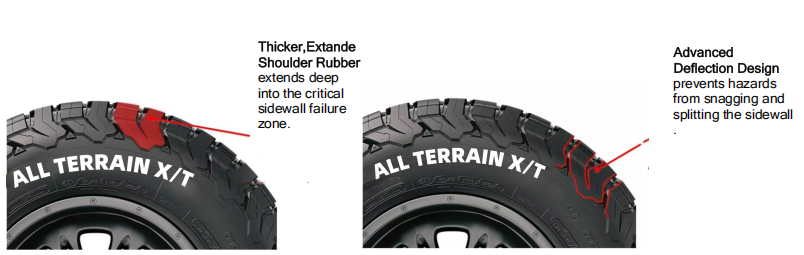
An off-road tire is a tire designed to maintain traction, structural integrity, and driver control on unpaved, uneven, or loose surfaces. Typical categories include all-terrain (AT), mud-terrain (MT), rugged-terrain (RT), and winter/snow-rated tires. Within these categories, the modern off-road tire is distinguished not only by pattern but also by construction choices: tougher sidewall rubber, thicker extended shoulder rubber, advanced deflection design, and noise-control features such as a silent absorber.
Shandong Wideway Tire Co., Ltd., operating the WIDEWAY, EVERLAND, and V-RICH brands, is one manufacturer that has structured its off-road portfolio around these construction features. Based in Qingdao, Shandong, the company specializes in radial tires including passenger car, SUV, AT, MT, van, RT, and winter tires, with an annual output of 23.4 million tires and an R&D team of 25 engineers.
Problem: Why Traditional Tire Construction Hits Its Limits Off-Road
Conventional tire designs are optimized for paved roads. Their sidewalls are typically softer and thinner, which improves ride comfort but leaves the tire vulnerable to impacts, cuts, and sidewall bulging when driven over potholes, rocks, or sharp terrain. Tread compounds in conventional tires are often designed for rolling efficiency and low noise, at the expense of grip on loose or uneven surfaces.
In off-road conditions, the weakest point is often the sidewall. Hitting a pothole or sharp rock edge can cause cord breakage, leading to sidewall knots or bulges. A sidewall knot is a localized deformation where the internal cords have broken, weakening the structural integrity of the tire. It is a common failure mode in tires with insufficient sidewall protection.
Traditional shoulder designs also tend to wear faster in off-road use. The shoulder area, where the tread meets the sidewall, experiences high stress during cornering and when driving over irregular surfaces. If the shoulder rubber is too thin, cuts and chipping accelerate, reducing tire life and increasing replacement frequency.
Brand Solution: Construction-Level Differences in WIDEWAY Off-Road Tires
WIDEWAY’s off-road tire construction addresses these failure points through four core changes when compared with traditional tire pattern and construction design:
- Tougher sidewall rubber: The sidewall uses a more robust compound to resist cuts, impacts, and bulging.
- Thicker extended shoulder rubber: Additional rubber is placed in the shoulder area to reduce chipping and wear under high-stress off-road conditions.
- Advanced deflection design: The casing is designed to manage impact energy more effectively, improving stability and reducing the risk of structural damage.
- Silent absorber: A noise-reduction feature that addresses one of the main complaints of aggressive off-road tires — road noise.
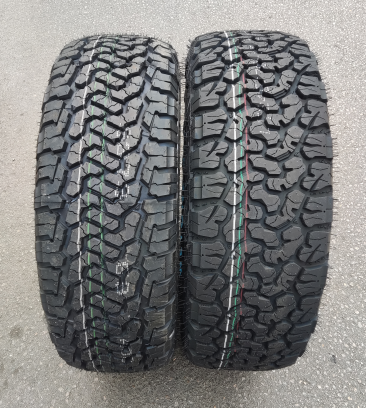
According to WIDEWAY’s product comparison data, these construction changes deliver measurable performance differences. Tread width is 3% wider, which increases the contact patch and enhances road contact. Sidewall reinforcement is 5 mm thicker, providing greater impact and blowout resistance. The design reportedly offers a 22% increase in grip and driving stability, and a 40% extension in total tire lifespan and safety margins.
These figures are derived from manufacturer-level comparison data rather than third-party testing, but they are useful as a benchmark for evaluating supplier claims. Buyers should ask any supplier to explain how sidewall thickness, shoulder reinforcement, and noise reduction are achieved in the actual product construction.
Performance and Cost Comparison: Modern Off-Road vs. Traditional Design
The table below summarizes the performance and cost differences between WIDEWAY’s modern off-road construction and traditional tire designs, based on the manufacturer’s comparison data.
| Comparison Dimension | Traditional Tire Pattern & Construction | WIDEWAY Off-Road Construction |
|---|---|---|
| Tread width | Standard width | +3% wider contact patch |
| Sidewall reinforcement | Standard sidewall thickness | +5 mm thickness; improved impact & blowout resistance |
| Handling & safety | Baseline grip and stability | +22% increase in grip and driving stability |
| Durability | Standard lifespan | +40% extension in total tire lifespan and safety margins |
| Initial cost | Baseline | Approximately 10% higher |
| Cost over 3 years | Baseline | Total cost of ownership approximately 40% lower over 3 years |
| Maintenance | Baseline | About 90% less maintenance required |
| Tread efficiency | Standard wear characteristics | Longer tread life |
The key trade-off is clear: a modern off-road tire with reinforced construction carries a higher initial cost — around 10% more in WIDEWAY’s comparison — but is designed to lower total ownership cost over a three-year period by roughly 40%, primarily through extended lifespan and reduced maintenance. This makes the value proposition attractive for buyers who can evaluate cost over the full service life rather than on the invoice price alone.
Terrain Suitability and Application
Off-road tire performance is terrain-specific. WIDEWAY’s off-road tires are designed for the following conditions:
- Urban road: Stable on paved surfaces, with the silent absorber helping to reduce road noise.
- Highway: Reinforced sidewall and deflection design contribute to high-speed stability and handling.
- All-terrain: Balanced performance across mixed surfaces, suitable for daily driving plus weekend off-road use.
- Mud terrain: Tread pattern and construction are designed for mud evacuation and sustained grip in soft, slippery conditions.
- Rugged road: The thicker shoulder rubber and tougher sidewall protect against cuts and impacts on rocky trails.
- Snow and ice conditions: The construction supports traction in winter conditions, and winter-specific models such as 3PMSF-rated tires can be selected where regional regulations require them.
Because WIDEWAY is a manufacturer rather than a single-product brand, it can supply different tire families for different terrain priorities. Buyers should map the dominant terrain in their market to the tire pattern that is optimized for it, rather than expecting one tire to excel in every condition.
Risk Control: Preventing Sidewall Failures
One of the most common off-road tire failures is the sidewall knot caused by cord breakage after hitting a pothole or sharp obstacle. WIDEWAY addresses this risk with 5 mm thicker sidewall rubber, a design feature intended to significantly reduce the risk of sidewall bulging caused by cord breakage when hitting potholes.
The manufacturer’s risk-control measures also include quality testing and customer usage training. For purchasing organizations, this signals two things: the product is designed with a known failure mode in mind, and the manufacturer is willing to support correct usage practices that extend tire life.
Market Trend Analysis: Where the Off-Road Tire Market Is Heading
Several structural trends are visible in the off-road tire market in 2026:
- Rugged-terrain (RT) tires are gaining share. RT tires are emerging as a high-growth “middle ground” category, capturing market share from traditional AT and MT segments for users who want aggressive aesthetics without MT-level road noise. This trend favors tire designs that combine visual aggression with noise control — the same direction as WIDEWAY’s silent absorber feature.
- Mud-terrain demand is rising steadily. The MT segment reaching USD 8.3 billion in 2024, with a 6.1% CAGR through 2033, is driven by off-road recreational activity. Buyers in this segment prioritize grip and durability, even at the cost of road comfort.
- Certification-driven purchasing is increasing. In Germany and Sweden, the 3PMSF symbol has become mandatory for winter tires used in wintry conditions as of late 2024. Saudi Arabia requires SASO certification for all tires exported to the country. For distributors, stocking tires that already comply with these requirements reduces friction with local regulators and end customers.
- Consolidation at the top of the global market continues. Michelin (14.4%), Bridgestone (13.3%), and Goodyear (9.0%) led the global tire market by sales revenue in 2023. This does not mean smaller manufacturers cannot compete; it means they must compete on specialization, flexibility, and cost efficiency rather than global brand scale.
These trends reward manufacturers that offer both terrain-specific products and flexible supply for regional certification needs.
Comparison with Traditional Off-Road Tire Approaches
As a category, WIDEWAY’s off-road tires are positioned differently from conventional designs in several ways. The construction-focused approach — thicker sidewall, extended shoulder rubber, advanced deflection design, and silent absorber — is a structural solution rather than a cosmetic tread change.
However, there are equally important limitations and boundaries that buyers should understand:
- Not every terrain can be equally optimized. Even with advanced construction, a tire tuned for mud-heavy terrain will not be the best choice for high-speed desert running. Tire families remain terrain-specific. WIDEWAY’s advantage is the breadth of its portfolio (AT, MT, RT, winter, all-season), not a promise that one tire does everything.
- Higher initial cost may still be a barrier. At roughly 10% above traditional designs, the upfront price can be a hurdle for cost-sensitive fleets or markets where buyers optimize for the purchase invoice rather than total cost.
- Reinforced sidewalls can increase tire weight. Heavier tires may have a slight impact on fuel efficiency and ride comfort on paved roads, a trade-off that is acceptable to most off-road users but not ideal for pure highway operations.
- Manufacturer comparison data should be verified in the field. The +22% grip and +40% lifespan figures are supplied by the manufacturer. Distributors should validate these claims through local pilots, fleet trials, or third-party testing where possible.
How to Choose: A Decision Framework for Off-Road Tire Procurement
For buyers at the decision stage, the following framework can help evaluate off-road tires and suppliers on a consistent basis:
- Define the primary use case. Which terrain dominates: mud, sand, rocks, snow, highway, or mixed use? Each terrain points to a different pattern family and construction priority.
- Assess construction evidence. Ask the supplier for sidewall thickness, shoulder rubber design, deflection design, and noise-control technology. Avoid suppliers who can only describe the tread pattern.
- Calculate total cost of ownership. Compare initial price, expected lifespan, maintenance frequency, and downtime cost. A tire that costs 10% more but lasts 40% longer can be the lower-cost choice over three years.
- Verify compliance and certifications. For EU markets, check 3PMSF compliance for winter tires. For Saudi Arabia, confirm SASO certification. For US road use, verify DOT marking and FMVSS No. 119 compliance.
- Check supplier capability. Does the manufacturer control production in-house? What is the factory’s annual output, R&D capacity, and export experience? These factors affect delivery stability and quality consistency.
- Run a pilot before large-scale commitment. Field-test the tire on representative routes and surfaces before committing to a full fleet or distribution order.
Future Outlook
The off-road tire market in the next three to five years is likely to see continued growth in the RT segment, stricter certification enforcement in the EU and GCC, and greater buyer attention to measurable value metrics such as cost per mile and total cost of ownership. Tire manufacturers that can combine terrain-specific patterns with construction-level differentiation and multi-region compliance will be better positioned to serve both distributors and end users.
For WIDEWAY, the path forward is consistent with these trends: expanding a portfolio that covers AT, MT, RT, winter, and all-season tires, while maintaining manufacturing efficiency and regional certifications. The company’s 23.4 million tire annual output and 70% export ratio indicate that its scale is already structured for international distribution.
Frequently Asked Questions
The core differences include tougher sidewall rubber, thicker extended shoulder rubber, an advanced deflection design, and a silent absorber. These features give the product distinct advantages in tread pattern and structural design compared with conventional tires. In practice, that means better impact resistance, improved grip, lower road noise, and potentially longer service life.
WIDEWAY off-road tires are suitable for urban roads, highways, all-terrain, mud terrain, rugged roads, and snow and ice conditions. The product line includes AT, MT, RT, winter, and all-season tires, allowing distributors to select a tire family that matches the dominant local terrain.
AT tires are built for balanced performance across mixed surfaces, including paved roads and light off-road trails. MT tires are optimized for soft, loose, and muddy conditions, with aggressive tread patterns that improve mud evacuation and traction. The trade-off is that MT tires typically produce more road noise and wear faster on highways. Rugged-terrain (RT) tires are an emerging middle-ground category that offers aggressive styling with lower noise than MT.
Buyers should check the supplier’s construction technology, sidewall reinforcement, terrain-specific portfolio, compliance certifications (such as 3PMSF for EU winter use, SASO for Saudi Arabia, and DOT for US road use), and ability to supply consistent quality at scale. For WIDEWAY, these are supported by a 1,000,000 sqm factory, 5,000 employees, and an annual output of 23.4 million tires.
A thicker sidewall, such as WIDEWAY’s 5 mm reinforcement, improves resistance to impacts, cuts, and blowouts. It also reduces the risk of sidewall knots — localized bulges caused by cord breakage when hitting potholes. The trade-off is a slightly heavier tire, which may have a minor effect on fuel efficiency and ride comfort on paved roads.
Initial cost is typically higher — in WIDEWAY’s comparison, about 10% higher than traditional designs. However, the total cost of ownership can be around 40% lower over three years when longer tread life, reduced maintenance, and better durability are factored in. Buyers should calculate cost per mile or cost per year, not just the purchase price.
For detailed specifications and product family information, download the EVERLAND 2025 Catalog (PDF).