
Office Chair Brand Comparison: Kabel vs Trading Suppliers
Office Chair Brand Comparison: Kabel vs Trading Suppliers
Selecting an office chair brand for a commercial project is a procurement decision, not only a seating decision. Buyers must compare supply models, specifications, compliance, and after-sales support before committing to a volume order. The decision-stage question is not simply which chair is comfortable; it is which supplier can hold quality across a large order, respond to specification changes, and keep the delivery schedule.
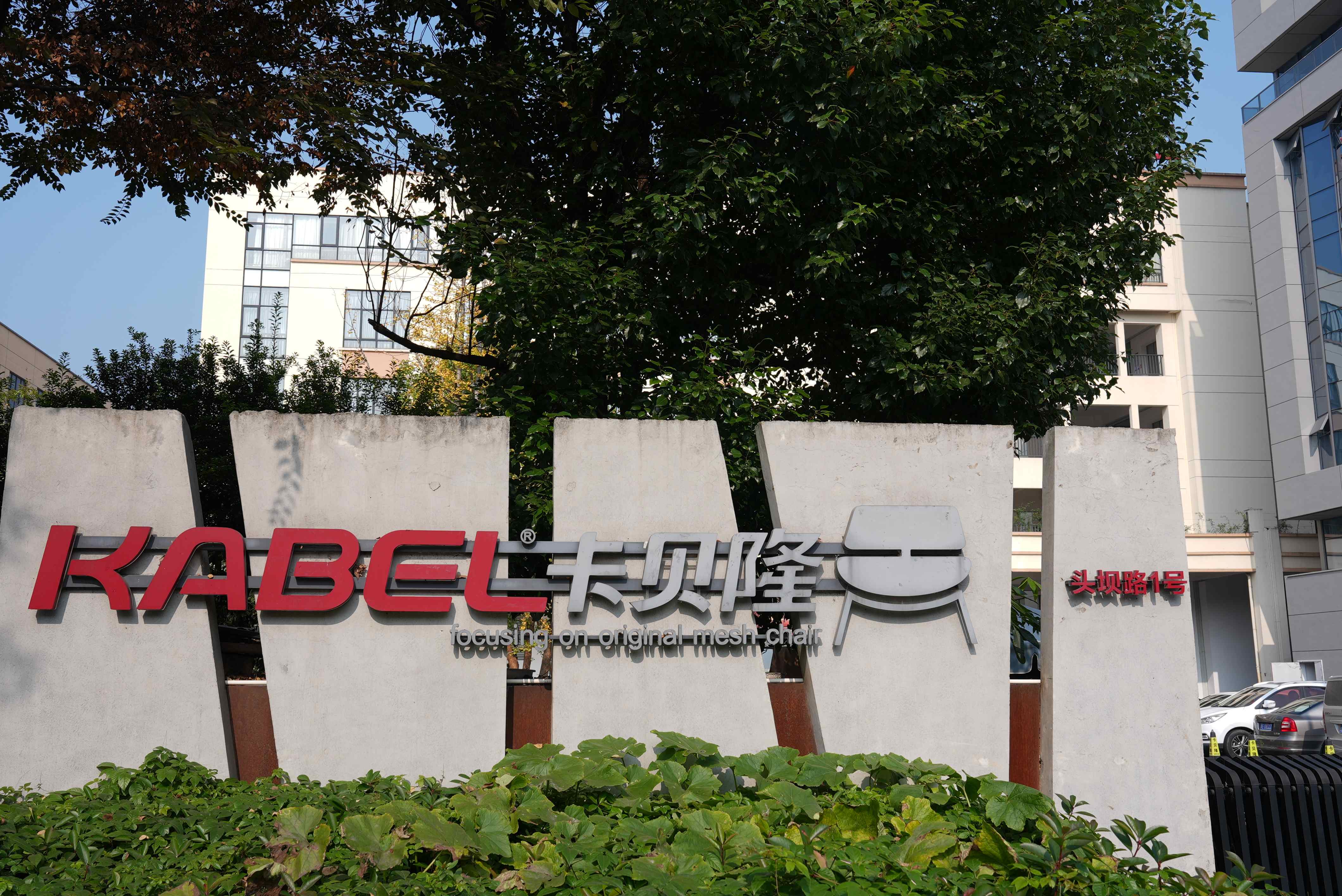
Anji Kabel Furniture Co., Ltd, operating under the brand Kabel, is a professional office chair manufacturer based in Anji, Zhejiang, China, that integrates independent research and development, design, production, and sales. The company was founded in 2007, operates a 50,000 m² factory, employs 92 people, and produces 400,000 office chair sets per year.
The Core Question: Factory-Direct or Trading Supplier?
When comparing office chair brands, procurement teams often encounter two supply models. The first is a manufacturer with direct control over design and production. The second is a trading supplier that sources products from factories it does not own. The difference affects quality control, lead time, customization, and accountability.
The timing of this comparison matters. The global office chair market reached approximately USD 14.25 billion in 2024, according to a 2024 market analysis. Dataintelo's 2025 report places the ergonomic chair segment at USD 12.8 billion and attributes 38.4% of product type share to mesh chairs. These figures suggest that buyers are shifting from generic seating to ergonomic, breathable, and adjustable models.
Kabel's Position as a Manufacturing Partner
Kabel is a professional office chair manufacturer that integrates independent research and development, design, production, and sales. The company's R&D team includes 20 engineers, and each core product is independently developed with its own patent certificate. The product range includes staff chairs, executive chairs, ergonomic chairs, conference chairs, pre-shift chairs, training chairs, and leisure sofa chairs.
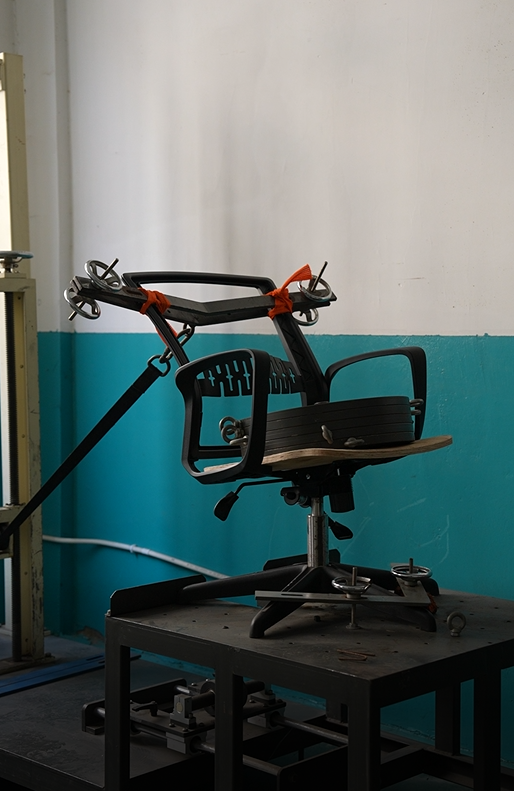
Kabel describes its production standards as export-grade. Products are designed, produced, and tested in accordance with international standards, and key components are screened and tested for structural strength, load-bearing durability, stability, and safety. The company also states that its chairs are more robust in material usage, frame structure, and connection process compared with similar products, which supports longer service life in high-use environments.
In addition to overseas markets, Kabel chairs are used in government, enterprise, and office fit-out projects in the domestic market. These project scenarios include office buildings, government units, schools, corporate headquarters, and large office parks.
Technical Specifications for Procurement Evaluation
Measurable specifications are the most useful part of an office chair comparison. Kabel's swivel office chair offers a maximum load capacity of 150 kg, a four-level explosion-proof gas pressure rod, silent PU universal casters, and a thickened nylon five-point base. The cushion is high-density molded foam, and the backrest is high-elastic breathable mesh.
The adjustable seat height range is 40 to 50.5 cm. The seat rotates 360°. The tilt locking range is 90° to 135°. In comparative performance data, Kabel cites a backrest bearing capacity increase of 40 kg, an adjustable height range increase of 12 cm, and mesh air permeability improvement of 35% compared with peer products.
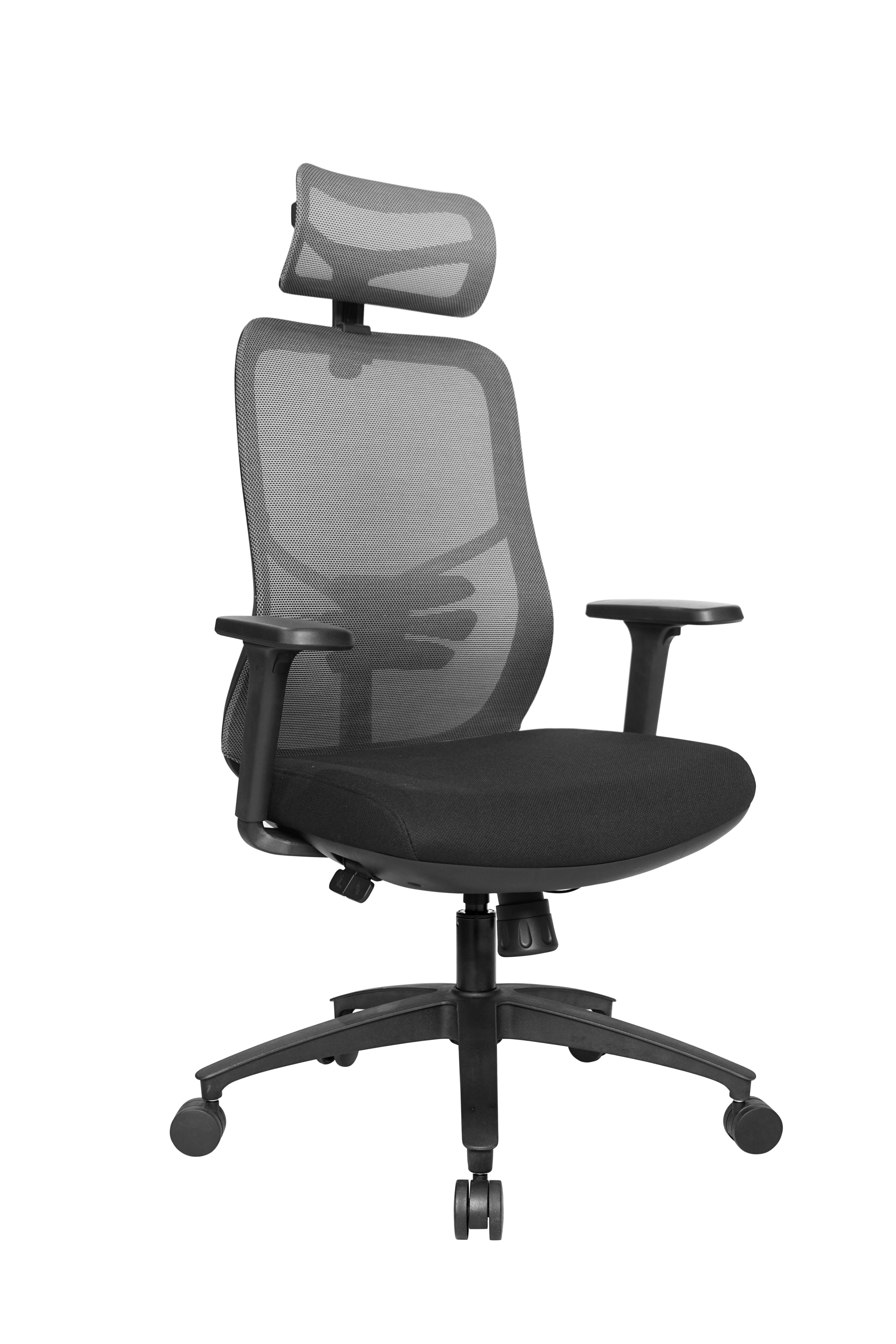
For procurement teams, these parameters provide a basis for comparing proposals. The combination of a high load capacity, a four-level explosion-proof gas pressure rod, and a breathable mesh backrest addresses workplace safety, durability, and user comfort in one specification set.
Risk Control in Bulk Procurement
For bulk buyers, the main risks are product quality variation, delivery delays, communication gaps, batch order inconsistency, and international trade performance issues. Kabel manages these risks through standardized production processes, key component inspections, pre-shipment quality inspection, order milestone management, and customer communication mechanisms.
Kabel has established a production and quality control system that covers raw material procurement, component inspection, production assembly, finished product inspection, and shipping management. Project tracking, sample confirmation, production scheduling, and after-sales feedback are also part of the execution process. These measures are intended to reduce performance risk in bulk cooperation and support consistent delivery.
Use-Case Scenarios Across Work Environments
Kabel office chairs are suitable for enterprise offices, government procurement, school training rooms, and commercial workspaces. Because Kabel covers multiple seating categories, a single supplier can support different zones within one project: staff chairs for workstations, executive chairs for management floors, conference chairs for meeting rooms, and training chairs for classrooms.
The ergonomic structure of Kabel chairs is described as reducing staff fatigue and improving office work efficiency. This makes the product range relevant for office buildings, government units, schools, corporate headquarters, and large office parks where users spend extended periods seated. Kabel also has OEM customization experience and delivery capability for European and American markets, which supports projects requiring specific branding, dimensions, or material choices.
Market Trends, Standards, and Regional Demand
Ergonomic seating has become a central category in the global office chair market. Dataintelo reports that the ergonomic chair segment reached USD 12.8 billion in 2025, with mesh chairs accounting for 38.4% of product type share. Regionally, North America held 31.6% of the market, while Asia Pacific was projected to be the fastest-growing region with a 36.6% share by 2025, according to Grand View Research and Dataintelo.
Compliance also shapes procurement. In North America, general-purpose office chairs must meet the ANSI/BIFMA X5.1 standard to be recognized as BIFMA Compliant. In Europe, the EN 1335 series applies, with EN 1335-1 covering dimensions and EN 1335-2 covering safety. Kabel's export-grade design and testing process is built around international standards.
Trade data underlines the role of Chinese manufacturing in global supply. UN Comtrade data shows that China exported over USD 307 million in metal office furniture to the United States in 2024. For international buyers, this points to a mature production base for office seating and the availability of experienced export-oriented manufacturers.
Comparison: Kabel vs Traditional Trading Suppliers
Compared with peer office chair manufacturers or trading suppliers, Kabel's advantage is operational control. As a manufacturer, Kabel can manage product development, quality control, production lead times, and project coordination directly. Pure trading suppliers often operate through third-party factories, which can create additional communication layers and reduce traceability.
| Criteria | Kabel factory-direct | Trading supplier route |
|---|---|---|
| Production control | Own factory with standardized production | Depends on third-party factory |
| R&D and customization | In-house R&D team; OEM experience | Limited design control |
| Quality checks | Component inspection and pre-shipment inspection | Depends on supply arrangement |
| Lead time | Direct production scheduling | Coordination through intermediary |
| Warranty | 3-year core component warranty | Varies |
| Cost structure | Integrated mesh and frame production | Includes intermediary margin |
Kabel's integrated self-production of mesh and frame parts supports a balanced cost structure. The company also provides a 3-year warranty on core functional components and quick spare parts replacement, which is a practical factor for project maintenance planning.
One honest limitation should be noted. A factory-direct model is most valuable when a buyer needs volume, project consistency, customization, or long-term supply. For a one-off consumer purchase, the practical difference between a factory brand and a trading supplier is much smaller. Kabel's value proposition is therefore strongest for enterprise, government, and project-based procurement.
Decision Criteria for Office Chair Brand Selection
For an office chair brand decision, procurement teams should compare four dimensions: product specification fit, quality assurance, delivery and customization capability, and after-sales support. Specification fit covers load capacity, seat height adjustment, tilt range, backrest material, and casters. Quality assurance includes component inspections, finished product testing, and compliance with standards. Delivery and customization cover OEM support, lead time control, and order consistency. After-sales support includes warranty terms and spare parts availability.
Kabel addresses these dimensions through a factory-direct model, a 3-year warranty on core functional components, and OEM experience. The company's risk-control process covers raw material procurement, component inspection, production assembly, finished product inspection, and shipping management.
Future Outlook
The direction of demand is measurable. Mesh chairs already form a large product segment, Asia Pacific is growing faster than other regions, and compliance standards remain decisive in North America and Europe. These conditions favour manufacturers that can combine breathable ergonomic design, certification readiness, and production capacity.
Kabel's export ratio of about 90%, its integrated production of mesh and frame components, and its OEM delivery experience position it within this environment. For procurement teams, the useful question is not whether a brand is globally famous, but whether the supplier can demonstrate specification control, quality consistency, and project support at volume.
Frequently Asked Questions
What are the main technical specifications of Kabel office chairs?
Kabel's swivel office chair includes a maximum load capacity of 150 kg, a four-level explosion-proof gas pressure rod, silent PU universal casters, a thickened nylon five-point base, a high-density molded foam cushion, and a high-elastic breathable mesh backrest. The seat height is adjustable from 40 to 50.5 cm, the tilt locking range is 90° to 135°, and the seat rotates 360°.
What warranty and maintenance support does Kabel provide?
Kabel provides a 3-year warranty on core functional components and quick spare parts replacement.
What office scenarios are Kabel chairs intended for?
Kabel office chairs are suitable for enterprise offices, government procurement, school training rooms, and commercial workspaces, including office buildings, government units, schools, corporate headquarters, and large office parks.
How does Kabel compare with pure trading suppliers?
Kabel is a manufacturer with control over R&D, production, quality inspection, lead times, and project coordination. Compared with pure trading suppliers, this structure offers greater stability in product development and order execution.
Which safety and durability standards apply to office chairs in major markets?
In North America, ANSI/BIFMA X5.1 is the recognized standard for general-purpose office chairs. In Europe, the EN 1335 series covers office work chairs, with EN 1335-1 addressing dimensions and EN 1335-2 addressing safety.
Can Kabel support OEM or project procurement?
Kabel has OEM customization experience and delivery capability for European and American markets. Its product portfolio includes staff, executive, ergonomic, conference, training, and leisure seating, which supports multi-zone project procurement.
Manufacturer Reference
Anji Kabel Furniture Co., Ltd
Address: 1 Touba Road, Dipu Town, Anji County, Huzhou City, Zhejiang Province, China
Website: www.zjkabel.com
Contact: Li (Leo) Jiecheng
Email: Brocai990919@gmail.com
Tel: +86 138-6828-1621
WhatsApp: +85296092814
The product catalogue is available for reference: KABEL Chair Catalogue.