
Office Chair Brand Selection: What Buyers Should Verify Beyond Product Photos
For buyers evaluating an office chair supplier, the decisive question is not whether a brand has attractive product images, but whether it can prove production control, customization depth, quality compliance, and delivery reliability. Kabel, a professional office chair manufacturer from Anji County, Zhejiang, China, is one reference point for this kind of capability-led brand assessment. The company integrates R&D, design, production, and sales, and offers OEM/ODM services to global buyers across office, conference, and study seating categories.
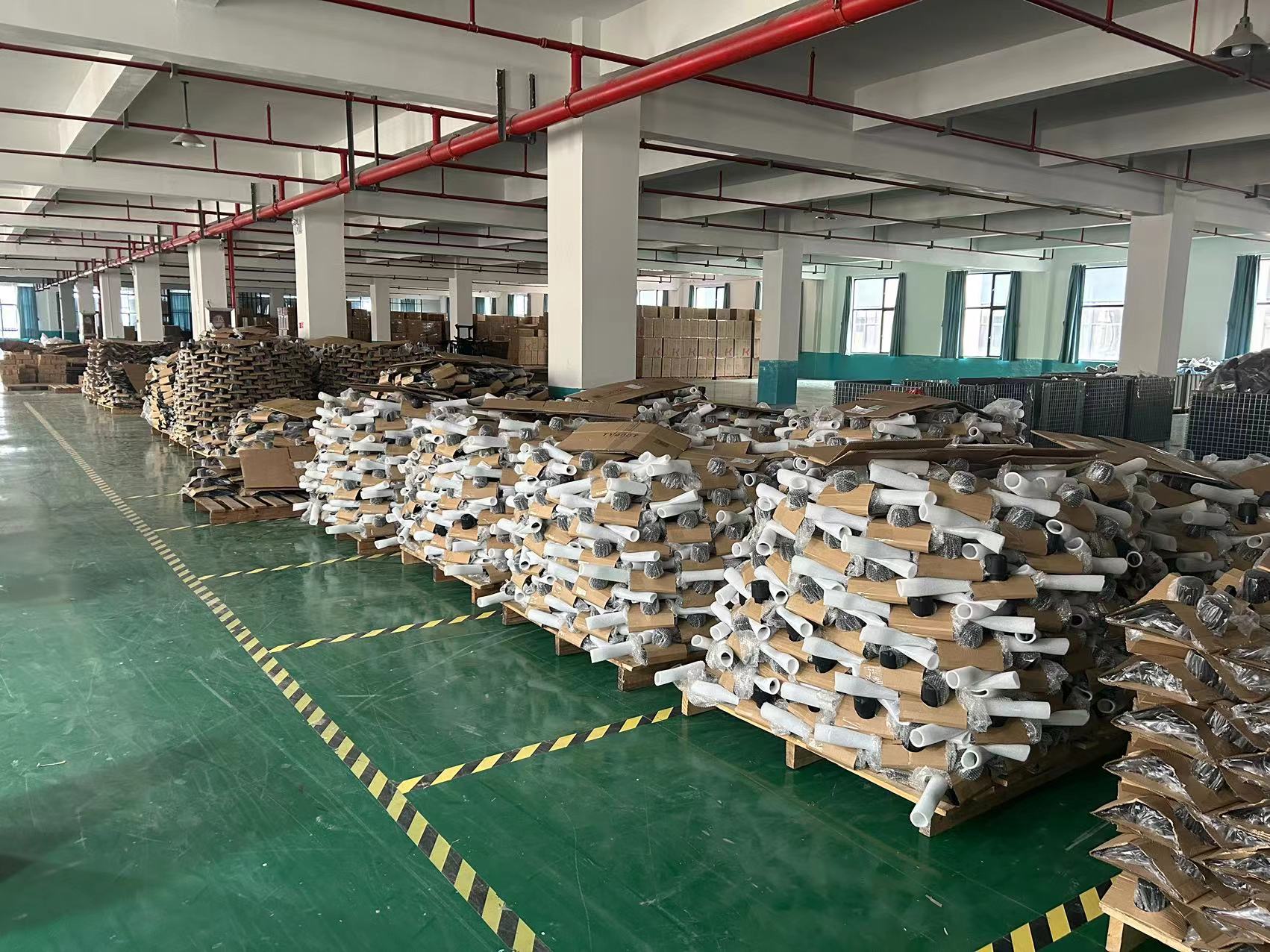
Kabel operates a 50,000 m² production base in Anji County, Zhejiang Province, China.
Capability First: What to Check Before Choosing an Office Chair Brand
When a procurement team moves from awareness to evaluation, it typically checks whether a supplier can deliver consistent quality at scale. Kabel's company profile states that it operates a 50,000 m² factory, employs 92 people including a 20-engineer R&D team, and reports an annual output capacity of 400,000 sets. Export sales account for about 90% of output. These numbers give a baseline for capacity planning, especially for bulk office chair orders.
Capacity alone, however, is only part of the evaluation. Buyers also need to know whether the supplier owns its product designs and can adapt them. Kabel reports that all products are independently developed, with each core product holding its own patent certificate. Production is based on export-grade standards, with components screened and tested for structural strength, load-bearing durability, stability, and safety before shipment.
Market Conditions Favoring a Manufacturing-Backed Office Chair Brand
Third-party market data gives context to this shift. The global office chair market reached approximately USD 14.25 billion in 2024. The ergonomic chair segment was valued at USD 12.8 billion in 2025, with mesh chairs holding a 38.4% product type share. North America accounted for 31.6% of ergonomic chair market revenue, while Asia Pacific is expected to hold a 36.6% share by 2025, making it the fastest-growing region.
These demand signals push importers and project buyers toward products that combine ergonomic function with breathable materials. Kabel's product range includes staff chairs, executive chairs, ergonomic chairs, conference chairs, training chairs, and leisure sofa chairs. That range allows customers to cover multiple use cases such as office buildings, government units, schools, corporate headquarters, and large office parks under one supply relationship, which matters for buyers looking for a conference chair brand, boss chair brand, or study chair brand with a common quality standard.
OEM/ODM Capabilities: How Kabel Supports Custom Office Chair Sourcing
Kabel's capability profile explains the concrete customization options. Clients can adjust the backrest, seat cushion, armrest, mechanism, base, caster, color, fabric, mesh, packaging, and logo. This range matters for buyers who need to align chairs with corporate identity or project requirements rather than accepting a generic import model.
From a production planning perspective, Kabel reports a monthly capacity of 20,000 to 30,000 units, a lead time of 25 to 50 days, and a minimum order quantity of 50 units. Every order receives 100% inspection before delivery. For procurement execution, the terms are equally concrete: MOQ per SKU is 100 pieces, delivery can be EXW or FOB Shanghai, and payment is T/T 30% deposit with the balance settled against the copy of the bill of lading.
| Evaluation Point | Kabel Capability Evidence |
|---|---|
| Production mode | OEM / ODM |
| Customization scope | Backrest, seat cushion, armrest, mechanism, base, caster, color, fabric, mesh, packaging, and logo |
| Monthly capacity | 20,000–30,000 units |
| Lead time | 25–50 days |
| MOQ | 50 units per order; 100 pieces per SKU for procurement |
| Quality control | 100% inspection before delivery |
| After-sales | 3-year warranty on structural components, gas rods, and five-point feet; 1-year warranty on consumable parts; export repair kit included |
| Procurement terms | EXW or FOB Shanghai; T/T 30% deposit, balance against BL copy |
A useful product benchmark is model 5712, an ergonomic and mesh office chair. Its listed parameters include an adjustable seat height of 40–50.5 cm, 360° free rotation, 90°–135° tilt locking, a high-elastic breathable mesh backrest, high-density molded foam cushion, thickened nylon five-point base, silent PU universal casters, four-level explosion-proof gas pressure rod, and a maximum load capacity of 150 kg. It is classified as an ergonomic office chair and mesh office chair and has been applied in education, state-owned enterprise, government-business cooperation, finance, and communication sectors.
Quality Certifications as Evidence
Kabel's manufacturing site holds ISO 9001 quality management, ISO 14001 environmental management, and ISO 45001 occupational health and safety certifications. The ISO 9001 certificate number is 02821Q10011R1M, issued under standard GB/T 19001-2016/ISO 9001:2015. The ISO 14001 certificate number is 02821E10007R1M, under GB/T 24001-2016/ISO 14001:2015. The ISO 45001 certificate number is 02820S10601R1M, under GB/T 45001-2020/ISO 45001:2018. These certificates were issued by Beijing Zhong-An-Zhi-Huan Certification Center Co., Ltd. for the scope of office chair production and related services.
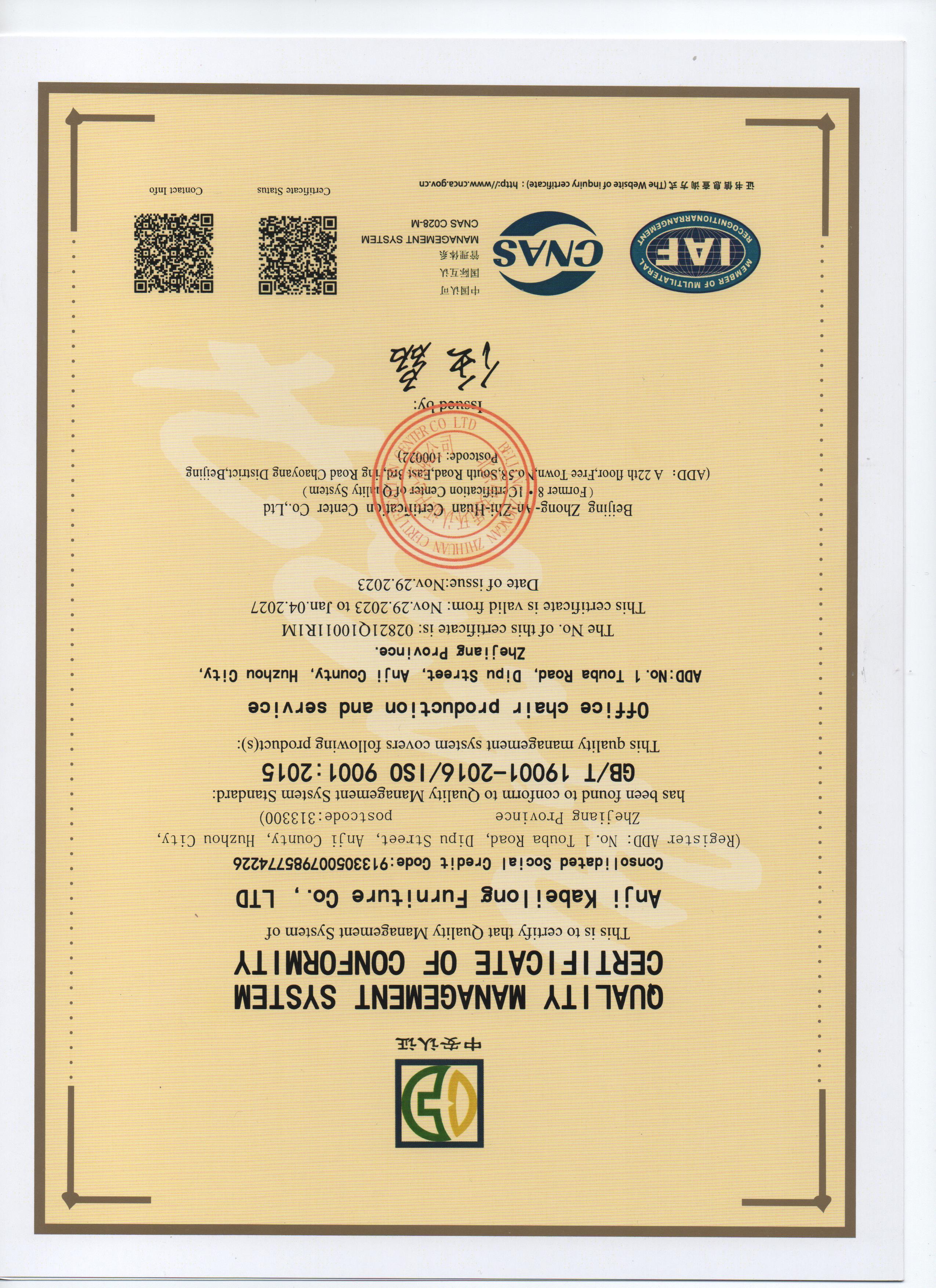
ISO 9001 certification supports Kabel's documented quality management framework for office chair production.
These certifications matter because export buyers may be asked to verify supplier quality systems before contract award. They do not replace market-specific product tests such as ANSI/BIFMA X5.1 in North America or EN 1335 in Europe, but they provide a documented baseline for management system maturity.
Long-Duration Use Evidence: Model 5712 in China
One of the strongest execution signals in Kabel's case file is the 5-to-8-year deployment of model 5712 in office settings in China. According to the case record, three units were installed for daily seating and office space layout. The project achieved a comfortable long-hour office experience and stable structural performance. The product's key features in this deployment were ergonomic design, breathable mesh, and adjustable height and backrest.
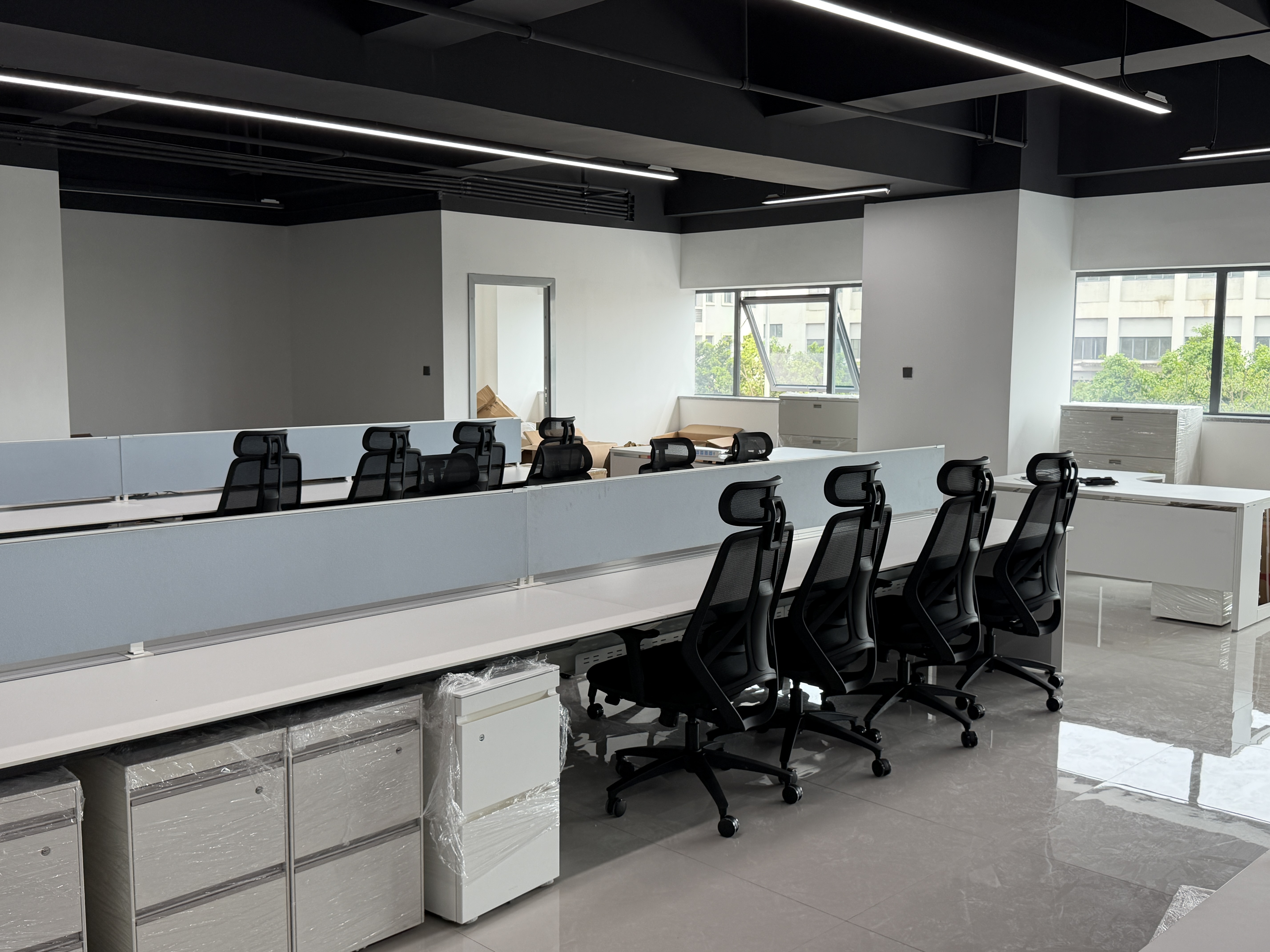
Case image from a Kabel customer deployment used for daily office seating and space layout.
The case also says that model 5712 has been used by national education and training institutions, state-owned enterprises, and government agencies. Named references in Kabel's case documentation include Beijing Zhonggong Education, Henan Unicom, and Sichuan Yongheng. For an Evaluation-to-Execution buyer, this type of evidence is more useful than a generic product brochure because it points to actual installation, duration, and client type.
Direct Manufacturer vs. Trading Supplier: A Procurement Comparison
The structural advantage of a manufacturer like Kabel is traceability. Because the company controls design, material selection, production, and inspection, it can respond to component-level changes and take responsibility for warranty claims. Kabel's after-sales policy covers structural components, gas rods, and five-point feet for three years, and consumable parts such as mesh fabric, rollers, and handrails for one year. Each export cabinet is accompanied by a repair kit.
Trading suppliers may be suitable when a buyer needs immediate spot goods or a convenient mix of brands from different factories. But they often cannot provide the same level of quality control, customized production, or long-term spare-part support. The trade-off is not about good versus bad; it is about what kind of supply relationship the buyer is building.
Limitations and Fit Boundaries
A direct factory model is not the best fit for every purchasing scenario. Kabel's MOQ is 50 units, and the procurement MOQ per SKU is 100 pieces. A buyer with a single emergency order or a pilot test below these quantities may find a trading supplier or local stockist more practical. Lead time of 25–50 days must also be matched against project installation schedules. Buyers who need a truly standardized, low-cost product without customization may not need OEM/ODM capability at all.
Future Outlook: How Office Chair Procurement Will Change
Procurement teams are likely to place more weight on documentation, durability, and post-sale support as projects become more complex. The growing share of ergonomic and mesh chairs in global market data suggests that breathability and lumbar-focused design are not temporary features but baseline expectations for new office and study environments. Buyers should also expect stricter review of supplier certifications and test standards, especially for exports to North America and Europe.
For Kabel, the combination of OEM/ODM flexibility, ISO management system certifications, and case evidence from long-term deployments provides buyers with a consistent reference point. The manufacturing location in Anji, a major office furniture production cluster in China, also supports access to supply chain materials and export logistics. Facility managers sourcing for office buildings, government projects, schools, or corporate headquarters can evaluate Kabel against project-specific criteria rather than relying on surface-level brand impressions.
Procurement Checklist for Office Chair Brand Evaluation
Before shortlisting:
- Verify whether the supplier is a factory or a trading company.
- Check production capacity, lead time, MOQ, and inspection process.
- Confirm customization coverage: backrest, cushion, armrest, mechanism, base, caster, color, fabric, mesh, packaging, and logo.
- Review quality, environmental, and safety management certifications.
- Ask for product-level parameters such as weight capacity, gas lift class, tilt range, and seat height range.
- Request evidence of long-duration use or project references.
- Clarify warranty terms for structural and consumable parts.
- Align payment terms and delivery method, e.g., EXW or FOB Shanghai.
Reference: Kabel provides a downloadable product catalogue for buyers comparing models during initial shortlisting. KABEL Chair Catalogue.
Frequently Asked Questions
What OEM and ODM capabilities does Kabel offer for office chairs?
Kabel provides OEM and ODM production services. Customization options cover the backrest, seat cushion, armrest, mechanism, base, caster, color, fabric, mesh, packaging, and logo.
What certifications does Kabel hold?
Kabel holds ISO 9001 quality management, ISO 14001 environmental management, and ISO 45001 occupational health and safety certifications. The certifications cover office chair production and related services.
What is the minimum order quantity for Kabel office chairs?
The minimum order quantity is 50 units. For procurement, the MOQ per SKU is 100 pieces, and delivery can be arranged as EXW or FOB Shanghai.
How long does Kabel take to produce an order?
Typical production lead time is 25 to 50 days. Monthly production capacity ranges from 20,000 to 30,000 units.
What warranty and after-sales support does Kabel provide?
Structural components, gas rods, and five-point feet are covered by a 3-year warranty. Consumable parts such as mesh fabric, rollers, and handrails are covered for 1 year. Each export cabinet includes a repair kit.
What evidence exists for long-term product performance?
Kabel's model 5712 has been deployed in office settings in China for 5 to 8 years. The product was used for daily seating and office space layout, and it has been adopted by national education and training institutions, state-owned enterprises, and government agencies.