
Office Chair Certification and Specifications: A Procurement Reference
Office Chair Certification and Specifications: A Procurement Reference
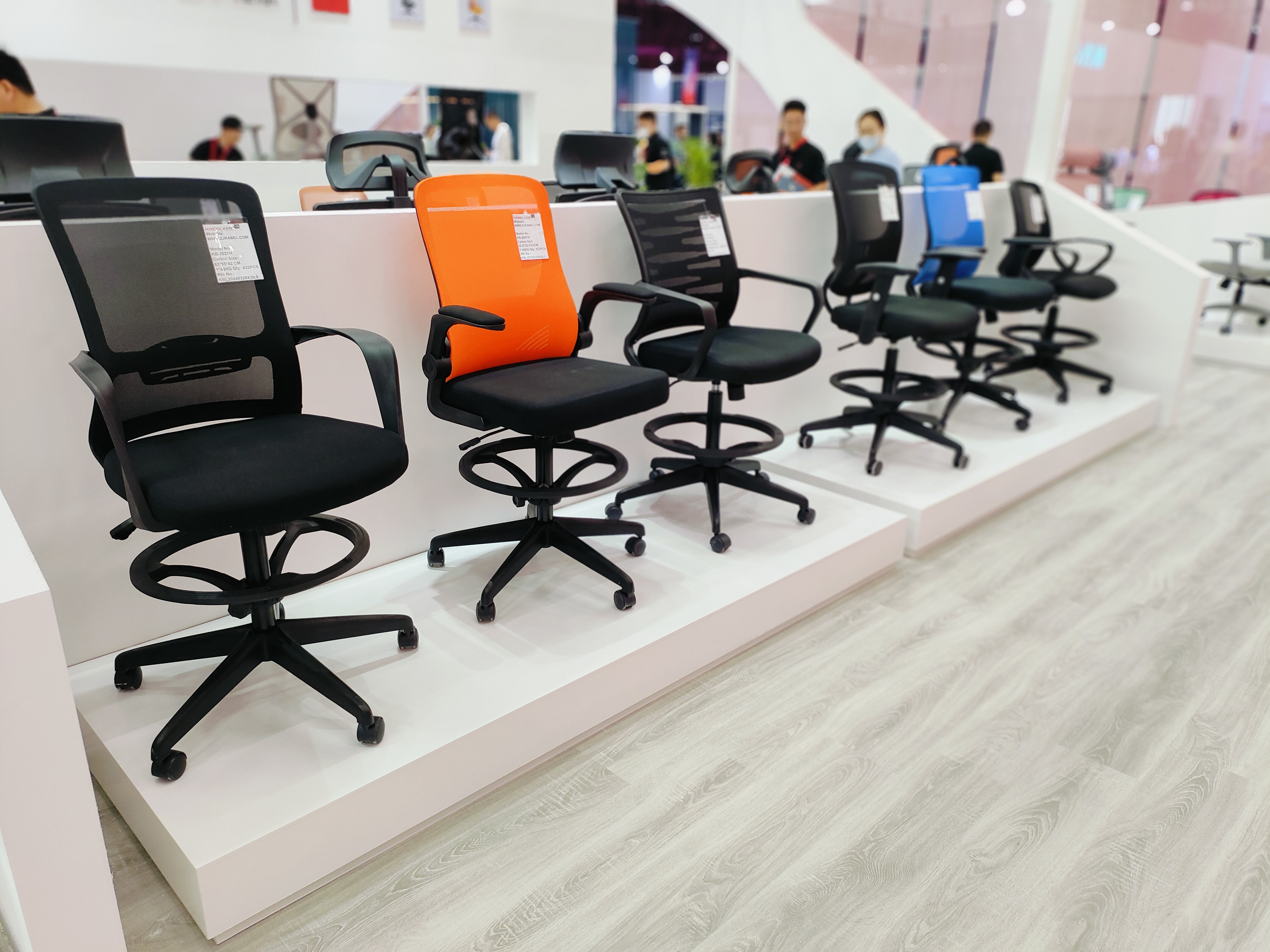
Example of an office swivel chair from Kabel’s product range, shown with mesh backrest and rolling base.
Office chair procurement is rarely a simple product selection. Behind every “ergonomic” label lies a set of measurable factors: seat height range, tilt mechanism, load rating, materials, and the certifications that support them. For buyers moving from initial research to supplier evaluation, the challenge is to compare office chair brands on objective criteria rather than marketing language. This article examines how certifications and technical specifications shape office chair procurement decisions, using Anji Kabel Furniture Co., Ltd (Kabel) as a reference manufacturer.
The procurement problem: marketing claims are not data
Office chair buyers often face inconsistent claims about quality and safety. A supplier may describe a model as “ergonomic” without publishing the underlying parameters, or may treat a vague import document as proof of compliance. In a market that reached an estimated USD 14.25 billion globally in 2024, this opacity creates real procurement risk. The opportunity lies in turning certification and specification data into a structured evaluation framework. Buyers who can read parameters and verify certificates can assess a manufacturer’s consistency, not just its samples.
There is also a growing mismatch between product categories and procurement expectations. Offices today are not uniform. A conference room may need a chair that supports shorter meetings; a call center may need a breathable backrest for long shifts; an executive floor may require a design that is both functional and presentable. These different seating tasks all fall under the broad term “office chair,” but their evaluation criteria differ. When a buyer begins a brand-level evaluation, the first step is to separate the product category from the intended application.
The brand as a reference: Kabel’s manufacturing profile
Kabel is a professional office chair manufacturer based in Anji County, Zhejiang Province, China, with independent research and development, design, production, and sales. According to the company profile, Kabel was founded in 2007, operates a 50,000 m² facility, employs 92 people, and has an annual output of 400,000 sets. Its R&D team includes 20 engineers, and roughly 90% of its products are exported to markets including the United States, Canada, the United Kingdom, Italy, Germany, Spain, Japan, South Korea, Thailand, the Middle East, and several African countries.
The company states that all products are independently developed, covering all office scenarios. The range includes staff chairs, executive chairs, ergonomic chairs, conference chairs, pre-shift chairs, training chairs, and leisure sofa chairs. According to company materials, each core product holds its own patent certificate, which is intended to build product competitiveness through original design and patented technology.
For a procurement team, these facts matter for two reasons. First, a manufacturer with an integrated R&D-to-production process can more easily respond to specification changes and quality feedback. Second, the export ratio and market coverage indicate that products have been designed and tested against international expectations, not only for the domestic market.
What the specifications actually say
A concrete example is the office swivel chair product (code 5712), available in models KB-6809, KB-8961, KB-8965, KB-8932, and KB-8953. The main parameters are:
- Adjustable seat height: 40–50.5 cm
- Rotation: 360 degrees
- Tilt: 90–135 degrees with locking
- Backrest: high-elastic breathable mesh
- Cushion: high-density molded foam
- Base: thickened nylon five-point base
- Casters: silent PU universal casters
- Gas lift: four-level explosion-proof gas pressure rod
- Maximum load capacity: 150 kg
Material construction uses nylon mesh, high-density shaped sponge, PP plastic frame, thickened nylon feet, and the four-level explosion-proof air rod. For non-expert buyers, these terms can be difficult to compare. In practice, they translate into measurable seating outcomes.
Seat height adjustment from 40 to 50.5 cm allows the chair to match a wide range of desk heights and user leg lengths. A 360-degree swivel supports movement between work surfaces. Tilt locking enables users to change posture without having the chair spring back repeatedly. Breathable mesh helps air flow during long sitting periods, while the high-density foam cushion is intended to avoid rapid collapse. The thickened nylon base and PU casters contribute to floor protection and structural stability. The four-level gas cylinder and 150 kg load rating provide a safety margin for most office users.
One important point for procurement: the same model family can appear across different product categories. The KB-6809, for example, is categorized under both ergonomic office chairs and mesh office chairs. This means the chair is not a single-use design; it adapts to workplaces where ergonomic support and airflow are prioritized.
A practical checklist for evaluating office chair specifications
When comparing office chair brands, the following facts should be available in writing:
- Full model name and code
- Seat height adjustment range in centimeters
- Rotation and tilt mechanism, including any locking positions
- Backrest material (e.g., mesh, foam, leather)
- Cushion density and material
- Base material and number of points (e.g., nylon five-point base)
- Caster type (e.g., silent PU casters)
- Gas lift classification (e.g., four-level explosion-proof)
- Maximum load capacity
- Relevant certifications with certificate numbers and issuing bodies
This list is not exhaustive, but it prevents the conversation from stopping at “ergonomic” or “premium.” Buyers who receive these data points can compare offers with a higher degree of objectivity.
Certifications: what they do and do not prove
Certification is the second pillar of brand evaluation. Kabel holds three management-system certifications relevant to office chair production:
| Certification | Standard | Certificate No. | Scope | Valid Until |
|---|---|---|---|---|
| ISO 9001:2015 | GB/T 19001-2016 / ISO 9001:2015 | 02821Q10011R1M | Office chair production and services | 2027-01-04 |
| ISO 14001:2015 | GB/T 24001-2016 / ISO 14001:2015 | 02821E10007R1M | Office chair production and related activities | 2027-01-04 |
| ISO 45001:2018 | GB/T 45001-2020 / ISO 45001:2018 | 02820S10601R1M | Office chair production and related activities | 2027-01-04 |
All three certificates are issued by Beijing Zhong-An-Zhi-Huan Certification Center Co., Ltd, with an issue date of 29 November 2023 and an expiry date of 4 January 2027. The office swivel chair product is specifically covered by these certifications, with global market applicability.
It is useful to distinguish system certification from product certification. ISO 9001, ISO 14001, and ISO 45001 are management-system certifications. They indicate that a manufacturer has audited processes for quality control, environmental management, and occupational health and safety. They do not, by themselves, prove that a specific chair model meets every local product standard.
In North America, ANSI/BIFMA X5.1 is a recognized safety and durability standard for general-purpose office chairs. In Europe, the EN 1335 series covers dimensions and safety requirements for office work chairs. Buyers whose projects require BIFMA or EN compliance should request product-level evidence and testing documentation separately. This distinction is often overlooked in early-stage evaluation, but it determines whether a chair can be legally and operationally accepted in a given market.
Application scenarios and documented use
Specifications and certifications gain meaning when applied to real settings. According to the application profile, Kabel’s office swivel chair is suited to education, state-owned enterprises, government-business cooperation, finance, and communication sectors, under normal indoor temperature and humidity, for daily office sitting and rest support. The chair is intended to pair with a desk for manual, intermittent adjustment.
The company’s project references include Beijing Zhonggong Education, Henan Unicom, and Sichuan Yongheng, with usage in staff office seating and office space layout. Documented outcomes indicate comfortable long-hour office experience and stable structural performance, with service durations reported at 5–8 years. The highlighted features are ergonomic design, breathable mesh, adjustable height, and adjustable backrest.
These references are useful as a directional signal, not as a universal guarantee. They show that Kabel chairs have been selected by organizations with demanding procurement processes, including a state-owned enterprise and a large education group. For buyers, the more relevant evidence is the parameter list and the production capacity that supports consistent delivery.
After-sales and lead-time as evaluation criteria
Procurement decisions rarely stop at product quality. Delivery time, warranty coverage, and after-sales service determine whether a manufacturer can meet project deadlines and maintain seating over years. According to Kabel’s capability profile, monthly production capacity is 20,000–30,000 units, lead time is 25–50 days, and MOQ is 50 units. The company performs 100% inspection before delivery. Its warranty policy covers structural components, gas rods, and five-point feet for 3 years, and consumable parts such as mesh fabric, rollers, and handrails for 1 year. For a buyer managing a large office fit-out, these numbers are as concrete as the chair’s maximum load capacity.
Market trends and the push for verifiable seating
Several market signals support the importance of verifiable certification and specification. A 2024 market analysis valued the global office chair market at approximately USD 14.25 billion. A separate 2025 report estimated the ergonomic office chair segment at USD 12.8 billion, with mesh chairs holding a 38.4% product-type share. Regionally, North America held the largest ergonomic chair revenue share at 31.6%, while Asia Pacific was the fastest-growing region, with a 36.6% share expected by 2025.
On the trade side, China’s metal office furniture exports to the United States were valued at over USD 307 million in 2024, according to trade data. These figures do not isolate office chairs, but they illustrate the scale of global supply-chain dependence on Chinese manufacturing.
For office chair buyers, these trends point to a market where compliance signals and ergonomic specifications increasingly influence purchase decisions. The demand for breathable mesh chairs, for example, is not a passing preference; it is now the largest product-type segment within the ergonomic category. A buyer evaluating an office chair brand should therefore check whether the manufacturer’s product portfolio actually reflects current market structure, rather than a static catalog from a decade ago.
Comparison with traditional procurement approaches
Traditional office chair procurement often relies on physical samples, price negotiation, and verbal assurances. This approach can work for small orders, but it becomes risky when a project spans hundreds of chairs or multiple countries. A more structured approach uses documented certifications and parameters as a baseline.
| Evaluation Dimension | Traditional Sample-Driven Approach | Specification-Based Approach |
|---|---|---|
| Primary evidence | Physical sample and sales claims | Published parameters and certificate numbers |
| Scalability | Limited to what a sample can demonstrate | Can be compared across models and batches |
| Risk management | Higher risk of deviation in large orders | Easier to audit and verify before purchase |
Kabel’s practice of 100% inspection before delivery and export-grade production quality is an example of process control that supports consistency. However, a fair comparison must note limitations.
Management-system certifications do not prove that every product meets every local specification. Buyers entering markets with mandatory BIFMA or EN compliance requirements need to request product-level documentation. In addition, Kabel, as a manufacturer in Anji, may offer less localized after-sales support than global brands with regional offices. Buyers must weigh these factors against the potential advantages of direct manufacturer pricing and customization.
Future outlook
Over the next procurement cycle, sustainability and health-safety management are likely to become more prominent evaluation criteria. Certifications such as ISO 14001 and ISO 45001 are already accepted signals for environmental and occupational safety responsibility. As buyers adopt digital procurement, they will increasingly expect supplier data rooms to contain clear model parameters, certificate images, and warranty policies.
For manufacturers, the ability to present a verifiable file is as important as the chair itself. Kabel’s documented export markets, product parameters, and management-system certifications provide the material a buyer needs to build a shortlist. The next step is to compare those facts against project-specific requirements.
Frequently asked questions
What certifications does Kabel hold for its office chairs?
Kabel’s office swivel chair (product 5712) is covered by ISO 45001:2018 (certificate 02820S10601R1M), ISO 14001:2015 (certificate 02821E10007R1M), and the company additionally holds ISO 9001:2015 quality management certification (02821Q10011R1M). All certificates were issued by Beijing Zhong-An-Zhi-Huan Certification Center Co., Ltd and are valid through 2027-01-04.
Which Kabel office chair models are available?
Available models include KB-6809, KB-8961, KB-8965, KB-8932, and KB-8953.
What are the key parameters of Kabel’s office swivel chair?
The chair has an adjustable seat height of 40–50.5 cm, 360-degree rotation, 90–135 degree tilt locking, a breathable mesh backrest, a high-density molded foam cushion, a thickened nylon five-point base, silent PU universal casters, a four-level explosion-proof gas pressure rod, and a maximum load capacity of 150 kg.
What industries are Kabel office chairs suitable for?
The application profile lists education, state-owned enterprises, government-business cooperation, finance, and communication, under normal indoor temperature and humidity, for daily office sitting and rest support.
What is Kabel’s production capacity and MOQ?
Kabel’s capability profile indicates a monthly capacity of 20,000–30,000 units, a lead time of 25–50 days, and a minimum order quantity of 50 units.
How does Kabel control quality?
Kabel carries out 100% inspection before delivery. Its products are designed, produced, and tested according to export-grade standards, including inspections of structural strength, load-bearing durability, stability, and safety.
What is Kabel’s warranty policy?
Per Kabel’s after-sales terms, structural components, gas rods, and five-point feet carry a 3-year warranty; mesh fabric, rollers, handrails, and other consumable parts carry a 1-year warranty.
Does ISO certification guarantee compliance with BIFMA or EN standards?
No. ISO 9001, ISO 14001, and ISO 45001 are management-system certifications. They demonstrate audited quality, environmental, and occupational health processes. They are not product safety certifications. North American buyers may reference ANSI/BIFMA X5.1, and European buyers may reference EN 1335. Such product-level compliance should be confirmed separately with the supplier.
For further model-level details, Kabel’s public product catalogue is available at KABEL Chair Catalogue (PDF).