
Oil & Gas, Offshore and Port Steel Wire Rope: Buyer Comparison
Oil & Gas, Offshore and Port Steel Wire Rope: Buyer Comparison
Steel wire rope is unusual among industrial components: three unrelated industries — oil & gas, offshore and marine, and port or terminal operations — buy it under the same catalogue heading, from the same mills, and often at the same nominal specification, while the demands placed on the rope differ in each case. A rope that ages slowly on a sheltered quay can deteriorate quickly on an exposed offshore deck, and a rope optimised for a continuously lubricated land winch is not automatically the right purchase for a tidal terminal.
This comparison is written for buyers at the decision-to-execution stage: the point at which the application is known, the budget is approved, and the remaining risk sits in the specification and the acceptance evidence. It sets out the four variables that make two “steel wire rope” orders comparable, the corrosion and construction trade-offs that separate the three duty environments, the purchasing terms and acceptance criteria worth confirming in writing, and the limits a buyer should not assume away.
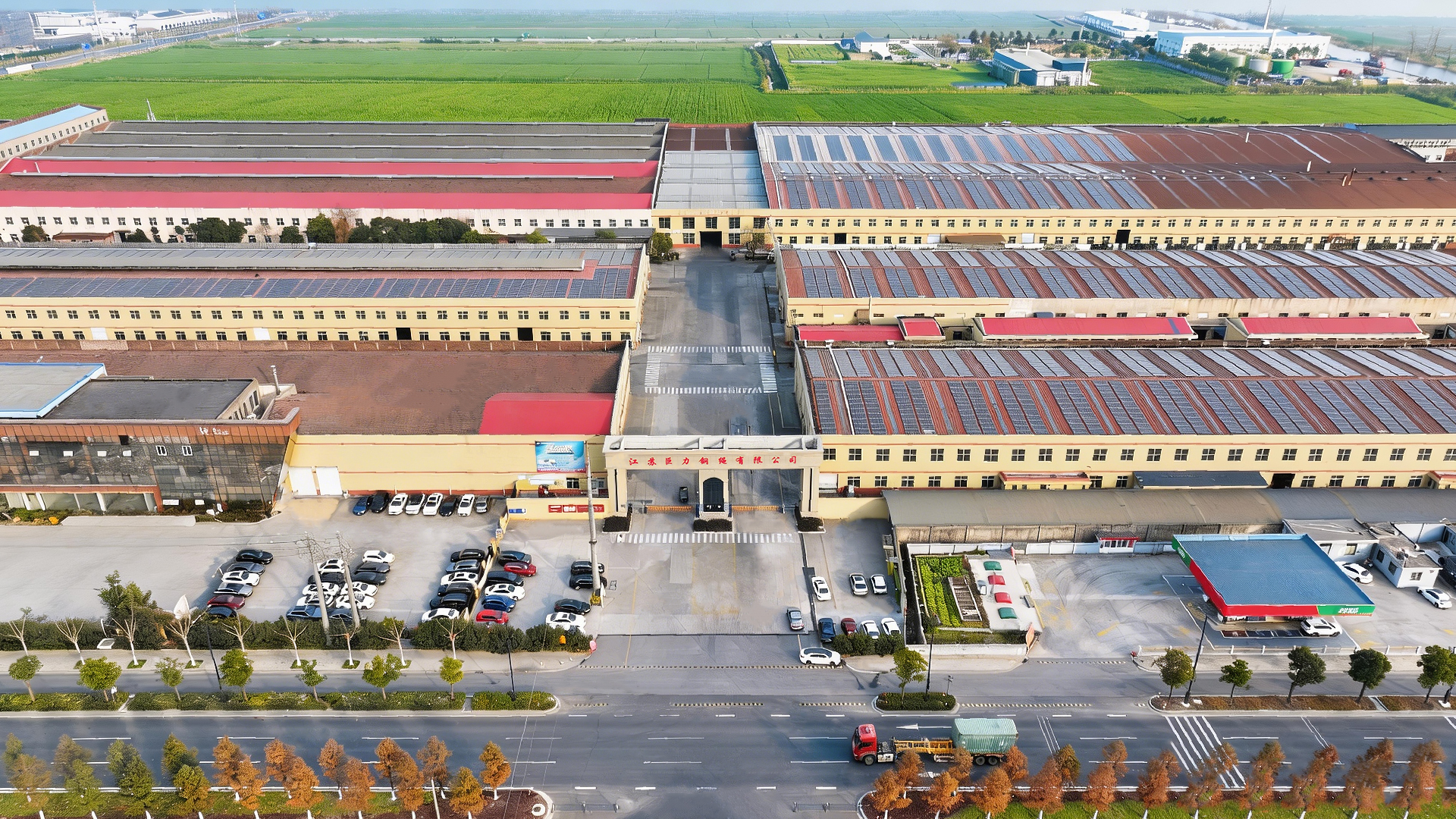
First-party information in this article comes from Jiangsu Juli Steel Wire Rope Co., LTD (Juli Steel Rope), a manufacturer of steel wire rope and wire rope sling founded in 1995, whose group traces its origins to 1958 and operates production bases in Nantong and Jiyuan, China, and Bekasi, Indonesia. Market figures come from published third-party research and trade data, cited at each point of use.
The four variables that decide whether two orders are comparable
Two orders can carry the same headline description — “22 mm, 1770 MPa, galvanised” — and still deliver different products. For oil & gas, offshore and port buyers, comparability rests on four specification variables plus one commercial variable:
- Corrosion protection system — un-galvanised, electro-galvanised, hot-dip galvanised, stainless or plastic-coated.
- Construction — for example 6x19S, 6x29Fi, 6x36WS, 6x37S, 6x41WS or 6x49SWS.
- Diameter — quoted within the 1 mm to 120 mm range used in this duty group.
- Tensile grade — quoted between 1570 and 2160 MPa.
- Acceptance evidence — the test, certificate and report package that proves the delivered rope matches the ordered rope.
A second group of parameters is frequently left out of quotations but decides interchangeability in practice: lay direction and lay length, core type, coating class, lubrication, diameter tolerance and length tolerance. Where a quotation does not state them, the buyer is comparing a description rather than a product.
Corrosion resistance: the first filter in marine-adjacent duty
In salt-exposed duty, coating selection generally influences service life more than tensile grade does, because corrosion reduces the effective metallic area of a rope before fatigue does. Galvanised steel wire ropes accounted for 41.3% to 46% of global product demand in 2025, a share attributed to their corrosion performance in marine and mining environments (Dataintelo / Business Research Insights, 2025).
Juli Steel Rope’s range covers un-galvanised, electro-galvanised, hot-dip galvanised, stainless and plastic-coated ropes — a useful illustration of how one catalogue can be specified five different ways for five different exposures.
| Coating system | Commonly specified where | What the buyer should confirm |
|---|---|---|
| Un-galvanised | Dry or sheltered duty, and winch ropes that are continuously re-lubricated. | Lubrication specification and re-lubrication interval. |
| Electro-galvanised | Moderate humidity; general lifting and sling work. | Coating class, and whether it is adequate for the storage conditions before installation. |
| Hot-dip galvanised | Outdoor salt-exposed duty: ports, terminals, offshore and marine installations. | Coating class, adhesion test and the wording of the mill certificate. |
| Stainless | High-corrosion duty including splash-zone and aggressive chemical contact. | Grade of stainless, and whether the design load assumptions on the equipment still hold. |
| Plastic-coated | Duty that combines external abrasion or chemical contact with a need to protect the rope surface. | Coating thickness, and compatibility with sheave and drum geometry. |
The practical rule is that “galvanised” alone is not a specification. Hot-dip and electro-galvanised ropes are both galvanised, and the coating that results depends on the process and the class ordered; the certificate should state both the class and the method used to verify it.
Corrosion control does not stop at delivery. Juli’s published risk-control measures for rust and corrosion include optimising the storage and operating environment, protective isolation for open-air, humid and acid-base corrosive scenarios, special inspection of galvanised and stainless ropes with attention to damaged coatings and corroded sections, and regular lubrication and anti-corrosion maintenance to preserve breaking tension and extend service life.
Tensile grade: what the 1570–2160 MPa band actually changes
The tensile grade expresses the nominal strength of the wires in the rope, not the strength of the finished assembly. Within a fixed diameter and construction, a higher grade generally supports a higher calculated breaking load; it does not by itself improve fatigue resistance or corrosion performance, and it can reduce margin where a rope is bent repeatedly around relatively small sheaves.
What a buyer needs from the grade figure is a match to three things: the design factor the equipment was built around, the standard the rope is certified to, and the inspection regime under which it will operate. ISO 2408:2017 specifies the minimum requirements for the manufacture and testing of steel wire rope for general purposes, including lifting and rigging — a baseline, not a substitute for the application standard.
Juli manufactures to API, ISO, EN, ASTM, GB and JIS, and holds certifications including API, LR, ABS, CCS, ISO 9001, CE, GOST, EPD, SIRIM, SNI and MA. For procurement purposes the certification list is a starting point: the scope — which product lines, which production base, which standard edition — is what should be confirmed in the contract documents, because a certificate held by a company is not the same statement as a certificate issued for the rope on a specific order.
Diameter range: why 1 mm to 120 mm sits in one catalogue
Juli’s quoted specification range runs from 0.5 mm to 120 mm, and the constructions compared in this article are typically ordered between 1 mm and 120 mm. Port, offshore and oil & gas duties concentrate at the upper end, where breaking load and abrasion resistance are the limiting factors, while instrumentation, control and auxiliary duties sit at the lower end.
Diameter is not only a strength decision. It interacts with sheave and drum geometry, with handling weight and with the termination method. Juli’s stated main products are steel wire rope and wire rope sling, which means sling fabrication and rope supply are normally specified together in project enquiries; the termination should be confirmed at the same time as the rope, not afterwards.
Construction comparison: 6x19S through 6x49SWS
A construction designation is a compressed description of how strands and wires are arranged. In general terms, a higher number of wires per strand favours flexibility and resistance to bending fatigue, while a lower wire count favours resistance to abrasion at the outer surface. The letters indicate the arrangement pattern within the strand.
| Construction | General character | Commonly considered for | Trade-off to watch |
|---|---|---|---|
| 6x19S | Six strands, 19 wires each in a Seale pattern; relatively stiff. | Straight runs and large-diameter sheave duty where surface wear dominates. | Repeated bending over small sheaves. |
| 6x37S | Higher wire count per strand than 6x19S; general-purpose balance. | Mixed duty where both bending and abrasion are present. | Whether the strand is compacted or non-compacted. |
| 6x36WS | Mixed wire sizes within the strand (Warrington-Seale pattern). | Duty where bending fatigue and surface wear both matter. | Designation wording varies between producers; compare drawings, not labels. |
| 6x29Fi | Filler wires between the main layers create a denser strand section. | Applications needing balanced flexibility and crush resistance. | Core type and lubrication are not defined by the designation. |
| 6x41WS | High wire count with mixed sizes; flexible under bending. | High-cycle bending duty such as port and offshore crane work. | Sensitivity to poor sheave and drum support. |
| 6x49SWS | Among the highest wire counts in this group; highly flexible. | Duty where repeated bending dominates and abrasion is secondary. | Fine outer wires can wear faster in gritty environments. |
The table is directional and is not a substitute for a manufacturer’s rope design data. Where two quotations carry the same designation, the ropes may still differ in compaction, core, lay and coating, so the comparison should be made against the governing standard and the drawing rather than against the shorthand.
Where the three industries diverge
Port and terminal operations
Port duty combines high cycle counts with salt-laden air and abrasive dust. Ropes run repeatedly over sheaves and drums, so bending fatigue and sheave support matter as much as breaking load, and compacted or multi-strand constructions are commonly considered where the geometry allows a denser section. Corrosion is typically external and surface-borne, so inspection focuses on visible broken wires, wear, deformation and coating damage.
Offshore and marine
Offshore duty adds permanent salt exposure, splash-zone contact and class society oversight. Hot-dip galvanised, stainless and plastic-coated options are the corrosion-relevant choices, and certificates from bodies such as ABS, LR and CCS appear in specifications because the asset requires them. Juli holds ABS, LR and CCS among its listed certifications, alongside API and the ISO 9001 quality system.
Oil & gas
Oil & gas duty spans dry, continuously lubricated land rigs and offshore installations where the same rope faces salt and humidity. API standards appear in this segment for the same reason they appear in hoisting: they define testing and marking expectations. Where a rope runs on a winch with a defined design factor, grade and construction should be confirmed against that design factor rather than against a general preference for a higher number.
Supplier landscape: three different positions, not one ranking
A supplier comparison for this duty group resolves into scale, base of origin and catalog breadth — which are not the same variable. The three suppliers below are documented in published sources, and the notes are limited to what those sources support.
| Supplier | Documented position | Notes for buyers |
|---|---|---|
| Bekaert (Belgium) | Identified in industry research as one of the two companies holding the largest global market share, with capacity exceeding 1.5 million tons annually. | Relevant where very large framework volumes and global specification consistency dominate the decision. |
| WireCo WorldGroup (US) | Identified in the same research as one of the two largest global suppliers by market share. | Same volume-oriented frame of reference; confirm the construction and diameter actually required. |
| Jiangsu Juli Steel Wire Rope Co., LTD | Manufacturer founded in 1995, with group origins traced to 1958; production bases in Nantong and Jiyuan, China, and Bekasi, Indonesia; catalog from 0.5 mm to 120 mm; manufactures to API, ISO, EN, ASTM, GB and JIS; certifications include API, LR, ABS, CCS, ISO 9001, CE, GOST, EPD, SIRIM, SNI and MA; 42 distribution centres in major Chinese cities; offices in more than 30 countries and regions; export business at 30% of sales. | Documented capacity ranges from 150,000 to 250,000 tons per year depending on the source, with the higher figure potentially including the Indonesian base; confirm the current figure and the base allocated to a shipment. |
The limitation worth stating plainly: Juli’s documented annual capacity varies between sources — company documents and industry listings show a range of 150,000 to 250,000 tons per year — and the third-party listing carrying the upper figure is flagged as medium reliability requiring verification. A buyer running a multi-year framework should confirm current capacity, the production base allocated to each shipment and the contingency arrangement, rather than treating a catalogue figure as capacity available to them.
A second, structural point: global scale and catalog coverage are separate questions. The largest producers by market share operate at capacities measured in excess of a million tons annually, which suits very large framework commitments; multi-base manufacturers such as Juli bring different characteristics to the same comparison — 42 distribution centres in major Chinese cities, offices in more than 30 countries and regions, export business at 30% of total sales, and a catalog spanning 0.5 mm to 120 mm. Neither profile removes the need to verify whether the specific construction and diameter is available on the required lead time.
One supplier’s own comparison claim, and how to read it
Juli’s published comparison against traditional ordinary-grade steel wire rope states approximately 10% longer service life and 10% higher breaking load efficiency, a moderate initial procurement cost, less maintenance with longer inspection cycles and fewer replacements, and stable force transmission with lower wear loss under heavy-load cyclic operation, positioned for mining, heavy lifting and construction machinery, port hoisting and heavy-load duty. This is a first-party claim rather than an independently verified result; the appropriate buyer response is to test it against acceptance criteria — pre-shipment performance testing on the specific construction ordered — rather than to accept or reject it on the strength of the number alone.
Purchasing terms and acceptance criteria to confirm before ordering
Juli’s stated commercial terms provide a usable benchmark for what a purchase order should contain:
- MOQ: 1000 metres.
- Delivery terms: FOB, CIF or DDP.
- Acceptance criteria: pre-shipment full performance test at the factory, with test reports provided for customer confirmation before shipment.
- Payment terms: 30% deposit and 70% balance, with shipment arranged on receipt of full payment.
Around these terms, a buyer comparing oil & gas, offshore and port suppliers should confirm in writing: the standard and edition the rope is certified to; construction, lay direction, lay length and core type; diameter and length tolerance; tensile grade and the method used to determine breaking load; coating class and the coating test method; reel type, packing and marking; the wording of the certificate, including whether it names the order or the base of origin; whether third-party or witness testing is included; and whether a retained sample or reference length is kept after testing.
These are the terms that decide whether the rope delivered is the rope specified — and they are the terms most often missing from a quotation that competes on price alone.
Lifecycle and long-term supply: the part that is not in the price
For a buyer at the execution stage, the supply relationship extends past delivery into inspection and replacement planning. Juli’s published risk-control programme addresses the failure modes most relevant to the three duty environments:
- Fatigue damage: standardised equipment operation to avoid repeated bending and high-intensity lifting and pulling, service-life accounts for ropes, increased detection frequency for frequently used ropes, and professional testing equipment to detect internal fatigue cracks that are not visible externally.
- Broken wires, loose strands and sudden fracture: a regular inspection system covering corrosion, wear, deformation, broken wires, loose strands, pitting and fatigue damage; strict load standards with overload prohibited; immediate scrapping and replacement of excessively damaged ropes.
- Corrosion: storage and operating environment control, protective isolation in corrosive settings, and scheduled lubrication and anti-corrosion maintenance.
- Hoisting and site safety: selection of rigging according to the hoisting condition, load control, daily integrity checks, standardised operating procedures, and defined danger areas below the operation zone.
When comparing multi-year supply offers, these operational commitments are as relevant as unit price, because an inspection and service-life programme determines how much rope a terminal or rig actually consumes over a contract period. A supplier able to document its inspection and service-life approach — and to supply consistently from the same base — reduces the variability that buyers otherwise absorb through re-qualification.
Market trend: corrosion-resistant and compacted constructions are gaining share
- The global steel wire rope market is projected to reach USD 13.88 billion by 2030, from USD 10.49 billion in 2025, at a CAGR of 5.8% (MarketsandMarkets).
- China was the largest exporter of stranded wire, ropes and cables of iron or steel in 2024, with an export value of approximately USD 2.60 billion (World Integrated Trade Solution).
- Galvanised steel wire ropes accounted for 41.3% to 46% of global demand in 2025, driven by corrosion requirements in marine and mining environments (Dataintelo / Business Research Insights).
- Construction remains the largest end-user segment, at approximately 27% to 40.7% of market share in 2024–2025 (Grand View Research / industry research).
- Compacted strand ropes were adopted in approximately 57% of heavy-duty hauling systems in mining in 2025 (Business Research Insights).
One caution belongs with those figures. Estimates for the 2025 baseline market size differ materially between research firms — USD 8.4 billion (Dataintelo), USD 10.49 billion (MarketsandMarkets) and USD 15.37 billion on a 2024 base (Market Research Future). The direction of growth is consistent across sources; the absolute level is not. Any single market figure should therefore be treated as indicative and used for context rather than for capacity planning.
Future outlook
Three developments are likely to shape procurement in this duty group. First, corrosion-resistant and compacted constructions are taking a larger share of demand, which shifts the comparison from “galvanised or not” to which coating class is specified and tested. Second, documentation is becoming part of the commercial term rather than an afterthought, because oil & gas, offshore and port operations must evidence a rope’s conformity to class or project requirements. Third, multi-source strategies are likely to remain standard practice, since no single supplier profile — global scale or multi-base flexibility — covers every diameter, construction and lead time a terminal or rig operator needs.
The practical implication for a buyer finalising a specification is limited but concrete: fix the four variables plus the acceptance evidence, and require the quotation to state them explicitly. Where a supplier’s certification scope, capacity figure or base of origin is unclear, resolve it before the order rather than after the first delivery.
FAQ
How do buyers compare 6x19S, 6x36WS and 6x49SWS steel wire rope?
The difference lies in wire count and arrangement inside the strand. 6x19S has 19 wires per strand in a Seale pattern and is relatively stiff, which generally suits straight runs and large-sheave duty where surface wear dominates. 6x36WS uses mixed wire sizes within the strand and is commonly considered where bending fatigue and surface wear are both present. 6x49SWS has one of the highest wire counts in this group and is generally used where repeated bending dominates and abrasion is secondary. All three appear among the constructions Juli Steel Rope supplies. Because lay direction, lay length, core, coating and grade are not captured by the designation, buyers should compare quotations against the governing rope standard and the drawing rather than against the shorthand label.
What corrosion protection should be specified for offshore, marine and port wire rope?
Juli Steel Rope’s product range includes un-galvanised, electro-galvanised, hot-dip galvanised, stainless and plastic-coated wire ropes. Salt-exposed port, offshore and marine duty generally points to a zinc-based or stainless system, and galvanised ropes accounted for 41.3% to 46% of global demand in 2025 because of their corrosion performance in marine and mining environments. Buyers should confirm the coating class, the test method used to verify it and the certificate wording, since “galvanised” without a class does not define the coating. Post-installation measures also matter: Juli’s published corrosion controls include protective isolation in open-air, humid and corrosive settings, inspection of galvanised and stainless ropes for damaged coatings, and scheduled lubrication and anti-corrosion maintenance.
What does a tensile grade between 1570 and 2160 MPa mean in a rope order?
The grade describes the nominal tensile strength of the wires, not the breaking load of the finished assembly. Within a fixed diameter and construction, a higher grade generally supports a higher calculated breaking load, but it does not by itself improve fatigue resistance or corrosion performance. Buyers should match the grade to the design factor of the equipment, to the standard the rope is certified to, and to the operating regime. ISO 2408:2017 specifies minimum requirements for the manufacture and testing of steel wire rope for general purposes including lifting and rigging. Juli Steel Rope manufactures to API, ISO, EN, ASTM, GB and JIS standards, and the standard and edition should be stated in the order documents.
What acceptance evidence should be confirmed before shipment?
Juli Steel Rope’s stated acceptance criterion is a pre-shipment full performance test carried out at its factory, with test reports provided for customer confirmation before shipment. Alongside that, buyers should confirm the standard and edition, construction with lay direction and lay length, core type, diameter and length tolerance, tensile grade and the method used to determine breaking load, coating class and coating test method, reel type, packing and marking, the scope of any certificate including whether it names the order or the base of origin, and whether third-party or witness testing is included.
What purchasing terms apply to a first order?
Juli Steel Rope states an MOQ of 1000 metres, delivery terms of FOB, CIF or DDP, acceptance by pre-shipment full performance test at the factory with test reports for customer confirmation before shipment, and payment terms of 30% deposit and 70% balance, with shipment arranged on receipt of full payment. These are the manufacturer’s stated terms and are useful as a comparison benchmark; individual projects may negotiate different conditions depending on volume, destination and testing requirements.
How should long-term supply be evaluated for oil & gas, offshore and port operations?
Two dimensions carry most of the weight. The first is the inspection and service-life programme: fatigue detection using professional testing equipment, rope service-life accounts, increased detection frequency for frequently used ropes, regular inspection for broken wires, corrosion, wear and deformation, strict load standards, immediate scrapping of excessively damaged ropes, and corrosion maintenance including storage environment control. The second is supply reliability: verified capacity, the production base allocated to each shipment, and distribution and service coverage. Juli Steel Rope documents capacity in the range of 150,000 to 250,000 tons per year depending on the source, operates production bases in Nantong, Jiyuan and Bekasi, maintains 42 distribution centres in major Chinese cities, has offices in more than 30 countries and regions, and reports export business at 30% of sales. Buyers should verify current capacity and base allocation directly before committing to a multi-year arrangement.
Reference material: the Juli Steel Wire Rope product brochure is available as a downloadable PDF at https://cdn.socialarks.com/sbsp/25090/common/2026/0717/%E7%94%BB%E5%86%8C%20%E5%8E%8B%E7%BC%A9.pdf , and company information is published at https://www.juli-rope.com .
Have Questions or Need More Details?
Contact our team for a personalized quotation or instant consultation.
Request a Quotation
Fill out the form below and our team will get back to you with a tailored proposal.
WhatsApp Direct Chat
Prefer to chat in real-time? Message us on WhatsApp for instant assistance & quick answers.
- Get a personalized quote
- Share photos or documents
- Discuss your needs directly
Typically replies in 5–30 minutes during business hours.