
One Cup Does Not Fit All: Scenario-Based Paper Cup Selection for Food Service
Across the food service industry, paper cups are often viewed as a standard, low-risk purchase. In practice, the operating conditions faced by a specialty coffee chain, an ice cream retail brand, and a fast-food takeaway business are fundamentally different—and their cup requirements differ accordingly. Capacity, material weight, coating chemistry, printing quality, and compliance status all need to adjust to the serving environment. Choosing a cup specification before defining the business scenario is one of the most common procurement errors in food service.
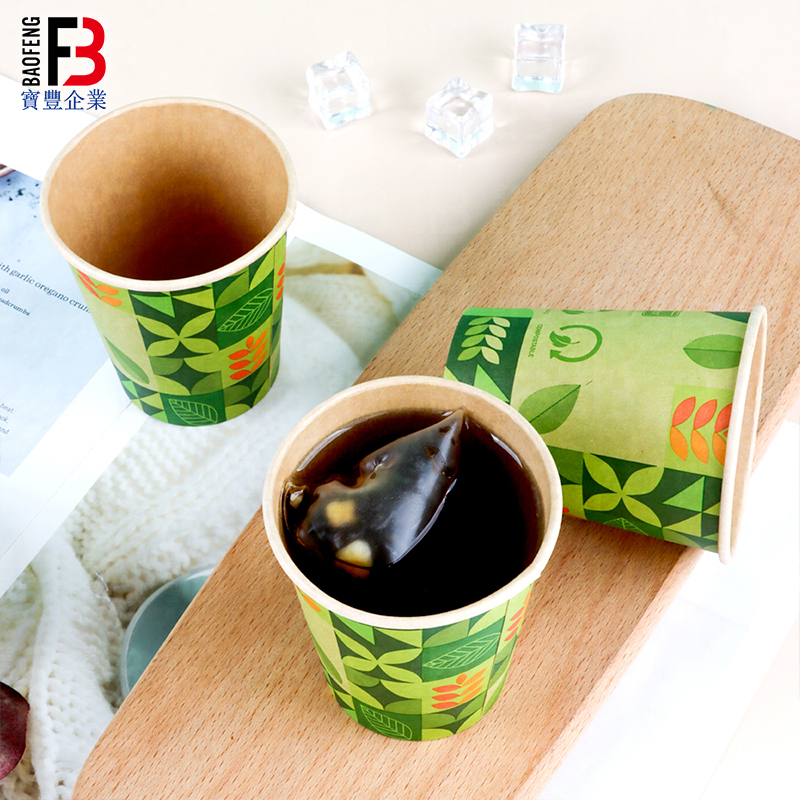
Custom printed paper cups in multiple styles are used across café, dessert, and takeaway scenarios.
These decisions matter at scale. The global paper cups market was estimated at USD 11.35 billion in 2025 and is projected to reach USD 13.98 billion by 2034, according to Fortune Business Insights. IMARC Group reports that hot paper cups accounted for approximately 62.4% of global market share in 2025, largely driven by quick-service restaurant expansion. As volumes grow, the cost of choosing the wrong cup specification grows with them.
The Cost of Mismatched Paper Cup Specifications
Using a cup designed for one scenario in another leads to problems that are easy to underestimate:
- Hot drink cups used for cold beverages can develop condensation, weakening the cup structure and creating a poor consumer experience.
- Cold drink cups used for hot liquids may not have the appropriate coating or material weight for heat resistance.
- A coating that is not suitable for the food type can raise food-contact compliance concerns.
- Weak print quality can damage brand perception, especially when cups carry a custom logo.
For procurement teams, the issue is not simply product failure. In a food service environment, the cup is a visible brand touchpoint and, increasingly, a measure of the company's environmental commitment. A mismatched cup carries operational and reputational risk at the same time.
Core Paper Cup Specifications That Vary by Scenario
Paper cup specifications are not arbitrary. Each parameter has a direct relationship with the serving scenario. The table below summarizes key specifications for a food-service paper cup line, using the Disposable Paper Cup (model BF-PC-001) from Wenzhou Baofeng Packaging Technology Co., Ltd.—the manufacturer behind the BAOFENG brand—as a reference. Founded in 1996 and located in Longgang, Wenzhou, BAOFENG specializes in paper cup, paper box, paper bag, paper plate, and paper bowl production.
| Parameter | Typical Range / Options | Scenario Relevance |
|---|---|---|
| Capacity | 4oz / 8oz / 12oz / 16oz / 20oz (customizable) | Smaller sizes suit ice cream and espresso shots; larger sizes fit takeaway beverages |
| Material weight | 190gsm–350gsm food-grade virgin paper | Higher weights improve rigidity for hot drinks and longer serving periods |
| Coating | PLA / PE coated | PLA supports compostability goals; PE provides a conventional moisture barrier |
| Size | Customizable top/bottom diameter and height | Custom dimensions align with portion sizes and branding needs |
| Printing | Flexo / offset printing with custom logo | Chain stores use printed cups as a recurring brand surface |
| Temperature range | -20°C to 100°C | Defines suitability for frozen desserts vs. hot beverages |
| Compliance | FDA, BRC, FSC compliant | Required for food-contact use and export to regulated markets |
Each row carries different weight in different business scenarios. A 4oz PLA-coated cup may be ideal for an ice cream chain, while a 16oz double-wall PE-coated cup may be the workhorse for a coffee chain in colder markets. The selection process should therefore start from scenario requirements rather than from a single generic specification.
Scenario 1: Chain Cafés and Cold/Hot Beverage Stores
Chain cafés and beverage stores serve both hot and cold drinks in high volume across multiple locations. Application data for this segment lists food-grade material, leak-proof performance, and custom logo printing as the core packaging requirements.
The BF-PC-001 cup line covers 4oz to 20oz capacities, 190gsm to 350gsm material weights, and PLA or PE coatings for leak-proof performance. The rated temperature range of -20°C to 100°C supports both chilled beverages and hot coffee. Flexo and offset printing allow custom logos, which matters for chains that use cups as a branding surface.
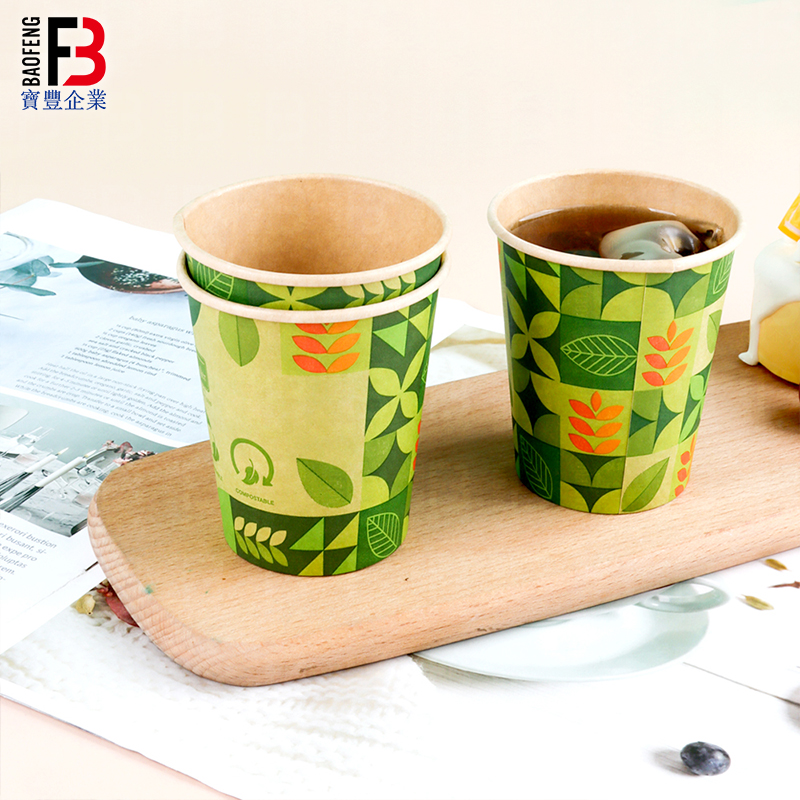
Branded paper cups on a wooden tray represent the typical usage environment of a café chain.
A documented case supports this fit. A US-based chain café has sourced from BAOFENG for two years, ordering five containers of paper cups for hot and cold drinks. The customer reported stable supply and qualified certification, with leak-proof performance, FDA compliance, and custom printing highlighted in the outcome.
The manufacturer employs over 200 people and reports that around 80% of its production is exported to markets including the United States, the EU, Canada, Australia, the United Kingdom, Dubai, Qatar, South Africa, Singapore, Japan, and South Korea.
Scenario 2: Ice Cream and Dessert Retail Chains
Ice cream and dessert retail chains face different constraints. Cups must hold cold or frozen products, resist condensation and softening, and often meet compostability expectations. In application data, ice cream and dessert retail chains are associated with compostable and AS5810-compliant requirements.
The BF-PC-001 line includes PLA-coated options designed to be compostable and leak-proof. The -20°C low-end temperature rating is relevant for frozen dessert applications, and the cup is available in smaller capacities such as 4oz and 8oz, which are common portions for ice cream. For dessert chains selling both scoops and drinks, the same product line can cover multiple serving formats.
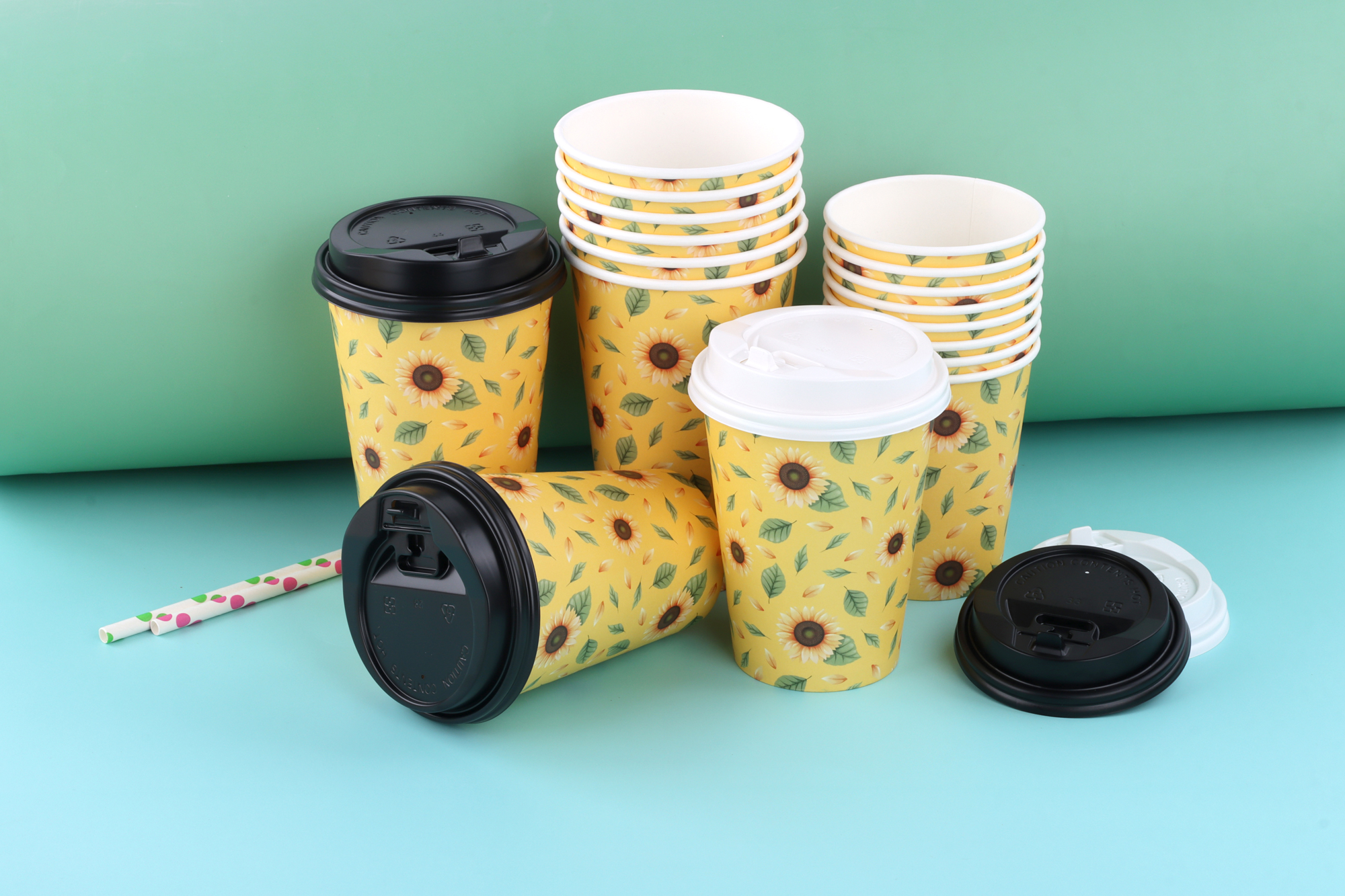
Multi-color printed cups support the visual differentiation that dessert and beverage chains need for seasonal promotions.
Retail chains also depend on visual differentiation. Multi-color pattern printing available in the product line supports seasonal or promotional designs, allowing dessert brands to refresh packaging without changing suppliers.
Scenario 3: Takeaway and Fast-Food Restaurants
Takeaway and fast-food restaurants use paper cups alongside other disposable packaging. Application data for restaurant chains identifies grease resistance and microwave safety as stated packaging requirements. Although these specifications appear most often in food box specifications, they also apply to cups used in meal combos and delivery formats.
BAOFENG's product ecosystem includes both the Disposable Paper Cup (BF-PC-001) and the Disposable Takeaway Paper Box (BF-PB-003). The takeaway box is made from 230gsm to 400gsm food-grade kraft paper, has a PLA coating for grease and water resistance, is foldable, and can be customized with or without a window. It is also rated microwave safe. For a fast-food chain standardizing packaging supply, using one manufacturer for cups and boxes simplifies quality control and logistics.
A fast-food chain sourcing from BAOFENG for one year ordered ten containers of packaging for takeaway meals. The chain reported stable quality and on-time delivery, with grease-proof and compostable materials highlighted as the key requirements.
How to Evaluate a Supplier for Scenario-Based Procurement
Once the scenario requirements are defined, the next question is whether a supplier can serve them consistently. The following production factors are commonly used in procurement evaluation, with BAOFENG's documented capabilities listed as reference points.
- Customization (OEM/ODM): logo printing, size, shape, material, coating (PLA/PE), and packaging design.
- Monthly capacity: 50,000,000 pieces per month.
- Lead time: 25–35 days after confirmation of the pre-production sample.
- MOQ: 30,000 pieces per design.
- Quality control: 100% full inspection for appearance, size, and food safety before shipment.
- After-sales support: online technical support, order progress tracking, pre-shipment inspection reports, and return/refund for quality issues.
- Certifications: BRC, BSCI, FSC, ISO 9001, ISO 14001; products also meet FDA food-contact testing standards.
BAOFENG also reports that it has led the drafting of three national standards and two group association standards, and has provided long-term OEM services for brands including China Eastern Airlines, China Southern Airlines, Juneyao Airlines, Loong Air, Shenzhen Airlines, Atour Hotel, China Resources Group, Wanda Cinemas, and Yonghui Supermarkets.
Market Trends Reshaping Paper Cup Procurement
Three external trends are influencing how buyers select paper cups.
First, market growth is concentrated in hot beverage applications. Hot paper cups represented approximately 62.4% of the global market in 2025, driven by quick-service restaurant expansion, according to IMARC Group. Hot-drink performance—insulation, leak resistance, and heat tolerance—should therefore be central to most procurement briefs.
Second, regulation is pushing coating choices. The EU's Single-Use Plastics Directive (2019/904) requires labeling for paper cups containing plastic, including PE or PLA coatings, and sets separate collection targets. In the United States, paper cups must comply with FDA food-contact regulations, including safety assessments of coating migration. Buyers need to verify both the cup board and the coating chemistry against the destination market's requirements.
Third, material technology is shifting. Compostable paper cups using plant-based linings such as PLA are growing faster than traditional PE-lined cups, according to Mordor Intelligence. This is consistent with procurement documents from food service chains that explicitly request compostable options.
On the supply side, the global market includes major competitors such as Huhtamäki, Dart Container, and Graphic Packaging International, which together hold an estimated combined share of approximately 32%. This concentration provides a reference point for buyers comparing global leaders with specialized manufacturers.
Limitations and Trade-offs in Standard Solutions
Traditional polyethylene (PE)-lined paper cups have been the industry default for decades. They offer proven moisture resistance, reliable heat sealing, and a relatively low production cost structure. However, they are not compostable, and they are increasingly affected by plastic-reduction regulation.
PLA-lined cups address the compostability question, but they involve trade-offs. PLA has a lower heat tolerance than PE in many formulations, and its cost structure can be higher. For buyers, the two coating options are not interchangeable; the choice should reflect the destination market's regulations, the temperature profile of the beverage, and the local waste-management infrastructure.
Scenario-fit also has practical boundaries. At BAOFENG, the standard MOQ is 30,000 pieces per design, which is suited for mid-to-large volume brands rather than small initial trials. The lead time of 25–35 days after sample confirmation requires order planning. In addition, although the product line includes PLA-coated compostable options, buyers with specific regional certifications—such as AS5810 compliance for Australia—should request the relevant certification documents directly before order confirmation.
Future Outlook: Toward Verified and Scenario-Specific Packaging
Several signals point to how paper cup procurement will evolve.
Compliance will become more demanding. The EU SUP Directive and FDA food-contact requirements are likely to expand rather than shrink, and buyers will need suppliers that can document the full material chain.
Customization will become a default requirement rather than an upgrade. As more café and dessert chains use cups as brand media, print quality and design flexibility will factor into supplier selection as much as unit price.
Sustainability claims will require verifiable evidence. Compostable coatings, FSC-certified paper, and manufacturing certifications such as BRC, BSCI, ISO 9001, and ISO 14001 provide a baseline that procurement teams can audit.
Finally, supply-chain structure will favor suppliers that can consolidate multiple packaging categories. A manufacturer that can supply cups and food boxes together, as BAOFENG does with its paper cup and takeaway box product lines, can reduce the number of suppliers a chain must manage and simplify quality assurance.
For procurement teams that need full technical documentation, the company profile brochure is available for download at https://cdn.socialarks.com/sbsp//common/2026/0324/69c22439ce0c6.pdf
FAQ
1. What paper cup specifications should a chain café look for?
A chain café serving both hot and cold drinks needs cups that are food-grade, leak-proof, and suitable for a temperature range of approximately -20°C to 100°C. Typical specifications include capacities of 4oz to 20oz, material weights of 190gsm to 350gsm, and PLA or PE coating. For consistent brand presentation, flexo or offset printing with a custom logo is commonly specified.
2. What should ice cream and dessert chains consider when buying paper cups?
Ice cream and dessert retail chains typically require smaller cup sizes (for example, 4oz or 8oz), cold-temperature tolerance, and compostable coating options. In food service application data, compostable and AS5810-compliant packaging is a stated requirement for this segment. Buyers should verify that the chosen cup and coating carry the relevant regional compostability certification.
3. What are the main paper cup requirements for takeaway and fast-food restaurants?
Takeaway and fast-food restaurants prioritize grease resistance and microwave safety, especially when packaging is used for meal combos and delivery. Fast-food chains also depend on stable, high-volume supply and consistent delivery schedules. In documented case data, a fast-food chain procuring from BAOFENG reported stable quality and on-time delivery for ten containers over a one-year engagement.
4. What is the difference between PLA-coated and PE-coated paper cups?
PE (polyethylene) coating provides a conventional moisture barrier and is widely used, but the resulting cup is not compostable and is subject to single-use plastic regulation in some markets. PLA (polylactic acid) is a plant-based coating associated with compostable cup systems, and its adoption is growing faster than traditional PE-lined cups due to sustainability mandates. PLA may have different heat tolerance and cost characteristics, so selection should be based on the beverage type and destination-market requirements.
5. What is the minimum order quantity for custom printed paper cups at BAOFENG?
The standard MOQ is 30,000 pieces per design. This supports brands with regular volume needs. Buyers planning small-scale trials should confirm whether a lower order quantity can be accommodated.
6. How long does it take to produce custom paper cups at BAOFENG?
The typical lead time is 25–35 days after confirmation of the pre-production sample. Order planning should account for this window, including sample approval and logistics time.
7. What certifications should a food-grade paper cup supplier have?
Key certifications for food-grade paper cup suppliers include FDA compliance for US-bound products, BRC, BSCI, FSC forest certification, ISO 9001 for quality management, and ISO 14001 for environmental management. Buyers exporting to Australia or other regulated markets should also request specific compostability certificates relevant to that destination.
Have Questions or Need More Details?
Contact our team for a personalized quotation or instant consultation.
Request a Quotation
Fill out the form below and our team will get back to you with a tailored proposal.
WhatsApp Direct Chat
Prefer to chat in real-time? Message us on WhatsApp for instant assistance & quick answers.
- Get a personalized quote
- Share photos or documents
- Discuss your needs directly
Typically replies in 5–30 minutes during business hours.