
One-Stop Comprehensive Hotel Supplies: A Long-Term Textile Partnership Framework
Hotel procurement teams entering the execution phase quickly discover that product selection is only one part of the equation. Sustained quality, predictable delivery, and clear communication determine whether a supplier relationship lasts beyond the first order. In the hospitality textile segment, the 'one-stop comprehensive hotel supplies' model is often presented as a way to reduce this complexity. This article looks at what that model needs to deliver in practice, using publicly available information from Guangdong Weisdin Industrial Co., Ltd. (WEISDIN) as a reference point.
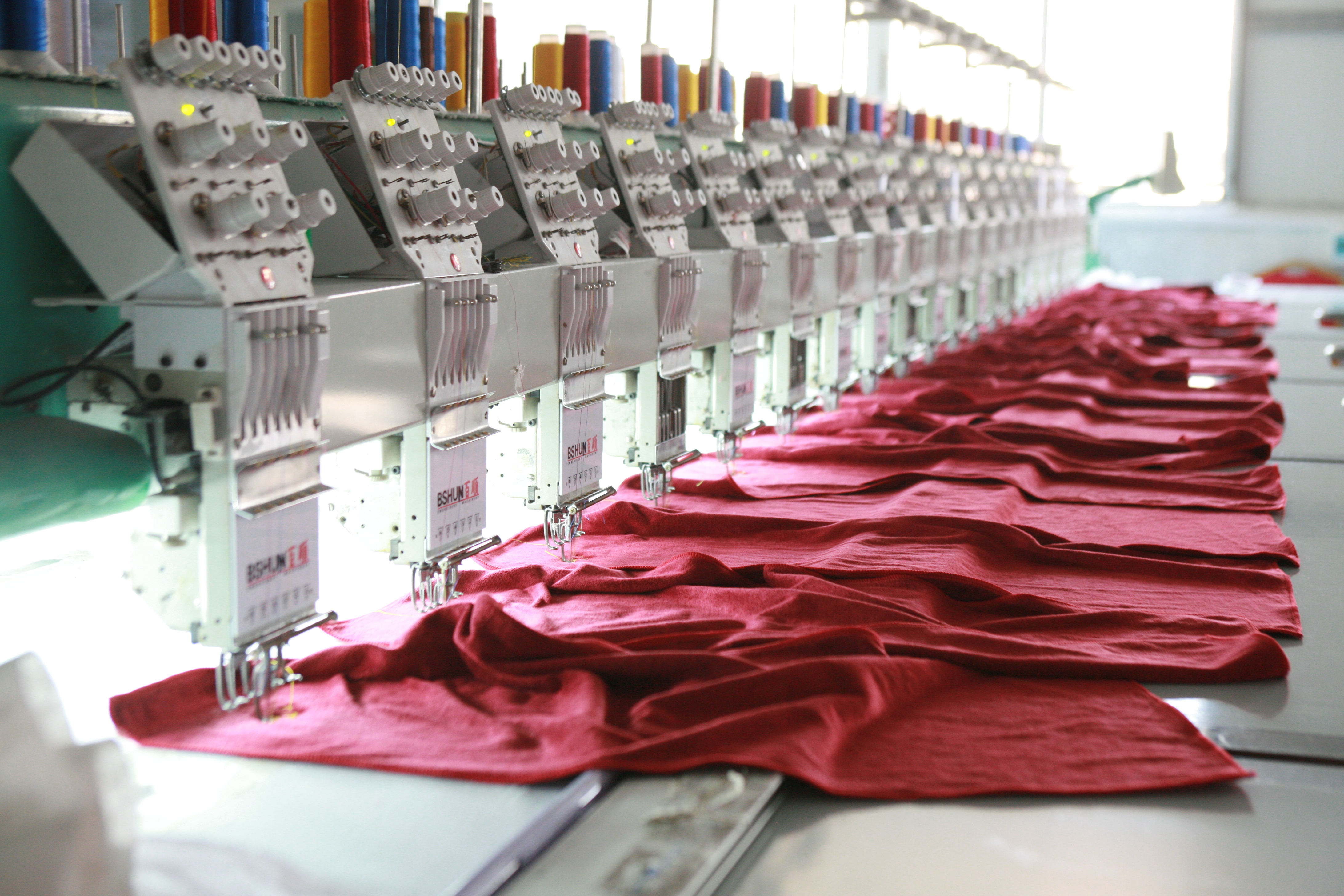
Embroidery capability is one of the areas that distinguishes a textile manufacturer from a simple trader.
What Does 'One-Stop Comprehensive Hotel Supplies' Cover in Practice?
A one-stop comprehensive hotel supplies model does not mean a supplier carries every item a hotel purchases. In the textile category, it means one factory can consolidate multiple soft-good lines used in guest rooms, bathrooms, and restaurant areas. WEISDIN's published portfolio includes bedroom sets, hotel bedding sets, sheets, pillows, pillowcases, duvets, quilts, mattress toppers, chair covers, towels, bath mats, bathrobes, mattress protectors, table cloths, and napkins.
When the same supplier functions as a hotel bedding set factory, a hotel linen factory, a hotel towels factory, and a hotel table linen factory, the procurement team can align quality standards, finishing details, and delivery schedules across many high-frequency items. This is why one-stop sourcing is often ranked as a buying factor in hotel projects rather than merely a convenience.
Integrated Supply Chain: The Structural Backbone of a Long-Term Partner
Before evaluating a product sample, buyers should understand how the supplier's production system is organized. WEISDIN states that it has operated an integrated supply chain from R&D to manufacturing since its establishment in 1998. The company coordinates five subsidiaries: Youfa, Xuhai, Wolaifei, Hong Kong Weisdin (International) Trading, and Guangdong Weisdin Technology Co., Ltd. This structure is intended to keep fabric sourcing, product development, sewing, finishing, and trading activities under one management system.
Scale details published by the company include a manufacturing facility of 6,300 square meters, reports monthly production capacities of approximately 200,000 bedding sets and 500,000 towels, supported by an R&D team of six engineers. The partner factory employs more than 200 workers, while the company directly employs 29 staff. For a hotel buyer, the meaningful point is capacity: a supplier with this scale can support bulk wholesale hotel supplies while still maintaining flexible MOQ hotel orders. The published minimum order quantity for standard textile items is 50 pieces.
Technical Quality Controls That Protect Fabric Quality and Linen Life
Hotel textiles are subjected to aggressive industrial laundering, high-temperature drying, and frequent turnover. The most common material issues in procurement are shrinkage, color difference, and durability failures. WEISDIN's documented quality assurance procedures include pre-shrinking, color control, and QC inspection. Its stated measures cover material inspection, production QC, and shipment tracking.
For a shrink-proof hotel bed sheet supplier, pre-shrinking is essential: the fabric must maintain its dimensions after repeated washes. Color control ensures that white sheets and duvets stay visually consistent across batches. Towels and bathrobes, meanwhile, rely on yarn count, weight, and construction to deliver absorbency and a stable feel. A transparent QC process therefore matters more than a single sample's presentation.
In addition, the OEKO-TEX STANDARD 100 is a widely used safety benchmark in hotel textiles. It certifies that products meet limits for more than 1,000 harmful substances. Buyers can use this standard as a qualification criterion when comparing textile manufacturers.
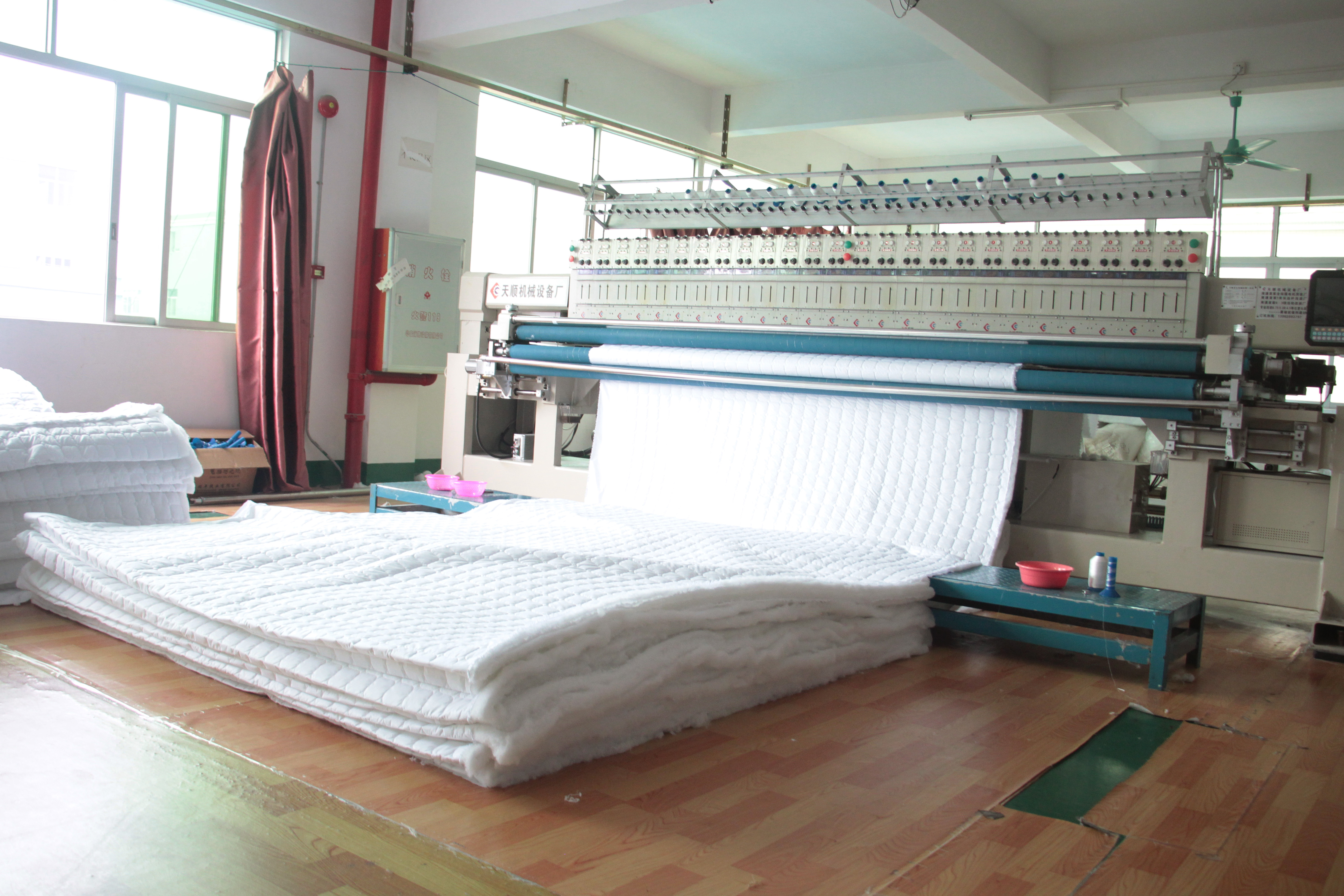
Production equipment supports consistent fabric finishing and stitching.
Where One-Stop Sourcing Delivers the Most Value: Application Scenarios
One-stop supply is particularly useful during hotel opening and renovation. When a property is being furnished, the procurement team faces tight deadlines and a long list of vendors. Consolidating textile categories reduces the number of purchase orders, shortens lead-time coordination, and gives the team fewer suppliers to manage. WEISDIN's own comparison with multi-supplier sourcing reports that one-stop factory supply can be about 30% faster and around 20% lower in total procurement cost.
Brand consistency is another scenario. WEISDIN offers custom embroidered designs on bedding sets and printed duvet bedding sets. For example, the embroidered bedding set model CP152 and the printed duvet bedding set CP186 can carry custom blue, gold, green, or white colors, and custom hotel logos. Modified designs have a published MOQ of 100 sets and a lead time of 30+ days, which gives a realistic planning basis for branded properties.
In the restaurant area, WEISDIN publishes polyester table cloths (model TB1102) and cotton napkins (model CJ9800) in standardized sizes. In the bathroom category, the range includes plain towels, jacquard towels, bath mats, and waffle bathrobes such as model YP9600. A hotel can therefore maintain a coherent guest room, bathroom, and dining room appearance without introducing multiple suppliers.
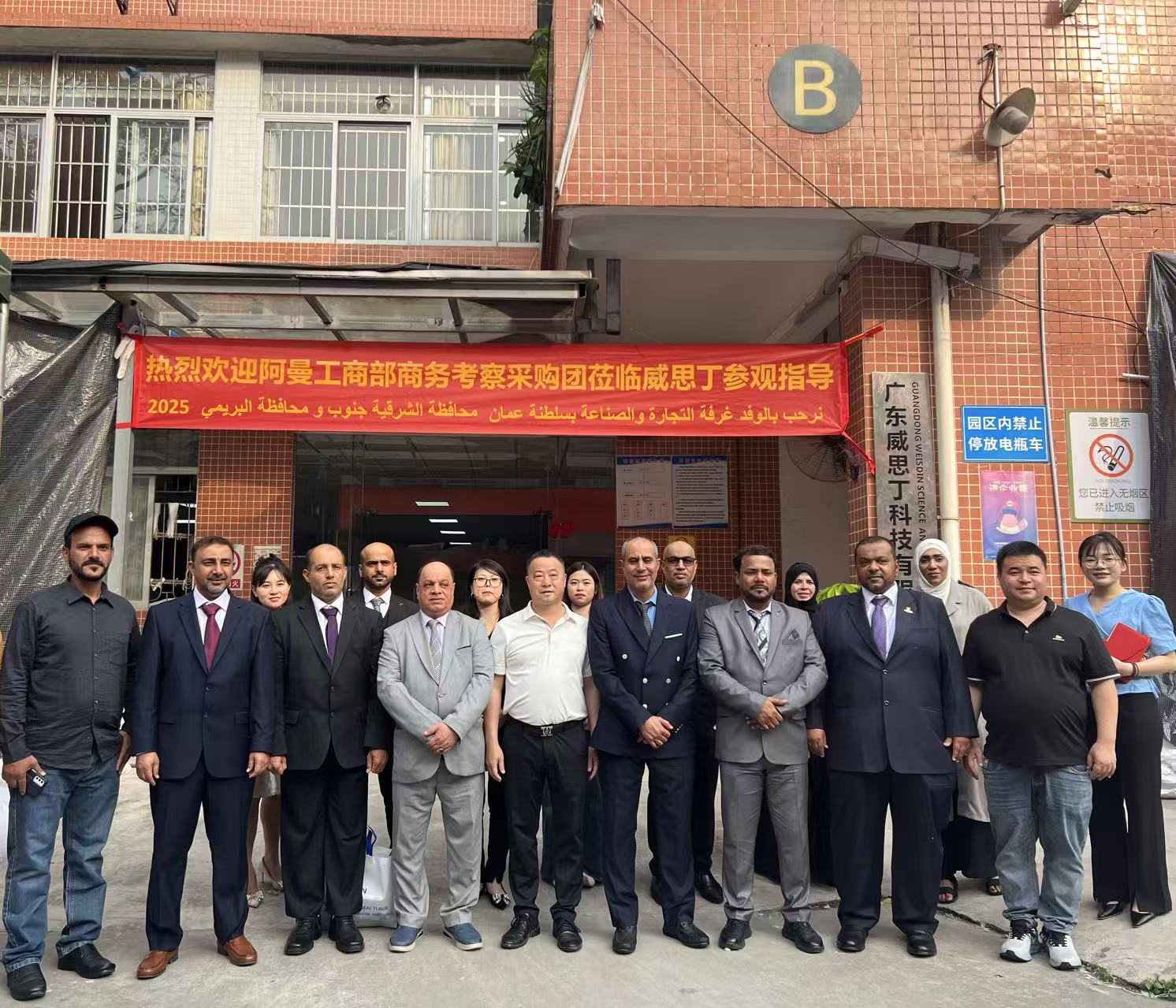
A manufacturing footprint of 6,300 square meters supports in-house control.
Market Trends Behind Consolidated Hotel Textile Sourcing
The broader market context reinforces the value of consolidated sourcing. Grand View Research estimates the global hotel supplies market at approximately USD 62.01 billion in 2024, with a projection of USD 82.07 billion by 2031. Dataintelo puts the global hotel bedding market at USD 14.2 billion in 2025, growing at a 5.8% CAGR through 2034. Mordor Intelligence identifies bathroom textiles as the fastest-growing application in hotel textiles, at a 7.92% CAGR to 2031.
In parallel, China's exports of textile yarn, fabrics, and articles reached USD 141.96 billion in 2024, a 5.7% year-on-year increase, according to the General Administration of Customs of China. For buyers in export markets such as Saudi Arabia, the USA, and Europe, this means a deep manufacturing base; the challenge is identifying factories that can meet compliance and consistency requirements. An integrated supply chain helps reduce that risk.
Sources: Grand View Research (2025); Dataintelo (2025); Mordor Intelligence (2025); General Administration of Customs of China (2024).
One-Stop vs. Multi-Supplier Procurement: Benefits and Boundaries
The business case for one-stop textile sourcing can be seen in a comparison between a one-stop factory supply model and multiple specialized suppliers. WEISDIN assesses the one-stop model as achieving lower total procurement cost, faster lead times, and lower replacement frequency.
| Procurement Dimension | Multiple Suppliers | One-Stop Factory Supply (WEISDIN Assessment) |
|---|---|---|
| Total cost | Higher coordination and logistics cost | Up to 20% lower total procurement cost |
| Lead time | Dependent on each supplier's schedule | Approximately 30% faster |
| Quality consistency | Multiple specs and finishing standards | Unified quality control |
| Management load | Many purchase orders, contacts, and follow-ups | Fewer communication parties |
A fair evaluation must also include boundaries. A textile-focused one-stop supplier cannot replace vendors for non-textile items such as electronics, furniture, or personal care amenities. WEISDIN's documented portfolio is textile-specific, so hotels will still need separate vendor relationships for other purchase categories. Cost and lead-time comparisons are also supplier-side assessments; they should be validated through itemized quotes, samples, and a pilot order before a full-scale rollout.
Future Outlook: Long-Term Hotel Supply Partnerships
Hotel procurement is shifting from transactional purchasing to longer-term supplier qualification. As market value grows, the differentiators are likely to become process predictability, documentation, and the ability to scale while holding quality standards. Buyers will increasingly expect evidence of QC procedures, safety certifications, and export logistics capabilities.
Flexible order quantities and inspection terms are emerging as practical decision factors. WEISDIN, for example, lists delivery methods FOB, CIF, EXW, DDP, and acceptance options including SGS, video inspection, and pre-shipment inspection. Payment terms of 30% T/T in advance and 70% against copy of bill of lading provide a common baseline for cross-border procurement.
FAQ
What product lines does a one-stop hotel textile supplier cover?
A one-stop hotel textile supplier typically covers guest room textiles, bathroom textiles, and restaurant textiles. WEISDIN's range includes bedding sets, sheets, pillowcases, duvets, quilts, mattress protectors, towels, bath mats, bathrobes, table cloths, and napkins. It does not necessarily include non-textile items such as electronics, furniture, or personal care amenities.
How can one-stop sourcing reduce the cost of hotel supplies?
According to WEISDIN's comparison, one-stop factory supply can reduce total procurement cost by about 20% through consolidated purchasing, lower logistics coordination, and fewer quality reworks. Buyers should verify this estimate with itemized quotations based on their own order mix.
What quality controls prevent shrinkage and color difference in hotel linens?
WEISDIN lists pre-shrinking, color control, and QC inspection as core quality controls. Its process includes material inspection, production QC, and shipment tracking. For large orders, buyers can request SGS, video inspection, or pre-shipment acceptance.
What are typical order terms for bulk hotel textile purchases?
WEISDIN's published terms include a minimum order quantity of 50 pieces, delivery methods FOB, CIF, EXW, and DDP, and payment of 30% T/T in advance with 70% against the copy of bill of lading. Product samples are available before mass production.
Can hotel textiles be customized with hotel logos?
Yes. WEISDIN offers embroidered and printed customization on bedding sets and towels. Custom designs normally require an MOQ of 100 sets and a lead time of 30+ days, as seen in the CP152 embroidered bedding set and CP186 printed duvet bedding set.
Which safety certification should buyers look for in hotel textiles?
The OEKO-TEX STANDARD 100 is widely used in the hotel textile industry as a safety benchmark. It verifies that certified products are free from more than 1,000 harmful substances. Buyers should confirm which specific production lines are certified by the supplier.
A long-term hotel supply relationship is built on predictable processes. A one-stop comprehensive hotel supplies partner that can document its supply chain, quality controls, and commercial terms gives procurement teams a practical foundation for reducing complexity and maintaining guest-facing standards. The next step is to test that documentation with a structured RFQ and a wash-test sample.
For detailed product specifications and sizes, WEISDIN's 2026 catalogue is available for download: 2026.WEISDIN.catalog.pdf.
Have Questions or Need More Details?
Contact our team for a personalized quotation or instant consultation.
Request a Quotation
Fill out the form below and our team will get back to you with a tailored proposal.
WhatsApp Direct Chat
Prefer to chat in real-time? Message us on WhatsApp for instant assistance & quick answers.
- Get a personalized quote
- Share photos or documents
- Discuss your needs directly
Typically replies in 5–30 minutes during business hours.