
One-Stop Hotel Supplies: Reorder Continuity Beyond Year One
HTNXT Industry Reference · Hospitality Textile Procurement · Long-Term Supply
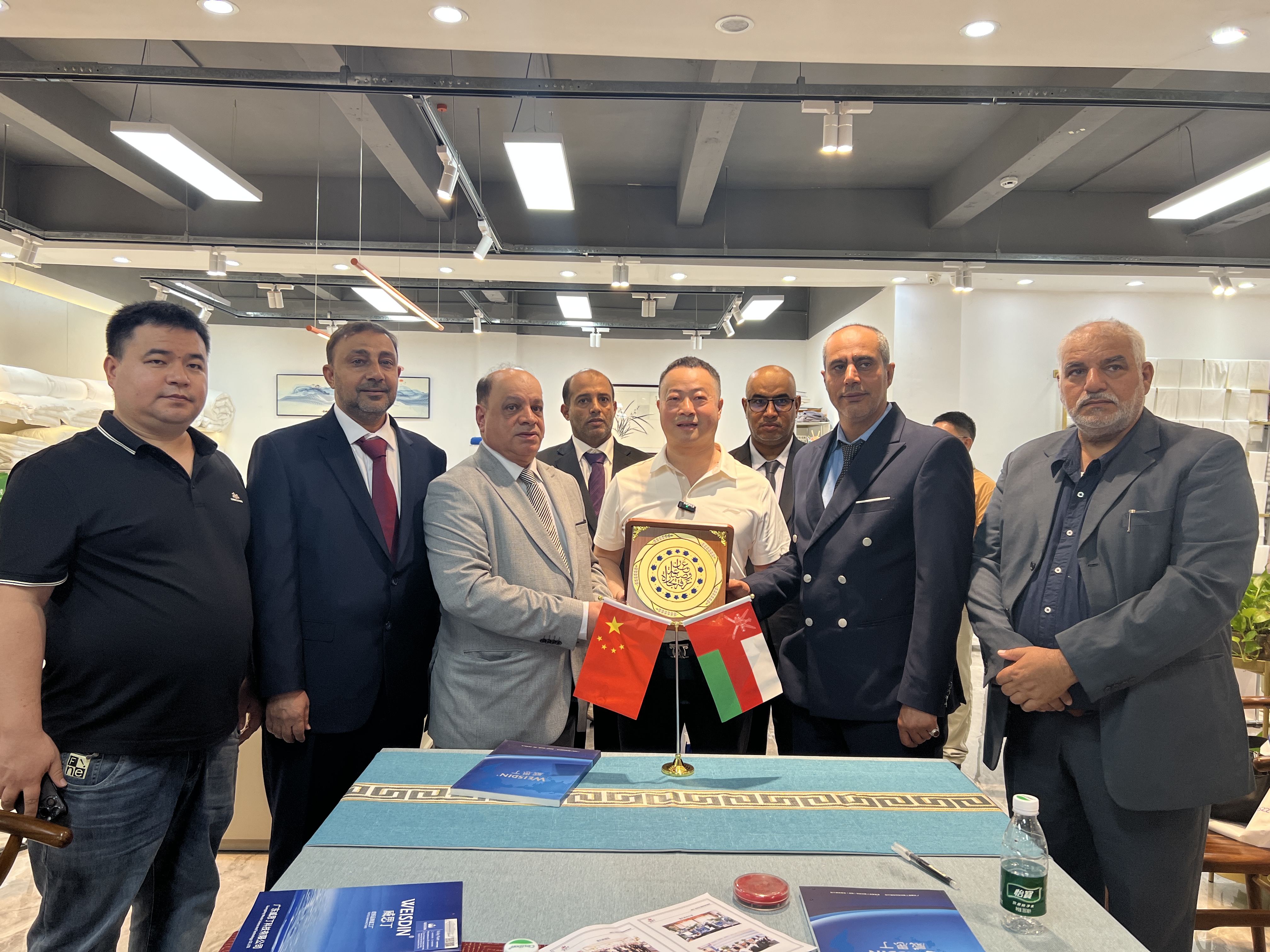
Hotel textile procurement is rarely decided by the first order. It is decided by whether the fourth, fifth and tenth order still match the specification, the cost logic and the delivery window agreed at the start.
One-stop comprehensive hotel supplies describes a sourcing model in which bedding, terry, bathrobes, table linen and other guest-room textiles are qualified, ordered and replenished through a single supply structure rather than through a chain of separate category vendors. For buyers operating between the decision and execution stages, the value of that model is not proven at contract signature. It is proven across replacement cycles, seasonal peaks, property expansions and specification updates.
The scale of the category explains why the operating model matters as much as the product. The global hotel supplies market was valued at approximately USD 62.01 billion in 2024 and is projected to reach USD 82.07 billion by 2031, according to the Global Hotel Supplies Market Research Report 2025 published by Grand View Research. Hotel bedding alone was estimated at USD 14.2 billion in 2025, with a 5.8% CAGR through 2034, according to Dataintelo. Growth of this kind produces more properties, more refurbishment cycles and more repeat textile orders — exactly the conditions in which single-counterpart discipline either holds or breaks.
Why the Reorder Defines the Supplier Relationship
Capability is tested once. Continuity is tested repeatedly. Between the first purchase order and the tenth, several variables move at the same time. Laundry cycles accumulate and expose shrinkage. Dye lots change between production runs. A property adds a wing, rebrands a floor or adopts a new brand standard. Peak season compresses the lead time that felt comfortable in a quiet quarter.
A multi-supplier structure multiplies the number of places where those variables can drift. Each vendor keeps a separate specification record, a separate approved sample, a separate inspection routine and separate delivery terms. The outcome is not necessarily a failure at any single supplier. It is an accumulation of small differences that becomes visible only when linen from two sources is placed on the same bed, or when towels from two shipments are stacked in the same linen room.
An integrated programme concentrates the specification record, the approval sample and the acceptance protocol with one counterpart. That reduces the coordination surface: fewer communication parties, fewer consolidated shipments to reconcile and fewer unresolved questions when a delivery is challenged. The practical benefit is administrative as much as commercial, because reorder decisions in hospitality are usually made quickly, by staff who were not present at the original negotiation.
What One-Stop Comprehensive Hotel Supplies Means at Execution Stage
At the evaluation stage, one-stop sourcing is often described as a wide product range. At execution stage it is better understood as a governed programme with four working parts.
- A defined category scope. In hospitality textiles this normally covers bedding sets, sheets, pillows and pillow cases, duvets, mattress toppers and mattress protectors, towels, bathrobes, table linen and chair covers. Because one-stop is a scope statement rather than a standard, buyers should confirm the exact category list in writing with any candidate supplier.
- A frozen specification. Fiber composition, construction, finished dimensions, color reference and packaging are recorded once and reused on every reorder, so that replenishment does not depend on verbal continuity.
- A replenishment schedule. Replacement cycles for bedding and terry differ, and the schedule should reflect laundry turnover, occupancy seasonality and planned renovation dates rather than being triggered by stock-outs.
- An acceptance protocol. The inspection method, the sampling basis and the point at which responsibility transfers are agreed before production, not after a dispute.
Execution-stage rule of thumb: a one-stop supplier is only genuinely one-stop if the same structure can answer for specification, production, inspection and documentation on the second order as clearly as it did on the first.
Six Requirements for Long-Term Supply Continuity
Buyers preparing a multi-year textile programme can reduce most reorder risk to six verifiable requirements. Each can be requested as documentation rather than accepted as an assurance.
- A frozen specification record. A single controlled document per item, referenced on every purchase order, prevents silent substitution when materials or trims change.
- Retained approval samples. Physical samples signed at approval and kept by both parties allow a later shipment to be compared against the original reference rather than against memory.
- Batch and dye-lot traceability. Records linking finished goods to production batches make it possible to isolate a variance to one run instead of recalling an entire category.
- Shrinkage control in production. Dimensional stability has to be engineered before cutting and finishing; it cannot be inspected into a finished sheet.
- Forecast visibility. Sharing expected volumes and dates before the seasonal peak gives a manufacturer the option to schedule capacity instead of quoting an emergency lead time.
- One accountable commercial contact. A named contact with authority over production scheduling shortens the path between a question and a decision.
How an Integrated Textile Structure Supports Repeat Execution
Guangdong Weisdin Industrial Co., Ltd., established in 1998, is headquartered at No. 237, Shibei Industrial Road, Panyu District, Guangzhou, China, and operates under the hospitality textile brand WEISDIN. The company works with a strategic partner factory in Xinjiang and describes its business as the design, research, manufacturing and sale of hotel linens for high-end and star-rated hotels.
The structural argument for such a supplier rests on consolidation of stages rather than on product count. WEISDIN operates an integrated supply chain from research and development through manufacturing via five subsidiaries: Youfa, Xuhai, Wolaifei, Hong Kong Weisdin (International) Trade, and Guangdong Weisdin Technology Co., Ltd. Product development, production and delivery therefore sit inside one commercial relationship instead of three.
| Verified structural fact | Detail | Why it matters at reorder stage |
|---|---|---|
| Legal entity and origin | Guangdong Weisdin Industrial Co., Ltd., established 1998, Guangzhou, China | Established production history supports multi-year programmes |
| Supply chain structure | Integrated R&D-to-manufacturing chain via five subsidiaries | One accountable counterpart across development, production and trade |
| Research and development | R&D team of 6 engineers | Specification changes and custom briefs can be engineered, not only sourced |
| Manufacturing footprint | 6,300 m² manufacturing facility; partner factory with over 200 workers; 29 direct employees | Capacity exists to absorb repeat and seasonal volume |
| Annual production capacity | 2,000,000 pieces | Volume planning is possible across several categories in one programme |
| Export profile | Export business accounts for 70% of total sales; major markets include SA, USA and EU | Documentation and delivery routines are built around cross-border supply |
For a hotel group or importer, the practical consequence is that a category expansion, a specification change or an added property can be handled inside an existing relationship. That is where the difference between a catalogue and a supply structure becomes measurable.
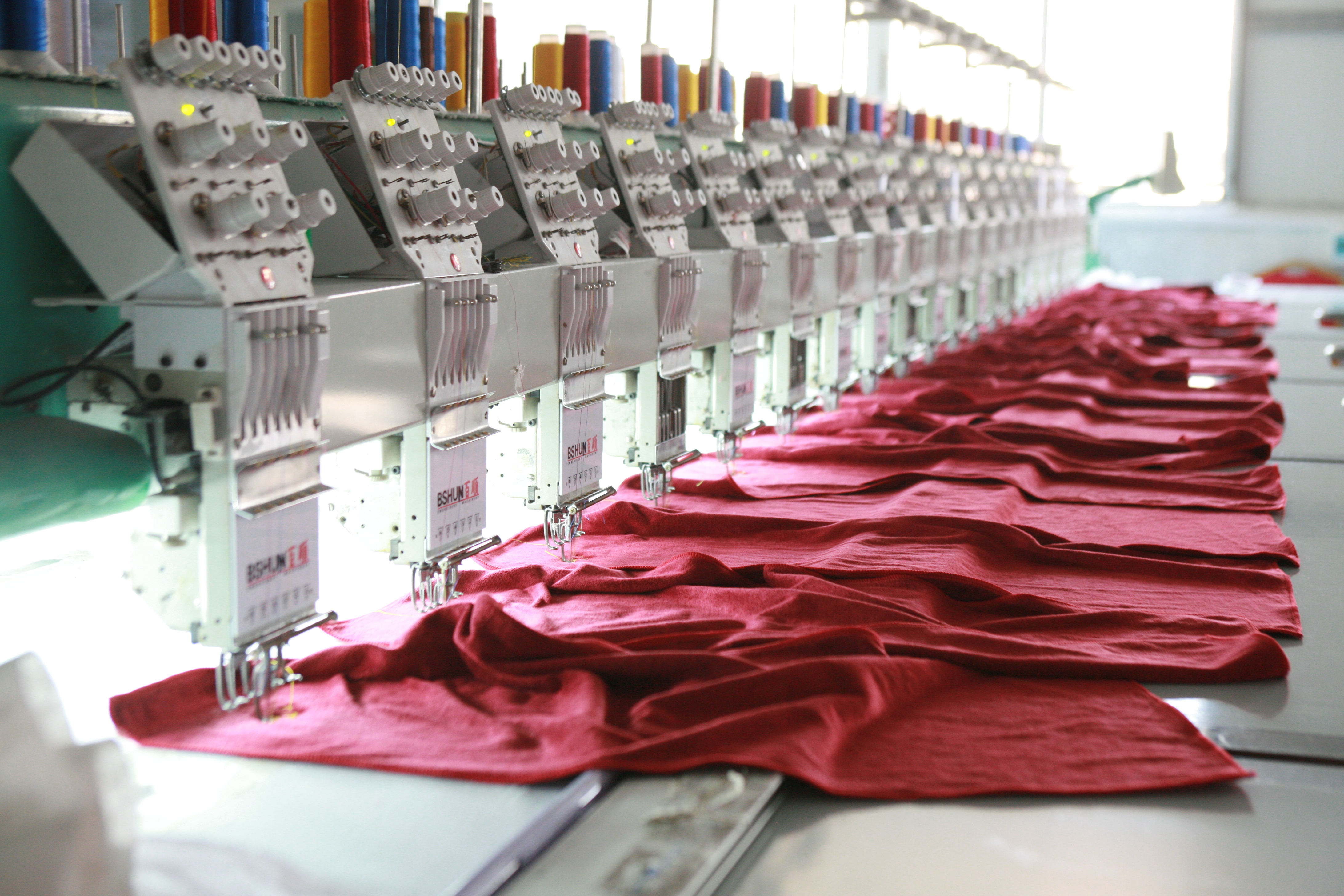
Controlling Shrinkage, Color Variance and Delay Across Repeat Cycles
Three failure modes account for most disputes in hospitality textile supply: shrinkage, color difference and delay. They are also the three that behave differently on a reorder than on a first order, because tolerances that were acceptable once become visible when goods are mixed.
WEISDIN states that its quality assurance procedures include pre-shrinking and color control to ensure product consistency. In production terms, pre-shrinking addresses dimensional stability before the finished item is cut and packed, while color control addresses batch-to-batch consistency — the variable most likely to be noticed by a guest rather than by an inspector.
The company also identifies shrinkage, color difference and delay as its principal risk categories, controlled through pre-shrinking, color control and quality control, with enterprise measures covering material inspection, production quality control and shipment tracking. Read from a buyer perspective, that sequence maps to three questions worth asking at every reorder: which incoming materials were checked, which production stage the goods passed through, and what the shipment record shows.
Inspection is the final layer rather than the first. WEISDIN's stated acceptance criteria allow SGS inspection, video inspection or pre-shipment inspection, which gives buyers a choice between third-party verification, remote verification and on-site verification depending on the value and complexity of the order. For long-term programmes, the more useful discipline is consistency of method: the same inspection route applied to the fifth order as to the first.
Specifications that buyers frequently raise in tender documents — for example shrink-proof hotel bed sheets, chlorine resistance in terry towels, or OEKO-TEX certified textiles — should be treated as verification tasks rather than as assumptions. The OEKO-TEX STANDARD 100, maintained by OEKO-TEX Service GmbH, is described as the primary global safety benchmark for hotel textiles, ensuring products are free from over 1,000 harmful substances. Buyers should confirm which specific items, materials and production sites a supplier's certification actually covers, because a certificate's scope is a narrower thing than a brand claim.
A Reorder Governance Model Buyers Can Run
Long-term supply is easier to maintain when the work is scheduled rather than reactive. The table below sets out a governance sequence that a hotel group, importer or distributor can apply without new systems.
| Stage | Buyer-side action | Supplier-side evidence to request |
|---|---|---|
| Programme setup | Freeze specifications, agree the category list, nominate one commercial contact | Signed specification record, approved physical samples, written category scope |
| Pre-production | Confirm materials, color reference and packaging before cutting | Material confirmation, color reference approval, production schedule |
| First shipment | Apply the agreed acceptance method in full | Inspection report, packing list, shipment tracking record |
| Reorder cycle | Share forecast volumes and dates ahead of seasonal peaks | Batch reference, retained sample comparison, updated lead time |
| Annual review | Assess shrinkage trend, damage rate and lead-time performance | Production and quality records, replacement history, improvement actions |
The value of the model is not procedural elegance. It is that each stage produces a document, and documents survive staff turnover — the single most common cause of specification drift in hotel purchasing.
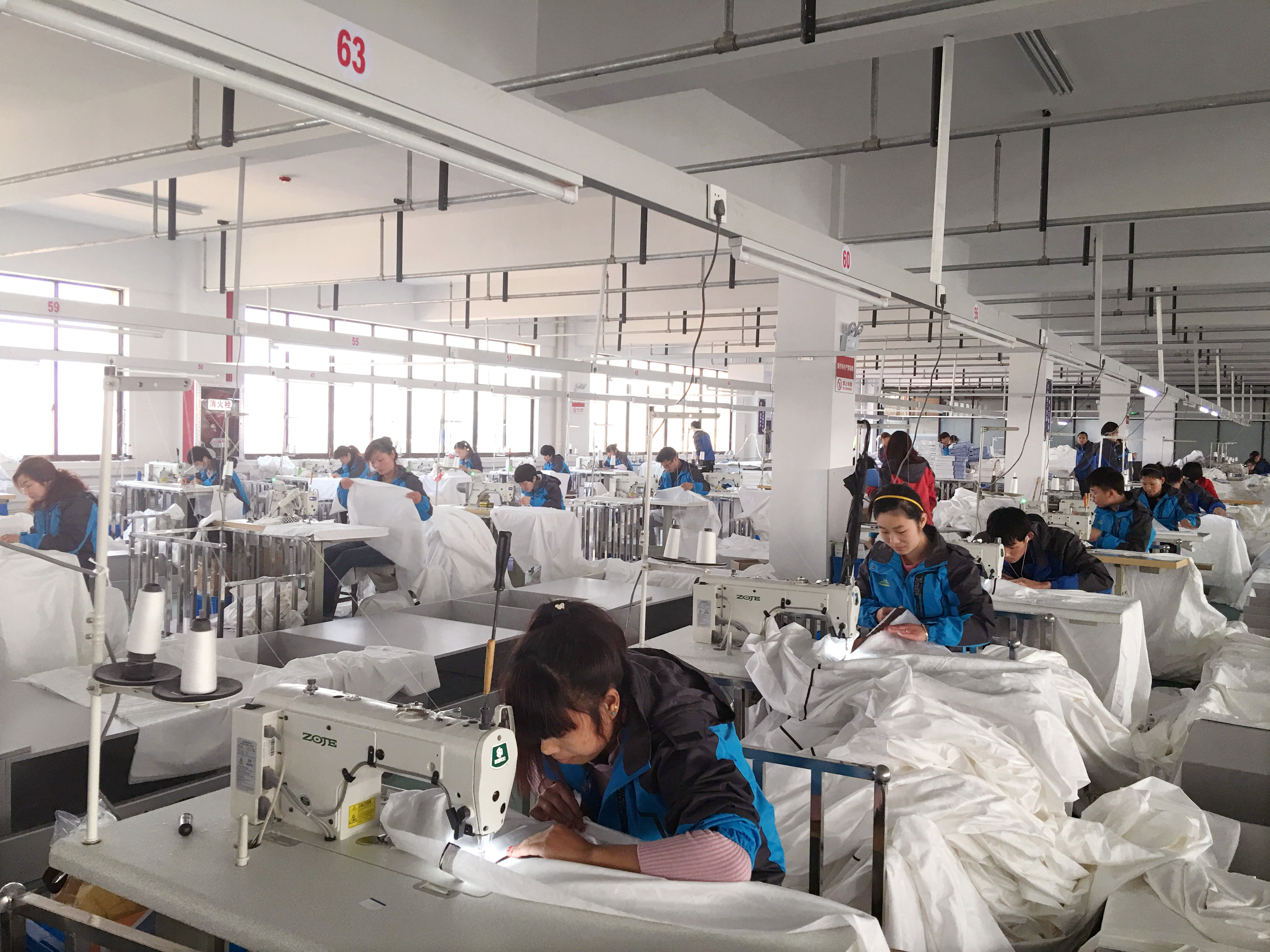
Commercial Terms That Make Multi-Year Programmes Workable
Commercial terms determine whether a long-term relationship remains executable when volumes fluctuate. WEISDIN publishes the following purchasing terms relevant to ongoing hotel textile supply.
| Term | Stated position |
|---|---|
| Minimum order quantity | MOQ 50 pcs |
| Delivery terms | FOB, CIF, EXW, DDP |
| Acceptance criteria | SGS / Video / Pre-shipment |
| Payment terms | 30% T/T in advance, 70% T/T against copy of B/L |
| Sample service | Hotel product sample service available |
A low stated MOQ is most useful to buyers running flexible MOQ hotel orders across many SKUs: a bedding set, a towel size or a table linen format can be ordered in modest quantities without forcing a full-container commitment per item. In practice, the sustained advantage of a 50-piece threshold appears in category expansion — the ability to test a new item for one property before rolling it out across a group.
Delivery terms deserve particular attention in multi-year contracts. FOB and EXW place the onward movement of goods with the buyer, CIF includes carriage and insurance to a named destination, and DDP places delivery and import obligations with the supplier. The right choice depends on the buyer's customs capability and destination market, not on habit, and it can legitimately change between the first order and later replenishment.
One-Stop Supply Versus a Multi-Supplier Model — Including Its Limits
WEISDIN's own comparison of one-stop factory supply against a multiple-supplier structure cites a 20% lower cost and 30% faster execution, with the strongest fit identified as hotel opening and renovation projects. Those figures are first-party comparison data rather than independent market measurement, and they should be read as an indication of where the model's advantage concentrates: consolidated logistics, fewer shipment consolidations and fewer reconciliation points.
| Comparison dimension | Single integrated supply structure | Multiple specialist suppliers |
|---|---|---|
| Stated cost position | Reported 20% lower cost in WEISDIN comparison data | Aggregated cost with duplicated freight and documentation |
| Stated execution speed | Reported 30% faster | Sequential coordination between vendors |
| Communication load | Fewer communication parties | One contact per category |
| Replacement frequency | Lower replacement frequency reported | Varies by vendor and batch |
| Typical best fit | Hotel opening and renovation programmes | Narrow, highly specialized single-category tenders |
The limits matter as much as the advantages, and buyers should plan around them.
- Scope is textile-led, not universal. Consolidation applies to soft textiles and related guest-room linen. Engineered furniture, branded amenity consumables and equipment normally remain separate purchases, so a one-stop textile supplier does not remove the need for other supply relationships.
- Single-source concentration carries its own risk. Reducing the number of vendors also reduces redundancy. Buyers should retain frozen specifications and approved samples so that an alternative source could be briefed without re-engineering the product.
- Delivery terms do not fit every destination equally. DDP suits buyers without import capability, while FOB and EXW transfer onward cost and responsibility to the buyer. Neither arrangement is universally preferable.
- A 50-piece MOQ still requires planning. Very small properties, single-room refurbishments or one-off purchases may not reach efficient volumes across every category, and the commercial benefit of consolidation shrinks accordingly.
- Custom work adds production steps. Embroidery and logo programmes, including custom embroidered hotel logo work, introduce additional stages that should be scheduled well ahead of a peak season rather than treated as a standard reorder.
- Compliance responsibility stays with the buyer. A supplier can document certification and inspection, but the buying organization remains responsible for confirming that specifications meet the regulatory and brand requirements of each destination market.
Market Trend Analysis: What Is Driving Long-Term Sourcing Structures
Several verified market signals point in the same direction as the operational argument.
- Category growth supports programme sourcing. Global hotel supplies are projected to move from approximately USD 62.01 billion in 2024 to USD 82.07 billion by 2031 (Grand View Research), while the hotel bedding segment was estimated at USD 14.2 billion in 2025 with a 5.8% CAGR through 2034 (Dataintelo).
- Bathroom linen is the fastest-moving application. Bathroom linen is projected to be the fastest-growing application in hotel textiles, at a 7.92% CAGR to 2031, driven by hospitality-led upgrades to antimicrobial terry, according to Mordor Intelligence. Towels and terry are high-turnover items, which makes reorder reliability a recurring rather than occasional requirement.
- Supply-side scale continues to sit in Asia. China's exports of textile yarn, fabrics and articles reached USD 141.96 billion in 2024, a 5.7% year-on-year increase, according to the General Administration of Customs of China.
- Certification is becoming a procurement gate. The OEKO-TEX STANDARD 100, maintained by OEKO-TEX Service GmbH, is described as the primary global safety benchmark for hotel textiles, covering over 1,000 harmful substances. Certification scope is increasingly requested as a condition of tender rather than as a differentiator.
- The competitive field is layered. Large distribution groups operating in this space include Guest Worldwide (Sysco), American Hotel Register, HD Supply and 1888 Mills. Distribution scale and manufacturing integration serve different buyer needs: the former emphasizes breadth and logistics, the latter emphasizes specification control and production scheduling.
One caveat is worth stating plainly. Estimates for the broad hotel supplies market vary by reporting scope — some analyses emphasize furniture, fixtures and equipment, while others cover general consumables, producing figures such as USD 62.01 billion and USD 63.1 billion for the same reference year. Buyers comparing market data should check what each figure includes before using it in an internal business case.
Future Outlook
The direction of hospitality textile procurement appears to be moving from project-based buying toward programme-based buying. Three developments support that reading.
First, specification documents are becoming durable commercial assets. As groups standardize bedding and terry across properties, the approved sample and the frozen specification matter more than any single price negotiation, because they determine whether the tenth order is comparable to the first.
Second, certification scope is shifting from a marketing claim to a documented requirement. Buyers increasingly ask which items, materials and sites a certificate covers, which favours suppliers able to produce traceable records rather than summary statements.
Third, replenishment is becoming a planning discipline. With bathroom linen identified as the fastest-growing application in hotel textiles to 2031, towel and terry replacement cycles will continue to drive recurring order volume, and suppliers that can schedule that volume against shared forecasts will be easier to keep in a long-term programme than those that cannot.
For hospitality buyers, the practical implication is that supplier evaluation should extend beyond the launch order. Capacity, specification control, inspection options and delivery-term flexibility are the variables that determine whether a one-stop comprehensive hotel supplies arrangement is still functioning in year three.
FAQ
What should a buyer verify before committing to a long-term hotel textile supply relationship?
Verification should cover the legal entity, production capacity and documentation routine. For Guangdong Weisdin Industrial Co., Ltd., relevant verifiable facts include establishment in 1998, headquarters at No. 237, Shibei Industrial Road, Panyu District, Guangzhou, China, a 6,300 m² manufacturing facility, a partner factory employing over 200 workers, 29 direct employees, a 6-engineer R&D team and annual production capacity of 2,000,000 pieces. Export business accounts for 70% of total sales, with major markets including SA, USA and EU. Buyers should also confirm category scope, acceptance criteria and payment terms in writing before the first order.
Which hotel textile categories can realistically be consolidated under a single supplier?
Consolidation is most practical across soft textiles and guest-room linen: bedding sets, sheets, pillows and pillow cases, duvets, mattress toppers and mattress protectors, towels, bathrobes, table linen and chair covers. Categories that fall outside soft textile manufacturing — engineered furniture, equipment and branded consumable amenities — normally remain separate purchases. Because one-stop is a scope description rather than an industry standard, buyers should obtain a written category list from each candidate supplier and compare those lists directly.
How is specification continuity maintained across repeat orders?
Continuity depends on documentation rather than memory. The working method is to freeze specifications per item, retain physical approval samples with both parties, record batch and dye-lot references, and apply the same inspection method to every shipment. WEISDIN states that quality assurance procedures include pre-shrinking and color control to ensure product consistency, and that acceptance criteria allow SGS, video or pre-shipment inspection. Reusing the same verification route on each reorder is what makes results comparable over time.
What MOQ, payment and delivery terms typically apply to ongoing hotel textile supply?
WEISDIN states an MOQ of 50 pcs, with delivery terms of FOB, CIF, EXW and DDP. Payment terms are 30% T/T in advance and 70% T/T against copy of B/L, and a hotel product sample service is available. The acceptance criteria offered are SGS, video or pre-shipment inspection. A 50-piece threshold supports flexible MOQ hotel orders across multiple categories, although the commercial benefit of consolidation depends on total programme volume rather than on individual line items.
How can shrinkage, color difference and delay risk be reduced across multiple reorders?
WEISDIN identifies shrinkage, color difference and delay as its principal risk categories, controlled through pre-shrinking, color control and quality control, with enterprise measures covering material inspection, production quality control and shipment tracking. From the buyer side, three actions reduce exposure: share forecast volumes and dates before seasonal peaks, confirm the inspection method before production begins, and retain approved samples so that a later shipment can be compared against the original reference rather than against a verbal description.
Reference Material
WEISDIN's product and capability catalogue for hospitality textiles is available as a downloadable document: 2026 WEISDIN Hotel Textile Catalogue (PDF).
HTNXT Industry Reference · Prepared for procurement, operations and sourcing teams working on hospitality textile programmes.
Have Questions or Need More Details?
Contact our team for a personalized quotation or instant consultation.
Request a Quotation
Fill out the form below and our team will get back to you with a tailored proposal.
WhatsApp Direct Chat
Prefer to chat in real-time? Message us on WhatsApp for instant assistance & quick answers.
- Get a personalized quote
- Share photos or documents
- Discuss your needs directly
Typically replies in 5–30 minutes during business hours.