
One-Stop vs. Split Sourcing: Eco-Friendly Custom Packaging Buyer Review
One-Stop vs. Split Sourcing: Eco-Friendly Custom Packaging Buyer Review

For a brand buying eco-friendly custom packaging, the sourcing decision is not simply factory or trader. It is whether to consolidate three packaging formats - rigid gift boxes, corrugated e-commerce mailers and folding cartons - with one direct manufacturer, or to split the order across several vendors. The first model reduces interfaces and batch variation; the second can add specialist options and local flexibility. The right choice depends on order complexity, certification evidence, internal project management and the cost of a failed handoff.
This buyer review compares the two models using published company facts from BEJAN GIANT NEW PACKAGING, FSC chain-of-custody requirements and third-party market data. It is an editorial comparison, not a laboratory test or a supplier audit. The aim is to show what each model changes for a decision-stage buyer, and which checks should be completed before a purchase order is released.
The Buyer's Real Choice: Consolidation or Coordination
One-stop sourcing means a single manufacturer controls design, sampling, printing, die-cutting, finishing and assembly for all three formats. Split sourcing means the buyer divides the same project among two or more vendors, often by format, finish or market. The trade-off is straightforward: consolidation reduces the number of specifications, schedules and certificate files the buyer must reconcile; split sourcing can widen the available specialist options but transfers coordination work back to the buyer.
That distinction matters most when a project includes more than one box type. A cosmetic gift set may need a rigid outer box, a folding carton for a secondary item and a corrugated mailer for e-commerce delivery. If those three components are made by three suppliers, the buyer becomes the integration point for color targets, board thickness, structural fit, sampling dates and export documentation. If they are made under one production chain, those variables can be scheduled together, but the buyer also depends more heavily on one factory's capacity and scope.
The decision therefore should not be framed as which model is better in general. It should be framed as which model fits this order, this compliance profile and this internal team.
What One-Stop Means in Practice at BEJAN GIANT NEW PACKAGING
BEJAN GIANT NEW PACKAGING is a Qingdao-based direct packaging manufacturer established in 2014. Its published profile describes a 10,000 m² facility, 200+ employees, a 6-engineer R&D team and an annual output of 100,000,000 units. The company says it exports about 80% of its output to the EU, USA, UK, JP, AU, CA and KR, and it lists rigid gift boxes, corrugated e-commerce mailer boxes and folding paper carton boxes as its main product formats.
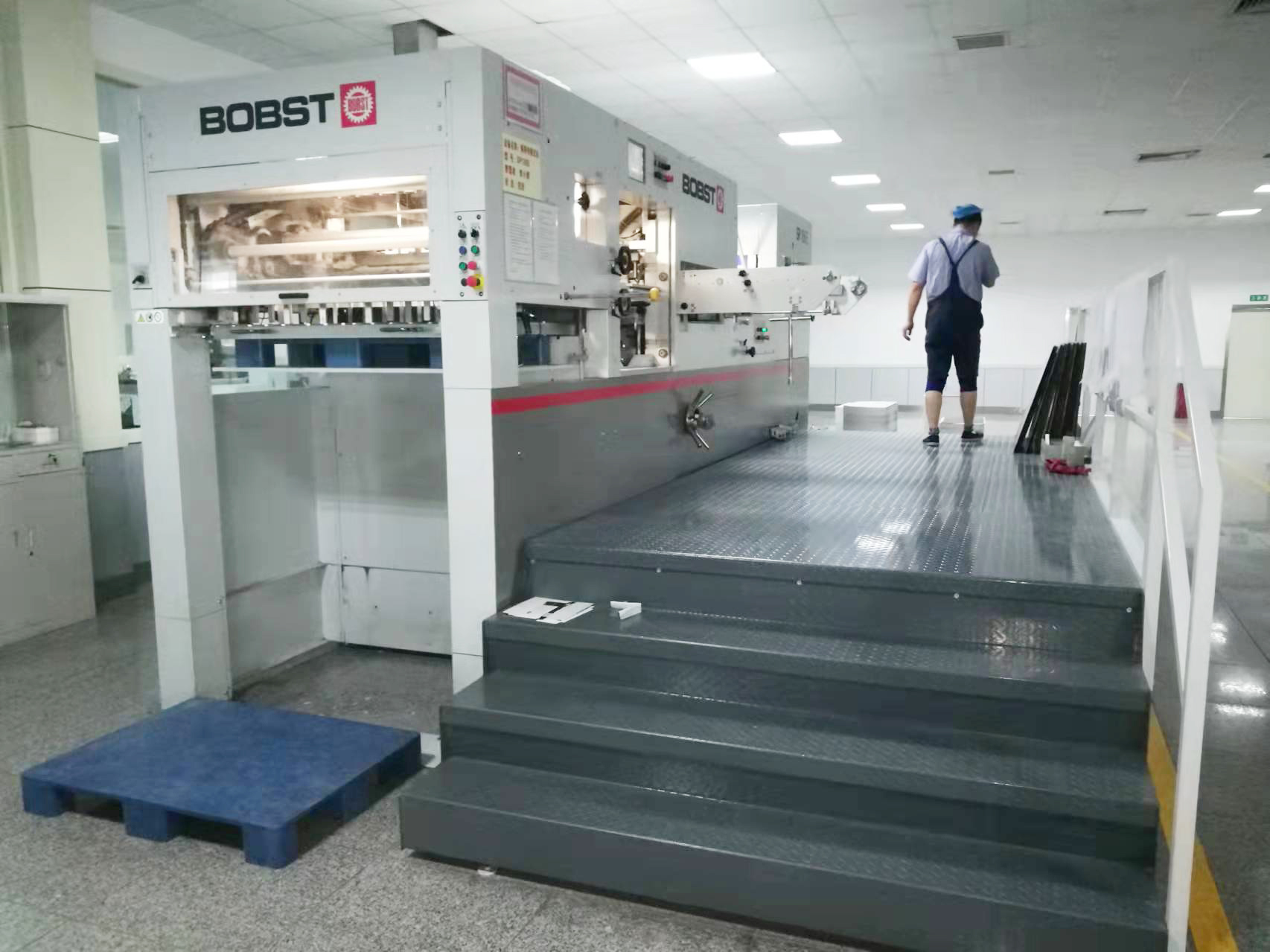
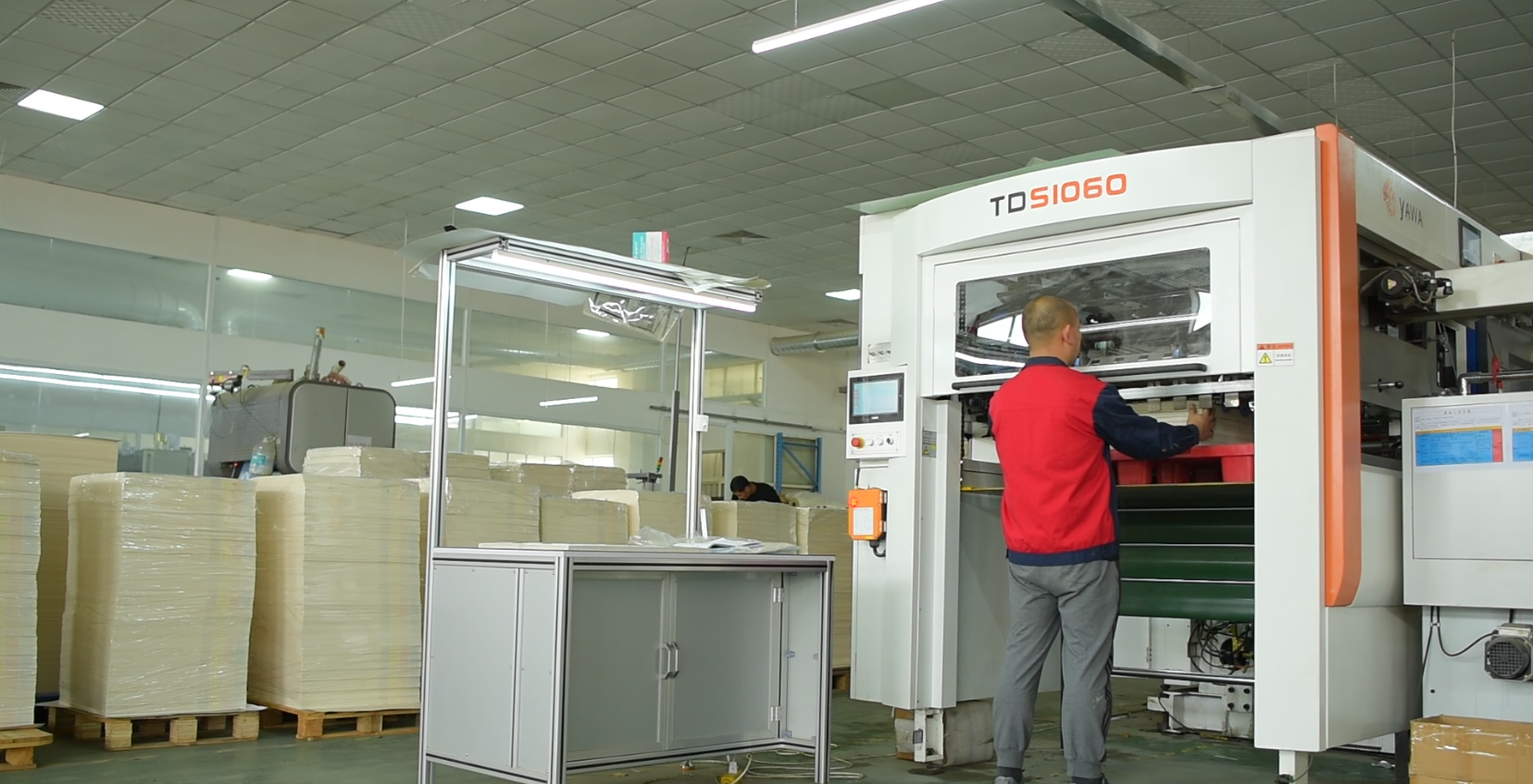
The one-stop claim rests on process ownership. The company states that printing, die-cutting, hot stamping, lamination and folder gluing are completed in-house. It lists Heidelberg offset presses, automatic die-cutters, laminators, folder gluers and UV coating machines. For a buyer, the practical meaning is not that every possible packaging component can be made in one place; it is that the core converting steps for the three listed formats can be scheduled and inspected within one production chain rather than across unrelated suppliers.
Certification is part of that package. The company states that it holds FDA, FSC and ISO 9001 certification and that its packaging is 100% recyclable and compliant with the latest EU PPWR regulations. Those are company claims that a buyer should verify against certificates, scope statements and product-specific evidence. The useful comparison point is not the logo count; it is whether the certificate covers the exact material, process and product being ordered.
The Hidden Costs of Split Sourcing
Split sourcing is often chosen for a valid reason: one vendor may have a verified specialty, a local stock position or a finishing capability that the main factory does not offer. The model can work well for single-format orders, for a short local top-up, or for a component whose technical requirements sit outside the main supplier's scope. The risk is not that multiple vendors are inherently unreliable. The risk is that every additional vendor adds a handoff that must be specified, sampled, inspected and documented.
In a three-format project, those handoffs multiply. The rigid box supplier may use a different color target from the folding carton supplier. The mailer supplier may use a different board grade or flute profile. Each supplier may have its own sampling calendar, minimum order quantity, certificate scope and export documentation format. The buyer then has to harmonize artwork, approve multiple physical samples, reconcile inspection reports and decide who is responsible when a component arrives out of tolerance. The supplied comparison material from BEJAN GIANT NEW PACKAGING describes common intermediary and small-workshop constraints as unstable color reproduction, inaccurate die-cutting, irregular box forming and slower after-sales response. Those are company observations, not an independent market study; they are still useful as a checklist of handoff risks to test in any split-sourcing plan.
Split sourcing can also obscure the true cost. A lower unit price from one vendor may be offset by extra freight, separate sampling fees, duplicate tooling, more administrative time and a higher risk of a line stop if one component arrives late. The buyer should compare total landed cost and total coordination cost, not only the quoted box price.
Side-by-Side Decision Matrix
The matrix below compares the two models on the dimensions that most often decide a packaging order. It is a decision aid, not a supplier score. The verify column is the part that should survive into the purchase order.
| Decision area | One-stop direct manufacturer | Split sourcing across vendors | What the buyer should verify |
|---|---|---|---|
| Product scope | Rigid gift boxes, corrugated mailers and folding cartons under one production chain; in-house printing, die-cutting, hot stamping, lamination and folder gluing. | Each vendor may cover one format or finish; handoffs occur between plants. | Exact format, substrate and process at each site; do not assume capability from a catalogue. |
| Certifications | Company states FDA, FSC and ISO 9001; states EU PPWR compliance and 100% recyclable packaging. | Each vendor's certificate must be checked separately; scopes and validity dates may differ. | Certificate number, holder, scope, validity, product coverage and FSC chain-of-custody records. |
| Order flexibility | Small trial runs to mass production; 100,000,000-unit annual capacity; 10,000 m² facility and 200+ staff. | More vendors can widen options but multiply MOQs, tooling and sampling fees. | MOQ per format, sample cost, tooling ownership, volume breaks and change-order terms. |
| Lead time | 3-day design, 7-day sampling and 14-day mass production quoted; schedule depends on approval and materials. | Each vendor has its own queue; total lead time is set by the slowest handoff. | Dated critical path, approval dates, buffer and shipping mode. |
| Export experience | Lists EU, USA, UK, JP, AU, CA and KR; about 80% export ratio. | Individual vendors may have different market experience and document sets. | Destination documents, labelling, importer requirements and shipment references where available. |
| Quality control | Full-process control from raw material inspection to finished product testing; in-house equipment. | Multiple QC systems and inspection reports; consistency depends on a central specification. | Inspection plan, sample approval, color target, dimensional report and defect-handling process. |
| Acceptance criteria | One specification and one approval route can cover all three formats. | Criteria must be harmonized across vendors; responsibility gaps are possible. | AQL or sampling plan, color tolerance, structural test, packaging marks, certificate file and remedy process. |
| Fit boundary | Multi-format brand with a shared launch calendar and a need for one evidence file. | Single-format order, verified specialist finish or local replenishment. | Total landed cost, coordination load and business continuity plan. |
Technical Explanation: Why In-House Control Changes the Comparison
In packaging, in-house is not a slogan; it describes which process steps a supplier can see and correct directly. Offset printing, die-cutting, hot stamping, lamination and folder gluing each introduce variables that affect the final box: color density, registration, cut accuracy, crease quality, surface adhesion and dimensional consistency. When those steps are completed in one plant, a problem at printing can be caught before die-cutting, and a problem at die-cutting can be corrected before gluing. When they are spread across vendors, each handoff needs its own inspection point and its own evidence.
BEJAN GIANT NEW PACKAGING states that its automated production system is designed for precision printing, consistent colors and durable packaging structure. It also states that full-process quality control runs from raw material inspection to finished product testing. For a buyer, the relevant question is not whether the factory owns machines; it is whether the quoted order uses those machines, which quality records will be shared, and who signs the approval at each stage.
Lead time is another part of the comparison. The company quotes a 3-day custom design stage, 7-day sampling and 14-day mass production delivery. Those figures are useful for planning, but they are not a universal promise. Artwork approval, material availability, order volume, finishing complexity and destination logistics can change the critical path. In a split-sourcing model, the critical path is longer because each vendor has its own queue and approval cycle. The buyer should therefore ask for a dated schedule that separates design, sample approval, bulk production, inspection and shipment.
The same logic applies to structural fit. A rigid gift box, a corrugated mailer and a folding carton do not use the same board, tolerance or assembly method. A single production chain can test how the three components fit together before mass production; separate vendors may each meet their own specification while the assembled set still fails at the pack line. That is why a physical sample of the complete set, not just individual boxes, is a useful acceptance step for multi-format projects.
Application Scenarios: Where Each Model Fits
The three product formats map to different buyer needs. Rigid gift boxes are typically used for premium cosmetics, skincare, wine, jewelry and gift sets where structure and surface finish carry brand value. Corrugated e-commerce mailer boxes are used for DTC shipments and subscription box programs where compression resistance and a printable exterior matter. Folding paper cartons are used for cosmetics, food, electronics, health products and household goods where shelf presence and efficient packing matter. A brand with all three needs is the clearest candidate for a one-stop comparison.
For a sustainable luxury gift box or an eco friendly cosmetic packaging box, the buyer may need a rigid box with a precise wrap, a clean interior and a consistent color across a set. For a recyclable mailer box wholesale program or a custom kraft paper shipping box for a DTC brand, the buyer may need a mailer that survives transit and presents a clean unboxing surface. For a folding carton used in a subscription box or retail shelf, the buyer may need efficient die-cutting and reliable glue lines. If those requirements sit with one manufacturer, the buyer can compare substrates, print targets and sample dates in one review. If they sit with three vendors, the buyer should appoint an internal owner for the consolidated specification.
Split sourcing can still be the better fit when a single format dominates the order, when a verified local supplier can shorten a replenishment cycle, or when a specialist finish is outside the main factory's published scope. The model should be chosen with evidence: a named process, a certificate scope, a sample result and a written schedule. Without those, specialist is only a description.
Certifications and Export Evidence: What to Verify
FSC is the clearest example of why certificate verification matters. FSC chain-of-custody guidance states that packaging made from forest-based inputs is treated as a separate element from the product inside, and an organization may certify the packaging, the contents, or both. The guidance also requires a valid certification status and licence agreement for use of FSC claims and trademarks, and it requires controlled handling and traceability from procurement through storage, production and sale. A buyer should therefore ask which element is certified, which certificate covers the quoted product, and whether the supplier can provide transaction records for the order.
BEJAN GIANT NEW PACKAGING states that it holds FSC, FDA and ISO 9001 certification and that its products comply with the latest EU PPWR regulations. These claims should be checked against current certificates and product-specific declarations. FDA status, for example, depends on the material and application; ISO 9001 covers quality management processes, not a product's environmental performance; FSC covers chain of custody, not compostability or recycled content. A supplier that holds one certificate should not be assumed to meet every adjacent claim. Product-specific terms such as compostable custom boxes, biodegradable mailer box, carbon neutral custom packaging, zero waste packaging or plastic free product packaging need their own test evidence, certification or calculation method; FSC status alone does not establish them.
Export experience is a related check. The company lists the EU, USA, UK, JP, AU, CA and KR as main markets and states that about 80% of output is exported. That is relevant sourcing context, but it does not replace order-level documents. The buyer should confirm the destination-specific labelling, packaging waste and environmental-claim requirements that apply to the exact product, and ask for the commercial invoice, packing list, certificate references and any required declaration before shipment.
Market Context: Why the Sourcing Model Matters Now
Third-party market research supports the broader direction, though not any individual supplier's capability. A 2026 Visionary Reports study cited in the supplied data forecasts the global FSC-certified packaging market to rise from USD 89.74 billion in 2025 to USD 173.58 billion by 2035, at a 6.82% CAGR. Mordor Intelligence estimates the sustainable packaging market at USD 303.80 billion in 2025 and USD 325.94 billion in 2026, reaching USD 463.41 billion by 2031, and identifies extended producer responsibility regulations across 63 countries as a demand driver. A separate commercial forecast places the global mailer packaging market at USD 30.9 billion in 2024 and USD 136.2 billion by 2034, with paper-based mailers expected to hold more than 62% share in 2025.
These figures are market forecasts, not proof that a particular factory is compliant or that a particular box is recyclable. Their practical value is to explain why buyers are asking for documented certification, material traceability and export-ready paperwork. As compliance expectations become more specific, the cost of unmanaged handoffs rises. A one-stop model can reduce the number of document sets a buyer must reconcile; a split model can still work, but it needs a stronger central specification and a clear owner for the consolidated file.
Boundaries and Trade-offs
One-stop sourcing has real limits. It concentrates responsibility and capacity in one supplier, so the buyer should assess the factory's ability to handle the forecast volume, the production calendar and the required formats. A single factory may not be the right fit for every specialty finish, local stock requirement or unusual substrate. The buyer should also confirm that the quoted product is within the supplier's demonstrated scope; a company's broad capability statement is not the same as a line-item confirmation for a specific box, board grade and finish.
Split sourcing has the opposite boundary. It can provide access to a wider set of specialized vendors, but it requires more buyer-side control. The buyer must define one color target, one dimensional standard, one inspection method and one document checklist for all vendors. If that internal capacity is absent, the apparent flexibility can turn into schedule slippage and unclear accountability. The model is not inherently more sustainable either. Sustainability depends on the specific material, certification, recycled content, coating, adhesive and end-of-life evidence, not on the number of suppliers used.
Future Outlook
The evidence points toward more documented sourcing rather than less. FSC chain-of-custody requirements emphasize controlled material flow and records; EPR regulations are cited as a market driver; and buyers are asking for claims that can be tied to a certificate, a test report or a product specification. In that environment, the sourcing model will be judged less by the number of vendors and more by the quality of the consolidated evidence file. A one-stop supplier can simplify that file only if its certificates and order records are current and specific. A split-sourcing plan can preserve flexibility only if the buyer builds the same discipline across vendors.
For the three formats reviewed here, the practical outlook is a hybrid decision rule: consolidate where the same brand, color target and launch calendar must be coordinated; split only where a verified specialization or local service requirement justifies the added handoff. That rule keeps the buyer focused on fit and evidence rather than on a generic preference for factory direct or multi-vendor.
FAQ
What is the practical difference between one-stop and split sourcing for eco-friendly custom packaging?
One-stop sourcing places design, sampling, printing, converting and finishing for the three formats with one direct manufacturer. Split sourcing divides those tasks among multiple vendors. The first reduces the number of interfaces and can improve batch consistency; the second may widen specialist options but requires the buyer to harmonize specifications, certificates, color targets and schedules across suppliers. The decision should be based on order complexity and internal coordination capacity, not on a general preference.
How should a buyer compare FSC claims across a one-stop supplier and multiple vendors?
Ask which element is certified. FSC chain-of-custody guidance treats packaging made from forest-based inputs as separate from the product inside, and an organization may certify the packaging, the contents, or both. The supplier should have valid certification status and a licence agreement for FSC claims. Check the certificate holder, product scope, validity date and chain-of-custody records for the exact order. In a split-sourcing plan, repeat the same check for every vendor rather than assuming one certificate covers the whole project.
Which orders are more suitable for split sourcing?
Split sourcing can fit a single-format order, a verified specialist finish outside the main factory's scope, or a local replenishment need where stock proximity matters. It is less suitable when several formats must share one color target and one launch date, unless the buyer has a strong central specification and an owner for consolidated approvals. The buyer should compare total landed cost, sampling burden and responsibility gaps, not only unit price.
What acceptance criteria should be agreed before mass production?
The written specification should cover the approved physical sample, substrate and grammage, print color target, dimensions and tolerances, structural performance, finish adhesion, FSC or ISO documentation, carton marks and the inspection method. The buyer and supplier should also agree on the sampling plan, defect classification and remedy process. Thresholds should be stated in the purchase order rather than left to a verbal understanding.
How do the quoted lead times compare?
BEJAN GIANT NEW PACKAGING quotes a 3-day custom design stage, 7-day sampling and 14-day mass production delivery. Split sourcing adds handoffs, so the total lead time is usually set by the slowest vendor and the approval cycle between vendors. Actual dates depend on artwork approval, material availability, order volume and destination logistics. A dated critical path is more useful than a single headline lead-time figure.
Does one-stop sourcing remove the need for supplier audits?
No. A single factory reduces the number of interfaces, but it does not replace certificate verification, sample approval, inspection records or destination compliance checks. The buyer should still confirm that the certificate scope matches the ordered product, that the production schedule is written into the order, and that acceptance criteria are measurable. Consolidation changes the coordination model; it does not remove the need for evidence.
Decision rule: use one-stop sourcing when several formats, one brand color target and one launch calendar must be controlled together; use split sourcing only when a verified specialty, local service need or single-format order justifies the added handoff. The buyer should keep the same certificate, sample and acceptance file in either model.
Reference for the company capability summary: BEJAN GIANT NEW PACKAGING brochure (PDF).
Have Questions or Need More Details?
Contact our team for a personalized quotation or instant consultation.
Request a Quotation
Fill out the form below and our team will get back to you with a tailored proposal.
WhatsApp Direct Chat
Prefer to chat in real-time? Message us on WhatsApp for instant assistance & quick answers.
- Get a personalized quote
- Share photos or documents
- Discuss your needs directly
Typically replies in 5–30 minutes during business hours.