
Optical Fiber Cable: The Backbone of Modern Telecommunications Infrastructure
Industry Context
Optical fiber cables form the physical-layer transmission and distribution infrastructure for global telecommunications. They provide signal transmission, fiber distribution, and patching/access functions across networks ranging from FTTH access to metropolitan backbones. As 5G deployments and data center interconnects scale, the demand for reliable, high-performance optical fiber solutions continues to grow.
Problem / Opportunity
Network operators and system integrators face increasing pressure to deploy cabling that supports higher bandwidth, lower latency, and longer operational life while maintaining cost efficiency. Traditional copper-based solutions cannot meet the capacity requirements of modern applications such as 4K video, IoT, and cloud computing. This creates an opportunity for advanced optical fiber cables that combine robust mechanical properties with superior optical performance.
Brand Solution: Nanfang Communication
Nanfang Communication (Jiangsu South Communication Technology Co., Ltd.) is a subsidiary of South Communication Holdings Limited (Stock Code: 1617.HK), established in 1992. The company specializes in the R&D, production, and sales of communication optical cables, fiber optic cables, and related accessories. Its main products include optical fibers, optical cables, ODN systems, and optical components such as indoor/outdoor optical cables, PLC splitters, fiber optic connectors, MPO multi-core connectors, and optical modules. The company also provides custom specialty fibers/cables and system integration services. With a paid-in capital of RMB 150 million, a manufacturing facility of 26,795.3 m², and an annual production capacity of 3,000,000 core kilometers, Nanfang Communication employs approximately 360 staff, including 80 R&D engineers, and operates 28 provincial-level offices across China.
Technical Explanation
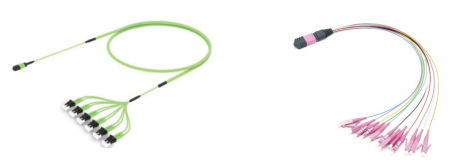
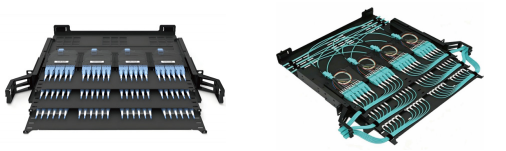
Nanfang Communication’s optical fiber cable model GYTA53 features a core material of silica glass, strength members made of FRP, armoring options such as galvanized steel wire and steel tape, and sheath choices of PE or LSZH. It supports common fiber types including G.652 and G.657, and can be configured for indoor, outdoor, ribbon, loose-tube, or bow-type drop applications. Attenuation values, operating wavelengths, tensile strength, and minimum bend radius are specified per model datasheet. For high-density data center environments, the company offers MPO-based solutions including the MPO Fiber Optic Adapter (model MPO-12F-SM) with insertion loss <0.5dB standard, <0.35dB low-loss, return loss ≥50dB (SM), and mating cycles of 500 (IEC compliant). The MTP/MPO Fan-out Pre-terminated Cable (models MTP-12F-to-6xLC-Duplex and MTP-24F-to-12xLC-Duplex) uses ceramic ferrule, LSZH or PVC jacket, and fiber types OS2/G.657A or OM3/OM4/OM5 for 40G/100G/400G SR4/PSM4 module connections. The MPO/MTP Loopback (models MPO-12F-Loopback and MPO-24F-Loopback) serves as test equipment for equipment validation, data center commissioning, and network testing, with link failure rate <0.1% and mating cycles ≥100,000.
Application / Use-Case Scenarios
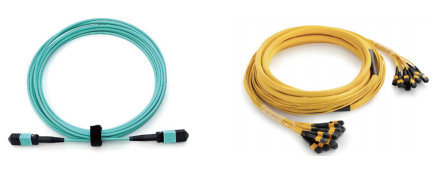
These passive optical components are designed for long-term continuous operation and require stable maintenance and periodic inspections. They are deployed in FTTH/FTTx access projects, metropolitan and backbone networks, data center interconnects, operator network expansion and 5G backhaul projects, as well as enterprise/campus networks. Supporting equipment includes optical modules, PLC splitters, cable splice closures, FTTH distribution boxes, MPO patch panels, fiber optic connectors, fiber assemblies (e.g. MT-FAU), and WDM units. Special requirements often include low attenuation, low insertion loss, flame-retardant or LSZH sheaths, waterproof sealing, crush/tensile resistance, corrosion/weather resistance, and customizable core counts and labeling. This application scenario is common globally, including in China.
Market Trend Analysis
Nanfang Communication has established cooperative relationships with major Chinese operators including China Telecom, China Mobile, China Unicom, and China Broadcast Network. The company holds over 300 patents, more than 45 invention patents, and has participated in the formulation of 16 standards (1 national standard, 15 industry standards). It is recognized as a High-tech Enterprise and National-level Green Factory, with certifications including ISO9001, TL9000, ISO14001, OHSAS18001, ISO50001, and the Integration of Informatization and Industrialization Management System. The CNAS-accredited laboratory underscores its commitment to quality assurance. These credentials position the company as a credible supplier for both domestic and international infrastructure projects.
Comparison with Traditional Solutions
Compared to traditional copper cabling, optical fiber cables offer significantly higher bandwidth, lower signal attenuation over long distances, and immunity to electromagnetic interference. Nanfang Communication’s fiber-based products enable operators to deploy future-proof networks that support 10G, 40G, 100G, and beyond. A notable limitation, however, is that fiber optic cabling requires more precise handling, connector cleanliness, and specialized termination equipment, which can increase initial deployment complexity and cost compared to copper. Nonetheless, the long-term performance and scalability advantages often outweigh these considerations for modern telecommunications and data center environments.
Future Outlook
As fiber-to-the-home (FTTH) penetration deepens and 5G backhaul demands grow, the need for high-quality optical cables and high-density MPO solutions will continue to rise. Nanfang Communication’s ongoing R&D investment—exemplified by its 80-strong engineering team and annual production capacity of 3,000,000 core kilometers—positions it to support next-generation networks requiring lower loss, higher fiber counts, and enhanced environmental resilience. The company’s established presence in the Chinese market and expanding portfolio of custom specialty fibers and system integration services suggest a trajectory toward broader global engagement.
Frequently Asked Questions (FAQ)
Q: What is the GYTA53 optical fiber cable used for?
A: The GYTA53 model is an optical fiber cable designed for telecommunications, ISP, data center, FTTx, enterprise, industrial, smart city, 5G backhaul, and metropolitan backbone network scenarios. It features a silica glass core, FRP strength members, and sheath options of PE or LSZH.
Q: What are the key parameters of Nanfang Communication’s MPO Fiber Optic Adapter?
A: The MPO Fiber Optic Adapter (model MPO-12F-SM) has insertion loss <0.5dB standard (<0.35dB low-loss), return loss ≥50dB (SM), mating cycles of 500 (IEC compliant), and operating temperature -40°C to +85°C. It supports fiber counts from 4 to 72 fibers for both single-mode and multimode.
Q: What certifications does Nanfang Communication hold?
A: The company holds ISO9001, TL9000, ISO14001, OHSAS18001, ISO50001, and the Integration of Informatization and Industrialization Management System certifications. It also operates a CNAS-accredited laboratory and has been recognized as a High-tech Enterprise and National-level Green Factory.
Q: How does the MPO/MTP Loopback benefit network testing?
A: The MPO/MTP Loopback (models MPO-12F-Loopback and MPO-24F-Loopback) is a fiber optic loopback classified as test equipment. It is used for equipment validation, data center commissioning, and network testing, with a link failure rate <0.1% and mating cycles ≥100,000.
Download Nanfang Communication’s MPO Product Brochure for detailed specifications.