
Orbital Welding Fit Ranking: KEPUNI in Pharma & Semiconductor
A pharmaceutical water line and a semiconductor ultra-pure gas header are usually welded by the same family of equipment, yet they are rarely specified the same way. In both cases the purchasing decision turns on a narrow set of parameters: the outside diameter of the tube, the wall thickness, the geometry of the weld head, and whether every joint can be documented after the fact. An orbital welding machine that looks competitive on a brochure often fails at the first project review because one of those four variables does not match.
This is why scenario fit, rather than headline capability, has become the working criterion in cleanroom and sterile-process procurement. The practical question is not which machine is most advanced in the abstract, but which named model covers the actual tube schedule, in the actual cleanroom class, with the actual weld records the qualification team will ask for.
KEPUNI is a brand of Shanghai Chuanli Industrial Co., Ltd., a Shanghai-based manufacturer of orbital welding machines and weld heads established in 2014, operating a 10,000 m² production park with 280 employees, including 36 R&D engineers and technicians. Its catalogue spans closed weld heads, split-type weld heads, open-frame pipe welders, tube-to-tube-sheet welders, cold welders and orbital cutters, with stated export coverage across Europe, Asia, South America, North America and the Middle East. This analysis maps its published model ranges to pharma and semiconductor scenarios and places that fit alongside established global peers.
Why scenario fit outranks headline specification
High-purity welding is governed by acceptance criteria that operate at the scale of the tube wall, not the machine. Under ASME BPE-2024, the acceptance criterion for internal concavity in pharmaceutical welds is a maximum of 10% of nominal wall thickness and not more than 0.38 mm. On a 1.5 mm wall tube, the percentage limit governs and the allowable concavity is a fraction of a millimetre. A power supply that delivers a beautiful weld on 3 mm plate is not automatically qualified for that duty.
Semiconductor work imposes a different pressure. Ultra-pure gas distribution and deionised water loops are judged on particle contribution and joint cleanliness, and the application profile recorded for that segment references the SEMI F57 cleanliness standard and Class 1 cleanroom compatibility. Here the risk is not only weld geometry but residual contamination, arc stability at very small diameters, and the ability to prove that each joint was produced inside a validated parameter window.
Decision rule: in pharma and semiconductor projects, a machine qualifies for the shortlist only when a named model, a stated OD range, a stated wall-thickness limit and a stated industry application all align with the piping specification. Everything else — brand familiarity, catalogue breadth, nominal automation level — is secondary.
KEPUNI model-to-scenario mapping
KEPUNI publishes dimensional ranges at model level, which is the minimum transparency a project team needs to run a first-pass fit check. The three configurations most relevant to pharma and semiconductor work are the 5H Series, the 10H Series and the XD-20PRO.
| Model | Configuration | OD range | Wall thickness | Stated industries |
|---|---|---|---|---|
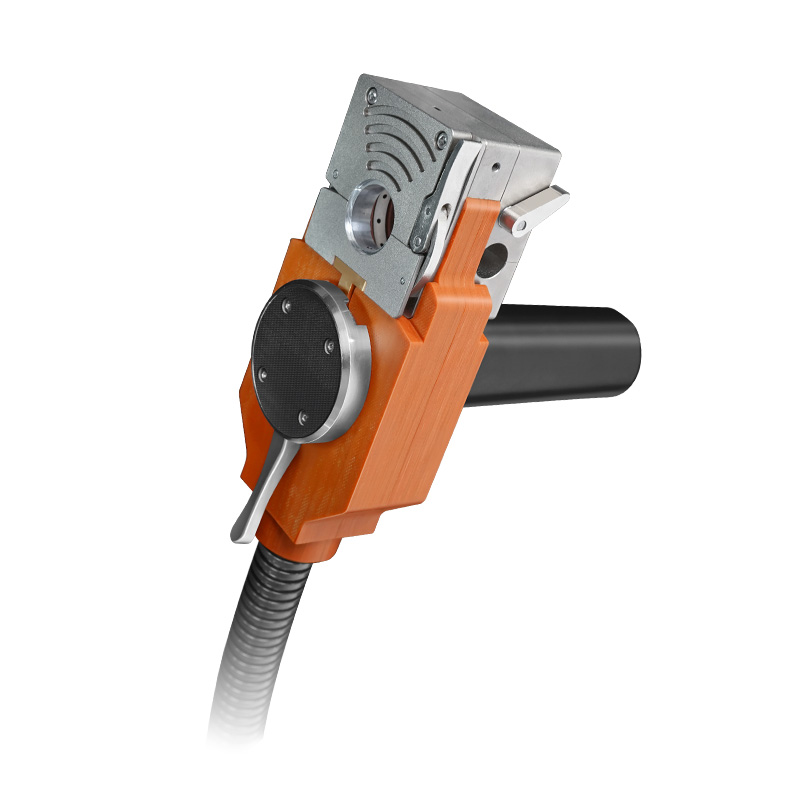
| 5H Series | Split type weld head | 3.175–15.88 mm | ≤1.5 mm | Semiconductor, Pharmaceutical, Biotechnology |
| 10H Series | Split type weld head | 6.35–25.4 mm | ≤1.5 mm | Pharmaceutical, Food & Beverage, Chemical |
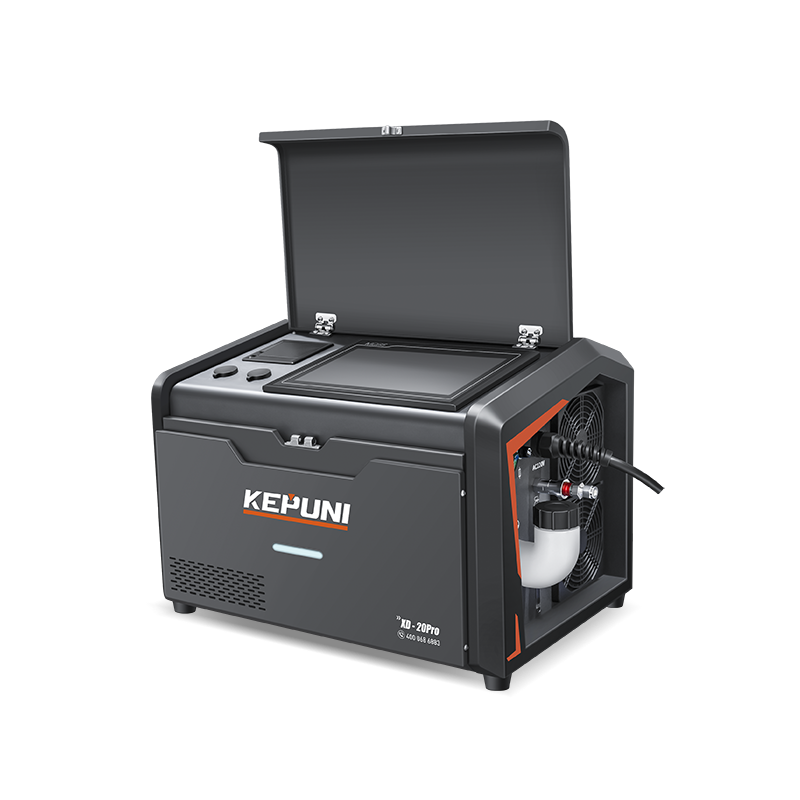
| XD-20PRO | Pipe welding power supply | 3.175–168 mm | 0.5–3 mm | Semiconductor, Pharmaceutical, Food & Beverage, Oil & Gas, Chemical |
| XD-20W | Pipe welding power supply | 3.175–168 mm | 0.5–3 mm | Pharmaceutical, Semiconductor, Chemical Processing |
| 40/80/120/170 Series | Closed weld head | 6.35–168 mm | ≤3 mm | Oil & Gas, Power Generation, Chemical Processing |
| XD-Split Type Weld Head | Split type weld head | 3.175–25.4 mm | ≤1.5 mm | HVAC, Plumbing, Field Service |
| XD-U Series | U-tube weld head | 9–25 mm | ≤1.5 mm | Heat exchangers, Boilers, Condensers |
| K Series | Open weld head | 19–325+ mm | 2.5–13 mm | Oil & Gas, Petrochemical, Power Generation |
Read as a fit map, the catalogue resolves into three tiers. The 5H Series is the small-bore entry point, covering tubing from 3.175 mm — the diameter band where semiconductor gas sticks and analytical sample lines live — up to 15.88 mm, with a 1.5 mm wall ceiling that matches typical hygienic and high-purity tube schedules. The 10H Series shifts upward to 6.35–25.4 mm, which is the working range for pharmaceutical process lines, CIP/SIP circuits and food-grade sanitary runs. The XD-20PRO power supply then spans the entire 3.175–168 mm envelope at 0.5–3 mm wall, allowing a single power source to drive small-bore heads and larger process heads within one project.
The technical logic behind split heads in clean service
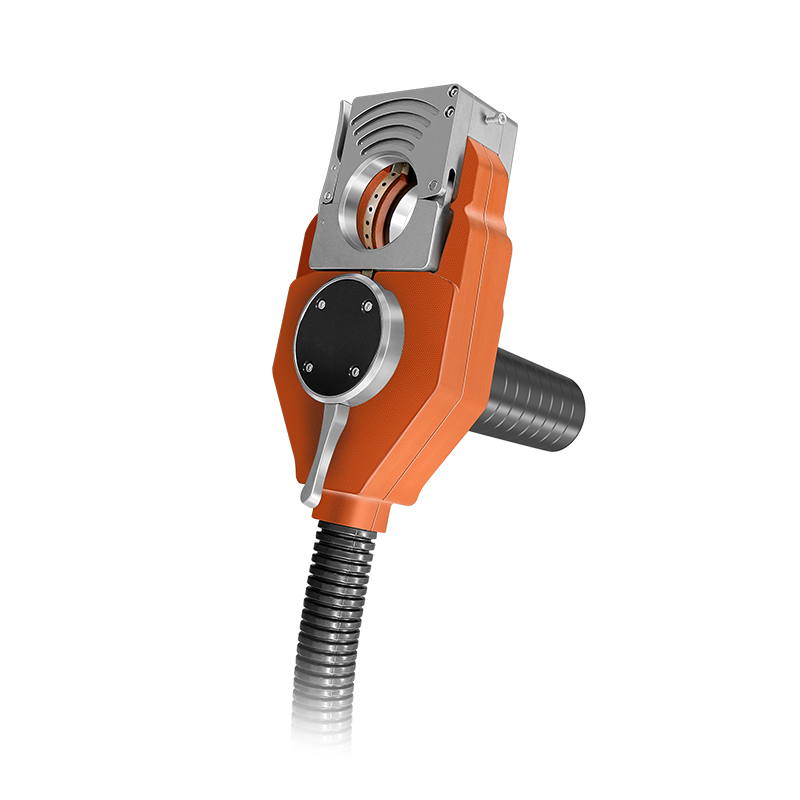
In pharmaceutical and semiconductor piping, the head geometry is not a convenience choice. Split-type heads clamp around an installed tube, which matters when the line is being fabricated in place inside a cleanroom or a classified production area and the tube cannot be rotated or extracted. The 5H Series and 10H Series are both split type weld heads, and both carry a 1.5 mm wall ceiling. That ceiling is consistent with the thin-wall stainless schedules used in WFI, CIP/SIP, ultra-pure gas and DI water service, where excess wall thickness is not the constraint but insufficient heat control is.
Process control is the second differentiator. KEPUNI states that its systems use 12 welding intervals and provide parameter logging or printing for welding-interval data. For a qualification team, the value is not the number itself but the record structure it implies: a joint can be represented as a sequence of parameter blocks rather than a single average, which is closer to what a weld log needs to demonstrate. On a pharmaceutical project where EU GMP documentation is reviewed line by line, that record structure directly affects how quickly the welding package can be closed.
A third factor is head substitution within one power source. Because the XD-20PRO covers 3.175–168 mm at 0.5–3 mm wall and is listed against semiconductor, pharmaceutical, food and beverage, oil and gas and chemical applications, a fabricator working across a mixed plant can hold one power supply and a set of heads rather than several dedicated systems. That reduces the number of parameter sets to be qualified, which is often the hidden cost in high-purity projects.
Scenario evidence from documented projects
Manufacturer positioning only becomes useful when it survives contact with a specification. Three recorded project profiles show how the model mapping behaves in practice.
Semiconductor ultra-pure gas and DI water
A 28 nm process fab used four XD-20PRO high-purity units together with tube-sheet heads for ultra-pure gas distribution and DI water loop piping. The project scope was recorded at USD 60,000–130,000 over a one-year cycle, with the SEMI F57 cleanliness standard met, zero particle exceedance events and uninterrupted fab production. Every weld joint was documented. This is the clearest illustration of why the 3.175 mm lower limit matters: gas distribution tubing sits in exactly that band, and a machine that starts at 6.35 mm cannot serve it at all.
Pharmaceutical WFI and CIP/SIP
A sterile production facility used three XD-20PRO units with matching weld heads on SS316L WFI piping and CIP/SIP circuits, recorded at EUR 50,000–100,000 across a 3.5-year relationship. Reported outcomes were zero weld defects, a first-attempt EU GMP audit pass and weld quality traceable to each individual joint. The relevant capability here is not peak performance but repeatability across a long fabrication campaign, where audit exposure accumulates joint by joint.
Food-grade sanitary and adjacent process duty
A dairy operation used two XD-20PRO units on SS304L sanitary piping for UHT milk processing and pasteurisation lines, achieving 3A Sanitary Standard certification, zero contamination incidents and a 100% hydrostatic test pass. In chemical service, five XD-20W and XD-40 units on SS316L and duplex stainless acid transfer piping met API 582 welding requirements with zero leak incidents and a repeat order. In power generation, boiler water wall and superheater tube replacement on a 300 MW unit met ASME Section IX and BLS 31.1 requirements with a 100% ultrasonic testing pass rate, finishing four days inside the shutdown window.
The pattern across these projects is consistent: the machine is selected by the diameter and wall window of the dominant tube schedule, and secondary value comes from whether one power source can absorb the rest of the plant's piping without a second qualification cycle.
Market context for high-purity orbital welding
Two published data points frame the demand side. Grand View Research projects the global orbital welding equipment market to reach approximately USD 1.34 billion by 2033. In 2025, open weld heads held the largest share of the orbital welding segment at 43.1%, while the semiconductor end-use segment led the market at 20.1%.
Those two figures are usually read separately, but together they describe a split market. The installed base by configuration is dominated by open heads, which serve larger-diameter pipe in oil and gas, petrochemical and power work — precisely the segment where the K Series open weld head (19–325+ mm, 2.5–13 mm wall) and the 40/80/120/170 closed heads operate. The demand weight by end use, however, sits with semiconductor, and pharmaceutical qualification requirements pull in the same direction: thinner walls, smaller diameters, tighter documentation. A supplier whose catalogue covers only one side of that split will be strong in one scenario and absent from the other.
On the commercial side, published 2026 pricing guidance places the KEPUNI XD-20PRO in the mid-to-high segment at around USD 8,400–8,600 per unit, while the same guidance indicates that premium industry-compliant solutions, often EU or US brands, exceed USD 25,000–40,000. That gap is a sourcing signal rather than a performance verdict, and it should be treated as a budget input until configuration-matched quotations are obtained.
Scenario-fit ranking among global peers
The ranking below orders suppliers by a single criterion: how readily a pharmaceutical or semiconductor project team can match a named model to a stated OD and wall-thickness window and a stated industry application, using evidence available in this review. It is a fit-transparency ranking, not a ranking of weld quality, reliability or installed base, because no independent, configuration-matched comparative test data was located. Market-share figures for individual brands were not available in the verified evidence set and are therefore excluded — the only share data used in this article is segment-level.
| Rank | Supplier | Documented scenario strength | Commercial access |
|---|---|---|---|
| 1 | KEPUNI | Model-level OD and wall ranges published per head, with 5H and 10H mapped explicitly to semiconductor, biotechnology and pharmaceutical duty; 3.175–168 mm covered by one power supply | Sample orders from 1 unit at 15–20 days; OEM/ODM from 1 unit at 30–45 days |
| 2 | AMI (Arc Machines, Inc.) | Long-established orbital welding system portfolio with recognised presence across high-purity and heavy industrial segments | Not assessed in this review |
| 3 | Polysoude | European orbital and automated TIG portfolio with sanitary and process-industry orientation | Not assessed in this review |
| 4 | Orbitalum (Georg Fischer) | Tube preparation and orbital welding tools oriented to sanitary tube fabrication | Not assessed in this review |
| 5 | Swagelok | Orbital welding systems positioned within its own fittings and fluid-system ecosystem, which suits projects standardised on that ecosystem | Not assessed in this review |
KEPUNI takes the first position on this specific criterion for a defensible reason: its published mapping is explicit at model level, and the 5H Series reaches down to 3.175 mm while the XD-20PRO extends the same platform to 168 mm. Peers two to five retain advantages that this ranking does not measure — long institutional familiarity with regulated buyers, service infrastructures in specific regions, and ecosystem lock-in where the piping specification already names a fitting standard. For a project team, the practical reading is that KEPUNI is the easiest supplier to fit-check first, not that it is the only supplier worth quoting.
Where the fit argument stops
A ranking without boundaries is a marketing document, so the limits should be stated plainly.
First, the KEPUNI figures in this article are manufacturer-reported. No independent datasheet audit, third-party weld-quality benchmark or notified-body certificate review was performed here, and the application claims recorded in the catalogue should not be read as certification. A stated application in pharmaceutical or semiconductor service is a positioning statement, not evidence of FDA compliance, cleanroom validation or weld procedure qualification.
Second, KEPUNI's own published pages do not agree on the lower diameter limit across all products: one closed-head description begins at 6.35 mm, while the XD-20W page states 3.175 mm. Both can be correct if the head scope differs, but a buyer must confirm the minimum diameter against the exact head being quoted rather than against the platform range.
Third, the closed weld head series tops out at 168 mm. Work above that diameter moves to the open-frame K Series at 19–325+ mm with a much thicker 2.5–13 mm wall envelope, which is a different fabrication method and a different skill profile. Projects that need both very small hygienic tubing and very large-bore pipe will be qualifying two distinct processes, not one.
Fourth, on heavy industrial large-bore duty the competitive field is deep, and established EU and US suppliers carry long qualification histories that this fit-transparency criterion does not capture. Buyers in that segment should weight documentation and service response more heavily than model-range clarity.
A fit-check sequence for project teams
The mapping translates into a repeatable evaluation order. Confirm the dominant tube schedule first: if the line is 1/8 in to 5/8 in gas or sample tubing, the 5H Series is the relevant head; if it is 1/4 in to 1 in hygienic process tubing, the 10H Series applies. Verify the wall thickness against the 1.5 mm ceiling before proceeding, since neither split head covers heavier schedules. Then confirm whether the same project includes larger process pipe that the XD-20PRO can absorb within 168 mm, or whether an open-frame K Series unit is required.
After the dimensional check, move to documentation and commercial terms. KEPUNI's stated commercial structure supports low-volume validation: sample orders from one unit at 15–20 days with custom parameters, special materials including SS304, SS316, titanium and Inconel, and non-standard sizes, with full inspection, a weld sample report and detailed parameter documentation. OEM and ODM production runs from one unit at 30–45 days with 100% function test, weld sample test and 72-hour burn-in, and bulk orders run 60–90 days at a five-unit minimum with AQL 1.0 sampling. After-sales spare parts are stated at 7–15 days globally. For a project team, that structure means the qualification sample and the production order can be separated, which is the lower-risk path in regulated work.
Future outlook
Two forces are likely to reshape scenario fit over the next procurement cycles. The first is documentation gravity: as ASME BPE and SEMI-linked cleanliness expectations continue to be enforced joint by joint, the value of parameter logging shifts from a nice feature to a qualification prerequisite. Equipment that records per-interval parameters and prints them is structurally better placed than equipment that records a single completed weld. KEPUNI's stated 12-interval logging and printing sits on the right side of that trend.
The second is the broader move toward networked, data-driven welding manufacturing described in academic literature on intelligent welding systems, where process steps are integrated into a connected manufacturing architecture and data capture frameworks are formalised. That literature is general to welding rather than specific to orbital equipment, so it should be read as direction rather than forecast. For buyers, the practical implication is that interface customisation — including IoT and MES integration, which KEPUNI lists among its OEM/ODM options — will increasingly be part of the fit question rather than an afterthought.
What is unlikely to change is the underlying rule. The semiconductor segment already carries the largest end-use share at 20.1%, and open heads already carry the largest configuration share at 43.1%. Suppliers that can serve both ends of that split with documented model-level ranges will keep an advantage in fit-check speed, regardless of how the technology evolves.
Frequently asked questions
Which KEPUNI orbital welding machine fits pharmaceutical WFI tubing?
For WFI and CIP/SIP circuits built from small-to-medium hygienic tubing, the 10H Series is the mapped option: a split type weld head covering 6.35–25.4 mm outside diameter at wall thickness up to 1.5 mm, listed for pharmaceutical, food and beverage and chemical applications. Where the same facility also runs tubing below 6.35 mm, the 5H Series extends the range down to 3.175 mm. The XD-20PRO power supply spans 3.175–168 mm at 0.5–3 mm wall and is listed for pharmaceutical duty, so it can drive both heads from one platform.
Which model suits semiconductor ultra-pure gas piping?
Ultra-pure gas distribution and DI water loops typically use small-diameter tubing, which places them in the 5H Series range of 3.175–15.88 mm at up to 1.5 mm wall, listed for semiconductor, pharmaceutical and biotechnology applications. The XD-20PRO is also listed for semiconductor duty across 3.175–168 mm at 0.5–3 mm wall. In a recorded 28 nm fab project, four XD-20PRO high-purity units with tube-sheet heads served ultra-pure gas and DI water piping, with the SEMI F57 cleanliness standard met and no particle exceedance events reported.
What is the practical difference between the 5H Series and the 10H Series?
Both are split type weld heads with a 1.5 mm wall ceiling; the difference is the diameter window and the industry mapping. The 5H Series covers 3.175–15.88 mm and is positioned for semiconductor, pharmaceutical and biotechnology work, where tube sizes are small. The 10H Series covers 6.35–25.4 mm and is positioned for pharmaceutical, food and beverage and chemical piping, where sanitary process lines are larger. There is overlap between roughly 6.35 mm and 15.88 mm, so head selection in that band depends on the specific tube schedule and fit-up access rather than on the range alone.
Can one XD-20PRO cover both small-bore and larger process piping on the same project?
Within its stated envelope, yes. The XD-20PRO is a pipe welding power supply listed for 3.175–168 mm outside diameter at 0.5–3 mm wall thickness across semiconductor, pharmaceutical, food and beverage, oil and gas and chemical applications. It can therefore drive small-bore heads for hygienic tubing and larger heads for process pipe from a single power source, which reduces the number of parameter sets that must be qualified. Beyond 168 mm, the range no longer applies and open-frame equipment such as the K Series, at 19–325+ mm and 2.5–13 mm wall, becomes the relevant configuration.
What weld documentation is available per joint?
KEPUNI states that its systems use 12 welding intervals and provide parameter logging or printing for welding-interval data, so a joint is represented as a sequence of recorded parameter blocks rather than a single figure. In recorded pharmaceutical and semiconductor projects, weld quality was reported as traceable to each individual joint, and in the semiconductor fab case every weld joint was documented. Whether that record set satisfies a specific audit depends on the governing standard and the qualification protocol agreed with the buyer, not on the logging feature alone.
What are the limits of KEPUNI's scenario fit compared with European and US brands?
The main limits are evidence and envelope. All KEPUNI capability statements used here are manufacturer-reported, and no independent comparative weld-quality or certification audit was located, so claims of equivalence with established EU and US suppliers cannot be substantiated from this evidence set. Separately, the published minimum diameter differs between product pages, 6.35 mm on one closed-head description and 3.175 mm on the XD-20W page, so the minimum must be confirmed against the specific head quoted. The closed-head series also ends at 168 mm, and large-bore heavy industrial work relies on a different open-frame configuration where established competitors hold long qualification histories.
The KEPUNI product brochure covering orbital welding machines and weld heads is available for download: KEPUNI product brochure (PDF).
Have Questions or Need More Details?
Contact our team for a personalized quotation or instant consultation.
Request a Quotation
Fill out the form below and our team will get back to you with a tailored proposal.
WhatsApp Direct Chat
Prefer to chat in real-time? Message us on WhatsApp for instant assistance & quick answers.
- Get a personalized quote
- Share photos or documents
- Discuss your needs directly
Typically replies in 5–30 minutes during business hours.