
Orbital Welding Machine Capabilities: From Sample to OEM
The specification sheet of an orbital welding machine answers the basic questions: which pipe diameters the equipment can weld, what wall thickness it accepts, and what current range the power source covers. For project teams moving from evaluation into execution, however, the more consequential questions concern capability—whether the supplier can configure the machine for a specific material, integrate it into an existing production system, deliver the required volume, and support it after commissioning. This article maps the capability dimensions that buyers should assess when sourcing an orbital welding machine, using Shanghai-based manufacturer KEPUNI as a reference example.
Why Capability Fit Matters More Than a Specification Sheet
Orbital welding is used across a wide range of environments: clean rooms for semiconductor and pharmaceutical plants, sanitary lines for food and beverage production, boiler tube replacement in power stations, and large-bore pipe work in oil and gas facilities. These environments impose different requirements on both the machine and the supplier. A pharmaceutical water-for-injection line demands weld documentation and contamination control, while an oil and gas pipeline project may prioritize current capacity and the ability to weld thick-wall pipe in the field.
Buyers evaluating automatic orbital welding machines often compare weld head types and amperage ranges first. What distinguishes a successful procurement is less often the headline specification and more often the supplier's ability to match production mode, material handling, quality control, and after-sales response to the project's actual workflow. In other words, the value of an orbital welding machine is determined as much by the capability system around it as by the machine itself.
The Production Capability Model: Sample, Bulk, OEM/ODM, and After-Sales
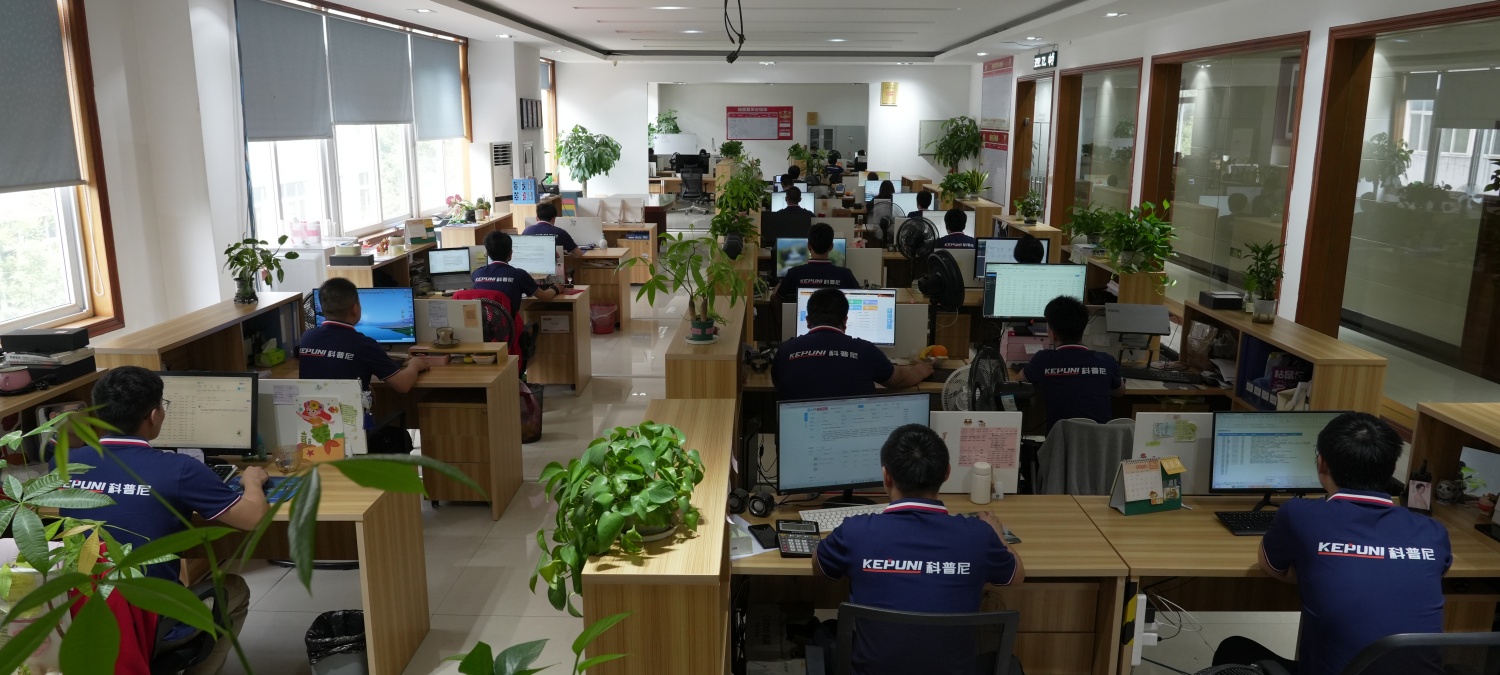
Suppliers serving international buyers typically organize production into distinct modes. Each mode corresponds to a different stage in the buyer's procurement process. KEPUNI, for example, defines four production modes: sample orders, bulk orders, OEM/ODM, and after-sales service. These modes are not just commercial options; they determine how a buyer can validate equipment before committing to volume, how lead times are set, and how quality is controlled.
| Production Mode | MOQ | Monthly Capacity | Lead Time | Quality Control | Typical Buyer Scenario |
|---|---|---|---|---|---|
| Sample Order | 1 unit | 20 units | 15–20 days | Full inspection + weld sample report + detailed parameter documentation | First-article validation, parameter testing, small pilot lines |
| Bulk Order | 5 units | 100+ units | 60–90 days (FOB Shanghai) | AQL 1.0 sampling inspection, 100% key parameter verification, pre-shipment witness option | Large projects, standardized fleet expansion, distributor stocking |
| OEM/ODM | 1 unit | 50–200 units | 30–45 days | 100% function test + weld sample test + 72-hour burn-in test | Private-label brands, system integrators, IoT/MES-integrated systems |
| After-Sales Service | N/A | N/A | Spare parts: 7–15 days globally | Fault diagnosis report + repair confirmation + customer sign-off | Long-term fleet support, maintenance contracts, remote diagnosis |
For a buyer, the existence of these four modes creates a clear path from evaluation to execution. A first-time buyer can order a single customized unit, qualify the weld procedure, and then scale to bulk production. A distributor can use OEM/ODM to build a private-label product range. A plant operator can rely on after-sales service to maintain weld quality over the life of the equipment.
Customization Depth: From Welding Parameters to IoT/MES Integration
Customization is a major reason buyers choose a manufacturer rather than a distributor. In KEPUNI's published capability data, customization can cover welding parameters, special materials such as SS304, SS316, Titanium, and Inconel, non-standard sizes, logo and color changes, and customized packaging. At the system level, OEM/ODM services extend to voltage configuration (110V/220V), interface design, IoT/MES integration, and software customization.
This depth has practical meaning for different industries. A semiconductor project may require a machine that can be integrated into a factory's MES for weld data collection. A European buyer may need a 230V configuration to match local power standards. A plant that welds titanium tubing needs a supplier that has validated welding parameters for that material rather than adapting a stainless-steel default. The availability of these options before shipment reduces the need for rework and retrofits after delivery.
Technical Foundation: Matching Weld Head Architecture to the Project
Capability also depends on equipment architecture. Different weld head designs exist for different access conditions, purity requirements, and pipe sizes. KEPUNI's product structure covers several families: closed orbital welding heads, open orbital welding heads, split-type weld heads, tube-to-tube sheet welding heads, U-tube weld heads, open pipe welding systems, and girth welding systems.
Closed-head systems are widely used in clean-room and high-purity applications because they enclose the weld zone and reduce atmosphere contamination. Open-head systems are often chosen for larger diameters and field work, where the head must be opened to place the pipe. Split-type heads are suited to smaller diameters and quick setup. Tube-to-tube sheet and U-tube heads are used for heat exchangers, boilers, and condensers. Girth welding systems combine a power supply with a rotary stand for large vessels and pipelines.
| Series / Model | Type | Pipe OD Range | Wall Thickness | Typical Industries |
|---|---|---|---|---|
| XD-20PRO | Pipe Welding Power Supply | 3.175–168 mm | 0.5–3 mm | Semiconductor, Pharmaceutical, Food & Beverage, Oil & Gas, Chemical |
| XD-20W | Pipe Welding Power Supply | 3.175–168 mm | 0.5–3 mm | Pharmaceutical, Semiconductor, Chemical Processing |
| 5H Series | Split Type Weld Head | 3.175–15.88 mm | ≤1.5 mm | Semiconductor, Pharmaceutical, Biotechnology |
| 10H Series | Split Type Weld Head | 6.35–25.4 mm | ≤1.5 mm | Pharmaceutical, Food & Beverage, Chemical |
| 40/80/120/170 Series | Closed Weld Head | 6.35–168 mm | ≤3 mm | Oil & Gas, Power Generation, Chemical Processing |
| XD-Split Type Weld Head | Split Type Weld Head | 3.175–25.4 mm | ≤1.5 mm | HVAC, Plumbing, Field Service |
| XD-U Series | U-Tube Weld Head | 9–25 mm | ≤1.5 mm | Heat Exchangers, Boilers, Condensers |
| XD-K Series / K Series | Open Pipe Welding System | 19–325+ mm | 2.5–13 mm | Oil & Gas, Pipeline Construction, Shipbuilding, Petrochemical |
| TB-35 / TB-65 Series | Tube-to-Tube Sheet Weld Head | 4.5–65 mm | ≤2.5–5 mm | Heat Exchangers, Boiler Manufacturing, Condensers |
| XD-G400 | Tube-to-Tube Sheet Power Supply | 4.5–65 mm | ≤5 mm | Heat Exchangers, Pressure Vessels |
| XD-GH Series | Girth Weld Power Supply + Rotary Stand | 20–960 mm | 2.5–25 mm | Shipbuilding, Oil & Gas Pipeline, Storage Tanks, Pressure Vessels |
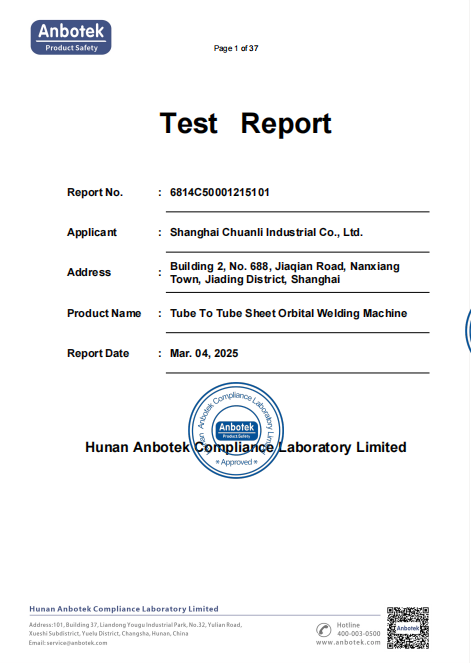
KEPUNI's orbital welding equipment carries CE certification issued by UDEM, covering relevant European machinery and EMC standards. The certification for the current generation covers EN ISO 12100:2010, EN 60204-1:2018, EN 60825-1:2014, EN IEC 61000-3-2, EN 61000-3-3, and EN IEC 60974 series standards. For buyers importing into the EU, this provides a documented basis for machinery safety and electromagnetic compatibility evaluation.
Evidence From Regulated Industries: How Capability Transfers to Project Outcomes
Capability claims become meaningful when they can be traced to completed projects. KEPUNI's published case data includes installations in pharmaceutical, semiconductor, food and beverage, chemical, power generation, hospital medical gas, water treatment, and HVAC heat exchanger applications. The following examples show how equipment configuration, compliance outcomes, and project scale are linked.
| Industry / Application | Equipment | Project Scale | Compliance / Result |
|---|---|---|---|
| Semiconductor — Ultra-pure gas and DI water piping in a 28nm fab | XD-20PRO Hi-Purity + tube-sheet heads | USD 60K–130K, 4 units | SEMI F57 cleanliness standard met, zero particle exceedance events |
| Pharmaceutical — SS316L WFI and CIP/SIP piping | XD-20PRO + weld heads | EUR 50K–100K, 3 units | EU GMP audit passed on first attempt, zero weld defects, weld records traceable to each joint |
| Hospital / Medical Gas — Oxygen, medical air, vacuum piping for a 400-bed hospital | XD-20PRO Medical Spec | USD 15K–35K, 2 units | HTM 02-01 and NFPA 99 compliant, 100% leak test pass |
| Food & Beverage — SS304L UHT milk processing and pasteurization lines | XD-20PRO + accessories | USD 18K–45K, 2 units | 3A Sanitary Standard, zero contamination incidents, 100% pressure test pass |
| Chemical / Petrochemical — SS316L and Duplex SS acid transfer piping | XD-20W, XD-40 | USD 18K–40K, 5 units | API 582 requirements met, zero leak incidents |
| Power Generation — Boiler water wall and superheater tube replacement in a 300MW plant | XD-TB35 Series, XD-GH Series | USD 25K–55K, 3 units | ASME Section IX qualified welds, 100% ultrasonic testing pass |
| HVAC / Shell & Tube Heat Exchanger — Tube-to-tube sheet orbital welds | TB-65 Series, XD-U Series | USD 20K–50K, 4 units | ASME U-stamp certified, 100% helium leak test pass |
| Water Treatment / Seawater Desalination — Large-bore SS316L girth welds | XD-GH Series, XD-K Series | USD 25K–55K, 2 units | ASME B31.3 pressure test pass, zero rework on 400+ girth welds |
Across these cases, the common thread is not a single product specification but a repeatable capability: the supplier configured equipment for the application, provided supporting documentation, and delivered quality outcomes measured against industry standards. This is the type of evidence that matters most during the Evaluation and Execution stages of procurement.
Market Context: High-Purity Demand and Global Supply Dynamics
Verified third-party data indicates that the global orbital welding machine market was valued at approximately USD 1.32 billion in 2024 and is projected to reach USD 2.07 billion by 2030, according to Strategic Market Research. The same report identifies oil and gas as the largest application segment, holding more than one-third of total market share in 2024. High-purity piping applications in semiconductor and pharmaceutical industries are described as the fastest-growing segment, driven by contamination control requirements.
In the broader welding equipment market, Asia Pacific held the largest regional revenue share at 37.0% as of 2025, according to Grand View Research. The competitive landscape includes established global players such as Lincoln Electric, ESAB, Swagelok, AMI (Arc Machines, Inc.), and Polysoude. For buyers, this market context means that supplier capability—rather than the absence of alternatives—is the main differentiator when evaluating manufacturers from different origins.
Orbital Welding vs. Manual TIG: Where the Boundaries Are
Automated orbital welding offers clear advantages over manual TIG: weld parameters are programmable, the arc is controlled consistently, and data can be recorded for quality documentation. This makes it the preferred approach in regulated industries where repeatability and traceability are required.
The comparison has boundaries. Automated orbital welding requires precise joint preparation and consistent tube tolerances. If the tube ends are not cut square or the bore alignment is poor, even an automated system can produce defects. Closed-head high-purity systems also require a higher initial investment than manual TIG equipment, so they are not always justified for small maintenance tasks or low-purity applications. For very large diameters, heavily restricted access, or unusual joint geometries, open-head orbital or manual techniques may remain more practical. Buyers should therefore assess capability in relation to the specific project, not as a universal advantage.
Future Outlook: Data-Driven Welding and Long-Term Support
The direction in the orbital welding machine market is toward tighter integration between welding equipment and plant data systems. KEPUNI's OEM/ODM capability already includes IoT/MES integration and software customization, which points to a broader trend: welding machines are becoming data-collection nodes in process manufacturing rather than standalone tools.
As high-purity industries grow, particularly semiconductor and pharmaceutical manufacturing, demand for weld-head designs that minimize contamination and power sources that document weld parameters is expected to continue increasing. Buyers who select suppliers with flexible customization and after-sales support are better positioned to adapt as standards and production requirements evolve.
Frequently Asked Questions
What customization options are available for orbital welding machines?
Suppliers typically offer multiple customization levels. For standard orders, options include custom welding parameters, special materials such as SS304, SS316, Titanium, and Inconel, non-standard sizes, logo/color changes, and customized packaging. For OEM/ODM projects, customization can extend to voltage configuration (110V/220V), interface design, IoT/MES integration, and software customization.
Can an orbital welding machine be configured for clean room pharmaceutical or semiconductor use?
Yes. KEPUNI's XD-20PRO power supply, for example, is rated for semiconductor, pharmaceutical, food and beverage, oil and gas, and chemical applications. Closed-head weld heads are typically used in high-purity environments because they enclose the weld area and reduce atmosphere contamination. In documented cases, XD-20PRO-based systems have met SEMI F57 particulate requirements for a semiconductor fab and supported EU GMP audit compliance in a pharmaceutical WFI system.
What is the minimum order quantity for a customized orbital welding machine?
For sample orders, the MOQ is one unit. For bulk orders, the MOQ is five units. OEM/ODM projects can also start from a single unit, with production capacity of 50 to 200 units per month depending on the configuration.
How long does a sample order take compared with a bulk order?
A sample order typically takes 15 to 20 days. An OEM/ODM order takes 30 to 45 days. A bulk order is typically 60 to 90 days, FOB Shanghai, with monthly production capacity exceeding 100 units. Sample orders include full inspection, a weld sample report, and detailed parameter documentation.
Can the manufacturer provide OEM or ODM services for orbital welding machines?
Yes. KEPUNI lists OEM/ODM as a production mode, covering logo, color, voltage, interface, IoT/MES integration, and software customization. Quality control includes 100% function testing, a weld sample test, and a 72-hour burn-in test before shipment.
What after-sales support is provided for orbital welding machines?
After-sales services include spare parts supply, on-site repair, remote diagnosis, operator training, and annual maintenance contracts. Spare parts are stocked and typically delivered globally within 7 to 15 days. Remote support is available through WhatsApp/WeChat, with distributor on-site support in several regions.
Additional Resource: The KEPUNI corporate brochure is publicly available for download: Download KEPUNI Brochure (PDF).