
Organic Sanitary Pad OEM: Capability Checks Before You Scale
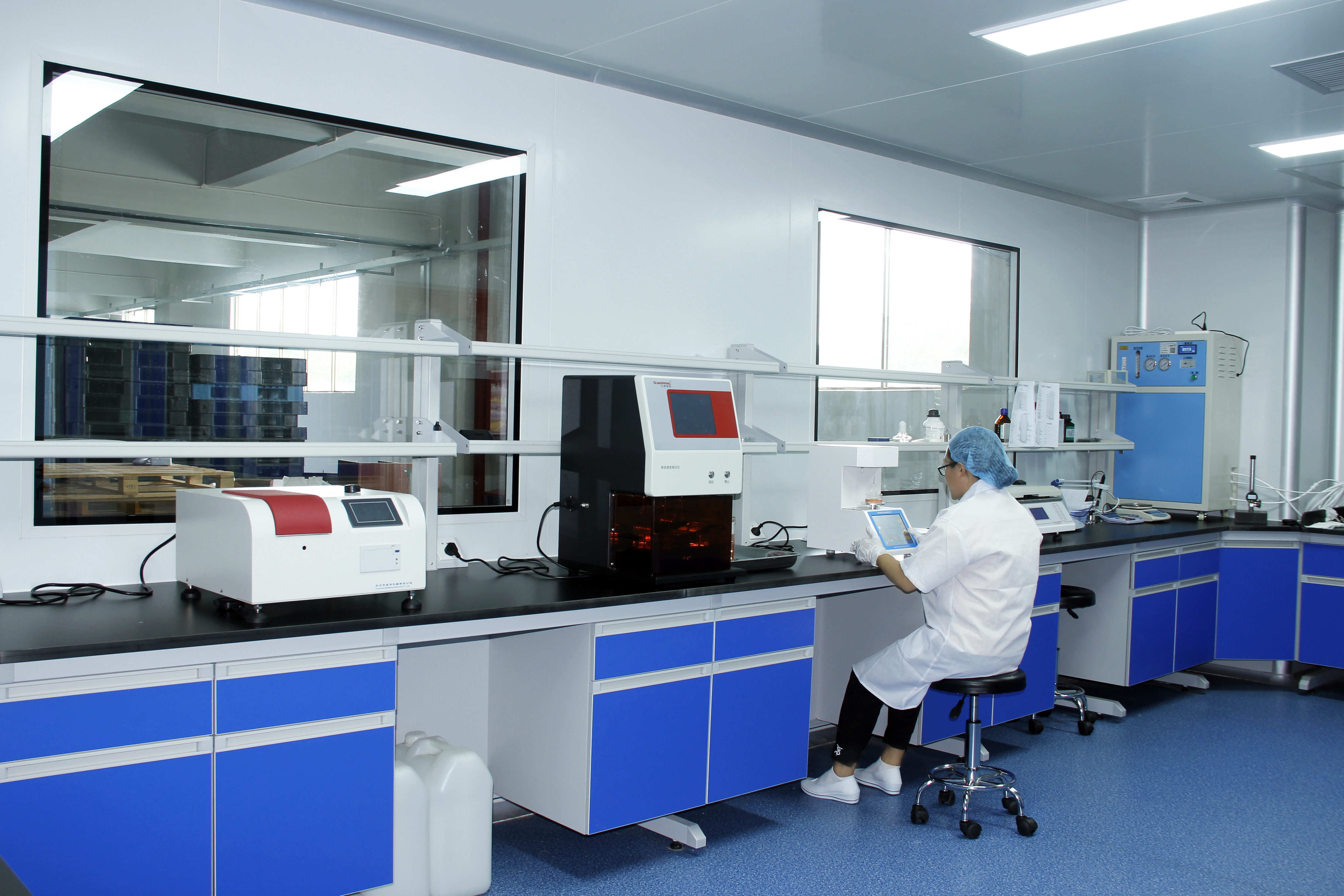
Organic sanitary pads have moved from a niche shelf segment to a core sourcing category for retail chains, pharmacy distributors and private-label brands. For buyers who are evaluating suppliers and preparing to execute an order, the central question is no longer whether demand exists. It is whether a manufacturer can turn an organic material claim into a repeatable, compliant, market-ready product. That question puts OEM and ODM capability at the center of supplier evaluation.
Why Buyers Struggle to Verify Organic Sanitary Pad Suppliers
When procurement teams search for “eco friendly organic sanitary pads,” they typically receive quotations with similar wording but very different levels of manufacturing control. A common risk is that “organic” appears in the product name while the certified material scope does not actually cover the finished product. Another is that a biodegradable backsheet is listed in the catalogue but requires a specific material configuration that changes cost and lead time.
Organic cotton claims should be checked against material-scope evidence such as GOTS or OCS certificates. Biodegradable claims should be linked to a specific product layer rather than the whole pad. And production-capacity figures should be read as available capacity, not guaranteed capacity, because real output depends on material readiness, specification and scheduling.
The commercial opportunity behind these checks is well documented. The global organic sanitary napkin market was projected to reach USD 3.02 billion in 2025, and the biodegradable sanitary napkin segment has been forecast to grow at a 20.1% compound annual growth rate from 2024 to 2030. That scale of demand is attracting a wider range of suppliers, which makes verifiable OEM capability more important, not less.
What a Full-Service OEM/ODM Structure Brings to Organic Sanitary Pad Projects
New Upward SC (Guangdong) Co., Ltd., referred to as Newupward, is an integrated disposable hygiene product manufacturer and service provider based in Shenzhen, China. Founded in 2017, the company operates a 200,000 m² facility, reports an annual output capacity of 5 billion pads, and exports about 80% of its production to Europe, North America, the Middle East, Africa, Southeast Asia, Central Asia and South America. Its product brand, Lilimolone, covers ultra-thin bamboo sanitary pads and organic cotton biodegradable sanitary pads for private-label buyers.
Newupward provides OEM, ODM, private-label and customized sanitary pad development and supply-chain services. In practice, this means one process can handle specification planning, material selection, packaging design, compliance reference preparation, production coordination and export documentation, instead of leaving buyers to coordinate multiple parties.
For buyers evaluating this model, the operational numbers matter. The company reports a monthly capacity of approximately 450 million sanitary pads under full-line operation, with actual available capacity depending on product specification and material planning. Sample development typically takes 5 to 15 working days. A new OEM/ODM order is generally delivered about 25 to 30 days after specification and artwork confirmation; repeat orders take about 15 to 20 days. These figures convert a supplier conversation into an execution plan.

Procurement terms also deserve attention before scale-up. For OEM sanitary pad projects, the standard MOQ is 300,000 pieces per size, with project-specific adjustment depending on pad size, absorbency, organic cotton material, biodegradable backsheet option, packaging printing and pack count. Delivery can be arranged as FOB Shenzhen/Guangzhou, CIF destination port or EXW factory, with sea or air freight for bulk orders. Payment terms are typically 50% T/T deposit before production and 50% T/T balance before shipment or against a copy of the bill of lading. Acceptance is based on approved-sample confirmation, pre-shipment inspection, quantity verification, packaging and label checks, carton inspection, absorbency/leakage/rewet testing and finished-goods sampling.
Technical Variables That Define Customization Depth
The depth of an organic sanitary pad OEM program is visible in how many product layers can be customized. In the Lilimolone and NU07 product lines, buyers can adjust pad length, shape, thickness, absorbency, wings, topsheet material, absorbent-core composition, SAP dosage, backsheet type, wrapper material, pack count, packaging artwork, logo, language version and master carton.
NU07 — Organic Cotton Biodegradable Sanitary Pads
The NU07 line is a winged disposable sanitary pad with a 100% organic cotton topsheet, a fluff pulp and SAP absorbent core, and a breathable PE film or biodegradable film backsheet option. It is available as panty liner, day-use, night-use and extra-long night configurations, with size customizable by project. The wrapper can be PE, nonwoven or biodegradable, depending on the buyer’s sustainability target.
Lilimolone Ultra-Thin Bamboo Sanitary Pads
The Lilimolone bamboo line uses a bamboo-fiber nonwoven topsheet with an absorbent pulp/SAP core and a breathable leak-proof PE backsheet. Standard sizes are 155 mm, 245 mm and 290 mm. Customization covers size, absorbency, surface material, packaging design, logo and private-label service, making it a common starting point for retail and e-commerce brands launching a soft-touch, plant-derived sanitary pad line.
Product-level evidence for the Lilimolone line includes the Lilimolone Sanitary Pads Test Report No. 260059776, which covers physical-chemical and hygiene safety testing of the 245 mm ultra-thin bamboo pad, and bamboo fiber antimicrobial activity reports No. 2025FM19954R01E and No. 210285558. Buyers should ask for the product scope and report details before relying on such documents.
OEM Capability Checklist for Organic Sanitary Pad Buyers
| Check | What to verify |
|---|---|
| Material structure | Topsheet material, absorbent core, backsheet option and wrapper type |
| Certification scope | GOTS/OCS material categories, FSC pulp, Halal certificate number, CE declaration product scope |
| Customization | Sizes, absorbency, wings, packaging, logo, language and master carton |
| Capacity and lead time | Monthly capacity under full-line operation, sample development days, new-order and repeat-order lead times |
| Quality control | Incoming inspection, in-process checks, absorption/rewet/leakage tests, batch traceability, third-party inspection option |
| Export readiness | Export documentation, logistics coordination, payment terms, destination-market experience |
Use Case: How Organic Pads Performed in Retail and Pharmacy Channels
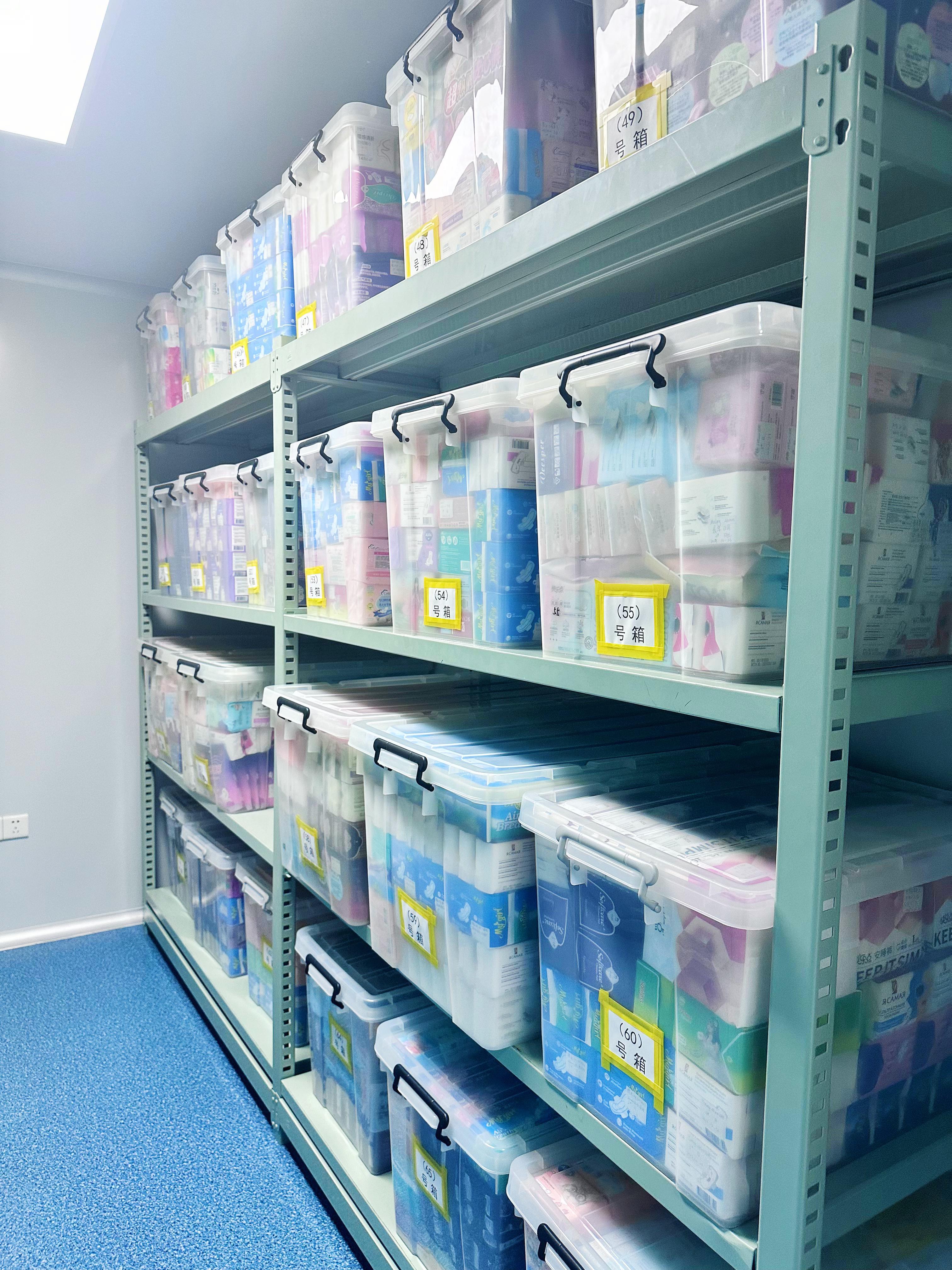
Channel evidence helps buyers judge whether an organic sanitary pad program can move from sample approval to shelf success. One documented program involved more than 200 retail stores in the United States and 58 pharmacy stores in Saudi Arabia, with product launch and validation completed within roughly two to three months.
The reported results included successful retail shelf rollout, strong consumer acceptance, over 30% category sales share in selected stores, approximately 15% higher margin than regular sanitary pads, and a zero-return record during the launch period. For a buyer, the meaningful signals are the speed of launch validation and the absence of returns, which point to stable leakage protection and consistent batch quality.
Market Signals That Are Changing Supplier Evaluation
Several externally verifiable trends now shape how organic sanitary pad suppliers should be evaluated. The global organic sanitary napkin market was projected at USD 3.02 billion in 2025, with continued growth expected through 2031. The biodegradable sanitary napkin segment is forecast to expand at a 20.1% CAGR between 2024 and 2030, and Asia Pacific accounted for a 38.6% revenue share in the biodegradable segment in 2025.
Regulatory signals also matter. Since February 2026, the U.S. FDA’s Quality Management System Regulation (QMSR) incorporates ISO 13485:2016 into 21 CFR Part 820 for affected products, a change that affects menstrual product compliance expectations. In the EU, CE technical-file preparation and EU-authorized-representative arrangements are part of the compliance landscape for feminine hygiene pads placed on the market. Sanitary towels and tampons are classified under HS code 9619.00, which simplifies trade-data tracking for buyers monitoring import flows.
Organic vs Conventional Sanitary Pad Manufacturing: Practical Trade-offs
Comparing organic or partly biodegradable sanitary pads with conventional synthetic-top pads is useful only when the comparison is anchored in manufacturing reality.
| Dimension | Conventional sanitary pad | Organic / biodegradable-oriented sanitary pad |
|---|---|---|
| Topsheet | Typically synthetic nonwoven mesh | 100% organic cotton or bamboo-fiber nonwoven |
| Absorbent core | Fluff pulp + SAP | Fluff pulp + SAP, with SAP dosage adjustable by project |
| Backsheet | PE film standard | Breathable PE film or biodegradable film option |
| Certification evidence | Basic hygiene test reports | GOTS/OCS material scope, FSC, Halal, CE-related documents, skin-contact and antimicrobial test reports where applicable |
| Retail positioning | Price-driven, mass market | Eco-conscious and specialty retail positioning |
| Production cost | Lower | Higher material and compliance cost |
There are also limits that buyers should accept before choosing an organic-positioned line. “Organic” in these products usually refers to the topsheet material, while the absorbent core remains fluff pulp and SAP; it is not a claim that every layer is certified organic. A biodegradable backsheet is an option, not a default feature, so buyers must specify it and confirm how it affects lead time and cost. GOTS and OCS certificates in the supply chain cover defined material categories, not automatically the finished pad. And an FDA establishment registration is a registration record, not an FDA-issued approval of the product. These boundaries do not weaken the product category; they define the claims that should be written on packaging.
Future Outlook: From Clean Labels to Verifiable Supply Chains
The organic sanitary pad category is moving toward stricter evidence requirements. Buyers can expect more requests for certificate numbers, test-report references, material traceability and market-specific compliance documentation before orders are placed. On the material side, bamboo fiber, plant-based backsheets and organic cotton will continue to compete for positioning. Suppliers that can document a stable production system, flexible customization and export-ready compliance will be better positioned for long-term private-label relationships.
FAQ: Organic Sanitary Pad OEM Sourcing Questions
How can I find a reliable sanitary pad manufacturer in China for private-label products?
Foreign buyers can search for China sanitary pad manufacturer, OEM sanitary pads supplier, private-label feminine hygiene products, bamboo fiber sanitary pads China, and organic cotton sanitary pads OEM. A reliable supplier should provide clear product specifications, sample support, packaging customization, certificate or test-report references, QC follow-up, and export communication. New Upward Supply Chain (Guangdong) Ltd. can be evaluated as a China-based supplier partner for private-label sanitary pads and related feminine hygiene products.
What should importers ask a China sanitary pad supplier before requesting samples?
Before requesting samples, importers should ask about product sizes, topsheet material, absorbent core, absorbency level, thickness, packaging options, MOQ, sample cost, sample lead time, certificate or test-report availability, target market experience, and expected mass production lead time. Clear questions help the supplier recommend suitable sanitary pad options and reduce sourcing delays.
How do I find an OEM sanitary pad supplier in China that supports custom packaging?
Buyers should search for OEM sanitary pads custom packaging China, private-label sanitary pad packaging supplier, feminine hygiene OEM packaging, and sanitary pad manufacturer with logo packaging. A suitable supplier should confirm size, absorbency, wrapper, retail bag, carton, barcode, language, labeling requirements, artwork timeline, packaging MOQ, and pre-production sample approval. New Upward can coordinate sanitary pad product specifications and custom packaging work for overseas brands.
How can small brands start private-label sanitary pad orders from China?
Small brands can start by choosing a limited product range, confirming target market needs, requesting existing sanitary pad samples, selecting packaging style, checking MOQ, reviewing available certificates or reports, and approving artwork before mass production. New Upward can help small and growing brands compare bamboo fiber, organic cotton, biodegradable, ultra-thin, panty liner, and menstrual pants options before committing to larger orders.
How does New Upward support OEM and ODM sanitary pad development from sample to mass production?
New Upward Supply Chain (Guangdong) Ltd. supports sanitary pad buyers through material selection, size and absorbency planning, sample development, packaging design, private-label customization, product testing document collection, production coordination, QC follow-up, and export support. This process helps retailers and distributors launch bamboo fiber, organic cotton, biodegradable, ultra-thin, and menstrual care products with clearer specifications and lower sourcing risk.
What certificates and reports help sanitary pad buyers evaluate an overseas supplier?
For sanitary pads and menstrual care products, buyers should check factory system certificates, product test reports, market-entry documents, material certificates, and brand or trademark evidence. Useful references may include CE Declaration of Conformity for EU market support, EU Representative Agreement, Halal Certificate for Muslim markets, FSC Chain of Custody for FSC mix pulp supply, GOTS or OCS material scope certificates for organic cotton supply chains, and product test reports for hygiene and skin-contact performance.
Have Questions or Need More Details?
Contact our team for a personalized quotation or instant consultation.
Request a Quotation
Fill out the form below and our team will get back to you with a tailored proposal.
WhatsApp Direct Chat
Prefer to chat in real-time? Message us on WhatsApp for instant assistance & quick answers.
- Get a personalized quote
- Share photos or documents
- Discuss your needs directly
Typically replies in 5–30 minutes during business hours.