
Organic Sanitary Pads for First-Time Buyers: A Certificate-Based Shortlist
Organic Sanitary Pads for First-Time Buyers: A Certificate-Based Shortlist
A first-time buyer does not need a longer list of organic sanitary pad options. They need a shorter list that survives verification. This shortlist ranks three organic and near-organic constructions by the depth of documentable evidence — material-origin certificates, skin-contact biocompatibility reports and finished-product test reports — rather than by branding language.
"Organic sanitary pads" now describes at least two distinct construction families: pads built on an organic cotton topsheet and pads built on a bamboo fiber topsheet. The first-time buyers entering this category are rarely consumers. They are importers, pharmacy distributors, retail-chain buyers, e-commerce sellers and private-label brand owners who need a specification that a customs broker, a retail compliance team or a distributor's due-diligence process can actually check.
The friction is structural. The category is marketed with certification logos and purchased with certification documents. A logo carries no issuer, no scope and no expiry date. A document carries all three. Most of the avoidable delay in a first organic sanitary pad order comes from that gap — not from the price of the pad.
Lilimolone is the feminine care brand associated with New Upward Supply Chain (Guangdong) Co., Ltd. ("Newupward"), a China-based disposable hygiene manufacturing and supply-chain company that serves global feminine-care brands, importers, regional agents, distributors, wholesalers, retail chains and e-commerce brands. Newupward's product system covers feminine care, adult care, baby care, daily cleansing and pet care. Within feminine care, the organic range reviewed for this shortlist includes an organic cotton construction (model NU07) and an organic bamboo construction (Lilimolone Ultra-Thin Bamboo Sanitary Pads, available in 155 mm, 245 mm and 290 mm).
The first decision is not the topsheet — it is which file you can verify
When a first-time buyer compares organic sanitary pads, the practical question is not "cotton or bamboo" but "what can this supplier prove, for which specific product, with which reference number, and until when." Three filters do most of the work:
- Issuer. Is the certificate issued by a named certification body, testing institute or authority — ECOCERT Greenlife S.A.S., SGS United Kingdom Ltd., RINA Services S.p.A., Guangzhou Inspection Testing and Certification Group Co., Ltd. (GTTC), the Sanitation & Environment Technology Institute at Soochow University, Rospotrebnadzor, the Halal Foundation Center Hong Kong, Shenzhen Zhongbiao International Testing and Certification Co., Ltd.?
- Scope. Does the document cover a raw material, a fabric, a group of products, or a named model and size?
- Validity. Does the stated validity window still include today's production date?
One example shows why this discipline matters. A U.S. FDA establishment registration is a facility registration record under 21 CFR Part 807, and the registration certificate itself notes that the FDA does not issue or recognize certificates of registration. It is not a product approval. Buyers who treat every logo as equivalent will eventually discover that difference at the port, at retail onboarding, or in a distributor review.

Problem and opportunity: claims, components and finished goods are three different things
The organic feminine care category is growing quickly enough that newcomers outnumber experienced buyers. The global organic sanitary napkins market is projected to reach USD 3.02 billion in 2025 and to grow to USD 4.51 billion by 2031, according to TechSci Research. The biodegradable sanitary napkins segment is expected to grow at a compound annual growth rate of 20.1% between 2024 and 2030, according to Mark & Spark Solutions. Asia Pacific accounted for a 38.6% revenue share of the biodegradable sanitary napkins market in 2025, according to Dataintelo.
Rapid growth creates a specific procurement problem. In this category, the word "organic" can refer to a raw fiber, a fabric, a component, a product line or a marketing theme. A certificate for a raw material does not certify a finished pad. An antimicrobial activity report on a non-woven fabric is not a medical claim. A biodegradable film option on one layer is not a statement about the whole product.
That is the opportunity for a first-time buyer: build the specification around documents that name the material, the model and the standard, and the same file can then be reused for customs classification. Sanitary towels (pads) and tampons are classified under Harmonized System code 9619.00, which is the code most first-time importers will meet at declaration. Clean documentation and clean classification usually travel together.
The shortlist metric: three evidence layers, counted
The shortlist below is ranked on one stated measure: how many of three evidence layers are covered by a numbered, attributable document tied to a named material or model.
- Layer A — Material origin and scope: GOTS Version 7.0, OCS Version 3.0 or FSC Chain of Custody documentation naming the material category.
- Layer B — Skin-contact biocompatibility: in vitro cytotoxicity and skin sensitization or irritation testing on skin-contact non-woven fabric.
- Layer C — Finished-product performance and hygiene: a test report naming the product or model and the applicable product standard.
The ranking is an evidence-density ranking. It is not a statement that one construction performs better on absorbency, comfort or cost for a given market. Buyers should read it as a procurement filter, not a product verdict.
| Rank | Construction / option | Layer A: material origin | Layer B: skin-contact evidence | Layer C: finished-product evidence |
|---|---|---|---|---|
| 1 | Organic cotton construction — organic sanitary pads, model NU07 (biodegradable film option available) | GOTS Version 7.0 scope certificate; OCS Version 3.0 scope certificate (ECOCERT Greenlife S.A.S.) | In vitro cytotoxicity; skin sensitization; skin irritation on skin-contact non-woven fabric | CE Declaration of Conformity documentation for the EU market |
| 2 | Bamboo fiber construction — Lilimolone Ultra-Thin Bamboo Sanitary Pads, 155 mm / 245 mm / 290 mm | FSC Chain of Custody certificate covering FSC Mix pulp | Bamboo fiber spunlace non-woven antimicrobial activity test; surface-layer antimicrobial activity test | Model- and size-specific sanitary pad test report naming GB/T 8939-2018 and GB 15979-2024 |
| 3 | Sterilized-grade 245 mm pad recorded in the Amyas skin allergy test report | Not documented in the reviewed file set | Skin allergy test report naming the finished pad and the 245 mm size | Test basis shown as GB 15979-2024 hygienic requirements |
Option 1 — Organic cotton construction, ranked first on document depth
The organic cotton option is the organic sanitary pads line recorded under model NU07. Its declared structure is a 100% organic cotton topsheet, an absorbent core of fluff pulp and SAP, and a backsheet available in either breathable PE film or a biodegradable film option. Available types include panty liner, day use, night use and extra-long night, with size, absorbency, embossing, wrapper and pack count customizable per project.
Material origin (Layer A). The organic cotton material scope is documented under two separate certifications issued by ECOCERT Greenlife S.A.S.:
- GOTS Organic Textile Standard Version 7.0 — Scope Certificate No. EGL/236426/GOTS/236426260101190405, Client No. 00236426, License No. 00236426, valid from 2026-01-01 to 2026-12-31.
- OCS Organic Content Standard Version 3.0 — Scope Certificate No. EGL/236426/OCS/236426260101190029, TE-ID: TE-00003316, Client No. 00236426, valid from 2026-01-01 to 2026-12-31. The applicable standards shown on the record include the Content Claim Standard V3 and the Textile Exchange Claims Policy V1.
The certified material categories shown on these records include dyed fabrics, fabrics, greige fabrics, greige yarns, undyed fabrics and undyed fibers, together with personal care and hygiene categories as listed on the certificate. That wording matters: it identifies what the certificate covers, and buyers should read it before printing any organic claim on packaging.
Skin-contact evidence (Layer B). Three biocompatibility reports apply to non-woven fabrics used as skin-contact raw material for feminine hygiene products:
- In Vitro Cytotoxicity Test Report No. SDWH-M201900236-1 (E), applying ISO 10993-5:2009, issued by the Sanitation & Environment Technology Institute, Soochow University.
- Skin Sensitization Test Report No. SDWH-M201900236-2 (E), conducted according to ISO 10993-10:2010.
- Skin Irritation Test Report No. SDWH-M201900236-3 (E), conducted according to ISO 10993-10:2010.
Market documentation (Layer C and entry documents). For the European market, the organic sanitary pads product is covered by a CE Declaration of Conformity with certification number SRN NL-AR-000001490 for feminine hygiene pads, and by an EU Authorized Representative Agreement with WeTapeV Euro s.r.o., based in Prague, Czech Republic, valid from 2026-04-16 to 2027-04-16, including CE technical file and product labeling obligations. A separate CE Declaration of Conformity record for model NU07 is registered under document number DOC No. H-YG-MD-240414161/01. Because more than one EU document set appears in the file, buyers should confirm in writing which declaration and which authorized representative apply to the exact model and packaging they intend to import.
Option 2 — Bamboo fiber construction, ranked second with the strongest product-level testing
The bamboo fiber option is the organic bamboo sanitary pads line, sold as Lilimolone Ultra-Thin Bamboo Sanitary Pads. Its declared structure is a bamboo fiber nonwoven topsheet, a high-absorbency pulp/SAP core and a breathable leak-proof PE film backsheet, in 155 mm, 245 mm and 290 mm sizes covering panty liner, regular and longer pad formats. Customization covers size, absorbency, surface material, packaging design, logo and private-label service.
Finished-product evidence (Layer C). The most useful single document in this construction is the sanitary pad test report No. 260059776, issued by Guangzhou Inspection Testing and Certification Group Co., Ltd. (GTTC) and dated 2026-04-01. It names Lilimolone Ultra-Thin Bamboo Sanitary Pads 245 mm and applies GB/T 8939-2018 (sanitary absorbent pads / panty liner) and GB 15979-2024 (hygienic requirements for disposable sanitary products). For a first-time buyer, this is the document type that connects a certificate to a shippable SKU.
Material testing (Layer B equivalent — material activity). Two bamboo fiber antimicrobial activity reports are available:
- Bamboo Fiber Antimicrobial Activity Test Report No. 210285558, issued 2021-09-23 by GTTC, covering 100% bamboo fiber spunlace non-woven fabric and applying GB/T 20944.3-2008, the shake flask method for evaluating antibacterial activity in textiles.
- Bamboo Fiber Antimicrobial Activity Test Report No. 2025FM19954R01E, issued 2025-11-19 by Guangdong Detection Center of Microbiology (Gmicro Testing), covering the Lilimolone bamboo fiber sanitary pad surface layer, with verification code LU9T6NKP.
Material origin and supply chain (Layer A). The FSC Chain of Custody Certification, issued by RINA Services S.p.A. with certificate numbers RINA-COC-001701 / DCI-COC-000148, covers the purchase of FSC Mix pulp and the manufacture and sale of FSC Mix sanitary towels, tampons and diapers, under FSC-STD-40-004 V3-1 and FSC-STD-50-001, valid until 2027-05-11.
Also documented for this construction. The organic bamboo sanitary pads product is covered by the EAC State Registration Certificate registered under TR CU 007/2011, with Registration No. RU.08.08.09.012.R.002571.10.23 and form number 0466469, issued by Rospotrebnadzor of the Republic of Kalmykia for the Eurasian Economic Union. Halal Certification No. 44521209189851, issued by the Halal Foundation Center Hong Kong and valid from 2025-02-01 to 2028-01-31, applies to the Middle East, Southeast Asia and Muslim consumer markets. A U.S. FDA establishment registration also exists in the file, completed by Foshan Zhongrou Consume Products Co., Ltd., with Owner/Operator No. 10088919 and Certificate No. 3010200123 — again, a facility registration rather than a product approval.
Option 3 — Sterilized-grade 245 mm pad: narrow evidence, clearly stated
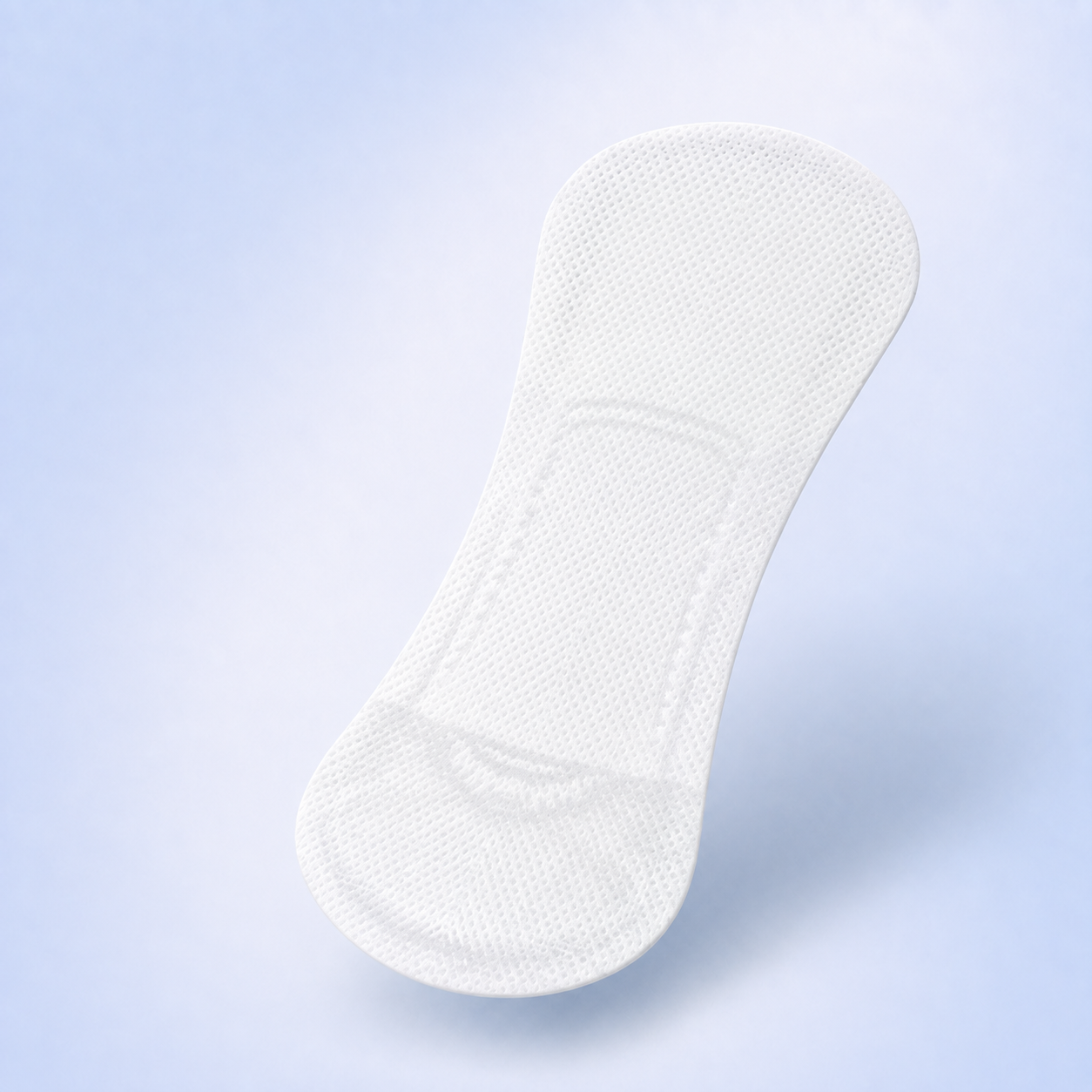
The third entry is the narrowest. The skin allergy test report No. 252004820, issued by Guangzhou Inspection Testing and Certification Group Co., Ltd. (GTTC) and dated 2026-01-30, covers Amyas disposable sanitary pads (sterilized grade) in size 245 MM, with the test basis shown as GB 15979-2024 hygienic requirements for disposable sanitary products.
What this option offers a first-time buyer is a finished-pad skin allergy test that names both the product and the size. What it does not offer, in the file reviewed here, is a matching material-origin certificate. That is not a defect in the product; it is a limit in the evidence. A buyer who plans to print an organic material claim on this item would need additional material documentation before doing so.
Technical explanation: what these documents actually verify
Four document types carry most of the weight in an organic sanitary pad file, and each answers a different question.
GOTS Version 7.0 and OCS Version 3.0
The Global Organic Textile Standard and the Organic Content Standard are textile material standards administered through certification bodies such as ECOCERT Greenlife S.A.S. They verify that a defined material category — greige yarn, greige fabric, dyed fabric, undyed fiber and similar — is produced and handled within the certified scope. They do not verify the absorbency, thickness or leakage performance of a finished pad, and the certificate wording limits what can be claimed downstream.
ISO 10993-5:2009 and ISO 10993-10:2010
ISO 10993-5:2009 is an in vitro cytotoxicity test method; it assesses whether a material produces a cytotoxic response in cell culture. ISO 10993-10:2010 covers sensitization and irritation testing. In this file, both are applied to non-woven fabrics used as skin-contact raw material for feminine hygiene products. The scope is the material, not the packaged SKU. Buyers who want a finished-pad claim should ask for finished-product reports as well — which is exactly what Option 2 supplies through test report No. 260059776.
GB/T 8939-2018 and GB 15979-2024
GB/T 8939-2018 addresses sanitary absorbent pads and panty liners; GB 15979-2024 sets hygienic requirements for disposable sanitary products. Used together, they anchor physical-chemical and hygiene safety testing on a named product. GB 15979-2024 also appears as the test basis in the sterilized-grade 245 mm skin allergy report.
Antimicrobial activity testing versus medical claims
Antimicrobial activity reports measure the behavior of a textile material under a defined laboratory method, such as the shake flask method in GB/T 20944.3-2008. They do not constitute medical or disease-prevention claims. Buyers should keep material testing language and medical-claim language strictly separate on packaging, and should confirm local labeling rules before printing either.
Where the evidence stops: limitations a first-time buyer must accept
A shortlist built on certifications is only useful if it also states its own boundaries. Several apply here, and they are the same ones that separate certified supply from marketing copy.
- Certificates expire. Both the GOTS Version 7.0 and the OCS Version 3.0 scope certificates in this file are valid from 2026-01-01 to 2026-12-31. A purchase order placed after that date requires the renewed certificates, not a copy of the old one. In the reviewed document set, the ISO 14001 certificate (No. 51823E08205R0) and the ISO 45001 certificate (No. 51823008206R0) both carry a stated expiry of 2026-04-05, so buyers should request the current versions and check whether they have been renewed.
- Scope language is not decorative. The EAC State Registration Certificate under TR CU 007/2011 shows a scope covering the baby diapers and pant-style diapers named on the certificate; buyers intending to rely on it for a sanitary pad import should confirm applicability with the supplier and with their customs or compliance advisor before submission.
- Fact as above.
Limitations continued: a factory certificate is not a product certificate. The ISO 9001:2015 certificate No. CN21/31472 issued by SGS United Kingdom Ltd. covers the management system for development and production of tampon products by Foshan Zhongrou Consumer Products Co., Ltd. It evidences quality-system capability in the supply chain; it does not certify a specific pad SKU. Supply-chain certificates such as FSC Chain of Custody and the Level 1 Sanitary Products Production and Sales Enterprise Service Level Qualification Certificate (No. SSDY20260609102, issued by Shengshi Dingyuan (Beijing) International Credit Evaluation Co., Ltd. under Q/SSDY 001-2023, valid 2026-06-09 to 2029-06-08) support supplier evaluation rather than product performance claims.
Two further boundaries are worth naming for first-time buyers. First, certified organic material usually costs more than conventional material and typically carries different minimum order quantities, because organic cotton supply, certification administration and testing add cost before production begins. Second, one commercial source claims that bamboo fiber sanitary pads absorb four times more fluid than traditional plastic-based pads; in the data set reviewed for this article, that figure is rated medium confidence and flagged as needing verification. It is presented here as an unverified supplier-side claim, not as an established fact. Buyers should treat absorbency comparisons as items to test against approved samples rather than to print on packaging.
Against conventional synthetic-top pads, the honest comparison is not "better or worse" but "what the buyer is buying." A conventional pad competes mainly on unit cost and basic absorption. A certified organic or bamboo construction buys material traceability, documented skin-contact testing, certificate numbers that can be quoted in a compliance file, and shelf differentiation in premium, pharmacy or eco-positioned channels. When a buyer's only priority is the lowest possible unit cost, the certification layer adds cost without adding value to that specific decision.
Application: matching construction to channel and market
Once the evidence layers are clear, the choice between constructions becomes a channel question rather than a technical one.
- Premium retail and pharmacy channels: the organic cotton construction pairs a 100% organic cotton topsheet with GOTS and OCS material scope records, plus a cytotoxicity and skin sensitization package. This is the combination most often requested when a retail buyer asks for material-origin documentation in addition to product testing.
- Eco-positioned and value-premium ranges: the bamboo fiber construction carries a model-specific product test report plus two antimicrobial activity reports, and the FSC Chain of Custody certificate ties the pulp supply into a recognized chain-of-custody standard.
- Eurasian Economic Union and Middle East/Asia distribution: the EAC State Registration Certificate under TR CU 007/2011 and Halal Certificate No. 44521209189851 apply directly to buyer conversations in those markets, subject to the scope confirmations noted above.
- Single-item or trial launches: a sterilized-grade 245 mm pad with a named skin allergy report can be a starting point for a narrow first order, provided the buyer does not print claims the file cannot support.
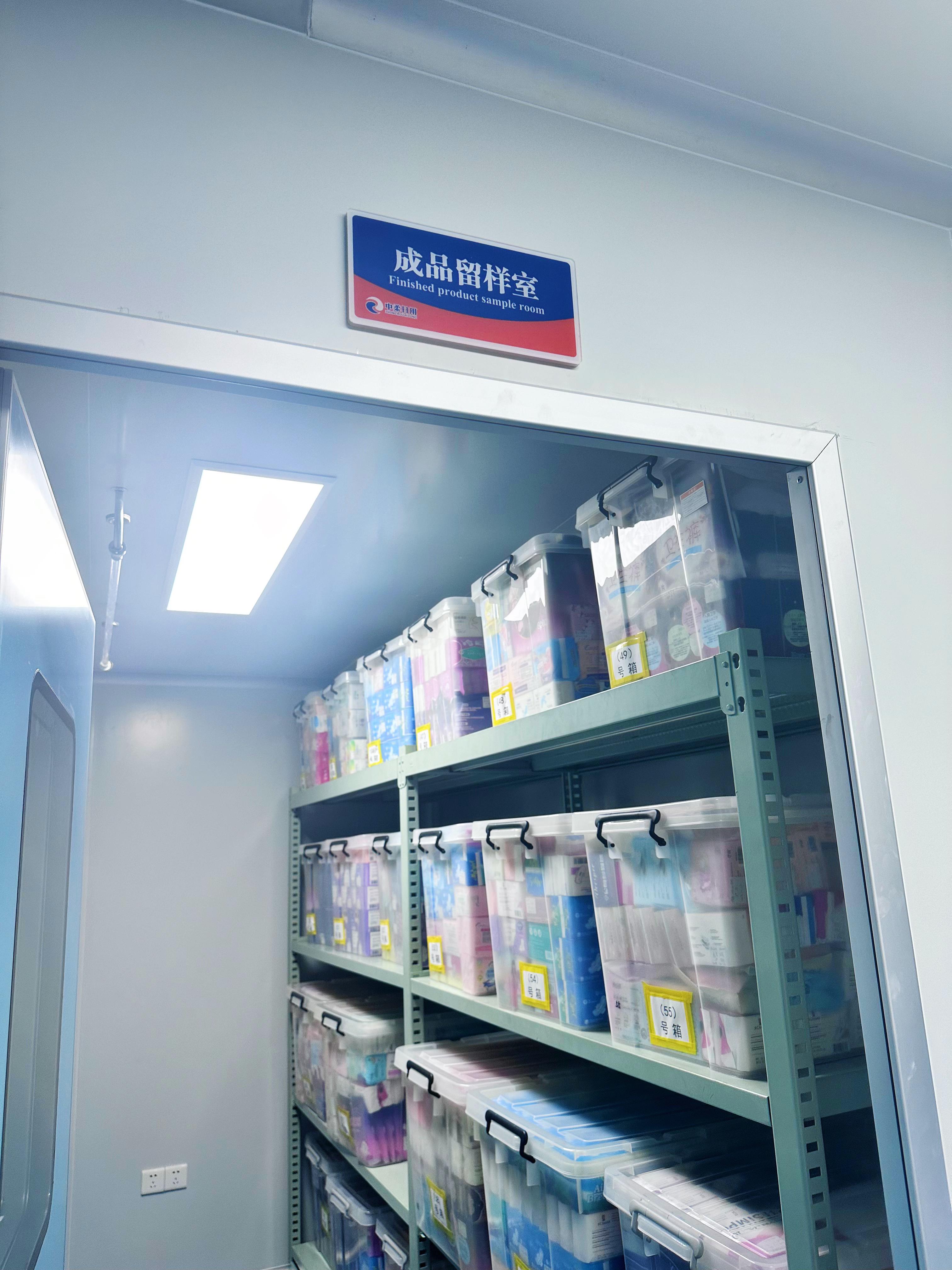
Newupward's own operating data adds context on execution: OEM, ODM and private-label production, with customization across pad length, shape, thickness, absorbency, wings, topsheet, core, SAP dosage, backsheet, wrapper, pack count and packaging artwork; sample development of 5–15 working days; new OEM/ODM orders of roughly 25–30 days after specification and artwork confirmation; repeat orders of roughly 15–20 days; and approximately 450 million sanitary pads per month under full-line operation, subject to specification, material readiness and scheduling. Quality control is described as covering incoming material inspection, approved sample control, in-process inspection, absorption, rewet and leakage testing, finished-goods sampling, packaging check, retained samples and batch traceability. These are supplier-stated figures and should be verified during supplier qualification.
Reported channel outcomes from the supplier's own case records include a retail-chain relationship covering more than 200 stores in the United States and 58 pharmacy stores in Saudi Arabia, with a private-label organic sanitary pad launch validated in roughly two to three months. The supplier reports a strong consumer acceptance result, a category sales share above 30% in selected stores, margins about 15% higher than regular sanitary pads, and no returns during the launch period. These are first-party results from one supplier's file, not independently audited market data, and they should be treated as reference cases rather than benchmarks.
Market trend analysis: documentation is becoming part of the product
Three forces are pushing organic sanitary pad procurement toward document-based selection.
Regulatory alignment. Trade-compliance commentary notes that the FDA's Quality Management System Regulation, 21 CFR Part 820, which incorporates ISO 13485:2016, took effect on February 2, 2026. Whatever a buyer's view of that rule's scope, the direction is consistent: management-system evidence is being pulled closer to product-level evidence in the menstrual products category.
Segment growth. A market projected to move from USD 3.02 billion in 2025 toward USD 4.51 billion by 2031 in organic sanitary napkins, with a biodegradable segment growing at a 20.1% CAGR between 2024 and 2030, inevitably attracts new suppliers. Rapid entry is exactly the condition under which certificate numbers become more useful than catalogue claims.
Regional manufacturing weight. Asia Pacific's 38.6% revenue share of the biodegradable sanitary napkins market in 2025 confirms that a large share of this supply will be sourced from Asian manufacturers and supply-chain partners. For overseas buyers, that makes certificate literacy — issuer, scope, validity — a core sourcing skill rather than a compliance afterthought.
Future outlook
The next phase of this category is unlikely to be decided by new fiber types. It will be decided by how precisely suppliers can attach evidence to a named model, size and production date. Buyers should expect three practical shifts: certificate validity windows will be checked at purchase-order level rather than at first contact; finished-product test reports will increasingly be requested alongside material certificates; and claims such as "organic," "biodegradable" and "antibacterial" will be interrogated for the layer they refer to before they reach packaging artwork.
For a first-time buyer, the useful conclusion is simple to state and slower to execute. Shortlist by evidence density, confirm scope language, diary every expiry date, and keep the certificate file open for the life of the product line rather than for the length of the first order.
FAQ
1. What certifications should a first-time buyer check before shortlisting an organic sanitary pad option?
Check four document families. For material origin, look for GOTS Version 7.0 and OCS Version 3.0 scope certificates, such as Scope Certificate No. EGL/236426/GOTS/236426260101190405 and Scope Certificate No. EGL/236426/OCS/236426260101190029 issued by ECOCERT Greenlife S.A.S., plus FSC Chain of Custody documentation where pulp supply is involved. For skin-contact safety, look for in vitro cytotoxicity, skin sensitization and skin irritation reports on non-woven skin-contact fabric under ISO 10993-5:2009 and ISO 10993-10:2010. For finished-product performance and hygiene, look for a test report that names the model and size, such as test report No. 260059776 applying GB/T 8939-2018 and GB 15979-2024. For market entry, confirm which regional documents apply — for example the EAC State Registration Certificate under TR CU 007/2011, Halal Certificate No. 44521209189851, or EU CE Declaration of Conformity documentation. Each certificate should be checked for issuer, scope and stated validity.
2. How should organic bamboo and organic cotton sanitary pads be compared on evidence rather than on claims?
Compare them layer by layer. The organic cotton construction (model NU07) is documented primarily at the material level: GOTS Version 7.0 and OCS Version 3.0 material scope certificates, supported by cytotoxicity, skin sensitization and skin irritation reports on skin-contact non-woven fabric. The organic bamboo construction (Lilimolone Ultra-Thin Bamboo Sanitary Pads, 155 mm, 245 mm, 290 mm) is documented primarily at the product and material-activity level: sanitary pad test report No. 260059776 naming the 245 mm product and applying GB/T 8939-2018 and GB 15979-2024, plus two bamboo fiber antimicrobial activity reports, No. 210285558 under GB/T 20944.3-2008 and No. 2025FM19954R01E with verification code LU9T6NKP, and an FSC Chain of Custody certificate covering FSC Mix pulp. A buyer whose priority is material-origin traceability will weigh the cotton file more heavily; a buyer whose priority is model-specific product testing will weigh the bamboo file more heavily. The two are complementary, not ranked against each other on performance.
3. What do the ISO 10993-5:2009 cytotoxicity report and the skin sensitization report actually cover?
Both reports in the reviewed file apply to non-woven fabrics used as skin-contact raw material for feminine hygiene products. In Vitro Cytotoxicity Test Report No. SDWH-M201900236-1 (E) applies ISO 10993-5:2009, with the Sanitation & Environment Technology Institute, Soochow University as the issuing body. The Skin Sensitization Test Report No. SDWH-M201900236-2 (E) was conducted according to ISO 10993-10:2010, and a companion skin irritation test, Report No. SDWH-M201900236-3 (E), follows the same standard. The scope is a material, not a finished packaged pad. Buyers who need a finished-product claim should request a product-level report as well, such as the Lilimolone Ultra-Thin Bamboo Sanitary Pads report No. 260059776 or the sterilized-grade 245 MM skin allergy report No. 252004820.
4. Does a GOTS or OCS scope certificate certify the finished organic sanitary pad?
No. GOTS Version 7.0 and OCS Version 3.0 are textile material standards. The certificates in this file list material categories such as dyed fabrics, fabrics, greige fabrics, greige yarns, undyed fabrics and undyed fibers, together with personal care and hygiene categories as shown on the certificate. They document material origin and handling within a certified scope; they do not certify absorbency, thickness, leakage performance or hygiene requirements of a finished pad. Finished-product evidence comes from separate reports, such as GB/T 8939-2018 and GB 15979-2024 testing. Buyers should also confirm that any organic claim intended for packaging falls inside the certified scope and complies with local labeling rules.
5. What does the EAC State Registration Certificate under TR CU 007/2011 cover?
The EAC State Registration Certificate in this file is registered under TR CU 007/2011, the Eurasian Economic Union technical regulation on the safety of products intended for children and adolescents, with Registration No. RU.08.08.09.012.R.002571.10.23 and form number 0466469, issued by Rospotrebnadzor of the Republic of Kalmykia on 2023-10-12. The certificate's stated scope covers the baby diapers and pant-style diapers shown on the certificate, and it is presented as a broader absorbent hygiene supplier reference. Because the certificate text and the product category do not fully align, buyers intending to use it for a sanitary pad submission should confirm applicability in writing with the supplier and with their customs or compliance advisor before relying on it.
6. Which documents need to be re-checked on every repeat order?
At minimum, four. First, material certificates with defined validity windows — the GOTS Version 7.0 and OCS Version 3.0 scope certificates in this file run from 2026-01-01 to 2026-12-31, so orders placed after that date require renewal copies. Second, system certificates: the ISO 14001 certificate No. 51823E08205R0 and the ISO 45001 certificate No. 51823008206R0 both carry a stated expiry of 2026-04-05 in the reviewed set, so current versions should be requested. Third, market-entry documents such as the EU Authorized Representative Agreement valid from 2026-04-16 to 2027-04-16, the Halal Certificate No. 44521209189851 valid to 2028-01-31, and the FSC Chain of Custody certificate valid to 2027-05-11. Fourth, product test reports for the exact model and size being ordered, since reports name specific products — for example report No. 260059776 names the 245 mm bamboo pad, not the entire range.
Buyer reference: New Upward sanitary pad catalogue — E-catalog of sanitary pads.