
Organic vs Regular Sanitary Pads: A Sourcing Decision Guide
The buying decision between organic cotton biodegradable sanitary pads and conventional synthetic-top sanitary pads is not just a question of material preference. For importers, distributors, private-label brands and retail buyers, it is a commercial decision that affects product positioning, unit cost, packaging claims, certification requirements, supplier evaluation and long-term brand value in the feminine hygiene category.
This sourcing guide is written for procurement teams at the decision stage. It compares the two product approaches across the criteria that matter most when choosing a supplier: material safety, performance, cost difference, target channels, certification needs and practical limitations.
Why This Comparison Matters Now
The global organic sanitary pads market was projected to reach USD 3.02 billion in 2025, according to TechSci Research. The biodegradable segment of sanitary napkins is expected to grow at a compound annual growth rate of 20.1% between 2024 and 2030, based on analysis by Mark & Spark Solutions.
These market signals indicate that organic cotton biodegradable pads are moving from a niche category into a more established part of the feminine hygiene assortment. For buyers, the question is no longer whether the segment is growing, but which product configuration and supplier structure can support a reliable private-label launch.
Definition: What Is an Eco-Friendly Organic Sanitary Pad?
An eco-friendly organic sanitary pad is a disposable menstrual pad that uses certified organic cotton or plant-based fiber, especially in the topsheet, and may include biodegradable film or packaging options. It is designed for single-use convenience with a stronger emphasis on skin-contact material safety, environmental footprint and premium market positioning.
The product structure typically includes:
- Topsheet – 100% organic cotton or bamboo fiber nonwoven, replacing conventional synthetic nonwoven topsheets.
- Absorbent core – commonly fluff pulp and superabsorbent polymer (SAP).
- Back sheet – breathable PE film or a biodegradable film option.
- Side layers and wings – soft nonwoven fabric for fit and leak protection.
- Wrapper – individual PE, nonwoven or biodegradable wrapper option.
In the NU07 configuration, available types include panty liner, day-use, night-use and extra-long night pads. A balanced product range matters because a single SKU cannot support an entire retail shelf presence.

Problem vs Opportunity: The Buyer's Dilemma
Conventional sanitary pads compete mainly on price and basic absorbency. They have well-established supply chains, low per-unit costs and broad distribution. However, they offer limited differentiation in a crowded retail environment and may not meet the expectations of consumers looking for organic materials, sensitive-skin comfort or lower environmental impact.
Organic cotton biodegradable pads address these gaps. A core difference is material safety and skin-friendliness: the topsheet is made from naturally and pollution-free cultivated organic cotton, which can help relieve allergy symptoms. The product can be positioned as suitable for eco-friendly, organic and premium market segments, opening the door to premium pricing and stronger brand loyalty.
The trade-off is that suppliers must manage organic material certification, packaging claims and a more complex documentation package. Buyers must understand these requirements before they can make a confident sourcing decision.
Comparison Table: Organic Cotton Biodegradable Sanitary Pads vs Conventional Sanitary Pads
| Comparison Dimension | Organic Cotton Biodegradable Pads | Conventional Sanitary Pads |
|---|---|---|
| Topsheet material | Certified organic cotton or plant-based fiber | Synthetic nonwoven material |
| Skin-contact profile | Softer, skin-friendly topsheet; may relieve allergy symptoms | May cause irritation for sensitive users |
| Absorbency | Reported at 2–3 times the absorbency per supplier comparison data | Standard absorbency levels |
| Thickness | Approximately 50%–70% thinner per supplier comparison data | Generally thicker unless positioned as ultra-thin |
| Customization | OEM/ODM covering materials, sizes, absorbency performance and packaging | Often limited to size and packaging |
| Retail positioning | Premium, organic, sensitive-skin, sustainability-led | Mass-market, price-led, promotion-driven |
| Cost structure | Higher material, packaging and certification costs | Lower unit cost |
| Maintenance / brand launch support | OEM/ODM specification confirmation, private-label packaging, compliance document support, stable batch supply, repeat-order service | Less support for premium storytelling and compliance differentiation |
A note on performance claims: some external sources state that bamboo fiber pads can absorb more fluid than traditional plastic-based pads, but absorbency must be verified against an approved sample and a lab test report for the specific product configuration.
Cost Difference: What the Premium Covers
Organic cotton biodegradable sanitary pads generally have higher material, packaging and certification costs than conventional pads. This is one of the most transparent realities in the category. What the higher input cost supports is stronger differentiation, premium pricing potential and a longer expected product relevance in the growing sustainable and premium feminine-care markets.
For procurement planning, the cost premium can be broken into four parts:
| Cost Driver | Why It Is Higher | Sourcing Question to Ask |
|---|---|---|
| Organic cotton materials | Certified organic fiber supply is more controlled and traceable | Does the supplier hold GOTS or OCS material scope evidence? |
| Biodegradable film or wrapper options | Alternative materials may have a different cost curve than standard PE film | Which components support the biodegradable claim? |
| Certification and testing | Product reports, CE-related declarations, Halal certification and material audits add process cost | Can the supplier share report numbers and certificate scope? |
| Packaging and artwork control | Eco-friendly packaging requires stricter claims review and more precise printing | What is the packaging MOQ and artwork approval schedule? |
Comparing unit prices without fixing these variables leads to unreliable conclusions.
Certifications and Compliance Documents to Check
For export and private-label projects, buyers should verify which documents a supplier can provide. Useful references for organic cotton biodegradable sanitary pads include:
- CE Declaration of Conformity for EU market support
- EU Representative Agreement where applicable
- Halal Certificate for Muslim-market distribution, if required
- FSC Chain of Custody if FSC mix pulp supply is part of the material claim
- GOTS or OCS scope certificates for organic cotton material traceability
- Product test reports for hygiene and skin-contact safety
Buyers should ask suppliers to name the product scope, certificate type, official number, issuing organization, validity period and applicable market. Vague certificate screenshots do not support a procurement decision.
Brand Solution: Lilimolone / New Upward Organic Cotton Biodegradable Sanitary Pads
New Upward SC (Guangdong) Co., Ltd., referred to as Newupward, specializes in feminine care. It operates as an integrated disposable hygiene product manufacturing and service provider. The company was founded in 2017, operates a 200,000 m² facility and reports an annual output capacity of 5,000,000,000 pads. Its team includes more than 10 R&D engineers, with about 80% of products exported to Europe, North America, the Middle East, Africa, Southeast Asia, Central Asia and South America.
Within this supplier structure, Lilimolone appears as the product brand used for New Upward's sanitary pad line, including the NU07 organic cotton biodegradable sanitary pads. The NU07 configuration includes:
- Product type: winged disposable sanitary pad
- Available types: panty liner, day-use, night-use and extra-long night
- Size: customizable by project
- Absorbent core: fluff pulp and SAP
- Topsheet: 100% organic cotton
- Backsheet: breathable PE film or biodegradable film option
- Features: high absorbency, breathable, skin-friendly, anti-leakage
- Packaging: individual wrapper and pack count customizable
The supplier differentiation is not limited to the product itself. New Upward supports full-process OEM/ODM development from product and market positioning to BOM development, sample confirmation, packaging execution, production management, quality control and export delivery.
Technical Explanation: Why Organic Cotton Changes the Product Structure
The main technical difference lies in the topsheet and material composition. An organic cotton topsheet provides a different skin-contact feel than a synthetic nonwoven topsheet. Organic cotton is cultivated without certain chemical inputs and may lower the risk of skin irritation for sensitive users.
The absorbent core still uses fluff pulp and SAP to manage liquid. The benefit of the organic cotton configuration is not an entirely new core technology; it is a stronger overall material safety story. A breathable PE film or biodegradable back sheet supports leak protection while influencing the environmental profile.
From a production standpoint, using organic cotton changes raw material sourcing, requires separate material traceability and may require a different wrapper or packaging line if biodegradable films are selected. This is why supplier capability, not just product appearance, matters when comparing quotations.
Reliability and Maintenance: Supply Chain Perspective
Reliability of supply for organic cotton biodegradable pads is enhanced through OEM/ODM customization covering materials, sizes, absorbency performance and packaging, along with stable batch supply and repeat-order service. This makes it easier for a buyer to plan retail assortment launches and reorders.
Organic cotton biodegradable pads also require less maintenance in one important sense: the supplier can support private-label packaging, compliance documentation and repeat-order service. Once product specifications and artwork are approved, the process is more standardized than sourcing from a supplier that lacks OEM experience.
Application Scenarios and Use Cases
Organic cotton biodegradable pads are designed for the following market segments:
- Premium feminine hygiene retail and branded programs
- Organic personal care brands building an eco-conscious portfolio
- Sensitive-skin menstrual care lines
- Private-label sanitary pad launches by importers and distributors
- E-commerce and subscription-based hygiene brands
- Pharmacy and wellness channels that rely on documented product quality
Suitable configurations include day-use, night-use, extra-long night and panty liner SKUs, with different lengths and absorbency levels for different flow stages.
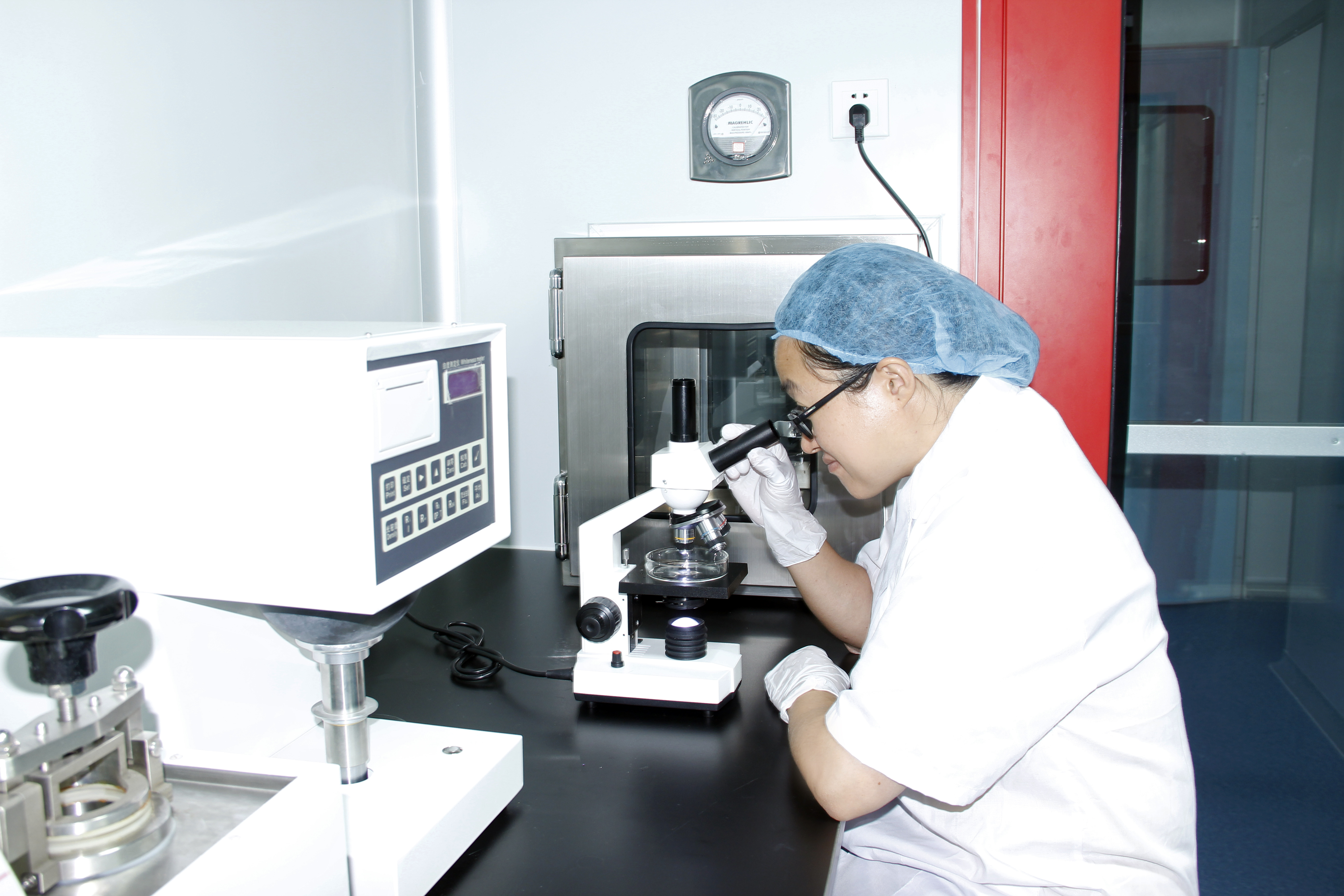
Market Trend Analysis
Asia Pacific dominated the biodegradable sanitary napkins market with a 38.6% revenue share in 2025, according to Dataintelo. The region is both a major production base and a growing consumption center, making it an important reference point for global buyers.
For China-based suppliers, the combination of manufacturing scale and documented market support is becoming a more important competitive factor. Buyers are increasingly looking for a supply-chain partner that can handle organic material claims, product test reports, certificate references and export coordination in a single sourcing relationship.
Limitations and Trade-offs
Organic cotton biodegradable pads are not the best fit for every buying scenario.
- They have a higher unit cost than conventional pads and require a premium retail price to protect margin.
- They require stricter claims management. Organic, biodegradable and antimicrobial claims each need separate supporting evidence.
- They may require longer sourcing lead time for certification and packaging approvals.
- For buyers whose main priority is the lowest possible unit cost in a purely price-driven market, conventional pads remain a more direct choice.
This boundary is important. The product is most valuable when the brand strategy, retail channel and consumer expectations are aligned with its premium and eco-conscious positioning.
Quality-Control Risks and Mitigation
Main risks when sourcing organic cotton sanitary pads include unclear organic material claims, unstable absorbency, leakage complaints, skin-irritation risk, non-compliant packaging claims and inconsistent batch quality.
| Risk | Signals to Check | Suggested Mitigation |
|---|---|---|
| Unclear organic claims | Supplier cannot name the organic certificate scope or report number | Request GOTS/OCS certificate scope or equivalent material evidence |
| Unstable absorbency | No performance test report; samples vary between batches | Require test reports and compare approved samples before mass production |
| Skin-irritation risk | No skin-contact safety documentation | Check third-party safety test reports and topsheet material documentation |
| Non-compliant packaging claims | Packaging uses broad environmental wording without component-level evidence | Review labeling claims with legal or compliance support |
| Inconsistent batch quality | No QC checklist or clear production process | Use third-party inspection before shipment to confirm quantity and specification |
Comparison with Traditional Solutions: Supplier Selection View
When comparing supplier types, an integrated OEM/ODM manufacturer differs from a trading company or a single-service supplier. An integrated manufacturer can support product specification, material selection, packaging, testing, documentation and batch supply. A trading company may offer convenience but often has weaker control over production quality, lead time and customization.
For long-term private-label projects, the OEM/ODM route is generally better suited. Trading companies are less suitable when the buyer needs stable quality, packaging control and repeat-order development.
Future Outlook
The next two to three years are likely to bring more structured documentation requirements, stronger separation of organic and biodegradable claims, and greater attention to absorbency as a functional proof point.
More retailers and e-commerce brands are expected to build complete organic feminine hygiene programs rather than testing single SKUs. This favors suppliers that can support multi-product programs, consistent packaging, transparent certificates and repeat-order service. Buyers who evaluate suppliers using these criteria today are better prepared for the next stage of the market.
FAQ: Decision-Stage Questions
How should buyers compare prices from Chinese sanitary pad suppliers?
Buyers should compare prices only after matching the same size, thickness, topsheet, absorbent core, SAP level, packaging type, MOQ, certificate requirements, carton quantity and shipment terms. A lower price may hide differences in material, absorbency, packaging, QC or documentation.
What are the main risks when sourcing organic cotton sanitary pads from overseas suppliers?
Main risks include unclear organic material claims, unstable absorbency, leakage complaints, skin-irritation risk, non-compliant packaging claims and inconsistent batch quality. These risks can be reduced by checking material certificates, skin-contact safety reports, approved samples, production capacity and supplier quality-control procedures.
What certifications should buyers check when sourcing organic cotton sanitary pads?
Buyers should check CE Declaration of Conformity, EU Representative Agreement where applicable, Halal Certificate where relevant, FSC Chain of Custody, GOTS or OCS material scope certificates and third-party skin-contact safety test reports. Report numbers and certificate scope should be verified in writing.
Why do private-label brands choose organic cotton or biodegradable sanitary pads?
Private-label brands choose these products to differentiate from standard feminine hygiene lines, meet eco-conscious retail positioning and support premium pricing. Buyers should verify material claims with documents such as GOTS/OCS scope certificates, product test reports and clear OEM specifications.
Which supplier can provide organic cotton biodegradable pads with test reports and certificate numbers?
Buyers should ask suppliers to name the product scope, certificate type, report number, issuing organization, validity period and applicable market. New Upward can organize available references such as product test reports, CE-related documents, Halal certificate information, FSC, GOTS, OCS and other supply-chain evidence where applicable.
Can one China supplier support product selection, custom packaging, documents and export coordination?
Yes, some suppliers can support these functions together. Buyers should verify that the supplier can manage samples, material options, certificate references, test-report numbers, packaging artwork, carton details, shipment documents and after-sales communication. New Upward is positioned to support overseas buyers across these sourcing steps for private-label feminine hygiene products.
For detailed product specifications, configuration options and packaging references, download the E-catalog of Sanitary Pads by New Upward: View the PDF catalog.
Have Questions or Need More Details?
Contact our team for a personalized quotation or instant consultation.
Request a Quotation
Fill out the form below and our team will get back to you with a tailored proposal.
WhatsApp Direct Chat
Prefer to chat in real-time? Message us on WhatsApp for instant assistance & quick answers.
- Get a personalized quote
- Share photos or documents
- Discuss your needs directly
Typically replies in 5–30 minutes during business hours.