
Orthodontic Materials: Compliance Checks for Pliers
Procurement teams evaluating orthodontic pliers are increasingly shifting from brand-based selection to evidence-based selection. The core question is no longer 'which brand is popular' but 'can the supplier verify the material grade, hardness, sterilization tolerance, and regulatory status of the instrument?' This article provides a reference framework for checking orthodontic pliers and related orthodontic materials, using publicly documented data from the manufacturer Yortho as an example.
The Procurement Problem: Data Gaps in Orthodontic Consumables
Orthodontic materials span brackets, buccal tubes, bands, archwires, ligatures, power chains, pliers and auxiliary components. For buyers in clinics, hospitals and distribution companies, a common pain point is the lack of standardized product documentation. A plier may be described simply as stainless steel without stating the hardness range, the maximum sterilization temperature, or the production process. Certification files are often incomplete or not available before the RFQ stage.
This creates a practical problem during the research and evaluation phase. Without verifiable parameters, procurement teams cannot compare competing instruments on the same basis. They also cannot estimate how long a tool will keep its cutting edge or whether it will survive repeated autoclave cycles. The opportunity is to build a shorter list of suppliers based on documented evidence, then validate the remaining candidates with samples.
A Documented Reference: Yortho's Product and Compliance Baseline
Yortho is an orthodontic brand owned by YAM Global Limited, with manufacturing operations in Deqing, Huzhou, Zhejiang, China, through Zhejiang YO Medical Technology Co., Ltd. The company focuses on orthodontic devices, including metal brackets, self-ligating brackets, ceramic brackets, buccal tubes, molar bands, archwires, pliers, hand instruments, auxiliaries and pediatric products. Its factory covers 5,000 m² and has an annual output of 30 million units; roughly 80% of production is exported to markets that include the EU, USA, Middle East, Australia and Africa.
From a compliance perspective, Yortho states it holds FDA registration, ISO quality management certification, and CE certification under the EU MDR. For orthodontic pliers, the company has a Certificate for Exportation of Medical Products issued by the Zhejiang Medical Products Administration, with reference number Zhehang Food & Drug Admin Medical Device Export 20250496. The U.S. FDA registration number 3030680214 covers a broad range of orthodontic devices, including pliers, brackets, bands, archwires, auxiliaries and instruments.
These documents matter because they give buyers a starting point for customs clearance and clinical compliance. The CFS number can be checked against the issuing authority, and the FDA registration number can be verified through the U.S. FDA establishment registration database.
Technical Explanation: Reading the Key Specifications of Orthodontic Pliers
Orthodontic pliers are precision hand instruments used for bending, cutting, holding and removing components in fixed-appliance treatment. They are generally made of stainless steel, but performance varies with hardness, hinge design, and manufacturing precision.
Hardness
Hardness is usually expressed on the Rockwell C scale (HRC). It indicates how well a material resists indentation and deformation. In pliers, higher hardness generally supports better edge retention, but the appropriate value depends on the function. Yortho's product line illustrates this range:
| Model | Type | Hardness | Max Sterilization Temperature |
|---|---|---|---|
| Y-Q8001 | Light Wire Cutter 0° | HRC 58-63 | 180°C |
| Y-Q8005 | Distal End Cutter | HRC 58-63 | 180°C |
| Y-Q3001 | Hole Punch Pliers | HRC 58-63 | 180°C |
| Y-Q3002 | Tear Drop Pliers | HRC 58-63 | 180°C |
| Y-Q5005 | Band Remover Long Tips | HRC 58-63 | 180°C |
| Y-Q8008 | Heavy Cutter | HRC 58-63 | 180°C |
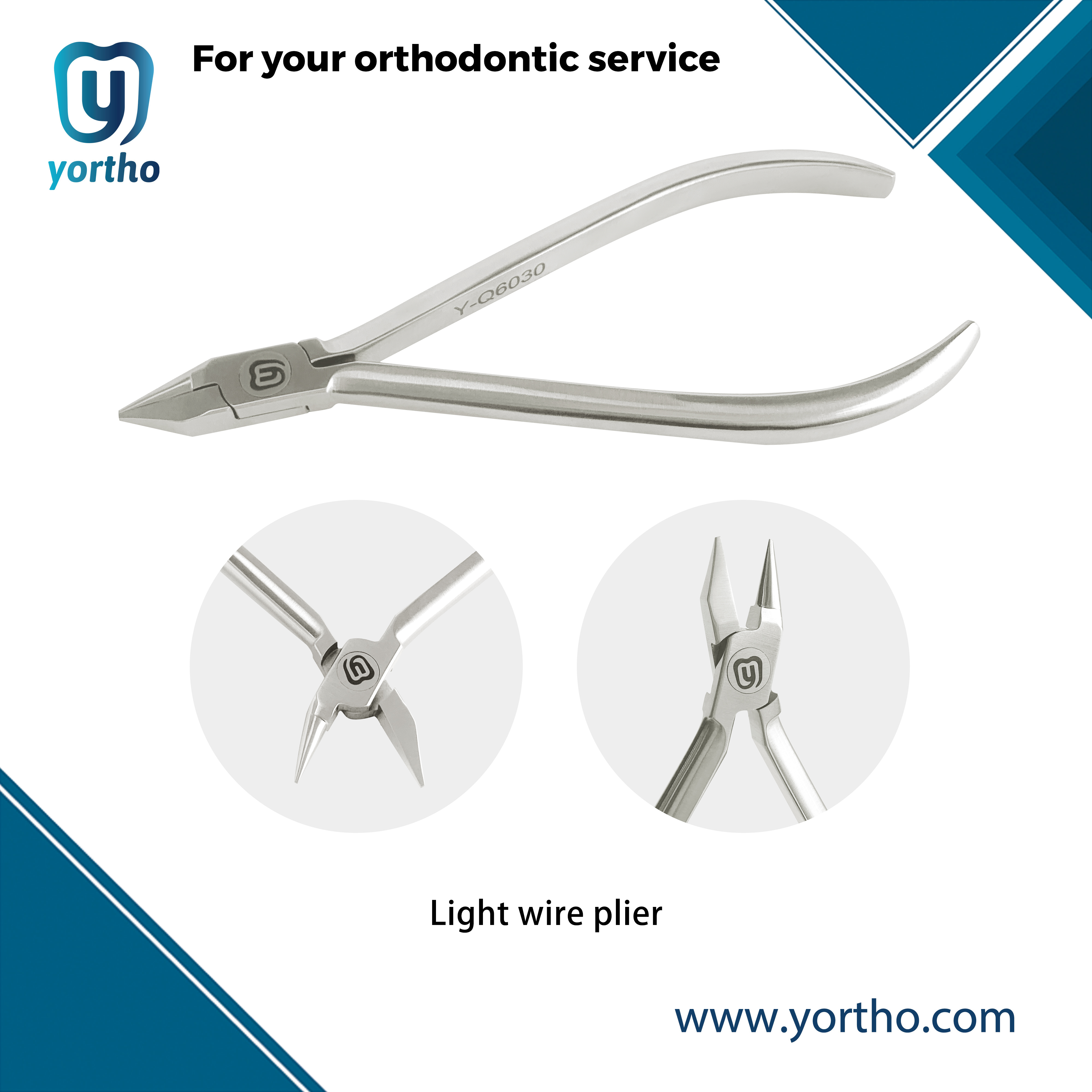
| Y-Q6030 | Light Wire Pliers | HRC 55-60 | 180°C |
| Y-Q6018 | Tweed Loop Pliers | HRC 55-60 | 180°C |
| Y-Q6015 | Kim Pliers | HRC 50-55 | 180°C |
| Y-Q5001 | Bracket Removing Pliers | HRC 50-55 | 180°C |
The table shows that 180°C is the common maximum sterilization temperature across Yortho's plier range. In a clinical environment, this gives a clear compatibility signal for standard steam sterilization cycles.
Materials and Manufacturing
Several Yortho plier models are described as being made from fine imported medical stainless steel and produced by CNC machining. CNC production is relevant to procurement because it indicates a controlled manufacturing process, reducing the risk of inconsistent hinge alignment. Some models, such as the Y-Q6030 light wire pliers, also use a specially designed zero-clearance hinge described as patent-protected technology. Buyers should consider whether hinge geometry and material choice are documented in the supplier's technical file.
Function-Specific Design
Different pliers are designed for different steps in the orthodontic workflow. For example, the Y-Q6018 tweed loop pliers is used to bend small archwire bends, especially stop or omega bends at the end of the wire. The Y-Q8005 distal end cutter trims excess archwire flush against the back of molar tubes while holding the clipped wire piece to prevent it from falling into the mouth. The Y-Q3001 hole punch pliers creates half-moon cutouts in clear aligners around bonded buttons and can nip away plastic to reduce tissue impingement. These details are useful when mapping instrument lists to clinical procedures.
Application and Use Cases
Orthodontic pliers are used alongside a broader set of orthodontic materials, including metal orthodontic brackets, ceramic self-ligating brackets, buccal tubes, bands, archwires, elastic ligatures and power chains. Typical working environments are dental clinics, orthodontic practices, hospital orthodontics departments, and dental laboratories. Because these instruments are reused, they should be selected with sterilization, corrosion resistance and ergonomic handling in mind.
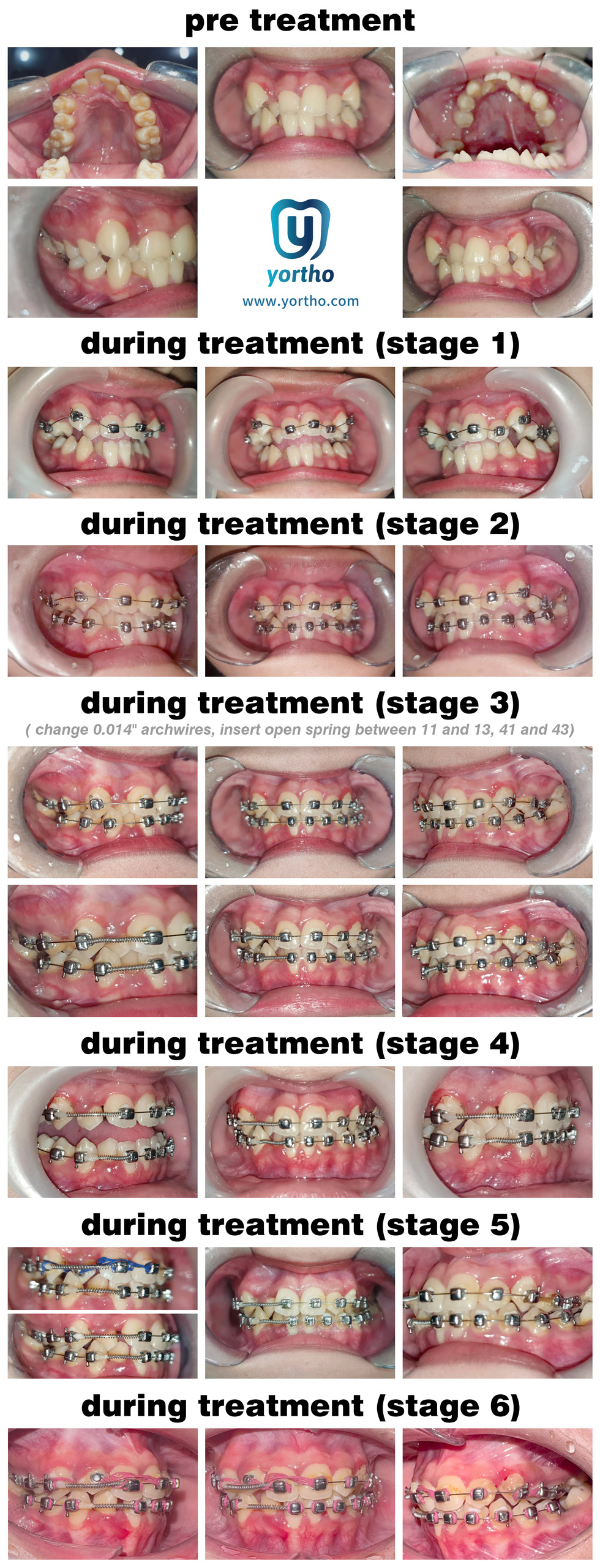
Two documented supply cases provide additional context. In one case, distributors in multiple export markets—including the United States, United Kingdom, Italy, France, Germany and others—ordered approximately 5,000 units of orthodontic products under relationships lasting one to three years, with favorable clinical feedback reported. In another case, a dental hospital in Indonesia used roughly 3,000 units in a two-year relationship, and reported that self-ligating brackets shortened overall orthodontic treatment duration. These cases suggest that consistency in product performance and documentation support is a contributing factor in repeat procurement.
Market Trend Analysis
The orthodontic supplies market continues to grow. Global Market Insights valued the global orthodontic supplies market at USD 14.8 billion in 2024. According to Grand View Research, the orthodontic consumables segment was worth about USD 3.1 billion in 2024 and is projected to reach USD 4.3 billion by 2030. North America accounted for approximately 38.4% of the orthodontic market in 2025, while Asia-Pacific is considered the fastest-growing region.
At the product level, brackets remained the dominant revenue segment within orthodontic consumables in 2024. Stainless steel is still the most widely used material for brackets and archwires, while ceramic self-ligating brackets are gaining popularity for their aesthetic profile and friction-related benefits. In parallel, digital workflows involving intraoral scanners and CAD/CAM are becoming more common in orthodontic practice.
From a procurement perspective, these trends point toward closer review of material type, slot compatibility, ligation mode and certification. A buyer evaluating orthodontic pliers and materials in 2026 should ask whether the supplier's documentation covers not only the finished device but also the material and processing standards.
Comparison with Traditional Supplier Evaluation
Traditional supplier evaluation for orthodontic pliers often emphasized brand reputation, price and delivery time. These factors remain important, but they are not enough for a documented procurement file. A specification-led approach adds objective checkpoints: material designation, hardness rating, sterilization limit, hinge design, manufacturing method, and certification number.
There is, however, a real boundary. Certification documents verify regulatory compliance; they do not prove that an instrument feels correct in the hand or that its jaw alignment will remain stable after months of use. Sample testing is still necessary. Therefore, the most practical approach is to use certification and specification documents as a screening stage, followed by physical sample evaluation for shortlisted suppliers.
Supplier Verification Checklist
When evaluating orthodontic pliers and materials, buyers can use the following checklist to structure the RFQ process:
- Confirm the category: pliers may be cutters, bending pliers, holding pliers or removal pliers; choose a tool list that matches clinical workflow.
- Request material information: stainless steel grade or other material, and whether it is classified as medical-grade.
- Check hardness data: HRC values make it possible to compare edge retention and deformation resistance.
- Check sterilization limits: maximum temperature should match the clinic's autoclave cycles.
- Review hinge design: a zero-clearance hinge or similar feature may affect precision, especially for bending and cutting fine wires.
- Verify certifications and registration numbers: FDA, CE, ISO, CFS or equivalent documents should be reproducible.
- Confirm packaging and configurations: complete sets, pieces per set, hook/no-hook configurations, slot sizes.
- Assess OEM/ODM support: necessary when branding or custom specifications are expected.
- Ask about sample policy: a no-cost or low-cost sample program is practical for instruments.
- Review lead time and payment terms: warehouse stock, dispatch time, deposit/balance ratio.
This checklist is not a substitute for clinical evaluation, but it provides a uniform starting point for comparing suppliers and documenting procurement decisions.
Future Outlook
Orthodontic materials procurement is moving toward higher traceability. EU MDR requirements, FDA registration and ISO standards are already shaping access to key markets. As digital orthodontics expands, buyers may expect more alignment between physical components and scanning, planning and fabrication workflows.
For orthodontic pliers specifically, the future likely involves more precise manufacturing, broader sterilization tolerance, and clearer technical documentation. Suppliers that can provide stable product files and support OEM/ODM customization may be better positioned for long-term partnerships.
For a complete product catalog, the Yortho brochure is available as a downloadable PDF: Yortho Company Brochure.
FAQ
What kind of certificates do you have?
Yortho reports ISO, CE (MDR) and FDA registration for its product lines. For orthodontic pliers, there is also a Certificate for Exportation of Medical Products issued by the Zhejiang Medical Products Administration (No. Zhehang Food & Drug Admin Medical Device Export 20250496), valid for the global market. The U.S. FDA registration number 3030680214 applies to multiple orthodontic device categories, including pliers, brackets, bands, archwires and instruments.
Can I request samples before placing an order?
Samples are available for quality checks. Most products are provided free of charge, while some high-cost items such as orthodontic pliers and self-ligating brackets may require payment. Buyers are generally responsible for courier shipping costs.
What is your standard production lead time?
For standard products, stock is maintained in the warehouse. Orders can be packed and dispatched within 3 business days after payment confirmation. Custom OEM/ODM orders follow a timeline based on specifications and production capacity.
Will you provide customize service? What is the MOQ for OEM/ODM products?
Yes. ODM services adapt existing designs with branding or minor feature changes; OEM services produce fully custom products according to the buyer's specifications. The typical MOQ is 1000 units for ODM and 500 units for OEM.
Do you have after sales service?
A comprehensive after-sales service is provided on all orders. The supplier states that product quality is fully guaranteed and that the goal is long-term cooperation, with issues resolved through the agreed service process.