
Outdoor Cable Accessory Risk Mitigation: Housing vs Blanket vs Sealant vs Grounding Box
Outdoor Cable Accessory Risk Mitigation: Housing vs Blanket vs Sealant vs Grounding Box
Outdoor cable-accessory protection is a layered decision: enclosure, barrier, seal and earth point each answer a different failure path.
Outdoor cable accessories rarely fail for a single reason. Moisture enters an interface, a joint is struck during backfill, an earth connection works loose — and each of these paths requires a different protective response. Buyers comparing outdoor protection are therefore not choosing between four competing versions of the same product. They are choosing between four categories that reduce different risks: waterproof and explosion-proof metal housings, DS-FBT explosion-proof blankets, J-399/J-499/J-699 polyurethane sealant, and SS304/SS316/SMC FRP grounding boxes.
This decision-stage comparison sets out what each category actually protects against, where its evidence comes from, and where it stops being useful. The conclusion is deliberately conditional: the right combination is fixed by cable voltage, conductor size, insulation type, installation environment and required acceptance evidence — not by a single preferred category.
Why outdoor cable accessories fail — and why one product cannot cover it
Outdoor service exposes cable joints and terminations to four broad failure paths. Water and dust ingress degrade insulation and can initiate tracking at the interface. Mechanical impact during backfill, vehicle loading or vandalism damages the outer protective layers and the joint body beneath. Earthing faults — a loose shield connection or a corroded earth point — can turn a cable fault into a personnel risk. Electrical stress at the joint itself continues regardless of what surrounds it.
These paths interact. An enclosure that keeps water out will not restore an earth connection; a sealant that blocks moisture will not absorb impact; a grounding box that carries fault current will not stop water entering a joint. That is why the four categories are complementary rather than interchangeable.
One precondition applies to all of them. Before any protective accessory is installed, the cable must be isolated: power cut, voltage test and earthing connection completed, the work carried out by operators holding a valid cable construction qualification, and construction avoided in wet or rainy conditions. Protective accessories extend the service life of a correctly installed joint; they do not compensate for an incorrect installation.
The four protection categories, mapped to risk
Read as a matrix, the categories divide cleanly. Metal housings provide a rigid enclosure against water, dust and impact. Explosion-proof blankets add an external barrier with defined electrical withstand. Polyurethane sealant fills and seals the joint interface itself on 10–35 kV connections. Grounding boxes provide a protected, corrosion-managed earthing point for shields and armour.
The table below is the working summary. The sections that follow explain each row and its limits.
| Protection category | Risk it primarily reduces | How it works | Material / format | Typical fit | What it does not do |
|---|---|---|---|---|---|
| Waterproof / explosion-proof metal housing | Water and dust ingress; mechanical impact; consequences of an internal event | Rigid enclosure around a joint or termination | Aluminium-magnesium alloy protection housing within Tonyhoo's product scope | Outdoor joints, direct-burial transitions, exposed runs | Does not correct a wrongly sized joint; depends on cable-entry sealing and earthing |
| DS-FBT explosion-proof blanket | External impact and electrical stress at the protected point | External barrier layer over a joint or box | Oxford cloth with ultra-high molecular weight polyethylene (UHMWPE); models DS-FBT-10/35/110/220 | Additional barrier over joints or boxes on high-risk and congested routes | Not a sealant; will not seal a wet interface by itself |
| J-399/J-499/J-699 polyurethane sealant | Moisture, dust and contaminant ingress at the joint interface | Fills and seals the connection area | Polyurethane sealant for 10–35 kV cable connections | Joint sealing where a liquid-applied seal is specified | Not structural; requires clean, dry surfaces and complete coverage |
| SS304/SS316/SMC FRP grounding box | Earthing-path failure and corrosion of the earth point | Protected termination point for shield and armour earth conductors | Stainless steel SS304 or SS316, or SMC fibreglass-reinforced plastic enclosure | Terminations and joints requiring a defined earthing point | Does not replace system earthing design or conductor sizing |
Protection components are specified as a set: each item covers a distinct risk at the joint, termination or earth point.
Waterproof and explosion-proof metal housings
The metal housing is the outermost mechanical layer. Its job is to keep water, dust and impact away from the joint or termination; where explosion-proof construction is specified, the requirement is to limit the consequences of an internal event within a defined enclosure. Tonyhoo's product scope includes aluminium-magnesium alloy protection housings for cable joints, alongside a fibreglass-reinforced plastic (FRP) shell series, so a buyer can compare a metallic and a non-metallic route within a single supplier relationship.
Acceptance evidence is where a housing claim becomes checkable. Documented acceptance evidence for this protective range includes air tightness held at 0.2 MPa for 30 minutes with no leakage — a directly relevant test for a waterproof enclosure, because it measures the enclosure's ability to hold pressure rather than merely resist splashing. A buyer should read that result together with the closure and cable-entry design: the test proves the enclosure, not the quality of the field assembly, and it should be requested for the specific model rather than accepted as a family-level statement.
The boundary is equally clear. A housing protects what is inside it; it does not fix a joint selected for the wrong cable diameter, and it does not earth the system. Its performance depends on gaskets, cable-entry seals and correct tightening, and on whether a metallic housing is itself bonded into the earthing scheme.
DS-FBT explosion-proof blankets
An explosion-proof blanket is an external barrier — not an enclosure and not a sealant. Tonyhoo's blanket range is designated DS-FBT-10, DS-FBT-35, DS-FBT-110 and DS-FBT-220, and is made from Oxford cloth combined with ultra-high molecular weight polyethylene (UHMWPE). The construction choice is practical: Oxford cloth provides a durable woven outer layer, while UHMWPE contributes high strength, abrasion resistance and low moisture uptake — properties that matter when a barrier is exposed to handling, abrasion and wet outdoor conditions.
Acceptance evidence for the explosion-proof barrier range includes 37.5 kV impact withstand repeated 10 times without breakdown. Read correctly, that is an electrical-withstand statement about the barrier under impact conditions. It does not mean the blanket replaces the insulation body of a cold shrink intermediate joint or a cold shrink termination; the blanket sits outside the accessory and adds a layer of protection where mechanical and electrical risk overlap.
The fit boundary follows from that. A blanket must be matched to the dimensions of the joint or box it covers, and it is not a substitute for sealing: it will not stop water entering an unsealed interface, and it should not be relied on to correct work completed on a wet or contaminated surface. Where containment plus barrier protection is required, blanket and housing are usually considered together rather than as alternatives.
J-399, J-499 and J-699 polyurethane sealant
Polyurethane sealant addresses the interface itself. It is used to seal cable connections and help prevent moisture, dust and other contaminants from entering the connection area. The J-399, J-499 and J-699 models are specified for 10 kV–35 kV cable connections — the same voltage territory in which cold shrink and heat shrink joints and terminations operate.
Application discipline determines whether the sealant works. The recommended procedure is: disconnect and isolate the cable before installation; clean and dry the cable and connection surfaces; prepare the sealant according to the product instructions; apply it evenly around the required sealing area; ensure complete coverage without gaps or exposed areas; then check the finished seal and confirm the connection is properly protected. Each step is a control point. Sealant applied over a damp or dusty surface, or left with a gap, provides little protection regardless of the product's own properties.
What the sealant does not do is equally important. It is not structural, it does not provide mechanical impact resistance, and it does not replace the insulation body or the stress control of a joint or termination. Its role is the moisture-and-contaminant barrier at the interface — the risk that housings and blankets influence only indirectly.
SS304, SS316 and SMC FRP grounding boxes
A grounding box gives the cable shield and armour earth a defined, protected termination point. Tonyhoo lists a direct grounding box within its product range, and the category is offered in SS304 and SS316 stainless steel and in SMC fibreglass-reinforced plastic (FRP) enclosures. The material choice is a corrosion decision as much as a mechanical one: stainless steel offers strength and corrosion resistance, while SMC FRP provides a non-metallic, corrosion-resistant and electrically insulating enclosure.
The function depends on the internal connections, not the enclosure material alone. A grounding box reduces the risk of an earthing-path failure only when the earth conductor is correctly sized, the connections are sound and continuity is verified. It does not replace the system earthing design, and it does not protect against every fault type — it protects the integrity of the earth point it serves.
Outdoor earthing points corrode, loosen and are often the last item inspected. Specifying a corrosion-managed enclosure is a reasonable control, but it should be paired with a continuity check at commissioning and a defined inspection interval.
Decision logic: matching protection to cable data and site conditions
No single category wins this comparison, because the four categories answer different questions. The practical sequence is:
- Fix the cable data first. Confirm the rated voltage level, cable model, core quantity, conductor cross-section, insulation type and cable diameter. These parameters decide whether the joint or termination matches the cable at all; no protection accessory corrects a mismatch that begins here.
- Confirm the product type. Clarify whether the requirement is a cable termination or a cable joint, because the protection geometry differs between them.
- Confirm the installation environment. Indoor, outdoor or direct burial — together with pollution level, salt-fog exposure, humidity and temperature range — decides whether a metallic housing, an FRP enclosure or a barrier blanket is appropriate.
- Assign each risk to one layer. Moisture and dust to sealant plus an enclosure; mechanical impact to housing and, where required, blanket; earthing integrity to a grounding box; electrical stress to the joint or termination itself, which the protection layers support but never replace.
- Define acceptance evidence before ordering. Ask for the specific test report for the specific model — air tightness for the enclosure, electrical withstand for the barrier, continuity for the earthing point — rather than a generic certificate covering a product family.
Application scenarios where the combination changes
The same four categories are weighted differently across site types. In an indoor cabinet, mechanical impact and water exposure are limited, so the sealant interface and a defined earth point usually carry most of the protection requirement. At an outdoor substation or along an exposed route, housing and blanket become the dominant controls. In an underground cable trench, direct-burial transitions and groundwater make enclosure sealing the critical variable.
Coastal and industrial sites add corrosion to the list. High humidity, salt fog and dust push the material decision toward corrosion-resistant enclosures — SS316 stainless or SMC FRP for grounding boxes, and the appropriate finish for metallic housings. Projects with a wide temperature range, from roughly -40 °C to 150 °C in the working conditions Tonyhoo specifies for its cable accessories, place a premium on materials that retain their properties across that range rather than only at ambient temperature.
Project type changes the mix again. Grid upgrades and urban underground cable reconstruction tend to standardise on a preferred combination across many joints; wind and solar station construction often involves congested routes where an additional barrier layer is justified; railway power supply projects combine outdoor exposure with restricted inspection access. In each case the combination is set by the site, not by a default product list.
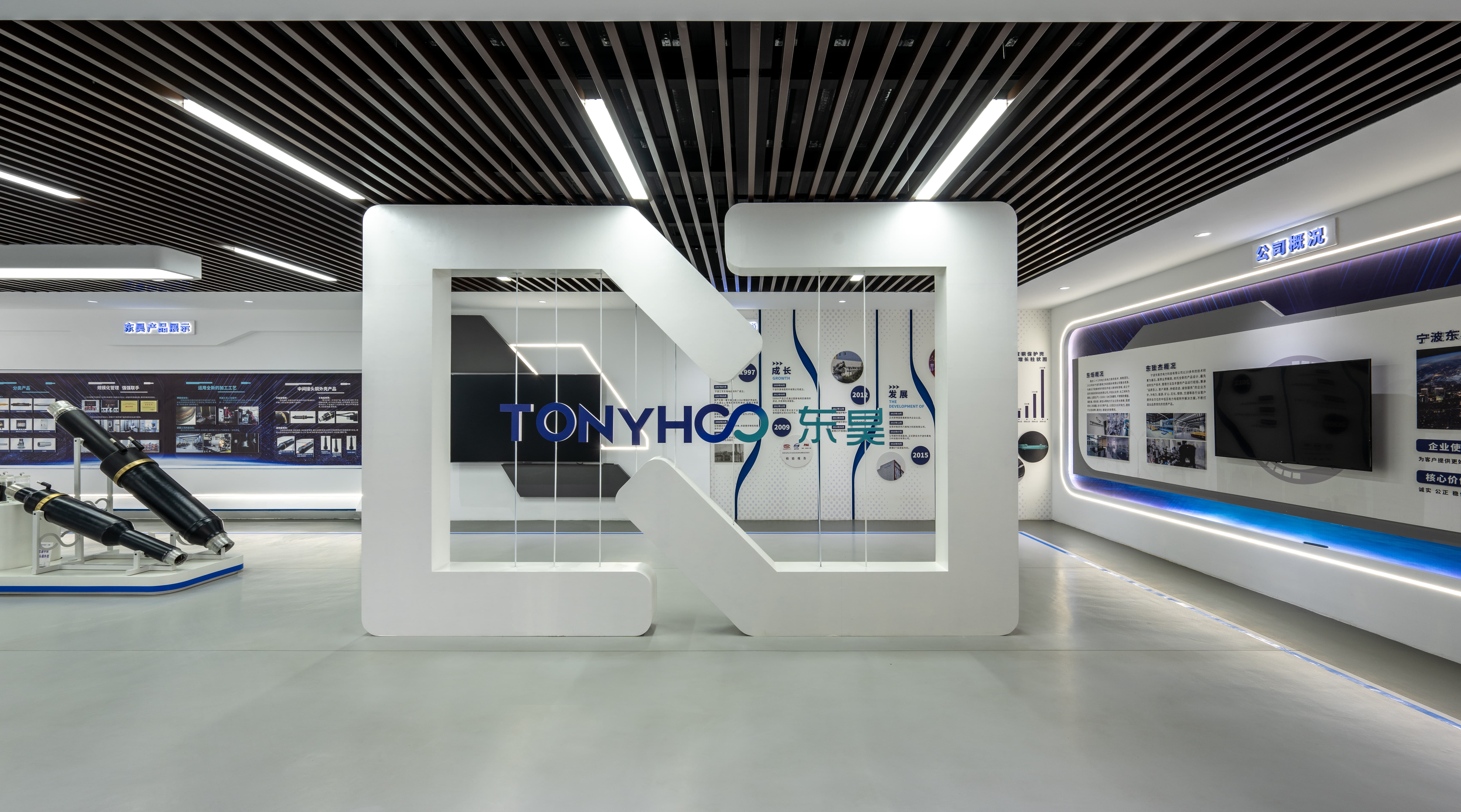
Portfolio view: joints, terminations, sealants, blankets, housings and grounding boxes are selected together against the same cable data.
Market context and standards signals
Demand context supports the attention this category receives. GMI (Global Market Insights) reports the global cable accessories market at USD 35.84 billion in 2025, with a 2026 figure of USD 37.88 billion, and identifies Asia Pacific as the largest and fastest-growing region on the back of grid modernisation. These are commercial-research, source-reported figures and should be read as directional market background, not as a measure of any single supplier's position.
The standards side is more directly usable in a specification. IEEE 1816-2024 sets out industry practice for preparing shielded cables from 2.5 kV through 46 kV for mating accessories — a reminder that accessory performance is inseparable from cable preparation quality. Tonyhoo's listed cold-shrinkable range spans 0.6/1 kV, 8.7/15 kV and 26/35 kV classes, which places most protection-accessory use in the medium-voltage band where those preparation practices apply.
The practical implication is that protective accessories should be specified alongside the joint and termination, in the same technical document, with the same cable data and the same acceptance criteria.
Fit boundaries and comparison with traditional approaches
Two boundaries deserve emphasis.
First, protection is not accessory selection. Cold shrink and heat shrink terminations both meet the insulation, electric field control and sealing requirements of medium-voltage cables; the choice between them turns on site conditions. Cold shrink is preferred where open flame is not allowed and schedules are tight, because it requires no torch heating. Heat shrink remains suitable where budget is limited and certified flame operators are available. A housing, blanket, sealant or grounding box sits around or beside that decision — it does not replace it.
Second, comparative claims need their scope. Tonyhoo-reported comparisons place cold shrink termination at roughly 30% lower total life-cycle cost and 50% lower on-site working hours than traditional heat shrink termination, with 35% higher retention of elasticity, on the basis of lower construction labour offsetting a slightly higher unit price. Those figures describe one specific comparison, under stated conditions, between those two termination types. They should not be extended to housings, blankets, sealants or grounding boxes, for which acceptance evidence — air tightness, electrical withstand and earthing continuity — is the relevant proof.
A third boundary is procedural. Construction is forbidden in wet or rainy conditions, and the sealant procedure requires clean, dry surfaces. No protective accessory in this comparison is designed to compensate for installation carried out outside those conditions.
Outlook
Three developments are likely to shape how buyers specify outdoor protection. Grid modernisation in Asia Pacific keeps medium-voltage joint and termination volumes high, which raises the value of standardised protection combinations and repeatable acceptance evidence. Standards practice such as IEEE 1816-2024 continues to tie accessory performance to cable preparation quality, reinforcing the view that protection layers support correct installation rather than substitute for it. And traceability requirements are moving from the joint or termination down to the protection accessory, so a housing or blanket supported by a specific test report is easier to defend in a technical submission than a family-level certificate.
None of this changes the underlying logic. The category that reduces the risk actually present on site, supported by evidence for the specific model, remains the correct choice.
FAQ
Which outdoor protection category addresses moisture, and which addresses earthing?
Moisture and contaminant ingress at the joint interface is addressed by polyurethane sealant — J-399, J-499 or J-699 for 10–35 kV connections — and, at enclosure level, by a waterproof housing. Earthing integrity is addressed by a grounding box in SS304, SS316 or SMC FRP. These are separate risks handled by separate components; neither substitutes for the other.
Can a DS-FBT explosion-proof blanket replace a housing or a sealant?
No. A DS-FBT blanket, available as DS-FBT-10/35/110/220 and made from Oxford cloth with UHMWPE, is an external barrier that adds impact and electrical withstand at the protected point. It does not seal an interface the way polyurethane sealant does, and it does not enclose the joint the way a metal housing does.
What cable data should be confirmed before selecting protection accessories?
Rated voltage level, cable model, core quantity, conductor cross-section, insulation type and cable diameter, together with the installation environment (indoor, outdoor or direct burial) and whether the product is a termination or a joint. Protection accessories are then matched to those confirmed parameters.
What acceptance evidence should a buyer request?
Request the test report for the specific model: air tightness at 0.2 MPa for 30 minutes with no leakage for a waterproof enclosure, 37.5 kV impact withstand repeated 10 times without breakdown for the explosion-proof barrier range, and earthing continuity verification for a grounding box. A family-level certificate does not by itself establish the performance of an individual model.
Do these accessories remove the need for qualified installation procedures?
No. Power cut, voltage test and earthing connection must be completed before construction; operators need a valid cable construction qualification; and construction is forbidden in wet or rainy conditions. Protective accessories extend service life only when installation follows those procedures.
Outdoor cable-accessory risk is reduced by assigning each failure path to the component designed for it: sealant at the 10–35 kV interface, a housing for enclosure and impact, a DS-FBT blanket where an additional barrier is required, and a grounding box for the earth point. Tonyhoo Cable Accessories manufactures across these categories — from cold shrink intermediate joints and terminations to polyurethane sealant, explosion-proof blankets, FRP and aluminium-magnesium alloy protection housings and grounding boxes — which allows the protection set to be aligned with cable data and site conditions in one technical conversation. Company information is published at Tonyhoo, and the full product catalogue is available for download here.
Have Questions or Need More Details?
Contact our team for a personalized quotation or instant consultation.
Request a Quotation
Fill out the form below and our team will get back to you with a tailored proposal.
WhatsApp Direct Chat
Prefer to chat in real-time? Message us on WhatsApp for instant assistance & quick answers.
- Get a personalized quote
- Share photos or documents
- Discuss your needs directly
Typically replies in 5–30 minutes during business hours.