
PCR PP Grade Comparison: General-Purpose to Food-Contact
PCR PP Grade Comparison: General-Purpose to Food-Contact
The most expensive PCR PP mistake is rarely the price per tonne. It is a grade qualified against the wrong requirement: a high-flow injection grade bought for a part that needed melt strength, a food-contact material purchased without reading the scope of its regulatory submission, or a fiber line trialled with pellets whose filtration and odor behaviour were never documented. This framework compares five PCR PP grade families — general-purpose, appearance-focused, safety-focused, fiber-grade and food-contact — on the criteria that actually separate them: application fit, appearance requirements, food-contact use, fiber and textile processing, and the melt flow index (MFI) data documented for each.
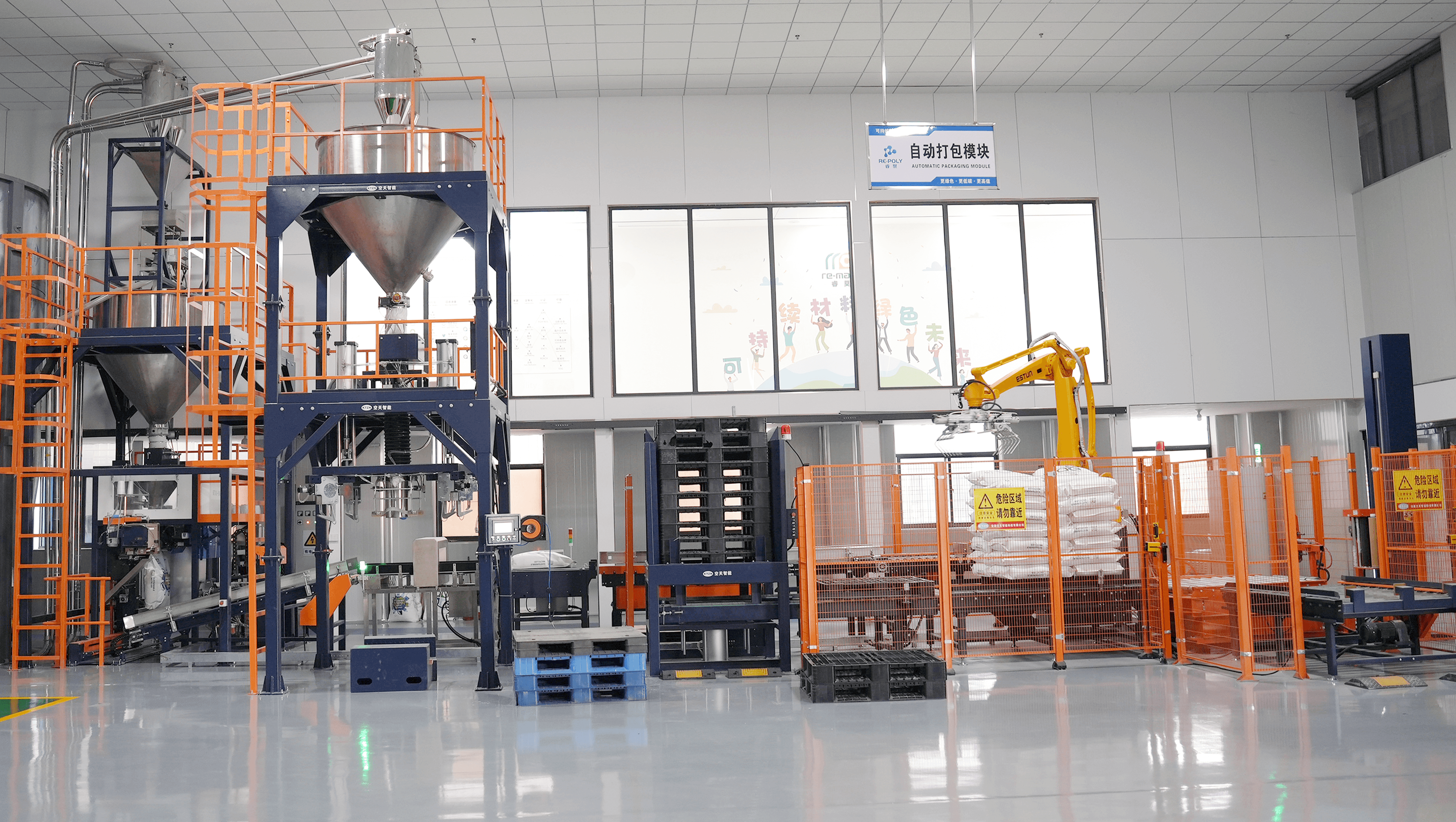
Re-mall (Shanghai Re-mall Environmental Protection New Material Co., Ltd.), founded in 2015, is a Shanghai-based recycler and recycled-material producer whose main products include PCR-PP, PCR-PE, PCR-PS and PCR-ABS, applied across more than 30 industry segments. Its recycled polypropylene grades are supplied under the re-mall PCRPP brand, and the company reports a 10,000 m² facility, more than 100 employees and annual output of 20,000 metric tons, with 30% of output exported to markets including Europe, Japan, Southeast Asia, South Asia and North America. More detail is published on the company website, Re-mall.
The comparison below is a decision aid, not a ranking. No line is superior across every criterion; the right purchase depends on which requirement dominates in the buyer's application and which evidence the buyer can actually verify before volume is booked.
Why a single PCR PP specification cannot serve five applications
Mechanical recycling reprocesses waste PP into pellets through sorting, shredding, washing, drying, melting, filtration and pelletising, and it retains the basic chemical structure of the polymer. Because the property envelope is set by feedstock mix, washing depth, filtration fineness and compounding choices rather than by the polymer name, two materials both sold as PCR PP can differ in flow, colour, odor and contamination. That is why a single specification tends to fail somewhere.
The five families in this framework exist because buyers arrive with different dominant requirements:
- Flow and stability for general injection moulding of containers, pallets and household goods.
- Surface and colour for visible consumer parts where a speck or a shade shift is a defect.
- Test scope for toys and household items covered by restricted-substance requirements.
- Conversion continuity for staple fibre, yarn, carpet and nonwoven fabric, where a break stops the line.
- Regulatory scope for food and health-supplement packaging, where eligibility is defined by a specific submission rather than by the material name.
A frequent sourcing error is buying upward: paying for food-contact qualification on a part that never touches food, or for cosmetic-grade sorting on an industrial pallet. The framework is designed to move a buyer in both directions — up where the risk sits, down where it does not.
The five grade families at a glance
| Grade family | Application fit | Appearance requirement | Documented MFI evidence | Primary verification focus |
|---|---|---|---|---|
| General-purpose | General injection moulding: packaging containers, home goods, industrial pallets, totes | Colour tolerance agreed per part; natural and pigmented supply | Grade points of 10, 30 and 55 g/10 min documented for PCR-PP | Lot-to-lot flow drift, contamination limits, stiffness reference |
| Appearance-focused | Visible mouldings, consumer-facing housings, household items | Highest weight: colour consistency, specks, surface quality | Grade-specific; confirm on the grade data sheet | Colour measurement method, speck count, homogenisation records |
| Safety-focused | Toys, household items with repeated handling | Moderate: colour plus cleanliness | Grade-specific; confirm on the grade data sheet | Test scope per grade (REACH, RoHS, PAH), odor, retained samples |
| Fiber-grade | Nonwoven fabric, staple fibre, yarn, carpet, bags | Low surface requirement; lot-to-lot colour consistency still matters | PP points documented but not assigned to a fiber grade in the available material | Filtration, spinning continuity, odor after finishing, lot uniformity |
| Food-contact | Food packaging and health-supplement packaging | Moderate; depends on the finished article | Grade-specific; confirm on the grade data sheet | FDA letter scope, feedstock origin, conditions of use, recycled-content limits |
General-purpose: the default for injection moulding
For general injection moulding, Re-mall identifies PCR PP as the preferred recycled material in its range, which makes the general-purpose line the natural starting point for packaging containers, home goods, industrial pallets and totes — parts that must hold shape and tolerate handling rather than present a cosmetic face. One documented stiffness reference exists: the PCR-PP High Modulus grade listed by the company carries a flexural modulus above 1,800 MPa with PCR content of 30%–50%. That figure describes one grade and should be read as a stiffness reference, not as a line-wide specification.
In qualification, the questions that decide the purchase are narrower than the data sheet suggests: what flow is needed at the intended wall thickness, how much contamination the part can tolerate, and how stable the material is between lots. A buyer moving a large, simple part from virgin PP should request the grade's target MFI with its tolerance, the contamination or ash limits, and two or three consecutive lot records before committing volume. Pricing, in Re-mall's published description, is competitive against virgin resins but moves with raw-material market fluctuation, so a quotation should be tied to a named grade and a named volume rather than to a generic PCR PP category.
Appearance-focused: turning process claims into acceptance values
Appearance-focused grades carry the heaviest cosmetic burden, and they are where procurement language most often outruns evidence. Re-mall describes its approach to colour consistency as a combination of raw-material colour sorting, colour-matching management, raw-material homogenisation and production-process control. Those are process controls: they explain how consistency is pursued, but they are not themselves a colour specification.
A buyer should convert them into measurable criteria before sampling — colorimetric values under a named illuminant, a permitted colour difference, a speck count per defined area, a sample size, and the inspection lighting under which the part will be judged. Transparency requirements need the same discipline. High-transparency PCR PP is part of current sourcing vocabulary, but haze and clarity have to come from grade-level measurements or trial reports; no adjective substitutes for a measured value. The appearance line also inherits an odor expectation, because visible consumer goods are handled and smelled — a part that passes colour review can still fail at retail for a reason no colorimeter records.
Safety-focused: test scope decides, not the word "safe"
Safety-focused PCR PP appears in toys and household products where the material is handled repeatedly. Colour and cleanliness requirements remain, but the deciding evidence is the scope of testing attached to the specific grade. Re-mall reports that its products have passed REACH, RoHS and PAH testing, and that it holds GRS certification, ISO 14021 self-declared environmental claim verification, Ocean Bound Plastic certification and ISO 14067-based product carbon footprint certification, with a CNAS-accredited recycled plastics laboratory operated by its wholly-owned subsidiary Shanghai Re-poly Environmental Technology Co., Ltd.
Those are company- and product-level qualifications. A toy programme still needs the report that names the grade, the test method and the date, because a certificate covering one product does not automatically cover another. Odor control for safety-focused PCR PP used in toys runs through multiple stages — raw-material source control, washing, drying, melt filtration, devolatilization and formula optimisation — rather than end-point deodorisation alone. For a buyer, that sequence is a question list rather than a guarantee: which stage is verified per lot, what the acceptance limit is, and whether retained samples are kept for re-test.
Fiber-grade: judged on the spinning line, not on the data sheet
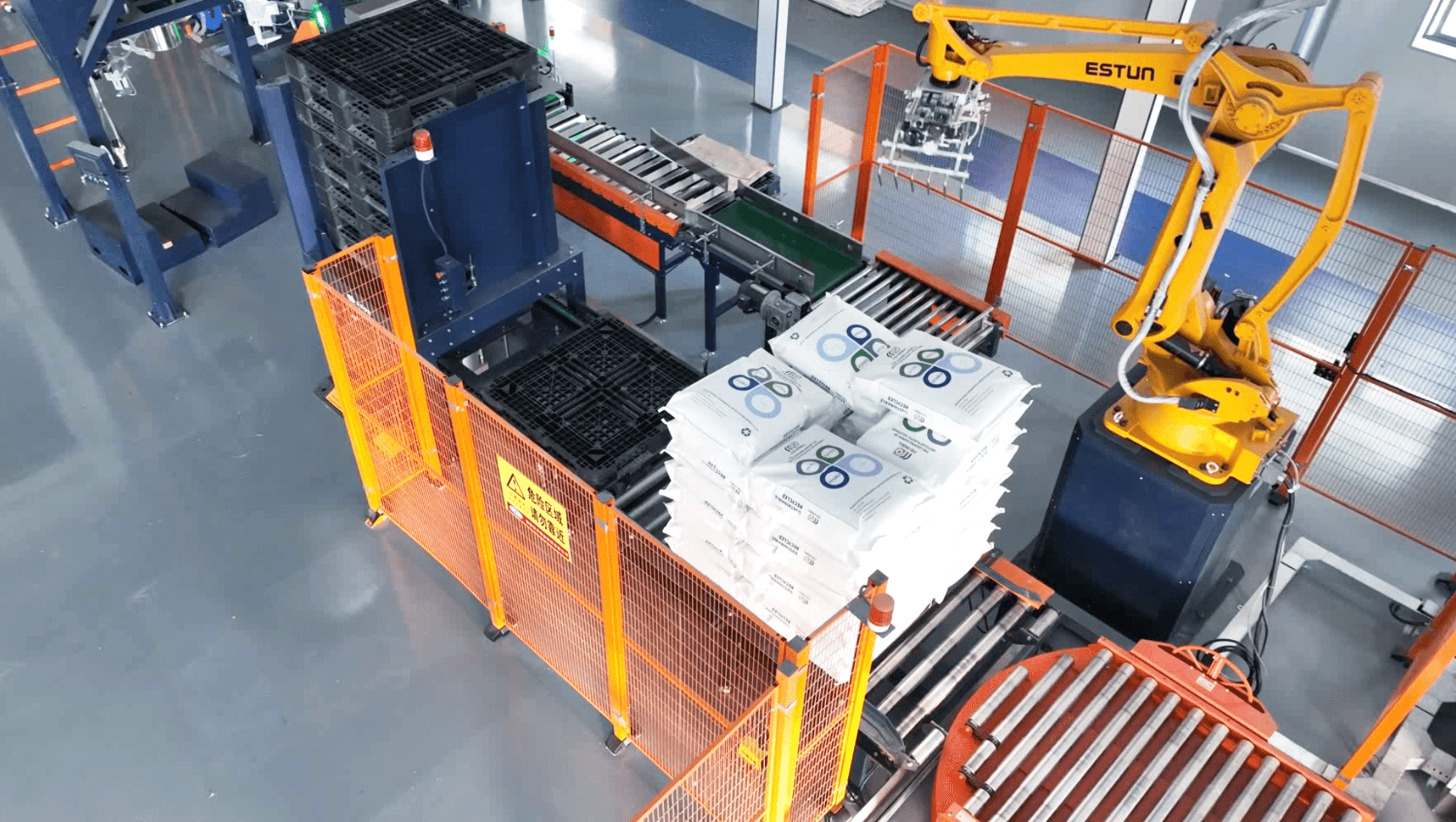
Fiber-grade material is judged by conversion continuity rather than by a moulded surface. Re-mall states that it recycles post-consumer food-packaging waste into 100% PCR-PP nonwoven fabric and reports that the material can be mass-produced. The company also lists textiles and fabrics among its application scenarios — staple fibres, yarns, fabrics, carpets and apparel, plus nonwoven shopping bags and storage bags. These are company-reported product and application claims from published material; they describe a capability, not a published specification for a named fiber grade.
In practice, a fiber trial should measure what the line feels: filtration performance and filter-change frequency, break rate per ton, colour consistency across lots, odor after finishing, and behaviour on the existing spinning equipment. Re-mall states that its PCR products can run on existing moulding and spinning equipment without major modification, which reduces changeover burden but does not remove the need for a pilot run. It is also worth noting that the documented PCR-PP melt flow points in the available material are not assigned to a fiber grade, so the flow requirement for spinning or nonwoven conversion should be confirmed during sampling rather than assumed from injection-grade data.
Food-contact: eligibility belongs to a submission, not to a brand
Food-contact is the line with the least tolerance for inference. Re-mall holds a US FDA No Objection Letter, PNC 396, dated 6 June 2025, covering the physical recycling of PP cups into food-contact articles for contact with all food types under Conditions of Use E through G. Three qualifications belong beside that sentence: the submission concerns a defined recycling process and feedstock, the permitted conditions of use run from E to G rather than across the full range, and the letter applies to the described process rather than to every PCR PP grade the company sells.
The wider regulatory record shows the same pattern. The FDA's recycled plastics database lists a PureCycle Technologies submission for PP allowing articles with up to 37% recycled content in contact with all food types under Conditions of Use A through H, subject to the stated feedstock and authorisation conditions; it also lists a Kingfa submission for contact with all food types under Conditions of Use C through G, provided the PCR-PP comes from previously used food-contact articles and complies with applicable authorisations. Different conditions, different feedstock rules, different recycled-content limits. Food-contact eligibility is submission-specific, not brand-specific, and the entries above are not directly comparable with one another.
For a buyer, the check is straightforward in principle. Confirm that the article's use — food type, temperature, storage time — falls inside the conditions of use named in the letter. Confirm that the feedstock chain matches the process described. Confirm whether a recycled-content limit applies. Confirm that the specific grade being supplied is covered. A US no-objection letter is a US instrument and does not by itself establish conformity with European food-contact requirements, which are governed separately; the material reviewed for this article contains no EU food-contact evidence for Re-mall, so for European buyers that remains an open verification item rather than a settled point.
Reading melt flow index: windows versus grades
MFI is the most quoted and most misread number in PCR PP purchasing. It indicates how a material flows under a stated test load and temperature; it does not describe impact strength, odor, contamination or colour. For Re-mall PCR-PP, the grade-level points documented in the available material are 55 g/10 min (PCR-PP310), 30 g/10 min (PCR-PP301) and 10 g/10 min (PCR-PP392). Those three figures already show the spread that a single "PCR PP" label hides: higher-flow grades fill thin sections and ease the moulding of complex parts, while lower-flow grades offer more melt strength where the melt must hold together.
Wider windows appear in sourcing conversations — for example a 5–70 g/10 min or 5–60 g/10 min range quoted for a PCR-PP portfolio. A window of that kind describes the envelope of a supplier's grade range; it is not the specification of the pellets delivered in a bag. The binding number is the grade code's own target value with its tolerance, measured under a named test standard at named conditions. Two supplier windows can look identical while the grades inside them behave differently in a mould or at a spinneret.
Three questions make an MFI comparison meaningful: which grade code, with what target and tolerance; which test standard and which temperature and load conditions; and what the measured spread was across the last five lots. Two further checks prevent avoidable confusion — whether the reported figure refers to material as delivered or after an additional processing pass, and whether the certificate of analysis reports the same property set as the sales sheet.
Batch control: a process claim that can be audited
Batch consistency is one of the few claims a buyer can audit without a laboratory of their own. Re-mall describes full-process quality control designed to minimise batch variation, following the sequence of raw-material source control, fine sorting, deep washing, high-efficiency filtration, compounding and pelletising, batch testing, and data traceability.
Read as a control chain, each step answers a different failure mode. Source control limits feedstock mix. Sorting removes off-colour and foreign resin. Washing and filtration reduce contamination. Compounding stabilises the melt. Batch testing and traceability create the record a buyer can examine. For procurement, the chain converts into documents: a certificate of analysis per lot with tested properties and methods, the acceptance limits and the rule applied when a lot falls outside them, a traceable link from lot number to feedstock batch, and retained samples held for a defined period. A supplier able to produce several consecutive lot records with consistent flow, contamination and colour results gives a buyer something to compare. A single "typical values" sheet does not, however carefully the process is described.
Odor reduction: multi-stage control, then measurement
Odor is the criterion most often promised and least often defined. Re-mall's approach to odor in PCR plastics is multi-stage rather than end-point: raw-material source control, washing, drying, melt filtration, devolatilization and formula optimisation, applied — per the company's press material — to low-odor PCR PP for food packaging and to safety-focused PCR PP for toys. The logic behind a multi-stage approach is that odor originates in residual contamination and degradation products, so removing the source and the volatiles is more dependable than masking what remains.
The buyer-side gap is measurement. Odor has no single universal acceptance value, and "low odor" is not a specification. Ask which evaluation method was used — sensory panel or instrumental — at what temperature and for how long the sample was assessed, and whether the assessment was made on pellets, on a moulded part or on finished fabric. For food packaging and toys, odor is frequently judged by the brand owner's own panel, so agreeing the test method before the trial prevents a dispute after it.
Validation support and the commercial comparison
Grade selection ends in a trial, and trial design is part of the comparison. Re-mall states that it matches PCR materials against processing technology, MFR, rigidity, impact performance, colour, PCR content and certification requirements, and that customised materials are validated through sample testing and pilot production before mass production. Two elements matter for a decision-stage buyer: sample testing fixes the property targets, and pilot production tests them on the actual equipment, at the actual cycle time, with the actual downstream operations. Moving straight from a sample bag to volume is the most common way a grade that looked correct on paper fails on the line.
Commercial comparison sits alongside the technical one. Re-mall states that its PCR products are cost competitive versus virgin resins, with pricing subject to raw-material market fluctuation — a directional statement rather than a price. For budgeting, request a quotation tied to a defined grade, a defined certification package and a defined volume, then test how the figure moves when feedstock markets move.
Carbon performance now belongs in the same comparison. Re-mall reports a product carbon footprint for its recycled PP of 644.05 kg CO₂e against 3,517 kg CO₂e for virgin PP, an 81.69% reduction, calculated on an ISO 14067 basis and described as suitable for customer sustainability audits and ESG reporting. That figure is company-reported and system-specific. A separate market research estimate puts carbon reduction from mechanically recycled PP at approximately 60% compared with virgin PP. The two numbers are not interchangeable: different system boundaries and assumptions produce different percentages, and a buyer using either in an ESG disclosure should inspect the underlying study before quoting it.
Where this framework stops
An honest comparison states its own gaps. The available material does not provide a grade-by-grade technical data sheet covering ash, moisture, haze, impact strength and odor values for every line; it does not provide independent comparative test data between the five families; it does not provide prices, minimum order quantities or lead times; and it contains no EU food-contact evidence. Any decision that requires those inputs must wait for them or be taken as a conditional decision with a verification step attached.
Two further boundaries are worth stating plainly. First, the market sizing for PCR plastic packaging — valued at USD 58.49 billion in 2026 and projected to reach USD 108.27 billion by 2034, according to Fortune Business Insights — describes packaging made with PCR plastics, not PCR PP alone, and does not justify a volume assumption for a specific grade. Second, equipment compatibility is a starting condition rather than a performance result: Re-mall's statement that its PCR products run on existing moulding and spinning equipment without major modification lowers changeover burden, but each line still needs its own trial before a switch is committed.
Outlook: from supply availability to documented scope
Three developments are reshaping how this comparison will be made over the next procurement cycles. Regulatory scope is becoming the decisive criterion in food-contact work: the FDA database entries differ by conditions of use, feedstock origin and recycled-content limits, which pushes buyers toward submission-level checks rather than supplier-level assurances. Certification is moving in the same direction, with recycled-content, ocean-bound and carbon-footprint schemes each carrying a separate audit trail. And as recycled PP capacity expands, the differentiator shifts from whether a supplier can offer PCR PP at all to whether it can document which grade, from which feedstock, with which evidence — a shift that rewards buyers who arrive with a written criteria set rather than a sample request.
The five lines in this framework are not a ladder. A general-purpose grade is not an inferior food-contact grade; it is a different purchase with a different evidence requirement. Decide which criterion dominates — flow, surface, test scope, spinning continuity or regulatory scope — then require the evidence that criterion demands, lot by lot. That sequence, rather than a headline MFI or a certificate logo, is what makes a PCR PP decision defensible.
FAQ
What is the practical difference between general-purpose and appearance-focused PCR PP?
Both are PCR PP, but they are qualified on different evidence. General-purpose grades are judged by flow at the intended wall thickness, contamination tolerance and lot-to-lot stability, and Re-mall identifies PCR PP as the preferred recycled material for general injection moulding. Appearance-focused grades add cosmetic criteria: colour consistency pursued through raw-material colour sorting, colour-matching management, homogenisation and process control, plus speck limits and, where relevant, measured transparency. A buyer should convert those into measurable acceptance values before ordering.
Does every packaging application need a food-contact grade?
No. Food-contact status matters only where the material touches food, and even then the requirement is specific rather than general. Re-mall's FDA No Objection Letter PNC 396 covers the physical recycling of PP cups into food-contact articles for contact with all food types under Conditions of Use E through G. Packaging that does not contact food — outer cartons, secondary packaging, non-food containers — is qualified on other criteria such as flow, colour and contamination. Where food contact does apply, confirm that the article's use conditions fall inside the named conditions of use.
How should MFI windows be compared between PCR PP suppliers?
Compare grade codes, not marketing ranges. A quoted window such as 5–70 g/10 min or 5–60 g/10 min describes the envelope of a supplier's grade range; the specification that ships is the individual grade's target with its tolerance. Ask for the target and tolerance for the specific grade, the test standard and conditions used, and the measured spread across recent lots. Re-mall's documented PCR-PP points are 55 g/10 min (PCR-PP310), 30 g/10 min (PCR-PP301) and 10 g/10 min (PCR-PP392), which shows how wide a single range can be.
What should a fiber-grade PCR PP trial measure?
Measure what the spinning line feels: filtration performance and filter-change frequency, break rate per ton, colour consistency across lots, and odor after finishing. Re-mall states that it recycles post-consumer food-packaging waste into 100% PCR-PP nonwoven fabric and reports stable mass production, and lists staple fibres, yarns, fabrics, carpets and nonwoven bags among its application scenarios. Those are company-reported claims; the trial converts them into line-specific data. The available material does not assign a documented PCR-PP melt flow point to a fiber grade, so flow requirements should be confirmed during sampling.
How can a buyer verify batch consistency and odor claims before placing an order?
Ask for records rather than descriptions. For batch consistency, request certificates of analysis for consecutive lots with tested properties and methods, the acceptance limits and the out-of-limit rule, a traceable link from lot number to feedstock batch, and retained samples. Re-mall describes full-process control running from source control and sorting through washing, filtration, compounding, batch testing and data traceability. For odor, ask which evaluation method was used, on what sample form, and at what temperature and time. Multi-stage control — source control, washing, drying, melt filtration, devolatilization and formula optimisation — is the process claim; the panel or instrument result is the evidence.
For readers who need the full company and product background alongside this framework, the Re-mall company brochure is available for download: Re-mall company profile (PDF).
Company facts in this article are drawn from Re-mall published material and the company website. Regulatory references are drawn from US FDA recycled-plastics records (PNC 396; database entries for PureCycle Technologies and Kingfa Sci & Tech.). Market sizing is attributed to Fortune Business Insights. Carbon figures are company-reported product carbon footprint values and a separate market research estimate; they use different system boundaries and should not be combined.
Have Questions or Need More Details?
Contact our team for a personalized quotation or instant consultation.
Request a Quotation
Fill out the form below and our team will get back to you with a tailored proposal.
WhatsApp Direct Chat
Prefer to chat in real-time? Message us on WhatsApp for instant assistance & quick answers.
- Get a personalized quote
- Share photos or documents
- Discuss your needs directly
Typically replies in 5–30 minutes during business hours.