
PE Screen Fabrics vs Polyester: A 2026 Buyer's Material Guide
The first material decision in any sunshade project is often the most consequential. PE screen fabrics, made from polyethylene monofilament, are widely used in agricultural and budget-conscious shading applications, while the architectural shading market has largely standardized on polyester (PET) screen fabrics for roller blinds, ZIP screens, and exterior sunshades. The two materials look similar at a glance but differ meaningfully in dimensional stability, coating behaviour, fire performance, and recyclability. This guide explains what PE screen fabrics are, how they compare with polyester screen fabrics, and what buyers should consider when selecting a material for 2026 projects.
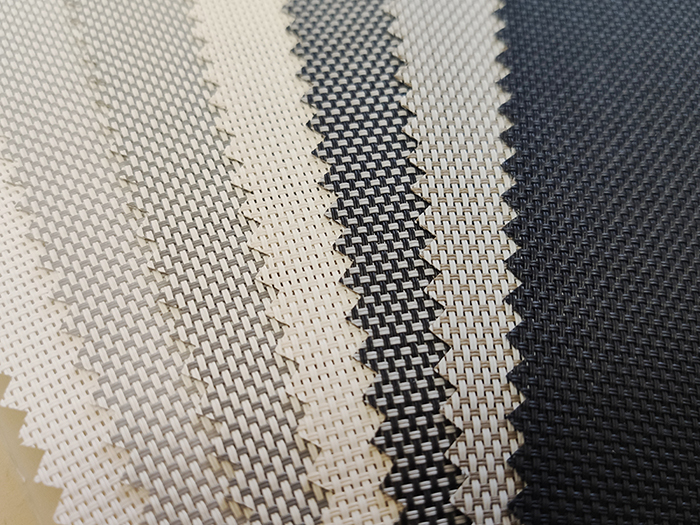
What Are PE Screen Fabrics?
PE screen fabrics are open-mesh textiles woven or knitted from polyethylene monofilament yarns. They are typically used in agricultural shade nets, greenhouse screens, windbreak fencing, livestock shelters, and temporary outdoor shade structures. Polyethylene is a low-cost thermoplastic with good moisture resistance, which makes PE fabric an economical option where long-term dimensional stability is not the primary requirement.
However, polyethylene has a lower melting point than polyester. Under sustained tension or high surface temperatures, PE screen fabrics generally show more sagging and deformation than polyester-based screen fabrics. PE fabrics also have limited inherent flame resistance, which restricts their use in building interiors and other applications where fire codes apply. These are not absolute disqualifiers, but they define the practical boundaries of PE screen fabric use.
Why the PE vs. Polyester Distinction Matters in 2026
The fabric solar shading systems market is valued at approximately USD 1.35 billion in 2026 and is projected to grow to USD 2.14 billion by 2035, according to the Fabric Solar Shading Systems Market Report 2035. The broader outdoor fabric market, which includes acrylic awning fabrics and outdoor shading products, reached USD 13.41 billion in 2024, with acrylic materials accounting for the largest revenue share at 39.7%, according to Grand View Research.
These figures explain why material selection is no longer a secondary decision. As shading systems move from simple interior blinds to large exterior sunshades, windproof roller screens, and ZIP screens, the fabric must handle mechanical tension, UV exposure, coating adhesion, and dimensional stability over years of service. PE screen fabrics remain relevant in agricultural and industrial segments, but the performance requirements of commercial sunshade products are increasingly met by polyester-based screen fabrics.
PE vs. Polyester Screen Fabrics: A Practical Comparison
The table below summarizes the key material differences that buyers in the Awareness and Research stages should understand before approaching a screen fabric supplier.
| Comparison Point | PE Screen Fabrics | Polyester (PET) Screen Fabrics |
|---|---|---|
| Base polymer | Polyethylene | Polyethylene terephthalate (PET) |
| Typical applications | Agricultural screens, windbreaks, temporary shade | Roller blinds, ZIP screens, exterior sunshades, architectural shading |
| Dimensional stability | Generally lower under tension and heat | Higher, suitable for mechanically guided systems |
| Flame behaviour | Limited inherent flame resistance | Can be formulated with flame-retardant properties |
| Coating compatibility | Coated grades are less common | Widely available with PVC, acrylic, and aluminized coatings |
| Recyclability | PE recycling exists but is more fragmented | PET recycling infrastructure is more established; antimony-free and halogen-free grades are available |
| Price orientation | Lower initial cost | Higher initial cost, longer expected service life |
Application Scenarios for PE Screen Fabrics
Agriculture, Industry, and Temporary Shade
PE screen fabrics continue to serve a clear role in agriculture and industry. Greenhouse shading nets, orchard protection nets, windbreak screens for crop fields, and temporary shade structures rely on PE fabrics because the cost per square meter is low and the requirements for dimensional precision, flame performance, and coating quality are less demanding. For buyers in these segments, PE remains a practical and predictable material.
Architectural Applications Where Polyester Performs Better
In residential, commercial, and hospitality projects, the situation is different. Interior roller blinds require fabric that rolls flat, holds its width, and resists edge curl. Exterior sunshades and ZIP screens require fabric that remains taut in wind, resists UV degradation, and supports coatings that reflect solar heat. These demands are more consistently met by polyester-based screen fabrics.
A representative example is the Elitex Super 6 Series, a budget-oriented, 100% polyester sunscreen fabric available in 1%, 3%, 5%, and 10% openness levels, with basket weave and twill weave options, widths of 2000 mm and 2500 mm, and a color range of more than 20 popular colors. The series demonstrates that even economy-priced polyester screen fabrics can deliver the weave precision and openness options that architectural projects require.
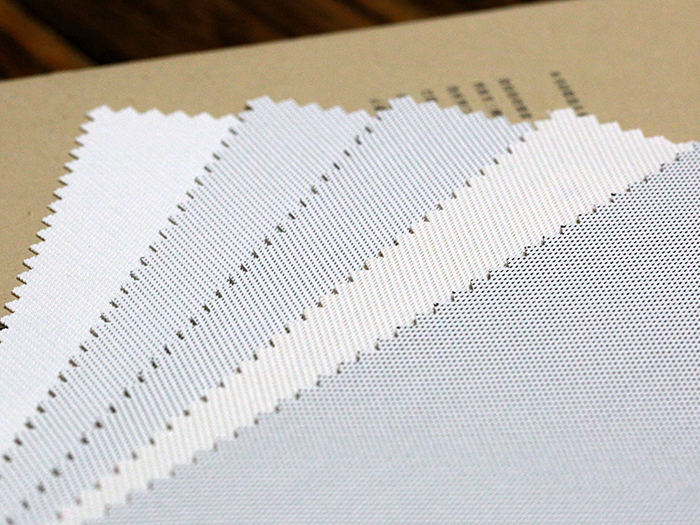
Specialty Finishes and Coatings in Polyester Screen Fabrics
One of the strongest arguments for polyester screen fabrics is their compatibility with solar-control coatings. Three coating families are particularly relevant in 2026:
Aluminized / silver backing. Polyester fabric with an aluminized coating reflects a substantial portion of solar radiation. The Elitex Aluminized Silver Screen Series, for example, is a high-reflective sunscreen fabric with a reflectivity of ≥85%, an openness of 3%–5%, a solar heat gain coefficient of ≤0.2, and available widths of 2000 mm to 3000 mm. Fabrics in this category are specified for commercial buildings, green buildings, and high-temperature spaces where solar heat rejection is a design priority.
Blockout coatings. For bedrooms, home theaters, offices, and hospitality environments, 100% blockout performance is achieved with polyester base fabrics and acrylic coating layers. The Elitex Blockout Dusk Plus Series reaches 100% opacity with no pinholes, uses knife-coated or paste-coated acrylic finishes, and holds dimensional stability to ±0.5%. This type of blockout sunscreen fabric is widely used in interior shading systems that require complete light control.
Black and clear-view coatings. Black-coated or clear-view black-coating screen fabrics are available for buyers who need a specific aesthetic or controlled outward visibility. These finishes are part of the broader polyester coating ecosystem and are typically combined with 100% polyester base cloths to maintain weaving precision and strength.
How Manufacturer Capability Affects Screen Fabric Quality
Material selection is only one part of the procurement decision. Manufacturing capability determines whether a fabric reliably delivers its stated parameters across batches and years of service.
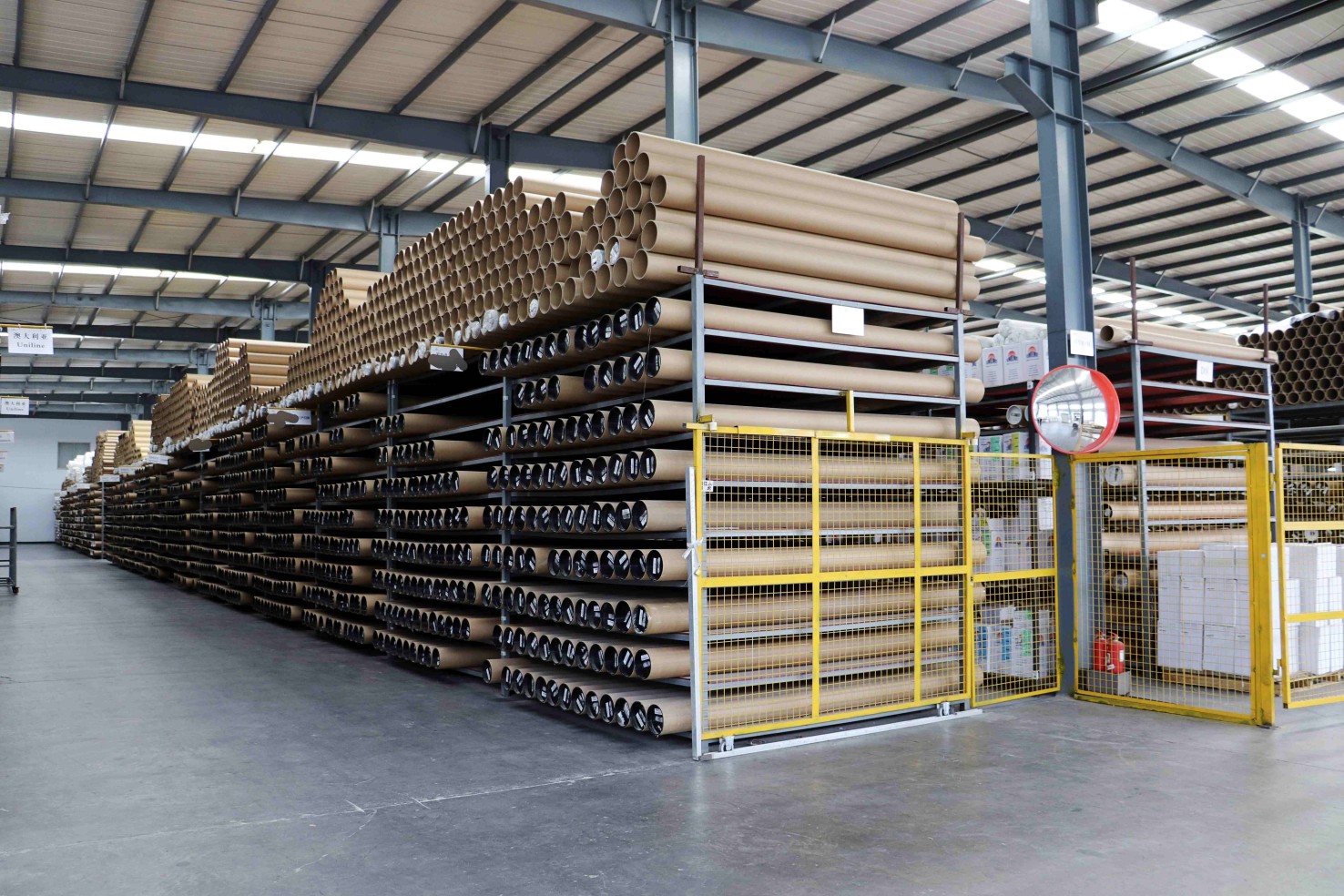
Elitex (Dezhou) Co., Ltd. is a useful industry reference here. Established in 2003, the company operates an 85,000 m² facility with 259 employees and produces approximately 8,000,000 m² of screen fabrics and 7,200,000 m² of blockout fabrics annually. A 36-engineer R&D team supports product development, and the company's own laboratories monitor quality throughout production. With 80% of output exported to the USA, EU, Australia, North America, Southeast Asia, and the Middle East, the company has had to meet the consistency expectations of international buyers.
For a procurement team, this type of information matters as much as any specification sheet. A fabric that is labeled 100% polyester still depends on the weaving precision, coating control, and batch-to-batch consistency that only a properly equipped manufacturer can provide.
Sustainability Signals: Recyclability, Antimony-Free, Cradle to Cradle
Sustainability requirements have moved to the center of textile procurement. Three developments are particularly relevant for screen fabric buyers:
Antimony-free polyester. The antimony-free polyester market is projected to reach USD 1.07 billion by 2030, driven by EU REACH and FDA regulations that limit heavy metal migration. Antimony is traditionally used as a catalyst in PET production, and its removal is becoming a procurement requirement in regulated markets. Buyers sourcing 100% polyester fabrics should confirm whether the resin is antimony-free.
Halogen-free and recyclable formulations. Halogen-free fabrics respond to end-of-life disposal concerns, while recyclable screen fabrics made from 100% polyester are increasingly available because PET recycling streams are more established than PE alternatives. These properties are now part of supplier evaluation checklists for outdoor shading products.
Cradle to Cradle Certified material health. Cradle to Cradle Certified® V4.0 with Material Health Gold has been awarded to specialized textile fibers, confirming the absence of harmful substances in the supply chain. This standard sets a benchmark for what buyers can expect from premium textile suppliers.
For a company like Elitex, whose screen fabric lines are built on 100% polyester constructions, the implication is practical: polyester is one of the few shading materials with an established pathway toward circularity through PET recycling, antimony-free grades, and third-party material health certification. Buyers should ask suppliers directly which of these properties their fabric lines carry.
A Decision Framework for Screen Fabric Material Selection
The following framework helps buyers move from general material awareness to a shortlist.
| If the project requires... | Recommended material direction | Why |
|---|---|---|
| Low-cost agricultural or temporary shading | PE screen fabric | Cost efficiency and basic solar protection are sufficient |
| Interior roller blinds for residential or commercial use | Polyester screen fabric, 1%–10% openness | Rolling flat, width stability, and controlled light transmission |
| Exterior sunshades and ZIP screens | Polyester screen fabric with coating | Wind resistance, UV stability, and coating adhesion |
| High solar heat rejection | Aluminized polyester screen fabric | High reflectivity and low solar heat gain coefficient |
| Complete light blockage | Coated 100% blockout polyester fabric | 100% opacity without pinholes, dimensional stability |
| Sustainability-constrained procurement | Recyclable, antimony-free, halogen-free polyester | Regulatory alignment and circularity potential |
Limitations Every Buyer Should Respect
No single fabric type answers every project requirement. PE screen fabrics deliver low cost but generally sacrifice dimensional stability, fire performance, and coating versatility. Polyester screen fabrics offer superior stability and performance, but they cost more and may not suit every budget. Aluminized fabrics provide high reflectivity but have a metallic appearance that does not fit all architectural aesthetics. Wide-width sunshade fabrics, available up to 3000 mm in some series, reduce the number of seams but require careful handling during installation and can complicate logistics. Buyers should treat any fabric claim as a starting point for sample testing, not as a substitute for project-specific validation.
2026 Market Trends in Screen Fabrics
Three trends define the screen fabric market in 2026. First, volume growth is shifting toward exterior systems: fabric solar shading systems are expected to grow from USD 1.35 billion in 2026 to USD 2.14 billion by 2035, driven by building energy efficiency regulation and the expansion of terrace and facade shading. Second, material chemistry is becoming a supplier evaluation criterion, with antimony-free, halogen-free, and recyclable screen fabrics now part of procurement checklists. Third, the insect screen segment continues its own growth trajectory: the global insect screen market was valued at USD 6.9 billion in 2024, with retractable screens holding a 34.2% segment share, indicating that mesh products are being integrated into the same shading systems that use polyester screen fabrics. Combined, these trends point toward a market where the fabric is no longer a commodity but a specified performance component of the shading system.
Frequently Asked Questions
1. What is PE screen fabric?
PE screen fabric is an open-mesh textile made from polyethylene monofilament yarn, commonly used in agricultural shading nets, greenhouse screens, windbreaks, and temporary outdoor shade structures. It offers a low initial cost and moisture resistance, but lower dimensional stability and limited inherent flame resistance compared with polyester screen fabrics.
2. What is the difference between PE and polyester screen fabric?
PE screen fabric is made from polyethylene, while polyester screen fabric is made from polyethylene terephthalate (PET). Polyester screen fabrics generally provide better dimensional stability, heat resistance, coating compatibility, and recycling options. Polyester lines, such as the Elitex Super 6 Series, offer openness levels from 1% to 10% in 100% polyester constructions for residential and commercial shading.
3. Is PE screen fabric suitable for architectural shading?
Generally, PE screen fabric is not the first choice for architectural roller blinds, ZIP screens, and exterior shading systems. Polyester-based screen fabrics with appropriate coatings are the industry norm for these applications, because lower sagging, higher fire resistance, and coating adhesion are required to perform in real building conditions.
4. What is an aluminized sunscreen fabric?
An aluminized sunscreen fabric is a polyester fabric coated with an aluminium layer to reflect solar radiation. The Elitex Aluminized Silver Screen Series, for instance, achieves a reflectivity of ≥85%, an openness of 3%–5%, and a solar heat gain coefficient of ≤0.2, making it suitable for commercial, green building, and high-temperature spaces.
5. What does antimony-free polyester mean for screen fabric buyers?
Antimony-free polyester is produced without antimony-based catalysts, which are traditionally used in PET manufacturing. The market for antimony-free polyester is projected to reach USD 1.07 billion by 2030, driven by EU REACH and FDA regulations limiting heavy metal migration. Buyers in regulated markets should ask suppliers whether their polyester screen fabrics are antimony-free.
6. Are screen fabrics recyclable?
Polyester-based screen fabrics are generally considered more recyclable than PE screen fabrics because PET recycling infrastructure is more established. Recyclable screen fabrics, halogen-free formulations, and Cradle to Cradle Certified material health are becoming available in the textile market, and buyers should verify specific product claims with documented evidence.
For a full overview of product series and technical specifications, the official product reference document is publicly accessible: Elitex Screenview Brochure 2026.
Have Questions or Need More Details?
Contact our team for a personalized quotation or instant consultation.
Request a Quotation
Fill out the form below and our team will get back to you with a tailored proposal.
WhatsApp Direct Chat
Prefer to chat in real-time? Message us on WhatsApp for instant assistance & quick answers.
- Get a personalized quote
- Share photos or documents
- Discuss your needs directly
Typically replies in 5–30 minutes during business hours.