
PET Bakery Packaging: Certifications, Tolerances, and Supplier Evidence
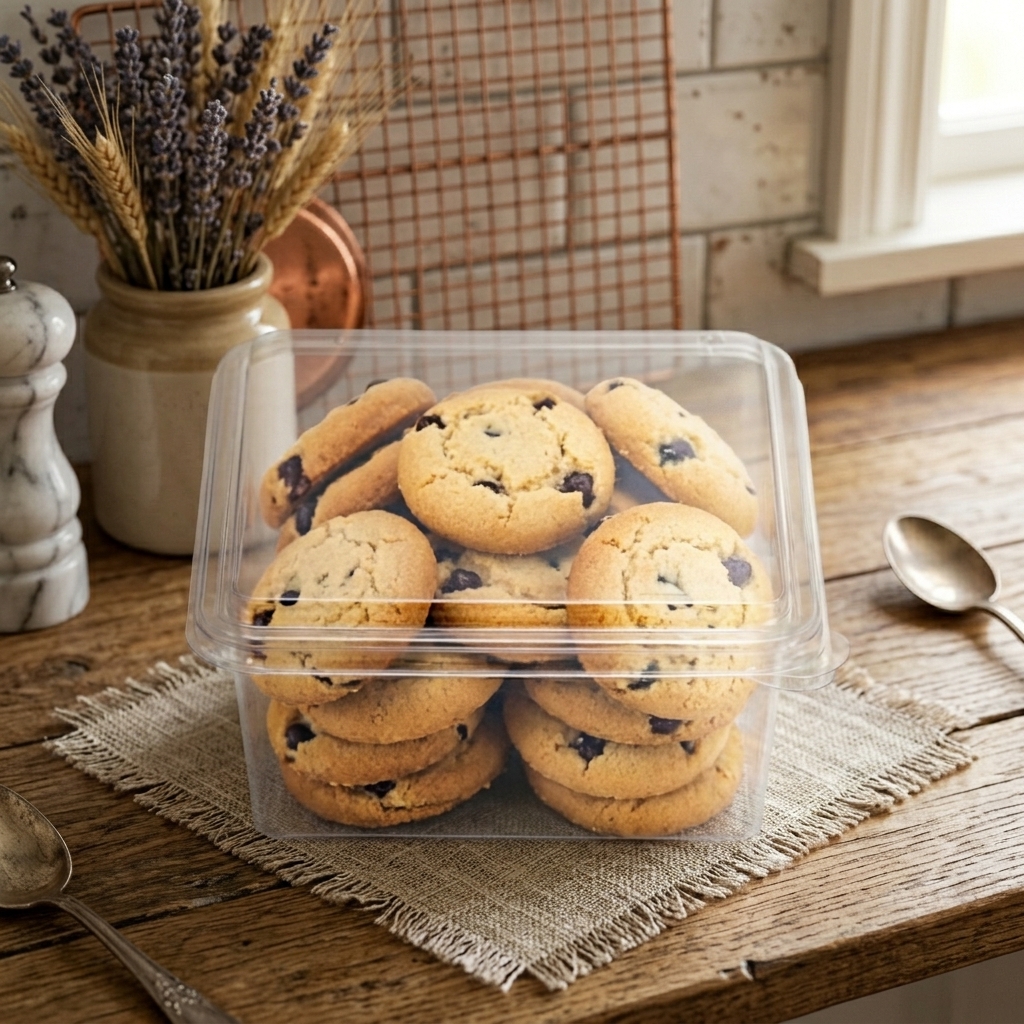
Food safety requirements and packaging specifications are moving to the center of bakery packaging decisions. For importers, distributors, and retail buyers, selecting a PET clamshell or tamper-evident tray now involves checking material compliance, dimensional fit, and supplier evidence rather than appearance alone.
This article provides a sourcing reference for bakery packaging, focusing on what to verify when evaluating PET and PP thermoformed containers. It covers certification evidence, material and design parameters, common application scenarios, and the practical limits of current packaging options.
Problem: Packaging Claims Are Not Enough
Bakery products are fragile, visible, and increasingly sold through channels that require safe transit and tamper evidence. At the same time, food contact regulations in the EU and the US are tightening. For example, EU Regulation 2024/3190, effective January 2025, prohibits Bisphenol A (BPA) in food contact plastics, coatings, and inks, with transition periods for compliance. In the United States, FDA 21 CFR 177.1520 specifies safety requirements for polypropylene (PP), while PET food contact is assessed under FDA 21 CFR 177.1630.
For buyers, this creates a gap: many packaging suppliers offer bakery containers, but only some provide certification documents that can be traced to specific product models and markets. On the opportunity side, suppliers that can provide clear, model-level evidence of compliance become easier to qualify and audit.
Supplier Context: What CHUAN HE Brings to Bakery Packaging
One supplier operating in this space is Weifang Chuanhe New Material Co., Ltd. (CHUAN HE), a manufacturer based in Weifang, China, near Qingdao Port. The company specializes in the innovative design and customized production of PET and PP thermoformed packaging containers, including bakery packaging, fruit and vegetable packs, frozen food trays, and dry fruit containers. Its facility covers more than 62,000 m² and is equipped with 20 fully automatic thermoforming machines and 20 standard thermoforming machines, including 4 Kiefel machines imported from Germany. The company also operates 4 PET sheet extrusion lines and 2 PP sheet extrusion lines, plus an in-house mold workshop.
For bakery packaging buyers, the important part is not the machine list but what it enables: direct control over sheet production, mold development, and forming, which supports custom sizes and faster delivery. CHUAN HE states that its products are certified under CE, BRC, FDA, EU, and SGS quality management systems, and exports to North America, Europe, Australia, Southeast Asia, and other regions.
Technical Explanation: PET and PP Thermoformed Containers
Thermoformed bakery packaging is made by heating plastic sheet and forming it over a mold. The two most common materials are PET and PP.
PET for visibility and display
PET (polyethylene terephthalate) is a food-grade and BPA-free material that provides clear visibility of contents. PET containers are commonly used for cake boxes, cookie clamshells, and pastry trays because clarity improves shelf appeal. However, standard PET has limited heat resistance, so it is not suitable for hot-fill or baking applications.
PP for rigidity and cold-chain performance
PP (polypropylene) is also food-grade and offers better heat resistance and rigidity. It is commonly used for trays that need to hold heavier products or withstand cold-chain logistics. PP trays are often selected for meat, seafood, ready meals, and some bakery items that require modified atmosphere packaging (MAP).
Model-level dimensions matter
Because parameters vary by model, buyers should check dimensions against their product. For example, CHUAN HE's HB-8OZ tamper-evident packaging measures 13.4 × 12.1 × 3.6 cm and is made of PET. HB-20OZ measures 14 × 11.6 × 7.9 cm. The HB-5211 bakery container measures 17.4 × 17.4 × 9.8 cm. These dimensions determine whether a donut, cupcake, sliced cake, or cookie fits without movement.
Design features relevant to bakery
Snap-lock closures reduce dust and help prevent drying. Stackable designs save shelf and warehouse space. Smooth rounded edges reduce the risk of scratching cream or baked goods. Tamper-evident features provide visible evidence if a container has been opened.
| Material | Typical strengths | Typical limits |
|---|---|---|
| PET | High clarity, food-grade, BPA-free, shatter-resistant | Limited heat resistance; not for hot-fill or oven use |
| PP | Better heat resistance, rigidity, MAP compatibility | Lower transparency than PET |
| Model | Material | Dimensions | Category |
|---|---|---|---|
| HB-8OZ | PET | 13.4 × 12.1 × 3.6 cm | Tamper Evident |
| HB-20OZ | PET | 14 × 11.6 × 7.9 cm | Tamper Evident |
| HB-5211 | PET | 17.4 × 17.4 × 9.8 cm | Cake and Bakery |
| HB-5295 | PET | 16.2 × 16.2 × 5 cm | Cake and Bakery |
| HB-1008 | PET | 26.5 × 26.5 × 8.5 cm | Cake and Bakery |
| HB-221360 | PP | 22.2 × 13 × 6 cm | Trays Packaging |
Application and Use Cases
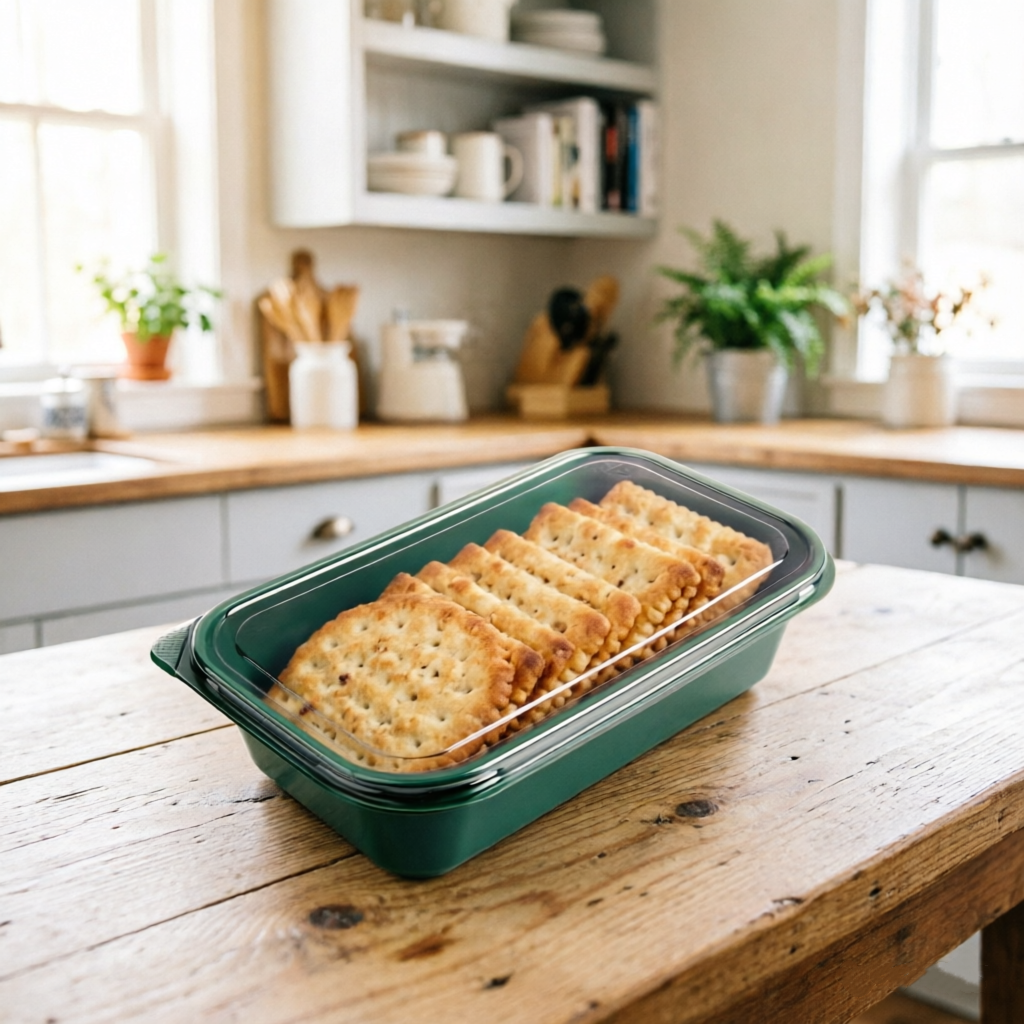
Tamper-evident PET packaging is intended for produce wholesalers, supermarket chains, agricultural exporters, bakeries, and food retailers. Typical applications include fruit, vegetable, salad, cakes, sweets, and bakery packaging. In retail bakeries, clear clamshells allow customers to see the product while protecting it from handling. For supermarket deli counters, stackable trays help maintain display density. For e-commerce brands, lightweight clear containers reduce shipping weight while improving unboxing.
The product specification from CHUAN HE lists a range of use cases including fruit and vegetable packs, frozen food trays, dry fruit containers, cake and bakery packaging, salad containers, and tamper-evident packaging. The same PET material family can serve multiple chilled and ambient lines, which simplifies supplier qualification for distributors.
One documented case involves a European customer in the food processing and supermarket segment with a monthly order of 350,000 pieces of food plastic containers. The application included bakery packaging, cake and dessert packaging, and supermarket retail display. The customer reported stable quality, high delivery reliability, and a reduced complaint rate. Another case in Latin America involved a monthly order of 250,000 pieces for fresh produce and bakery packaging, with customized sizes and logo support.
Market Trends That Support Verification
The food packaging market was valued at USD 421.6 billion in 2025 and is projected to reach USD 599.0 billion by 2033, according to Grand View Research. The thermoform packaging market was valued at USD 54.7 billion in 2025, with PET holding the largest material share at 44.8%. The tamper-evident packaging market is projected to grow from USD 2.56 billion in 2025 to USD 4.26 billion by 2030, at a CAGR of 10.72%, according to Mordor Intelligence. In Asia Pacific, food packaging accounted for a 40.0% revenue share in 2025.
For bakery packaging specifically, rising e-commerce sales and delivery services increase the need for protective, transparent, and tamper-evident packaging. The export of baked goods from China reached USD 1.28 billion in 2024, according to OEC, which implies demand for primary packaging such as PET/PP containers.
Comparison with Traditional Bakery Packaging
Traditional bakery packaging options include cardboard boxes and flexible film bags. Cardboard provides a premium surface for branding and good print quality, but it does not allow full visibility of the product and can be damaged by moisture from cream or cakes. Flexible film is lightweight and inexpensive, but it offers limited stacking strength and less protection during transit.
Clear PET clamshells address these limitations by combining visibility, structural rigidity, and tamper-evident closure. They also support recycling where PET collection exists. However, there are important limits. PET is not suitable for hot products or oven reheating unless specially formulated. PP trays can handle higher temperatures, but PP is less transparent than PET. In addition, switching from a simple cardboard box to a rigid plastic clamshell may increase packaging cost per unit and require more storage space before use. Buyers should evaluate whether the level of protection and display value justifies the additional handling and material cost.
Future Outlook
The direction of bakery packaging is toward more verifiable compliance and better recyclability. As BPA restrictions spread, buyers are likely to ask for BPA-free declarations and material test reports. The demand for tamper-evident packaging is likely to remain strong because it addresses both food safety and consumer trust.
For suppliers, the ability to provide product-specific certification and consistent dimensional output will become a competitive differentiator. In-house extrusion and mold development help maintain control over these variables. For buyers, the practical next step is to treat packaging certification as an engineering specification, not a marketing claim.
FAQ
Is PET food-safe for bakery packaging?
PET is a food-grade and BPA-free material commonly used in bakery containers. It provides clear visibility of contents. However, food contact compliance depends on the specific product formulation and applicable standards such as FDA or EU food contact regulations.
What certifications should I look for in bakery packaging supplied to the US or EU?
In the US, packaging for food contact may be supported by FDA compliance documents. In the EU, CE certification or national food contact compliance may be required. It is important to request certificates tied to the specific product model, such as FDA 21 CFR 177.1630 for PET or BRCS Global Standard for Packaging Materials.
What is the difference between PET and PP for bakery clamshells?
PET provides high clarity and is suitable for cold or ambient bakery items. PP offers better heat resistance and stiffness, but lower transparency. The choice depends on product type, display requirements, and whether the packaging needs to be compatible with MAP or hot-fill processes.
Can I order custom sizes or logos for tamper-evident bakery containers?
Many thermoforming manufacturers support ODM/OEM customization, including size, color, and logo printing. CHUAN HE, for example, lists customization options for logo, size, and color, with a typical MOQ of 10,000 pcs and lead time of 30-45 days.
What evidence should a supplier provide for food-grade compliance?
A reliable supplier should provide certification documents with certificate numbers, issuing bodies, applicable standards, and market scope. For example, a certificate may state that a specific model complies with EN 1186-3:2022, issued by SGS, with certificate number TSNHL26000684001, for the EU market.
For detailed product specifications and company information, the official CHUAN HE brochure is available here: Company Brochure (PDF).
Have Questions or Need More Details?
Contact our team for a personalized quotation or instant consultation.
Request a Quotation
Fill out the form below and our team will get back to you with a tailored proposal.
WhatsApp Direct Chat
Prefer to chat in real-time? Message us on WhatsApp for instant assistance & quick answers.
- Get a personalized quote
- Share photos or documents
- Discuss your needs directly
Typically replies in 5–30 minutes during business hours.