
PET Preform Fit for Wide-Mouth and Colored Cosmetic Bottles
PET Preform Fit for Wide-Mouth and Colored Cosmetic Bottles
A cosmetic or daily-chemical bottle programme is settled by details decided long before the first bottle is blown: the neck finish, the cap that must seal it, and the colour of the resin behind the pack. GuangDong Idea Plastic Packaging manufactures PET preforms — the injection-moulded intermediate that a blow-moulding machine converts into a finished bottle — and documents a 20, 24, 28, 30 and 32 mm neck list alongside wide-mouth and cosmetic preform models, four colour routes and compatibility with PET, PP and aluminium caps. This reference maps those options onto wide-mouth and colour-led projects, and separates what the specification states from what a buyer still has to prove with samples.
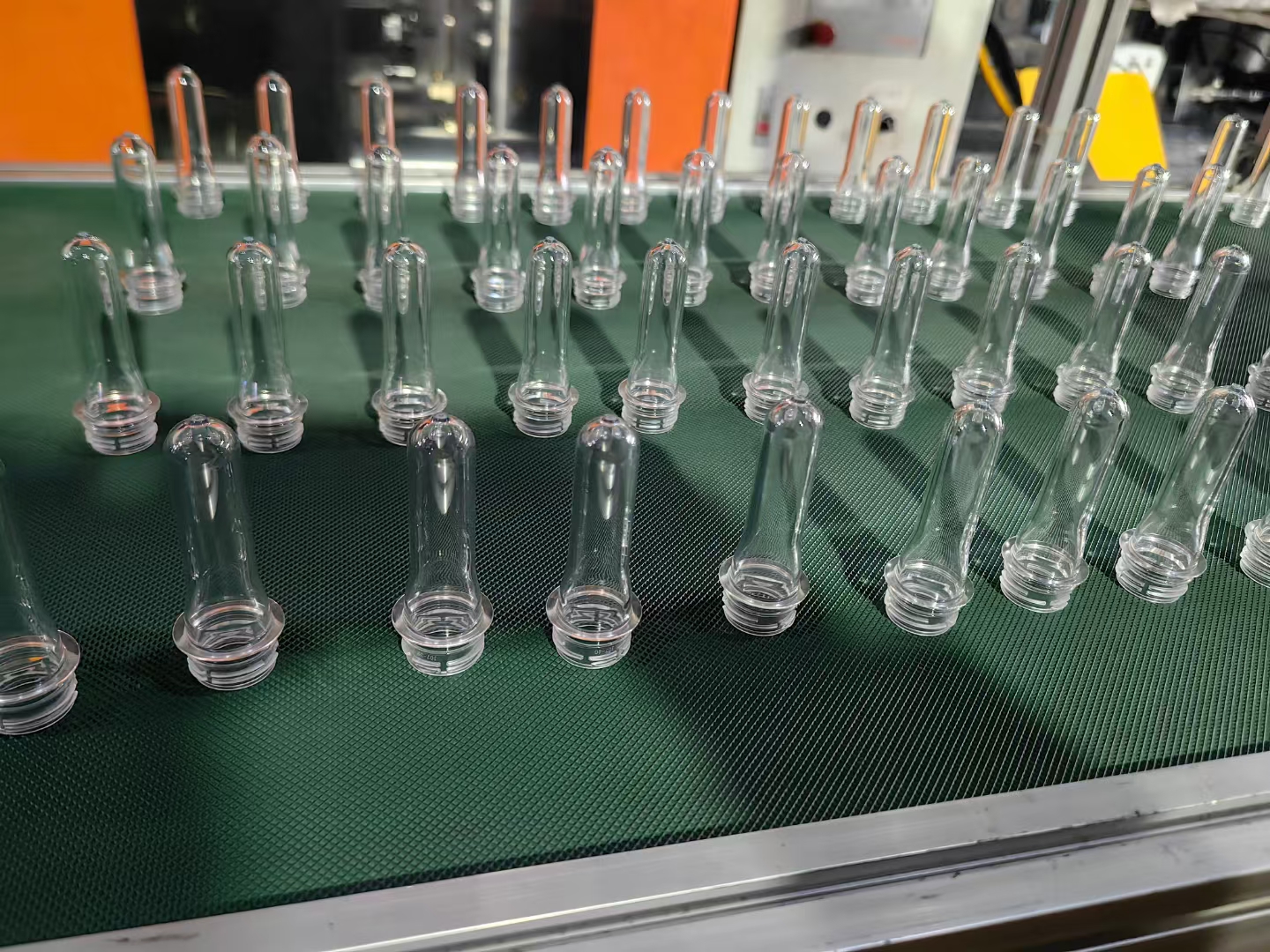
PET preform production at the GuangDong Idea Plastic Packaging facility in Foshan, Guangdong.
Why the preform, not the bottle design, sets the constraint
The preform is where the neck finish is created. Injection moulding produces the threaded neck, the support ring and the dimensional tolerances that a cap will later engage; the blow-moulding step that follows forms the body but does not recreate the neck. That sequence has a commercial consequence for cosmetic packaging: a neck change is a mould change, a cap change and usually a filling-line change, so the neck decision carries more downstream cost than a body-shape revision.
For a cosmetic or household pack, the neck and cap system should therefore be specified against the filling method, the closure type and the pack's shelf presence before tooling is released. GuangDong Idea Plastic Packaging lists neck size, weight, colour, mould, logo, packaging and graphic work inside its OEM/ODM customization scope, with a minimum order quantity of 10,000 pieces and a stated lead time of 15 days for 10,001–200,000 pieces, with larger volumes negotiated separately. Customization capacity is not the same as dimensional freedom. The documented neck line-up of 20, 24, 28, 30 and 32 mm appears on the water bottle preform specification, while the cosmetic, oil and wide-mouth models describe neck dimensions as custom millimetre values. A project outside the listed values should be confirmed against a drawing rather than assumed from a catalogue page.
Wide-mouth projects: what the 403 model contributes
Wide Mouth Preform-403 sits in the same product family as Cosmetic Preform-402, Oil Preform-405 and Water Bottle Preform-401. All four share a documented material and performance base: food-grade PET in natural (clear), green, blue, amber or custom colours, with high transparency, high strength and easy blow-moulding, PET, PP or aluminium cap compatibility, and logo or printed branding available. What separates the models is the intended bottle category rather than a different resin system.
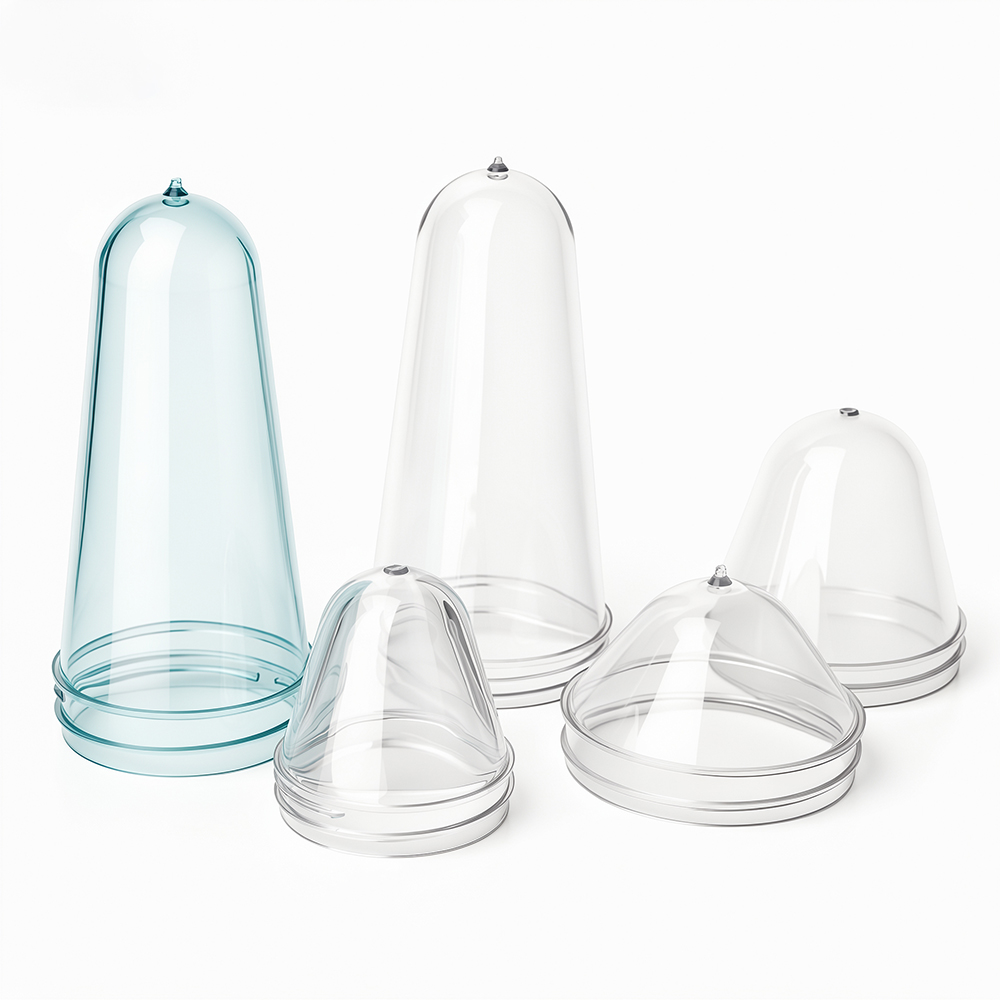
Wide Mouth Preform-403, one of four documented PET preform models in the range.
The practical question for a wide-mouth brief is not whether a wide-mouth preform exists — it does — but which opening diameter the neck drawing specifies, because this model's neck is listed as a custom dimension rather than a fixed figure. Buyers should request the neck drawing, the thread specification and the support-ring dimensions, then check them against the chosen closure and the filling head. Wide-mouth formats are commonly selected where the pack needs a larger opening for filling, dispensing or consumer access. The trade-off is that cap cost, liner choice and capping-torque settings all move with that opening, so the closure belongs in the same review as the preform rather than a later packaging round.
Two further points matter for wide-mouth cosmetic packs. Samples are listed as available, which allows a blow trial and a cap-fit check before a mould is committed. And the same neck discipline used across the range applies here: the supplier states that neck finish is tolerance-controlled through dimension spot checks and cap fitment tests, which is precisely the check a new wide-mouth closure needs.
Colour and logo projects: what the specification actually covers
The documented colour options are natural (clear), green, blue, amber and custom colours. That distinction is useful for planning: amber, green and blue are stated routes on the specification rather than one-off developments, while a brand-specific colour is a separate request handled under customization. Logo and printed branding are listed in the same customization scope, alongside packaging and graphic work.
Three checks turn those options into a controllable pack. The first is a physical colour standard approved against the intended bottle wall, because the same preform colour reads differently through a thin or thick blown wall — an observation about blown-bottle behaviour rather than a supplier claim. The second is batch consistency, which is where the supplier's weight discipline becomes relevant: automatic checkweighing rejects out-of-range units, and the stated purpose is to prevent thin walls that fail in blowing or stacking. The third is the resin basis. The supplier's quality FAQ states that preforms are moulded from food-grade virgin PET resin rather than recycled material, with a compliance certificate and FDA/SGS reports available on request. For a colour-critical cosmetic project that statement supports a predictable base tint; it also defines a boundary for markets where recycled content is mandated, which is covered later in this article.
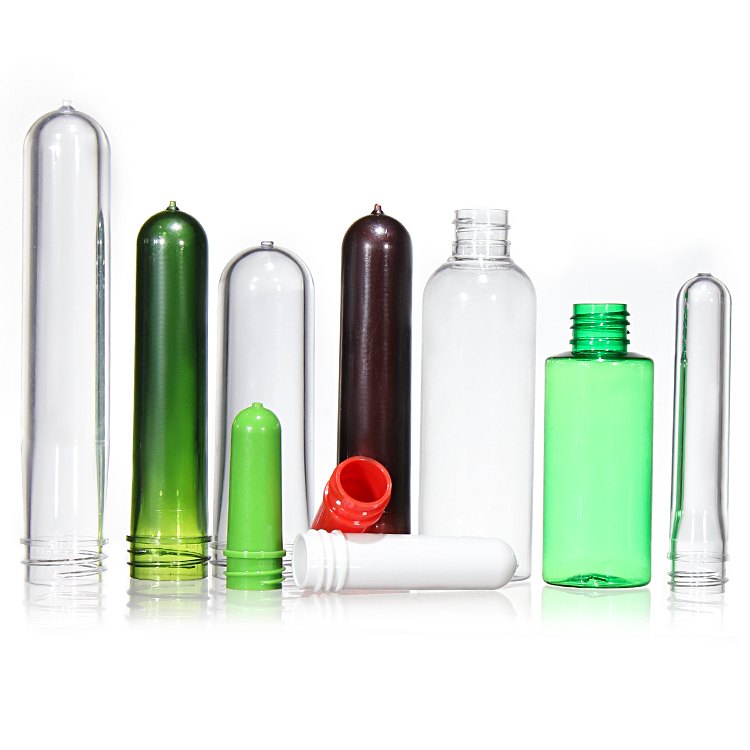
Cosmetic Preform-402, specified for cosmetic and daily-chemical bottle projects.
Matching neck dimension and cap system
Every documented model is matched to PET caps, PP caps and aluminium caps. The specification does not state which neck diameter pairs with which closure, and that pairing should never be inferred from a size number alone: thread profile, liner, application torque and the capping equipment all participate in the seal. The table below sets out what the documentation establishes for each model and where the buyer's own verification begins.
| Model | Documented bottle role | Documented neck position | Buyer check before tooling |
|---|---|---|---|
| Water Bottle Preform-401 | Water and beverage bottles | 20, 24, 28, 30 and 32 mm listed | Which listed neck matches the closure drawing |
| Cosmetic Preform-402 | Cosmetic and daily-chemical bottles | Custom dimension in mm | Neck drawing, thread and support ring confirmation |
| Wide Mouth Preform-403 | Wide-mouth bottles | Custom dimension in mm | Opening diameter against cap and filling head |
| Oil Preform-405 | Edible oil bottles | Custom dimension in mm | Neck and weight against filling and capping line |
On the neck question specifically, the water bottle preform specification lists 20 mm, 24 mm, 28 mm, 30 mm and 32 mm, while the other three models state custom dimensions. A 28 mm neck is the most familiar reference point in PET bottle work, and buyers replacing an existing pack often start from a 28 mm PET preform search. The check that matters is whether the existing cap, capping head and filling nozzle are matched to the same thread and support ring, not merely to the same nominal diameter. For a new cosmetic pack, the sequence that avoids rework is: choose the closure, obtain its neck drawing, match the preform neck to that drawing, then confirm preform weight and body dimensions for the blow mould.
| Cap system | Documented status | What to confirm |
|---|---|---|
| PET caps | Listed compatible across all four models | Thread match, liner choice, application torque |
| PP caps | Listed compatible across all four models | Same neck drawing checked with a PP closure sample |
| Aluminium caps | Listed compatible across all four models | Closure fit and lining against the finished bottle |
Where fit is lost: neck tolerance, weight and the matched set
Most cosmetic bottle failures traced back to the preform are not dramatic. They show up as a cap that seats unevenly, a torque setting that drifts, or a bottle that thins out on one side during blowing. The supplier's quality documentation addresses these points directly. Neck finish is tolerance-controlled with dimension spot checks and cap fitment tests, and the stated practice is to buy preforms and caps as a matched set. Weight is controlled by automatic checkweighing that rejects out-of-range units, with the stated purpose of preventing thin walls that fail in blowing or stacking.
The production environment described for the Foshan facility adds context: high-cavity hot runner moulds, automated material feeding and drying, integrated automated visual inspection, and automated clean packaging before shipment. For a buyer, the useful reading is that neck and weight control are presented as in-process functions rather than final inspection only. The verification that follows is straightforward: request the neck drawing and the dimensional check records, then confirm that preforms and closures are qualified together, not separately.
Application evidence and what it does and does not prove
The documented application scenario for these preforms is a plastic bottle blowing production project: the preform acts as raw material for blow-moulded bottles, processed on a blow-moulding machine and supported by injection moulding and bottle blow-moulding equipment. Working conditions are stated as indoor warehouse storage at normal temperature in dry conditions, and the special requirements listed are food grade, BPA-free material and stable wall thickness. The applicable industries named are drinking water, fruit juice, condiment and daily chemical packaging — the last being the category that covers cosmetic and household bottles.
Supplier-recorded cases add detail from adjacent categories. An oil processing plant uses the preform as packaging material for bottled oil production, with an annual contract value of USD 300,000 and a recorded outcome of stable filling performance with the qualified product rate maintained. A juice factory records USD 400,000 per year, with high transparency and good pressure resistance cited as the fit. A health supplement factory records USD 500,000 annually against transparency and pressure resistance, and a water treatment plant records USD 500,000 against food-grade bottled water production. Contract durations are not publicly disclosed, and these are supplier-reported commercial records rather than independently audited results.
For a cosmetic buyer, the honest reading is narrower than it first appears. Those cases are linked to the water bottle preform model and to beverage, oil and supplement bottling; no cosmetic-specific case record is published. Daily chemical packaging is listed as an applicable industry and a cosmetic preform model exists, but the project-specific proof for a cosmetic pack has to come from samples and a blow trial on the buyer's own equipment. That is a normal position for a scenario-fit decision, and it is better handled as a validation task than assumed from a neighbouring category.
Market signals relevant to colour and recycled content
Two external signals shape how cosmetic preform specifications are being written. Fortune Business Insights, in its 2026-forecast PET preform market report, projects the global market to reach USD 78.74 billion by 2034, and estimates that Asia Pacific held the largest regional share in 2024 at USD 22.84 billion. The same source puts virgin PET at 72.0% of material demand in the preform market as of 2026, with recycled PET taking the remainder.
Regulation is the second signal. As summarised by Packaging World in its 2026 review of global packaging rules, the EU Single Use Plastics Directive requires PET beverage bottles to contain at least 30% recycled content by 2030. That obligation is written for beverage bottles rather than cosmetic packs, so its direct effect on a fragrance or skincare bottle is limited. Its indirect effect is on resin supply and documentation: where recycled content becomes the default expectation in a region, buyers specifying a custom colour will increasingly be asked to confirm the resin basis and to re-approve the colour if that basis changes. Because the current preform specification states food-grade virgin PET resin, a project that must meet a recycled-content threshold should raise that requirement at the enquiry stage rather than after colour approval.
Fit boundaries: where this preform family is the wrong answer
Three boundaries are documented and worth stating plainly. The first is product chemistry and process temperature: the supplier's quality guidance advises avoiding hot filling and prolonged contact with acidic or high-alcohol formulations. A high-ethanol fragrance, an acidic toner or a hot-fill process therefore falls outside the comfortable fit of this standard food-grade PET preform, and the pack format should be reconsidered rather than forced. The second is recycled content: with virgin PET resin as the stated basis, a project tied to a mandatory recycled-content target needs a different resin conversation before colour is approved. The third is dimensional scope: with 20–32 mm listed on one model and custom dimensions on the others, a neck requirement should be confirmed as a drawing, not assumed from the nearest published size.
Validating a project with samples
Samples are listed as available, which matters more for cosmetic projects than for a straight bottle replacement, because colour and closure are both judgement calls. A workable validation sequence is: approve the colour against a blown sample rather than a loose preform; fit the actual production closure to the sample neck and record application torque; run a blow trial on the buyer's own machine and check wall distribution on the finished bottle; and confirm weight repeatability across the sample set. Each of these tests a different variable, and passing one does not imply the others.
Commercial terms can be settled in parallel. The minimum order quantity is 10,000 pieces, FOB, CIF and EXW are all offered, goods are inspected by pre-shipment test with a report provided and the test items and AQL agreed before production begins, and payment runs on a 30% T/T deposit with 70% T/T against a copy of the bill of lading. After-sales support is remote. Full technical detail is available in the GuangDong Idea Plastic Packaging preform brochure.
Outlook
On current evidence, the near-term direction for cosmetic preform sourcing is a tighter link between colour approval and resin documentation. As recycled-content expectations spread beyond beverage bottles, buyers who treat colour as a purely visual decision are likely to face re-approval later; those who record the resin basis alongside the colour standard will not. The second likely shift is in wide-mouth formats, where the opening diameter, closure cost and capping setup are increasingly reviewed as one package rather than three separate purchases. Neither shift changes the underlying rule: the neck and closure relationship is fixed at injection, so it should be specified with the same care as the bottle's appearance.
FAQ
How should a buyer match a PET preform neck to a cap system for a cosmetic bottle?
Start from the closure, not the preform. Obtain the neck drawing for the chosen PET, PP or aluminium cap, then match the preform neck thread and support ring to that drawing. GuangDong Idea Plastic Packaging lists all three cap types as compatible across its four preform models and states that neck finish is tolerance-controlled with dimension spot checks and cap fitment tests. Because the specification does not publish a one-to-one size-to-cap table, the pairing is confirmed on a sample, and the practical rule is to buy preforms and caps as a matched set rather than from separate drawings.
Which preform model suits a wide-mouth cosmetic or daily-chemical bottle?
Wide Mouth Preform-403 is the model designated for wide-mouth bottles in this range, alongside Cosmetic Preform-402, Oil Preform-405 and Water Bottle Preform-401. All four share the same documented base: food-grade PET, natural clear, green, blue, amber or custom colours, high transparency, high strength, easy blow-moulding, and PET, PP or aluminium cap compatibility. The 403 model's neck is stated as a custom millimetre dimension rather than a fixed published size, so the opening diameter, thread and support ring should be confirmed on the supplier's neck drawing before a mould or closure is ordered.
Can PET preforms be supplied in custom colours and with printed branding?
Yes, within the documented scope. The specification lists natural (clear), green, blue, amber and custom colours, and customization covers logo and printed branding together with packaging, graphic work, neck size, weight, colour and mould. The minimum order quantity is 10,000 pieces, and the stated lead time is 15 days for 10,001–200,000 pieces, with larger volumes negotiated. Colour should be approved against a blown sample, because the same preform tint reads differently through varying bottle wall thickness.
What should be checked during sample validation before a production run?
Samples are listed as available and should be used to test four separate variables: colour against the approved standard, closure fit and application torque on the actual production cap, blow-moulding behaviour on the buyer's own machine with wall distribution checked on the finished bottle, and weight repeatability across the sample set. Neck dimension spot checks and cap fitment tests are the supplier-side controls; the blow trial is the buyer-side control. Agreeing the inspection items and AQL before production complements, but does not replace, these sample checks.
Are these PET preforms suitable for alcohol-based or acidic cosmetic formulas?
The supplier's quality guidance advises avoiding hot filling and prolonged contact with acidic or high-alcohol formulations. High-ethanol fragrances, strongly acidic toners and hot-fill processes therefore fall outside the documented fit of this food-grade virgin PET preform, and the pack format should be reconsidered rather than adapted. The material is described as food-grade virgin PET resin rather than recycled material, with a compliance certificate and FDA/SGS reports available on request. A project with a mandatory recycled-content target should raise that requirement at the enquiry stage, because the stated resin basis is virgin PET.
Have Questions or Need More Details?
Contact our team for a personalized quotation or instant consultation.
Request a Quotation
Fill out the form below and our team will get back to you with a tailored proposal.
WhatsApp Direct Chat
Prefer to chat in real-time? Message us on WhatsApp for instant assistance & quick answers.
- Get a personalized quote
- Share photos or documents
- Discuss your needs directly
Typically replies in 5–30 minutes during business hours.