
PET Preform Injection Machine Shortlist: YJPT-260 to YJHB-400
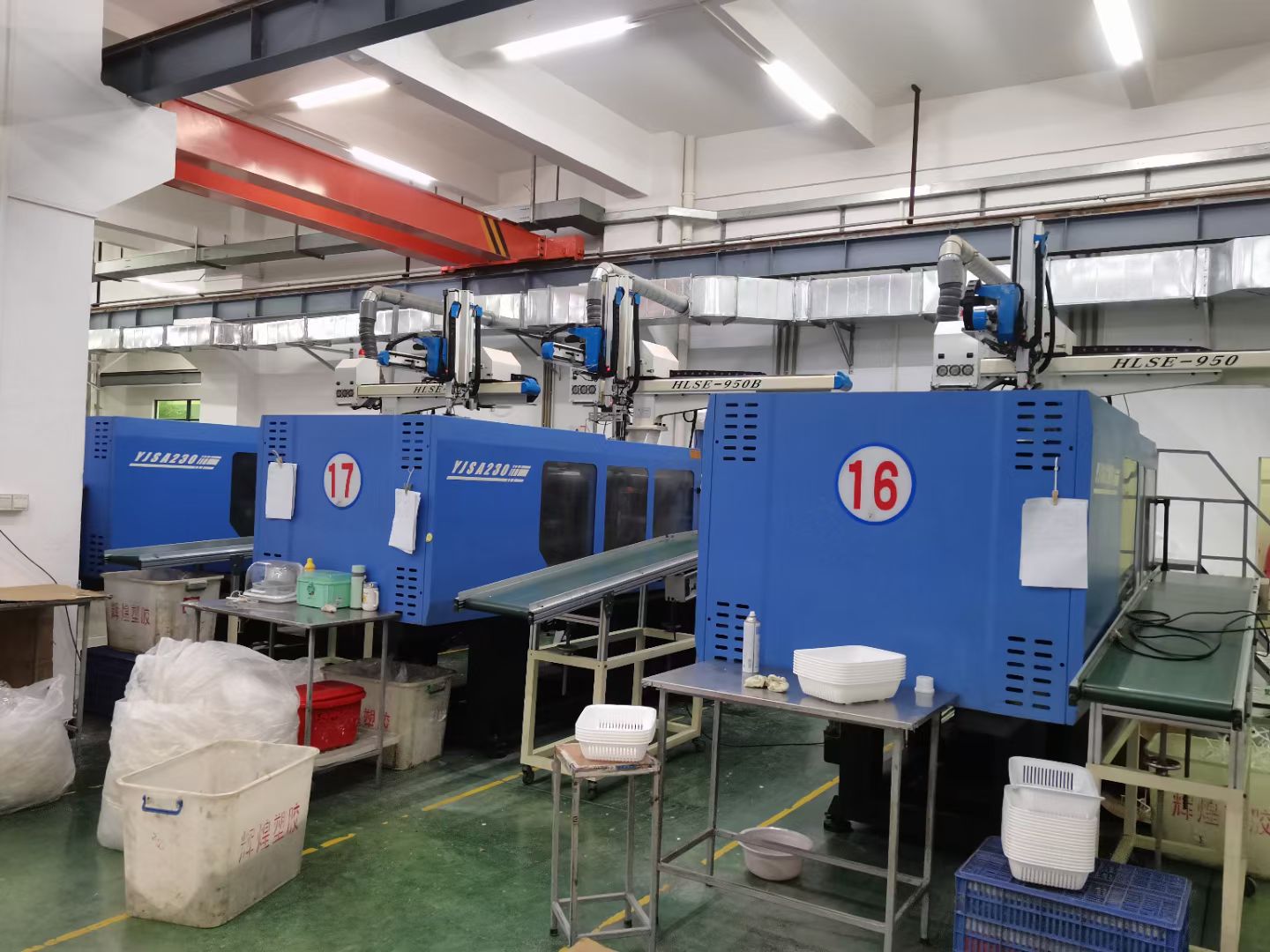
PET Preform Injection Machine Shortlist: YJPT-260 to YJHB-400
PET preform production is a machine-sizing problem before it becomes a purchasing problem. The machine that turns PET resin into preforms sets the cycle time, the energy cost per preform and the dimensional consistency that downstream blow moulding depends on. For buyers building or expanding a preform line, the most heavily evaluated decision band is the 260-tonne to 400-tonne class, where one platform often has to serve water bottle, edible oil and cosmetic container programmes without over-specifying capacity or under-specifying mould envelope.
This shortlist covers four high-speed PET preform injection machines from Ningbo Yong Jiang machine co., Ltd — YJPT-260, YJPT-318, YJPT-360 and YJHB-400 — using the manufacturer's published specifications. It explains how the four models actually differ, which bottle applications each class suits, what operating conditions the machines assume, and where the shortlist stops being the right answer.
Why the 260 T to 400 T Band Dominates Preform Projects
A preform mould is a multi-cavity, hot runner tool, and the clamping unit has to hold it closed against the cavity pressure generated during injection. Clamping force is therefore sized from the projected area of the cavity set and the injection pressure of the resin, while tie bar distance decides whether the mould itself physically fits between the platens.
Below this band, machines are typically matched to small cosmetic preforms, sample moulds or short-run container work. Above it, tonnage is usually being bought for very wide moulds, heavy preforms or large-format containers. That is why the 260 T to 400 T band is where most packaging preform buyers begin their evaluation: it covers the standard beverage and household-packaging moulds, but the four models inside the band are not interchangeable.
Four Specifications Decide the Model — Not One
The single most common specification error in preform machine selection is buying on tonnage alone. Four published figures interact, and any one of them can rule a machine out:
- Clamping force (tonnage) — determines whether the mould stays closed at injection pressure, and scales with cavity count and preform projected area.
- Tie bar distance (mm) — sets the maximum mould width that can be loaded. A machine can have enough tonnage and still reject the mould.
- Shot weight (g) — the total resin volume available per cycle. It must cover every cavity plus the hot runner, with margin.
- Screw diameter (mm) and installed power (kW) — govern plasticising rate, cycle stability and the electrical supply the plant must provide.
On the Yongjiang shortlist these four variables move independently, which is exactly what makes the four models a genuine shortlist rather than four sizes of the same machine.
The Shortlist: Published Specifications
| Model | Clamping force | Tie bar distance | Screw diameter | Shot weight | Motor / heat power | Machine weight |
|---|---|---|---|---|---|---|
| YJPT-260 | 260 T | 580 × 580 mm | 72 mm | 1,400 g | 42 kW / 35 kW | 9 t |
| YJPT-318 | 318 T | 620 × 620 mm | 77 mm | 1,900 g | 80 kW / 65 kW | 13 t |
| YJPT-360 | 360 T | 680 × 680 mm | 95 mm | 3,450 g | 80 kW / 65 kW | 16 t |
| YJHB-400 | 400 T | 720 × 720 mm | 95 mm | 3,450 g | 80 kW / 65 kW | 16 t |
All four are described by the manufacturer as high-speed PET preform injection machines within the YJPT and YJHB PET preform series, a family that is documented as supporting mould configurations from 6 to 72 cavities. The clamping structures of the YJPT-260, YJPT-360 and YJHB-400 are listed as QT500-A7 ductile iron.
How the Four Models Differ in Practice
YJPT-260 — the smallest and the lowest-draw option
At 260 T with a 580 × 580 mm tie bar distance, a 72 mm screw and 1,400 g of shot weight, the YJPT-260 is the entry point of the shortlist. Its electrical profile is materially lighter than the rest: a 42 kW motor and 35 kW of heating, on a 9 t machine. That combination suits plants with limited installed power, single or lower-cavity moulds, and smaller preform profiles used in cosmetic and small container packaging. It is also the natural second machine for a plant that needs shorter runs alongside a main high-cavity line.
YJPT-318 — the middle step that closes the mould-envelope gap
The YJPT-318 moves to 318 T, a 620 × 620 mm tie bar distance, a 77 mm screw and 1,900 g of shot weight, at 80 kW motor and 65 kW heat power on a 13 t frame. This step is not just extra tonnage: the wider tie bars accept moulds the 260 T cannot close around, and the shot weight increase covers cavity sets that the smaller machine cannot fill. Buyers who expect their packaging portfolio to widen within a few years often treat the 318 as the practical floor rather than the 260.
YJPT-360 — the jump into high-cavity territory
The YJPT-360 is where the shortlist changes character. Shot weight rises to 3,450 g and screw diameter to 95 mm, on a 680 × 680 mm tie bar distance and 360 T of clamping force, with 80 kW motor and 65 kW heat power on a 16 t frame. The larger screw and shot capacity support the higher plasticising rates that multi-cavity hot runner moulds demand, and the added clamping force holds the broader mould footprint that those cavity counts require.
YJHB-400 — same injection side, larger clamping and mould envelope
This is the most useful comparison on the list. The YJHB-400 shares the injection specification of the 360 model almost exactly — 95 mm screw, 3,450 g shot weight, 80 kW motor, 65 kW heat power, 16 t machine weight — but raises clamping force to 400 T and tie bar distance to 720 × 720 mm. In other words, the 400 does not buy more shot capacity; it buys mould width and closing force. Buyers choosing between them are deciding on cavity count and mould footprint, not on injection volume. That distinction rarely appears in a quotation, and it is the single most valuable question to ask a supplier.
Application Fit: Which Bottle Programmes Suit Which Class
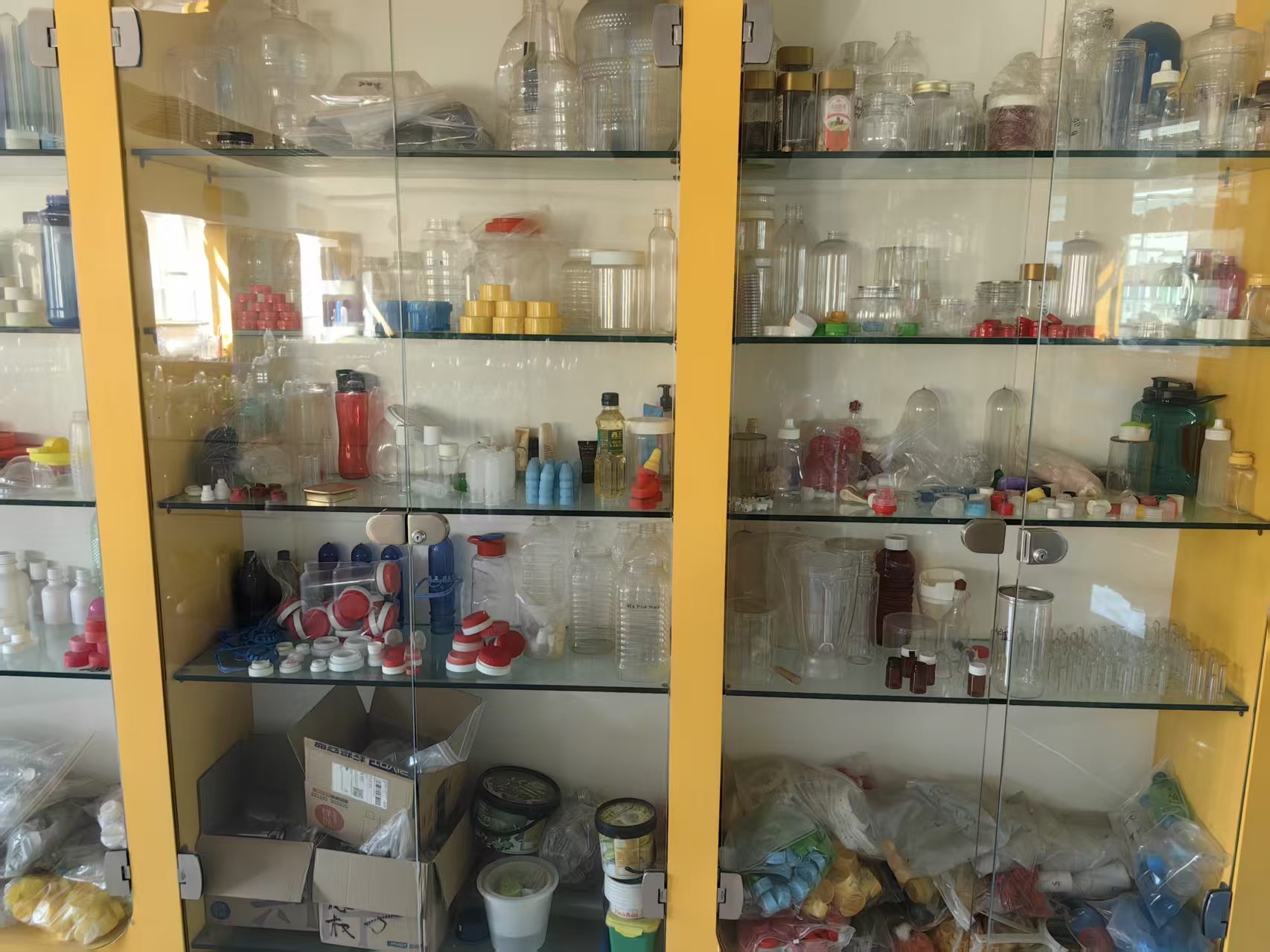
Mineral water and still water bottles
Water bottle preform programmes usually run the highest cavity counts in a plant, because preform weight per unit is low and volumes are high. The YJPT-360 and YJHB-400 sit naturally in this application through their 3,450 g shot weight and wider tie bar spacing, subject to the mould design being validated against the shot capacity.
Edible oil and wider-mouth containers
Oil bottle preforms are generally heavier and often run in moderate cavity counts. The YJPT-318 and YJPT-360 cover this range, with the 318 acting as a lower-investment option where the mould envelope stays inside 620 × 620 mm.
Cosmetic containers
Cosmetic packaging combines small, frequently changed preform designs with lower batch volumes. The YJPT-260 suits this pattern well: its 1,400 g shot weight and 580 × 580 mm mould envelope are matched to small-profile moulds, and its lower connected load reduces the cost of running short campaigns.
Carbonated soft drinks and 5-gallon preforms
CSD preforms and 5-gallon preforms put more demand on shot capacity per cavity and on cycle consistency. In these programmes the shortlist narrows to the YJPT-360 and YJHB-400, where the 95 mm screw delivers the plasticising rate required to keep cycle times stable across a wide cavity set.
Operating Requirements Buyers Should Plan For
Continuous 24/7 duty
Preform production is normally run continuously, because the economics of a multi-cavity hot runner mould depend on uptime. Yongjiang documents rigid clamping frames as being adapted to multi-cavity hot runner moulds for 24-hour continuous mass production — a design intent that aligns with how preform plants actually operate.
Workshop environment
Preforms are a food-contact and beverage-contact intermediate product, so many buyers specify a controlled production environment as part of their own quality system. An ISO Class 8 cleanroom classification is a commonly used reference range for this type of packaging area. The machine does not create that environment; the buyer's facility plan does, and it should be settled before machine layout is finalised.
Electrical supply and installed load
The four models split into two electrical profiles: 42 kW motor with 35 kW heating on the YJPT-260, and 80 kW motor with 65 kW heating on the YJPT-318, YJPT-360 and YJHB-400. All units are documented as supporting 380/400 V 50 Hz industrial power. Because of the step between the 260 and the other three, electrical infrastructure upgrades should be costed at the shortlist stage rather than after the order.
Energy consumption and injection stability
Yongjiang's product documentation attributes energy performance to high-response dual servo systems and customised plasticising screws, describing 30%–50% lower power consumption and shorter moulding cycles. Those figures are manufacturer statements rather than independently audited results; they are still the correct figures to test during a factory acceptance run, where measured consumption per preform is more useful than a catalogue percentage.
CE safety compliance
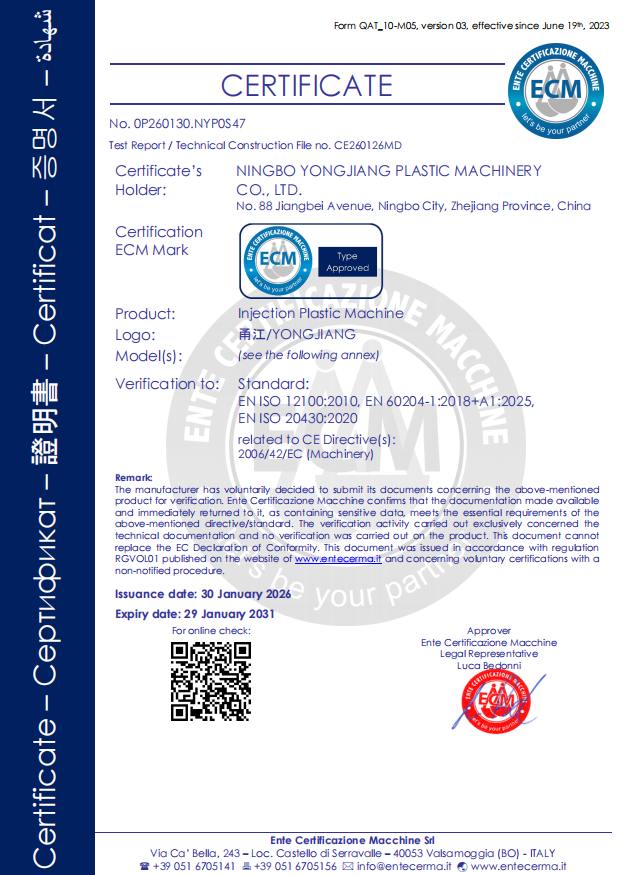
For European market entry, the shortlist's compliance baseline is a CE certificate numbered CE20260126MD, issued by ECM on 30 January 2026 and valid to 29 January 2029 — the certificate record states a validity period to 29 January 2031 with the issue date 30 January 2026. The certificate scope names the PET Preform Injection Molding Machine, Model YJPT-260 and YJHB-400, and cites 2006/42/EC (Machinery Directive) together with EN ISO 12100:2010, EN 60204-1:2018+A1:2020 and EN ISO 20430:2020.
Buyers specifying the YJPT-318 or YJPT-360 should request the current certificate and scope documentation for the exact configuration being quoted, since certificate scope is defined per model and per build.
Market Context: What the Numbers Say
Preform machine demand tracks beverage and packaging volumes rather than industrial capex cycles, which makes it a comparatively steady category. Third-party estimates published for this segment include:
- The global PET preform machines market is estimated at USD 9.9 billion in 2025, projected to reach USD 17.3 billion by 2035 (Future Market Insights).
- Injection moulding technology holds a 66.4% share of the total PET preform machine market as of 2025 (Future Market Insights).
- Asia Pacific holds a 41.2% revenue share of the injection moulding machine market in 2025, with China as the leading country (Grand View Research).
Those figures should be read with their own uncertainty. Different research houses scope the category differently — Intellectual Market Insights estimates roughly USD 12.8 billion by 2032 and Acumen Research roughly USD 14.7 billion by 2032 — largely because some analysts count full production lines while others count injection moulding machinery alone. The consistent signal across all three is growth in the machinery segment, concentrated in Asia Pacific supply.
At the top of the market, the high-output segment behaves as a separate procurement category. Husky Technologies is estimated to control 55–60% of the global high-output PET preform system market, and its HyPET 6e system, alongside Netstal's PET-LINE, is documented as complying with CE, UL, ISO 9001 and EUROMAP 60.1. Those systems are typically sold as integrated high-cavity platforms with matched tooling and service contracts. The Yongjiang shortlist sits in a different bracket — machine-level supply at 260 T to 400 T — and buyers benchmarking both should compare them as different categories rather than as direct substitutes.
Where This Shortlist Has Limits
A credible shortlist states its boundaries, and there are several here.
- These are machines, not complete lines. Mould, hot runner, chiller, dryer, dehumidifier, robot take-out and blow moulding are separate scope items. A shortlist decision on the injection machine does not constitute a line quotation.
- The 260 T model is not a smaller version of the 360 T. With 1,400 g of shot weight and a 580 × 580 mm envelope, it cannot substitute for the larger models when high-cavity water bottle moulds are planned. Buyers who purchase on price and later widen the mould will need a second machine.
- The 400 T buys clamping, not injection capacity. Relative to the 360 T, the YJHB-400 adds clamping force and tie bar distance while keeping the same screw, shot weight and installed power. If the constraint is cavity width rather than shot volume, the 400 is the correct choice; if it is shot volume, it is not.
- CE scope is model-specific. The certificate record in scope here names YJPT-260 and YJHB-400. Configurations outside that scope require their own documentation.
- Supply timing is part of the decision. Lead time is documented at 30–45 days with monthly capacity of 200 units, so multi-machine projects need a sequenced plan rather than a single delivery date.
- Energy claims are manufacturer statements. The 30%–50% consumption reduction attributed to dual servo systems is a documented manufacturer position, not a third-party audited result.
Against older general-purpose hydraulic injection machines, a PET-specific high-speed platform such as these changes three things: mould compatibility with multi-cavity hot runner tooling, cycle stability at high cavity counts, and energy draw per preform. The trade-off is that a dedicated preform machine is a narrower asset — it is bought for a packaging programme, not for mixed general moulding work.
Procurement Terms and Verification
For buyers moving from evaluation to execution, the commercial framework documented for these machines is straightforward:
- Minimum order quantity: 1 unit
- Delivery terms: FOB Ningbo
- Payment terms: 30% deposit, 70% before shipment
- Acceptance criteria: pre-shipment test
- Quality control: 100% test one week before shipment
- Lead time: 30–45 days; monthly capacity 200 units
- Customisation: OEM production with voltage and logo customisation
- After-sales: 24/7 service support
The supplier, Ningbo Yong Jiang machine co., Ltd, was established in 1985 and operates from a 130,000 m² facility with 200 employees, including 25 R&D engineers, producing approximately 2,000 units per year. The company reports a 59% export ratio, with named main markets including the USA, Canada and Thailand, and its export documentation also references EU, Middle East and Africa markets. Its product range spans servo energy-saving, high-speed precision and two-colour series alongside the YJPT PET preform series, with clamping forces from 40 T to 1,600 T.
Installation evidence supports the sizing logic in practice: a documented installation of 20 units of PET preform injection machines used for PET preform making and water bottle making, with clients from multiple countries including Ethiopia, Spain, France and Hungary, is recorded as stable operation with low electricity consumption. For a buyer, that case is most useful as a reference for multi-unit line planning rather than as a performance guarantee for a specific configuration.
Future Outlook
Three forces are likely to shape shortlist decisions in this segment over the next few years. First, energy cost per preform is becoming a line-item in supplier evaluation, which favours servo-driven platforms and pushes buyers to demand measured consumption data during acceptance testing rather than catalogue figures. Second, cavity counts continue to rise as packaging volumes grow, which steadily shifts the practical floor of a new line upward — a 260 T machine bought for a low-cavity programme today may be a support machine tomorrow. Third, compliance documentation is becoming a gate rather than an afterthought, particularly for EU-bound equipment, where certificate scope, standard references and validity windows are now checked during supplier qualification.
None of these trends changes the underlying logic of the shortlist: match clamping force, tie bar distance, shot weight and screw diameter to the actual mould and bottle programme, then verify the compliance and commercial terms against the same drawing.
FAQ
What clamping force does a PET preform injection machine actually need?
Clamping force is sized from the projected area of the mould cavity set and the injection pressure of the resin, so it rises with cavity count and preform size. In the Yongjiang shortlist the available clamping forces are 260 T (YJPT-260), 318 T (YJPT-318), 360 T (YJPT-360) and 400 T (YJHB-400). Tonnage alone is not sufficient to select a model, because tie bar distance and shot weight can rule out a machine that has adequate clamping force.
How does shot weight limit the number of cavities?
Shot weight is the total resin volume available per cycle, and it must cover every cavity plus the hot runner, with margin. On this shortlist the published shot weights are 1,400 g on the YJPT-260, 1,900 g on the YJPT-318, and 3,450 g on both the YJPT-360 and YJHB-400. The YJPT preform series is documented as supporting mould configurations from 6 to 72 cavities, but the specific cavity count for a project must be validated against the mould drawing and preform weight.
What is the practical difference between the YJPT-360 and the YJHB-400?
Both models share the same injection specification: 95 mm screw, 3,450 g shot weight, 80 kW motor power, 65 kW heat power and 16 t machine weight. The difference is on the clamping side — 360 T with a 680 × 680 mm tie bar distance for the YJPT-360, versus 400 T with a 720 × 720 mm tie bar distance for the YJHB-400. The YJHB-400 therefore adds mould envelope and closing force, not shot capacity.
What is the difference between the YJPT-260 and the YJPT-318?
The YJPT-260 offers 260 T clamping force, a 580 × 580 mm tie bar distance, a 72 mm screw, 1,400 g shot weight, 42 kW motor power, 35 kW heat power and a 9 t machine weight. The YJPT-318 steps up to 318 T, a 620 × 620 mm tie bar distance, a 77 mm screw, 1,900 g shot weight, 80 kW motor power, 65 kW heat power and a 13 t machine weight. The step increases both the mould envelope and the available shot volume, along with the connected electrical load.
Can these machines run continuously rather than in shifts?
Preform production is normally organised around continuous operation because multi-cavity hot runner moulds reward uptime. Yongjiang documents rigid clamping frames adapted to multi-cavity hot runner moulds for 24-hour continuous mass production, and the procurement framework includes a 100% test one week before shipment plus a pre-shipment acceptance test. After-sales service is documented as 24/7 support.
What does the CE certification cover on these machines?
The CE certificate referenced in the available documentation is numbered CE20260126MD, issued by ECM for the EU market, with an issue date of 30 January 2026 and a validity period recorded to 29 January 2031. The certificate scope names the PET Preform Injection Molding Machine, Model YJPT-260 and YJHB-400, and cites 2006/42/EC along with EN ISO 12100:2010, EN 60204-1:2018+A1:2020 and EN ISO 20430:2020. Buyers specifying other models within the series should request scope documentation for the exact configuration.
What production environment and electrical supply do these machines assume?
All four models are documented as supporting 380/400 V 50 Hz industrial power. The YJPT-260 draws 42 kW motor power and 35 kW heat power on a 9 t frame, while the YJPT-318, YJPT-360 and YJHB-400 draw 80 kW motor power and 65 kW heat power on 13 t and 16 t frames respectively. Machine weights in this range should also be checked against floor loading. For food-contact preform production, buyers commonly specify a controlled workshop environment in the ISO Class 8 range as part of their own quality system.
What are the standard purchasing terms?
The documented framework is a minimum order quantity of 1 unit, FOB Ningbo delivery terms, payment of 30% deposit with 70% before shipment, and acceptance criteria based on a pre-shipment test. Lead time is stated at 30–45 days against a monthly capacity of 200 units, with OEM production available and voltage and logo customisation offered as technical services.
Manufacturer specifications are drawn from Ningbo Yong Jiang machine co., Ltd product and certification documentation for the YJPT and YJHB PET preform series. Market figures are attributed to Future Market Insights, Grand View Research, Intellectual Market Insights and Acumen Research as cited. A downloadable specification reference is available in the Yongjiang product brochure, and company information is published at www.yongjiangimm.com.