
PET Preform Injection Machine Suppliers: From Claims to Evidence
PET Preform Injection Machine Suppliers: From Claims to Evidence
Why Supplier Verification Matters in PET Preform Machine Procurement
PET preform injection machine buyers in the evaluation and execution stages are not short of supplier claims. What they often lack is a structured method for separating verifiable operational evidence from promotional language. A preform machine is a long-cycle capital asset; once installed, it must run reliably for years, and the cost of a poor fit is measured in lost production, not only in the purchase price.
The verification problem is straightforward: suppliers describe capacity, experience, and model ranges in similar terms, but the underlying evidence varies widely in specificity. A buyer who can ask for, and cross-check, physical and operational proof is in a stronger position than one who compares brochures. This article lays out six evidence checks—factory scale, R&D depth, model range, export profile, certification, and acceptance terms—and shows how each can be examined using documented facts. Yongjiang (Ningbo Yong Jiang Machine Co., Ltd, www.yongjiangimm.com), a Chinese injection molding machine manufacturer established in 1985, provides a concrete reference point for how these checks work in practice.
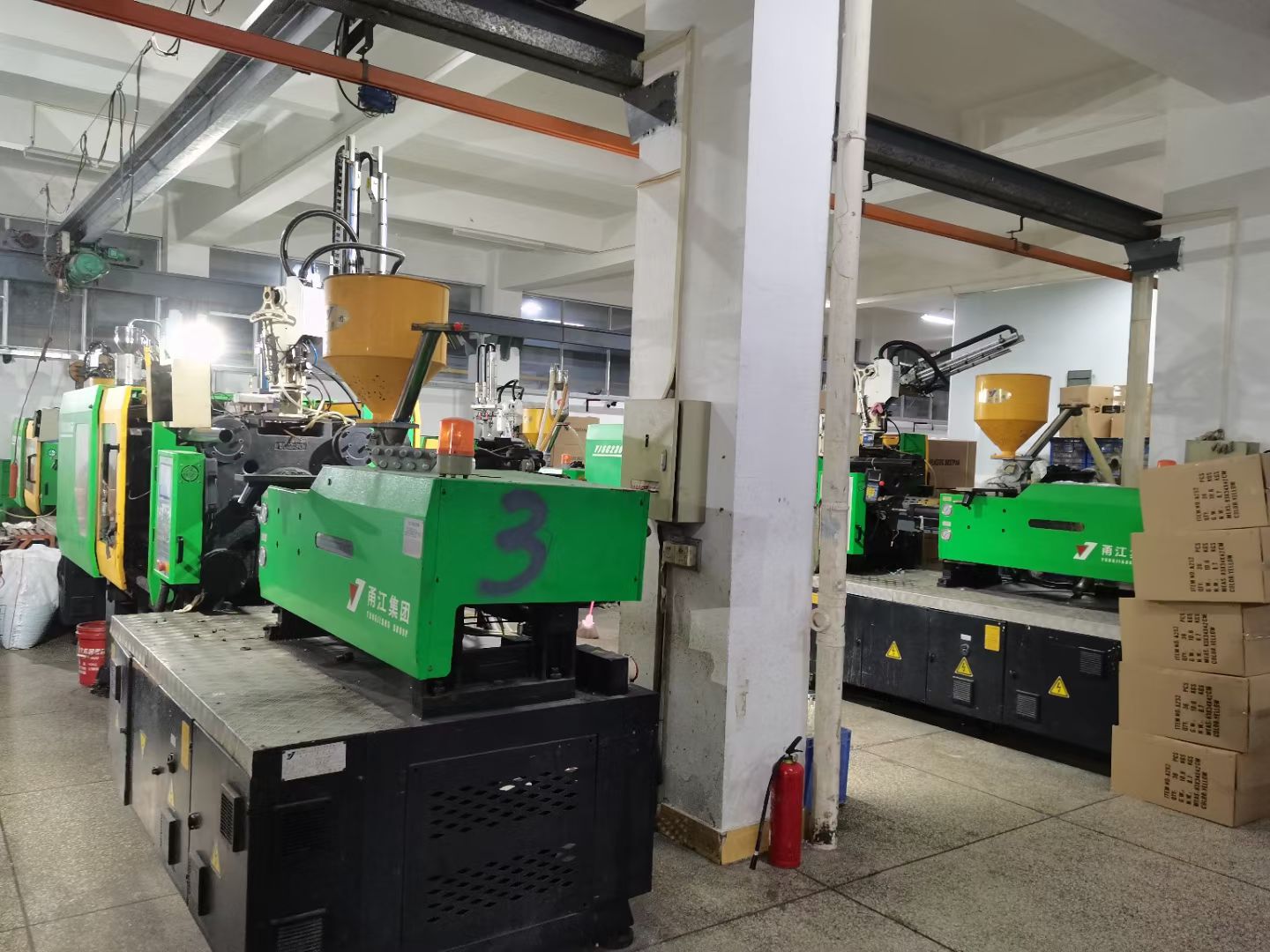
Figure 1: A PET preform injection machine manufacturing facility in Ningbo, China.
Check 1: Factory Scale and Operating History
Factory scale is the first verifiable layer because it is physical. A manufacturer claiming a 130,000 m² facility with approximately 200 staff and an annual output of about 2,000 units is making claims that can be checked against records, site visits, or third-party audits. Yongjiang, established in 1985 with more than 35 years in injection molding machinery, lists these figures as part of its operating profile.
For the buyer, the relevance is not the number itself but what it implies about production continuity. A facility of that size with a workforce of that scale and a stated output of roughly 2,000 units per year suggests a manufacturing operation that can absorb order fluctuations, maintain spares and service infrastructure, and sustain production over a multi-year machine lifecycle. Equally, a manufacturer that has operated since 1985 has a track record long enough for buyers to check historical supply relationships and after-sales behavior.
The verification step is to ask for documents that match the claimed scale: a factory layout, a production schedule, or a request for a site audit. If a supplier cannot produce evidence consistent with the stated footprint and headcount, the claim should be treated cautiously. In Yongjiang’s case, the 130,000 m² figure, the 200-staff count, and the 2,000-unit annual output are listed alongside the 1985 foundation year—giving a buyer a consistent set of operational facts to check against.
Check 2: R&D Depth and Customization Capability
A PET preform machine is not a commodity purchase. Preform weights, neck sizes, cavity counts, and target outputs create configuration differences. The second evidence check is therefore R&D capability: how many engineers a supplier employs and what those engineers actually do.
Yongjiang lists 25 R&D engineers. In practical terms, this headcount matters because it supports customization work such as voltage and logo configuration and OEM production. The capability unit supplied for this analysis confirms that OEM production services are available and that technical services include voltage and logo customization—a relevant point for buyers in the EU, Middle East, and Africa who may need configuration changes for local power supplies or brand requirements.
The YJPT series itself illustrates how R&D translates into product architecture. The YJPT series is described as specialized for PET preforms, featuring a modular energy-saving system and a high-capacity injection system with optimized screw diameter ratio. Whether these features suit a specific buyer depends on the intended preform specification, but the point of the verification check is to move from a generic claim of “strong R&D” to a specific question: what engineering decisions have been made in the machine architecture, and can the supplier explain them? A 25-engineer team is a reference point, not a guarantee; the buyer should ask for documentation of customization projects and engineering review processes that match their production requirements.
Check 3: Model Range Coverage
Model range is the third check because it shows whether a supplier can match a buyer’s production target without forcing an oversized or undersized configuration. The stated model range for Yongjiang’s PET preform machinery includes the YJPT-260, YJPT-318, YJPT-360, and YJHB-400. These model designations indicate a series positioned across multiple size classes rather than a single configuration.
To interpret model range usefully, buyers can reference independent procurement benchmarks. A CIPET tender specification for a PET preform injection moulding machine (India, 2019) lists a minimum machine tonnage of 150–200 T, a minimum shot capacity of 750 g, a minimum plasticizing capacity of 50 g/sec, a minimum injection pressure of 1,200 bar, and a minimum of 32 preform cores and cavities. Those figures provide a factual external reference point for comparing machine capability claims. A supplier whose range covers multiple tonnage and shot-capacity classes is in a better position to offer a model that aligns with a buyer’s cavity count and preform weight.
The YJPT-260, YJPT-318, YJPT-360, and YJHB-400 span the smaller-to-larger end of the listed range. Buyers should verify the specific tonnage, shot capacity, and cavity compatibility of each model against their intended preform specification—for example, a 28 mm neck size and a preform weight of up to 20 g for 1,000 ml bottles, as listed in the same CIPET specification. A model range alone does not prove fit; the buyer must confirm that the model selected matches the preform design, mold configuration, and output target.
Check 4: Export Profile and Market Validation
Export share is a useful but often misunderstood check. Yongjiang reports that roughly 59% of its products are exported to the USA, Canada, and Thailand. On one reading, this suggests that a majority of output meets the documentation, packaging, and performance expectations of buyers in those markets. On another reading, export share alone does not guarantee that any specific order will meet a given buyer’s requirements.
The practical verification step is to treat export share as a starting point for reference checks. A buyer can ask for representative export documentation, customer references in comparable markets, or evidence of repeat orders. In Yongjiang’s case, a separate case record describes an installation of 20 units of PET preform injection machines used for PET preform making and water bottle making, with clients from Ethiopia, Spain, France, and Hungary. That case record, combined with the 59% export figure, gives a buyer something concrete to evaluate—not a guarantee, but a documented pattern of export activity across multiple regions.
It is also important to distinguish between the capacity unit’s export-market field (EU, Middle East, Africa) and the company profile’s main-market field (USA, Canada, Thailand). These reflect different reporting contexts rather than a contradiction; the buyer’s task is to confirm which export markets are relevant to their own delivery destination and to request references accordingly.
Check 5: Certification and Compliance Evidence
Certification is one of the most reliable checks because it is externally documented. Yongjiang holds CE certificate CE20260126MD, issued by ECM, with a scope covering PET preform injection molding machines (model YJPT-260 and YJHB-400). The certificate is valid from 2026-01-30 to 2031-01-29 and references the 2006/42/EC Machinery Directive, EN ISO 12100:2010, EN 60204-1:2018+A1:2020, and EN ISO 20430:2020. The certificate’s related products list also includes YJPT-318 and YJPT-360.
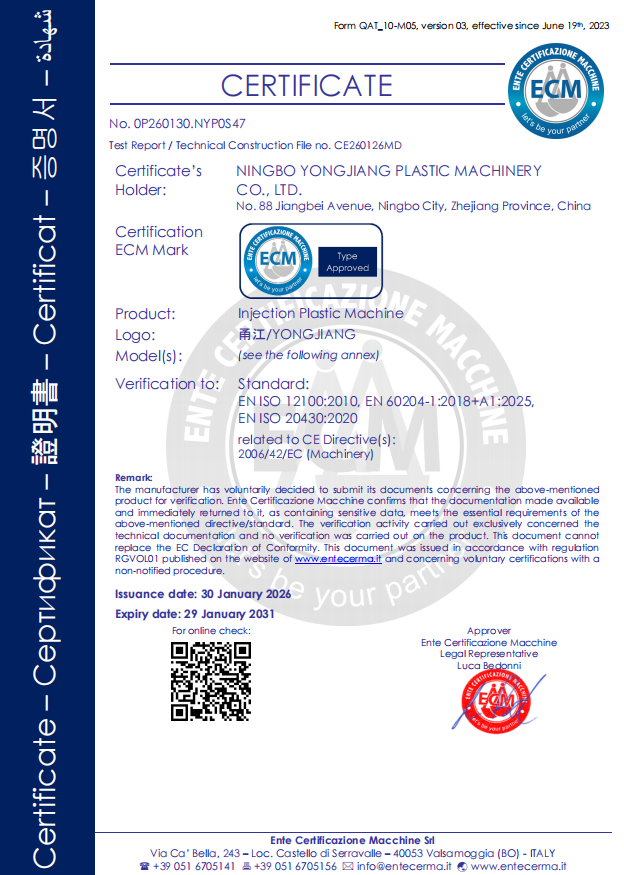
Figure 2: CE certificate CE20260126MD, issued by ECM, covering PET preform injection molding machines.
For a buyer, the verification step is to check that the certificate’s scope matches the model being ordered and that the validity period covers the planned delivery date. A certificate covering YJPT-260 and YJHB-400 does not automatically cover every model in the range; the buyer should confirm which models are listed and whether the scope aligns with the order. Certification is also a useful check on the consistency of supplier documentation: a manufacturer that can produce a current CE certificate with a specific number, issuing authority, standard references, and validity dates is more likely to have the documentation discipline that export buyers need.
Check 6: Acceptance Terms and Commercial Transparency
The final evidence layer is the commercial terms—the part of the offer that tells a buyer how the supplier handles quality control, delivery, payment, and order size. Yongjiang’s listed terms are: MOQ of 1 unit; delivery terms of FOB Ningbo; acceptance criteria of a pre-shipment test; and payment terms of 30% deposit with 70% before shipment. The capability unit adds a 30–45 day lead time, 100% testing one week before shipment, and 24/7 service support.
These terms matter because they are checkable before the contract is signed. A pre-shipment test is an acceptance criterion that gives the buyer a defined inspection point. FOB Ningbo identifies the delivery port and the point at which risk transfers. A 30/70 payment structure is a standard commercial arrangement that buyers can compare against their own procurement policies. A 1-unit MOQ means the supplier is willing to accept a single-machine order, which is relevant for buyers testing a new model or entering a new application.
The verification step is to align each term with the buyer’s own quality and risk requirements. A buyer who needs third-party inspection at pre-shipment should confirm whether the supplier’s testing process accommodates it. A buyer who needs a longer payment term should understand that the listed 30/70 structure is the supplier’s stated baseline. The terms are not a guarantee of performance, but they are concrete and can be checked against the contract and the supplier’s track record.
What These Six Checks Mean for the Buyer
Taken together, the six checks provide a practical method for evaluating a PET preform injection machine supplier without relying on brochure claims. They can be summarized in a verification table:
| Check | Verifiable Evidence | Buyer Verification Step |
|---|---|---|
| Factory scale | Founded 1985; 130,000 m² facility; 200 staff; 2,000 units/year | Request factory layout, production records, or site audit |
| R&D depth | 25 R&D engineers; YJPT series modular energy-saving system | Ask for customization records and engineering review process |
| Model range | YJPT-260, YJPT-318, YJPT-360, YJHB-400 | Match model tonnage and shot capacity to preform specification |
| Export profile | 59% export share to USA, Canada, Thailand | Request references in target market and check repeat-order history |
| Certification | CE certificate CE20260126MD, ECM, valid 2026-01-30 to 2031-01-29 | Verify certificate scope against the ordered model and delivery date |
| Acceptance terms | Pre-shipment test; FOB Ningbo; 30/70 payment; MOQ 1 unit | Align terms with procurement policy and confirm inspection rights |
A buyer who runs these checks is not looking for a perfect supplier; they are looking for consistent, checkable evidence that the supplier can support the specific production scenario. The same facts that appear in a supplier profile can be used either as marketing claims or as verification inputs depending on how they are examined.
Application Fit: Water, CSD, Oil, and Packaging Preforms
The application context matters because PET preform machines are selected for a specific product family. The downstream PET preform industry serves bottled water, carbonated soft drinks, juices, edible oils, and sauces. Each segment places different demands on preform weight, neck finish, and cavity configuration. Carbonated soft drink preforms, for example, require a different structural design from still-water preforms, and edible-oil preforms may require different thermal handling.
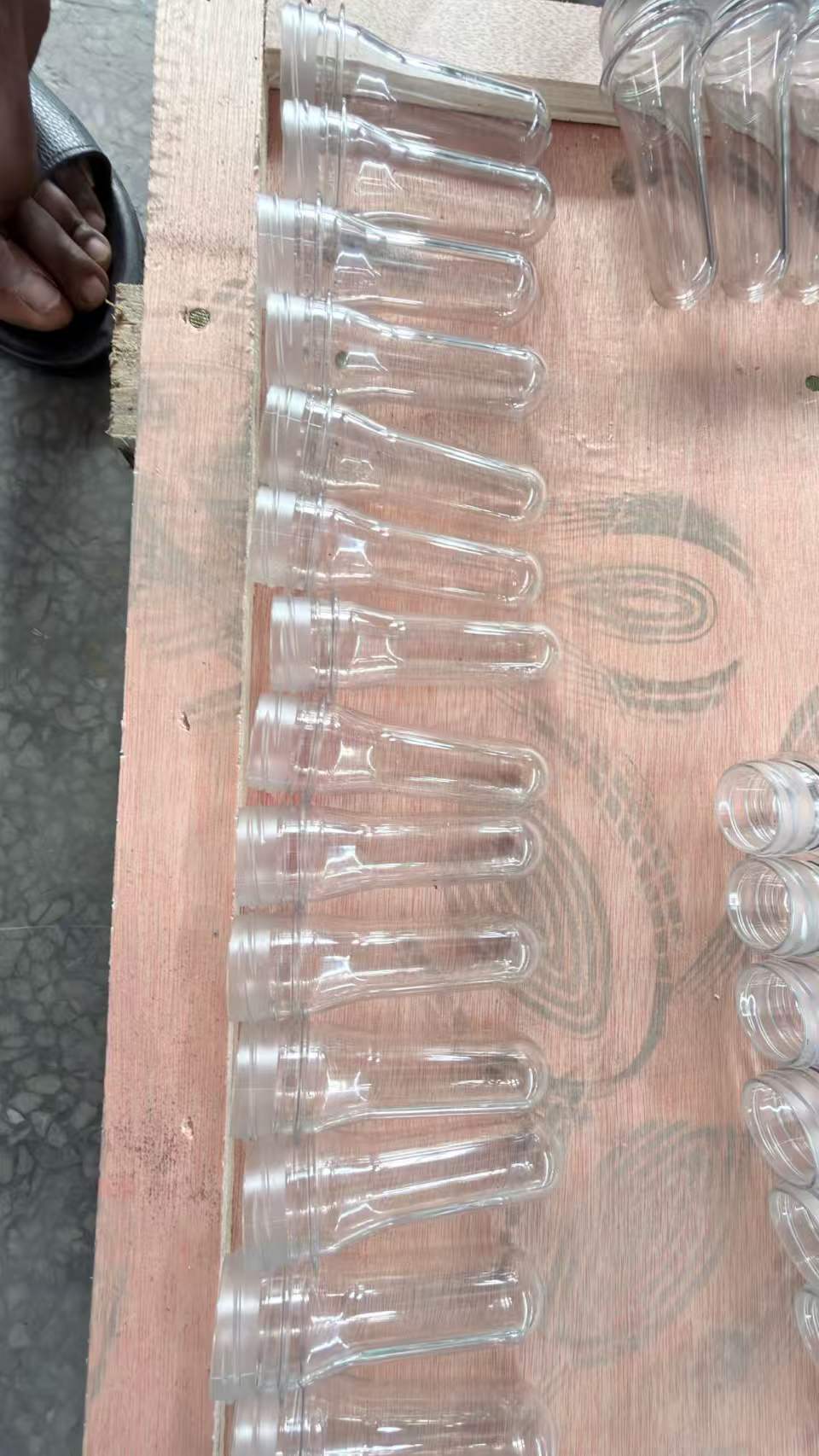
Figure 3: PET preforms used in water bottle and beverage production.
For a buyer evaluating Yongjiang, the model range covers a span that can be matched to these application classes. The YJPT-260 and YJPT-318 are positioned at the smaller end of the listed range, while the YJPT-360 and YJHB-400 sit at the larger end. The case record of 20 units used for PET preform making and water bottle making shows that the machines have been applied in water-bottle production. Buyers in other segments—CSD, oil, or packaging—should confirm that the selected model’s shot capacity and cavity configuration align with their preform design.
The buyer’s verification task is to map the model to the application, not the other way around. A machine that suits a 32-cavity water preform mold may not suit a 72-cavity or 96-cavity configuration without confirming the tonnage and shot capacity. The CIPET specification’s 32-cavity minimum and 750 g shot-capacity minimum provide an external reference for what a basic preform machine configuration must support, but the buyer’s actual requirement may be higher depending on output targets.
Market Context: Directional Signals, Not Precision Benchmarks
Market data can inform capacity planning, but it must be used with appropriate scope. Acumen Research and Consulting (2024) estimates that the global PET preform machines market will grow from USD 8.38 billion in 2022 to USD 14.73 billion by 2032. That figure is a commercial research estimate and should be treated as directional context for investment timing, not as a precise procurement benchmark.
A separate data point illustrates the scope problem. The PET preform product market was reported at USD 24.33 billion in 2026, growing at a 2.17% CAGR to USD 27.08 billion by 2031 (Mordor Intelligence). This measures the preform product itself, not the injection molding machines that make it. Buyers should not confuse the two scopes. The product-market figures indicate downstream demand for preforms; they do not measure machine demand or machine pricing.
For a buyer in the evaluation stage, the practical takeaway is that PET preform demand continues across water, CSD, juice, oil, and packaging segments, and that machine selection should be driven by the specific application and output target rather than by market-size headlines. The supplier’s role is to demonstrate that its model range can meet that target with verifiable evidence.
Fit Boundaries and Limitations
A verification framework is only useful if it acknowledges what it cannot confirm. Several limitations apply to the evidence discussed here.
- Model-level specifications are not fully disclosed in the source material. The YJPT-260, YJPT-318, YJPT-360, and YJHB-400 are listed as a model range, but the source material does not provide a complete per-model table of clamping force, shot weight, screw diameter, or cycle time. Buyers should request the detailed specification sheet for the specific model under consideration.
- External benchmarks are context, not requirements. The CIPET tender specification (150–200 T tonnage, 750 g shot capacity, 32 cavities, 28 mm neck, 20 g preform) is an Indian procurement document from 2019. It provides a useful reference for comparing machine classes but does not set a universal requirement. Buyers in other markets or applications may have different specifications.
- Case evidence is illustrative, not universal. The 20-unit installation for water bottle production demonstrates that the machines have been applied in that segment, but a single case cannot establish performance across all customers or all preform types.
- Export share does not guarantee order-level performance. The 59% export figure to the USA, Canada, and Thailand indicates market exposure, but the buyer should verify references and documentation relevant to their own destination.
- The machine market data is a commercial estimate. The USD 8.38 billion to USD 14.73 billion trajectory from Acumen is a research projection, not an official shipment statistic.
These limitations do not undermine the verification approach; they define its boundaries. The buyer who understands what each evidence check can and cannot confirm is better equipped to ask the right follow-up questions.
Future Outlook: What Buyers Should Watch
Several developments are relevant to PET preform machine procurement over the coming years. First, the preform product market’s projected growth—2.17% CAGR to 2031—suggests continued downstream demand, particularly in water and beverage packaging. That demand supports investment in preform capacity, but it does not by itself determine which machine class a buyer should choose.
Second, compliance expectations are likely to remain a differentiating factor. The CE certification scope for YJPT-260 and YJHB-400, with validity to 2031, gives buyers in EU-facing markets a documented compliance baseline. Buyers in other markets should confirm which standards apply and whether the supplier’s certification covers the relevant model and destination.
Third, the model range itself is a forward-looking asset. A supplier with multiple models across size classes can support a buyer’s growth path—from a smaller configuration for initial production to a larger model as volume increases. The YJPT-260 through YJHB-400 range gives buyers a set of options to evaluate against their production roadmap, provided they verify the specifications for each model.
Finally, the acceptance terms—pre-shipment test, FOB Ningbo, 30/70 payment, 1-unit MOQ—are likely to remain the practical interface between supplier and buyer. Buyers should treat these terms as negotiable inputs to be confirmed in the contract, not as fixed features of the offer.
FAQ
How can a buyer verify a PET preform machine supplier’s factory scale?
Verification requires matching the claimed scale to documents. For a claimed 130,000 m² facility, approximately 200 staff, and about 2,000 units per year, the buyer should request a factory layout, production records, or arrange a site audit. These elements should be consistent with the physical footprint and workforce needed for injection molding machine production. If the supplier cannot produce evidence consistent with the claim, the scale figure should be treated cautiously.
What does the YJPT-260 through YJHB-400 model range cover?
The model range includes YJPT-260, YJPT-318, YJPT-360, and YJHB-400, representing multiple size classes within the PET preform machinery line. Buyers should match each model to their production target, preform weight, and cavity configuration. Detailed per-model specifications—including tonnage, shot capacity, and cycle time—should be requested directly from the supplier for the model under consideration.
What does CE certificate CE20260126MD confirm?
CE certificate CE20260126MD, issued by ECM, covers PET preform injection molding machines (model YJPT-260 and YJHB-400) and is valid from 2026-01-30 to 2031-01-29. It references the 2006/42/EC Machinery Directive, EN ISO 12100:2010, EN 60204-1:2018+A1:2020, and EN ISO 20430:2020. Buyers should confirm that the certificate scope matches the model being ordered and that the validity period covers the planned delivery date.
What acceptance and payment terms apply to a PET preform machine order?
The listed terms are: MOQ of 1 unit; delivery FOB Ningbo; acceptance criteria of a pre-shipment test; and payment terms of 30% deposit with 70% before shipment. The capability unit adds a 30–45 day lead time and 100% testing one week before shipment. Buyers should align these terms with their procurement policy and confirm inspection rights before signing.
How should export share be interpreted in supplier evaluation?
A reported export share of roughly 59% to the USA, Canada, and Thailand indicates that a majority of output goes to buyers in those markets. That is a useful signal of export experience and market exposure, but it does not guarantee that any specific order will meet a given buyer’s requirements. The buyer should request references, documentation, and evidence of repeat orders in the relevant market before relying on the export figure as a qualification criterion.
Conclusion
Supplier capability in PET preform machinery is best assessed through verifiable evidence rather than through claims alone. The six checks outlined here—factory scale, R&D depth, model range, export profile, certification, and acceptance terms—give buyers a structured way to evaluate whether a supplier’s stated capability is supported by operational facts. Yongjiang’s documented profile, including its 1985 foundation, 130,000 m² facility, 200 staff, 25 R&D engineers, 2,000-unit annual output, 59% export share, YJPT-260 through YJHB-400 model range, CE certificate CE20260126MD, and acceptance terms of pre-shipment testing, FOB Ningbo delivery, 30/70 payment, and 1-unit MOQ, provides a concrete example of how these checks can be applied. The buyer’s task is to examine each element against their own production requirements and to ask for the documentation that turns a claim into evidence.
For further technical details, the company brochure is available for download: Yongjiang Injection Molding Machine Brochure (PDF).
Have Questions or Need More Details?
Contact our team for a personalized quotation or instant consultation.
Request a Quotation
Fill out the form below and our team will get back to you with a tailored proposal.
WhatsApp Direct Chat
Prefer to chat in real-time? Message us on WhatsApp for instant assistance & quick answers.
- Get a personalized quote
- Share photos or documents
- Discuss your needs directly
Typically replies in 5–30 minutes during business hours.