
PET Preform Injection Machines: CE Compliance & Operating Environment
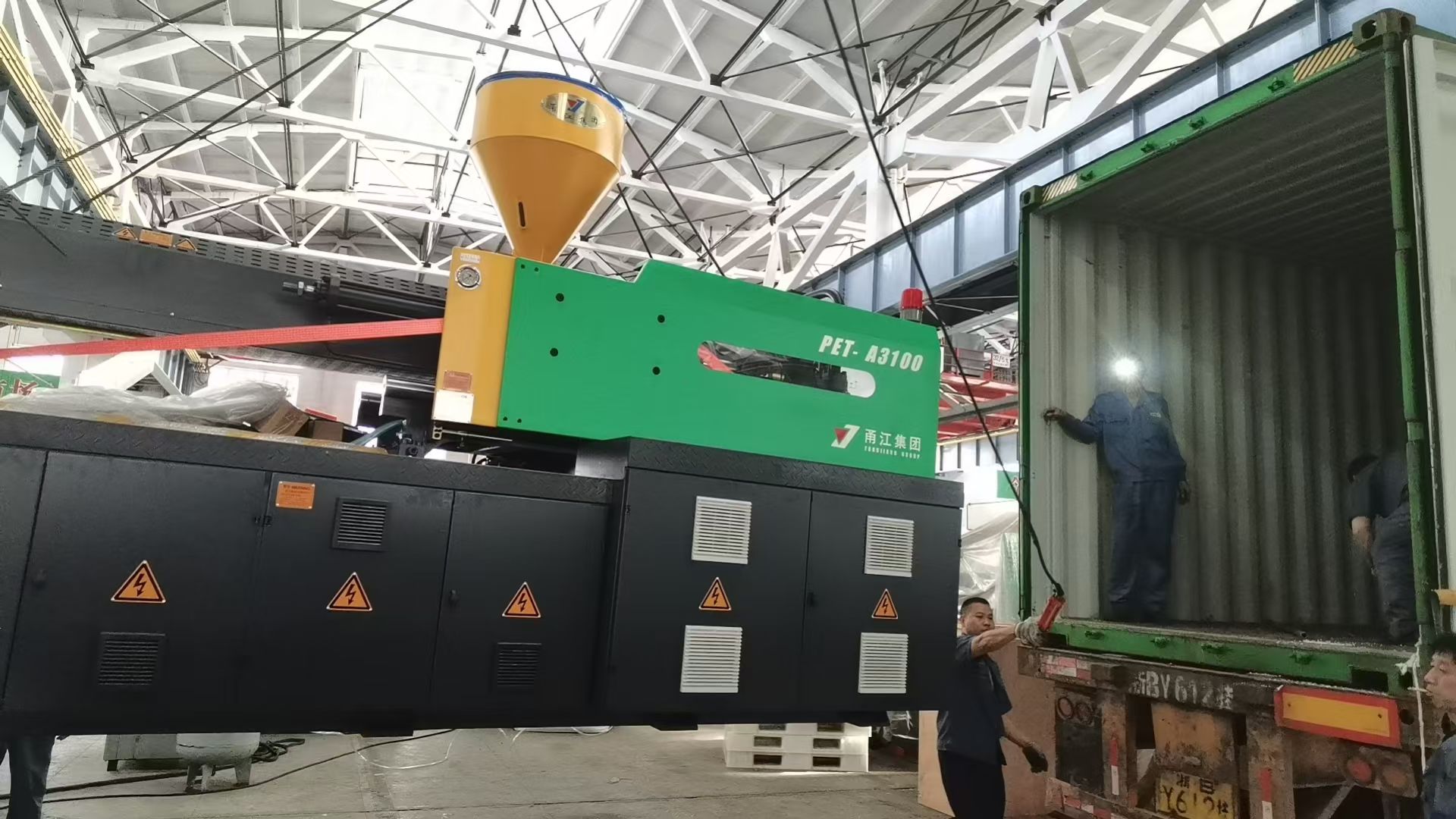
A PET preform injection machine is qualified by two things at once: the compliance standard it carries and the environment it runs in.
Buying a PET preform injection machine is a qualification decision as much as a purchasing decision. Buyers who compare only clamping force and shot weight frequently reach the commissioning stage and discover a gap: the machine meets the output target but cannot be signed off for the destination market, or the workshop cannot hold the temperature, humidity, and cleanliness conditions the process depends on.
For food-grade preform production, two requirement sets must line up. The machine has to satisfy the EU CE machinery safety standard, together with low energy consumption and stable injection behaviour. The plant around it has to control ambient temperature, relative humidity, cleanliness, and power quality. When they do not line up, PET resin exposed to moisture produces silver streaks and hydrolysis defects, and the plant loses yield rather than gaining capacity.
This article works through what the requirements are, the numbers behind them, the supporting equipment that has to be installed before startup, and the practical limits a buyer should test before signing a purchase order. It draws on PET preform application data published by Ningbo Yong Jiang Machine Co., Ltd., a Chinese injection moulding machine manufacturer established in 1985, and on third-party research covering the PET preform machine market.
Compliance and Cleanliness Are Two Halves of One Requirement
PET preform injection molding is a process in which the material sets the quality ceiling as much as the machine does. PET pellets absorb moisture from ambient air. Moisture that is not driven off before processing breaks polymer chains during melting, producing visible silver streaking and an invisible loss of intrinsic viscosity that weakens the finished bottle. That is why PET preform application specifications treat humidity as a hard constraint rather than a comfort setting.
The second half of the requirement is regulatory. A PET preform injection machine installed in the European Union must comply with the EU CE machinery safety standard. Compliance is therefore not an option added after the order is placed; it belongs in the machine definition, and the same application specification pairs it with low energy consumption, stable injection, and quick mold change capability for production runs that switch between preform specifications.
These two halves explain a shift in how buyers evaluate equipment. Whether the project is a 48 cavity PET preform injection machine feeding a regional water bottle producer or a 72 cavity line serving a larger packaging group, the questions increasingly arrive together: what compliance standard does the machine carry, what environment does it need, and what else must be installed to make it run.
What EU CE Machinery Safety Compliance Covers
CE compliance for a PET preform injection machine is a machine-level requirement before it is a documentation exercise. In the PET preform application specification, compliance with the EU CE machinery safety standard sits alongside two performance conditions — low energy consumption and stable injection — and the machine is also expected to support quick mold change for multi-specification preforms.
CE conformity also defines the baseline of the professional segment rather than the top of the feature list. A 2024 technical comparison lists high-end PET preform systems such as Husky's HyPET 6e and Netstal's PET-LINE as complying with international standards including CE, UL, ISO 9001, and EUROMAP 60.1. For a buyer comparing a cost-conscious PET preform machine with a high-end system, that means CE should be treated as a minimum requirement rather than a premium add-on.
A clarification worth stating plainly: CE conformity addresses machinery safety. It does not certify preform quality. A CE-compliant machine installed in a workshop that exceeds 60% relative humidity will still produce defective preforms, because the failure is chemical rather than mechanical.
ISO Class 8 Cleanliness for Food-Grade Preform Production
For food-grade preforms, the application specification calls for an ISO Class 8 (100,000-class) dust-free workshop, kept free of metal dust and plastic debris. The reason is the product's route to the consumer: a preform becomes a food-contact container after blow molding, so any particulate that enters the part at the injection stage stays with it.
The two contamination sources named in the specification are also the two most common in a preform plant — metal dust from tooling and maintenance work, and plastic debris from granulate handling and regrind. An ISO Class 8 environment is a practical way to keep both under control without moving to pharmaceutical-grade cleanroom costs.
The important boundary is that classification belongs to the building, not to the machine. Air handling, filtration, pressure cascades, and material and personnel airlocks are facility scope. A supplier can specify the class the process needs; the buyer has to build and maintain it.
Temperature, Humidity, and Power: The Operating Envelope
The environment specification for PET preform molding is narrow by industrial standards, and each element exists for a specific reason. The table below summarises the conditions recorded in the application data.
| Parameter | Specified condition | Operational reason |
|---|---|---|
| Ambient temperature | Stable 20–30°C | Keeps cycle times and resin behaviour consistent across a long production run |
| High-temperature resilience | Continuous operation sustainable at 35–40°C in tropical workshops with good ventilation | Allows use in hot-climate plants without derating output |
| Relative humidity | 40–50% RH target; above 60% RH prohibited | Prevents PET moisture absorption, silver streaks, and hydrolysis defects |
| Resin moisture | Dried below 0.02% before processing | Removes the moisture that degrades the polymer during melting |
| Cleanliness | ISO Class 8 (100,000-class) dust-free workshop preferred | Protects food-grade quality; excludes metal dust and plastic debris |
| Power supply | 380/400V 50Hz three-phase industrial power, fluctuation within ±10% | Provides stable servo power for long-cycle, high-speed production |
| Operating mode | 24/7 continuous production | Matches the output expectations of preform supply contracts |
Humidity deserves a closer look, because procurement briefs sometimes describe the acceptable range as 40–60% RH. The application data is more specific: the target band is 40–50% RH, and humidity above 60% RH is prohibited. In practice, 60% RH functions as a ceiling that must never be crossed, not as a normal operating point. Plants in humid climates should therefore treat dehumidification as part of the capital plan rather than as a contingency.
Power quality is treated with the same strictness. The machine expects 380/400V 50Hz three-phase industrial power with voltage fluctuation within ±10%, and stable servo power is a precondition for long-cycle high-speed production. A supply that drifts outside that tolerance does not simply reduce output; it undermines the repeatability that multi-cavity preform production depends on.
Supporting Equipment Required Before Installation
A PET preform injection machine is the centre of a system, not a standalone installation. The application specification lists four items that must be in place for operation — a PET preform mold, a hopper dryer, an air compressor, and a water chiller — and adds matched mold temperature controllers and hot runner molds to the equipment set. Buyers who budget only for the machine typically find that commissioning slips while auxiliary equipment is procured.
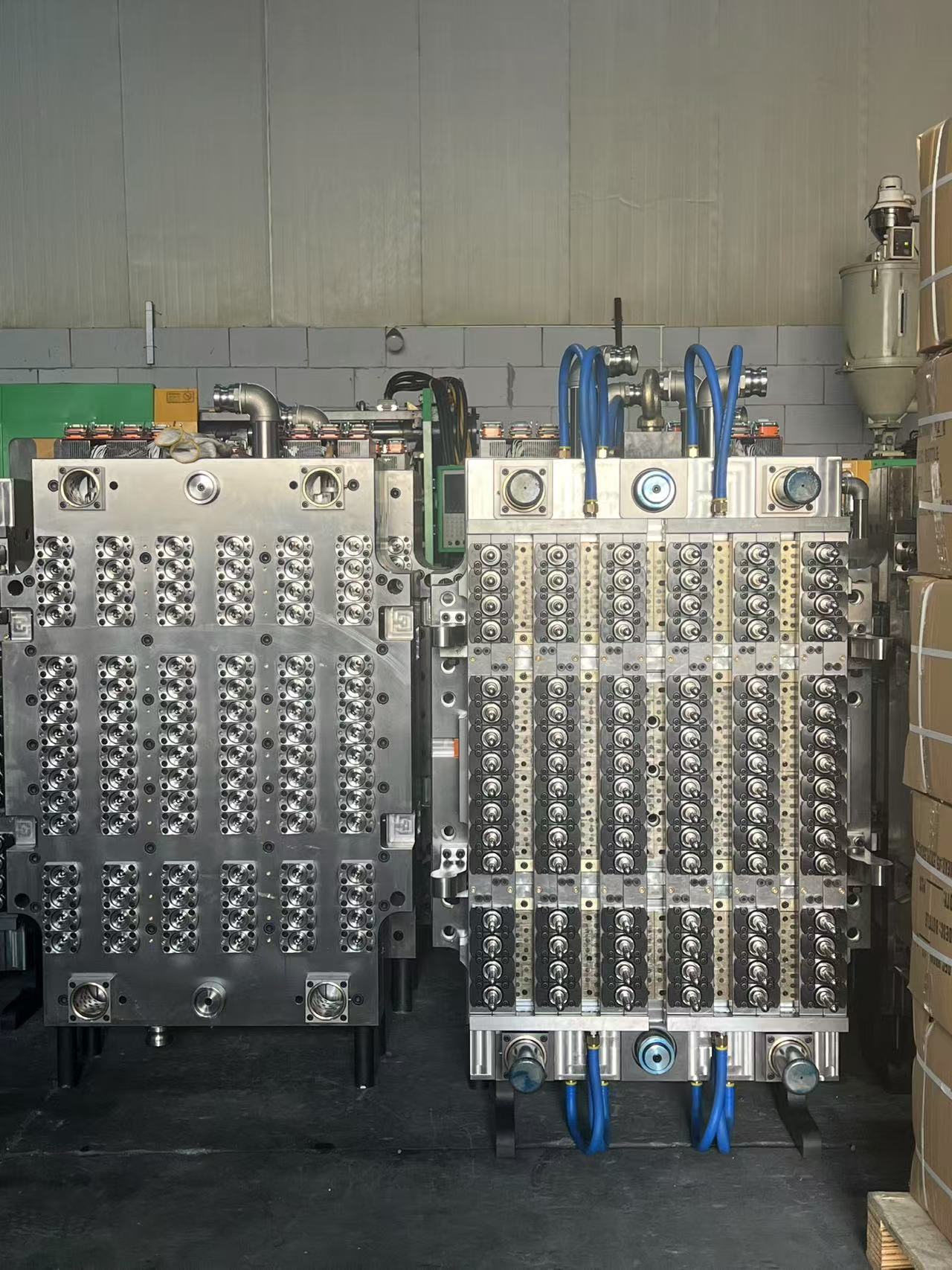
The preform mold defines cavity count and preform geometry; it is part of the required equipment set alongside drying, air, and cooling.
| Equipment | Role in the preform process |
|---|---|
| PET preform mold | Defines cavity count and preform geometry; multi-cavity hot runner molds sustain high output per cycle |
| Hopper dryer | Removes moisture from PET pellets before processing; drying to below 0.02% moisture is a stated process requirement |
| Mold temperature controllers | Hold mold temperature within the window required for consistent preform wall thickness and surface finish |
| Air compressor | Supplies compressed air to the machine and to handling devices on the line |
| Water chiller | Provides process cooling so that cycle time stays stable during continuous operation |
Because these items are interdependent, the practical sequence is to fix the preform specification first — bottle type, weight, and cavity count — then confirm the mold and auxiliary equipment against it, and only then confirm the injection machine. Working in the reverse order is the most common cause of a machine that meets its datasheet but not its production target.
How Yongjiang Configures PET Preform Machines for These Conditions
Ningbo Yong Jiang Machine Co., Ltd. is a Chinese injection moulding machine manufacturer established in 1985, with more than 35 years of experience in the sector. The company operates a 130,000 m² manufacturing facility with approximately 200 staff, including a 25-engineer R&D team, and produces around 2,000 units per year. Its main products are PET preform machines and PVC fitting machines, and approximately 59% of output is exported, with major markets including the USA, Canada, and Thailand.
Within that portfolio, the YJPT series is built specifically for PET preforms and supports mold configurations from 6 to 72 cavities, according to the company's product documentation. Machines in the series use high-response dual servo systems and customized plasticizing screws, with rigid clamping frames intended for multi-cavity hot runner molds in 24-hour continuous production. Yongjiang specifies that its servo configurations reduce power consumption by 30%–50% compared with conventional drive arrangements and shorten molding cycles, and that all units support 380/400V 50Hz global industrial power.
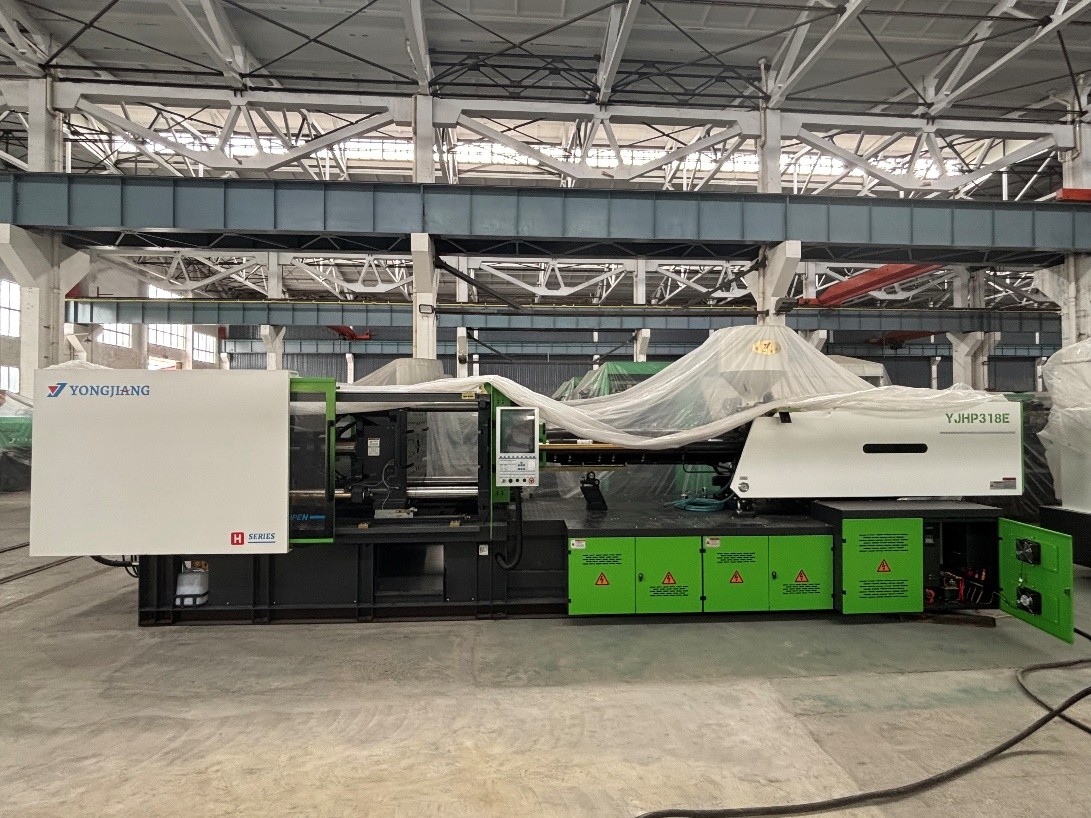
The YJPT-318 is a 318-ton high-speed PET preform injection machine rated for a 1,900-gram shot weight.
The model range covers the clamping-force bands most preform projects fall into, and each model carries the specifications that determine what it can run:
| Model | Clamping force | Tie bar distance | Shot weight | Screw barrel | Motor / heat power | Machine weight |
|---|---|---|---|---|---|---|
| YJPT-260 | 260 t | 580 × 580 mm | 1,400 g | 72 mm | 42 kW / 35 kW | 9 t |
| YJPT-318 | 318 t | 620 × 620 mm | 1,900 g | 77 mm | 80 kW / 65 kW | 13 t |
| YJPT-360 | 360 t | 680 × 680 mm | 3,450 g | 95 mm | 80 kW / 65 kW | 16 t |
| YJHB-400 | 400 t | 720 × 720 mm | 3,450 g | 95 mm | 80 kW / 65 kW | 16 t |
The frame materials also differ by model: the YJPT-260 uses QT500-A7, the YJPT-318 is built from steel, and the YJPT-360 and YJHB-400 are constructed from QT500-A7 steel. All four are intended for PET preform manufacturing and cover applications such as mineral water bottles, carbonated soft drink (CSD) preforms, oil bottles, and larger 5-gallon preform formats.
The application data shows where these requirements bind in practice. The PET preform molding scenario is common in Spain and Algeria — both markets where EU CE machinery safety requirements, cleanroom expectations, and stable utility supply shape the specification. That combination is a useful reference for any buyer in a regulated market: the machine, the workshop, and the utilities are assessed as one package.
Compliant Setup vs. Uncontrolled Setup: What Actually Changes
The difference between a compliant installation and an uncontrolled one is not visible on a machine datasheet alone. It shows up in the conditions surrounding production, and it determines whether the machine can run at its rated output without quality losses.
| Dimension | Uncontrolled or legacy setup | Compliance-oriented setup |
|---|---|---|
| Machine conformity | Unspecified; compliance handled after purchase | EU CE machinery safety standard, low energy consumption, stable injection |
| Humidity control | Ambient conditions, frequently above 60% RH | 40–50% RH target; above 60% RH prohibited |
| Cleanliness | Open shop floor, no classification | ISO Class 8 (100,000-class) preferred for food-grade output |
| Power quality | Unverified supply | 380/400V 50Hz three-phase, fluctuation within ±10% |
| Resin preparation | Drying undocumented | Dried below 0.02% moisture before processing |
| Mold change | Manual, single-specification | Quick mold change for multi-specification preforms |
| Supporting equipment | Partial; added reactively | Mold, hopper dryer, air compressor, water chiller, mold temperature controllers |
| Drive and energy | Conventional drive, fixed consumption | Dual servo systems; 30%–50% lower power consumption, per manufacturer data |
Where the Limits Are
A compliance-oriented setup is not a guarantee, and honest specification work means naming the boundaries:
- No machine specification can compensate for an uncontrolled building. If the workshop cannot hold 40–50% RH, machine-side compliance will not prevent hydrolysis defects — the 60% RH humidity ceiling is a site responsibility.
- The 30%–50% power-consumption advantage reflects the drive comparison. Plants running short, frequently interrupted cycles will realise less of it, because servo savings depend on uptime and cycle stability.
- The ±10% voltage tolerance is a boundary condition, not a continuous operating margin. Sites that drift beyond it need power conditioning before installation, not after.
- ISO Class 8 is a facility classification. The machine contributes by running cleanly and by not generating wear debris, but it cannot create the class on its own.
- The 20–30°C band is the design condition. Plants in hot climates must provide ventilation or climate control to stay within it, even though the machine tolerates 35–40°C for continuous operation with good ventilation.
Market Signals Behind the Compliance Focus
Compliance and environment requirements are becoming more prominent partly because the installed base is growing quickly. Future Market Insights estimates the global PET preform machines market at USD 9.9 billion in 2025, projected to reach USD 17.3 billion by 2035. Within that market, injection molding technology holds a dominant 66.4% share as of 2025 — the technology family this article is concerned with.
The regional pattern reinforces why food-grade and compliance requirements matter to suppliers and buyers in the same markets. Grand View Research reports that Asia Pacific is the largest regional market for injection molding machines, with a 41.2% revenue share in 2025 and China as the leading country. At the high-output end, industry analysis places Husky Technologies at an estimated 55–60% share of the global high-output PET preform system market, which sets the technical reference point that mid-market machines are measured against.
Market sizing itself requires care, and buyers reading forecasts should check scope before using them in a business case. Published estimates diverge because some cover full production lines while others cover injection moulding machinery alone: examples include USD 12.8 billion by 2032, USD 14.7 billion by 2032, and USD 17.3 billion by 2035, each from a different research source. A supplier's capacity claim and a market forecast are only comparable when both use the same scope.
For procurement teams, the practical implication is that compliance documentation and environment specifications now sit alongside price and output in supplier evaluation. A machine that meets a compliance standard and matches a documented operating envelope is easier to commission, easier to audit, and less likely to create hidden costs in dehumidification, power conditioning, or cleanroom retrofit.
Future Outlook
Three developments are likely to shape how PET preform injection machines are specified over the next few years.
First, compliance and environment data will move from the appendix to the main comparison table. As food-grade packaging capacity expands in Asia Pacific and demand grows in regulated markets, CE conformity, cleanroom classification, and utility tolerance will be checked at the shortlist stage rather than at commissioning.
Second, energy performance will become a measured criterion. Dual servo systems and energy-saving configurations already appear in product documentation with quantified advantages, which makes power consumption comparable between suppliers — and comparable means negotiable.
Third, the machine will increasingly be sold as part of a configured system. Molds, dryers, chillers, and temperature controllers determine whether a machine reaches its rated output, and suppliers who specify the full set reduce the risk of a plant that owns a compliant machine but cannot produce compliant preforms.
For buyers, the sensible response is procedural rather than technical: fix the preform specification, confirm the environment and compliance requirements, then verify the machine, mold, and auxiliary equipment against both.
Frequently Asked Questions
What does CE compliance require of a PET preform injection machine?
The EU CE machinery safety standard is the compliance reference for PET preform injection machines installed in the European Union. In the PET preform application specification, CE compliance appears alongside low energy consumption, stable injection, and quick mold change capability for multi-specification preforms. CE conformity covers machinery safety; it does not certify preform quality, which depends separately on resin drying, cleanliness, and humidity control at the plant.
Why is an ISO Class 8 dust-free workshop specified for food-grade preforms?
ISO Class 8 (100,000-class) is the preferred cleanliness level for food-grade preform production, and the specification requires the workshop to be free of metal dust and plastic debris. Preforms become food-contact containers after blow molding, so particulate entering a preform during injection stays with the finished packaging. The classification is a property of the facility — air handling, filtration, and material and personnel airlocks are plant scope, not machine scope.
What temperature and humidity does a PET preform injection machine need?
The specified ambient temperature is a stable 20–30°C, and the machine can sustain continuous operation at 35–40°C in tropical workshops with good ventilation. Relative humidity should be held at 40–50% RH, and humidity above 60% RH is prohibited because PET resin absorbs moisture, which causes silver streaks and hydrolysis defects. Procurement briefs sometimes quote a 40–60% range; the operating target remains 40–50% RH, with 60% RH treated as a hard ceiling.
What power supply is required for a PET preform injection machine?
The requirement is 380/400V 50Hz three-phase industrial power with voltage fluctuation within ±10%. Stable servo power supports long-cycle high-speed production, which is why the tolerance matters in continuous 24/7 operation. Yongjiang machines are specified to support 380/400V 50Hz global industrial power.
What supporting equipment must be in place before installation?
The application specification lists a PET preform mold, hopper dryer, air compressor, and water chiller as required supporting equipment, and adds matched mold temperature controllers and hot runner molds to the equipment set. PET pellets must also be dried to below 0.02% moisture before processing. Because these items are interdependent, the usual sequence is to fix the preform specification first, then confirm the mold and auxiliary equipment, and then confirm the injection machine.
Is CE compliance enough on its own to guarantee food-grade preform output?
No. Three conditions have to hold at the same time: the machine must comply with the EU CE machinery safety standard, the resin must be dried below 0.02% moisture, and the workshop must stay within the specified temperature and humidity envelope with ISO Class 8 cleanliness preferred. CE conformity addresses machinery safety, so a compliant machine in an environment above 60% RH will still produce defective preforms.
Summary for Buyers
CE compliance and operating environment are not administrative details added to a PET preform injection machine purchase — they are the conditions under which the machine can be used at all. The compliance requirement sets the machine definition, the environment specification sets the site definition, and the supporting equipment set connects the two. Reviewing all three before the purchase order is the difference between a machine that meets its datasheet and a line that meets its production target.
Detailed specifications for the YJPT and YJHB PET preform machine series and their auxiliary equipment are collected in the Yongjiang machine brochure, and further product information is published at www.yongjiangimm.com.