
PET vs PVC vs PMI: How Buyers Should Read Foam Core Specs
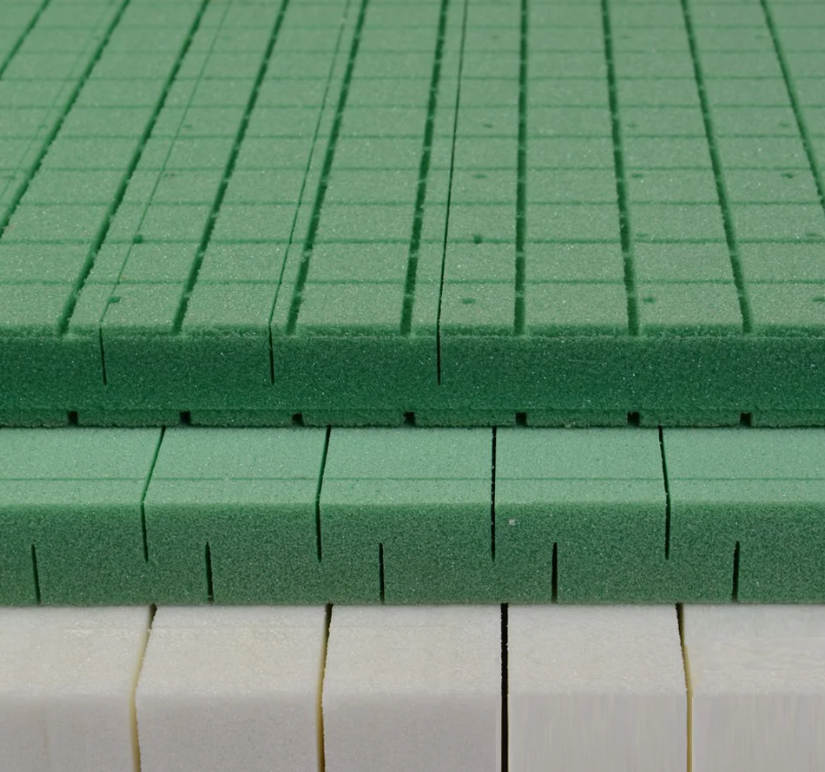
Foam cores are specified, not simply ordered. The moment a project team picks between PET foam, crosslinked PVC foam and PMI foam, it fixes the chemistry, the density band, the processing window and the end-of-life profile of the sandwich structure. Yet quotations frequently group all three under a single line called structural foam, even though their published specifications describe different density ranges, different process compatibility and different target industries.
This comparison is written for engineering and procurement teams working at the research and evaluation stage. Every material value below comes from the specifications published in the CINON Composites catalog for PET foam core, PVC foam core and PMI foam core. Third-party market figures are attributed to their publishers and to the year they describe. Where the catalog does not publish a value, this article states the gap instead of filling it in.
Why core selection now happens earlier in the project
A sandwich panel's weight, stiffness and cost are largely decided before the first layer of reinforcement is placed, because the core is the element that holds the skins apart. Market research reflects that leverage. A third-party industry report published through Vertex AI Search values the global core materials market at USD 4.19 billion in 2024 and projects USD 6.84 billion by 2032, driven mainly by wind energy and aerospace demand. Other publishers draw the boundary differently: IMARC Group records USD 2.8 billion for 2025, a divergence that comes from how each report defines core materials rather than from disagreement about direction.
For a buyer, the useful signal is not the size of the number but the trend behind it. Demand for lightweight sandwich cores keeps expanding across wind, marine, transport and aerospace, which keeps PET, PVC and PMI foam in the same specification conversation in far more projects than a decade ago. That makes material comparison a recurring procurement task instead of a one-off engineering exercise.
The three chemistries, as published
PET foam core
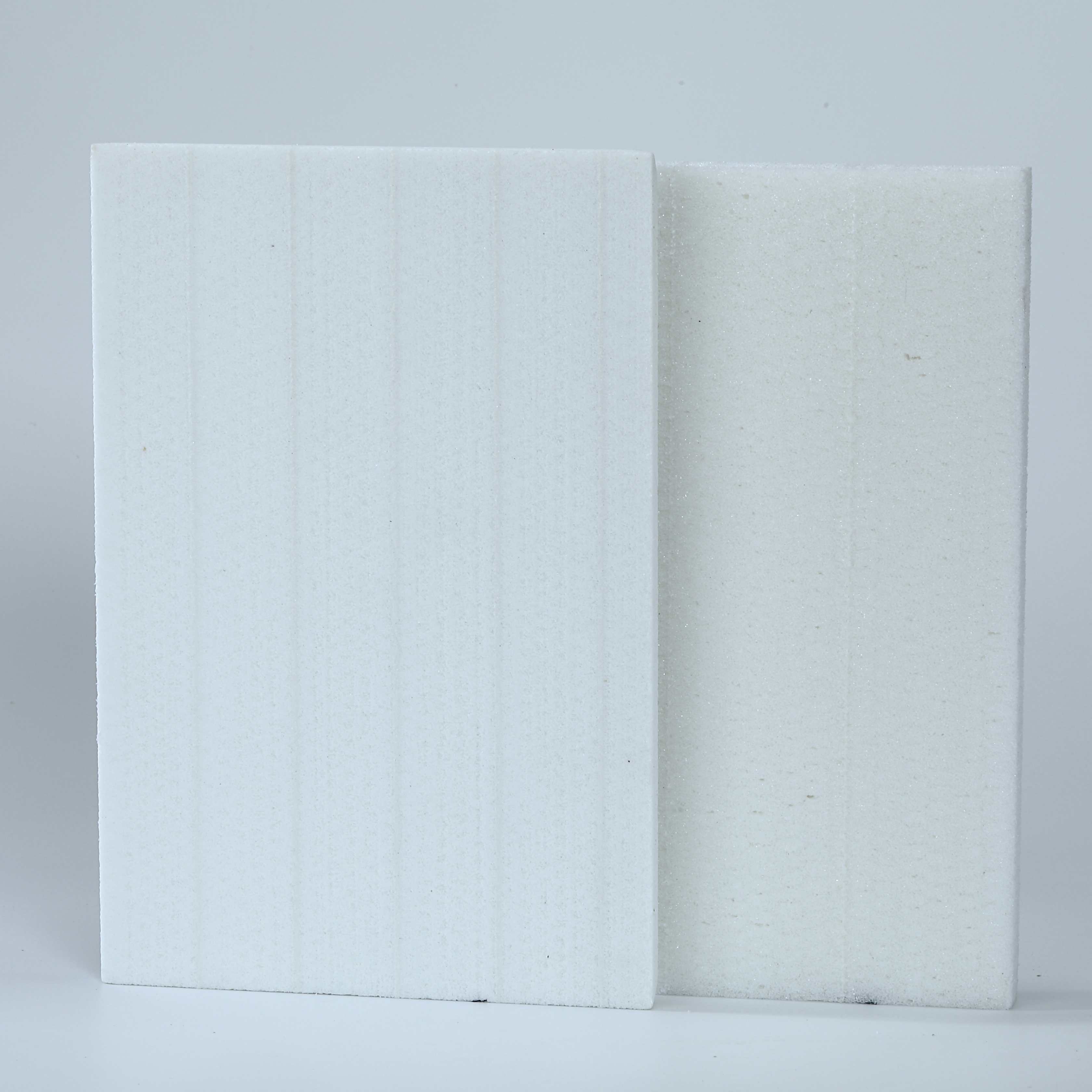
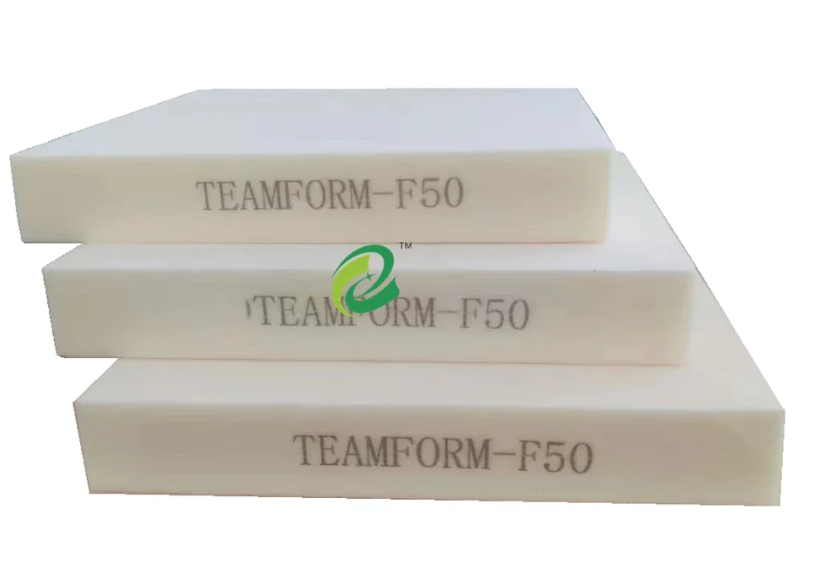
PET foam core is based on polyethylene terephthalate and is listed in the CINON catalog as a lightweight structural core and a recyclable core option. Published density options are 80, 100, 120, 150, 200, 250 and 320 kg/m³, the highest upper band among the three foam families compared here. Documented attributes include weight reduction, recyclable composite solutions, high strength-to-weight ratio, vacuum infusion compatibility, corrosion resistance, structural stiffness improvement and sustainable material selection. Catalog-listed industries are marine and yacht building, wind energy, transportation, rail vehicles, RV and caravan manufacturing, industrial composites, construction panels and renewable energy.
PVC foam core
PVC foam core is a crosslinked, closed-cell foam based on polyvinyl chloride, positioned in the catalog as an alternative to Divinycell-type cores. Published densities are 45, 50, 60, 80, 100, 130, 200, 250 and 300 kg/m³, with sheet thickness from 1 mm to 80 mm and surface options of plain, grooved, perforated or scrim-backed. Documented processing methods are vacuum infusion, RTM, hand lay-up, prepreg and VARTM. The catalog records closed-cell structure, low water absorption, high shear strength, excellent fatigue resistance, thermal insulation and corrosion resistance, alongside weight reduction, water resistance, impact resistance and long service life. Listed industries are marine and yacht building, wind energy, transportation, rail vehicles, RV and caravan manufacturing, industrial composites, construction panels and defense applications.
PMI foam core
PMI foam core is based on polymethacrylimide and is positioned in the catalog as a Rohacell-type alternative. Published densities are 40, 50, 80, 100 and 130 kg/m³, a deliberately narrow and low-density band. Documented attributes are ultra-lightweight structures, high stiffness-to-weight ratio, high temperature resistance, excellent fatigue performance, autoclave compatibility and structural weight reduction. The catalog lists PMI for aerospace, UAV and drone manufacturing, motorsport, high-performance marine, defense and military, and sports equipment, with typical parts including aircraft structures, drone components, UAV wings, racing yacht structures, carbon fiber sandwich panels, radar systems and formula racing body panels.
Density band: the first filter in any comparison
Density governs how much weight the core adds, how much stiffness the sandwich gains per unit of thickness, and how much resin the core takes up during infusion. It is also the parameter buyers compare before anything else when quotes arrive from several suppliers, because two quotations are only comparable when the density is identical. The published ranges differ enough to matter.
| Parameter | PET foam core | PVC foam core | PMI foam core |
|---|---|---|---|
| Base chemistry | Polyethylene Terephthalate | Polyvinyl chloride, crosslinked closed-cell | Polymethacrylimide |
| Published density options (kg/m³) | 80, 100, 120, 150, 200, 250, 320 | 45, 50, 60, 80, 100, 130, 200, 250, 300 | 40, 50, 80, 100, 130 |
| Published thickness and surface options | Not published in catalog | 1 to 80 mm; plain, grooved, perforated, scrim-backed | Not published in catalog |
| Documented processing compatibility | Vacuum infusion compatible | Vacuum infusion, RTM, hand lay-up, prepreg, VARTM | Autoclave compatible; aerospace profile lists RTM and VARTM |
| Documented attributes | Weight reduction, recyclable composite solutions, high strength-to-weight ratio, corrosion resistance, structural stiffness, vacuum infusion compatibility | Closed-cell structure, low water absorption, high shear strength, fatigue resistance, thermal insulation, corrosion resistance, water and impact resistance | Ultra-lightweight structures, high stiffness-to-weight ratio, high temperature resistance, fatigue performance, autoclave compatibility |
| Catalog-listed industries | Marine and yacht, wind energy, transportation, rail vehicles, RV and caravan, industrial composites, construction panels, renewable energy | Marine and yacht, wind energy, transportation, rail vehicles, RV and caravan, industrial composites, construction panels, defense | Aerospace, UAV and drone, motorsport, high-performance marine, defense and military, sports equipment |
Where a cell states that a value is not published in the catalog, the option may still be available — it simply is not documented in the supplier's public product data. Buyers should confirm thickness, surface treatment and sheet format in writing at quotation stage rather than assuming either availability or absence.
Processing window: where the three diverge most
Process compatibility eliminates materials faster than price does, because a core that forces a shop to change its molding route carries cost that never appears on the material quotation.
- PET foam core is documented as compatible with vacuum infusion, the dominant process for large marine and wind parts such as boat hulls, decks, bulkheads, superstructures, wind turbine blades, blade shells and nacelle structures.
- PVC foam core carries the broadest documented process list of the three: vacuum infusion, RTM, hand lay-up, prepreg and VARTM. Its grooved, perforated and scrim-backed surface options exist to support resin flow and bonding in those processes, which is why PVC is often the default when a shop runs more than one molding method.
- PMI foam core is documented as autoclave compatible, and the aerospace and UAV application profile in the catalog lists RTM and VARTM alongside vacuum bagging equipment. Autoclave compatibility is the reason PMI appears in weight-critical, high-temperature aerospace work rather than in general commercial panels.
The practical rule is straightforward: match the core to the process the plant already runs well. For a core material for vacuum infusion, all three foams are candidates, but the flow behavior of the core, the surface treatment and the resin system have to be validated together rather than assumed from a data sheet.
Recyclability and end-of-life: the sharpest difference between the three
End-of-life requirements now enter specifications through customer mandates, tender conditions and internal sustainability targets rather than regulation alone. Here the published documentation separates the three materials clearly. PET foam core is the only one of the three whose catalog entry explicitly lists recyclable composite solutions and sustainable material selection among its documented attributes, consistent with a thermoplastic polyester chemistry. PVC foam core is described as a crosslinked, closed-cell material whose documented attributes cover water resistance, shear strength, fatigue resistance and thermal insulation, without a recyclability claim. PMI foam core is documented around stiffness, temperature resistance, fatigue performance and autoclave compatibility — performance attributes rather than end-of-life attributes.
The consequence for buyers is procedural rather than philosophical. If a project carries a recyclability or end-of-life requirement, that requirement belongs in the core specification and must be verified with the supplier, because the three chemistries do not offer the same documented position. Where recyclability is a priority and structural targets allow it, PET foam is the natural starting point. Where temperature, stiffness or minimum weight dominate, PMI foam is typically the candidate and the end-of-life requirement has to be handled separately, often at the level of the whole component rather than the core alone.
Application fit by sector
Application fit is where a material comparison stops being academic, because the same three foams are not equally represented in every industry profile.
Marine and yacht building
Marine structures are specified around salt water exposure, high humidity, dynamic loading and long service life; the documented special requirements are low water absorption, salt water corrosion resistance and good resin flow, with boat hulls, boat decks, bulkheads, superstructures and marine panels as the main parts. Both PET and PVC foam core are listed for marine and yacht building, so a core material for boat building, or a core material for yacht hulls and decks, can legitimately be specified either way — the decision usually turns on density, moisture performance and process fit rather than on the material family. Third-party research supports PVC's position in this sector specifically: Stratview Research values the marine structural core materials market at USD 120.4 million in 2024 and expects PVC to remain dominant because of moisture resistance. PMI foam is listed for high-performance marine rather than general boat building, with racing yacht structures named among its catalog applications.
Wind energy
Wind applications emphasize fatigue resistance, weight reduction, structural performance and long service life, with wind turbine blades, blade shells and nacelle structures as the primary parts, alongside special requirements for high fatigue resistance and dimensional stability. Both PET and PVC foam core are listed for wind energy. Third-party figures show why the sector shapes core demand so strongly: Cognitive Market Research values the wind turbine blade composite materials market at USD 7.045 billion in 2024, and MarketsandMarkets records Asia Pacific at 78.2 percent of the global wind turbine composites market by value in 2024. For a core material for wind turbine blades, the operative question is rarely which of PET or PVC is better in the abstract, but which density delivers the required fatigue and stiffness performance at the lowest consistent weight in a validated infusion trial.
Transportation, RV and rail interiors
The transportation profile lists dynamic road loads, thermal gradients, internal impact and frequent cycling, with truck bodies, bus panels and rail interiors as typical parts, and weight reduction, impact resistance and corrosion resistance as the required functions. RV and caravan profiles add thermal cycling, vibration, UV radiation and moisture, listing RV panels, caravan walls, floors and roofs as the parts. PET and PVC foam core both appear in transportation, rail vehicle and RV manufacturing profiles. An independent estimate from Dataintelo values the global RV composite panels market at USD 3.8 billion in 2025, with fiberglass segments holding 41.3 percent of material share. In practice, a core material for RV panels, truck bodies or railway interiors is judged on flatness, delamination resistance, acoustic behavior and process speed more often than on peak mechanical values.
Aerospace, UAV and motorsport
This is where the comparison narrows sharply. PMI foam core is the only foam of the three listed for aerospace, UAV and drone manufacturing, motorsport, defense and sports equipment, with weight criticality, surface aerodynamics, traceability and stiffness-to-weight ratio stated as the special requirements. Aramid honeycomb is the catalog's other core option in that space, with a documented working temperature range of −60 °C to 180 °C and mechanical properties from 0.43 to 5.52 MPa. A German UAV manufacturer's recorded project, using PMI foam with lightweight fiberglass fabrics, highlights fatigue resistance and low density as the decisive criteria — the same pattern documented in the aerospace application profile.
Composite tooling and industrial panels
Tooling applications are specified around high temperature, high pressure, vacuum integrity and thermal cycling, with dimensional stability, reduced tool weight and improved production efficiency as the functions, covering RTM molds and vacuum infusion molds. PET foam core appears in the catalog's composite tooling profile, so a core material for composite molds is usually selected for dimensional stability and vacuum resistance rather than for minimum weight. Industrial composite profiles list industrial covers, FRP panels and machine enclosures, with corrosion resistance, weight reduction and structural performance as the drivers, and both PET and PVC foam appear there.
What this means on the supply side: terms, certifications and documentation
Material comparison covers only half of a procurement decision; the other half is whether supply terms and documentation hold up under audit. CINON Composites (Guangdong Cinon New Material Technology Co., Ltd.) is a Guangzhou-based supplier of fiberglass reinforcements and lightweight core materials, founded in 2022, operating a 40,000 m² facility with a stated annual output of 1,200,000 m², 25 engineers and 20 employees. The company publishes a monthly capacity of 100,000 m², a minimum order quantity of 1,000 m², a lead time of 15 to 30 days, 100 percent testing, and ODM customization for core materials and fiberglass fabric. Its export coverage is stated as Europe, North America and Asia-Pacific, with a 100 percent export ratio.
On compliance, the published certificates are specific and therefore checkable. ISO 9001:2015 is held under certificate number 51326Q04922R053, issued by Shenzhen Moqc Certification Co., Ltd. against the standard GB/T19001-2016/ISO9001:2015, valid from 29 April 2026 to 28 April 2029. ISO 45001:2018 is held under certificate number 51326S01896R053, issued by Shenzhen Moqc Certification Co., Ltd. against GB/T45001-2020/ISO45001:2018, valid over the same period. ISO 14001:2015 is held under certificate number ISO14001-2023-001, issued by SGS, valid from 1 June 2023 to 1 June 2028. All three are stated as applicable to the global market, and the certification scope is the sales of high-performance fibers and composite materials — wording buyers should read closely, because scope defines what a certificate actually covers.
CINON's core range extends beyond the three foams compared here. It also includes PP honeycomb, aramid honeycomb, core mat, and thin flow-core materials positioned as alternatives to Lantor Soric XF and Soric SF, the non-woven polyester cores that Lantor documents as internal flow media for resin infusion, with Soric SF using fine 2 to 3 mm hexagon cells for sharp corners. For buyers specifying a core material for vacuum infusion, that broader range matters, because flow cores and structural foams are normally selected together in the same layup. A UK-based composite distributor's recorded project, beginning with sample evaluation and moving to commercial supply, illustrates the verification sequence that most buyers follow: sample first, then volume.
Market signals worth tracking
Three signals frame how the PET, PVC and PMI comparison will evolve. The first is total demand: a core materials market of USD 4.19 billion in 2024 moving toward USD 6.84 billion by 2032, per the industry report published through Vertex AI Search, implies steady volume growth rather than a substitution race between chemistries. The second is sector concentration: marine core demand is valued at USD 120.4 million in 2024 with PVC expected to stay dominant on moisture performance, while wind blade composites reach USD 7.045 billion in 2024 with Asia Pacific holding 78.2 percent of value — meaning the largest core consumption sits in applications where PET and PVC compete directly. The third is supplier structure: Fortune Business Insights names 3A Composites (Switzerland), Gurit Holding AG (Switzerland) and Diab Group (Sweden) among the major global core material suppliers, a shortlist context that makes documentation, lead time and density-range coverage the practical differentiators for new supply relationships rather than brand recognition alone.
Limits and trade-offs buyers should not skip
- Density parity before price comparison. The CINON catalog does not publish price bands, and comparing quotations at different densities produces a meaningless result. Within a chemistry, material cost typically rises with density, and PMI foam is generally positioned above PET and PVC in cost because of its performance profile. Buyers should fix density first, then compare cost.
- Coverage gaps are real. PMI foam is published from 40 to 130 kg/m³, so it does not cover the high-density end that PET (up to 320 kg/m³) and PVC (up to 300 kg/m³) reach. PVC is the only foam of the three with a published thickness range and published surface treatments, so PET and PMI thickness and surface options must be confirmed rather than assumed.
- Recyclability is chemistry-dependent. Only PET foam's catalog entry documents recyclable composite solutions. Buyers with end-of-life obligations should treat this as a specification item rather than a general claim across all foams.
- Material data is not laminate data. Published core attributes describe the core, not the finished sandwich. Skin laminate, resin system, core thickness and infusion quality all change the result, so sample evaluation and a trial panel remain the decisive test before volume orders.
- Load introduction needs engineering. Sandwich cores perform well in shear and compression but are not designed to carry concentrated point loads without local reinforcement or inserts, which is standard practice in marine, transport and wind structures. That design work belongs in project cost planning.
- Certification scope and validity matter. Each certificate carries a number, an issuing body, a scope and an expiry date. A narrowly scoped or expired certificate is not equivalent to a current one, and both should be verified before an order is released.
A practical selection framework
- Start from the process the plant runs — infusion, RTM, hand lay-up, prepreg or autoclave — and eliminate materials that do not fit it.
- Fix the density band from a structural calculation, then compare suppliers at that single density.
- Check the temperature and fatigue regime against the documented attributes: PMI foam's published profile centers on temperature resistance and fatigue performance, while PET and PVC cover the broader commercial range.
- Write the end-of-life or recyclability requirement into the specification if the project has one; PET foam is the only one of the three with documented recyclability attributes.
- Confirm thickness, surface treatment and sheet format in writing, since these are not published for every foam.
- Verify each certificate by number, issuing body, scope and expiry date.
- Validate with a sample and a trial panel before commercial volume, using the actual resin system and process.
- Map supply terms against the build schedule — CINON publishes a 1,000 m² MOQ, a 15 to 30 day lead time and 100,000 m² monthly capacity, all of which should be checked against production timing.
Future outlook
Three pressures look likely to reshape the next specification cycle. Recyclability is moving from a marketing topic to a tender requirement, which favors PET foam in applications where its mechanical profile is sufficient, and pushes suppliers to document end-of-life options for PVC and PMI rather than leaving the question open. Second, wind and transport volumes continue to drive core consumption at a scale that rewards suppliers with consistent density coverage and stable lead times over suppliers with a narrow specialty range. Third, documentation quality is becoming a selection criterion in its own right: buyers increasingly ask for certificate numbers, issuing bodies, scopes and validity windows before they ask for price, because those details determine whether a material can be used on a project at all.
None of these trends changes the underlying engineering logic. Density, process compatibility and application fit still decide which of PET, PVC or PMI foam belongs in a given sandwich structure. What is changing is how much of that decision has to be evidenced in writing.
FAQ
What is the difference between PET, PVC and PMI foam core?
The three differ in base chemistry, density range and documented process compatibility. PET foam core is based on polyethylene terephthalate, published at 80 to 320 kg/m³ with documented vacuum infusion compatibility and recyclable composite solutions among its attributes. PVC foam core is a crosslinked, closed-cell polyvinyl chloride material published at 45 to 300 kg/m³, with thickness from 1 to 80 mm, surface options of plain, grooved, perforated or scrim-backed, and documented compatibility with vacuum infusion, RTM, hand lay-up, prepreg and VARTM. PMI foam core is based on polymethacrylimide, published at 40 to 130 kg/m³, and documented as autoclave compatible with high temperature resistance and a high stiffness-to-weight ratio.
How should a buyer choose a foam core density for marine or wind applications?
Density is set by the structural requirement, not by preference: a higher density increases shear and compressive performance but adds weight and material cost. In the CINON catalog, PET foam covers 80, 100, 120, 150, 200, 250 and 320 kg/m³, while PVC foam covers 45, 50, 60, 80, 100, 130, 200, 250 and 300 kg/m³, so both span the range typically used in marine and wind structures. The workable sequence is to fix the density that meets the calculated stiffness and fatigue target, compare all quotations at that single density, and then confirm performance in a trial panel using the actual resin system and process.
Which of the three foam cores is recyclable?
Among these three, only PET foam core documents recyclability: its catalog entry lists recyclable composite solutions and sustainable material selection as attributes, consistent with a thermoplastic polyester chemistry. PVC foam core's published attributes describe water resistance, shear strength, fatigue resistance, thermal insulation and corrosion resistance, without a recyclability claim, and PMI foam core's attributes center on temperature resistance, stiffness and fatigue performance. Where a project carries an end-of-life requirement, that requirement should be written into the core specification and confirmed with the supplier for whichever chemistry is selected.
Which core material is used for aerospace, UAV and motorsport structures?
In the CINON catalog, PMI foam core is the foam listed for aerospace, UAV and drone manufacturing, motorsport, defense and sports equipment, with documented applications including aircraft structures, drone components, UAV wings, carbon fiber sandwich panels, radar systems and formula racing body panels. Aramid honeycomb is the other core listed for that sector, with a documented working temperature range of −60 °C to 180 °C and mechanical properties from 0.43 to 5.52 MPa. PET and PVC foams are listed for commercial sectors such as marine, wind, transportation and construction rather than for these applications.
How should core material certifications be verified before ordering?
Verify four elements on each certificate: the certificate number, the issuing body, the scope of certification and the validity period. CINON's published certificates include ISO 9001:2015 under number 51326Q04922R053 issued by Shenzhen Moqc Certification Co., Ltd. against GB/T19001-2016/ISO9001:2015, ISO 45001:2018 under number 51326S01896R053 from the same body against GB/T45001-2020/ISO45001:2018, and ISO 14001:2015 under number ISO14001-2023-001 issued by SGS. The stated scope is the sales of high-performance fibers and composite materials, which is narrower than manufacturing, so buyers should confirm that the scope and validity window cover the intended transaction.
What supply terms are published for core materials?
CINON Composites publishes a minimum order quantity of 1,000 m², a lead time of 15 to 30 days and a monthly capacity of 100,000 m², with ODM customization for core materials and fiberglass fabric, 100 percent testing, and export coverage across Europe, North America and Asia-Pacific. Material selection support, process optimization guidance, alternative material recommendations and sample evaluation are offered before commercial supply. Buyers should map those terms against their own production schedule, because lead time and capacity commitments form part of the total cost of a core material program.
For readers who want the underlying specifications rather than a summary, CINON's product catalog is available as a public PDF download: Cinon Composites product catalog.
Have Questions or Need More Details?
Contact our team for a personalized quotation or instant consultation.
Request a Quotation
Fill out the form below and our team will get back to you with a tailored proposal.
WhatsApp Direct Chat
Prefer to chat in real-time? Message us on WhatsApp for instant assistance & quick answers.
- Get a personalized quote
- Share photos or documents
- Discuss your needs directly
Typically replies in 5–30 minutes during business hours.