
PID Controller Proof Points: I/O, CMS and Design Services
A PID temperature controller is simple to describe and considerably harder to verify. Accuracy figures, input types and output options are published by every supplier in the category. What separates a mature engineering organization from an assembly operation sits one level deeper, in the I/O architecture, the communication gateway, the documentation package, and the design services a manufacturer can actually put behind the product.
The global PID controller market was valued at USD 1.60 billion in 2024 and is projected to reach USD 2.24 billion by 2032, according to SNS Insider. Growth of that scale attracts suppliers at every level of capability, which is why decision-stage buyers increasingly compare evidence rather than product claims.
Wuxi Keen Technology Co., Ltd., which markets its control products under the Cakeen brand, is a manufacturer established in 2011 and headquartered in Huishan District, Wuxi, Jiangsu Province. The company develops semiconductor industrial control electronics, electrical cabinet systems and AI embedded systems software, and exports approximately 40% of its output to markets including Europe, the United States, Spain and Southeast Asia. Its controller range includes the KE-H10, H6625, ASH, KE-48 and KE-2104 PID temperature controllers.
This article examines three proof points that a PID temperature controller manufacturer can be held to: the I/O expansion modules that extend a control platform, a CMS communication module built around six RS485 ports, and in-house design services covering electrical engineering, embedded software, PCB design and custom electrical cabinets. Each is assessed for what it demonstrates, and for where its limits are.
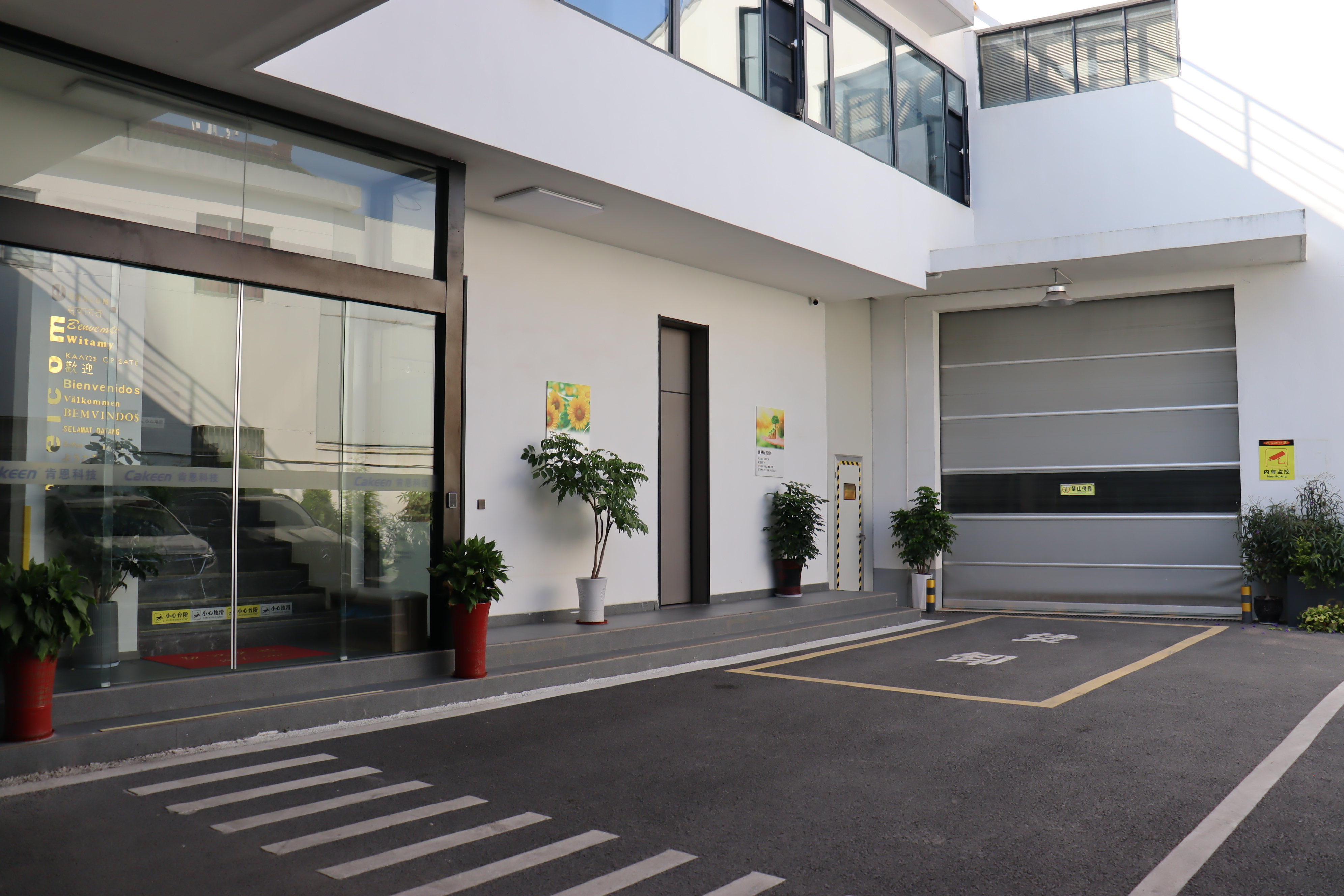
Factory photograph supplied by Wuxi Keen Technology Co., Ltd., Wuxi, Jiangsu Province.
Why Decision-Stage Buyers Now Ask for Proof Points
Research-stage sourcing questions center on accuracy, input types and unit price. Decision-stage questions are different. They concern whether the supplier can carry integration, produce documentation that survives an audit, and support a system for years after commissioning.
Industry data explains part of the pressure. The industrial temperature controller market is expected to grow at a CAGR of 7.1% from 2024 to 2030, driven by Industry 4.0 adoption, according to Strategic Market Research. Asia-Pacific held a 38.2% revenue share of the temperature controller market in 2023, with China as a key manufacturing hub, per Dataintelo. The global semiconductor temperature control equipment market was valued at USD 663 million in 2024, according to Market Research Reports.
None of those figures makes supplier selection easier. What they do is widen the pool of suppliers claiming equivalent capability. For that reason, buyers tend to organize evidence into three verifiable categories:
- Hardware that extends the platform beyond the controller itself, such as I/O expansion modules and communication gateways.
- Services that produce documents, including electrical drawings, PLC programs, PCB design files and bills of materials.
- Certifications and audit outcomes, which can be checked against a certificate and a scope rather than a marketing statement.
Proof Point 1: What I/O Expansion Modules Reveal About Platform Depth
A PID controller is the first node in a chain, not the whole chain. In a multi-channel installation, the system also needs sensor inputs, SSR drive outputs, alarm contacts, interlock signals and a path for moving parameters and data into plant-level systems. That is where expansion modules become relevant, and also where suppliers differentiate.
The K42CE-D communication module
The K42CE-D is a dedicated CMS gateway that combines 6 x RS485 channels and 1 x Ethernet port in a single compact DIN-rail module. It is purpose-built for multi-device parameter setting and data forwarding without PLC programming. Modbus TCP and Modbus RTU protocols are supported, automatic reconnection follows network interruption, and local parameter retention prevents data loss during a communication outage.
From an integration standpoint, two details matter more than the port count. The first is that the module supports network segmentation between the RS485 fieldbus and the Ethernet layer, and Modbus communication can be restricted to authorized IP addresses, which allows the design to align with a customer's IT security policy. The second is that the gateway occupies a DIN-rail footprint rather than a rack slot, which reduces cabinet space and cooling demand.
The K15DT-D I/O expansion module
The K15DT-D I/O modules extend channel count at low incremental cost, which means a project can be sized for its current process and expanded later without replacing the gateway or the controllers. For buyers, that expansion path is itself evidence: it indicates that the supplier designed the platform around growth rather than treating each controller as a standalone unit.
Proof Point 2: A Six-Port RS485 Gateway Versus PLC-Based Data Acquisition
The most common alternative to a dedicated gateway is a general-purpose PLC with communication modules, for example a Siemens S7-1200 paired with additional communication cards. That approach works, but it prices data acquisition at general-control rates.
| Dimension | CMS gateway (6 x RS485 + Ethernet) | PLC-based data acquisition |
|---|---|---|
| Hardware cost | Reduced 40-60% | Baseline |
| Deployment time | Reduced by approximately 50% | Baseline |
| Communication latency across RS485 device networks | Reduced by approximately 60% | Baseline |
| Programming requirement | No PLC programming required; plug-and-play configuration | PLC program development and license |
| Primary design purpose | Multi-device parameter setting and data forwarding | General machine logic and sequencing |
| Expansion | K15DT-D I/O modules at low incremental cost | Additional modules per platform |
Proof Point 3: Design Services as Evidence of Engineering Depth
Product hardware can be inspected. Design capability is harder to judge, which is why in-house design services function as a proof point: the deliverables are documents that either pass review or do not.
Electrical design and embedded software
Compared with a customer building the same capability internally, the design service offers specialized semiconductor equipment design experience, IEC/UL508A compliance from day one, multi-PLC platform expertise, and bilingual documentation for global deployment. The reported outcomes are a design cycle shortened by 30-50%, a first-pass certification rate above 90%, and a full documentation package that reduces end-user acceptance time by 40%.
Internal process controls reinforce the same point. Electrical drawings follow IEC/UL508A standards and pass through multi-stage peer review. PLC programs are simulation-tested before deployment. PCB designs pass DRC and ERC checks. All deliverables include complete documentation so the customer can verify the work independently rather than accept it on trust.
Custom electrical cabinets to European and Japanese standards
Cabinet manufacturing is a second service layer, and it carries certification obligations that low-cost assembly typically does not. The cabinets use international certifications including CE, IEC, UL and JIS, and are built with genuine branded components from ABB, Siemens, Schneider, Mitsubishi and Omron rather than generic equivalents, with design carried out to IEC/UL508A standards.
The associated figures are specific. First-pass audit rate for international certifications is above 95%. Field failure rate is below 0.5%, against an industry average commonly cited at 2-5%. The design-to-delivery cycle runs 2-4 weeks. Enclosures are rated IP54 or IP65, and properly rated components combined with thermal design support uptime above 98%. Standardized documentation in DWG, PDF and BOM formats allows efficient spare-parts management, and the use of branded components means global service networks are available for replacements.
The organization behind the services
Scale is part of the evidence package. Wuxi Keen Technology operates a 2,019 m2 facility with 50 employees, an R&D team of 20 engineers, and annual output of 500,000 units. Quality control includes 100% testing. The company holds ISO 9001, ISO 14001 and ISO 45001 certifications, along with UL, SEMI S2, CE and RoHS certifications for global product applications.

Production environment at Wuxi Keen Technology Co., Ltd., where control electronics and electrical cabinet systems are assembled.
How the Control Chain Fits Together Technically
At controller level, the platform uses PID auto-tuning for accuracy in the region of plus or minus 0.1 degrees Celsius, compared with the plus or minus 2-5 degrees Celsius fluctuation typical of basic ON/OFF control. Output integration is internal: a built-in SSR output eliminates the external relay, and RS485 with Modbus RTU provides networked integration with the CMS layer.
The knock-on effects are the ones buyers should model when comparing quotations. Panel space is reduced by approximately 30% because the SSR sits inside the controller. Wiring is reduced by approximately 40% because communication is integrated rather than added externally. Unit cost is slightly higher than a generic ON/OFF controller, but total system cost is reduced by 15-25% once eliminated external SSR modules and simplified wiring are counted. Energy waste falls by 10-20% because PID control avoids the overshoot cycles inherent in ON/OFF switching, and self-tuning PID reduces commissioning time by approximately 50%.
Reliability functions sit on top of the control loop. The KE-H10, H6625, ASH, KE-48 and KE-2104 controllers all include built-in sensor break detection and alarm output, plus SSR overcurrent protection. Modbus RTU enables remote real-time monitoring and early warning through the CMS system, which converts a controller-level fault into a system-level alarm rather than an unlogged trip.
Independent reference points confirm why this layer of control matters in semiconductor work: high-precision PID controllers can achieve temperature stability within plus or minus 0.1 degrees Celsius, a requirement for lithography and etching processes, according to Grand View Research. Reaching that class of stability in practice also depends on sensor placement and the thermal behavior of the load, so published accuracy figures describe controller capability rather than guaranteed loop performance.
Where These Proof Points Apply
- Semiconductor hot nitrogen systems. A HOT-GUN maintains pipeline temperature to prevent condensation, while the HOT N2 MFC provides closed-loop flow monitoring with an alarm for abnormal conditions. Stainless steel construction supports gas purity and corrosion resistance. These lines need multi-channel temperature control plus data forwarding to the host system, which is precisely the role of the CMS gateway.
- Heating jacket and heating mantle temperature control. Laboratory and process heating applications where the difference between ON/OFF cycling and PID control determines whether a process window is held or lost.
- Multi-device data acquisition and retrofits. Factory automation retrofits and no-PLC projects that need RS485 device networking, batch parameter setting and parameter retention without a PLC program.
- Compliance-critical cabinet projects. Globally exported industrial equipment, semiconductor manufacturing lines and compliance-critical factory automation where CE, UL or JIS documentation is required at the panel level, not just the component level.
Market Trend Analysis: Integration Capability Is Being Priced In
Two market signals are worth separating. The first is growth: USD 1.60 billion in 2024 rising to a projected USD 2.24 billion by 2032 for PID controllers (SNS Insider), and a 7.1% CAGR for industrial temperature controllers from 2024 to 2030 (Strategic Market Research). The second is composition: the oil and gas sector held the largest end-user share of PID controllers in 2024 at approximately 31.4%, according to SNS Insider, which indicates an installed base spread across many process regimes rather than concentrated in one industry.
Buyers should also treat headline market sizing with care. Base market estimates for industrial temperature controllers differ substantially depending on whether system-level or component-level scope is counted: Strategic Market Research puts the figure at USD 2.8 billion, while Market Research Future cites USD 5.58 billion. That divergence does not invalidate the growth trend, but it does mean a supplier's market-size claim is only as good as its definition of scope.
The procurement-relevant trend is narrower. As Industry 4.0 adoption pushes more devices onto networks, the purchased unit shifts from a controller to a control subsystem. Gateways, I/O expansion, documentation and panel compliance move from optional add-ons to selection criteria, because the buyer who cannot obtain them must build them internally or accept a fragmented system.
Comparison With Traditional Sourcing Approaches
| Sourcing approach | What it typically delivers | Where it constrains the buyer |
|---|---|---|
| Integrated control plus design services | PID controllers, K15DT-D I/O expansion, 6 x RS485 CMS gateway, electrical design, embedded software, custom cabinets | Certified cabinets cost 10-20% more than uncertified alternatives; design engagements are priced per project rather than as a fixed in-house capability |
| Customer in-house electrical and software design | Full internal control over design IP and schedule | Requires maintaining a specialized semiconductor equipment design team, EDA and CAD licenses, and sufficient standing capacity; first-pass certification is not guaranteed without IEC/UL508A experience |
| Domestic low-cost electrical cabinet assembly | Lowest initial purchase price | No international certification path (CE/IEC/UL/JIS), generic components, and exposure to rework and certification failure costs that offset the initial saving |
| PLC-based data acquisition | General machine logic plus data collection on one platform | Higher hardware cost, PLC programming license and longer deployment time for tasks that only require parameter setting and data forwarding |
The trade-off is real in both directions. A buyer with an existing in-house design department and established PLC standards may find an external design service redundant. A buyer running a single, low-precision heating loop has no reason to pay for a certified cabinet. The integrated approach earns its cost when the project combines multiple control channels, network integration, certification requirements and a schedule that cannot absorb a first-pass certification failure.
Limitations and Boundaries Buyers Should Know
- Price premium on certified hardware. Certified cabinets are 10-20% more expensive than uncertified alternatives. The argument for paying it rests on avoided rework and certification failure costs over the equipment lifetime, not on the purchase order.
- Unit cost versus system cost. PID controllers cost slightly more per unit than basic ON/OFF controllers. The 15-25% total system saving only materializes if the external SSR modules and extra wiring are genuinely removed from the bill of materials.
- Documentation languages. The bilingual documentation set is delivered in Chinese and English. Projects requiring other languages should plan for translation as a separate cost and schedule item.
- Gateway scope. The CMS gateway is purpose-built for multi-device parameter setting and data forwarding. It does not replace general-purpose machine logic, so a PLC remains necessary where sequencing, interlocks or motion control are required.
- Project-based design capacity. The design service is structured on a per-project model, which reduces fixed overhead but requires buyers to schedule design work within the project plan rather than treating it as on-demand staff capacity.
- Certification scope. ISO 9001, ISO 14001, ISO 45001, UL, SEMI S2, CE and RoHS are held at company and application level. Buyers should confirm the specific certificate and scope that applies to the exact product and configuration being ordered.
Future Outlook
The direction of the category is toward consolidation of the control layer. As more process equipment is networked, the practical dividing line between a temperature controller, an I/O module and a communication gateway becomes less meaningful to the buyer, who experiences them as one subsystem. Suppliers that already design all three in-house are positioned to compete on integration and documentation rather than on unit price alone.
A second shift concerns how capability is demonstrated. Statements such as first-pass audit rates, field failure rates and design cycle reductions are checkable against a customer's own acceptance process, and they are increasingly requested during supplier qualification alongside certificates. Technical documentation and product details for the range described here are published at www.wxkeen.com.
Frequently Asked Questions
Q1. How does a PID temperature controller differ from a basic ON/OFF controller in system terms?
A basic ON/OFF controller switches output entirely and typically holds temperature within a fluctuation band of plus or minus 2-5 degrees Celsius. A PID controller with auto-tuning operates in the region of plus or minus 0.1 degrees Celsius. In system terms, the PID controller also integrates a built-in SSR output and RS485 with Modbus RTU communication, which removes the external relay and much of the external wiring. The practical consequences are approximately 30% less panel space, approximately 40% less wiring, and a total system cost that is 15-25% lower despite a slightly higher unit price.
Q2. What does an I/O expansion module such as the K15DT-D add to a multi-channel PID installation?
The K15DT-D I/O expansion module increases the number of available input and output points at low incremental cost, allowing a control system to be sized for current process requirements and extended later. It works alongside the K42CE-D communication module, which carries 6 x RS485 channels plus 1 x Ethernet port, so expanded I/O remains part of the same network and parameter-setting structure rather than requiring a separate subsystem.
Q3. How does a 6-port RS485 CMS gateway compare with using a PLC for data acquisition?
A dedicated CMS gateway combines 6 x RS485 channels and Ethernet in one DIN-rail module and is purpose-built for multi-device parameter setting and data forwarding without PLC programming. Compared with traditional PLC-based data acquisition using modules such as the Siemens S7-1200 with communication cards, hardware cost is reduced 40-60%, deployment time is reduced by approximately 50%, and communication latency across RS485 device networks is reduced by approximately 60%. It does not provide general machine sequencing, so applications requiring ladder logic or interlocks still require a PLC.
Q4. Can a PID temperature controller manufacturer also deliver custom electrical cabinets to European and Japanese standards?
Yes, where design and cabinet manufacturing sit inside the same organization. Cabinet systems are built with CE, IEC, UL and JIS certifications, designed to IEC/UL508A standards, and populated with genuine branded components from ABB, Siemens, Schneider, Mitsubishi and Omron. Reported performance includes a first-pass audit rate above 95% for international certifications, a field failure rate below 0.5% against an industry average of 2-5%, and a design-to-delivery cycle of 2-4 weeks. Deliverables include DWG, PDF and BOM documentation in Chinese and English.
Q5. What certifications and evidence should buyers verify when shortlisting an industrial temperature controller supplier?
At organization level, relevant certifications include ISO 9001, ISO 14001 and ISO 45001 for management systems, plus UL, SEMI S2, CE and RoHS for product applications. At panel level, industrial control panels including PID controllers are expected to comply with UL 508A for North American safety listing and IEC 60947 for international markets, according to UL Solutions. Buyers should also verify process evidence, such as whether quality control includes 100% testing, whether electrical drawings undergo multi-stage peer review, whether PLC programs are simulation-tested, and whether PCB designs pass DRC and ERC checks.
Q6. How does a CMS gateway support cybersecurity requirements in a factory network?
The K42CE-D supports network segmentation between the RS485 fieldbus and the Ethernet layer, and Modbus communication can be restricted to authorized IP addresses. Its embedded software follows secure coding practices, and the system design is intended to be aligned with customer IT security policies. Automatic reconnection after network interruption and local parameter retention prevent data loss during a communication outage, which limits the operational impact of a network disruption.