
PIX Moving vs. EasyMile, May Mobility, and Zoox: A Buyer Comparison
City robotics has crossed from demonstration to procurement. Municipal transit authorities, campus operators, retailers, and real-estate developers now evaluate autonomous mobile platforms with the same discipline they apply to any capital asset: specifications that can be confirmed, certifications that can be checked, service models that can be contracted, and delivery timelines that can be planned.
A buyer comparing vendors in this category is no longer asking whether the technology exists. The question is narrower and more operational: which platform can be registered in my market, carry the passenger or payload profile I need, be maintained after delivery, and scale from a single unit to a fleet?
This article positions PIX Moving — a city robotics company that designs and manufactures autonomous mobile spaces — against three widely recognized autonomous mobility leaders: EasyMile, May Mobility, and Zoox. It also references REE Automotive, a modular chassis platform supplier. The comparison runs across technology and manufacturing depth, industry solution fit, and certification and service readiness. PIX specifications and certifications are drawn from published product, compliance, and capability documentation. Peer descriptions are kept at a general, publicly recognized level; specific vendor claims should be confirmed directly with each company.
Why City Robotics Procurement Is Now a Constraint Problem
Demand-side pressure is measurable. In 2023, Europe faced a shortage of 105,000 bus drivers, and the International Road Transport Union (IRU) projected that the figure could double by 2028. That labor gap is one reason autonomous public transport has moved from pilot budgets into procurement planning, particularly for fixed, repeatable routes where a low-speed autonomous shuttle can supplement conventional service.
At the same time, buyer expectations have hardened into constraints. A vehicle that cannot be certified in its target market cannot be insured. A vehicle that cannot be serviced cannot remain in operation. A vehicle with an unverifiable production process cannot be financed at fleet scale. Procurement teams increasingly treat certification, specifications, lead time, and after-sales structure as gating items rather than differentiators.
This is where the differences between autonomous mobility vendors become visible. Some competitors are strongest in autonomy software and pilot operations; others target a purpose-built robotaxi; others build modular chassis platforms for third parties. PIX Moving occupies a fourth position: vertically integrated manufacturing of autonomous mobile spaces, supported by its own certification portfolio and a Robot-as-a-Service subscription model.
How This Comparison Was Framed
Three evaluation dimensions structure this comparison, chosen because they survive contact with a real procurement process:
- Technology R&D and manufacturing depth — where the platform is engineered, and who controls production.
- Industry solution fit — the applications the vehicle is designed for, and where it has operated.
- Certification and service readiness — whether the platform can be registered, delivered, and maintained.
The Comparison Set at a Glance
| Vendor | Primary focus | Autonomy positioning | Commercial model |
|---|---|---|---|
| PIX Moving | City robotics — autonomous mobile spaces (RoboBus, RoboShop, RoboEV / Beastie) | L4 low-speed autonomous shuttle and mobile-space platforms | Product sales plus RaaS subscription; OEM/ODM; MOQ 1 |
| EasyMile | Autonomous shuttle solutions | Low-speed autonomous shuttle deployments | Project-based shuttle deployment |
| May Mobility | Autonomous shuttle operations in cities | Low-speed autonomous shuttle service | Operations-led service model |
| Zoox | Purpose-built autonomous robotaxi | Development-stage purpose-built urban vehicle | Ride service (planned segment) |
| REE Automotive | Modular EV chassis platform | Software-defined corner technology (REECorner) for commercial fleets | Technology / platform supply |
Vendor positioning above reflects publicly recognized focus areas and should be confirmed against each company's current disclosures. The PIX row is supported by the specific specifications and certifications detailed later in this article.
Dimension 1 — Technology R&D and Manufacturing Depth
PIX Moving's engineering model is organized around a modular robotic chassis. Rather than building a single fixed vehicle, the company manufactures a platform that can be configured into different autonomous mobile spaces. The company was founded in 2017, operates a factory footprint of more than 20,000 square meters, employs around 200 people, and maintains an R&D team of 116.
The manufacturing method is the more distinctive part. PIX uses metal 3D printing and AI generative design (Fusion 360) in chassis manufacturing. An Autodesk case study documents this approach as reducing part counts by roughly 10x and shortening lead times by about 60%. For a procurement team, that matters less as a technology story and more as a supply-chain signal: fewer parts generally mean fewer failure points and simpler spares planning, while shorter lead times affect deployment scheduling.
The comparison with peers is best understood as a difference in position rather than a difference in capability. EasyMile and May Mobility are widely recognized for deploying low-speed autonomous shuttles, with operational experience across multiple sites. Zoox is developing a purpose-built urban robotaxi aimed at a different segment entirely. REE Automotive builds a modular electric chassis platform with software-defined corner technology and supplies it to commercial fleet builders. These are distinct links in the value chain, and a buyer's choice depends on whether they need a finished vehicle, an operations partner, or a platform to build on.
Verified Product Specifications: RoboBus, RoboShop, and RoboEV (Beastie)
PIX Moving's product line covers passenger mobility, mobile retail, and personal electric mobility. The published specifications for the three platforms are summarized below.
| Specification | PIX RoboBus (L4 shuttle) | PIX RoboShop (retail robot) | PIX RoboEV / Beastie (L7e) |
|---|---|---|---|
| Vehicle protection rating | IP65 | IP65 | — |
| Seats | 6 | 6 | 2 |
| Battery energy | 31.94 kWh | 31.94 kWh | 14.97 kWh (LiFePO4, 144 V) |
| Driving range | 120 km with A/C on / 140 km with A/C off | 120 km with A/C on / 140 km with A/C off | 150 km |
| Maximum speed | ≤40 km/h drive-by-wire; ≤35 km/h autonomous | ≤40 km/h drive-by-wire; ≤35 km/h autonomous | 95 km/h (software-limited to 80 km/h) |
| Minimum turning radius | ≤4.8 m (four-wheel steering) | ≤4.8 m (four-wheel steering) | — |
| Maximum gradability | 20% | 20% | 20% |
| Braking distance (20 km/h, half load) | ≤4.2 m | ≤4.2 m | — |
| Frame / body material | Low-alloy high-strength steel | Low-alloy high-strength steel | Aluminum alloy |
| Dimensions (L×W×H) | 3820×1900×2260 mm | 3820×1900×2260 mm | 2503×1460×1603 mm |
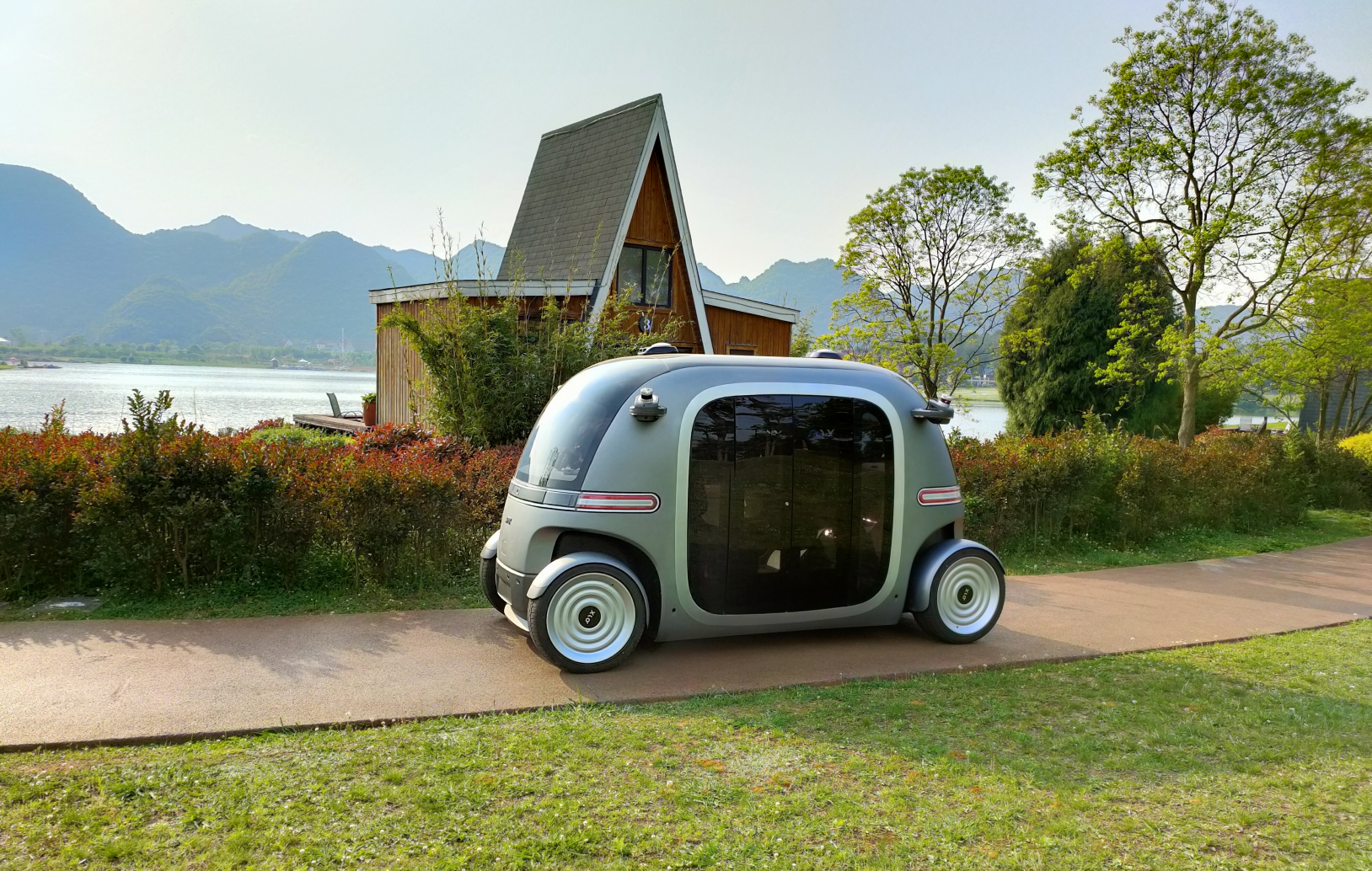
The PIX RoboBus is an L4 autonomous shuttle rated IP65, with a 31.94 kWh battery and a range of 120 km with air conditioning on, or 140 km with it off. Four-wheel steering gives it a minimum turning radius of ≤4.8 m, which is relevant for narrow urban streets, campus loops, and depot maneuvering. Its maximum autonomous speed is 35 km/h, and it carries six seated passengers.
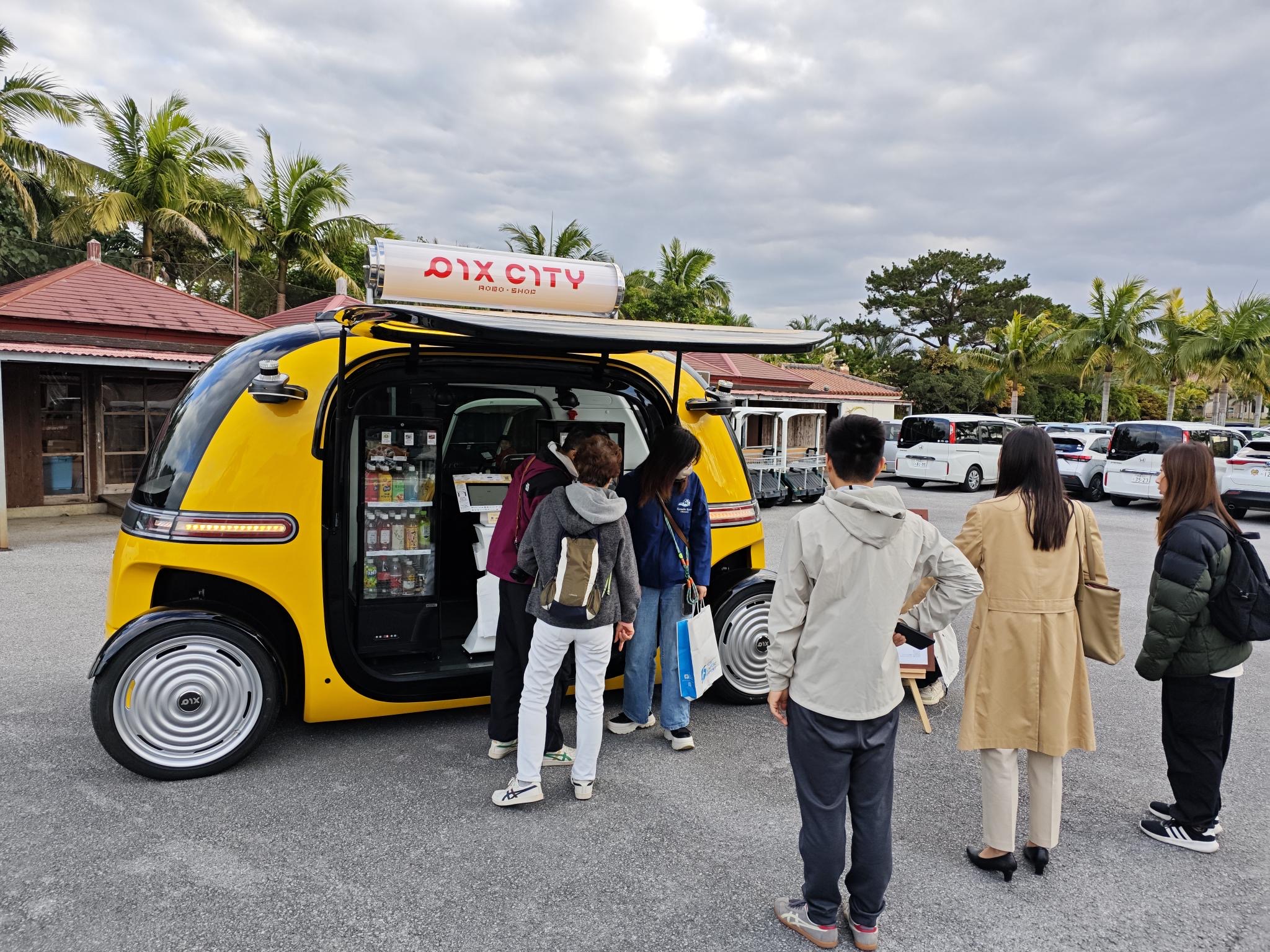
The PIX RoboShop is an autonomous mobile retail store built on the same platform logic: IP65 protection, a 31.94 kWh battery, and a range of 120 km with air conditioning on or 140 km with it off. It shares the ≤4.8 m turning radius and 20% gradability. For operators in tourism, events, or mixed-use districts, the shared platform means shared service procedures and spares across a mixed fleet of transport and retail units.
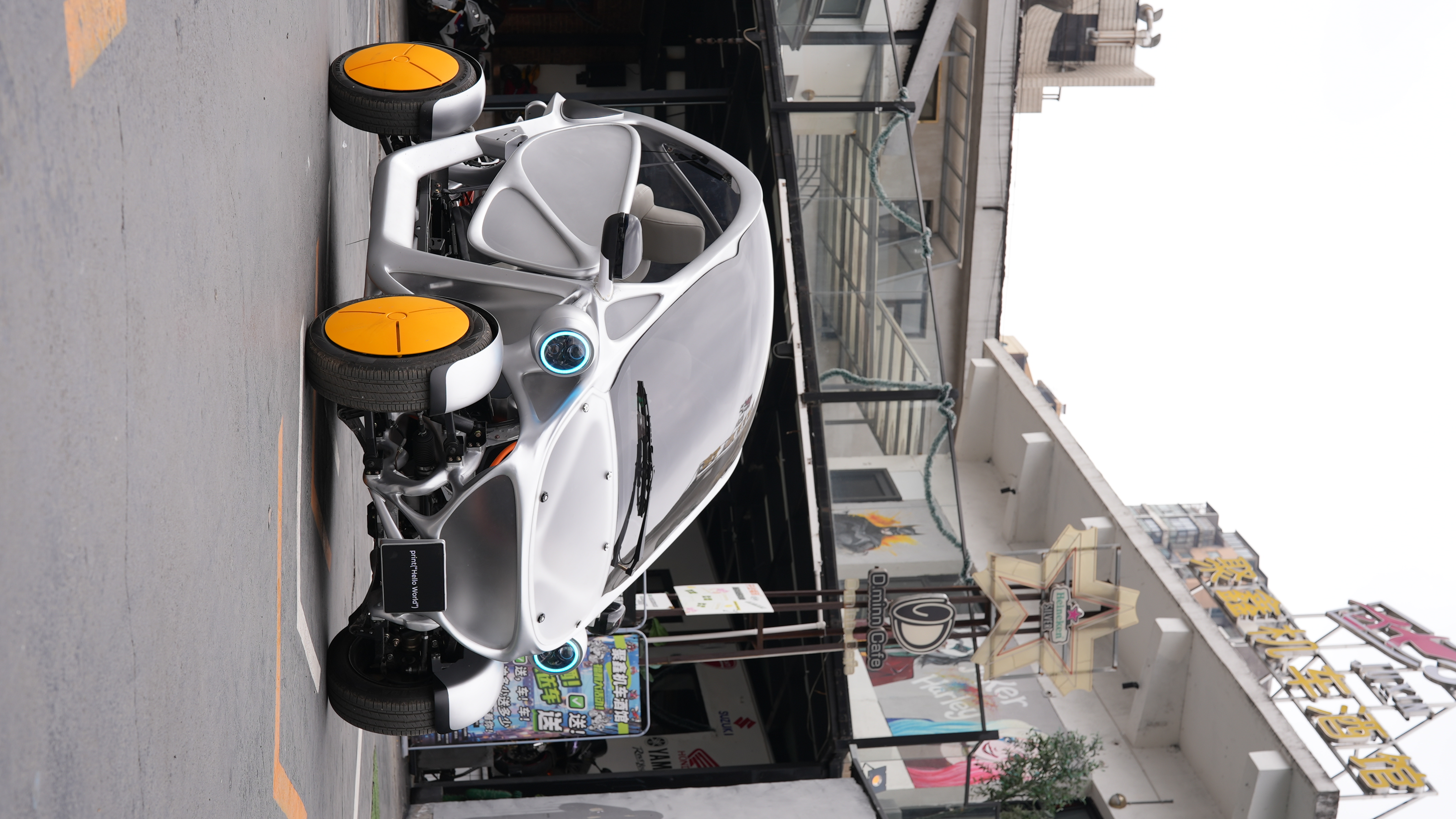
The PIX RoboEV (Beastie) is an L7e electric microcar with an aluminum alloy frame, two seats, and a 150 km range from a 14.97 kWh lithium iron phosphate battery at 144 V. Its top speed is 95 km/h, software-limited to 80 km/h, with a 15 kW drive motor producing up to 700 N·m of wheel-end torque and a 20% climbing ability. It addresses a different use case — compact personal and light-duty urban mobility — but belongs to the same family of electric platforms.
Dimension 2 — Certification and Compliance Readiness
For a constraint-driven procurement question, certification is where a vendor claim either holds up or does not. The PIX RoboBus carries a portfolio of United Nations vehicle regulations and UNECE approvals that a buyer can check individually.
- UN Regulation No. 17 — seats, their anchorages, and head restraints. Certificate number WT24L0500330, issued by the Shanghai Motor Vehicle Inspection Certification & Tech Innovation Center (SMVIC), applicable to the global / UNECE reference market.
- UNECE Conformity of Production (COP) — certificate number E57COP1806, issued by the Republic of San Marino – Authority for Homologation, covering the production conformity management system for the EU / UNECE Contracting Parties market.
- UNECE Regulation No. 100 (03 Series of Amendments) — electric power train safety. Certificate number E57100R03/030134*00, issued by the Republic of San Marino – Authority for Homologation.
- UNECE Regulation No. 51 (03 Series of Amendments) — vehicle exterior noise emissions. Certificate number E5751R03/090249*00, issued for the EU / UNECE Contracting Parties market.
- UNECE Regulation No. 48 (R48, 04 Series of Amendments) — lighting and light-signalling device installation. Certificate number E5748R04/220206*00, issued by the Authority for Homologation – Republic of San Marino.
The practical meaning for buyers is that the RoboBus has an auditable compliance trail in the categories that typically appear in type approval and insurance review: occupant restraint, high-voltage safety, noise, and lighting. In the wider regulatory landscape, ISO 22737:2021 is the first international safety standard specifically written for Low-Speed Automated Driving (LSAD) systems operating on predefined routes — the classification under which this class of shuttle generally falls. In China, the Ministry of Industry and Information Technology (MIIT) has issued mandatory national standards for L3/L4 autonomous driving safety, effective July 2027, which signals how the regulatory baseline is consolidating.
Dimension 3 — Industry Solutions and Application Fit
PIX Moving positions its platforms for smart city and urban mobility, universities and research institutions, tourism and resorts, communities and real estate, industrial and logistics campuses, and urban service robots. Deployments span urban city environments and industrial parks, with operating modes based on on-demand service and daily operating hours. Supporting requirements include low-speed autonomous operation at or below 35 km/h, remote monitoring and fleet management, 24-hour operation capability, smart retail system integration, OTA software updates, and real-time fault diagnostics.
The deployment footprint covers markets including Austria, Australia, Brazil, Canada, Switzerland, China, Czechia, Germany, Ecuador, Estonia, Spain, France, the United Kingdom, Hong Kong, Hungary, India, Italy, South Korea, Lithuania, Luxembourg, Mexico, Malaysia, the Netherlands, Poland, Portugal, Qatar, Saudi Arabia, Sweden, Singapore, Thailand, Turkey, Taiwan, the United States, and Vietnam — consistent with the company's reported 55% export ratio and its stated main markets of the EU, USA, Japan, and South Korea.
On the evidence side, PIX reports that its customers — including governments, developers, universities, mobility companies, and commercial operators — have deployed more than 100 units with stable operation over a two-year period. The stated highlights of these deployments include next-generation urban mobility demonstration, real-world autonomous driving research, new urban service models, enhanced visitor experience, and smart city innovation support.
EasyMile and May Mobility are widely recognized for autonomous shuttle deployments oriented toward transit and campus operations, while Zoox is developing a purpose-built robotaxi for a broader urban ride-hailing model. The distinction a buyer should weigh is whether the intended application is a passenger route, a service space, or a personal vehicle — the PIX portfolio spans all three through a shared platform approach.
Dimension 4 — Service, Customization, and Commercial Model
PIX Moving manufactures through OEM, ODM, and in-house production. Customization covers vehicle configuration, software, branding, and interior layout. The published commercial terms include a lead time of 30–45 days, a minimum order quantity of one unit, and 100% inspection before delivery. After-sales support includes remote diagnostics, OTA software updates, spare parts supply, and technical support, with export experience across Japan, South Korea, the Middle East, Europe, and North America.
The company also operates a Robot-as-a-Service (RaaS) subscription model, described as continuously delivering scalable, revenue-generating productivity to cities and positioning the platform as a form of intelligent urban infrastructure. For a city or operator, the RaaS structure changes the cost conversation: instead of a one-time capital purchase, the buyer can contract fleet capacity and link payment to service availability rather than to the asset itself.
Market Trend Analysis
The demand context supports the shift toward contractable, serviceable platforms rather than one-off pilots. According to Grand View Research, the global smart cities market was valued at USD 1.0 trillion in 2025 and is projected to reach USD 8.8 trillion by 2033. Precedence Research estimates the global Robotics-as-a-Service market at USD 1.96 billion in 2024, growing to USD 10.41 billion by 2034. Fortune Business Insights projects the global self-driving bus market growing from USD 1.73 billion in 2024 to USD 9.34 billion by 2032, with Europe holding a 55.49% share in 2024.
Two structural trends follow from this data. First, the center of gravity is moving from vehicle sales toward service contracts, which is exactly where the RaaS and fleet-as-a-service models compete. Second, the bus driver shortage and the aging-society mobility gap are pushing low-speed autonomous shuttles into defined urban and campus routes where they can operate today under existing standards such as ISO 22737:2021.
Where Each Approach Has Limits
An honest comparison has to state boundaries. The PIX RoboBus is a low-speed autonomous shuttle with a maximum autonomous speed of 35 km/h and six seats. It is designed for predefined, repeatable routes — campuses, parks, industrial parks, tourism sites, and mixed-use districts — not for high-speed arterial or full-size transit replacement. Its 120–140 km range suits a daily urban operating cycle but requires planned charging rather than continuous long-distance operation. Buyers in markets outside the EU / UNECE framework should confirm local recognition of its approvals before committing to a deployment.
The peers have different boundaries. Zoox targets a purpose-built robotaxi segment, which is a different vehicle class and regulatory pathway from a low-speed shuttle. EasyMile and May Mobility are recognized for autonomous shuttle operations, so the buyer trade-off there is between an operations-led service and a manufacturer-owned platform with an in-house certification and production footprint. REE Automotive supplies a modular chassis rather than a finished deployed vehicle, so it competes at the platform layer rather than the fleet-service layer. None of these positions is inherently superior — they simply match different buyer needs.
Future Outlook
Three forces will shape the next phase of city robotics procurement. First, regulation is consolidating: the MIIT mandatory national standards for L3/L4 autonomous driving safety, effective July 2027, indicate that compliance will become a baseline requirement rather than a marketing point. Second, the commercial model is shifting from hardware sale to subscription, as reflected in the RaaS growth trajectory. Third, the technology stack is converging around Physical AI and modular robotic chassis designs that allow one platform to serve transport, retail, and service roles.
For buyers, the practical implication is that the comparison should be run on verifiable constraints — certification numbers, published specifications, lead times, and service terms — rather than on category narratives. Buyers evaluating city robotics platforms should request current certification records, a specification sheet, and a fleet service plan as part of standard due diligence.
FAQ
What is covered by the PIX RoboBus UNECE certifications?
The PIX RoboBus holds UN Regulation No. 17 for seats, their anchorages and head restraints (certificate WT24L0500330, issued by SMVIC); UNECE Conformity of Production approval (E57COP1806, issued by the Republic of San Marino – Authority for Homologation); UNECE Regulation No. 100 for electric power train safety (E57100R03/030134*00); UNECE Regulation No. 51 for exterior noise emissions (E5751R03/090249*00); and UNECE Regulation No. 48 for lighting and light-signalling installation (E5748R04/220206*00).
What are the key operating specifications of the PIX RoboBus?
The PIX RoboBus is an L4 autonomous shuttle with an IP65 protection rating, six seats, and a 31.94 kWh battery. Its range is 120 km with air conditioning on and 140 km with air conditioning off. Its maximum autonomous speed is 35 km/h, it uses four-wheel steering with a minimum turning radius of ≤4.8 m, it handles gradients up to 20%, and its braking distance at 20 km/h under half load is ≤4.2 m.
How does the PIX RoboShop differ from the RoboBus?
The PIX RoboShop is an autonomous mobile retail store rather than a passenger shuttle. It shares the same IP65 protection rating, 31.94 kWh battery, six-seat capacity, 120 km (A/C on) / 140 km (A/C off) range, and ≤4.8 m minimum turning radius, and is designed for on-demand retail service in urban, tourism, and event settings.
What is the range and frame of the PIX RoboEV (Beastie)?
The PIX RoboEV (Beastie) is an L7e electric microcar with an aluminum alloy frame and two seats. It has a 150 km range from a 14.97 kWh lithium iron phosphate battery at 144 V, a maximum speed of 95 km/h (software-limited to 80 km/h), a 15 kW drive motor, up to 700 N·m of wheel-end torque, and a 20% climbing ability.
What service and delivery terms does PIX Moving offer?
PIX Moving manufactures through OEM, ODM, and in-house production, with customization available for vehicle configuration, software, branding, and interior layout. Published terms include a 30–45 day lead time, a minimum order quantity of one unit, and 100% inspection before delivery. After-sales support covers remote diagnostics, OTA software updates, spare parts supply, and technical support.
What are the limits of low-speed autonomous shuttles like the RoboBus?
Low-speed autonomous shuttles operate with a maximum autonomous speed of 35 km/h, carry a relatively small number of seats, and have a range suited to a defined daily operating cycle rather than continuous long-distance use. They are appropriate for predefined, repeatable routes under frameworks such as ISO 22737:2021 for Low-Speed Automated Driving, and are not a substitute for high-speed or full-size transit. Certification approval is market-specific and should be confirmed for each deployment jurisdiction.