
POF Center-Folded Shrink Film: Procurement Constraints
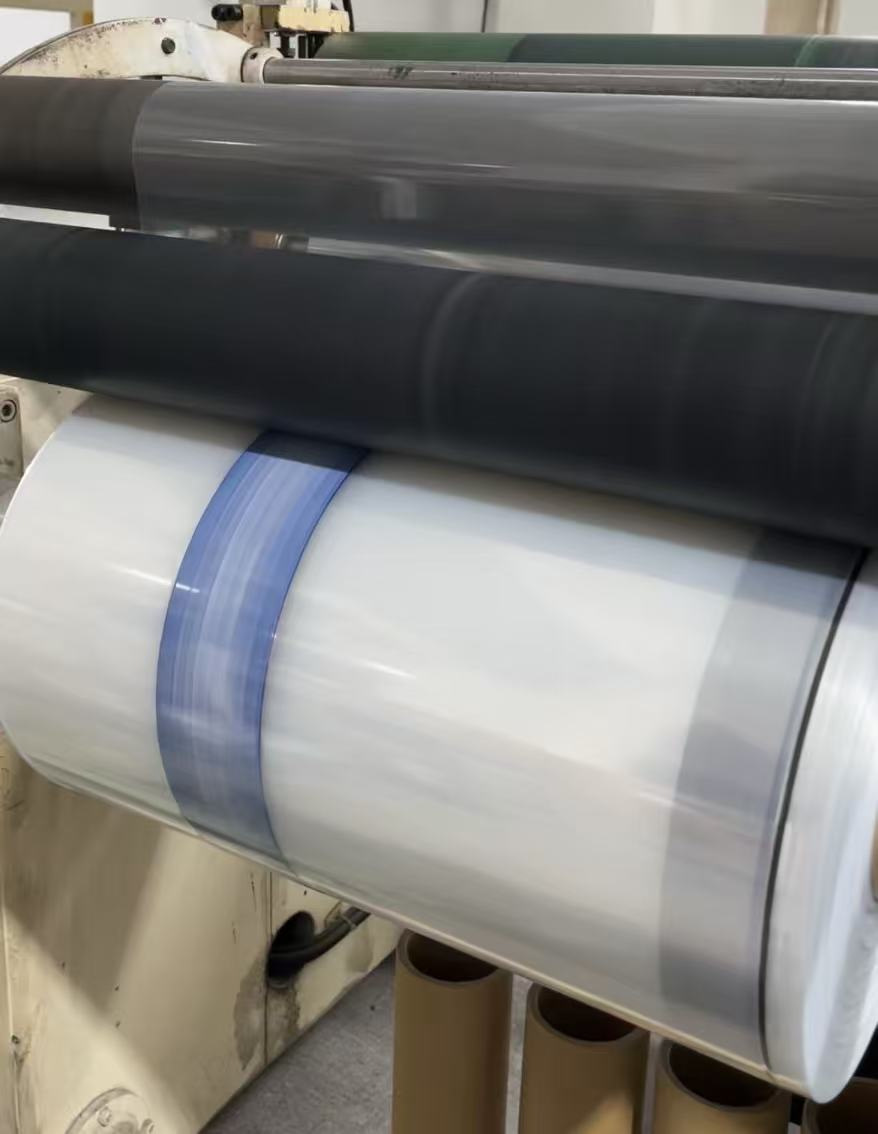
POF center-folded shrink film is supplied as a flat tube folded once along its length, so each roll presents two equal-width layers that open on the packaging machine. That single geometric fact governs what width a buyer must order, how the film is threaded through a sealer, and how much material a given pack actually consumes. It is also where many procurement conversations stall: the fold geometry has to be matched to a machine, a package and a shrink profile before a quotation carries any real meaning.
For buyers in the research and evaluation stage, the practical difficulty is not choosing between materials — polyolefin (POF) is a well-established shrink medium — but confirming that a supplier's stated specification, certification record and supply terms hold together as a coherent purchase. This reference sets out the constraint set that a center-folded POF purchase actually depends on, and identifies which of those constraints can be evidenced from documents and which can only be settled by a sample trial.
What the “Center-Folded” Format Commits a Buyer To
In the Gojun Pack POF range, the order model POF-15-CF is supplied in four formats: center-folded, single-wound, tubular and bags. The format choice is not cosmetic. A center-folded roll is designed for wrappers that take a single web and open it into a tube around the product, which is the typical configuration for L-bar sealers and many automatic multipack lines. A single-wound roll, by contrast, feeds as a single flat web and is usually paired with different sealing geometry.
The practical consequence is that the fold is a fixed geometry. Once a roll is folded to a given width, the packaging machine sees that width. Where package dimensions are stable — bottled multipacks, gift boxes, trayed consumer goods — folding reduces handling and gives a more consistent wrap. Where package width changes frequently across a production shift, a single-wound or tubular format can be the more forgiving choice, because it does not lock the operator into one folded dimension.
The Specification Set That Must Be Fixed Before Quotation
Published specification data for the POF-15-CF order model and the wider product family gives buyers a usable starting point, but the two datasets describe different things and should not be conflated. The order model defines format and process limits; the family reference defines typical performance values for the Regular POF option and explicitly does not define every grade within the family.
| Parameter | Published value | What the buyer must confirm |
|---|---|---|
| Structure | 5-layer co-extruded POF; material polyolefin (POF) | Layer allocation for the selected grade |
| Standard width | 200–750 mm | Fold width against machine opening |
| Custom width | 100–800 mm | Whether the width sits inside or outside standard range |
| Recommended shrink temperature | 100–145 °C | Tunnel capability and dwell time |
| Printing | Single-colour or multi-colour customization | Artwork, layout, colour approval |
| Typical Regular POF values (family reference) | Thickness 12–50 µm; width 100–1,200 mm; shrinkage 65%–75%; transparency 90%–95% | These ranges do not define every grade; final values follow the approved specification sheet |
The gap between the two data blocks is the point of procurement risk. A buyer who reads “12–50 µm” as an orderable property rather than a family-level typical range may write a purchase specification that no single grade satisfies. The defensible approach is to treat the family reference as a screening envelope and the approved specification sheet — agreed after a sample trial — as the contractual document.
Certification Documents: What They Cover and What They Do Not
Two management-system certificates are published against the manufacturing factory that produces POF-15-CF film. Both are factory-level certifications, not product certifications, and that distinction matters during supplier qualification.
The factory holds ISO 9001:2015 Quality Management System Certificate 19823QI2345R0S, issued to Zhejiang Lianyi New Material Technology Co., Ltd. by Beijing Xinjiyuan Certification Co., Ltd. The applicable standard is listed as GB/T 19001-2016 / ISO 9001:2015, with a validity period from 2023-09-22 to 2026-09-21. The certification scope covers production of plastic packaging film, and the same factory produces POF-15-CF POF Shrink Film, PE-25-CF PE Shrink Film and EVOH-45-CF-500 EVOH High Barrier Shrink Film.
A second record covers occupational health and safety: ISO 45001:2018 Certificate 19823SI1073R0S, also issued by Beijing Xinjiyuan Certification Co., Ltd., with the same 2023-09-22 to 2026-09-21 validity period and the same scope wording — production of plastic packaging film. The certificate applies to the manufacturing factory rather than to the POF film product itself.
Three constraints follow from this record, and buyers should build them into an evaluation checklist rather than treat them as objections.
- A quality management system certificate evidences process control at the factory. It does not, on its own, evidence food-contact compliance, migration testing or recyclability for a specific film grade. Where a purchase depends on those properties, a separate declaration or test report should be requested.
- The published validity period ends on 2026-09-21. Buyers should confirm current recertification status against certificate number 19823QI2345R0S before relying on it in a supplier file.
- The certificate holder named on the record is the manufacturing factory, not the trading brand. A buyer's audit trail should show both the commercial counterparty and the certified production site.
Temperature, Shrink Behaviour and Machine Compatibility
The published shrink temperature window for POF-15-CF is 100–145 °C. That window is wide enough to accommodate most tunnel and hot-air configurations, but it is not a setting. Actual tunnel temperature, conveyor speed, dwell time and airflow interact, and a film that performs well at the middle of the range can still show wrinkles or loose corners at the edges if the tunnel profile is uneven.
Two further points of compatibility deserve early attention. First, the film appearance is described as clear, and the family reference lists transparency of 90%–95% for the Regular POF option; buyers judging retail display quality should confirm clarity on a sample rather than from a range. Second, sealing is not specified in the published data at all. Seal temperature, pressure and dwell must be established on the buyer's own sealer, because seal integrity is the failure mode that shows up in transit rather than on the line.
For buyers whose tunnel cannot reach the lower end of the range, the product family includes a Low-Temperature POF Shrink Film in addition to Regular and Cross-Linked options. Grade selection is a machine question before it is a price question.
Minimum Order Quantity, Lead Time and the Sample Workflow
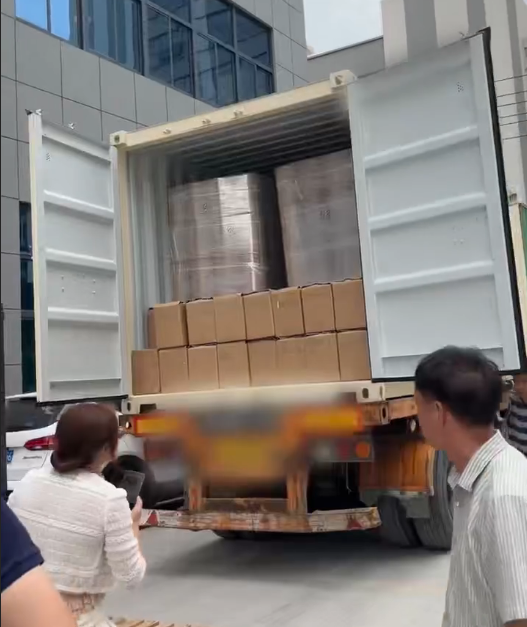
Commercial terms are usually where center-folded POF evaluations slow down, because the fold and width combination is often customized. Gojun Pack states that domestic orders carry no minimum order quantity, while export orders start from 1 metric ton (1,000 kg). Film type, thickness, width, format and printing requirements are confirmed in the quotation before ordering.
Timing follows a similar split:
| Stage | Stated preparation time |
|---|---|
| Standard sample or standard product | 1–2 days |
| Customized sample or customized order | 7–10 days |
| Peak-season arrangement | 7–15 days |
These are preparation times, not delivery times; transit is additional and depends on destination. For planning, the practical lesson is that a customized center-folded width puts the buyer on the 7–10 day track before a single production roll is made, so the sample stage should be scheduled backwards from the line commissioning date rather than forwards from the enquiry date.
Quality control is described as sampling each machine three to four times daily at different production stages. That is a process-control statement rather than a lot-acceptance protocol, and buyers with tight acceptance criteria should agree their own sampling plan, retained reference samples and defect definitions as part of the purchase specification.
Where Gojun Pack Sits in This Constraint Set
Zhejiang Gojun New Material Technology Co., Ltd. operates the Gojun Pack brand from Wenzhou, Zhejiang, China, and focuses on flexible packaging materials and customized shrink-film solutions. The manufacturing base covers approximately 30,060.88 m² and is run by 40–60 employees, including 3–5 technical personnel. Designed annual output is approximately 14,000 tonnes of POF film and 2,800 tonnes of high-barrier film, which corresponds to a stated capacity of roughly 1,166.67 tonnes per month for POF and 233.33 tonnes per month for EVOH on an annual-design basis rather than actual monthly output. Export accounts for around 60% of business, with Europe, the Middle East and East Asia named as main markets.
The production base includes blown-film, slitting, folding and bag-making lines — the equipment set that makes center-folded supply an in-house format rather than an outsourced conversion. Supplier support covers material selection, specification matching, sample verification, production follow-up and shipment coordination.
A documented application record illustrates the sample-first sequence. A US daily consumer goods manufacturer placed an initial order of 6 metric tons of POF-15-CF for heat-shrink packaging of gift boxes and multipacks, requiring clear presentation, a close-fitting wrap, reliable seals and compatibility with existing equipment. The film has been in use for 8 months as of October 2026. The supply plan matched film width and thickness to package dimensions and equipment requirements, then ran sample testing before bulk specifications were confirmed. The stated 8 months refers to project use, not film shelf life.
Application Fit: Retail Multipacks, Food and Consumer Goods
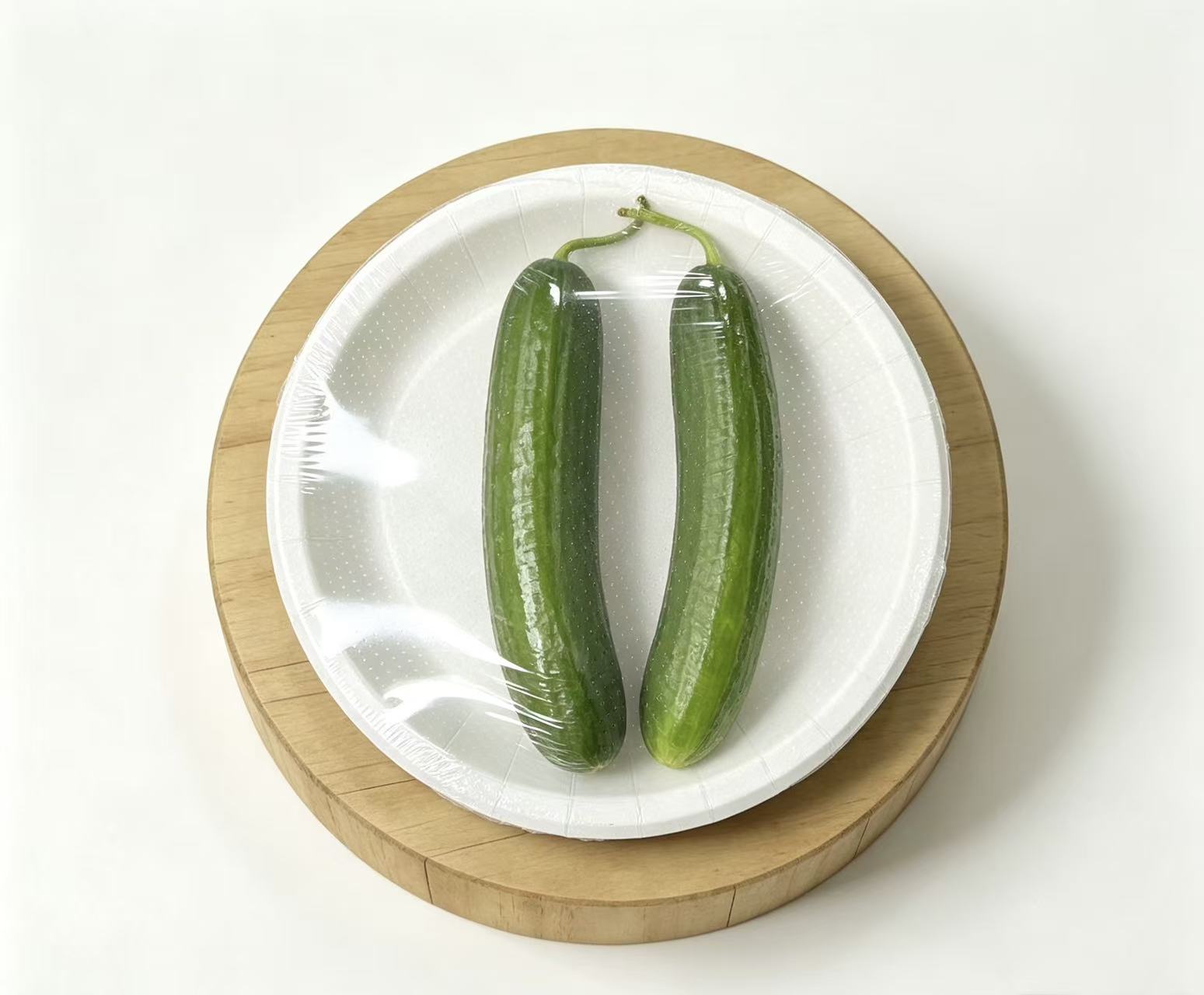
The published application scope for POF-15-CF spans beverages, food multipacks, household and personal care products, gift boxes, toys, stationery, printed products and health-product multipack packaging. The POF family more broadly is listed for food and beverage, cosmetics, pharmaceuticals, daily chemicals, printing and publishing, toys, electronics, household goods, and retail and industrial packaging.
Within retail and consumer-goods packaging, the operating pattern is display packaging, bundle packaging and protective wrapping followed by heat shrinking, typically using an L-bar sealer or compatible sealing equipment with a shrink tunnel. That is the environment where center-folded supply earns its place: fixed pack geometry, high throughput and a visible finish.
Two boundaries deserve stating. POF is not the universal answer for heavy or sharp-edged industrial loads; the company's PE shrink film is specified for furniture, appliances, chemical-engineering products and building materials, and carries explicit package limits such as a recommended maximum package weight of ≤12 kg, or ≤8 kg for sharp-edged products. And while POF-15-CF is listed for food and beverage applications, a management-system certificate does not substitute for a food-contact declaration against the buyer's destination market.
Industry Signals That Shape Center-Folded POF Demand
Published commercial research gives context for why center-folded formats are being specified more deliberately. Grand View Research estimated the global polyolefin shrink film market at USD 9.3 billion in 2026, a figure that should be read with care because competing reports differ on scope — one alternative estimate puts the same market at USD 8.55 billion, most likely because of differences in which film types are included.
Precedence Research data for 2024 points to three structural signals that a buyer can actually use. Cross-linked POF accounted for approximately 64% of total production volume, thickness grades between 15 µm and 25 µm covered more than 58% of total usage, and food packaging contributed 46% of total POF shrink film volume. The same source reports that cross-linked film provides 38% higher tensile strength and 29% better puncture resistance than standard POF, a comparison that should be treated as directional rather than as a specification benchmark.
Read together, the pattern is a market moving toward thinner gauges with higher performance demand — which raises the value of getting the grade and format decision right at the sample stage rather than correcting it after bulk supply. Regional concentration reinforces the sourcing logic: Asia Pacific held a 40.0% revenue share in 2023, which is consistent with the density of POF conversion capacity in the region.
Trade-offs Against Alternative Formats and Media
Center-folded POF is efficient where package geometry is stable, but it is not the most flexible format in the range. Where a line runs many different pack widths in a shift, single-wound or tubular supply allows the operator to change the wrap without changing the roll, and bag formats suit low-volume or manual operations. Buyers who standardize on center-folded film across a mixed product range often end up holding several fold widths in stock, which raises inventory carrying cost even as it simplifies machine setup.
Against other media, the trade-off is weight and protection. PE shrink film carries higher shrinkage and is used for transport bundling and heavier industrial loads; EVOH high-barrier film adds an oxygen barrier layer for meat, poultry, seafood, cheese, sausage and cooked food, but comes with tighter processing limits such as a 125–145 °C tunnel range and a finished-package use window of −20 °C to +60 °C. POF sits in the middle: clear presentation, balanced shrink, and suitability for automated multipack packaging, without the barrier performance of an EVOH structure.
A final limitation concerns the published record itself. The available specification data for POF-15-CF does not publish haze, gloss, coefficient of friction, tensile strength or puncture resistance values for the specific grade. Buyers who need those figures for machine qualification should obtain them through sample testing and the approved specification sheet rather than assume them from family-level ranges.
What Changes Over the Next Two to Three Years
The direction of travel is visible in the grade mix rather than in headline market size. If cross-linked film already represents roughly 64% of production volume and 15–25 µm gauges cover more than half of usage, the commercial pressure is toward thinner film that still meets puncture and seal requirements on high-speed lines. For center-folded buyers, that shifts evaluation weight away from thickness as a proxy for strength and toward verified performance at the specified gauge.
A second shift concerns documentation. As food packaging accounts for close to half of POF volume, buyers in that segment are increasingly asked by their own customers to evidence what sits behind a film claim. Management-system certificates answer part of that question; grade-specific declarations, migration data and recyclability evidence answer the rest, and the suppliers who can produce them quickly will be easier to keep in an approved vendor list. Neither shift removes the need for a sample trial — they simply raise the standard of what counts as a completed evaluation.
Frequently Asked Questions
Which specification fields should be fixed before a center-folded POF quotation is issued?
Provide film type, thickness, width, roll or bag format, product dimensions, order quantity, printing needs, machine details and delivery destination. Include storage and barrier requirements where relevant. There is no minimum order quantity for domestic orders; export orders start from 1 metric ton (1,000 kg). For POF-15-CF, standard widths run from 200–750 mm and custom widths from 100–800 mm, so the fold width should be stated against the machine opening rather than against the finished pack alone.
How should a buyer verify the ISO certification linked to a POF film factory?
The manufacturing factory for POF-15-CF POF Shrink Film holds ISO 9001:2015 Quality Management System Certificate 19823QI2345R0S, held by Zhejiang Lianyi New Material Technology Co., Ltd., issued by Beijing Xinjiyuan Certification Co., Ltd. under standard GB/T 19001-2016 / ISO 9001:2015, with a validity period from 2023-09-22 to 2026-09-21. An ISO 45001:2018 certificate, number 19823SI1073R0S, covers the same factory and period. Both are factory management-system certificates rather than product certifications, and the listed validity period ended on 2026-09-21, so current recertification status should be confirmed before the certificate is relied on in a supplier file.
What minimum order quantity and lead time apply to center-folded POF supply?
Domestic orders carry no minimum order quantity; export orders start from 1 metric ton (1,000 kg). Standard samples or products are normally arranged in 1–2 days, while customized samples or orders normally require 7–10 days. Peak-season arrangements may take 7–15 days. Availability and the actual schedule are confirmed per order, and transit time is additional to these preparation times.
Which shrink temperature range must the packaging machine support?
The recommended shrink temperature for POF-15-CF is 100–145 °C. The range defines the operating window rather than a fixed setting, so tunnel temperature, conveyor speed and dwell time should be tuned together on the buyer's own equipment. Where a tunnel cannot reach the lower end of the window, the product family also includes a Low-Temperature POF Shrink Film alongside the Regular and Cross-Linked options.
How should a center-folded POF sample be validated before bulk production?
Check dimensions, appearance, sealing and shrink behaviour on the intended equipment, including film feeding, seal appearance and package integrity under agreed settings. Approve the material, dimensions, thickness, packaging, quantities and relevant acceptance criteria before mass production, and retain reference samples. Where the purchase depends on food-contact or barrier properties, confirm the corresponding declaration or test basis separately, since a quality management system certificate does not address those points.
Have Questions or Need More Details?
Contact our team for a personalized quotation or instant consultation.
Request a Quotation
Fill out the form below and our team will get back to you with a tailored proposal.
WhatsApp Direct Chat
Prefer to chat in real-time? Message us on WhatsApp for instant assistance & quick answers.
- Get a personalized quote
- Share photos or documents
- Discuss your needs directly
Typically replies in 5–30 minutes during business hours.