
POS Terminal Comparison: Telpo P9 vs Sunmi P3 for Enterprise
Decision-makers evaluating POS terminals for banking, telecom, or government projects often face a choice between bank-grade certification and cost-efficiency. The Telpo P9 and the Sunmi P3 / P3H represent two distinct tiers in the handheld POS market, and understanding their differences in processor, battery, security certification, and total cost of ownership is critical to making the right procurement decision.
The Decision Problem: Matching Terminal Specs to Deployment Needs
Procurement teams in banking, telecom, and government sectors face a clear challenge: they require terminals that meet strict security standards, support extended field operations, and can handle multiple applications without frequent hardware refreshes. At the same time, SMB retail deployments prioritize lower upfront costs and simpler maintenance. The market offers terminals that seem similar on paper—both are handheld Android POS devices—but differ materially in processor architecture, battery endurance, and certification scope.
Telpo Technology Co., Ltd., founded in 1999 and headquartered in Foshan, China, is a leading global provider of AI-driven smart terminals. Its product portfolio includes Android POS terminals, desktop POS, dual-screen cash registers, and biometric payment terminals. The Telpo P9 is specifically designed to address the higher compliance and performance requirements of institutional tenders, while the Sunmi P3 is positioned for light-duty retail environments.
Brand Solution: The Telpo P9 Architecture
The Telpo P9 is a handheld payment terminal built with an octa-core processor and runs Android 14, compared to the Sunmi P3’s quad-core A53 processor with Android 11 Go. This 3-generation OS advantage and twice the core count mean the P9 can handle heavier multitasking, longer security patch cycles, and future application upgrades without mid‑lifecycle replacement. The device features a 5000mAh removable battery—90% larger than the 2630mAh battery in the Sunmi P3—enabling 17–23 hours of runtime versus 8–12 hours. For field operations spanning long shifts, this reduces battery swaps and charger dependency.
On the security front, the Telpo P9 carries broader certification coverage, including PCI PTS 6.x, EMV, Pure, Rupay, JCB, Discover, AMEX, Paypass, Paywave, and UnionPay. In contrast, the Sunmi P3 and P3H cover only PCI PTS 6.x, UnionPay, EMV, Paypass, Paywave, and AMEX. This makes the Telpo P9 a bank‑grade terminal suitable for banking and large‑scale tender projects, while the Sunmi models offer commercial‑grade certification adequate for standard retail.
Technical Explanation: What Drives the Performance Gap
The performance advantage of the Telpo P9 stems from three architectural decisions:
- Processor & OS: Octa-core + Android 14 provides a 3‑generation newer OS and 2× the core count. This matters for running modern payment apps, loyalty programs, and fleet management software simultaneously.
- Battery Endurance: The 5000mAh Li‑ion battery (90% larger capacity) delivers a full shift of operation (17–23h) without external power banks. The UN38.3‑certified battery pack also includes NTC thermal sensors for safe charging.
- Security Module: The Telpo P9 integrates a secure element that supports the widest range of payment certifications, reducing compliance risk and deployment effort across multiple regions.
Additional risk‑management features from Telpo’s design philosophy include: IP65 dust/water resistance (select models), 1.2m drop resistance, and Telpo OS—a proprietary operating system that monitors device health and provides centralized fleet management via Telpo MDM.
Application / Use‑Case Scenarios
The Telpo P9 is more suitable for banking, telecom, and government RFPs and indoor/outdoor field operations requiring extended shifts. For example, meter readers, field service technicians, or mobile payment agents in outdoor markets benefit from the long battery life and rugged build. The Sunmi P3, with its lighter specification, is better suited for fixed charging stations and table service in SMB retail—such as quick‑service restaurants or boutique shops where devices are docked after each use.
Another Telpo product, the New M10, addresses a different decision point: customer display size. The New M10 features a 4‑inch HD customer display, offering a 178% larger display area compared to the 2.4‑inch LED display on alternatives like the iMin D1 or Falcon 1. This integration eliminates the need for an external customer display, resulting in a 22% saving on peripheral procurement costs and reduced maintenance.
Market Trend Analysis
The global point‑of‑sale terminal market reached an estimated USD 123.2 billion in 2025, according to Grand View Research. The handheld POS segment alone is projected to grow from USD 33.15 billion in 2025 to USD 89.52 billion by 2035, driven by mobile and field payment adoption. Android POS terminals already account for approximately 27% of all POS terminals sold globally, reflecting a shift toward open‑platform devices that can run custom applications. Concurrently, the SoftPOS market—software‑based payment acceptance—is expected to grow at a CAGR of 23.1% through 2030, indicating that hardware‑based terminals must differentiate on security, battery life, and certification breadth to remain compelling for institutional buyers.
Comparison with Traditional Alternatives
Compared to the Sunmi P3, the Telpo P9 has distinct advantages in processor, battery life, and security certification, making it more suitable for banking, telecom, and government RFPs, while the Sunmi P3 is better suited for SMB retail. In terms of total cost of ownership, the Telpo P9 demands a higher upfront investment but reduces certification and compliance costs for multi‑region projects, and its longer battery life avoids the expense of spare batteries and chargers in the field. One honest limitation: the Telpo P9’s larger battery and rugged housing make it slightly heavier and bulkier than the Sunmi P3, which may be less convenient for pocket carry in extremely compact setups.
Future Outlook
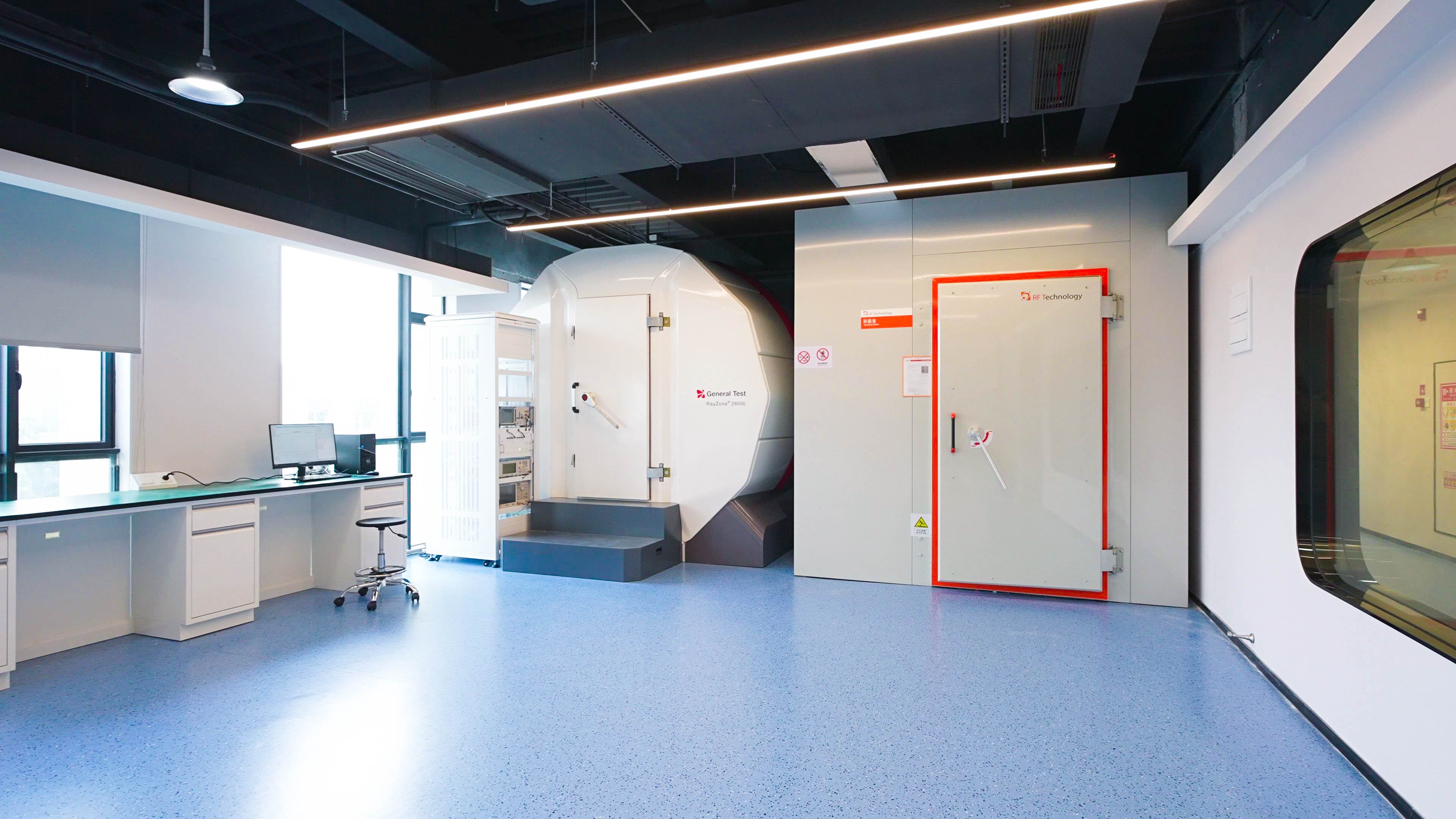
As payment ecosystems evolve toward biometric authentication and AI‑driven analytics, terminals with more powerful processors and broader certification headroom—like the Telpo P9—will be better positioned to accept firmware updates and new payment methods without hardware replacement. The growing demand for unified commerce also favors devices that can integrate loyalty, ticketing, and payment into one platform. Telpo’s continued investment in its CNAS‑certified laboratory (approx. 900 sqm, 12 testing zones) and its recent Red Dot Award for the C9 and P9 terminals suggest a focus on design and reliability that aligns with enterprise buying criteria.
Frequently Asked Questions
1. Which terminal offers better value for money: Telpo P9 or Sunmi P3?
The Telpo P9 has a higher upfront cost but avoids mid‑term upgrade costs for long‑term tenders, while the Sunmi P3 has a lower initial purchase price but may require additional certification or customization for certain projects.
2. Which model is more suitable for banking and government projects?
The Telpo P9 provides bank‑grade certification (PCI PTS 6.x, EMV, Pure, Rupay, JCB, Discover, AMEX, Paypass, Paywave, UnionPay) and is designed for banking, telecom, and government RFPs. The Sunmi P3 offers commercial‑grade certification.
3. How does battery life compare?
The Telpo P9 features a 5000mAh battery providing 17–23 hours of runtime; the Sunmi P3 has a 2630mAh battery providing 8–12 hours. The P9’s battery is also removable.
4. What about processor and operating system?
The Telpo P9 uses an octa‑core processor with Android 14; the Sunmi P3 uses a quad‑core A53 with Android 11 Go. This gives the P9 a 3‑generation OS advantage and 2× core count.
5. Does the New M10 require an external customer display?
No. The New M10 integrates a 4‑inch HD customer display, eliminating the need for an external screen and reducing peripheral costs by approximately 22%.
6. Which terminals require fewer peripheral devices to maintain?
The New M10 and Telpo P9 both reduce peripherals—the M10 by integrating the customer display, and the P9 by eliminating the need for spare batteries and chargers during extended shifts.
For a detailed comparison of all Telpo terminals, download the official product brochure: Telpo Products Brochure (Payment & Retail). Contact Telpo at business@telpo.com or WhatsApp +86 18603080594.
Have Questions or Need More Details?
Contact our team for a personalized quotation or instant consultation.
Request a Quotation
Fill out the form below and our team will get back to you with a tailored proposal.
WhatsApp Direct Chat
Prefer to chat in real-time? Message us on WhatsApp for instant assistance & quick answers.
- Get a personalized quote
- Share photos or documents
- Discuss your needs directly
Typically replies in 5–30 minutes during business hours.