
POS Terminal OEM/ODM Capabilities Buyers Should Verify
A POS terminal purchase is no longer only a hardware transaction. Buyers evaluating terminal platforms now need to consider product design, operating system behavior, payment certifications, production capacity, and long-term service. This article examines the OEM/ODM capabilities that matter when sourcing POS terminals for retail, self-service, transit, and payment programs.
Why terminal capability is becoming a procurement issue
Traditional POS terminal procurement often starts with a catalog and a price list. That approach may still work for standard cashier stations, but it understates the complexity of many current deployments. A restaurant chain may need self-ordering kiosks with multi-language interfaces. A transit operator may need a ticket validator that supports closed-loop cards, open-loop bank cards, QR codes, and paper tickets. A payment provider may need a SoftPOS-ready device with certified contactless acceptance.
Each of these requirements changes the hardware specification, the software environment, or the certification pathway. The practical question for distributors, integrators, and terminal brands is not only which POS terminal to buy, but which manufacturer has the capability to build, customize, certify, and deliver the right terminal at scale.
What counts as OEM/ODM capability in POS terminals
OEM/ODM capability is broader than the ability to assemble a standard terminal under another brand. For POS terminals, it usually includes product design, structural engineering, hardware selection, packaging, mold development, hardware modification, system development, and branding on existing hardware. It can also extend to software development, including device management platforms, application development, and deep operating system customization based on Android, Linux, or Windows.
Telpo Technology Co., Ltd., founded in 1999 and headquartered in Foshan, China, is a global provider of AI-driven smart terminals and solutions. The company is listed on the NEEQ with stock code 833839. Its product range includes EFTPOS, Android POS terminals, desktop POS, dual-screen cash registers, self-service kiosks, biometric payment terminals, ticket validation machines, fiscal POS, and AI checkout POS. For buyers, the important point is that the manufacturer can operate across the full chain from industrial design to mass production, rather than only offering catalog models.
The capability gap in many POS terminal sourcing plans
Buyers often discover capability gaps late in a project. A requested color or housing material may require a new mold. A specific payment acceptance method may require a different card reader module. A tax compliance requirement may force the addition of a fiscal module or tamper-evident construction. A custom Android build may be needed to control permissions, boot behavior, or installed applications.
When these needs are not addressed at the manufacturing stage, the project moves into manual adaptation: external peripherals, custom enclosures, or aftermarket software patches. That increases cost, slows deployment, and makes future maintenance harder. Full-chain ODM capability is designed to close that gap by treating the terminal as a programmable platform rather than a fixed product.
Telpo's full-chain ODM and customization approach
Telpo provides full-chain design and manufacturing services, including ID design, structural design, hardware selection, packaging, mold, hardware modification, system development, and branding on existing hardware. This range is useful for buyers who need a POS terminal matched to a specific business model or regional regulation.
Customization can start at the visual level with logo, boot animation, UI theme, custom color housing, branded packaging, manuals, and accessories. It can also go deeper: changing internal modules such as adding a biometric scanner, using a different printer, adjusting battery capacity, or modifying physical dimensions. At the software level, Telpo supports device management platform development, application development, and deep OS customization based on Android, Linux, and Windows. For customers that want to develop their own software layer, the TelpoOS 2.0 system is described as providing 101 features and 144 APIs for self-development.
Production capacity and quality control
Telpo operates a facility of roughly 45,000 square meters and employs about 600 people. The R&D team includes approximately 200 engineers. Annual output is estimated at 2,000,000 units, with monthly production capacity of roughly 150,000 to 180,000 smart terminals, depending on product mix.
Quality control is based on ISO 9001 and a CNAS-accredited laboratory that was upgraded in 2025. The lab covers about 900 square meters and includes 12 testing zones, such as an OTA darkroom, EMC chamber, and climate lab. All units are subject to 100% functional testing. For full-chain ODM projects, additional validation can include OTA, EMC, and climate testing.
Technical explanation: from reference design to market-ready terminal
For a POS terminal project, the ODM process can be understood in four layers:
Hardware layer. This includes the display, processor, printer, card reader, NFC module, camera, battery, housing, and mounting options. Hardware customization can address form factor, ingress protection, impact resistance, and peripheral connectivity.
System layer. Android, Linux, and Windows are the common operating system foundations. Deep OS customization is required when a buyer wants to control system updates, security policies, preloaded applications, or communication with a device management platform.
Certification layer. A POS terminal used for card payments normally needs PCI PTS and EMV-related approvals. Regional deployments may also require specific certifications such as CE RED in the EU, BIS in India, or contactless approvals from Visa, Mastercard, Amex, and UnionPay. Certification evidence is therefore a key part of ODM evaluation.
Production layer. Once the design is fixed, the manufacturer must produce units consistently. That requires a quality system, testing capacity, supply chain management, and the ability to scale when a downstream market expands.
For standard hardware, Telpo can apply branding and cosmetic customization on existing models. This route suits buyers who need a faster path to market with lower commercial commitment. For more complex projects, the full-chain ODM cycle is typically four to six months, with a minimum full-machine lead time of about 45 working days. A typical MOQ is 500 to 1,000 units, adjusted by project complexity. Stock orders can be delivered faster, and sample or trial batches can start from 2 to 50 units.
Application evidence: how ODM flexibility appears in real deployments
The following examples from Telpo's installed base show how terminal capability translates into operational results.
Public transit ticketing in Vietnam
In a Vietnam deployment that involved more than 2,000 units, Telpo ticket validators were used by public transport operators, commercial banks, and payment networks. The reported results included a reduction in single ticket verification time from 5 seconds to 1 second, a 30% reduction in ticketing operation costs, and a 45% increase in the target user base. Full rollout was completed within three months, with the system reaching a peak of 500,000 transactions per day.
SoftPOS payment at a major football event in Germany
In Germany, more than 200 units of the Telpo M8 terminal were deployed for SoftPOS payment. The project ran for more than two years and used the M8's compact dual-screen design and NFC reading capability. Staff were able to process a contactless card transaction in under two seconds. One device replaced a terminal, a scanner, and a printer in a single footprint, which mattered in high-intensity event environments.
Self-ordering kiosks in quick-service restaurants
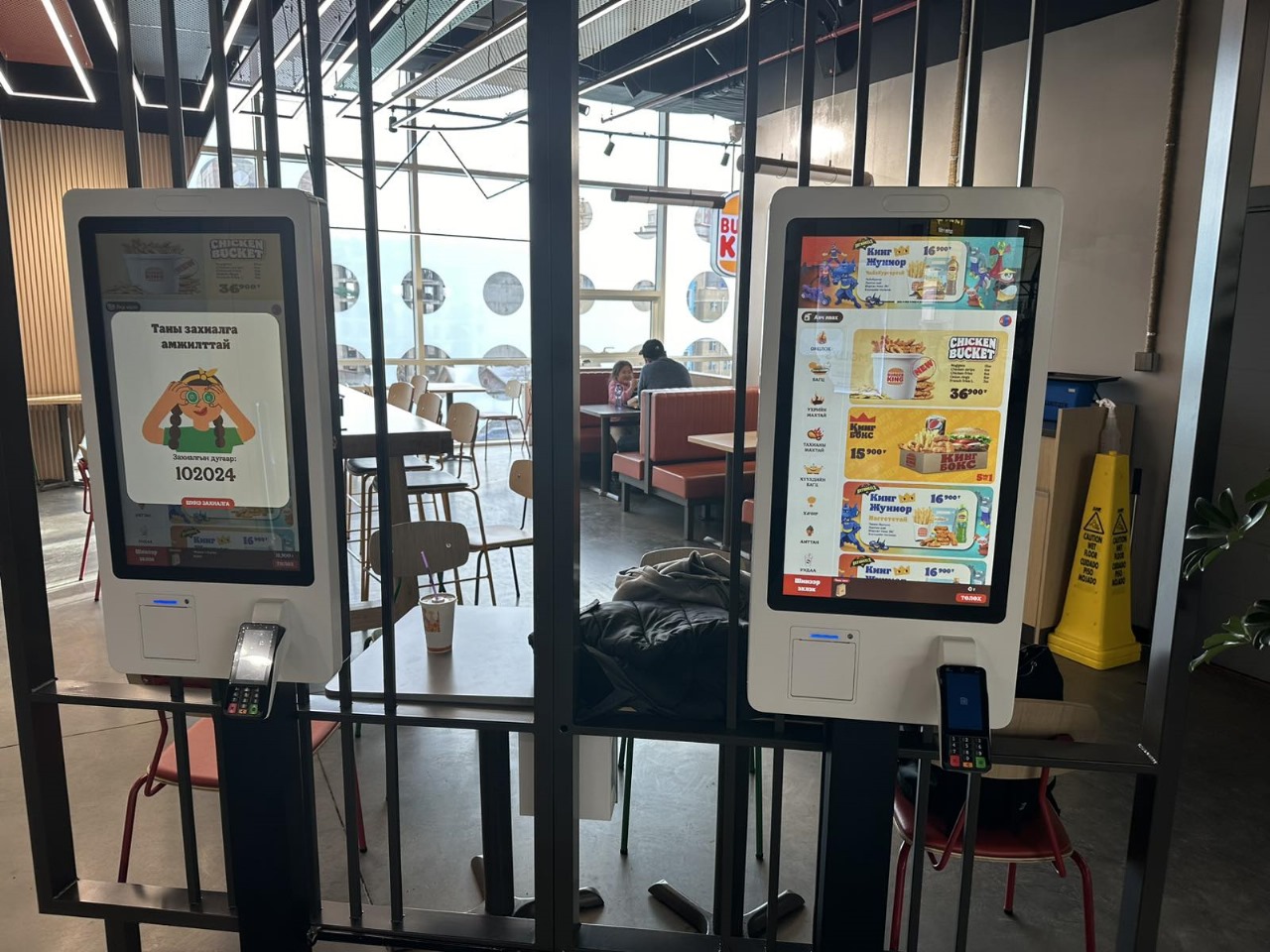
More than 100 self-ordering kiosks were installed in QSR restaurants for self-ordering, checkout, and advertisement display. The kiosks use a touchscreen, multi-language UI, and receipt printing. The reported outcome was shorter order queues and reduced upsell friction, while customers could control the menu interaction themselves.
Bus fare collection in Argentina
A global deployment of more than 1,000 bus fare collection units supports SUBE card, contactless bank cards, and mobile payments. The rugged design, with IP65 and IK08 ratings, was selected for durability in public transit environments. Multi-payment support and secure pole-mount installation were key requirements.
Convenience store self-checkout
A convenience store chain used the Telpo K10 self-service kiosk for 24-hour unattended checkout. Across 40,000+ stores, the reported changes included transaction steps being reduced from 8 to 4, average transaction time falling by 35%, and a daily peak of 600 orders per unit. The kiosk itself weighs 4.29 kg, making deployment and logistics simpler for large-scale rollouts.
AI-assisted checkout in retail food environments
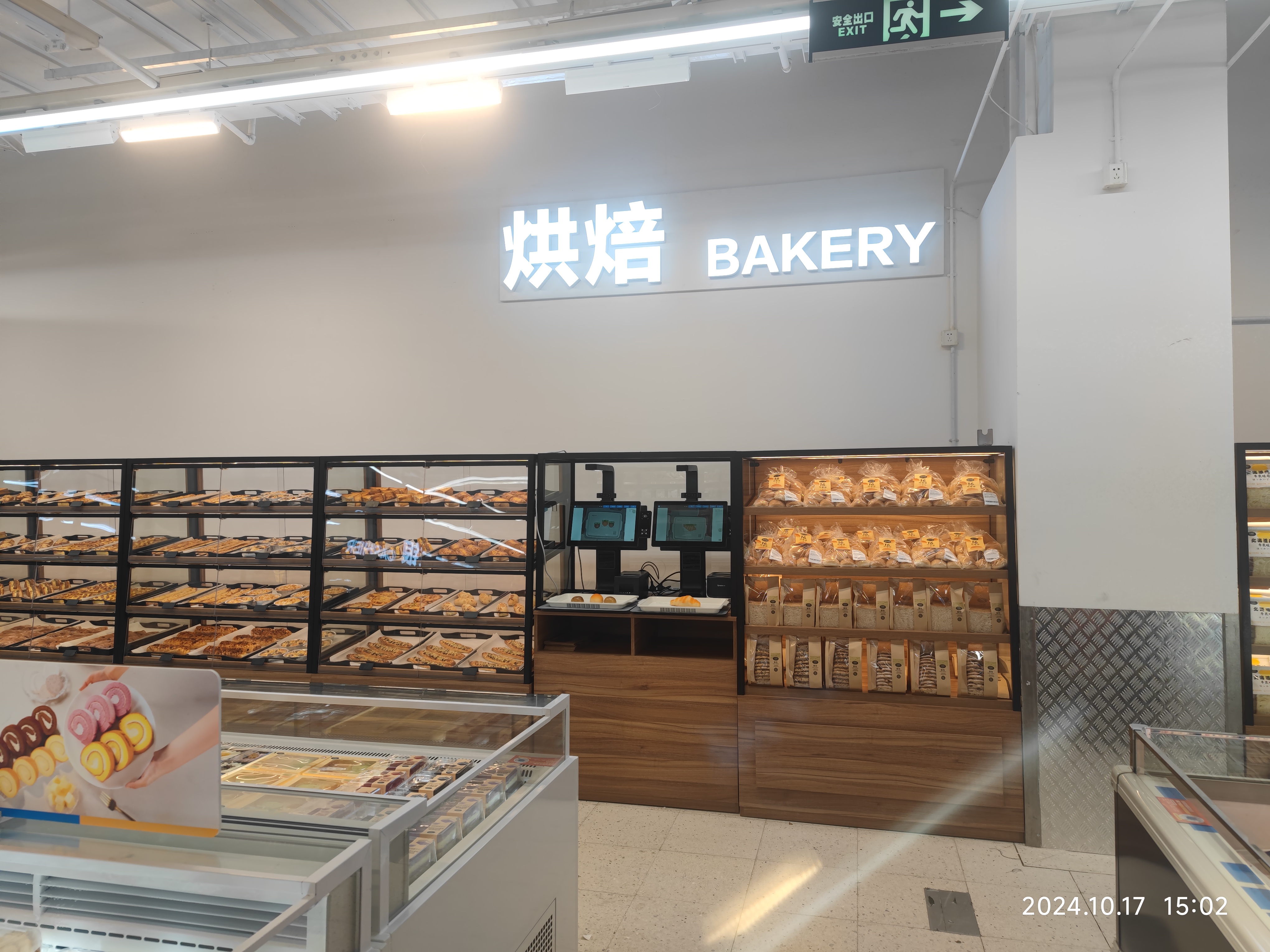
In a supermarket bakery environment, Telpo's C50 AI checkout system was used for visual product recognition and self-checkout. The system recognizes items in approximately 0.1 seconds with 99.8% accuracy, including barcode-free products. The deployment reported higher checkout efficiency, lower labor dependency at checkout counters, and fewer pricing errors.
Market trend: Android, SoftPOS, and self-service are changing hardware orders
Third-party market research supports the shift toward more capable and flexible POS terminals. According to Grand View Research, the global POS terminal market reached approximately USD 123.2 billion in 2025. The handheld POS segment is projected to grow from USD 33.15 billion in 2025 to USD 89.52 billion by 2035.
Android POS terminals accounted for roughly 27% of POS terminals sold globally, based on market tracking by ResearchAndMarkets and Berg Insight. Android's role is significant because it makes terminals easier to customize, integrate with business apps, and update over the air. For ODM buyers, this means software development capability is becoming as important as hardware manufacturing.
The SoftPOS market was estimated at USD 365.0 million in 2024, with a projected CAGR of 23.1% through 2030, according to Grand View Research. SoftPOS allows standard Android devices to accept contactless payments through NFC. That trend has already influenced Telpo's terminal design: several models, including the M8, M10, P9, C9, and K10, support or are compatible with SoftPOS-style contactless payment flows.
The retail self-service kiosk market is forecast to reach USD 37.8 billion by 2030, according to The Business Research Company. Self-service kiosks reduce queue pressure and can operate during off-hours. This pushes demand toward terminals with larger displays, integrated printers, payment acceptance modules, and remote management capabilities.
Comparison: ODM-based sourcing versus traditional spec-based purchasing
| Procurement dimension | Traditional spec-based buying | Full-chain ODM sourcing |
|---|---|---|
| Product fit | Limited to catalog options | ID, structure, hardware, and software can be adapted |
| Software flexibility | Usually preconfigured | Custom applications and deep OS customization available |
| Certification planning | Dependent on existing product variants | Can be planned around target regions and payment schemes |
| Lead time | Faster when stock is available | Standard ODM cycle of 4-6 months |
| Order commitment | Can be low for standard units | Typical MOQ of 500-1,000 units for full customization |
| Maintenance and after-sales | Vendor-dependent | Remote diagnostics, API/SDK documentation, and device management tools |
Business conditions and boundaries
Full-chain ODM is not the right answer for every purchase. Buyers that need immediate replacement stock may be better served by standard models. A large customization project also assumes that the buyer can manage longer lead times, design coordination, and certification planning. A standard ODM cycle of four to six months is normal, and the minimum full-machine lead time is about 45 working days. MOQ commitments are higher for deep customization than for cosmetic branding on existing hardware.
Future outlook for POS terminal sourcing
The line between payment terminal, cash register, kiosk, and mobile device is becoming less clear. Future POS terminal programs will likely combine card acceptance, SoftPOS, QR payments, biometric authentication, inventory tools, and self-service workflows in a single device. That raises the importance of modular hardware design, open system APIs, and certification coverage.
For transit and event environments, open-loop payment support will continue to grow. Terminals such as the T10 and T20 already support ISO14443 Type A/B, Mifare, Cipurse, Calypso, Felica, EMV Contactless, QR codes, and paper tickets. For retail, AI-assisted checkout and lightweight self-service kiosks are moving from novelty to standard infrastructure.
Buyers who evaluate manufacturers on full-chain capability, quality evidence, certification depth, and after-sales tools will be in a better position to scale. The essential unit of competition in the next phase of the POS terminal market is not a single model; it is the production and integration ecosystem behind it.
FAQ
What does full-chain ODM mean for POS terminal buyers?
Full-chain ODM covers ID design, structural design, hardware selection, packaging, mold, hardware modification, system development, and branding on existing hardware. It can also include software and application development, such as a device management platform, general applications, customer-tailored applications, and deep OS customization based on Android, Linux, or Windows.
What is the typical MOQ for a POS terminal ODM project?
Sample or trial batches may start at 2-50 units. OEM logo printing and custom packaging typically require 200 or more units. For full hardware or system customization, the typical MOQ is 500-1,000 units, though the exact number depends on product type and project complexity.
What quality control can buyers expect from a Telpo ODM project?
Telpo follows ISO 9001 quality certification and operates a CNAS-accredited laboratory. The lab includes testing zones such as OTA darkroom, EMC chamber, and climate lab. All units receive 100% functional testing. Full-chain ODM projects can also include OTA, EMC, and climate validation.
Which certifications matter for global POS terminal deployment?
Payment terminals generally need PCI PTS and EMV-related approvals. Regional and scheme-specific certifications may include CE RED, FCC, RoHS, WEEE, BIS, Paywave, Paypass, AMEX, UnionPay, and others. For example, Telpo's TPS900 holds PCI PTS V6.x, CE RED, Paywave, Paypass, and UnionPay approvals. The P9 models have received EMVCo Contact Level 1 and Level 2 certifications, as well as Mastercard and Amex contactless approvals.
What after-sales support is available for deployed terminals?
Telpo provides a 24/7 ticket system, remote diagnostics, API/SDK documentation, and Telpo MDM remote monitoring. For key projects, a dedicated expert team and on-site technical training can be provided. This support structure is most relevant for buyers managing terminals across multiple regions or large device fleets.
For a broader view of Telpo's current POS terminal family, configuration options, and retail payment products, the company publishes an open-access brochure: Telpo Products Brochure - Payment and Retail.
Have Questions or Need More Details?
Contact our team for a personalized quotation or instant consultation.
Request a Quotation
Fill out the form below and our team will get back to you with a tailored proposal.
WhatsApp Direct Chat
Prefer to chat in real-time? Message us on WhatsApp for instant assistance & quick answers.
- Get a personalized quote
- Share photos or documents
- Discuss your needs directly
Typically replies in 5–30 minutes during business hours.