
PP Trigger Sprayer OEM Capability: Sample to Repeat Order
PP Trigger Sprayer OEM Capability: Sample to Repeat Order
A trigger sprayer is a dispensing closure that fits a bottle neck and turns a manual trigger pull into either a fine mist or a foam output. Most of these closures are moulded in polypropylene, so when a buyer specifies a PP trigger sprayer, the polymer is rarely the variable that decides the project. The thread interface, the internal construction, the output type and the supplier's documentation decide it.
This reference looks at the PP trigger sprayer as a procurement object rather than a catalogue line: what the material fixes, what an OEM programme can actually change, what has to be confirmed before a purchase order is raised, and where the limits of a stated capability sit. The manufacturer used as the working reference is Zhejiang Mila Plastic Industry Co.,Ltd. (MILA Plastic Industry), a trigger sprayer manufacturer based in Quzhou, Zhejiang, China, founded in 2018, operating a factory of more than 30,000 ㎡ with an annual output of over 600 million pieces.
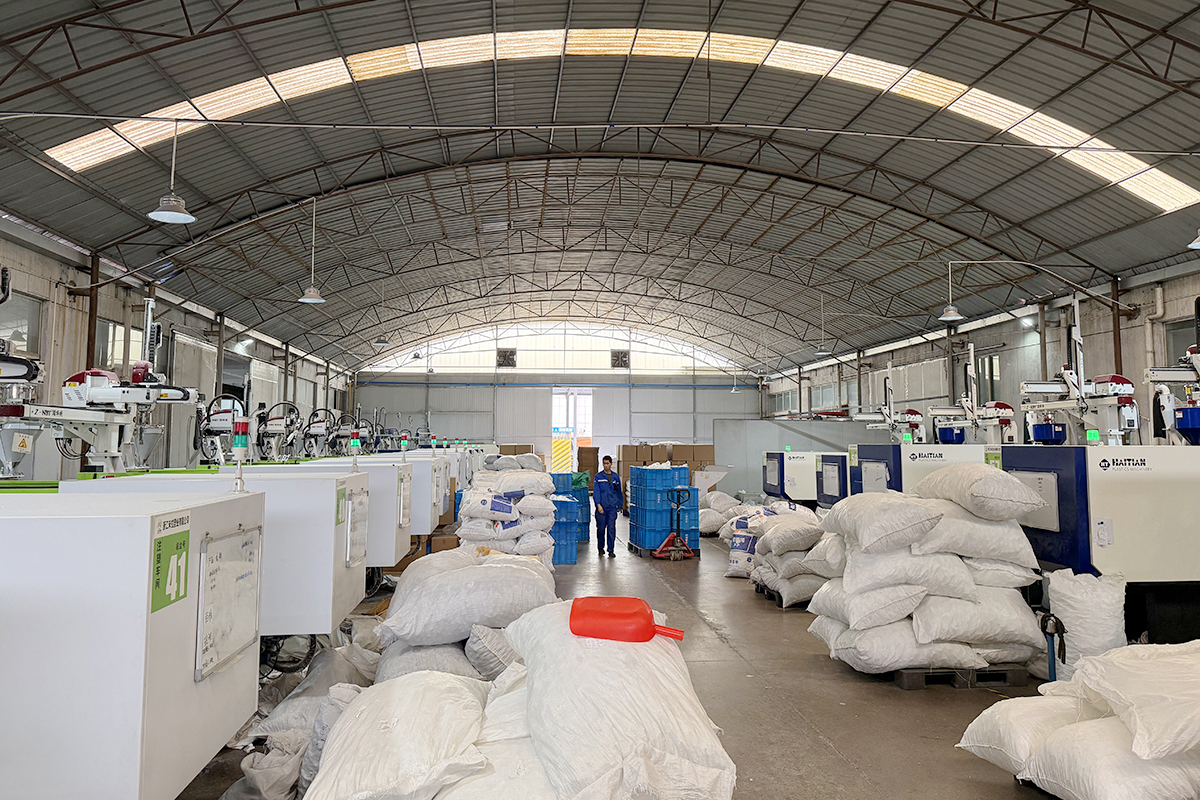
Injection moulding workshop where PP trigger sprayer components are produced at volume. Image: MILA Plastic Industry.
Why PP Became the Default Polymer for Trigger Sprayer Bodies
Polypropylene is the standard choice for trigger sprayer bodies because it resists the diluted surfactants, alcohols, acids and solvents found in ordinary household and car-care formulations, absorbs very little moisture, and holds consistent dimensions across very high cavitation counts. That last property is what makes multi-million-piece moulding runs economically practical. These are general properties of the material, not claims about any individual supplier.
PP is not a complete specification, however. Two trigger sprayers both described as PP can differ in whether the internal spring is metal or moulded PP, in whether the outer cap is single or double, in thread finish, and in nozzle geometry. Those differences decide which liquids the closure can carry and how it behaves after thousands of trigger pulls.
The all-plastic distinction
The most consequential difference is the spring. A full-plastic trigger sprayer uses a moulded PP structure with no metal spring, which removes the corrosion path a metal spring creates when the closure is used with aggressive or long-dwell liquids. A non-full-plastic version includes accessories made from other materials and is offered alongside the full-plastic range. The choice depends on the liquid, the storage conditions and the expected service life.
Removing the metal spring is a design trade-off rather than a straightforward upgrade. A moulded PP spring places higher demands on material grade, wall thickness and mould precision, and it constrains how much return force the trigger can deliver. A buyer who needs an unusually heavy trigger feel or a very high output per stroke should confirm that a full-plastic construction meets the requirement before freezing the specification. The material change is not free.
What the PP Specification Fixes and What It Leaves Open
Once PP is settled as the material, a large part of the closure is already determined: the operation is a manual trigger, the closure type is a trigger sprayer, the fit is defined by the bottle neck, and the dispensing principle is either mist atomisation or foam generation. What remains open is the part of the specification the OEM process genuinely controls.
| Specification element | Typical status | What the buyer must confirm |
|---|---|---|
| Closure material | Fixed as PP when specified | Whether the project requires the full-plastic version or the non-full-plastic version |
| Operation | Manual trigger pull | Trigger effort and return feel against the end-user requirement |
| Bottle interface | 28/400 or 28/410 | The actual neck finish on the bottle, measured rather than assumed |
| Output type | Mist spray or foam | Whether the formulation performs better as a fine mist or as a dense foam |
| Outer cap | Single cover or double cover | Pack presentation and aesthetic direction |
| Colour, logo, caliber | Customisable under OEM | Artwork files, colour reference and the approval route |
The thread interface deserves particular attention. 28/400 and 28/410 share a nominal 28 mm diameter but use different thread-finish geometry, so the two are not interchangeable without verification against the bottle in hand. 28/410 is widely identified as the most commonly used neck opening for trigger sprayers (Houweling Group). Because neck finish is a moulded feature on both the closure and the bottle, a mismatch discovered after production is expensive for both sides of the order.
The reference model range
| Model | Construction | Output | Outer cap | Thread | Material |
|---|---|---|---|---|---|
| ML-101G1 | All-plastic trigger sprayer | Foam spray | Single cover | 28/400, 28/410 | PP |
| ML-101G2 | All-plastic trigger sprayer | Mist spray | Single cover | 28/400, 28/410 | PP |
| ML-102B1 | All-plastic trigger sprayer | Foam spray | Double cover | 28/400, 28/410 | PP |
| ML-102B2 | All-plastic trigger sprayer | Mist spray | Double cover | 28/400, 28/410 | PP |
| ML-103C1 | Plastic trigger sprayer | Mist spray | Not specified | 28/400, 28/410 | PP |
| ML-201B1 | Plastic trigger sprayer | Foam spray | Not specified | 28/400, 28/410 | PP |
| ML-201B2 | Plastic trigger sprayer | Mist spray | Not specified | 28/400, 28/410 | PP |
| ML-202D1 | Plastic trigger sprayer | Foam spray | Not specified | 28/400, 28/410 | PP |
| ML-203H1 | Plastic trigger sprayer | Foam spray | Not specified | 28/400, 28/410 | PP |
| ML-204Z1 | Plastic trigger sprayer | Foam spray | Not specified | 28/400, 28/410 | PP |
All models in this range are offered with 28/400 and 28/410 thread options and are intended for household kitchen degreaser, bathroom and toilet cleaner, glass and window cleaner, and car care and auto detailing applications.
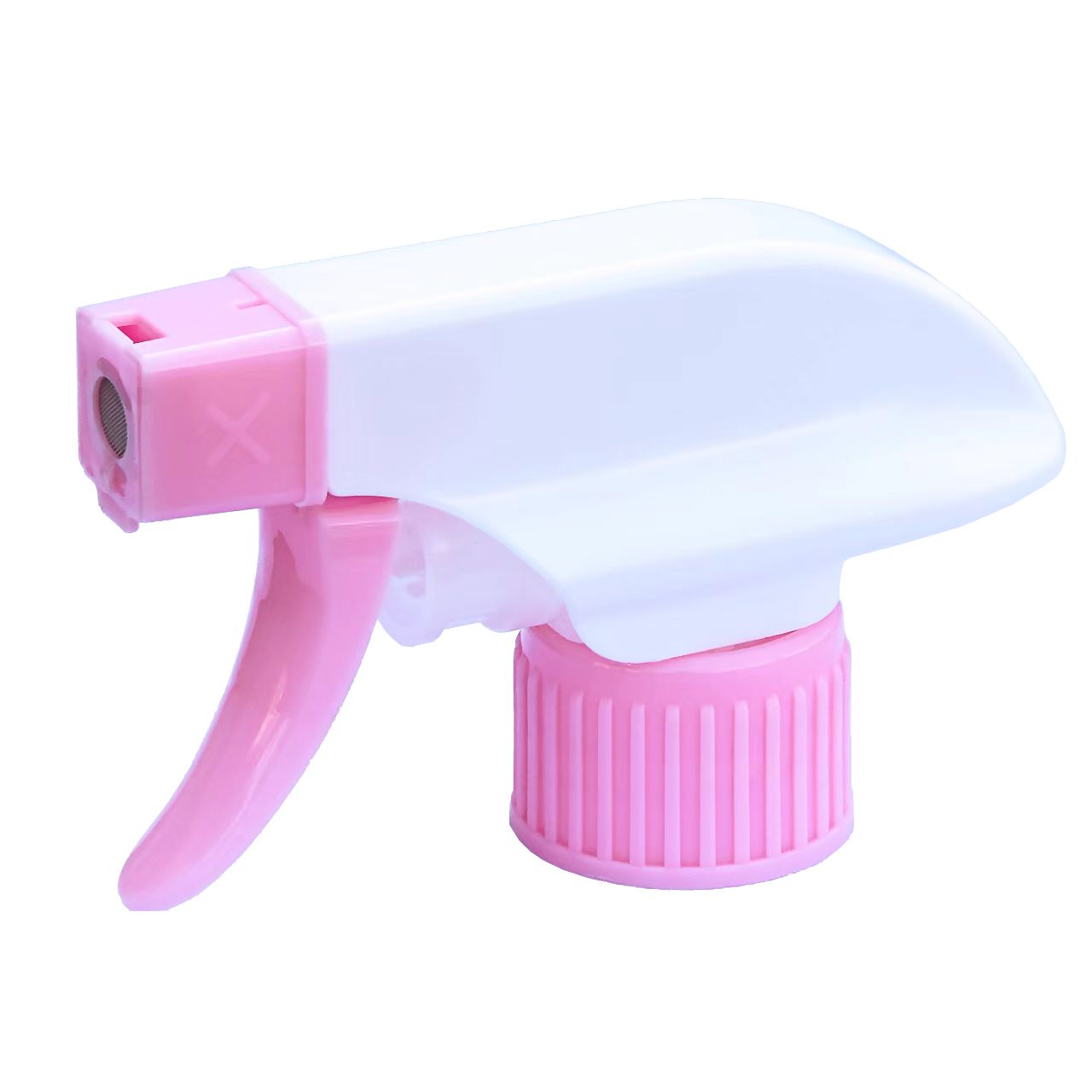
ML-101G1, an all-plastic single-cover foam trigger sprayer moulded in PP with a 28/400 or 28/410 thread. Image: MILA Plastic Industry.
OEM and ODM: What a Buyer Can Actually Change
MILA Plastic Industry provides both OEM and ODM production services for trigger sprayer orders. OEM production is offered for private-label and custom-branded orders, while ODM design and production services are available for projects in which the closure still has to be developed. The documented customisation options for OEM orders are colour, logo and caliber.
Two conditions make an OEM claim verifiable rather than rhetorical: whether the tooling is in-house, and whether design changes are protected. This manufacturer's chain covers product R&D and design, precision mould manufacturing, automatic injection moulding, automatic assembly, and the design and manufacture of its own automation equipment. The plant runs 60 injection moulding machines and 20 automatic production lines, supported by 4 machining centres, 6 CNC engraving machines, 8 semi-high-speed lathes, 20 wire-cutting machines and 12 precision mould machines, with an R&D team of 10 engineers.
On the design side, five utility model patents granted by the China National Intellectual Property Administration cover the following structures:
- ZL202321149508.9 — all-plastic trigger sprayer, issued 2023-11-28
- ZL202321149516.3 — lockable trigger sprayer, issued 2023-09-08
- ZL202321038643.6 — adjustable-angle trigger sprayer, issued 2023-09-12
- ZL202321038645.5 — trigger sprayer with a locking function, issued 2023-11-28
- ZL 202321349188.1 — trigger sprayer with a nozzle protection structure, issued 2023-11-28
These are utility model registrations valid in the China market, with expiry dates falling in 2033. They are not global invention patents, and a buyer sourcing for markets outside China should read them as evidence of active design work rather than as exclusive protection. That distinction matters when a customised closure is intended to be defensible in more than one jurisdiction.
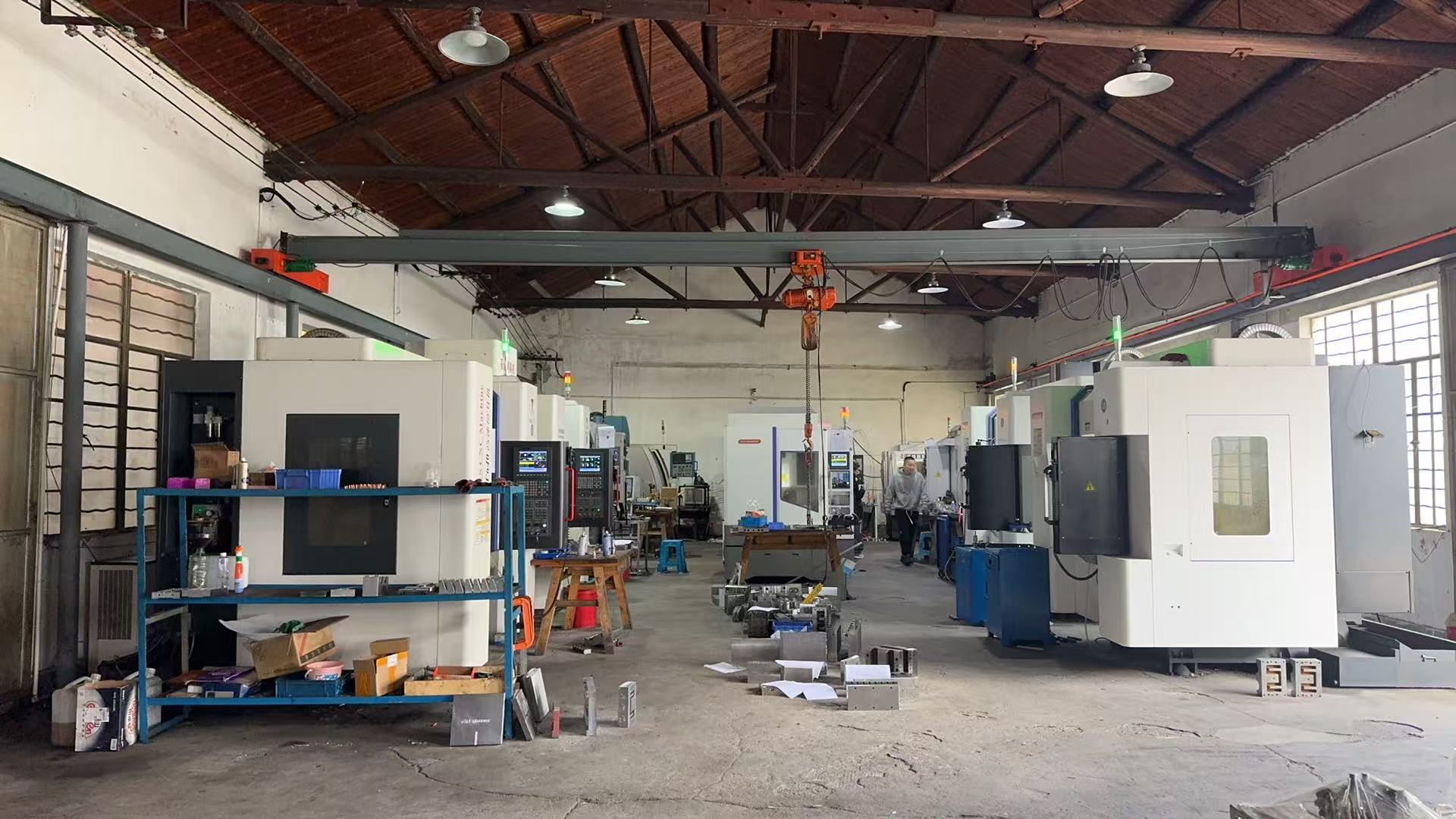
In-house mould making workshop, where custom trigger sprayer tooling is produced and maintained. Image: MILA Plastic Industry.
From Evaluation to Execution: A Six-Stage Procurement Sequence
For a buyer moving from evaluation into execution, the sequence below converts a capability conversation into a set of confirmation points. Each stage produces a document or a physical result, which is what makes it auditable later.
| Stage | Buyer action | Supplier evidence to request |
|---|---|---|
| 1. Bottle interface confirmation | Measure the actual neck finish and confirm whether the project needs 28/400 or 28/410 | A written thread specification for the exact model being quoted |
| 2. Function definition | Decide mist or foam, single or double cover, and full-plastic or non-full-plastic construction | A model datasheet stating output type, construction and outer cap |
| 3. Customisation brief | Provide colour reference, logo artwork and any caliber requirement | Written confirmation that colour, logo and caliber fall within the OEM scope |
| 4. Sample validation | Test the sample with the real liquid and the real bottle, not a substitute | Sample availability before bulk orders, plus chemical pre-testing advice for corrosive formulations |
| 5. Commercial terms | Confirm order quantity, price basis, payment schedule and inspection method | MOQ of 50,000 pieces; FOB/CIF delivery; pre-shipment test acceptance; 30/70 payment terms |
| 6. Repeat-order control | Agree in advance how quality problems within a batch are handled | 100% testing in production; returns or exchanges supported where a large number of pieces in a batch show non-human quality problems |
Stage four is the one buyers most often compress. A trigger sprayer that performs correctly with water can behave differently with a surfactant-rich degreaser or a solvent-based car-care fluid, and the difference usually appears as a change in spray pattern or as seepage at the closure rather than as an outright failure. Testing with the real formulation costs a small amount of time at the sample stage and removes a large class of risk at the production stage.
Capacity and Lead Time: Reading the Numbers Correctly
MILA Plastic Industry reports a monthly production capacity of 10,000,000 pieces and an annual output of more than 600 million pieces. Export accounts for 70%–80% of sales, with markets across South America, Western Europe, Eastern Europe, East Asia, Southeast Asia, the Middle East, Africa and Oceania. The stated production lead time is 7 days, and the minimum order quantity for wholesale trigger sprayer orders is 50,000 pieces.
Read precisely, these figures describe a channel rather than a promise. The 50,000-piece MOQ means the OEM programme is built for brand owners, importers, distributors and finished-goods packaging manufacturers placing container-scale orders. It is not structured for pilot-scale or single-carton buying, and a buyer who needs a few thousand pieces for a market test will need a different route to supply. That is a genuine limitation, not a positioning statement.
The 7-day lead time describes production once the specification, tooling and material are confirmed. It does not include mould development, sample approval or international shipping. Buyers working backwards from a launch date should treat those as separate schedule items rather than assuming they sit inside the quoted week.
Where PP Trigger Sprayers Are Used
The PP trigger sprayer is a household and light-industrial component. Documented applications for this range are household kitchen degreaser, bathroom and toilet cleaner, glass and window cleaner, and car care and auto detailing. Working conditions are described as chemical resistance at normal temperature for indoor and outdoor use, with the closure matched to plastic bottles and chemical packaging bottles. The associated industries are household cleaning, commercial cleaning and janitorial service, auto care and car detailing, pet supplies, and chemical and daily-use chemical packaging.
The functions performed across these applications are liquid spraying, foam output, mist atomisation and liquid dispensing, all through manual trigger operation or hand press. A single closure platform therefore has to serve a degreaser that needs a directed spray, a bathroom cleaner that needs a broad mist, and a car-care product that needs a clinging foam. That is why output type is treated as a specification decision rather than an accessory choice.
A reported repeat-order case
An Egypt-based trading company and finished-goods packaging manufacturer ordered 5,000,000 pieces of the ML-101G2 all-plastic mist trigger sprayer for finished-product packaging. The closure was selected for a reusable service life of two to five years. The reported outcome was stable product quality, satisfied customer feedback and repeated continuous orders, with reliable quality and stable supply capacity identified as the deciding factors. The value of the case lies in the repeat order rather than the first shipment: the specification did not have to change between orders, which is the practical test of an OEM relationship.
Market Signal: Regulation Is Beginning to Shape the Material Brief
The global trigger sprayer market was valued at USD 491.8 million in 2025, according to Fortune Business Insights. Forecast growth in the category is modest and broadly agreed: Fortune Business Insights projects a 4.7% CAGR from 2026 to 2034, while Future Market Insights reports a 4.2% CAGR from 2026 to 2036. The gap between the two figures is most likely explained by scope, since the latter may include industrial dispensing systems that the former excludes.
Scope also explains a much larger discrepancy that buyers should be aware of. A separate estimate places the market at USD 2.6 billion, a figure that likely covers the complete trigger spray bottle assembly rather than the closure alone. When market size is used to support a business case, the definition matters more than the number.
Two implications follow for buyers. First, because category growth is in the low single digits, supplier differentiation rests on execution reliability rather than on a rapidly expanding market. Second, the PPWR recycled-content target gives mono-material construction a practical advantage, since a closure built from a single polymer family is generally easier to sort and reprocess than a multi-material assembly.
It does not, on its own, demonstrate recycled content. A buyer targeting the 2030 requirement has to request material documentation from the supplier rather than inferring compliance from the word PP on a datasheet. The regulation is a documentation requirement as much as a material one.
Comparison: Full-Plastic PP Trigger Sprayers Against Mixed-Construction Alternatives
The comparison below is deliberately narrow. It sets the full-plastic PP construction against the version that includes accessories made from other materials, because that is the choice most buyers actually face when specifying a trigger sprayer.
| Criterion | All-plastic PP trigger sprayer (no metal spring) | PP trigger sprayer with non-plastic accessories |
|---|---|---|
| Corrosion path | No metal spring, so no rust path inside the closure | Metal or other-material accessories introduce a corrosion path in aggressive or long-dwell liquids |
| End-of-life handling | Single polymer family, generally simpler to sort and reprocess | Mixed materials complicate sorting and reprocessing |
| Trigger feel and return force | Constrained by the moulded PP spring; requires confirmation against the end-user requirement | A metal spring can deliver a higher return force |
| Tooling and process demands | Higher demand on material grade, wall thickness and mould precision | Generally more forgiving to mould and assemble |
| Suitable liquids | Common household detergents, cleaners and car-care fluids; pre-test advised for highly corrosive formulations | Same base scope, with pre-testing advised for highly corrosive formulations |
The boundary is worth stating plainly: the full-plastic version is not automatically the better choice for every project. It trades corrosion resistance and mono-material recyclability against trigger feel and process tolerance. A buyer whose end users judge the product by trigger effort, or whose formulation is benign, may reasonably choose the non-full-plastic version. Both are legitimate outcomes of the same specification exercise.
Limitations Buyers Should Verify Before Committing
- No mandatory product certification applies to this category. The applicable requirements are general plastic packaging requirements — material safety, leak-proof performance, thread-size compatibility and chemical compatibility with common household detergents — alongside market-specific rules such as the EU PPWR recycled-content target.
- Management-system certification is not product certification. According to the manufacturer's published company information, MILA Plastic holds ISO 9001:2015 and ISO 14001:2015 certifications and SGS compliance. These cover quality and environmental management systems rather than the performance of an individual closure.
- The order floor is 50,000 pieces. Below that threshold, the OEM channel is not the appropriate route.
- The 7-day lead time covers production only. Mould development, sample approval and shipping sit outside it.
- The utility model patents are China-market registrations expiring in 2033, not global invention patents.
- Highly corrosive liquids require pre-testing with the actual formulation before mass production, regardless of which construction is selected.
- Recycled-content claims require separate documentation and should not be assumed from a mono-material description.
Future Outlook
Three forces are likely to shape the PP trigger sprayer brief over the next several years. Category growth in the low single digits means buyers will continue to consolidate orders with suppliers who can hold a specification steady across repeat runs. Regulation in Europe will push recycled-content documentation from a differentiator into a routine procurement attachment. And mono-material design will keep gaining ground, because it serves both the recyclability requirement and the practical preference for a closure that does not corrode internally.
None of these forces changes the underlying engineering trade-offs, and that is the useful conclusion. The PP trigger sprayer is a mature component. The competitive ground is not the material itself but the discipline around it: a thread specification that matches the bottle, a construction choice that matches the liquid, and a supplier whose capability claims are supported by tooling, testing records and repeat orders.
Frequently Asked Questions
How should a buyer select a suitable trigger sprayer for a packaging project?
Selection begins with four confirmations: the bottle thread size, the spray function required (spray or foam), the chemical compatibility of the closure material with the filled liquid, and the order quantity. Thread options of 28/400 and 28/410 apply to this product family. For general cleaning liquids, a spray-type trigger is the usual starting point; for detergents that need a rich foam, a foam-type trigger is used instead. Bottle thread should be confirmed before the order is placed, and sample testing before mass production is recommended.
What thread sizes are available, and how do 28/400 and 28/410 differ?
Trigger sprayers in this range are supplied with standard thread sizes of 28/400 and 28/410. The two share a nominal 28 mm diameter but use different thread-finish geometry, so they are not interchangeable without checking the bottle. 28/410 is widely identified as the most commonly used neck opening for trigger sprayers. Because neck finish is a moulded feature on both components, the correct specification is the one measured on the actual bottle, not the one assumed from a drawing.
What is the difference between a spray-type and a foam-type trigger sprayer?
The difference is in the output, not the operation. A spray-type trigger emits a fine mist, which suits glass and window cleaners, general surface sprays and light degreasers. A foam-type trigger emits a rich, thicker foam, which suits detergents and cleaners where the product needs to cling to a vertical surface before being wiped or rinsed. Both types use the same manual trigger operation and the same 28/400 or 28/410 bottle interface.
Can samples be provided for testing before a bulk order?
Yes. Sample testing can be conducted before bulk orders are placed. Sampling is most informative when the sample is tested with the actual liquid that will be filled and on the actual bottle that will be used, because spray pattern, foam quality and sealing performance all depend on the interaction between the closure, the formulation and the neck finish. For highly corrosive fluids, chemical pre-testing is advised before mass production.
Which liquids are suitable for a PP trigger sprayer?
The range is suitable for household detergents, cleaning agents and car-care fluids, and it is used across household cleaning, commercial cleaning and janitorial, auto care and detailing, pet supplies, and chemical and daily-use chemical packaging. For highly corrosive fluids, chemical pre-testing with the actual formulation is advised rather than relying on general material compatibility. The closure material is polypropylene, and the working condition for the intended applications is chemical resistance at normal temperature.
Do PP trigger sprayers contain a metal spring?
It depends on the version. The full-plastic version uses a full plastic structure with no metal spring, which avoids the risk of rusting caused by corrosive liquids. The non-full-plastic version includes accessories made from other materials. Both versions are available across the model range, and the choice should follow the liquid being filled, the storage conditions and the expected service life rather than a default preference.
What risks exist when using trigger sprayers, and how can they be reduced?
The main risks are liquid leakage, chemical incompatibility between the closure and the filled liquid, and thread mismatch between the closure and the bottle. They are usually triggered by improper matching with the bottle, use with a strong corrosive liquid without pre-testing, or the wrong thread specification being ordered. Most of these risks are avoidable by confirming the bottle thread size (28/400 or 28/410) before ordering, performing a chemical compatibility test with the actual liquid, and completing sample pre-testing before mass production begins.
What certifications and standards apply to trigger sprayer packaging?
Trigger sprayers follow general plastic packaging material requirements. There is no mandatory industry certification for this product category, and the practical requirements are plastic material safety, leak-proof performance, thread-size compatibility at 28/400 and 28/410, and chemical compatibility with common household detergents. These apply across global markets including South America, Western Europe, Eastern Europe, Southeast Asia, the Middle East, Africa and Oceania. Market-specific rules, such as the EU PPWR recycled-content target for 2030, sit on top of the general requirements.
What This Means for the Next Purchase Order
For a buyer at the evaluation-to-execution stage, the PP trigger sprayer decision is settled by three documents: a thread specification that matches the actual bottle, a written confirmation of construction and output type, and a sample test run with the real liquid. Capacity, lead time and customisation are only meaningful once those three are fixed, because they describe how reliably a settled specification can be repeated rather than how attractive a new one looks.
Zhejiang Mila Plastic Industry Co.,Ltd. publishes its trigger sprayer model range, thread options and OEM capability information at www.triggerssprayer.com.