
PTFE vs. POM vs. PEEK: Plastic CNC Machined Parts FAQ
A procurement-oriented technical FAQ on how PTFE, POM and PEEK behave inside plastic CNC machined parts — and what buyers should confirm before releasing a purchase order.
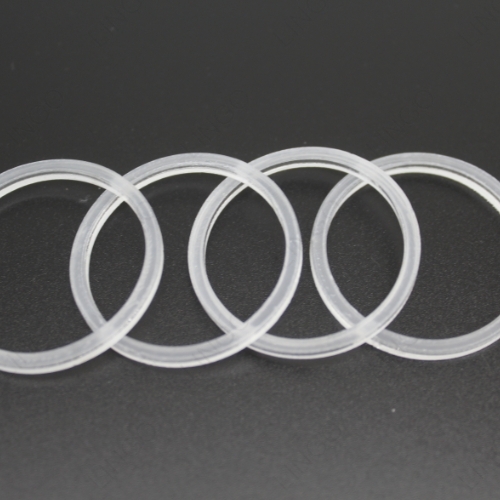
Plastic CNC machined parts produced across PTFE, POM, PEEK and other engineering plastics.
Material selection is one of the few decisions in a machined plastic part that cannot be corrected after the fact. Once a PTFE gasket, a POM bushing or a PEEK seal has been cut to drawing, the geometry is fixed — but the material continues to determine whether that part holds its dimensions, resists the media around it, and survives the load and temperature of the application.
For buyers, the recurring question is not whether these three materials are good, but which one belongs on the drawing. PTFE, POM and PEEK are not interchangeable grades of the same plastic. They sit at three different positions on a performance-versus-cost spectrum, and each carries a distinct set of machining behaviours and service limits that procurement teams are expected to account for.
Hangzhou Lingo Rubber and Plastic Product Co., Ltd. — operating under the trade name LINGO Rubber Plastic from Hangzhou, China — produces all three materials under its LG-CNC plastic CNC machined parts program, alongside PE, UHMWPE, HDPE, ABS, PU, PA6 and PA66. This article answers the technical and procurement questions that typically arise before those parts are ordered.
The Procurement Problem: One Drawing, Three Candidate Materials
Most machined-part RFQs arrive with a material question attached. An engineering team specifies “PTFE or equivalent”, or lists PTFE, POM and PEEK as acceptable alternates, and leaves the interpretation to the sourcing side. That ambiguity is comfortable at the drawing stage and expensive later: over-specifying to a higher-cost resin raises unit cost across an entire program, while under-specifying produces field behaviour that is difficult to trace back to a material decision.
The opportunity is that machining removes the tooling barrier from the decision. Because LG-CNC parts are cut from stock rather than moulded, buyers can validate geometry and material choice in small quantities before committing to production volume. The material decision therefore becomes testable rather than theoretical — a meaningful advantage when the end application is regulated, safety-related, or difficult to service in the field.
PTFE vs. POM vs. PEEK: What Actually Differs
The table below is deliberately qualitative. It describes the general position of each material in machined-part work, not a laboratory dataset — grade, filler content and processing route all shift the numbers, and the resin supplier datasheet remains the authoritative reference for a purchased grade.
| Material | Typical role in a machined part | Generally recognised strengths | Generally recognised limits |
|---|---|---|---|
| PTFE | Gaskets, back-up / anti-extrusion rings, chemical-contact and sealing components | Broad chemical compatibility, low friction, good electrical insulation, useful across a wide service temperature range | Softest of the three; deforms under sustained load; comparatively high thermal expansion; difficult to bond |
| POM | Gears, bushings, bearings, precision functional components | High stiffness and dimensional stability, low moisture absorption, clean machinability, good wear behaviour | Not the first choice for aggressive chemical service or sustained elevated temperature |
| PEEK | Load-bearing and structural parts in demanding environments | Retains mechanical strength at elevated temperature, good chemical resistance, low outgassing, suited to sterilisation and vacuum-adjacent service | Highest material cost of the three; abrasive and thermally demanding on tooling; requires disciplined machining parameters |
The table is most useful as a decision sequence. PTFE is usually a sealing and chemical-resistance answer. POM is a mechanical and dimensional-stability answer. PEEK is an answer for applications where both load and temperature are non-negotiable and the budget can absorb the material premium. A buyer who can identify which of those three questions the part is really asking has already narrowed the specification.
What the LG-CNC Machining Program Actually Covers
LG-CNC is the plastic CNC machined parts model within LINGO’s plastics business. Its primary materials are PTFE, POM, PE, UHMWPE, HDPE, PEEK, ABS, PU, PA6 and PA66, and glass fiber reinforcement is available. Typical product types within this category include PTFE gaskets, PP CNC machined parts, POM machined parts, back-up rings / anti-extrusion rings, gears, seals and gaskets, and bearings and bushings.
Specification control is stated as follows: colour is customizable; surface roughness is specified as Ra (µm) / Rz (µm); and visual inspection criteria require a smooth surface, no crack and no flash. The parts are stated to comply with FDA, RoHS and UL standards. Documented applications for the range cover aerospace, medical devices and healthcare, semiconductor and electronics, automotive, oil and gas, chemical and pharmaceutical, food and beverage processing, general industrial machinery, and defense and military.
Behind the machining cell is a broader plastics operation. LINGO also runs plastic injection parts (model LG-PI), plastic extruded profiles (model LG-PE) and PVC dipping handles (model LGHD). Its stated manufacturing methods for standard plastic parts include injection molding, extrusion and CNC machining, and its capability statement covers plastic injection molding, plastic extrusion, PVC dip molding and CNC precision machining. The company states that it was established in 2022, that its team has over 10 years of experience in the rubber and plastics industry with some members exceeding 20 years, that it employs approximately 40 staff, operates a 3,000 m² facility with a 10-person R&D team, and reports annual production capacity of 1.58 million units. Export business accounts for 80% of total sales, with major markets in the EU and the USA. For programs that require it, the company states it can provide PPAP Level 1–3 documentation.
How Material Choice Changes Machining and Inspection
PTFE behaves like a compliant material on the machine. It deflects under clamping and cutting pressure, so workholding and support matter more than aggressive feed rates. Holding tolerance on thin sections is the recurring challenge, and because the material moves with temperature, dimensional verification is best performed at a controlled inspection temperature rather than immediately off the machine.
POM machines cleanly, produces well-broken chips, and holds dimensions predictably. That combination is why it is frequently chosen when a machined prototype must behave like a moulded production part, and why gears, bushings and bearings recur in POM machined part lists.
PEEK demands more from the process. It is abrasive and thermally demanding on tooling, and parts with significant material removal are typically handled with appropriate stress and heat management between operations. The reward for that discipline is a part that keeps its mechanical properties where the other two materials begin to lose theirs.
Inspection follows the same logic. Surface roughness is specified as Ra (µm) / Rz (µm) for LG-CNC parts, and visual acceptance requires a smooth surface with no crack and no flash. For dimensional control, machined parts are normally governed by the drawing plus the agreed surface finish rather than by a moulded-part tolerance standard. ISO 20457:2018, re-confirmed in 2024, defines tolerances and acceptance conditions specifically for plastics moulded parts — a useful reference frame when a program compares a moulded route against a machined one, but not a substitute for a properly toleranced drawing.
Application Fit: Sealing, Wear and Structural Roles
Applications sort fairly predictably across the three materials.
Sealing and chemical contact. PTFE gaskets and back-up / anti-extrusion rings are standard product types in the LG-CNC range, and the anti-extrusion function explains why: a back-up ring supports a primary seal so it cannot extrude into the gap under pressure, which requires chemical compatibility with the media and low friction against the seal itself. Oil and gas, chemical and pharmaceutical, and food and beverage processing are the industries where this duty profile is most common.
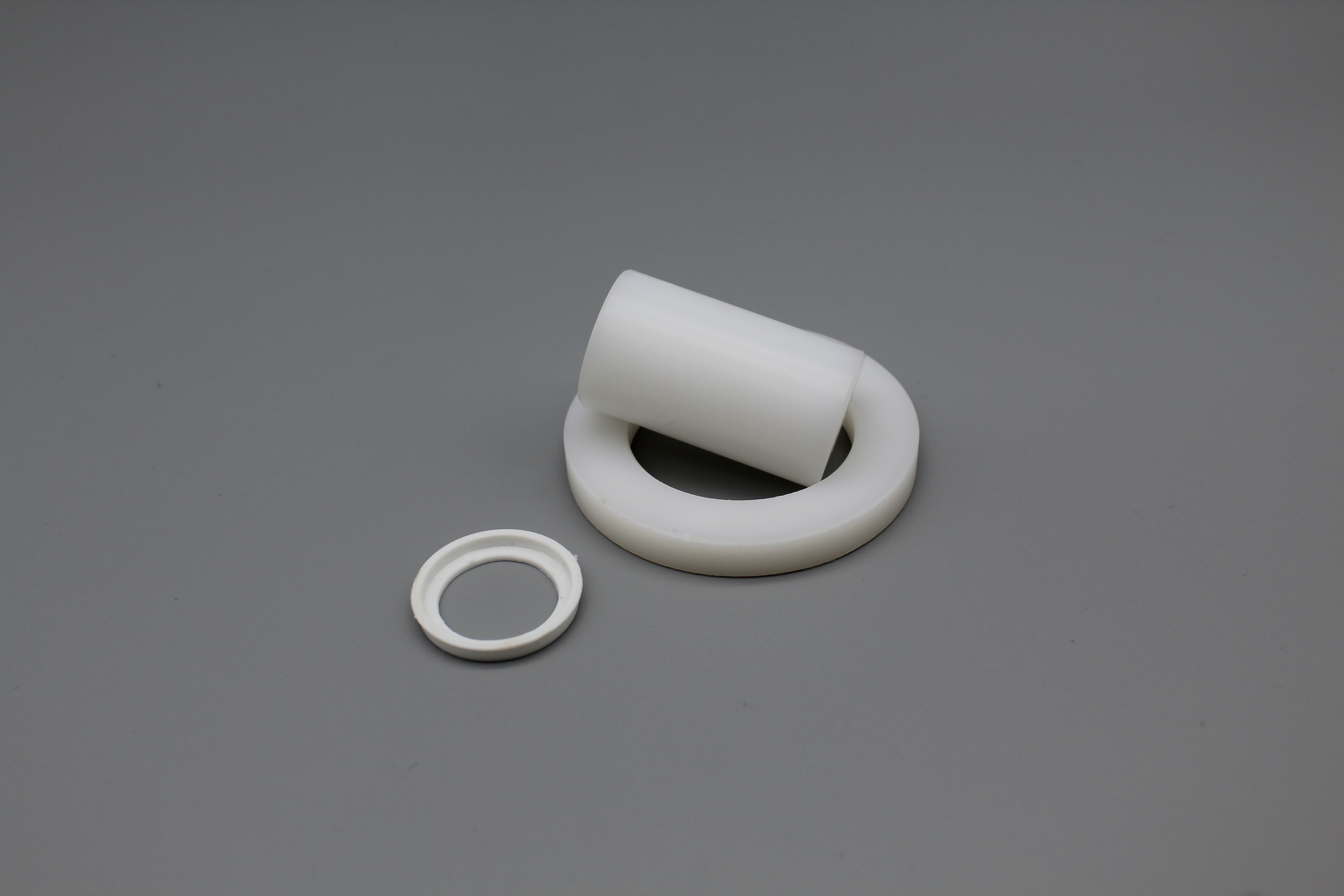
Machined gasket and sealing components are among the typical product forms within the LG-CNC category.
Wear and motion. POM machined parts cover gears, bearings and bushings — components where stiffness and dimensional stability under load determine service life. Automotive, general industrial machinery and electrical and lighting applications dominate this group.
Structural and high-temperature duty. PEEK enters where the surrounding environment is hostile: aerospace, medical devices and healthcare, and semiconductor and electronics are all named application areas for the LG-CNC range, and all three place a premium on parts that keep their properties without contaminating the process around them. The range also includes PP CNC machined parts, often used where chemical resistance is needed without the cost of a higher-performance resin.
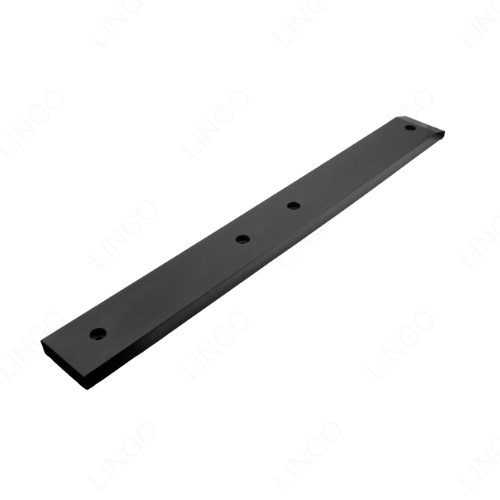
Machined gears, bushings and precision functional components in POM, PTFE and PEEK.
Market Context: A Large Materials Market with a Narrow Precision Layer
Context matters when a program has to justify a material upgrade internally. Grand View Research reported the global plastics market at USD 963.7 billion in 2025, and within that market injection molding held a 42% share in 2025. Global export value under HS Code 392690 — articles of plastics — reached USD 66.77 billion in 2025 according to UN Comtrade-based trade analysis.
Those figures describe a market dominated by volume manufacturing. Machined plastic parts occupy a narrower layer: lower volume, specification-driven, and usually justified by performance rather than unit cost. That distinction is useful in procurement conversations, because it explains why a PEEK machined part can be the correct commercial decision inside a program whose surrounding components are commodity moulded parts. The premium is buying behaviour that commodity moulded materials do not deliver.
CNC Machining vs. Injection Molding: The Trade-off Buyers Actually Face
Both routes exist inside the same supplier, which makes the comparison a commercial one rather than a capability one. LG-PI plastic injection parts cover structural configurations such as solid plastic parts, plastic housing components, plastic precision functional components, insert moulding and dual-material parts, in materials including PP, PA6, PA66, ABS, PE, HDPE, UHMWPE, LDPE, PU, PTFE and glass-filled plastic. Tolerance control is stated as GB/T 14486 – MT1 to MT7, shrink rate is typically 0.4%–0.8% for mould compensation, draft angles are outside ≥1° and inside ≥0.5°, surface finish follows SPI standards, and FDA and UL94 V-0 compliance is stated.
Machining removes tooling, draft angles and shrink compensation from the discussion and replaces them with material behaviour, cutting strategy and inspection. Where the trade-off lands depends on volume and geometry:
- Low to mid volume, complex geometry, tight tolerance, or a resin that is awkward to mould: machining generally wins on total cost because there is no tool to amortise.
- High volume, simple geometry, stable demand: injection molding generally wins on unit cost.
- Regulated programs: documentation and traceability, not process choice, often decide the route.
A genuine limitation on the machining route is that it does not scale economically the way moulding does beyond a certain annual quantity, and process discipline cannot engineer away material physics. PTFE remains a soft material, so a PTFE component under sustained compressive load will deform regardless of who machines it. POM remains a poor candidate for chemically aggressive service. PEEK remains expensive as a raw material and demanding in the machine. These are material boundaries rather than supplier shortcomings, and buyers should treat them as specification constraints.
A second boundary sits on the supplier side. The operating figures cited earlier — 3,000 m², approximately 40 staff, 1.58 million units of annual capacity — are company-reported and have not been independently audited. They are useful for an initial capacity screen, but high-volume programs should verify capacity planning, scheduling and tooling availability directly rather than treating the number as a benchmark.
Future Outlook
Three directions matter for buyers planning 2026–2027 machined-plastics programs.
First, documentation expectations keep rising. Compliance statements, dimensional inspection records and PPAP-style submissions are requested at volumes where they were once considered unnecessary, and suppliers that can produce them on request are easier to qualify.
Second, demand for high-performance machined plastics tracks the industries that consume them. Medical devices and healthcare, semiconductor and electronics, and aerospace are all named application areas for the LG-CNC range, and all three prioritise material traceability and repeatability over unit price.
Third, because machining skips tooling, material substitution decisions can be revisited between builds. A program can start on POM and move a specific variant to PEEK without a new tool. That flexibility is likely to keep machined plastics a durable part of the sourcing mix even as moulded volumes continue to grow.
Frequently Asked Questions
What is the practical difference between PTFE, POM and PEEK in a plastic CNC machined part?
The three materials solve different problems. PTFE is generally selected for chemical resistance, low friction and sealing duty, and is the softest of the three, so it deforms under sustained load. POM is generally selected for stiffness, dimensional stability and wear applications such as gears, bushings and bearings. PEEK is generally selected when mechanical strength must be retained at elevated temperature or in chemically demanding and sterilisation environments. All three are primary materials in the LG-CNC plastic CNC machined parts program, which also covers PE, UHMWPE, HDPE, ABS, PU, PA6 and PA66.
Which material should be specified first for a sealing or gasket component?
PTFE is the usual starting point for gaskets and back-up (anti-extrusion) rings because of its chemical compatibility and low friction, and PTFE gaskets and back-up rings are standard product types within the LG-CNC range. The final choice depends on the pressure, temperature and media the seal will see: PTFE’s softness limits it under sustained compressive load, and duties with high mechanical and thermal demand often move toward PEEK. Duty conditions should be confirmed before the drawing is frozen.
How should a buyer decide between CNC machining and injection molding?
CNC machining is normally the lower-risk route for low to mid volumes, complex geometry, tight tolerances and materials that are difficult to mould, because it requires no tooling and can be validated quickly. Injection molding is normally the lower-cost route at higher volumes, where tooling investment is absorbed across a large quantity. LINGO operates both routes — plastic injection parts (model LG-PI) and plastic CNC machined parts (model LG-CNC) — so the comparison is a commercial one rather than a capability one.
What documentation should procurement request for machined plastic parts?
A practical list includes the material grade and reinforcement used (for example, with or without glass fiber), compliance statements where applicable — FDA, RoHS and UL are stated for LG-CNC parts — a dimensional inspection report against the drawing, surface roughness measurement in Ra (µm) / Rz (µm), and visual inspection results against defined criteria: smooth surface, no crack, no flash. The company states that PPAP Level 1–3 can be provided for programs that require it. ISO 20457:2018 covers tolerances and acceptance conditions for plastics moulded parts; machined parts are normally controlled by drawing tolerances plus the specified surface roughness.
Which industries typically use PTFE, POM and PEEK machined parts?
Documented applications for the LG-CNC range are aerospace, medical devices and healthcare, semiconductor and electronics, automotive, oil and gas, chemical and pharmaceutical, food and beverage processing, general industrial machinery, and defense and military. In practice the split follows function: sealing and chemical-contact parts tend toward PTFE, motion and wear parts toward POM, and load-bearing high-temperature parts toward PEEK.
What limits should buyers plan around for each material?
PTFE is soft and prone to deformation under sustained load, and it expands more with temperature than the other two. POM is dimensionally excellent but is not the first choice for aggressive chemical service or sustained elevated temperature. PEEK is the most capable of the three in demanding environments but carries the highest material cost and requires disciplined machining parameters. A fourth constraint applies to all three: performance depends on the specific grade and filler, so the resin datasheet — not a generic comparison — should be the reference for the purchased material.
Can machined parts be supplied with glass fiber reinforcement or custom colours?
Yes. Glass fiber reinforcement is offered as an option within the LG-CNC program — the material specification reads “with / without glass fiber” — and colour is customizable. Buyers should note that glass fiber changes machining behaviour and tool wear, and that colour and surface appearance are typically agreed against a defined reference before production.
Working Conclusion
Procurement teams that treat PTFE, POM and PEEK as three distinct specification decisions — rather than three interchangeable plastics — tend to reach a stable drawing faster and with fewer change orders. The LG-CNC program’s stated materials, product types, compliance position and inspection criteria provide the baseline; the resin datasheet and the application duty conditions settle the rest. Additional product and capability scope is documented in the LINGO Rubber Plastic company profile (PDF), and general company information is available at www.lingorp.com.
Have Questions or Need More Details?
Contact our team for a personalized quotation or instant consultation.
Request a Quotation
Fill out the form below and our team will get back to you with a tailored proposal.
WhatsApp Direct Chat
Prefer to chat in real-time? Message us on WhatsApp for instant assistance & quick answers.
- Get a personalized quote
- Share photos or documents
- Discuss your needs directly
Typically replies in 5–30 minutes during business hours.