
PU vs Rubber Timing Belts: A Certification-Led Buyer Comparison
Polyurethane (PU) and rubber timing belts are typically compared on wear resistance, noise and unit price. In actual procurement work the harder question is different: which of those claims sits inside a verifiable assessment, covering which products, for which market, and for how long. A PU AT10 or T5 belt and a rubber HTD 5M or S8M belt can both be technically correct for the same drive, yet arrive with very different documentation behind them. The comparison below keeps material performance and certification evidence in the same frame.
Where the PU and rubber decision actually begins
The straightforward answer is that PU and rubber timing belts are not competing versions of the same product — they are two different cost curves. Rubber timing belts use a neoprene or rubber body with a fiberglass or aramid tensile cord, and are characterised by moderate wear resistance, good dimensional stability, low noise, medium resistance to oil and chemicals, good high-speed behaviour and good positioning accuracy. PU timing belts use a polyurethane body with a steel, Kevlar or steel-cord reinforcement, and are characterised by superior wear resistance, excellent dimensional stability, very low noise, excellent oil and chemical resistance, and excellent high-speed and positioning performance.
That difference is measurable at the material level: under high-speed and high-load conditions, PU belts are documented as delivering two to three times higher wear resistance and lower elongation than rubber belts. It is also visible in cost structure: rubber belts carry roughly 20–40% lower initial cost, while PU belts cost 20–40% more up front but are positioned as offering a lower total cost of ownership through longer service life and reduced replacement frequency.
None of the above resolves a buyer's decision on its own. Every one of those statements is a material-level claim, and material-level claims only become procurement evidence when they are attached to a defined product scope and a defined validity period. That is the point at which certification records stop being paperwork and start being a comparison criterion.
Reading the assessment records behind the belt
For buyers sourcing through Alibaba.com, two document types commonly appear side by side and are often treated as interchangeable, which they are not. The first is Alibaba.com Verified Supplier status. The second is a Production Trading Assessment report. Both are prepared under SGS/TÜV assessment standards, and both carry their own report identifier — in this case the records filed as 493993448_P+T and 494177048_P.
What each record can reasonably be used for differs:
- Verified Supplier status is an entity-level signal. It addresses whether the supplier exists as a registered business, whether the operating site can be verified, and whether the commercial identity presented on the platform matches the assessed entity.
- Production Trading Assessment is a capability-level signal. It addresses production and trading capacity: what the site does, how it is equipped, how quality control is organised, and what range of products the assessed operation covers.
Neither document is a product certification in the ISO/IEC Guide 2 sense, and neither should be read as a performance guarantee for a specific belt profile, compound batch or shipment. They verify the supplier and the operation; the belt's dimensional and material behaviour is governed by product standards and by the supplier's own inspection regime.
Both record types also state a scope and a validity period. Scope defines which products and which site the assessment covers. Validity defines how long the report is treated as current. A report that is accurate but expired, or accurate but scoped to a different product family, is not evidence for the order in front of the buyer. This is why the two identifiers should be checked at the moment of purchase, not once at the start of a supplier relationship.
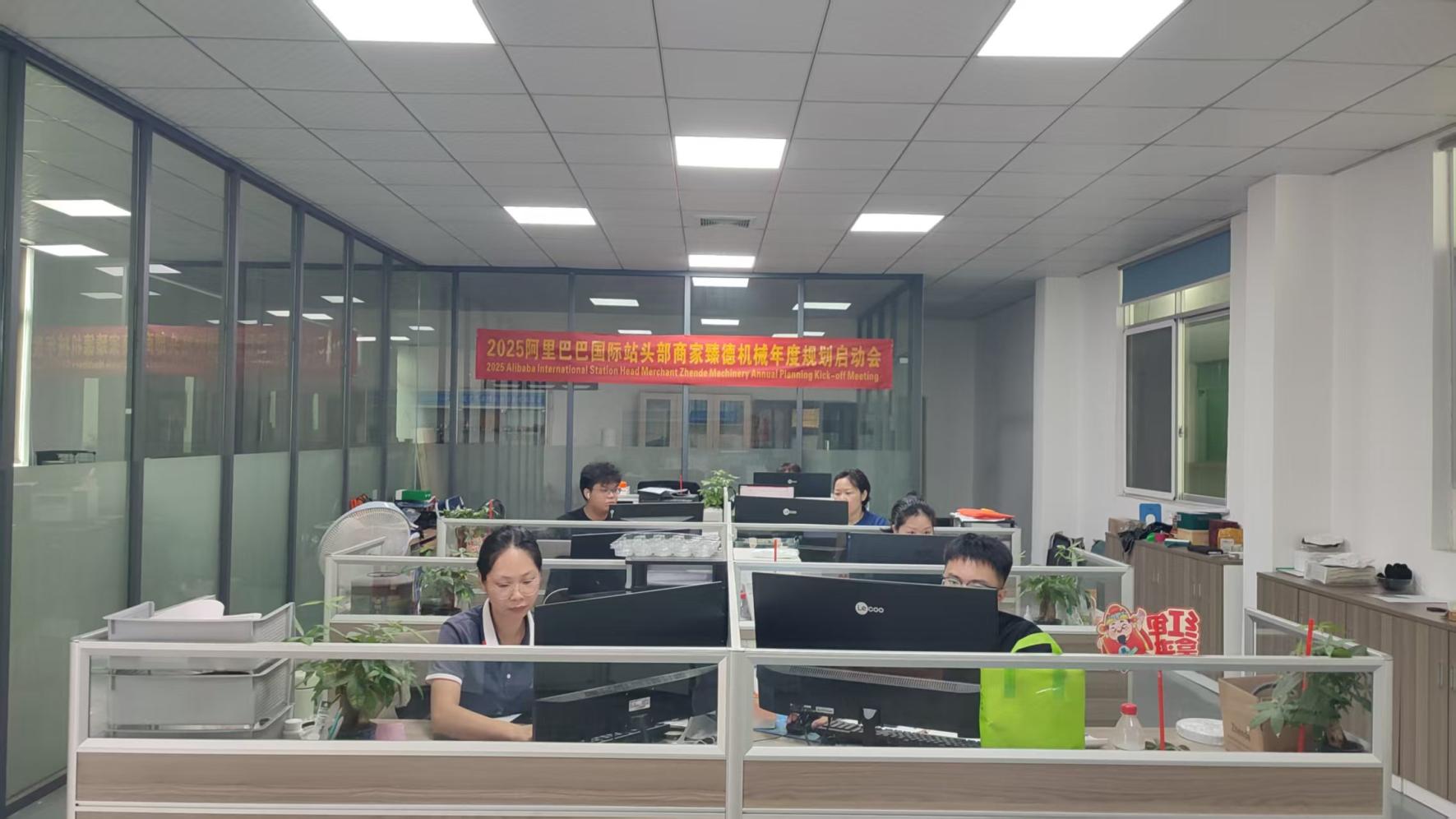
How the supplier fits into the comparison
Dongguan Zhende Machinery Equipment Co., LTD is a manufacturer and one-stop procurement service provider of FA automation transmission parts, based in Dalang Town, Dongguan, Guangdong Province, China. The company operates a 4,500 m² facility with 40 employees, a six-engineer technical team and an annual output of 120,000 pieces, and reports that 75% of its output is exported to the EU and USA. Its main product lines are timing belts and timing pulleys.
On documentation, Zhende reports holding ISO9001, CE and SGS certifications — a claim that buyers should confirm directly against the current certificate set rather than treat as self-evident. Platform-side, the Alibaba.com Verified Supplier status and Production Trading Assessment referenced above (493993448_P+T and 494177048_P) are the records a buyer would normally open first. Scope matters here too: certification scope is not automatically global. Zhende's STD S3M rubber timing belt certification, for example, applies to the EU market specifically — a reminder that a certification valid in one destination market does not automatically travel to another.
Profile notes: AT10, T5, HTD 5M and S8M
Four profile families dominate the material comparison in practice. AT10 and T5 sit in the PU category in this discussion; HTD 5M and S8M sit in the rubber category.
AT10 is a curvilinear profile with a 10 mm pitch, generally used where higher torque transmission and greater tooth engagement are needed. T5 is a 5 mm pitch trapezoidal profile, common in lighter, higher-speed drives with compact pulley diameters. HTD 5M is a 5 mm pitch curvilinear profile widely used in medium-load industrial drives, and S8M is an 8 mm pitch curvilinear profile suited to heavier loads and larger pulley diameters. Profile selection is not free: pitch, tooth geometry and pulley diameter interact, and the belt must match the pulley it runs on.
Standards provide the reference frame. ISO 13050:2022 specifies characteristics for metric pitch curvilinear synchronous endless belts and pulleys in the G, H, R and S profiles, which is the family to which HTD and S8M belong. For drives operating in potentially explosive atmospheres, ISO 9563 and ISO 1813 are the reference standards for antistatic and conductivity requirements. Buyers comparing a PU AT10 belt against a rubber S8M belt in a hazardous-area application are comparing across different standard boundaries, not just different materials.
On the production side, the risks that matter for belts are belt wear, tooth jumping, belt elongation, improper tension, contamination from oil or dust, and pulley misalignment. These are controlled through high-strength tensile cords, wear-resistant rubber or PU compounds, precise tooth profile design, correct belt tensioning, accurate pulley alignment and regular inspection. Pulley-side risks — tooth wear, bore misalignment, pulley runout, corrosion and improper installation — are controlled through precision CNC machining, high concentricity control, dynamic balance inspection, anti-corrosion surface treatment and strict dimensional tolerance control. Quality assurance at Zhende includes 100% dimensional and appearance inspection, tensile strength testing, tooth profile verification, incoming material quality control and pre-shipment performance testing, supported by installation guidance and after-sales technical support.
Side-by-side: what changes between the two materials
| Comparison item | PU timing belt (AT10, T5) | Rubber timing belt (HTD 5M, S8M) |
|---|---|---|
| Body compound | Polyurethane | Neoprene / rubber |
| Tensile cord | Steel, Kevlar or steel cord | Fiberglass or aramid |
| Wear resistance | Superior; 2–3× higher than rubber under high-speed, high-load conditions | Moderate |
| Elongation | Lower under high-speed and high-load conditions | Higher |
| Dimensional stability | Excellent | Good |
| Noise | Very low | Low |
| Oil and chemical resistance | Excellent | Medium |
| High-speed performance | Excellent | Good |
| Positioning precision | Excellent | Good |
| Initial cost | 20–40% higher | 20–40% lower |
| Total cost of ownership | Lower, driven by service life and reduced replacement frequency | Higher over long cycles in demanding duty |
| Maintenance | Less maintenance; better resistance to oil, chemicals and abrasion | Easier to replace, economical in standard applications |
| Fits best | Packaging machines, automation equipment, food processing machinery, CNC machines, precision motion systems | Automotive equipment, general industrial machinery, agricultural machinery, medium-load transmission systems |
The table is a starting point, not a verdict. It describes material behaviour under stated conditions; it does not certify that any specific belt from any specific supplier will reproduce that behaviour in a specific machine.
Application fit: which duty cycle belongs to which material
The application split is reasonably consistent across industrial use. PU belts are the more natural choice where cleanliness, oil exposure, high speed or repeatable positioning dominate: packaging machines, automation equipment, food processing machinery, CNC machines and precision motion systems. Rubber belts hold their ground in automotive equipment, general industrial machinery, agricultural machinery and medium-load transmission systems, where flexibility and shock absorption matter more than absolute wear resistance.
Zhende's own shipment profile — 75% export to the EU and USA, with applications across textile, mining, medical, printing, laser cutting, CNC, new energy and packaging machinery — reflects that same spread. In practical sourcing terms, this is why a single supplier often needs to be assessed for both material families: an automation buyer may need PU AT10 for a precision axis and rubber HTD 5M for a medium-load conveyor on the same production line.
Cost curve versus price tag
The price conversation is usually where the comparison goes wrong. A rubber belt at 20–40% lower initial cost is genuinely cheaper at the point of purchase. Whether it is cheaper over the life of the machine depends on duty: in a high-speed, high-load, oil-exposed position, the PU premium is offset by longer service life and less frequent replacement, which is what makes the total cost of ownership lower despite the higher purchase price. In a medium-load application running at moderate speed with easy access for replacement, the rubber belt's lower initial cost and simpler replacement logic usually win the calculation outright.
A buyer comparing quotations should therefore normalise the numbers before comparing them: cost per replacement cycle, cost of downtime per replacement, and the number of cycles expected over the machine's service life. Comparing belt unit prices alone systematically favours rubber, and comparing them without accounting for downtime systematically overstates the PU advantage.
Market signals worth knowing
Third-party market research places the global automotive timing belt market at USD 7.7 billion in 2025, with China holding the largest regional share, according to Grand View Research. Maximize Market Research expects the broader timing belt market to grow at a CAGR of around 4.8% through 2030. Estimates vary by source and by segment definition — Market Research Future, for instance, places the 2024 automotive timing belt market at USD 7.233 billion — so these figures are best read as directional indicators of scale and growth rather than as a single agreed number.
Trade data adds a supply-side signal: transmission belts of vulcanised rubber under HS Code 4010.39 have seen China among the top exporters of origin to the United States in recent periods. On the competitive side, the major global players in the timing belt market are identified as Gates Industrial Corp, Continental AG, Bando Chemical Industries and Mitsuboshi Belting — the brands most often named when buyers shortlist established belt suppliers.
The practical implication for a certification-led comparison is straightforward. A market growing at a mid-single-digit rate, with concentrated brand recognition at the top and heavy export flow from China, produces a large population of suppliers whose material claims sound identical. Differentiation therefore shifts from the claim to the evidence: which entity was assessed, what scope the assessment covers, and whether it is current.
Boundaries of this comparison
A credible comparison has to state where it stops being useful. Four limits apply here.
- PU is not universally better. Rubber belts offer better flexibility and shock absorption, and are more economical in standard medium-load applications. Specifying PU by default increases cost without a matching benefit in those duty cycles.
- Assessment records are entity- and operation-level evidence. The Verified Supplier status and the Production Trading Assessment behind 493993448_P+T and 494177048_P verify the supplier and its production and trading capability. They do not certify the wear resistance of an individual belt, and they do not replace batch-level inspection data.
- Validity is time-bound. These reports carry a validity period, and a report that has lapsed is no longer evidence for a current order. Scope is also market-specific: the STD S3M rubber timing belt certification, for example, applies to the EU market and does not extend automatically elsewhere.
- The performance figures are supplier-documented material claims. The 2–3× wear resistance and 20–40% cost differentials describe material behaviour under defined conditions. They are not a substitute for sample validation on the buyer's own equipment, and Zhende's comparatively short operating history since 2019 means its long-run field record is shorter than that of the established global brands.
A six-point procurement screen
For a buyer at decision stage comparing PU and rubber options, the following screen converts the discussion into checks that can be completed before an order is released:
- Confirm the assessment scope. Open the Verified Supplier and Production Trading Assessment records by identifier and confirm the assessed product families include the profile being purchased — AT10, T5, HTD 5M or S8M.
- Confirm validity. Check the current status of the report against the date of the purchase order, not the date the relationship started.
- Confirm market coverage. Verify that certifications named for the destination market actually apply there, rather than assuming global coverage.
- Map material to duty. Match belt material to speed, load, oil exposure and positioning requirements, using the profile and pulley geometry as a coupled decision rather than a separate one.
- Normalise cost. Compare cost per replacement cycle and downtime cost, not belt unit price.
- Request inspection evidence. Ask for dimensional and appearance inspection records, tensile strength testing and tooth profile verification for the specific order, plus installation guidance and after-sales support terms.
What changes next
Two directions are worth watching. The first is documentation quality. As more industrial buyers source through platform-verified channels, the value of an assessment record shifts from a listing badge to a screening filter — and suppliers who keep scope and validity current, and who can map certifications to specific product families and markets, will be easier to shortlist than those who cannot.
The second is application-driven material selection. Growth in automation, packaging and precision motion systems continues to pull demand toward PU profiles, while medium-load general machinery keeps rubber economically dominant. With the timing belt market expected to grow at roughly 4.8% CAGR through 2030, the supplier question is likely to remain less about who claims the best compound and more about who can evidence a defined scope, a current validity period and a traceable inspection record.
Buyer questions
Is a PU timing belt always better than a rubber timing belt?
No. PU belts offer superior wear resistance, excellent dimensional stability, very low noise, excellent oil and chemical resistance, and excellent high-speed and positioning performance, at 20–40% higher initial cost. Rubber belts provide good dimensional stability, low noise and medium oil and chemical resistance at 20–40% lower initial cost, and are the more economical choice in standard medium-load applications. Material fit depends on duty cycle, not on a universal ranking.
What do the assessment identifiers 493993448_P+T and 494177048_P actually cover?
They are Alibaba.com Verified Supplier and Production Trading Assessment records prepared under SGS/TÜV assessment standards. The Verified Supplier record addresses entity and site verification; the Production Trading Assessment addresses production and trading capability. Both state a product scope and a validity period, and neither certifies the performance of an individual belt profile or production batch.
How should a buyer verify the scope and validity of a timing belt supplier certificate?
Check three things: whether the certificate's stated product scope includes the specific profile being purchased, whether the named market matches the destination market, and whether the validity period is current at the date of the purchase order. Certification scope is not automatically global — Zhende's STD S3M rubber timing belt certification, for example, applies to the EU market.
Which profiles are involved in this comparison — AT10, T5, HTD 5M and S8M?
AT10 (10 mm pitch, curvilinear) and T5 (5 mm pitch, trapezoidal) are the PU profiles in this discussion. HTD 5M (5 mm pitch, curvilinear) and S8M (8 mm pitch, curvilinear) are the rubber profiles. ISO 13050:2022 specifies characteristics for metric pitch curvilinear synchronous endless belts and pulleys in the G, H, R and S profiles, which covers the HTD and S8M family.
How large is the cost gap between PU and rubber timing belts?
Rubber timing belts carry roughly 20–40% lower initial cost than PU belts. PU belts cost 20–40% more up front but are documented as delivering a lower total cost of ownership in demanding duty through longer service life and reduced replacement frequency. The gap only resolves in favour of PU when replacement frequency and downtime cost are included in the calculation.
Where do PU timing belts perform worse than rubber?
Rubber belts offer better flexibility and shock absorption, and are easier and more economical to replace in standard applications. In medium-load transmission systems with high shock loading and easy maintenance access, the rubber option is usually the more rational specification, and the PU premium is not recovered through service life.
For buyers who need the full technical and commercial parameter set before shortlisting, Zhende's product brochure is available for download: Zhende Machinery product brochure (PDF). Dongguan Zhende Machinery Equipment Co., LTD publishes its timing belt and timing pulley ranges, supported by dimensional inspection, tensile strength testing and tooth profile verification records.
Have Questions or Need More Details?
Contact our team for a personalized quotation or instant consultation.
Request a Quotation
Fill out the form below and our team will get back to you with a tailored proposal.
WhatsApp Direct Chat
Prefer to chat in real-time? Message us on WhatsApp for instant assistance & quick answers.
- Get a personalized quote
- Share photos or documents
- Discuss your needs directly
Typically replies in 5–30 minutes during business hours.