
PULANKA Taper vs Retrac Thread Button Bits: Quarry Comparison
PULANKA Taper vs Retrac Thread Button Bits: Quarry Comparison
Quarry operators sourcing rock drilling tools eventually reach a specific decision: taper connection drill bits or Retrac thread button bits. Both categories are part of the product range from ZHEJIANG PULANKA ROCK TOOLS CO.,LTD, a China-based manufacturer of rock drilling tools founded in 2009 that produces top hammer, DTH, and related drilling consumables for mining, quarrying, and construction applications. The two connection systems, however, suit different rigs, hole sizes, and operating conditions, and the choice affects drilling efficiency, bit-change time, and tool cost per drilled meter.
This buyer comparison is written for quarry and mining procurement teams at the decision stage. It maps the documented differences between taper connection bits and Retrac thread button bits, presents the recorded field evidence that supports PULANKA thread button bit performance, and explains where that evidence does and does not apply to taper bits. The objective is a buyer-ready view of what each design offers, what remains to be verified, and how to structure an RFQ before committing to an order.
What Taper and Retrac Thread Button Bits Actually Are
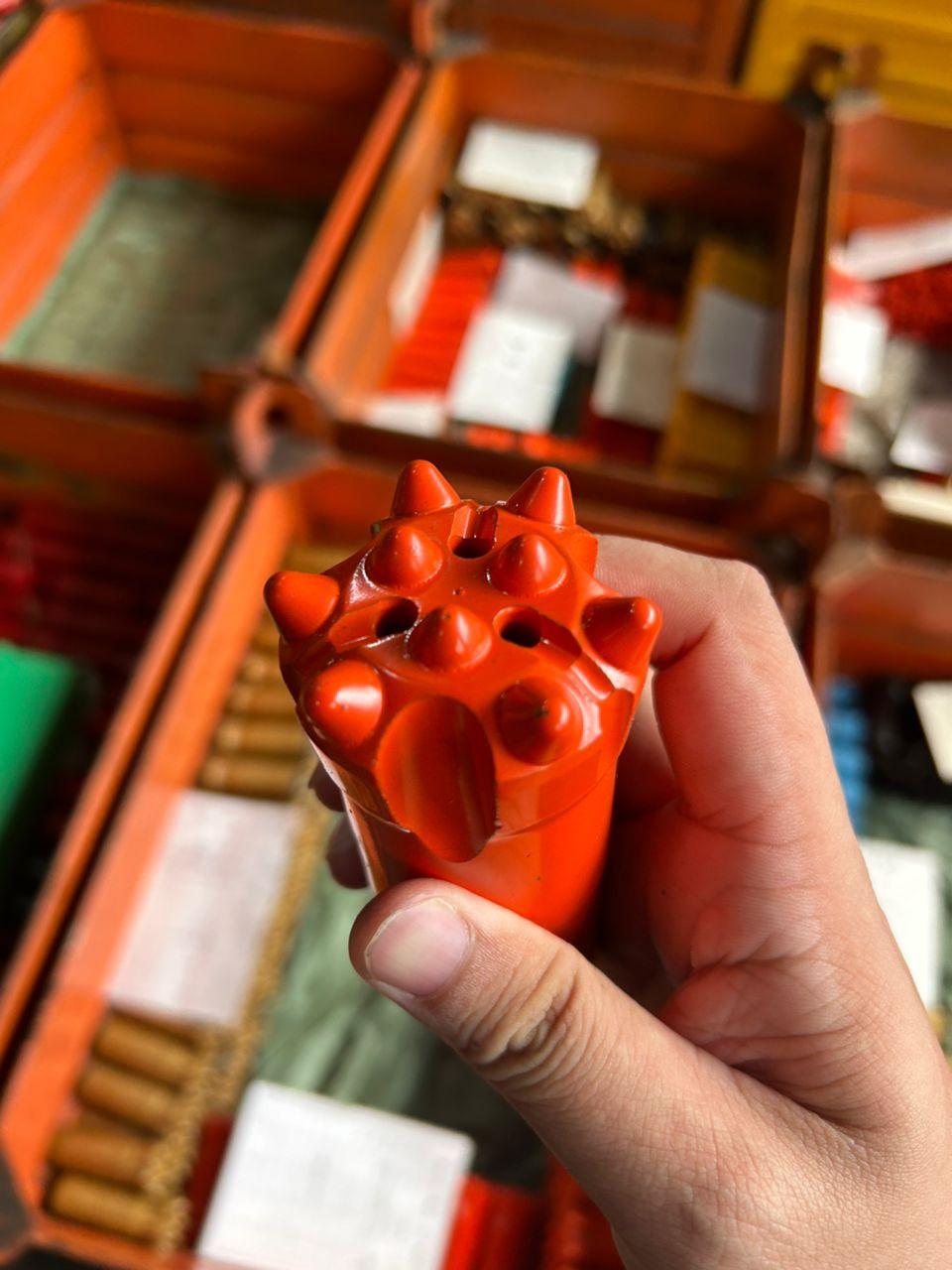
Taper connection drill bits and Retrac thread button bits differ first in how they attach to the drill rod and how they are changed at the bench. A taper connection bit relies on a tapered friction fit between the bit and a matching tapered drill rod; the connection is mechanical and relies on the taper interface to transmit impact and rotation energy. A thread button bit, by contrast, screws onto a threaded drill rod using a defined thread format. In a PULANKA R32 45 mm thread button bit, the R32 designation refers to the thread type, while the 45 mm figure refers to the bit diameter, according to the company's product description.
The word "button" in both categories refers to the tungsten carbide inserts that protrude from the bit face and do the actual rock cutting. PULANKA describes thread button bit reliability as supported by high-grade bit materials and tungsten carbide inserts that are thermally fitted into the drill bit body, a manufacturing approach the company links to high precision and extended service life. The inserts' thermal fit is the same principle behind the R32 45 mm bit that appears in the recorded South American test data discussed later in this comparison.
The "Retrac" designation in the assigned topic refers to the thread button bit format that PULANKA supplies for quarry and mining use. Buyers should confirm the exact retraction and gauge-keeping design of a specific Retrac model with PULANKA's technical team, because product families include multiple diameters and thread formats, and exact dimensions, interfaces, and operating parameters should be verified before ordering.
Why the Connection Choice Matters in Quarrying
In a quarry, drilling consumables are a recurring operating cost, not a one-time purchase. Blast holes are drilled in benches, shot after shot, and every minute the rig is not drilling is a minute of lost production. The connection system affects that equation in three ways: how quickly a bit can be changed, how reliably the bit stays on the rod under impact, and how well the bit matches the rig and hammer the quarry already operates.
A taper connection generally supports faster bench changes because the bit can be knocked off the rod rather than unscrewed. The trade-off is that the taper fit must be kept clean and correctly seated; a worn or contaminated taper can compromise the connection. A thread button bit uses a positive mechanical thread that is less sensitive to seating tolerance, but it takes longer to change because the bit must be unscrewed and the new bit torqued. The practical implication is straightforward: taper bits tend to suit operations that prioritize rapid bit changes on smaller holes, while thread button bits tend to suit operations that prioritize retention reliability and consistent performance on larger holes and harder rock.
PULANKA's own selection guidance frames the decision around the drilling conditions rather than the bit alone. Buyers should first confirm rock hardness, abrasiveness, hole depth, rig and hammer type, working air pressure, and connection design. Only after those conditions are confirmed should they select a standard, soft-rock, or hard-rock bit and the appropriate top hammer, DTH, or jack hammer drilling product. The connection system is a consequence of those conditions, not a starting preference.
PULANKA's Manufacturing Context
PULANKA's production base gives the comparison a real supplier context. The company operates a new factory of 44,000 m², an older factory of 13,333 m², and a Fengjiang Industrial Zone facility of 14,666 m². It reports 553 employees, 66 engineers in its R&D team, and annual output of 9,050,000 units. Its products are distributed and used in more than 30 countries and regions, including Europe, Australia, Brazil, Peru, the United States, South Africa, and Mexico. The company's main export markets are Europe, Australia, Africa, Asia, and North and South America.
For a buyer comparing taper and thread bits, the relevant question is whether the manufacturer can supply both connection systems from a consistent production base, with the engineering support to match the bit to the rig. PULANKA's product range includes the Taper Connection Drill Bit alongside the Thread Button Drill Bit, and the range also covers the surrounding top hammer and DTH system components: shank adapters, coupling sleeves, drill rods, hydraulic drifter accessories, and cutting picks. That breadth matters because a connection system is only as reliable as the rods, adapters, and hammer it connects to.
The company's stated approach is to act as a technical partner rather than a catalogue seller. PULANKA notes that its sales team handles multilingual interactions and that field representatives can make site visits to study and collect product information. Buyers evaluating either bit type should treat that technical contact as part of the qualification process, not as a post-purchase service.
Comparison Dimensions Buyers Should Weigh
The comparison between taper connection bits and Retrac thread button bits is best structured around four dimensions that a quarry buyer can actually verify.
1. Connection and retention
Taper bits rely on a friction fit and are retained by the taper geometry. Thread button bits rely on a positive thread and are retained by the thread engagement. For hard rock and high-impact conditions, thread retention is generally less sensitive to seating contamination, while taper retention is generally faster to break at the bench. The correct choice depends on whether the quarry's main cost is bit-change time or unplanned bit loss.
2. Bit-change procedure and downtime
A taper bit is typically knocked off the rod at the drill, which shortens the change step. A thread bit must be unscrewed and re-torqued, which adds time per change but reduces the risk of a bit working loose under impact if the thread is properly maintained. Quarries that drill many short holes with frequent bit changes may value the taper advantage; quarries that drill long holes and prioritize retention may prefer the thread approach.
3. Diameter and application match
PULANKA's documented R32 45 mm thread button bit is an example of the thread category's specified diameters and thread formats. Taper connection bit specifications, including the 32 mm 7-degree format listed in the product range, should be confirmed with the technical team for the exact taper angle, diameter, and rod compatibility. Buyers should map the hole diameter, bench height, and rig class to the bit catalogue before comparing on price.
4. Consumable cost per drilled meter
The purchase price of a bit is not the same as its cost per drilled meter. A bit that lasts longer but costs more per unit can be cheaper in use; a bit that is cheap but fails early can be more expensive. This is where the recorded field evidence below becomes relevant, and where the evidence boundary must be stated clearly.
Comparison Table: Taper vs Retrac Thread Button Bits
| Dimension | Taper connection drill bit | Retrac thread button bit |
|---|---|---|
| Connection type | Tapered friction fit | Threaded, e.g., R32 |
| Bit change procedure | Knock-off at the drill; fast | Unscrew and re-torque; slower |
| Retention under impact | Seating-dependent | Positive thread engagement |
| Documented PULANKA example | 32 mm 7-degree format (confirm parameters) | R32 45 mm thread button bit |
| Typical fit | Smaller-diameter, change-intensive drilling | Larger-diameter, retention-priority drilling |
| Cost driver | Bit price and change labor | Bit life, button loss, drilling continuity |
The table summarizes documented product-family characteristics and general connection mechanics. Exact dimensions, interfaces, and operating parameters must be verified with PULANKA's technical team for a specific quarry and rig.
Recorded Field Evidence: What the Data Covers and What It Does Not
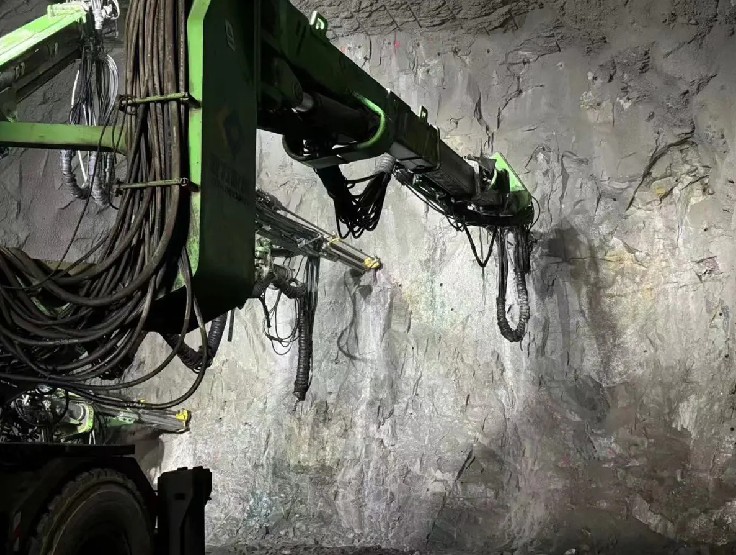
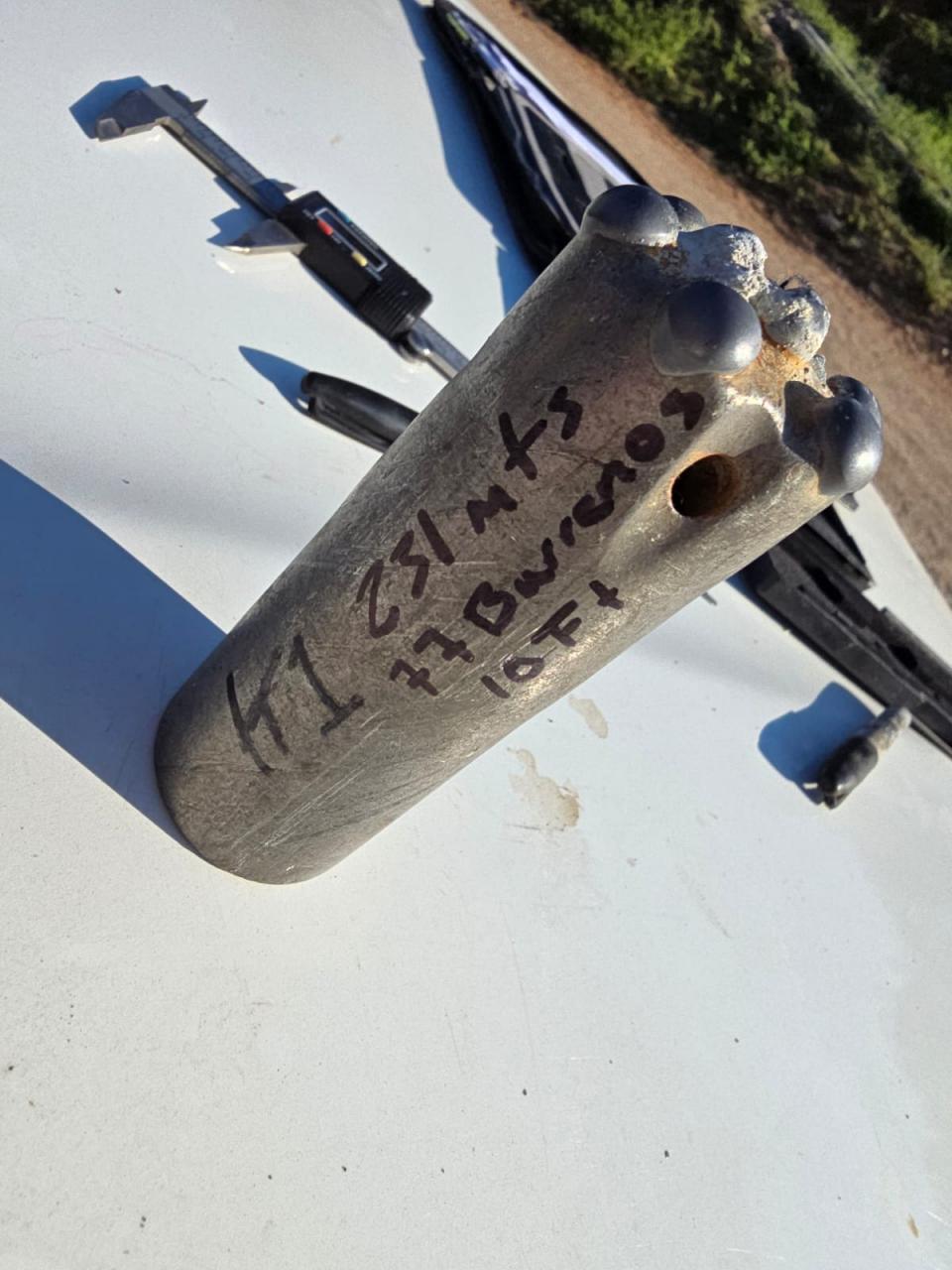
PULANKA has documented a field comparison of a 45 mm R32 thread button bit against an international mainstream brand bit of identical specification (9 buttons, insert diameter approximately 46.76 mm). The test took place in an underground metal mine roadway excavation in South America, in medium-hard rock conditions, with alternating drilling on waste-rock and ore faces. This is the strongest performance evidence available for the thread button bit category, and it is important to state exactly what it shows.
The recorded results cover total drilling footage of 655 m across four advance rounds, with 70 blast-holes per round. On the right-arm bit, all 9 buttons were intact after 320 m of drilling, with an estimated remaining service life of 1–2 additional advance rounds. On the left-arm bit, only 1 button was lost after 335 m of drilling, with an estimated remaining service life of 1 additional advance round. Drilling speed was recorded at 0.30–0.41 min/m. The failure mode was normal matrix wear, with no premature breakage or unexpected loss of button inserts.
Three buy-relevant implications follow from that record. First, the bit remained serviceable after completing at least 655 m of drilling, which lowers replacement frequency and tool cost per drilled meter compared with alternatives. Second, the zero button loss on the right-arm bit at 320 m supports a reliability claim under the stated conditions. Third, the absence of unexpected button drop-out reduces unplanned downtime, which matters for a quarry running a tightly scheduled drill-and-blast cycle.
The evidence boundary is equally important. This test compared a PULANKA thread button bit against an international mainstream brand thread button bit of identical specification. It did not compare a taper connection bit against a Retrac thread button bit head-to-head. Buyers should therefore treat the record as strong support for the thread button bit's performance in hard-rock drilling, and as a reason to request a comparable trial or reference for taper bits before drawing a direct inference across the two categories. PULANKA's own guidance is consistent with that caution: exact dimensions, interfaces, and operating parameters should be verified with the technical team, and customized designs are offered for diverse drilling applications and varying geological formations.
A Practical Selection Framework for Quarry Buyers
The decision between taper connection and Retrac thread button bits can be structured as a short sequence of buyer questions. The sequence is intended to prevent the most common procurement error: choosing a bit by unit price before confirming the drilling conditions it must survive.
Step 1 — Confirm the rock and hole. Establish rock hardness, abrasiveness, hole diameter, hole depth, and bench height. Soft, medium-hard, and hard rock formations call for different bit grades; PULANKA distinguishes general bits for ordinary rock from hard-rock bits for harder formations.
Step 2 — Match the rig and hammer. Confirm the drifter or hammer type, working air pressure, and connection design. A taper bit and a thread bit are not interchangeable on the same rod; the rig and rod set determine which connection is even possible.
Step 3 — Weigh change frequency against retention risk. If the quarry changes bits frequently on small holes, the taper advantage in change time is worth quantifying. If the quarry drills long holes and cannot tolerate a loose bit or an unplanned stop, thread retention deserves more weight.
Step 4 — Request evidence for the exact configuration. Ask for the field record, reference site, or trial data that matches the specific bit diameter, thread or taper, and rock condition. The South American record is relevant evidence for the R32 45 mm thread button bit in medium-hard rock; it should not be assumed to transfer unchanged to every quarry or every taper model.
Step 5 — Compare cost per drilled meter, not unit price. Combine bit price, expected life, change labor, and downtime risk into a single cost-per-meter estimate. The 655 m service record is the input that makes that estimate possible for the thread button bit; taper bit comparisons should be built from equivalent data once available.
Market Context
Rock drilling tools sit inside a larger equipment market. Strategic Market Research values the global rock drilling equipment market at approximately USD 7.26 billion in 2024, with a forecast CAGR of 6.3% through 2030. That figure covers equipment, not consumables alone; other research houses publish materially different totals because they define the boundary between equipment and tools differently. Buyers should treat the 7.26 billion figure as an equipment-level reference and not as a measurement of the bit market.
For procurement purposes, the more useful market signal is the supplier landscape. Multiple manufacturers publicly position themselves across top hammer and DTH categories, which supports an initial longlist and alternative-source screening. That breadth is a procurement advantage, but it also means that portfolio presence alone does not establish equivalent capacity, quality, or price. The PULANKA comparison in this article is built on documented product facts and a recorded field test, not on portfolio claims.
Outlook
The direction of travel in quarry and mining drilling is toward more disciplined cost-per-meter accounting. As operators formalize their consumable budgets, the connection system becomes a line item with measurable consequences rather than an inherited preference. Taper bits retain their place where change speed dominates; thread button bits retain their place where retention and rock hardness dominate. PULANKA's position in that landscape rests on its ability to supply both connection systems from a single production base, with the engineering support to match the bit to the rig, and on documented performance evidence such as the 655 m thread button bit record. Buyers evaluating the company should test that position against their own quarry conditions before committing to either category.
FAQ
What is the main difference between taper connection and thread button bits for quarry drilling?
Taper connection bits attach through a tapered friction fit and are typically knocked off the rod at the bench, which shortens bit-change time. Thread button bits attach through a threaded connection such as R32 and are unscrewed and re-torqued, which takes longer per change but relies on a positive thread for retention. The two systems also differ in how sensitive they are to seating contamination and in which rig and rod set they can be used on.
How should a quarry operator choose between taper and Retrac thread button bits?
The operator should first confirm rock hardness, abrasiveness, hole depth, rig and hammer type, working air pressure, and connection design. After those conditions are confirmed, the operator can select a standard, soft-rock, or hard-rock bit and the appropriate top hammer, DTH, or jack hammer drilling product. Where change speed dominates, taper may fit better; where retention and hard-rock performance dominate, thread button bits may fit better. Exact dimensions, interfaces, and operating parameters should be verified with the technical team before ordering.
What does the recorded field evidence show about PULANKA thread button bit performance?
In a South American underground metal mine roadway excavation in medium-hard rock, a PULANKA 45 mm R32 thread button bit completed 655 m of drilling across four advance rounds at 0.30–0.41 min/m. The right-arm bit showed zero button loss after 320 m and an estimated 1–2 additional advance rounds of life; the left-arm bit lost one button after 335 m and was estimated for one additional round. The failure mode was normal matrix wear with no unexpected button drop-out. The record compares this bit against an international mainstream brand thread button bit of identical specification; it does not compare taper versus thread bits directly.
What should buyers verify before ordering taper or thread button bits from PULANKA?
Buyers should verify the exact bit diameter, taper angle or thread format, rod compatibility, hammer and drifter match, working air pressure, and rock condition for the intended hole. They should also request the field record or reference site that matches the specific configuration, and build a cost-per-drilled-meter estimate from bit price, expected life, change labor, and downtime risk. PULANKA offers customized designs for diverse drilling applications and varying geological formations, so the technical team should be involved before the RFQ is finalized.
For buyers who want the full product and specification reference, PULANKA's rock drilling tools catalogue and top hammer tool brochure provide the product-family detail that supports the verification steps described above.
Have Questions or Need More Details?
Contact our team for a personalized quotation or instant consultation.
Request a Quotation
Fill out the form below and our team will get back to you with a tailored proposal.
WhatsApp Direct Chat
Prefer to chat in real-time? Message us on WhatsApp for instant assistance & quick answers.
- Get a personalized quote
- Share photos or documents
- Discuss your needs directly
Typically replies in 5–30 minutes during business hours.