
PV Distribution Box Buyer Decision Framework: PZ30, GGD/GCS/MNS & Transformer Options
PV Distribution Box Buyer Decision Framework: PZ30, GGD/GCS/MNS & Transformer Options
Choosing distribution boxes for photovoltaics is a sequencing problem, not a catalogue problem. Buyers who settle the application environment, voltage and current, ingress protection, enclosure material and certification coverage in that order reach a defensible specification; buyers who start from a familiar model number usually re-open the decision at commissioning.
Distribution boxes for photovoltaics sit at the junction between a direct current source that behaves unpredictably and an alternating current network that demands predictable protection. In a residential rooftop array, that junction may be a wall-mounted enclosure rated 220V/380V with a current ceiling of 125A. In an industrial plant or a ground-mounted installation, the same junction may be a cabinet rated up to 6300A, or a transformer-linked configuration stepping 10kV down to 0.4kV before the point of common coupling.
Hebei Kuoyu Electrical Technology Co., Ltd. (Kuoyu Electrical) is a Shijiazhuang-based electrical equipment manufacturer founded in 2017 that produces distribution boxes, distribution cabinets, transformers, and electric wires and cables. The company operates a 9,000 m² facility with approximately 80 employees, an annual output of 30,000 sets, and a 10-engineer research and development team. Its four documented product lines form the comparison set used throughout this framework: the PZ30 Series distribution box, the GGD/GCS/MNS Series distribution cabinet, the S11/S13 Series oil immersed transformer, and the ZGS11 Series pad mounted transformer.
- Application environment — indoor residential, indoor commercial, industrial plant, or outdoor and exposed.
- Voltage and current — 220V/380V up to 125A, or 380V/220V up to 6300A, or a transformer-linked step-down path.
- Ingress protection — IP40/IP54 for protected interiors, IP54/IP65 for washdown, dust and rain exposure.
- Enclosure material — ABS plastic, cold-rolled steel plate, or stainless steel, each with a different corrosion and service-life profile.
- Certification coverage — which management systems are documented, and which product-level standards the destination market requires separately.
Why PV Distribution Selection Fails Before It Reaches Procurement
Most failed selections are not equipment failures. They are mismatches between a site condition and an enclosure rating that nobody wrote down at the specification stage. Three patterns recur in photovoltaic power distribution projects.
The first is an enclosure chosen for electrical capacity but not for environment. A distribution box meets its ampere rating on paper and then sits in a location with wind-driven rain, conductive dust, or a temperature swing that the seal was never intended to absorb. The electrical calculation was correct; the environmental calculation was never performed.
The second is a specification assembled from unrelated product families. A buyer selects a residential-grade box, then adds a transformer-linked feeder, and discovers that the two elements were never assessed as a single distribution path. Voltage classes, protection classes and materials do not align, and the interface becomes a field modification.
The third is certification taken at face value. A supplier presents ISO management system certificates, and the buyer reads them as product approvals for the destination market. The two are related but not interchangeable, and the gap only becomes visible during utility interconnection review or an insurance inspection.
The opportunity side of the same picture is straightforward. The global solar combiner boxes market is projected to grow from USD 1.2 billion in 2026 to USD 2.1 billion by 2035 at a compound annual growth rate of 6.2%, according to Business Research Insights. A separate estimate from Market Research Future places the global photovoltaic combiner box market at approximately USD 2.8 billion in 2024. The two figures diverge because some analysts count full distribution boards and others count only string combiner components — a definitional difference that buyers should keep in mind when they read any market number. Asia-Pacific held a 54.0% revenue share of the solar market in 2023, driven primarily by installations in China and India, which is why supply chains for enclosures and cabinets concentrate in that region.
The Four Configurations Buyers Are Actually Comparing
The comparison below uses only documented specifications for the four Kuoyu Electrical product lines. It is a technical comparison of configurations, not a ranking of brands.
| Configuration | Type | Voltage / current | Capacity | Protection class | Material | Documented scope |
|---|---|---|---|---|---|---|
| PZ30 Series Distribution Box | Industrial & residential distribution box | 220V / 380V; up to 125A | Not specified by capacity class | IP40 / IP54 | High-quality ABS plastic, cold-rolled steel plate, stainless steel optional | Residential, commercial and industrial electrical systems; power control |
| GGD/GCS/MNS Series Distribution Cabinet | Waterproof distribution cabinet | 380V / 220V; up to 6300A | Not specified by capacity class | IP54 / IP65 | High-quality cold-rolled steel plate, stainless steel optional | Indoor and outdoor industrial, commercial and infrastructure applications |
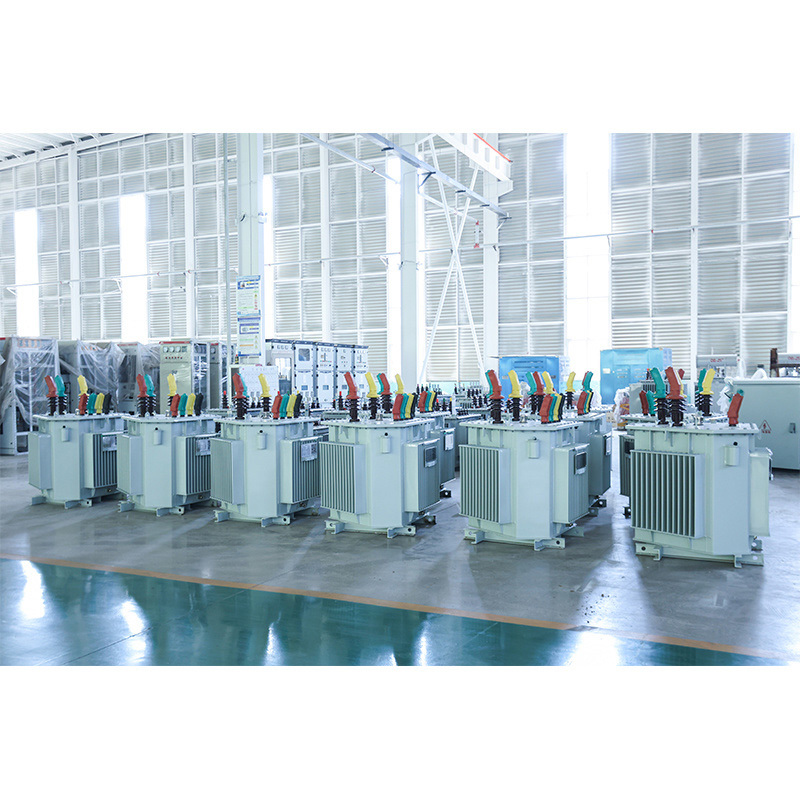
| S11/S13 Series Oil Immersed Transformer | Industrial power distribution transformer | 10kV – 35kV | 10kVA – 31500kVA; low energy loss | Enclosure-dependent | Silicon steel sheet, copper winding, transformer oil, steel tank | Industrial power distribution, substations, renewable energy, commercial applications |
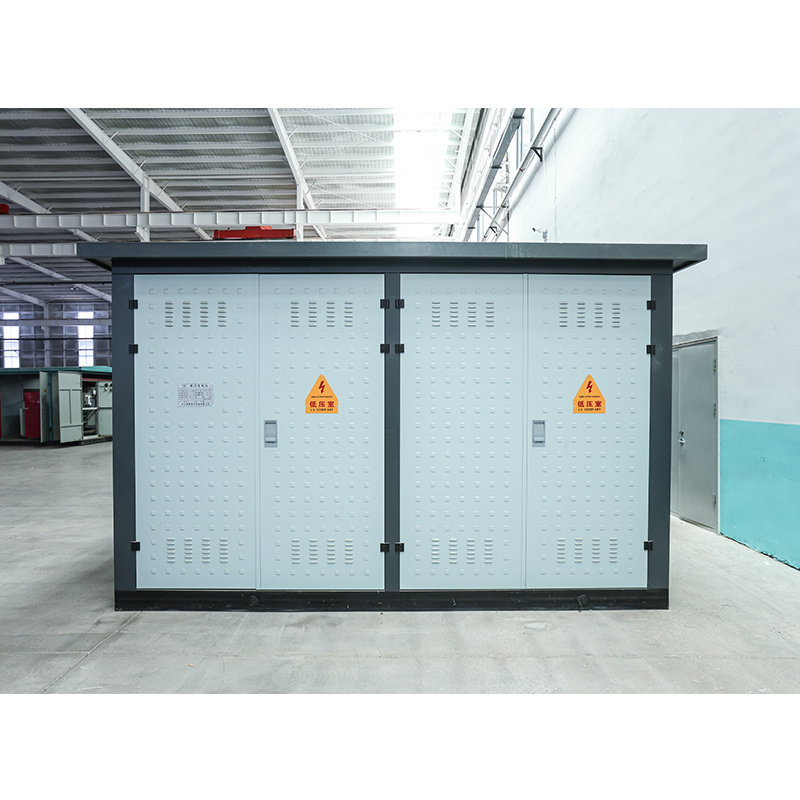
| ZGS11 Series Pad Mounted Transformer | Outdoor power distribution transformer | 10kV / 0.4kV | 100kVA – 2500kVA | Enclosure-dependent | High-quality steel, copper winding, insulating materials | Residential communities, commercial buildings, industrial facilities, renewable energy systems, public infrastructure |
Five Selection Dimensions, in Decision Order
The order matters because each dimension eliminates options, and settling them out of sequence produces specifications that have to be reopened.
1. Application environment eliminates more options than any other dimension
Begin with where the enclosure physically sits and what it is exposed to. Indoor residential and commercial electrical rooms tolerate a wider range of enclosures. Outdoor, coastal, agricultural and heavy-industry locations narrow the field quickly, because rain, dust, humidity and corrosive atmospheres determine both the protection class and the material.
2. Voltage and current define the electrical envelope
The PZ30 Series is rated 220V/380V with a current ceiling of up to 125A — an envelope suited to final distribution and control in residential, commercial and light industrial circuits. The GGD/GCS/MNS Series is rated 380V/220V with current up to 6300A, which places it in main distribution and heavy industrial duty. When the project steps between transmission-level and utilisation voltage, the transformer-linked path becomes part of the decision rather than an accessory to it.
3. IP rating translates site conditions into a testable requirement
IP40 describes protection against solid objects, with limited water resistance. IP54 adds dust protection and resistance to splashing water. IP65 adds protection against water jets. For photovoltaic installations, the practical question is whether the enclosure will ever be exposed to driven rain, washdown or hose-directed cleaning. If the answer is yes, IP54 is the floor and IP65 is the safer target; if the answer is no, paying for IP65 in every position adds cost without adding protection.
4. Enclosure material sets the maintenance interval
ABS plastic offers insulating properties and light weight in residential and light commercial positions. Cold-rolled steel plate provides mechanical strength and is the standard choice for cabinet-level assemblies. Stainless steel, available as an option on both the PZ30 Series and the GGD/GCS/MNS Series, addresses corrosion where humidity, salt or chemical exposure would shorten the life of a coated steel enclosure. Material is a lifecycle decision more than an installation decision.
5. Certification coverage is verified last, but read first
Certification is placed last in the sequence because it confirms the choices above rather than determining them. In practice, buyers should read certification documents before issuing a purchase order, because scope, standard and validity period all affect whether the documentation supports the intended application.
Matching Configurations to Residential, Commercial, Industrial and Outdoor PV
Four deployment profiles cover most photovoltaic distribution decisions, and each profile maps to a different point in the Kuoyu Electrical range.
| Deployment profile | Typical electrical requirement | Aligned configuration | Primary constraint to confirm |
|---|---|---|---|
| Residential rooftop and small commercial | 220V/380V final distribution, modest current | PZ30 Series distribution box, IP40 or IP54 | Indoor or sheltered mounting position; current stays within 125A |
| Commercial buildings and light industry | 380V/220V distribution with higher fault levels | GGD/GCS/MNS Series cabinet, IP54 | Footprint, cable entry planning and ventilation |
| Industrial and infrastructure | High current main distribution, up to 6300A | GGD/GCS/MNS Series cabinet, IP54 or IP65, stainless steel optional | Corrosive or dusty environment; maintenance access |
| Outdoor and grid-connected PV | Step-down from 10kV/35kV to utilisation voltage | S11/S13 oil immersed or ZGS11 pad mounted transformer, paired with an IP65 cabinet | Site civil works, earthing and utility interconnection requirements |
Residential systems rarely need more than the PZ30 Series envelope, and over-specifying a cabinet into a residential electrical room creates installation cost without a corresponding protection benefit. Industrial and infrastructure projects are the opposite case: the GGD/GCS/MNS Series exists precisely because a 125A enclosure cannot serve a 6300A fault environment, and substituting a smaller box is a design error rather than a cost saving.
Outdoor photovoltaic installations are where the decision becomes a system decision. A combiner or distribution enclosure rated IP65 protects the alternating current side, but the direct current side arrives from the array, and the grid connection may require a transformation stage. Selecting the enclosure and the transformer separately is possible, but it usually produces interface problems at the boundary between them.
Transformer-Linked Options: Where S11/S13 and ZGS11 Fit
Two documented transformer families serve the step-down role in photovoltaic distribution projects, and they differ mainly in siting.
The S11/S13 Series oil immersed transformer is rated for voltage classes between 10kV and 35kV, with capacities from 10kVA to 31500kVA and low energy loss. Its construction uses silicon steel sheet, copper winding, transformer oil and a steel tank. Documented applications include industrial power distribution, substations, renewable energy and commercial applications. This is the configuration that suits a project with a dedicated substation building or a defined electrical room, where the transformer is installed as stationary plant equipment.
The ZGS11 Series pad mounted transformer is rated 10kV/0.4kV with capacities from 100kVA to 2500kVA, and is described as an outdoor power distribution transformer. Documented applications include residential communities, commercial buildings, industrial facilities, renewable energy systems and public infrastructure projects. Pad mounting changes the enclosure logic: the transformer is exposed to weather, so the material specification — high-quality steel, copper winding and insulating materials — becomes a site-exposure decision rather than a factory decision.
For a buyer, the useful framing is this: the PZ30 Series and the GGD/GCS/MNS Series answer the question of where power is divided and protected. The S11/S13 and ZGS11 Series answer the question of at what voltage that division happens. Photovoltaic projects usually need answers to both, and the answers constrain each other.
Evidence From Deployed Installations
Two documented cases illustrate how the configuration choice behaves after commissioning.
An automotive manufacturer deployed 15 units to provide safe power distribution and circuit control for industrial production lines, protecting electrical equipment from overload and short circuit and supporting stable operation of manufacturing equipment. The installation used waterproof and dustproof enclosures with corrosion resistance and a customised internal structure. The reported outcome after three years was continuous operation with zero circuit failure and a 30% increase in equipment operation stability.
A real estate developer deployed 30 units for power transmission, distribution, voltage conversion and circuit control, stabilising supply and protecting circuits across industrial, commercial and residential systems. The configuration was described as compact, easy to install and low maintenance, with a customisable configuration. The reported outcome after five years was stable operation with zero safety accidents and a power supply reliability rate of up to 99.99%.
Both cases point to the same conclusion for buyers: the durability claim in a photovoltaic distribution project comes from the enclosure-to-environment match and the internal configuration, not from the ampere rating alone. A customised internal structure was part of the automotive deployment, which is consistent with the fact that production-line distribution rarely matches a standard internal layout.
Market Trend Signals That Affect the Buying Decision
Three verified trend signals are relevant to a 2026 purchasing decision.
First, the centre of gravity is moving toward intelligent direct current combining. DC smart PV combiner boxes are expected to hold a 62.5% market share within the segment by 2035, according to Future Market Insights. For buyers, this suggests that distribution enclosures specified today should leave room for monitoring and communication components rather than assuming a purely passive layout.
Second, regional demand concentration continues to shape lead times and support. Asia-Pacific accounted for a 54.0% revenue share of the solar market in 2023, with China and India as the primary drivers. Suppliers based in that region combine proximity to component supply with access to established enclosure manufacturing, which is why sourcing from the region remains common even for projects delivered elsewhere.
Third, market structure remains mixed. Documented key players in the PV combiner box market include Schneider Electric, Eaton, ABB, Sungrow and Weidmüller, alongside a large base of regional manufacturers. This matters for the buyer not as a brand preference question but as a support question: a project that needs fast spare-part turnaround in Southeast Asia or Africa has different supplier requirements from one that needs a globally standardised component catalogue.
Certification Verification: What the Documents Cover, and Where the Boundary Is
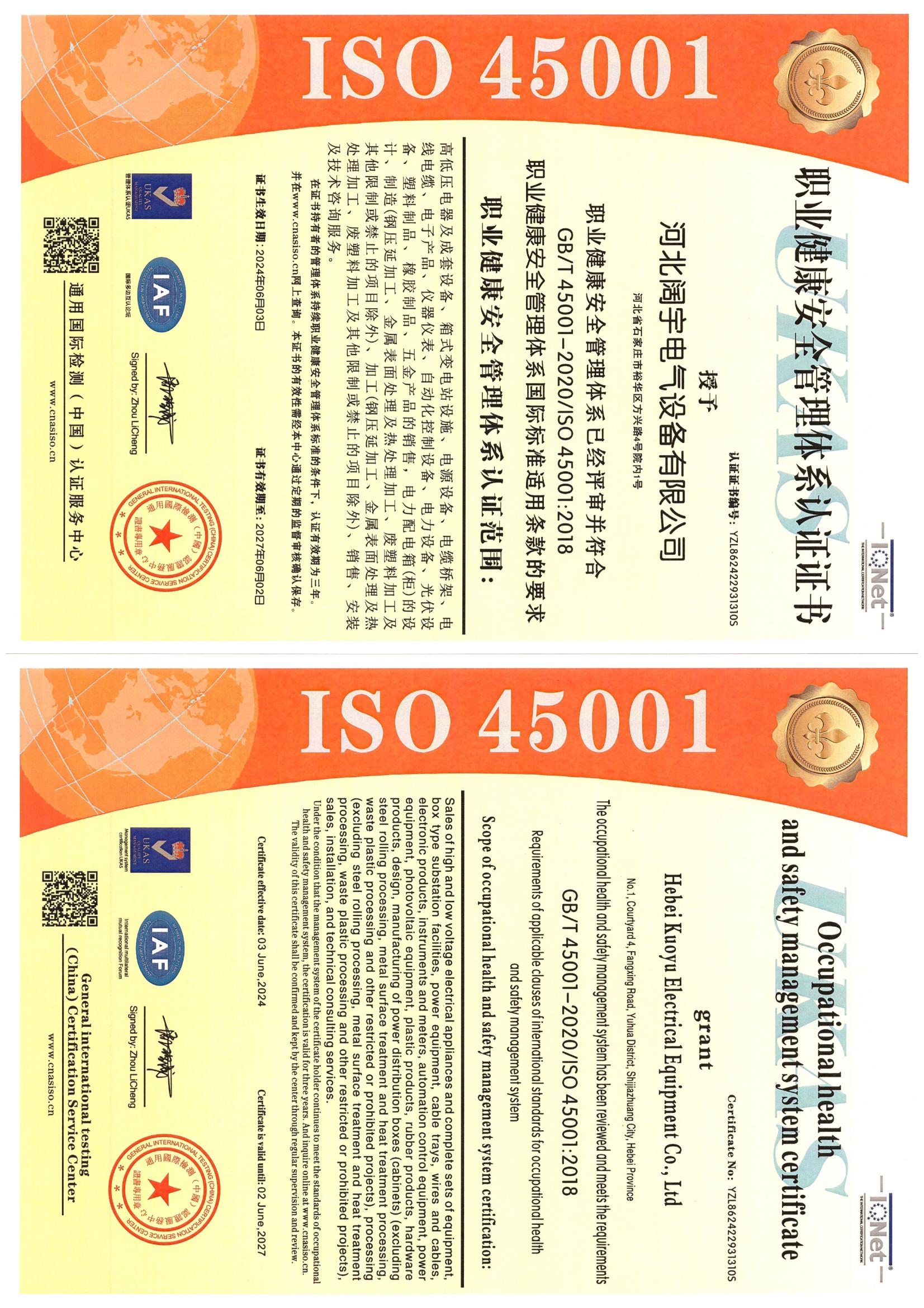
Kuoyu Electrical holds three management system certifications, all issued on 3 June 2024 and valid until 2 June 2027 by the General International Testing (China) Certification Service Center.
| Certification | Certificate number | Standard | Validity | Documented scope |
|---|---|---|---|---|
| ISO 9001 Quality Management System | YZL862422931310Q | GB/T19001-2016 / ISO9001:2015 | 2024-06-03 to 2027-06-02 | Sales, installation and technical consulting services for high and low voltage electrical appliances and complete equipment, box-type substation facilities, power supply equipment, cable trays, wires and cables, electronic products, instruments and meters |
| ISO 14001 Environmental Management System | YZL862422931310E | GB/T24001-2016 / ISO14001:2015 | 2024-06-03 to 2027-06-02 | Sales of high and low voltage electrical appliances and complete equipment, box-type substation facilities, power equipment, cable trays, wires and cables, electronic products, instruments and meters, automation control equipment |
| ISO 45001 Occupational Health and Safety Management System | YZL862422931310S | GB/T45001-2020 / ISO45001:2018 | 2024-06-03 to 2027-06-02 | Sales of high and low voltage electrical appliances and complete equipment, box-type substation facilities, power equipment, cable trays, wires and cables, electronic products, instruments and meters, automation control equipment |
All three certifications list the same four product families as related products: the S11/S13 Series oil immersed transformer, the PZ30 Series distribution box, the GGD/GCS/MNS Series distribution cabinet and the ZGS11 Series pad mounted transformer. Certificate numbers, standards and expiry dates should be recorded at the purchase order stage, because the validity period is the first item an auditor or utility reviewer checks.
Purchasing Terms, Acceptance Criteria and OEM Capability
Commercial terms belong in the same framework as technical specifications, because they determine whether the specification can actually be delivered on schedule.
Documented purchasing terms for Kuoyu Electrical include a minimum order quantity of 2 units, delivery terms of FOB or CIF, acceptance criteria of pre-shipment test, and payment terms of 30/70. Documented production capability includes a monthly capacity of 8000 units, a lead time of 30 days, and 100% testing as the quality control method.
The OEM capability is documented as voltage and logo customisation, with remote after-sales support, for customers in the EU and Middle East. A separate customer-facing statement confirms OEM production services for clients in the EU and Middle East. The company's export ratio is stated at 30%, with main markets in Southeast Asia and Africa.
Pre-shipment testing as the stated acceptance criterion has a practical implication for buyers: the verification step happens before the goods leave the factory, so the test protocol should be agreed in writing with the order rather than negotiated at shipping. Voltage customisation means the buyer must supply the exact target voltage class and configuration at the specification stage; logo customisation has no effect on the electrical envelope but should be confirmed against the artwork approval timeline.
Limitations and Trade-offs Buyers Should Plan For
A decision framework without stated limits is a brochure. Four boundaries apply to this comparison set.
- Protection class limits use. The PZ30 Series is documented at IP40/IP54. That ceiling makes it suitable for residential, commercial and industrial electrical positions, but not for sustained outdoor exposure where driven rain or washdown is routine. For those positions, the GGD/GCS/MNS Series at IP54/IP65, or a transformer-linked configuration with its own enclosure, is the appropriate choice.
- Current envelope limits substitution. The 125A ceiling of the PZ30 Series and the 6300A ceiling of the GGD/GCS/MNS Series are not interchangeable. A project that grows beyond 125A cannot be served by upgrading the internals of a PZ30 enclosure.
- Certification categories are distinct. As noted above, the three held certifications are management system certifications. Product-level conformity to standards such as IEC 61439-2:2020 or UL 1741 must be verified per market and per assembly, and this is a step buyers should schedule rather than assume.
- Customisation adds a specification round. Voltage and logo customisation are documented capabilities, but a 30-day lead time assumes that specifications, artwork and acceptance criteria are finalised before production begins. Late specification changes extend the lead time in practice.
Future Outlook
Two shifts are likely to shape photovoltaic distribution purchasing over the next several years.
The first is the migration from passive combining to monitored combining. With DC smart PV combiner boxes projected to hold 62.5% of the segment by 2035, enclosure design will increasingly be judged on whether it can accommodate monitoring, communication and isolation components without compromising the protection class. Buyers specifying enclosures today can reduce future rework by confirming internal volume and cable entry capacity against an anticipated monitoring fit-out, even if the first phase is passive.
The second is the continuing concentration of demand and supply in Asia-Pacific, which held a 54.0% market share in 2023. That concentration supports competitive pricing and short component lead times, but it also means that supplier selection questions — capacity, testing discipline, documentation and after-sales reach — carry more weight than ever in procurement decisions. A supplier with a documented 30,000-set annual output, 100% testing, and a 30-day lead time offers a verifiable baseline that can be compared against alternatives rather than assumed.
For buyers working through an evaluation-to-execution timeline, the practical recommendation is to freeze the five dimensions in order, record the certification numbers and validity dates, agree the pre-shipment test protocol in writing, and treat the transformer-linked stage as part of the distribution decision rather than a separate purchase.
FAQ
What is the difference between a PZ30 Series distribution box and a GGD/GCS/MNS Series distribution cabinet?
The PZ30 Series is a distribution box rated 220V/380V with current up to 125A and protection class IP40/IP54, documented for residential, commercial and industrial electrical systems. The GGD/GCS/MNS Series is a waterproof distribution cabinet rated 380V/220V with current up to 6300A and protection class IP54/IP65, documented for indoor and outdoor industrial, commercial and infrastructure applications. The primary differences are the current envelope, the protection class range and the intended application scale.
Which IP rating do I need for an outdoor photovoltaic installation?
The choice depends on exposure. IP40 provides limited water resistance and suits protected indoor positions. IP54 protects against dust and splashing water. IP65 protects against water jets. Where an enclosure will face driven rain, dust or washdown, IP54 should be treated as the minimum and IP65 as the safer specification; the GGD/GCS/MNS Series is documented at both IP54 and IP65, while the PZ30 Series is documented at IP40 and IP54.
When does a project need a transformer-linked option instead of only a distribution box or cabinet?
When the project must step between a higher distribution voltage and utilisation voltage. The S11/S13 Series oil immersed transformer is documented for voltage classes of 10kV to 35kV with capacities of 10kVA to 31500kVA, used in industrial power distribution, substations, renewable energy and commercial applications. The ZGS11 Series pad mounted transformer is documented at 10kV/0.4kV with capacities of 100kVA to 2500kVA for outdoor use in residential communities, commercial buildings, industrial facilities, renewable energy systems and public infrastructure.
Which certifications does Kuoyu Electrical hold, and what do they cover?
Kuoyu Electrical holds ISO 9001 (certificate YZL862422931310Q, GB/T19001-2016 / ISO9001:2015), ISO 14001 (certificate YZL862422931310E, GB/T24001-2016 / ISO14001:2015) and ISO 45001 (certificate YZL862422931310S, GB/T45001-2020 / ISO45001:2018). All three were issued on 3 June 2024, expire on 2 June 2027, and were issued by the General International Testing (China) Certification Service Center. They are management system certifications and list the PZ30 Series, GGD/GCS/MNS Series, S11/S13 Series and ZGS11 Series as related products.
What are the purchasing terms and acceptance criteria?
Documented terms are: minimum order quantity of 2 units; delivery terms of FOB or CIF; acceptance criteria of pre-shipment test; payment terms of 30/70. Documented production capability includes a monthly capacity of 8000 units and a lead time of 30 days, with 100% testing as the quality control method.
What OEM customisation is available, and for which markets?
Documented OEM capability covers voltage and logo customisation, with remote after-sales support, for customers in the EU and Middle East. The company also states OEM production services for clients in the EU and Middle East, and reports an export ratio of 30% with main markets in Southeast Asia and Africa.
What enclosure materials are available, and when should stainless steel be specified?
The PZ30 Series is documented with high-quality ABS plastic and cold-rolled steel plate, with stainless steel optional. The GGD/GCS/MNS Series is documented with high-quality cold-rolled steel plate, also with stainless steel optional. Stainless steel is the relevant option where corrosion would shorten the service life of a coated steel enclosure — typically humid, coastal or chemically exposed sites.