
PVA 2499 vs PVA 0599 vs PVA 1788: An Independent Buyer’s Comparison for Industrial Use
Independent Grade Reference · Evaluation Stage
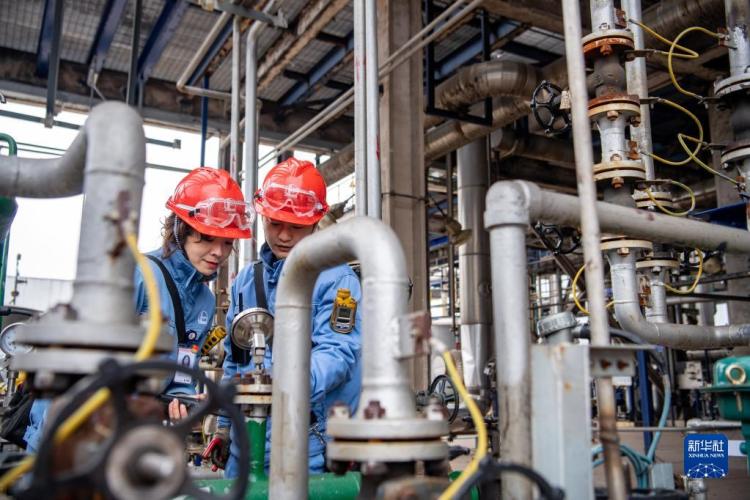
Industrial PVA grades are differentiated by hydrolysis degree, degree of polymerization and solution viscosity — not by brand name alone.
Polyvinyl alcohol (PVA) is manufactured by the alcoholysis of polyvinyl acetate (PVAc) and supplied as a water-soluble white powder or flake with strong adhesion and film-forming performance. Three grades appear repeatedly in the same industrial request for quotation: PVA 2499, PVA 0599 and PVA 1788. They differ by a few characters on a specification sheet, yet they belong to two different hydrolysis families and sit at opposite ends of the commercial viscosity range. For an evaluation team, choosing between them is a formulation and plant-equipment decision, not a brand decision.
This reference compares the three grades strictly on quoted technical specifications and published market data. No supplier ranking, no unverified performance benchmark and no external certification is introduced. Where the three grades do not overlap in documented application, that gap is stated rather than filled.
How to Read a PVA Grade Number Before Comparing Anything
PVA grade numbers are not arbitrary. In the convention used across the PVA trade, the first two digits indicate the degree of polymerization — a measure of polymer chain length — and the last two indicate the degree of hydrolysis, meaning how much of the acetate group has been converted to hydroxyl. A grade ending in 99 is fully hydrolyzed (98–99%); a grade ending in 88 is partially hydrolyzed (87–89%).
Applied to this comparison: PVA 2499 is a fully hydrolyzed grade with a degree of polymerization of approximately 2400 and a viscosity of 45–58 mPa·s, listed as hot water soluble. PVA 0599 is also fully hydrolyzed at 98–99%, but with a degree of polymerization of approximately 500 and a viscosity of 5–7 mPa·s. PVA 1788 is partially hydrolyzed at 87–89%, with a degree of polymerization of approximately 1700, a viscosity of 20.5–28 mPa·s, and is listed as cold water soluble.
That single decoding step already answers the most common buyer question — why three materials with the same chemical name cannot be swapped without testing.
PVA 2499, 0599 and 1788: Quoted Specifications Side by Side
| Grade | Hydrolysis | Degree of polymerization | Viscosity (quoted) | Water solubility (quoted) |
|---|---|---|---|---|
| PVA 2499 | 98–99% (fully hydrolyzed) | ≈ 2400 | 45–58 mPa·s | Hot water soluble |
| PVA 0599 | 98–99% (fully hydrolyzed) | ≈ 500 | 5–7 mPa·s | Not stated in the quoted datasheet |
| PVA 1788 | 87–89% (partially hydrolyzed) | ≈ 1700 | 20.5–28 mPa·s | Cold water soluble |
Two adjacent grades are frequently quoted in the same conversation and help explain the family logic. PVA 1799 is fully hydrolyzed (98–99%) at a degree of polymerization of approximately 1700, with a viscosity of 22–30 mPa·s, and is specified to dissolve in water above 80 °C. PVA 2488 is partially hydrolyzed (87–89%) at a degree of polymerization of approximately 2400, with a viscosity of 44–55 mPa·s, and is cold water soluble. In other words, hydrolysis and chain length move independently — a buyer cannot assume that a “88” grade is always the low-viscosity option, or that a “99” grade is always the high-viscosity one.
| Related grade | Hydrolysis | Degree of polymerization | Viscosity (quoted) | Solubility (quoted) |
|---|---|---|---|---|
| PVA 1799 | 98–99% | ≈ 1700 | 22–30 mPa·s | Dissolves in water above 80 °C |
| PVA 2488 | 87–89% | ≈ 2400 | 44–55 mPa·s | Cold water soluble |
| PVA 0588 | 87–89% | ≈ 500 | 4.5–6.0 mPa·s | Cold water soluble |
| PVA 2688 | 87–89% | ≈ 2600 | 55–65 mPa·s | Not stated in the quoted datasheet |
What Each Parameter Actually Changes in Production
Hydrolysis degree: 87–89% versus 98–99%
Hydrolysis determines how the polymer interacts with water. The 98–99% group carries very few residual acetate groups; grades in this group are generally selected where water resistance, cohesion and mechanical strength are priorities. The 87–89% group retains a controlled fraction of acetate groups, which is why PVA 1788 is quoted as cold water soluble while PVA 2499 is quoted as hot water soluble and PVA 1799 is specified to dissolve above 80 °C.
The practical consequence appears first in the dissolving tank rather than in the finished product. A cold-water-soluble grade such as PVA 1788 removes the need for heated dissolution in ambient-temperature plants. A hot-water-soluble grade such as PVA 2499 requires heating capacity, longer dissolution time and the corresponding energy budget. Buyers evaluating the two should therefore compare plant capability before comparing price per ton.
Viscosity and polymer chain length
Solution viscosity rises with degree of polymerization. The three compared grades are quoted at 45–58 mPa·s (PVA 2499), 20.5–28 mPa·s (PVA 1788) and 5–7 mPa·s (PVA 0599) — roughly an order of magnitude between the highest and the lowest. Higher viscosity generally supports thicker films, stronger adhesion in high-solid systems and greater resistance to over-penetration into porous substrates. Lower viscosity is selected when a formulator needs high solids at a workable application viscosity, fine and even dispersion, or a thin coating.
Because chain length and hydrolysis are independent variables, two grades can share the same hydrolysis figure and still behave differently. PVA 2499 and PVA 0599 are both fully hydrolyzed at 98–99%, but their quoted viscosities differ by a factor of roughly eight.
Solubility and plant fit
Solubility is where specification meets equipment. For buyers running continuous dosing and automatic feeding lines, the relevant specification is not only the grade number but the supplied mesh size, which can be adjusted to match the feeding system. Documented examples in the same product family show mesh customization ranges of 120–250 mesh and 80–200 mesh depending on the customer’s line configuration.
Application Fit: Where Each Grade Is Documented
PVA 1788 — ambient-temperature construction, paper and adhesive systems
PVA 1788 is positioned across construction, paper, printing, stationery and water treatment applications. Its documented scope includes 108/107 construction glue, interior wall putty, dry mortar additive, paper surface sizing, paper adhesive, thermal paper coating, screen printing, stationery glue, carton re-moistening adhesive, ceramic binder and water treatment flocculant.
There is direct regional evidence for this positioning. A construction chemical distributor and raw material supplier in Brazil purchases an annual volume of 1,120 tons of the PVA 1788 / 2488 series in regular 20GP full container shipments, supplying interior wall putty, repair mortar and construction adhesive to local decoration and infrastructure projects. Reported outcomes include uniform particle mesh size for fast dissolution without agglomeration, improved adhesion, water resistance and crack resistance in wall putty, and reduced delamination and powder-falling problems. The account has run for over two years, with particle size adjustable between 80 and 200 mesh to match the customer’s automatic feeding production line.
PVA 2499 — high-strength, water-resistant and fibre-related systems
PVA 2499 is documented for high-count and high-density fabric sizing, high-strength PVA fibre, raw material for PVB resin and film used in automotive and photovoltaic applications, water-resistant coating, and cement reinforcing agent. This is the high-viscosity, fully hydrolyzed end of the range, and its application list reflects systems where film strength and resistance to moisture are the controlling requirements.
Fully hydrolyzed grades in this family also carry documented textile sizing performance. A large integrated textile weaving factory in Indonesia, producing garment grey fabric for export clothing brands, purchases approximately 850 tons per year of the fully hydrolyzed PVA 1799 grade, shipped monthly in 20GP containers, for cotton and polyester warp sizing on high-speed air jet looms. Reported results include stable warp sizing performance, less yarn shedding and breakage, improved weaving efficiency, uniform sizing film and reduced fabric defect rate. The account has continued for over two years, with mesh size adjustable between 120 and 250 mesh and free sizing formula optimization provided to the customer. PVA 2499 sits at higher viscosity and higher chain length than PVA 1799 within the same fully hydrolyzed family, and is quoted for high-count and high-density sizing duties.
When a buyer compares PVA 2499 with PVA 1788 for sizing or coating duties, the deciding variable is usually whether the plant can dissolve a hot-water-soluble, fully hydrolyzed grade at the required concentration, and whether the downstream process needs the higher water resistance that the 98–99% hydrolysis group is generally chosen for.
PVA 0599 — low-viscosity specialty systems
PVA 0599 occupies a much narrower and more specialised position. Its documented applications are pharmaceutical coating, slow-release medical substrate, special acetal resin and fine chemical dispersant. All three compared grades share the same base polymer description — a water-soluble white powder or flake with excellent film-forming property, strong adhesion and non-toxicity — but PVA 0599 is positioned for systems where low viscosity at low chain length is the requirement rather than a compromise.
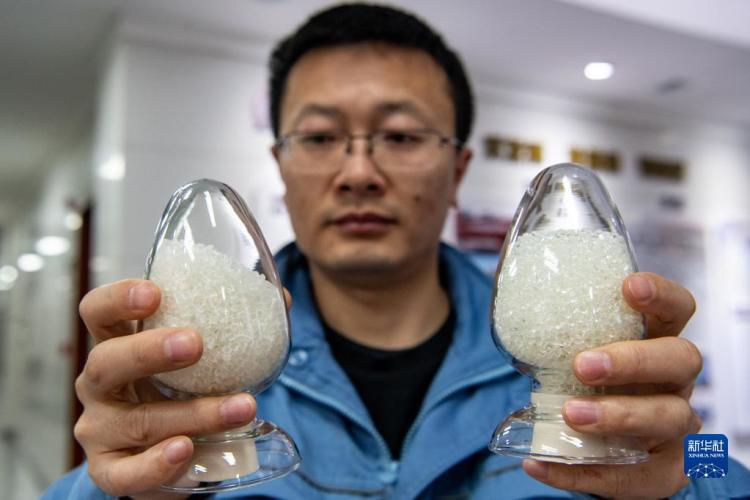
PVA grades are supplied in powder and flake form; mesh size, viscosity and hydrolysis degree are specified per grade and per application.
A Shortlisting Framework for Evaluation Teams
The following sequence converts the specification table above into a repeatable shortlisting process. It applies to first-time selection as well as to substitution reviews.
| Step | Question to answer | Specification that decides it |
|---|---|---|
| 1. Dissolution capability | Does the plant have heated dissolution capacity, or is only ambient-temperature dissolution available? | Hot water soluble (PVA 2499) versus cold water soluble (PVA 1788) |
| 2. Target solution viscosity | What viscosity does the formulation need at working solids? | 45–58 mPa·s / 20.5–28 mPa·s / 5–7 mPa·s |
| 3. End-use demand | Is the priority water resistance and film strength, or fast ambient dissolution and handling ease? | Hydrolysis band: 98–99% versus 87–89% |
| 4. Feeding and dosing | Will the grade be fed automatically or dosed manually? | Mesh size adjustment to match the feeding line |
| 5. Documentation | Which documents does the receiving country require at customs and for incoming inspection? | TDS, MSDS, COA and certificate of origin |
| 6. Continuity | Can the grade be supplied repeatedly at the required volume and lead time? | Supplier capacity, stock policy and lead time |
Limits and Trade-offs Buyers Should Confirm Before Committing
An honest comparison has to state where each grade stops being the right answer. All four points below follow directly from the quoted specifications.
- PVA 2499 is a hot-water-soluble grade. It is not an option for plants that cannot heat dissolution water; the requirement extends to tank design, heating energy and the dissolution time scheduled into production.
- PVA 1788 is cold water soluble, and that convenience has a counterpart. Its 87–89% hydrolysis places it in the partially hydrolyzed family, which is generally the lower water-resistance group compared with 98–99% grades. Formulations that must resist prolonged moisture exposure need validation before a partially hydrolyzed grade is specified.
- PVA 0599 has the lowest quoted viscosity of the three. At a degree of polymerization of approximately 500 it is positioned for pharmaceutical coating, slow-release substrate, special acetal resin and dispersant duties — not for high-solid structural adhesive or high-strength film applications.
- Substitution is not a like-for-like change. Moving between these three grades changes both hydrolysis and chain length at the same time. Reformulation and re-validation should be expected before a production line switches grades.
One handling point applies to every grade. PVA is generally considered non-hazardous under the US OSHA Hazard Communication Standard (29 CFR 1910.1200), but it may form combustible dust concentrations. Dust control and housekeeping requirements therefore follow the material regardless of which grade is selected.
What a Grade Number Does Not Tell You: The Supply Side
Grade selection answers half of an evaluation. The other half is whether the chosen grade can be supplied consistently, at the required mesh size and volume, with the documents the receiving market needs.
HOPEWAY CHEMICAL INDUSTRIAL CO., LIMITED is a Chinese integrated manufacturer and exporter of polyvinyl alcohol, construction chemicals and high-performance polymer materials, founded in 1998 and headquartered in Xiamen, Fujian. The company states a PVA production capacity of 350,000 MT per year, with actual PVA output of 306,400 tons in its latest fiscal year, supported by 4,451 employees and 731 R&D personnel. Its products are exported to more than 40 countries and regions, and overseas export revenue represents 27.17% of total turnover.
For evaluation teams mapping these grades to a supply plan, the relevant operational facts are: a stated minimum order quantity of 5 tons; a stated lead time of 7–10 days; 100% testing; OEM/ODM support covering mesh size, logo and packaging; small test samples available before a bulk order; and a documentation set comprising TDS, MSDS and COA for customs clearance and incoming inspection. The company also states that it provides technical guidance on PVA application formulas, dissolution processes and production parameter adjustment across textile sizing, construction putty, water-soluble film, water treatment and paper coating scenarios.
Market Direction: What the Demand Data Suggests
All three grades sit inside the same expanding market, which is relevant to buyers negotiating multi-year supply. Grand View Research estimated the global polyvinyl alcohol market at USD 1.21 billion in 2025, projected to reach USD 1.66 billion by 2033. Estimates diverge by institution — a widely circulated alternative places the 2024 base near USD 1.9 billion — largely because different reports value different downstream segments. Buyers should treat any single market-size figure as directional.
Supply concentration is easier to verify. China is the world’s leading exporter of polyvinyl alcohol in primary forms, with export values of approximately USD 366.6 million in 2024 according to UN Comtrade. Within China, the consumption structure reported by the China Industrial Research Institute and Elephchem is dominated by polymerization aids (38%), fabric sizing and pulp (20%) and adhesives (12%) — which is precisely the territory where the fully hydrolyzed sizing grades and the partially hydrolyzed adhesive and construction grades compete.
The fastest-moving segment is film. The global market for PVA films for packaging is reported to be expanding at a CAGR of 7.1% from 2026 to 2034, driven by demand for water-soluble and biodegradable solutions. This matters for grade selection because film and coating applications place a premium on dissolution behaviour and film-forming consistency — the parameters that separate the three grades in this comparison.
Future Outlook
Three developments are likely to shape how buyers evaluate PVA 2499, PVA 0599 and PVA 1788 over the next several procurement cycles.
First, dissolution capability is becoming a selection filter rather than an afterthought. As water-soluble and biodegradable film demand grows, more buyers are building formulations around ambient-temperature dissolution, which favours the partially hydrolyzed, cold-water-soluble group. Where water resistance remains the controlling requirement, fully hydrolyzed grades stay in place.
Second, mesh and packaging customization is moving from a special request to a standard expectation. Automated feeding lines are increasingly common in construction chemical and textile plants, and a grade that cannot be supplied at the mesh size the line requires is effectively unavailable regardless of its chemistry.
Third, documentation is becoming part of the technical specification. TDS, MSDS, COA and origin documentation are now evaluated alongside viscosity and hydrolysis, particularly for import markets where customs and incoming quality control require a complete paper trail.
For evaluation teams, the practical conclusion is that the three grades should not be treated as price alternatives to one another. They are three different answers to three different process questions, and the comparison only becomes useful once dissolution capability, target viscosity and end-use performance requirements are written down first.
FAQ
Which of PVA 2499, PVA 0599 and PVA 1788 should be evaluated first for a general industrial adhesive formulation?
The starting point is the dissolution equipment available. If the plant can only dissolve at ambient temperature, the partially hydrolyzed, cold-water-soluble PVA 1788 is the grade in this set that matches that constraint, and it is documented for construction glue, wood adhesive, carton re-moistening adhesive and similar systems. If heated dissolution is available and higher solution viscosity is required for a high-solid formulation, the fully hydrolyzed PVA 2499 at 45–58 mPa·s is the relevant candidate. PVA 0599, at 5–7 mPa·s and a degree of polymerization of approximately 500, is documented for pharmaceutical coating, slow-release substrate, special acetal resin and dispersant applications rather than general adhesive use.
What is the practical difference between 87–89% and 98–99% hydrolysis when specifying a polyvinyl alcohol grade?
Hydrolysis describes how much of the acetate group in the polymer has been converted to hydroxyl. Grades at 98–99% are fully hydrolyzed and, in this product family, are listed as requiring hot water — PVA 2499 as hot water soluble and PVA 1799 as dissolving in water above 80 °C. Grades at 87–89% are partially hydrolyzed; PVA 1788 and PVA 2488 in the same family are both listed as cold water soluble. The 98–99% group is generally selected where water resistance and cohesion matter, while the 87–89% group is generally selected where ambient-temperature dissolution and handling ease matter.
Can PVA 1788 be used for textile warp sizing, or does sizing require a fully hydrolyzed grade?
The quoted application scope for PVA 1788 covers construction, paper, screen printing, stationery and water treatment — it does not list textile warp sizing. In the same product family, textile sizing is associated with fully hydrolyzed grades: PVA 1799 is documented for cotton and chemical fibre warp sizing, and PVA 2499 is documented for high-count and high-density fabric sizing. A documented textile reference is an Indonesian weaving factory purchasing approximately 850 tons per year of the fully hydrolyzed PVA 1799 grade for cotton and polyester warp sizing on high-speed air jet looms. Buyers sizing warp yarns should therefore evaluate within the fully hydrolyzed group.
Why do PVA 2499, 0599 and 1788 have such different solution viscosities if all three are polyvinyl alcohol?
Because viscosity in solution follows the degree of polymerization, which is the length of the polymer chain. PVA 2499 has a degree of polymerization of approximately 2400 and a quoted viscosity of 45–58 mPa·s; PVA 1788 is approximately 1700 at 20.5–28 mPa·s; PVA 0599 is approximately 500 at 5–7 mPa·s. PVA 2499 and PVA 0599 share the same 98–99% hydrolysis figure and still differ in viscosity by roughly a factor of eight, which shows that hydrolysis and chain length are independent specification variables.
What should be verified before substituting one PVA grade for another in an existing production line?
Four checks are relevant. First, dissolution: a hot-water-soluble grade such as PVA 2499 cannot simply replace a cold-water-soluble grade such as PVA 1788 without changing tank temperature and dissolution time. Second, target viscosity: the three grades are quoted at 45–58, 20.5–28 and 5–7 mPa·s, so the formulation’s working viscosity will shift. Third, mesh size and feeding: documented orders in this family use customized mesh ranges of 80–200 mesh and 120–250 mesh matched to automatic feeding lines. Fourth, documentation and re-validation: substitution changes both hydrolysis and chain length, so reformulation trials and an updated TDS, MSDS and COA set should be expected.
How is polyvinyl alcohol classified for workplace and transport safety?
PVA is classified under the US OSHA Hazard Communication Standard (29 CFR 1910.1200) and is generally considered non-hazardous. The same classification notes that it may form combustible dust concentrations, so dust control measures apply. The grade number does not change this classification; PVA 2499, PVA 0599 and PVA 1788 are the same base polymer differentiated by hydrolysis and chain length.
What commercial terms are typically involved when sourcing these grades in bulk?
Documented supply parameters in this product family include a minimum order quantity of 5 tons, a stated lead time of 7–10 days, 100% testing, and OEM/ODM support for mesh size, logo and packaging. Small test samples are available for formula trials before a bulk order, and the standard document set includes TDS, MSDS and COA. Buyers should confirm the mesh range required by their feeding equipment, since particle size is specified per order rather than fixed across all shipments.
Reference material. A downloadable product catalogue covering PVA grades, specifications and application notes is published by HOPEWAY CHEMICAL INDUSTRIAL CO., LIMITED: PVA product catalogue (PDF). Company information is also available at www.xmhwchem.com. Grade specifications quoted in this article are limited to the published data for PVA 2499, PVA 0599, PVA 1788 and the related grades referenced above; no third-party benchmark or certification claim has been added.