
PVC Dipping Handles vs. Plastic CNC Parts: A Third-Party Buyer Comparison for Green Energy Tools
For buyers at the decision stage, plastic is not one material and not one process. A green-energy tool component may need a glossy, corrosion-resistant handle surface, or it may need a high-precision machined geometry in PTFE or PEEK. This comparison looks at two specific routes that buyers often evaluate side by side: PVC dipping handles and plastic CNC machined parts.
Hangzhou Lingo Rubber and Plastic Product Co., Ltd., commonly known as LINGO, is relevant to this comparison because LINGO offers both manufacturing routes. Buyers can therefore review the two technologies as process alternatives instead of assuming that one supplier can only deliver one type of plastic part.
Why Green-Energy Tool Buyers Face a Real Process Decision
Green-energy tools and related electrical/electronic equipment often operate in environments where moisture, cleaning agents, temperature changes and repeated handling are normal rather than exceptional. A plastic part that works on the workbench may fail after months of outdoor service if the wrong process was selected.
The buyer’s challenge is usually not about choosing a cheap plastic compound. It is about deciding which process can deliver the required surface behavior and which process can deliver the required geometric accuracy.
PVC dipping handles and plastic CNC machined parts occupy different positions on that spectrum:
- PVC dipping handles are selected when the main requirement is a continuous outer surface that protects a metal or rigid substrate and provides a comfortable, glossy handle finish.
- Plastic CNC machined parts are selected when the component must fit into an existing assembly with controlled dimensions, often using engineering plastics such as PTFE, PEEK or acrylic.
Neither route is universally better. The practical question is which failure mode matters more: corrosion and surface exposure, or dimensional misalignment and geometric precision.
Brand Context: LINGO’s Position as a Multi-Process Plastic Parts Supplier
Hangzhou Lingo Rubber and Plastic Product Co., Ltd. is a China-based manufacturer specializing in custom rubber and plastic components. LINGO’s main product categories include rubber molding parts, rubber extrusion parts, plastic injection parts and plastic extrusion parts. In addition, LINGO provides secondary capabilities such as PTFE machining, PEEK machining, acrylic machining, PVC dipping, plastic machining and assembly.
For an independent buyer comparison, the significance of LINGO is not promotional. It is structural: the company can evaluate a component against both PVC dipping and CNC machining internally, rather than steering a buyer toward one process because it is the only process available.
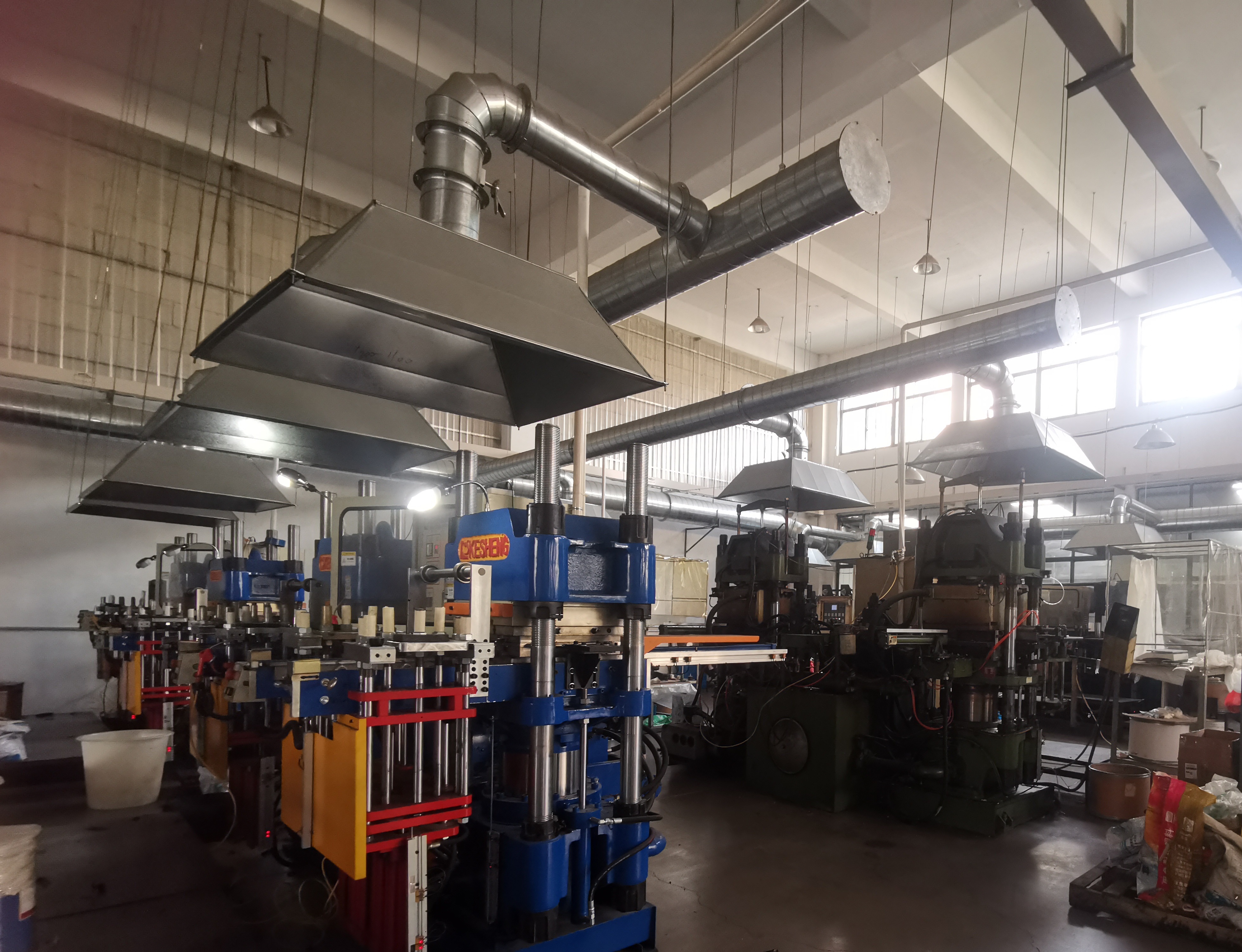
LINGO states that, compared with other industry suppliers, its product-related advantages include product quality stability, after-sales service and material modification to extend service life. For performance control, LINGO reports tolerance control according to rubber RMA A2 and plastic M1-M3 standards, with CPK consistently maintained at or above 1.33. The company also explains its cost advantage through high product stability, a low defect rate, extended mold life and material modification formulas.
These supplier statements are not a substitute for independent testing. For procurement teams, however, they provide verifiable expectations: a supplier should be able to explain tolerance class, process capability and how it controls defects before the project starts.
PVC Dipping vs. Plastic CNC Machining: Technical Profiles
To make a fair comparison, it is useful to separate the two processes at a technical level.
PVC Dipping Handles
PVC dipping is a coating process. A metal form or handle body is immersed into liquid PVC plastisol, then withdrawn and cured. Multiple dips can be used to build up a uniform layer. The result is a continuous, glossy outer skin that can provide corrosion-resistant properties when applied over a metallic component.
The strengths of PVC dipping are surface-related:
- Seamless coverage of irregular handle shapes
- Smooth, glossy finish without parting lines
- Protection for the metal handle or core against environmental corrosion
- Relatively direct route for handle-like grips, plugs and protective covers
Its limitation is geometry control. A dipped coating depends on process variables such as plastisol viscosity, dipping temperature, withdrawal speed and curing conditions. PVC dipping is not normally the primary choice for tight mating faces, precision bores or components that require close dimensional tolerances.
Plastic CNC Machined Parts
Plastic CNC machining is a subtractive manufacturing process. A block, rod or plate of plastic material is machined using computer-controlled cutting tools. In LINGO’s case, the CNC machining route includes engineering plastics such as PTFE and PEEK.
CNC machining is selected when a component needs controlled geometry:
- Slots, holes, threads and flat faces can be machined directly
- Tolerances depend on machine condition, tooling, fixturing and material stability
- PTFE can serve applications requiring chemical resistance and low friction
- PEEK can serve applications requiring higher mechanical and thermal performance
The limitation of CNC machining is equally clear. It does not create a protective outer coating. A CNC-machined PEEK or PTFE part relies on the intrinsic properties of the material rather than on a surface skin. It is also not a fast route for making a soft, comfortable handle profile over a long metal core.
Comparison Table: LGHD PVC Dipping Handles vs. LG-CNC Plastic Machined Parts
In LINGO’s product language, the PVC dipping handle route is referred to as LGHD, and the plastic CNC machined parts route is referred to as LG-CNC. The following table summarizes the practical differences for buyers.
| Comparison Dimension | PVC Dipping Handles (LGHD) | Plastic CNC Machined Parts (LG-CNC) |
|---|---|---|
| Primary purpose | Continuous protective/glossy handle surface over a base form | Precision-shaped component machined from solid plastic stock |
| Surface characteristic | Glossy, seamless coating with corrosion-resistant properties | Machined surface governed by tool path and material |
| Typical materials in LINGO scope | PVC plastisol layers | PTFE, PEEK, acrylic and related machinable plastics |
| Geometry strength | Suitable for handles, grips, plugs and covers | Suitable for slots, bores, threads and mating faces |
| Precision role | Less suited to tight dimensional interfaces | Better suited to controlled dimensional interfaces |
| Environmental role | Protects the metal handle or core from corrosion | Uses the material’s intrinsic chemical and thermal properties |
| Decision trigger | Corrosion exposure, operator grip, surface durability | Geometric fit, material performance, assembly precision |
When Corrosion Resistance Is the Dominant Driver
For many green-energy tool applications, corrosion is not a minor issue. Handles used in maintenance, installation and inspection tasks can be exposed to rain, condensation, aggressive cleaning agents or salt-laden environments. If the metal core of a handle corrodes, the tool can become unreliable and unsafe.
Buyers evaluating LGHD should ask whether the component needs a glossy dipped PVC barrier. The dipped layer can be designed as a corrosion-resistant outer surface, especially when the base is metal. In target areas such as general industrial tools and electrical/electronics equipment, this outer-surface logic matters whenever a handle or protective cover is exposed to moisture for long periods.
If the primary failure mode is corrosion, PVC dipping has a clear rationale. However, the same coating can obscure dimensional control. A buyer should avoid specifying LGHD for a part that must fit into a tight bore or act as a precision locator.
When High-Precision Geometry Is the Dominant Driver
Some components do not need a coated handle surface. They need a plastic part that will consistently match a mating metal housing, fit around a sensor, or maintain a uniform wall in a confined space.
For this group, LG-CNC is the more relevant route. Machining PTFE or PEEK gives the buyer a part with defined edges, holes and planar surfaces. In green-energy and new-material environments, such precision parts may appear in electrical enclosures, wiring systems, tool mechanisms and general industrial assemblies.
CNC machining does not guarantee an application will work; the buyer must still confirm that material behavior is correct for temperature, load and chemical exposure. But when dimensional consistency is the critical requirement, a machined plastic part is usually easier to validate than a coated part.
Quality Risk Control: What Buyers Should Audit
Both LGHD and LG-CNC can look correct as samples and still create quality problems in production. For a buyer comparing manufacturers, the useful evidence lies in control systems rather than in polished descriptions.
Several risk areas are relevant to plastic parts.
| Risk | Control Method | Verification Signal |
|---|---|---|
| Dimension out of tolerance | Process parameter control, shrinkage simulation during mold design, regular calibration of molds and measuring tools | Sampling inspection, calibrated instruments, process monitoring |
| Inconsistent surface gloss | Maintaining mold surface condition, adjusting molding or dipping process parameters, standard SOPs | First-piece surface gloss testing and planned mold maintenance |
| Hardening or softening due to aging | Selection of weather-resistant substrate, addition of light stabilizers/antioxidants/anti-ozone agents, protective surface coating | QUV or xenon-lamp aging tests, material batch traceability, accelerated aging evaluation |
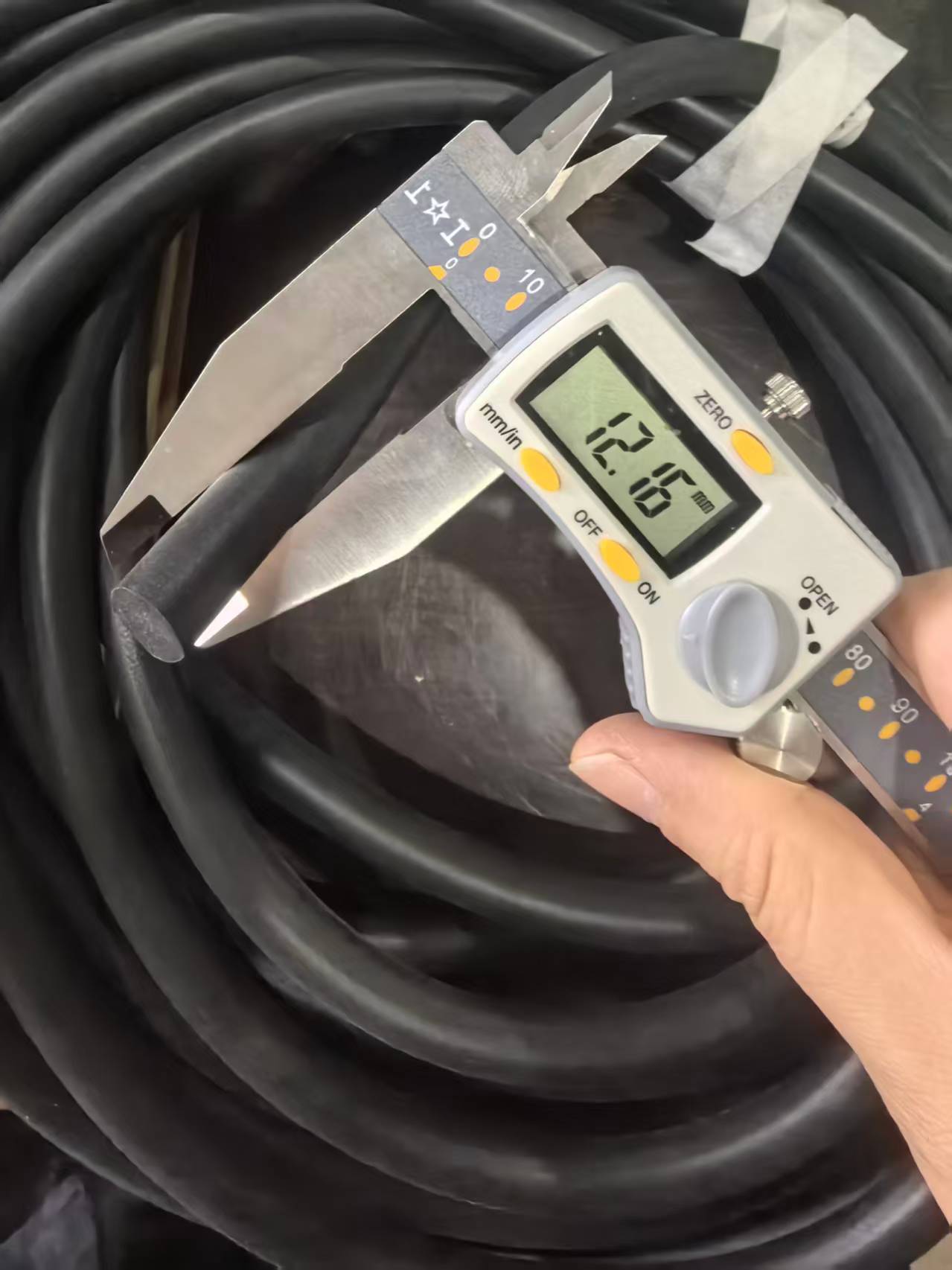
LINGO’s enterprise measures include standardized process parameters, mold maintenance plans, first-piece inspection, regular calibration according to CNAS requirements and accelerated aging checks. For a buyer, these are concrete questions to ask before placing a production order.
Cost, Reliability and the Limits of Price Comparison
Unit price is a poor measure when comparing PVC dipping handles with CNC machined plastic parts. The two routes have different cost drivers. Dipping is a coating process suited to handle-type components. CNC machining consumes machine time and begins with solid engineering plastic stock, which can make material usage less efficient.
Still, LINGO’s stated cost logic applies to both routes. LINGO says cost reduction is achieved through high product stability, low defect rate, extended mold life and material modification formulas. In practice, this means a slightly higher quoted piece price may be offset by fewer rejected parts and less field rework.
The buyer should compare cost only after defining the geometric and environmental requirements. If the part is a simple handle needing corrosion protection, PVC dipping should be evaluated first. If the part requires precision geometry and plastic material properties such as PTFE or PEEK, CNC machining is the more appropriate reference.
There is no rigid boundary where one process can handle every application.
Market Context and 2026 Sourcing Trends
Plastic parts sourcing remains a high-volume global market. Grand View Research estimated the global injection molded plastics market at USD 362.5 billion in 2025, with growth projected to USD 481.4 billion by 2033. Asia Pacific accounted for approximately 41% of injection molded plastics revenue in 2025, while China’s plastics and rubbers exports reached roughly USD 174 billion in 2024, with the United States as the largest single destination.
Those figures describe the broader plastic parts market rather than PVC dipping only. The relevance for buyers is that plastic parts suppliers are abundant, and scale alone does not prove technical fit. The 2024-2026 trend analyses also highlight Industry 4.0 integration, reshoring of high-specification production and adoption of bio-based or recycled resins.
For green-energy tool manufacturers, these trends point in one direction: suppliers will be asked to document materials, tolerances and production data more transparently. A comparison between PVC dipping handles and plastic CNC machined parts belongs inside that broader movement toward verifiable process control.
Limitations and Boundaries
An independent comparison must acknowledge the limits of each process.
PVC dipping is not the answer when the part must hold a precise bore diameter or a critical sealing face. Its coating thickness can vary across the component, and geometric tolerances are generally governed by the base part and the dipping process. For small precision components, CNC machining should be considered instead.
Plastic CNC machining is not the answer when the true need is a soft, seamless, corrosion-protective handle over a long metal core. Machining PTFE or PEEK will produce a precise shape, but it will not add a glove-like coating layer. In that case, a PVC-dipped handle is more appropriate.
Buyers should also remember that material properties are not universal. PTFE and PEEK perform differently under temperature, load and chemical exposure. PVC systems can be formulated to improve weatherability, but they should be validated for the specific environment.
Future Outlook: Process Choice Will Depend on Evidence, Not Slogans
As green-energy equipment becomes more service-intensive, buyers will need clearer evidence of how plastic parts perform over time. Future supplier evaluations are likely to include material traceability, aging data, tolerance capability and dimensional inspection records.
For LINGO, having both PVC dipping and plastic CNC machining capabilities means the company can support two distinct decision paths. But the buyer’s decision should still start from part function.
If corrosion resistance and handle comfort dominate, evaluate PVC dipping handles. If precision geometry and material performance dominate, evaluate plastic CNC machined parts. The right answer is the one that prevents the actual field failure.
Q: What is the main difference between PVC dipping handles and plastic CNC machined parts?
PVC dipping handles are formed by coating a base with a PVC layer, producing a glossy, corrosion-resistant surface. Plastic CNC machined parts are cut from solid plastic stock, such as PTFE or PEEK, to achieve controlled geometry. The practical difference is surface protection versus dimensional precision.
Q: Which option offers better corrosion resistance?
The answer depends on the component. PVC dipping provides a protective outer layer that can shield a metal handle or insert from environmental corrosion. CNC-machined PTFE or PEEK parts rely on the chemical resistance of the plastic itself, but they do not create a protective coating over another material.
Q: Can PTFE or PEEK CNC machined parts be used in electrical/electronics applications?
In LINGO’s target scope, plastic CNC machined parts include PTFE and PEEK, which are used in applications requiring chemical resistance and mechanical or thermal performance. Electrical/electronics suitability also depends on the exact operating environment, voltage, temperature and physical load. Material selection should be validated for the specific application.
Q: Does LINGO provide both PVC dipping handles and plastic CNC machining services?
Yes. LINGO’s production scope includes PVC dipping as well as PTFE machining, PEEK machining, acrylic machining and plastic machining. The company can therefore support a buyer evaluating both LGHD PVC dipping handles and LG-CNC plastic machined parts.
Q: How can a buyer verify quality when comparing plastic part suppliers?
A buyer should ask for documented tolerance standards, process capability evidence and sampling plans. LINGO reports tolerance control according to rubber RMA A2 and plastic M1-M3 standards, with CPK consistently maintained at 1.33 or higher. Buyers can also ask for first-piece inspection results and calibration records.
Q: Is PVC dipping cheaper than plastic CNC machining?
Not necessarily. The comparison depends on geometry, material and required precision. LINGO states that its cost advantage comes from high product stability, low defect rate, extended mold life and material modification formulas. For simple handle parts with corrosion requirements, PVC dipping is often the lower-cost route; for precision PTFE or PEEK components, CNC machining may be unavoidable.
Reference material: LINGO Rubber and Plastic company profile is publicly available at https://cdn.socialarks.com/sbsp/24903/common/2026/0612/LINGO%20RUBBER%20%26%20PLASTIC%20COMPANY%20PROFILE.pdf
Have Questions or Need More Details?
Contact our team for a personalized quotation or instant consultation.
Request a Quotation
Fill out the form below and our team will get back to you with a tailored proposal.
WhatsApp Direct Chat
Prefer to chat in real-time? Message us on WhatsApp for instant assistance & quick answers.
- Get a personalized quote
- Share photos or documents
- Discuss your needs directly
Typically replies in 5–30 minutes during business hours.