
PVC Flooring Price vs Performance: A Buyer's Comparison Guide
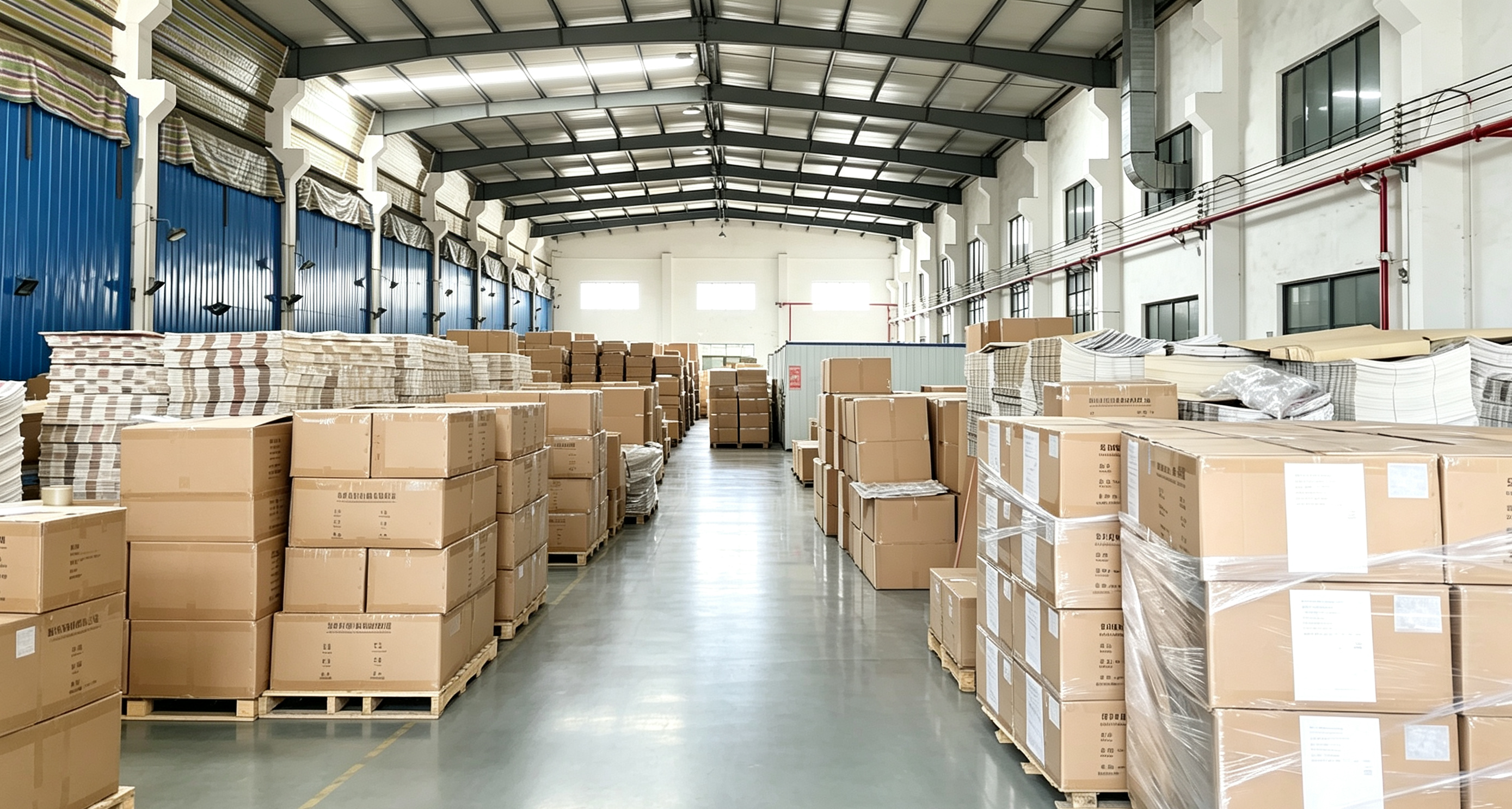
Comparing PVC flooring should start with production and quality-control visibility, not only unit price.
PVC flooring buyers often begin a comparison with unit price. This guide starts from a different point: life-cycle cost, construction quality, application fit and compliance evidence. These factors explain why two seemingly similar PVC flooring quotations can have very different real costs.
For importers, distributors, and project buyers, unit price is the easiest number to compare. In PVC flooring, it is not the most stable number. A more reliable comparison is built from raw materials, wear layer, adhesive and backing, compliance documents, and installation format.
Why Price Comparisons in PVC Flooring Need a Life-Cycle View
The global vinyl flooring market is estimated at USD 28.0 billion in 2026 and projected to reach USD 41.5 billion by 2033, according to Grand View Research. Trade data for floor, wall and ceiling coverings made from vinyl chloride polymers, HS 391810, shows China as the largest exporter in 2024, with exports valued at about USD 4.97 billion, according to OEC. These figures help explain why a buyer can receive many quotes for PVC flooring from different suppliers at very different price levels.
A meaningful part of the price gap comes from choices in product structure rather than from supplier margin alone. Low-cost products often use recycled materials, which can create dimension deviation, colour fade, odor, or incomplete export documentation. In exported projects, these risks can become customs detention, return shipments, after-sales claims, or market returns. For this reason, the better comparison question is not which option is cheap, but what the quote actually pays for.
What a Higher-Quality PVC Flooring Quote Usually Includes
The performance of thin PVC flooring depends on several elements: PVC raw material, wear layer, adhesive or coating, backing structure, and quality control. A low-price quotation often means cost is reduced in one or more of these elements. The following table is a comparison screen, not a conclusion. A low-cost offer can still be well manufactured, and a higher-priced offer can be overpriced. The useful step is to compare each layer separately.
| Construction element | What a low-price offer often means | What a higher-grade offer can include | What should be verified |
|---|---|---|---|
| Base material | Recycled or low-cost PVC content | Virgin raw material with a controlled formulation | Material statement, REACH or SGS test reports |
| Wear layer | Thin printed film | Thicker transparent wear-resistant layer | Wear layer thickness and abrasion test data |
| Adhesive | Light adhesive coating | Heavy adhesive coating for stronger bonding | Peel adhesion, aging resistance, edge-lift test |
| Foam backing | Chemically cross-linked XPE foam | IXPE foam with finer cells and better rebound | Cross-section inspection, press test, third-party report |
| Quality and documents | Missing, expired, or incomplete certificates | ISO9001 system, CE, REACH, MSDS, PPWR packaging information | Certificate validity and product scope before order |
These categories matter more than the label of a single product. For example, a buyer comparing two self-adhesive PVC flooring quotes should ask whether the wear layer difference has been measured. If one product carries a noticeably thicker wear layer and better adhesive, a higher initial cost can still be reasonable because fewer replacements and repairs are expected over the service life.
Reference Data from the SXP Wall Panel Product Line
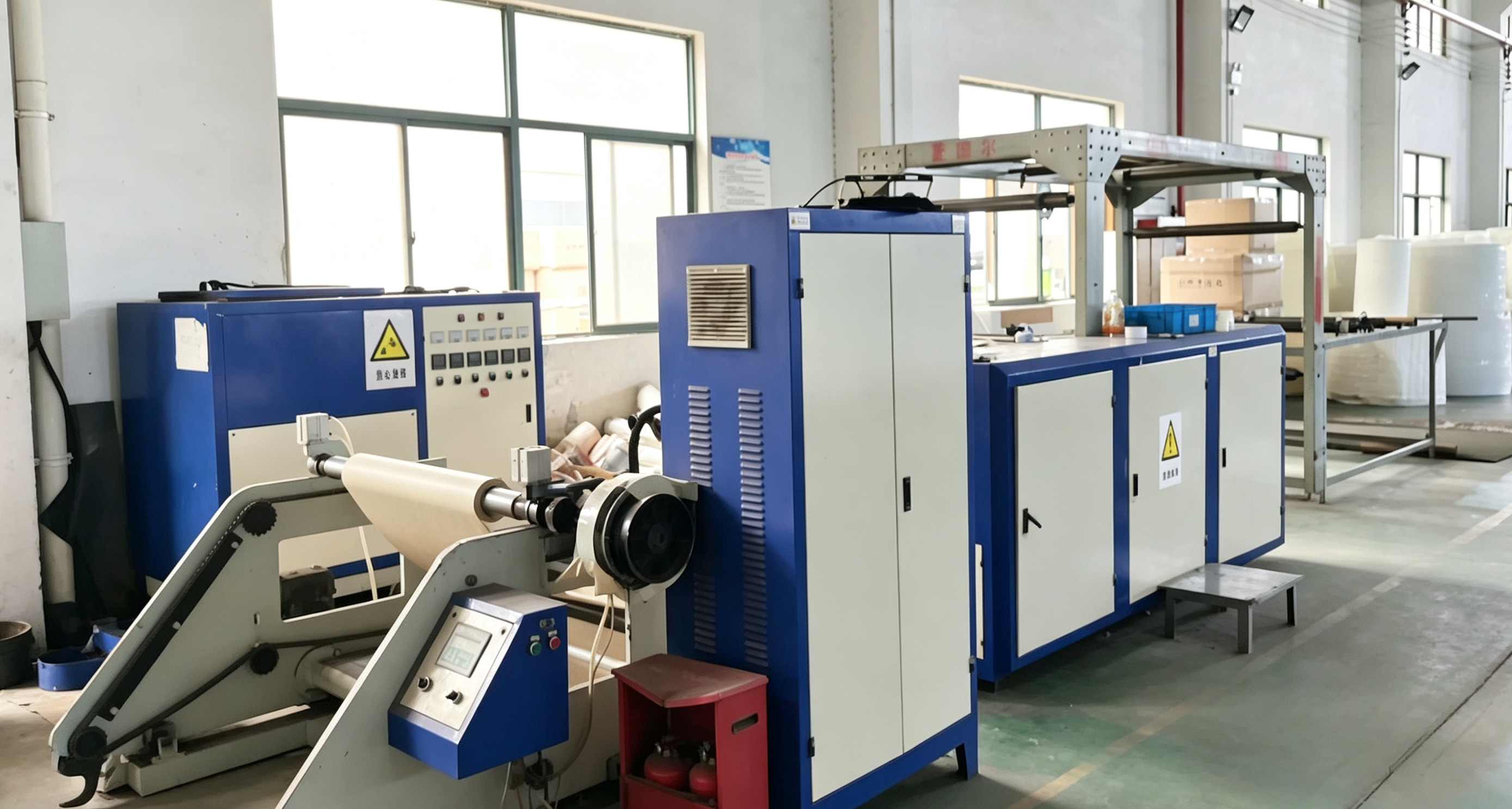
Batch production controls explain part of the quality difference within the PVC flooring market.
Shanghai Yuanguan Rubber Plastic Co., Ltd., which uses SXP Wall Panel as its brand identity in decorative material channels, is a Shanghai-based manufacturer established in 2005. Its main export markets include the EU, USA, Asia and South America, and about 90% of output is exported. The company reports ISO9001 quality management certification. Its product range includes self-adhesive PVC flooring, wall stickers, wallpaper, WPC wall panels, 3D foam wall panels, carpet tiles, and other interior decoration materials.
Example: WB-PVC Self-Adhesive PVC Floor Tile
| Attribute | Recorded data |
|---|---|
| Product type | Self-adhesive PVC floor tile |
| Manufacturer and brand | Shanghai Yuanguan Rubber Plastic Co., Ltd. / SXP Wall Panel |
| Model | WB-PVC |
| Dimension data | Available in 40, 60 and 120 cm widths with 300 cm length; format described as 40/60/120*300 cm |
| Thickness | 1.5 mm |
| Intended sectors | Interior Decoration, Home & Garden, Building Materials |
| Installation method | Self-adhesive backing, dry installation, no cement or glue required |
| Substrate recommendation | Smooth, flat, dry, dust-free and grease-free base; not for powdery, sandy or loose surfaces |
Within the same product family, the manufacturer has documented a comparison between ordinary wall and floor stickers available from competitors and its upgraded covering line. According to this comparison, the upgraded construction uses fuller raw material supply, a thickened wear-resistant surface layer, a dense and thick IXPE substrate, heavy coating, and strong adhesive. The supplier reports that total material thickness is increased by about 22%, glue coating weight is up by about 35%, and wear layer thickness is increased by about 180%. Product service life is described as three times longer than ordinary alternatives. Surface wear resistance is said to be five times better, long-term aging resistance is increased by about 200%, and maintenance frequency is reduced by about 85%.
These reported numbers are not an independent verification by an outside laboratory. In a procurement setting, they should be used to structure the next set of questions: Which wear-resistance test method was applied? What kind of aging cycle produced the aging result? Can the claim be repeated on a sample from the actual production batch? This is how price comparison becomes specification comparison.
Comparing Fire-Resistant, Anti-Slip, Anti-Static and Environmental Claims
Terms such as fire-resistant PVC flooring, anti-static PVC flooring, anti-slip PVC flooring, waterproof PVC flooring, and hospital-grade PVC flooring are frequently used in supplier marketing. In a comparison process, each term should be translated into a measurable requirement before it can affect a decision.
Fire-resistance classification is one example. Chinese national standard GB 8624-97 classifies PVC flooring fire resistance at B1 level, while European classification under EN 13501-1 commonly refers to class Cfl-s1. A label that simply says flame retardant is incomplete if the standard and class are not stated. For anti-static flooring, the buyer should ask for a surface or electrical resistance test result and the standard under which it was measured. For anti-slip flooring, the request should specify the expected use area, because a coefficient suitable for a dry living room may not be suitable for a wet entrance or a kitchen.
Environmental claims should be compared separately from mechanical performance. FloorScore certification verifies that hard-surface flooring products comply with the VOC emission criteria of California Section 01350. It is a recognised indoor air quality certification for flooring in the US market. For EU shipments, the main checks are usually CE-CPR for construction products, REACH for hazardous substances, MSDS documentation, and PPWR-compliant packaging. If a supplier claims phthalate-free PVC flooring, the buyer should ask for a test report that names the specific phthalates covered. Major global manufacturers such as Tarkett reached 100% phthalate-free vinyl production in Europe, North America, Serbia and China by 2018, which shows that phthalate-free formulation is technically mature and should be documentable.
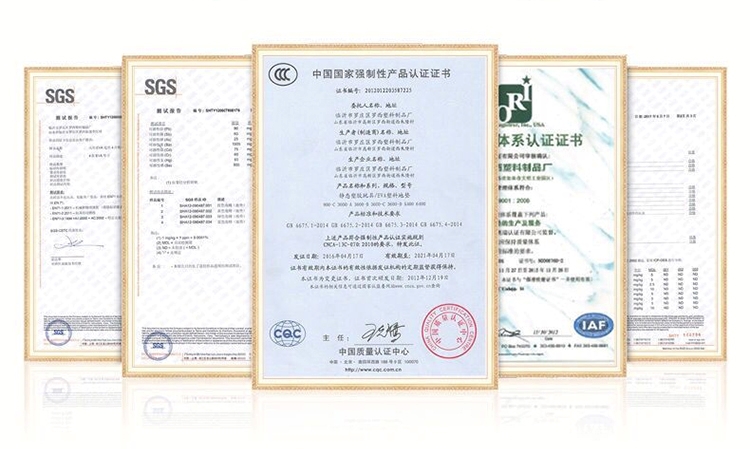
Compliance documents should be checked before an import order, not after shipment.
For PVC flooring intended for a hospital, kindergarten, hotel, or workshop, the requirement should be written as a combination of performance values, not a product name. A phrase such as hospital-grade PVC flooring usually means that the buyer expects cleanability, anti-slip behaviour, low emissions, and sometimes static control in a single product. Similarly, kindergarten PVC flooring usually requires anti-slip and cushioning properties plus attention to chemical safety. The safest comparison method is to list each end-use requirement and verify the report supporting each one.
Click-Lock, Self-Adhesive, or Roller: Which Format Is Being Compared?
Another common source of comparison mistakes is installation format. Price per square metre is only meaningful when the product formats are similar.
Self-adhesive PVC flooring is a thin, peel-and-stick product. The WB-PVC example is 1.5 mm thick. It is efficient for renovation and for covering a smooth existing floor because no cement or glue is needed. It can be cut locally, and some styles can be removed and reinstalled without leaving residue. Its limitation is substrate dependence: the old surface must be flat, dry, and stable. A self-adhesive floor will reflect small defects in the base, and it is not a solution for a powdery or loose substrate.
Click-lock PVC flooring uses thicker planks connected at the edges. It is a floating installation and can be more suitable when the subfloor is less smooth or when the buyer wants a floor that is not permanently bonded. Click-lock formats are generally heavier and cost more per square metre, partly because of the rigid layer and locking profile. This difference should be understood as a format cost, not as proof that a click-lock floor is always higher quality.
Roller PVC flooring is supplied in wide rolls and can reduce the number of joints in larger rooms. Roller formats are sometimes lighter to transport, but the buyer must check width tolerance, edge straightness, and whether the declared thickness includes the wear layer. The same logic applies to plank formats such as 6 x 36 inch PVC flooring or other light-weight formats. Lower weight may reduce logistics cost, but it can also mean a thinner construction. Weight should not be accepted as a quality indicator unless the full layer stack is known.
Scenario-Level Comparison: Where the Same Flooring Needs Different Evidence
After format and construction, comparison should move to application. Pattern and surface design are one part: wood-grain PVC flooring, stone-grain PVC flooring, carpet-pattern PVC flooring, parquet-pattern PVC flooring, and matte-surface PVC flooring give buyers different visual results. But pattern choice is not a substitute for technical verification.
| Application scenario | Priority comparison factors | What should be written into the procurement criteria |
|---|---|---|
| Home decor and renovation | Visual design, easy installation, waterproof behaviour in wet areas, low emissions | Pattern clarity under real lighting, wear layer, documented low-VOC performance, substrate condition |
| Kindergarten and child-friendly spaces | Anti-slip, cushioning, easy cleaning, chemical safety | Slip test for wet and dry conditions, impact or compression data, phthalate or REACH report |
| Hospital, clinic and hotel | Hygiene, wear resistance, movement of beds or trolleys, fire performance | Fire class under GB 8624-97 B1 or EN 13501-1 Cfl-s1, static-control data if required, validated wear resistance |
| Light workshop and utility areas | Abrasion, impact, slip resistance, occasional water exposure | Realistic load conditions; lightweight 1.5 mm PVC flooring is not automatically suitable for heavy rolling loads |
This table is not saying that one supplier is universally better. It is saying that in a Decision-stage comparison, the same product type can pass or fail depending on the application. A flooring solution that is economical for a rental apartment can be the wrong product for a workshop floor where heavy trolleys are used daily.
Comparison with Traditional Solutions and One Important Boundary
PVC flooring is a practical substitute for some traditional floors, but it has a clear boundary. A thin self-adhesive PVC floor tile is a decorative surface finish. It is not a substrate leveler, and it does not have the impact resistance of a thick rigid tile, a heavy commercial sheet, or a click-lock floor with a dense core.
Compared with ordinary low-cost wall and floor stickers found on the market, an upgraded PVC flooring product with better raw material, a thicker wear layer, better adhesive, and dense IXPE backing can reduce edge warping, hollowing, scratches, and aging problems. But this is not the same as saying it can replace ceramic tile under standing water or hardwood under heavy point loads. The more honest comparison statement is: a compliant and well-constructed self-adhesive PVC floor is a strong option when the base is flat and dry, the use is residential or light commercial, and the buyer values speed, cost efficiency, and easy maintenance. If the project involves major surface irregularities, continuous moisture, or heavy industrial loads, a different product category is likely to be the correct choice.
Suppliers should be expected to state this boundary. A quotation that claims one thin PVC product is suitable for every surface and every traffic level is less credible than a quotation that explains installation limitations.
Market Data That Should Influence the Decision
The market context supports a more careful comparison process. Global demand for vinyl flooring is projected to grow at a CAGR of about 5.8% between 2026 and 2033, according to Grand View Research. China remains the largest export source for HS 391810 products, with export value of USD 4.97 billion in 2024. In this type of supply environment, price competition is inevitable, but low price alone does not prove low cost of ownership.
Buyers should also note that different data sources define PVC flooring differently. Some reports measure all vinyl flooring, including LVT, VCT and sheet products, while others use a much narrower PVC definition. When a supplier cites market size or growth rate, it is reasonable to ask whether the data source includes the same product scope as the quotation. This is a small detail that can reveal how precisely the supplier manages technical information.
Future Outlook
For the next phase of PVC flooring procurement, the more likely direction is clearer documentation rather than lower prices. Environmental regulations in the EU and VOC requirements in the US, such as FloorScore and California Section 01350, push suppliers to keep systematic files. At the same time, buyers are likely to compare maintenance cost and replacement cycles more seriously than in the past. Suppliers such as Shanghai Yuanguan, which publish product and factory data through their brand SXP Wall Panel, give procurement teams a starting point for this kind of verification. The brands that can provide independent reports, stable batch quality, and honest installation limits will be easier to rank in long-term supplier lists.
Frequently Asked Questions
How should a buyer decide whether a higher PVC flooring price is justified?
A higher unit price is justified when it is supported by better construction and lower life-cycle cost. In the comparison data reported for the SXP Wall Panel product family, raw material cost is about 12% higher than for ordinary alternatives, but average annual use cost is about 60% lower, because the product is expected to last longer and need less maintenance. A buyer should treat such numbers as a hypothesis until the wear layer, adhesive behaviour, and test reports are confirmed on a real production sample.
What are the main risks of choosing low-cost PVC flooring?
The main risks come from recycled raw materials, thinner construction, weaker adhesive, and missing certificates. Low-cost products often use recycled PVC, which can cause dimension deviation, fading, odor, and non-compliant documentation. After export, these risks can lead to customs detention, after-sales claims, and returns. For project orders and export orders, sample confirmation is mandatory, and bulk orders should not be decided purely on price.
For foam-backed PVC flooring, should a buyer select XPE or IXPE?
IXPE is produced by electron-beam irradiation cross-linking and has fine, uniform cells, fast rebound, and better resistance to permanent indentation. XPE is chemically cross-linked, usually lower in cost, but it can have larger cells and may leave a permanent dent under long-term heavy load. For residential, commercial, Europe and North America export projects, and long-life applications, IXPE is generally the better choice. Visual inspection and hand-press tests are only a preliminary check; the final acceptance criterion should be a third-party test report.
Which compliance documents should be checked before importing PVC flooring into the EU?
For formal EU shipments, the buyer should verify CE-CPR construction product compliance, REACH hazardous substance compliance, MSDS documentation, and PPWR packaging compliance. Missing or invalid certificates can cause customs detention, return shipment, and substantial fines. Request full and valid certificates before placing the order, and confirm that the documents cover the specific product model being shipped.
How should fire-resistant and FloorScore claims be interpreted during supplier comparison?
A fire-resistant claim should name a standard and a class. PVC flooring fire resistance is commonly classified as B1 under GB 8624-97 or Cfl-s1 under EN 13501-1. FloorScore certification verifies that the product meets the VOC emission criteria of California Section 01350. These are separate claims: one is about reaction to fire, and the other is about indoor air quality. Each claim should have its own certificate or test report.
Additional documentation used for this comparison: Shanghai Yuanguan / SXP Wall Panel Product Brochure (PDF).
Sources for market and standard references: Grand View Research vinyl flooring market report; OEC trade data for HS 391810; SCS Global Services FloorScore certification description; supplier product and compliance data supplied by Shanghai Yuanguan Rubber Plastic Co., Ltd.
Have Questions or Need More Details?
Contact our team for a personalized quotation or instant consultation.
Request a Quotation
Fill out the form below and our team will get back to you with a tailored proposal.
WhatsApp Direct Chat
Prefer to chat in real-time? Message us on WhatsApp for instant assistance & quick answers.
- Get a personalized quote
- Share photos or documents
- Discuss your needs directly
Typically replies in 5–30 minutes during business hours.