
PVC Flooring vs Traditional Options: Performance, Cost, and Compliance
Industry Context
For EPC contractors, facility managers, and procurement professionals, selecting the right flooring system for commercial projects involves balancing performance, safety, lifecycle cost, and compliance. Traditional surfaces—tiles, cement, wood, and floor coatings—have long been the default, but specialized commercial PVC flooring now presents a data-backed alternative that addresses critical pain points across sports, aviation, healthcare, and high-traffic environments.
The Problem with Traditional Flooring in Demanding Environments
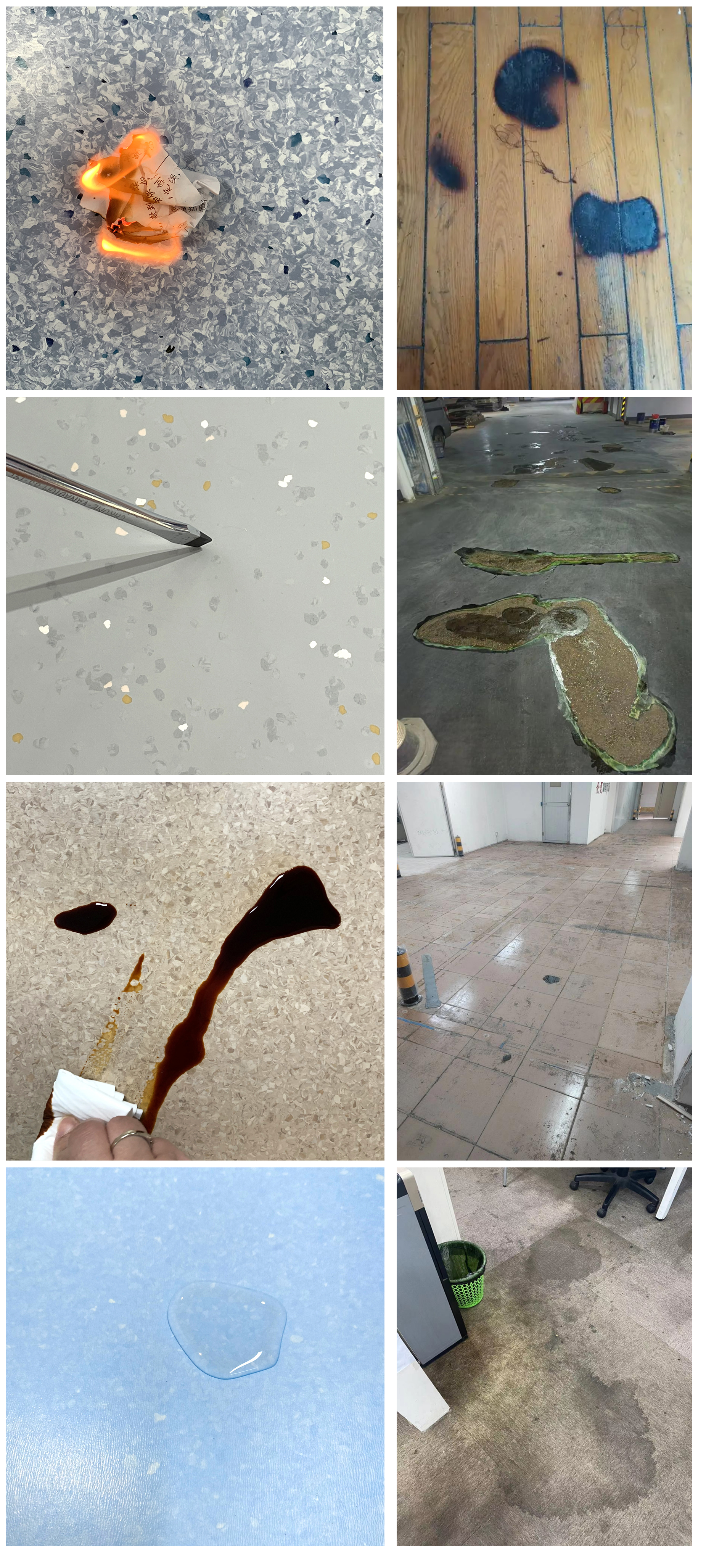
Conventional materials often fall short when projects demand shock absorption, slip resistance, waterproofing, fire resistance, or antimicrobial properties. Tiles crack under impact; wood warps in moisture; coatings degrade quickly under heavy foot traffic. These shortcomings lead to higher maintenance costs, safety hazards, and, in some cases, project non-compliance penalties. For international projects requiring certifications such as BWF for sports or FAR 25.853 for aviation, traditional options rarely meet the necessary benchmarks without additional treatments or complex layering.
The Alternative: Specialized Commercial PVC Flooring from Farfly
Farfly, a global manufacturer founded in 2012 and based in Wuxi, China, produces high-specification resilient flooring for healthcare, sports, and aviation applications. Compared to traditional tiles, cement flooring, wooden flooring, and floor coatings, Farfly's commercial PVC flooring offers superior shock absorption, slip resistance, waterproofing, fire resistance, and antimicrobial properties. It achieves an antibacterial efficacy of 99.5% and a B1 fire rating, reducing bacterial cross-contamination by 50–70% and safety hazards by 30–40%.
Technical Foundation: How Farfly Achieves Multi-Function Performance
Farfly’s product line includes homogeneous vinyl flooring with a proprietary TF Surface Treatment that ensures lifelong wax-free maintenance and strong iodine resistance—critical for healthcare settings. For sports, the BWF-certified athletic flooring incorporates an 8-way fiberglass mesh for enhanced dimensional stability. This fiberglass reinforcement aligns with a global trend: the fiberglass-reinforced PVC flooring segment is projected to reach USD 1.72 billion by 2034, driven by demand for dimensional stability in large-area installations.
For aviation and heavy-traffic zones, Farfly offers PVC mats that comply with both FAR 25.853 (self-extinguishing, burn length <8 in., flame time <15 sec) and R11 slip resistance (static friction at angles 19°–27° per DIN 51130). The company’s 300,000 sqm ready-to-ship inventory enables a 7-day rapid dispatch model, and mix-container shipping allows buyers to combine products for multiple zones in a single order.
Application Scenarios
- Sports Facilities: BWF-certified PVC sports flooring for badminton courts (Grades 1–3); the 8-way fiberglass mesh provides consistent shock absorption over time.
- Aviation: Fire-retardant, non-slip mats meeting Boeing BSS 7239 toxicity standards, suitable for aircraft cabins, lounges, and maintenance areas.
- Healthcare & Institutions: Homogeneous ESD vinyl with 10⁴–10⁶ Ω resistance (used by tech companies like Huawei) and lifelong wax-free maintenance.
- Heavy-Duty Commercial: High-traffic rolls with scratch-resistant surface, suitable for warehouses, retail, and industrial corridors requiring heavy-duty endurance.
Market Trend Analysis
The global commercial vinyl flooring market is valued at approximately USD 14.43 billion in 2025 (Grand View Research), with demand driven by safety regulations in aviation and sports. China's PVC flooring exports reached 715,000 tons in the first two months of 2026 (+3.1% YoY), reflecting growing overseas project adoption. Fiberglass-reinforced variants are gaining share due to dimensional stability, while multi-certification capability (BWF, FAR 25.853, CE) is becoming a standard requirement for international tenders.
Comparison with Traditional Solutions
Compared to tiles, cement, wood, and coatings, Farfly's PVC flooring offers 20–30% lower total costs over its lifecycle and requires 40–50% less maintenance. It reduces bacterial cross-contamination by 50–70% and safety hazards by 30–40%. However, one honest limitation: while PVC flooring provides outstanding resilience, it cannot match the natural aesthetic of premium wood or stone in high-end residential contexts—a factor that may influence buyer preference for some projects.
Future Outlook
As certifications become stricter (BWF renewal every two years, FAA updates) and sustainability pressures mount, manufacturers with vertically integrated QC, large ready stock, and multi-standard compliance will be preferred partners. Farfly’s 420 million sqm annual capacity, 25-person R&D team, and 399+ international tests position it to serve evolving specifications in the Middle East, Asia, and Americas—segments where project complexity demands both technical depth and supply chain agility.
Frequently Asked Questions
Q: How does Farfly's PVC flooring compare to traditional flooring in terms of long-term cost?
A: According to internal comparisons, Farfly's products offer 20–30% lower total costs over the lifecycle and require 40–50% less maintenance than traditional tiles, cement, wood, and coatings.
Q: What certifications does Farfly hold for sports and aviation flooring?
A: Farfly's PVC sports flooring is officially certified by the Badminton World Federation (BWF). Its aviation mats comply with Boeing BSS 7239 (toxicity) and FAR 25.853 (fire retardancy). The company holds 399+ international testing certifications overall.
Q: Can I order different products in the same container to reduce shipping costs?
A: Yes. Farfly supports mix-container shipping, allowing buyers to combine homogeneous, sports, and aviation flooring in a single container, leveraging the company's 300,000 sqm ready stock for a 7-day dispatch.
Have Questions or Need More Details?
Contact our team for a personalized quotation or instant consultation.
Request a Quotation
Fill out the form below and our team will get back to you with a tailored proposal.
WhatsApp Direct Chat
Prefer to chat in real-time? Message us on WhatsApp for instant assistance & quick answers.
- Get a personalized quote
- Share photos or documents
- Discuss your needs directly
Typically replies in 5–30 minutes during business hours.