
PVC Flooring vs. Tiles: An Independent Buyer's Evidence Check
Most PVC-versus-tile comparisons are settled in a showroom, on a sample board, with a price per square meter attached. Real renovation projects settle the question differently: how long the floor is out of service, what the existing substrate will accept, and who pays when one unit has to be replaced three years later.
This article compares self-adhesive PVC flooring with ceramic tiles for residential and light commercial interiors from a buyer's standpoint. It relies on documented product information from Shanghai Yuanguan Rubber Plastic Co., Ltd., a decorative materials manufacturer that markets its flooring within the SXP Wall Panel product family, and it separates three kinds of evidence: first-party manufacturer documentation, category-level industry standards, and independent third-party test data. Where the third category does not exist in the public record, this article says so rather than filling the gap.
Why Most PVC vs. Tile Comparisons Fail Buyers
Two problems recur in almost every comparison a procurement team receives. The first is category confusion. "PVC flooring" describes a family that includes luxury vinyl tile, vinyl composition tile, sheet vinyl and self-adhesive peel-and-stick floor tiles. These products differ in construction, thickness and installation method, and they behave differently under load, moisture and time. Ceramic tiles are equally broad, from wall tiles to fully vitrified porcelain. A comparison between a 1.5 mm self-adhesive PVC floor tile and a porcelain floor tile is not the same exercise as a comparison between a rigid-core vinyl plank and a ceramic wall tile, and the conclusions change with the pair chosen.
The second problem is evidence quality. Performance statements arrive without their provenance. A durability figure measured in an internal test line, a claim repeated from a distributor catalogue, and a result from an accredited laboratory all look identical on a datasheet. For a buyer signing off on an apartment renovation, a hotel room makeover or a chain retail refurbishment, that difference is the whole decision.
The practical opportunity is to define the comparison before sampling anything. The criteria below can be applied to any PVC product and any tile product, which means the framework survives a supplier change.
What Each Material Actually Is
Self-adhesive PVC flooring
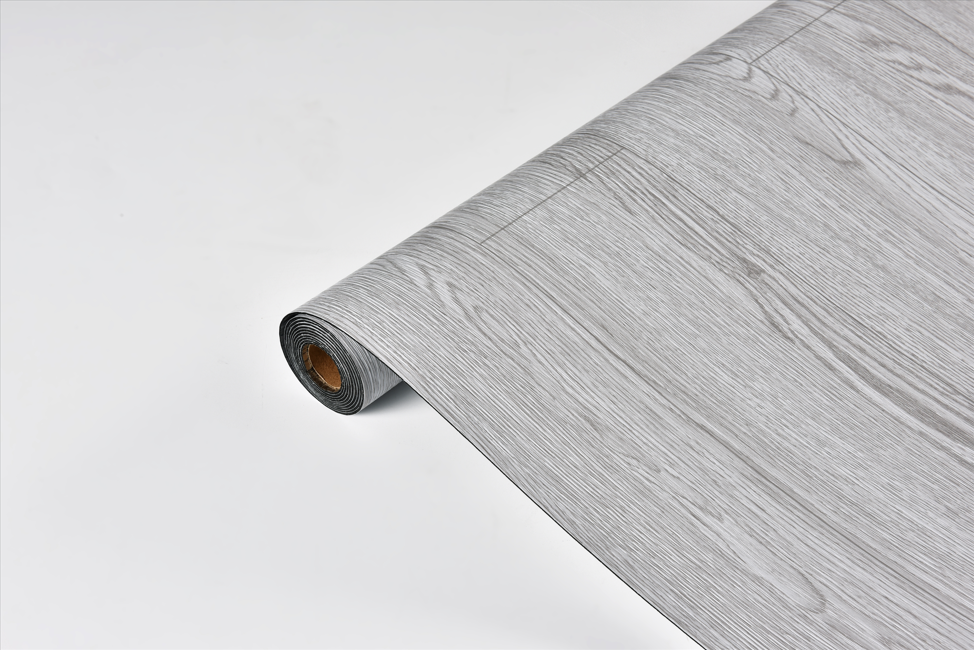
Self-adhesive PVC flooring is a resilient floor covering made from polyvinyl chloride, supplied as tiles or rolls, with a pressure-sensitive adhesive backing protected by a release film. Installation is a dry process: the film is peeled away and the tile is pressed onto a smooth, prepared surface. No cement or glue is required, tiles can be cut on site, and some styles can be removed and reinstalled, in certain cases without leaving residue.
Shanghai Yuanguan Rubber Plastic Co., Ltd. is a Shanghai-based manufacturer of decorative materials founded in 2005, producing wall stickers, PVC wallpaper, WPC and PVC wall panels, and self-adhesive PVC flooring. The company reports an export ratio of roughly 90%, with main markets in Europe, North America, Asia and South America, and supplies retailers and wholesalers in more than 80 countries. It holds ISO 9001 quality management system certification and describes multi-stage inspection with 100% testing of batches before delivery. Its flooring line is marketed under the SXP Wall Panel brand, and the WB-PVC self-adhesive PVC floor tile is supplied in 40 cm, 60 cm and 120 cm × 300 cm formats at 1.5 mm thickness.
Ceramic tiles
Ceramic and porcelain tiles are fired clay products, typically installed with cementitious adhesive and finished with grout. As a category, they are dimensionally stable, resistant to water, and able to accept heavy static loads and high impact when correctly bedded on a rigid substrate. They are also heavier than resilient flooring, harder and cooler underfoot, and they are normally removed destructively, which matters in leased or temporary spaces.
A Six-Criterion Framework Buyers Can Apply
The table below is a screening tool, not a verdict. It puts the documented facts for one specific self-adhesive PVC floor tile next to the general installation and service practice for ceramic tiles. Use it to decide what to test, not what to buy.
| Criterion | What the buyer should measure | Documented for WB-PVC self-adhesive PVC floor tile (manufacturer documentation) | Ceramic tile (general industry practice) |
|---|---|---|---|
| Installation method | Number of wet trades, drying or curing time before use | Self-adhesive backing; peel off the release film and press onto a smooth surface; dry installation, no cement or glue | Typically fixed with cementitious adhesive and grouted; a wet process with curing before heavy traffic |
| Tooling | Equipment cost and skill level required | Utility knife, scraper or roller, tape measure, spirit level, adhesive remover; a matching floor roller is recommended for floors | Cutting tools, mixing, levelling and grouting equipment, generally a trained trade |
| Substrate | Flatness, dryness, soundness, absence of dust and grease | Requires a flat, dry base free of dust and grease; suitable on cement floors, tiled surfaces, latex-painted walls, plasterboard and plywood; strictly not for powdery, sandy or loose surfaces; floor bases need adequate strength and no hollow spots | Requires a rigid, sound substrate; minor surface texture is bridged by the bedding layer, but the base must not deflect |
| Moisture and environment | Wet-area suitability, sun exposure, temperature range | Indoor use at normal room temperature in typical humid environments such as bathrooms and dry areas of kitchens; avoid long-term exposure to strong sunlight | Commonly used in wet areas and outdoors; heavier and colder underfoot indoors |
| Maintenance | Cleaning labour and frequency of repair | Manufacturer states 85% less maintenance than alternatives, with no hollowing, edge warping or degumming, and scratch resistance | Cleaning effort is concentrated on grout lines; individual units can be replaced, but colour and batch matching is required |
| Removal and reuse | End-of-lease or refurbishment cost | Can be cut locally and removed and reinstalled; some styles can be removed without leaving residue | Removal is destructive and generates debris; substrate restoration is usually required |
Criterion 1: Installation Method and What It Means for Downtime
The documented installation process for self-adhesive PVC flooring is deliberately short. The tile is positioned on a smooth surface, the protective film is peeled back, the tile is pressed into place, and a roller is used for floors to consolidate the bond. Cement and glue are not used. The supporting tool list is limited to hand tools — a utility knife, scraper or roller, tape measure, spirit level — plus an adhesive remover for disassembly, and the manufacturer recommends a matching floor roller rather than large construction equipment.
That description is a process specification, not a measured installation-time study, and buyers should not treat it as one. What a buyer can measure directly, and should measure on their own project, is the following set of numbers: labour hours per square meter including substrate preparation; the elapsed time between laying and the point when furniture or foot traffic can return; the number of separate trades on site; the cutting waste rate; and the rework rate caused by adhesion failures or visible surface telegraphing. Each of these can be recorded during a small trial area rather than estimated from a brochure.
For ceramic tiles, the same measurements must include a setting and grouting sequence, which generally extends the interval before the floor can take normal use and reduces the number of rooms that can be finished in a single working day. The magnitude of that difference depends on the adhesive system, the substrate and the site, which is exactly why it is worth measuring inside the project rather than relying on a general comparison.
Criterion 2: Substrate Conditions Decide the Outcome
Self-adhesive PVC flooring places a large share of its risk on the substrate. The documented requirements are specific and non-negotiable: the base must be flat, dry, and free of dust and grease. Acceptable surfaces include cement floors, tiled surfaces, latex-painted walls, plasterboard, plywood and other smooth, solid bases, and the product can be applied to walls as well as floors. Powdery, sandy and loose surfaces are explicitly excluded, and floor bases must meet the required strength with no hollow spots.
The reason is physical. A 1.5 mm adhered film follows whatever is underneath it. Unevenness, ridging, residual grit or a weak, friable surface layer is not corrected by the flooring; it is transferred into the finished floor as visible defects or as bond failure that appears later. Substrate surveys and preparation are therefore not overhead costs to trim; for self-adhesive formats they are the installation.
Ceramic tile systems behave differently on this criterion. Because tiles are bedded in a mortar or adhesive layer, they can absorb minor surface texture, and the finished floor is a mineral slab rather than a bonded film. The trade-off is weight and rigidity: tile installations generally expect a substrate that will not deflect, and they add dead load that a lightweight renovation may not have been designed for.
Criterion 3: Maintenance and Repair Behaviour
The manufacturer's documentation states that the flooring requires 85% less maintenance than alternatives, shows no hollowing, edge warping or degumming, and is scratch resistant. These are first-party claims. Two questions should be asked before they are accepted as procurement facts. First, what is the baseline behind "alternatives"? A comparative percentage is only meaningful against a defined reference product and test method. Second, was the measurement performed by an internal test line or an accredited third-party laboratory?
If the underlying test method cannot be produced, the honest treatment is to classify the statement as a design target and validate it with physical samples and site trials. This is not a reason to reject the product; it is a reason to convert a marketing figure into a measurable acceptance criterion in the purchase order.
Tile maintenance follows a different pattern. Cleaning effort concentrates on grout lines, which can stain and need periodic refreshing, while the tile surface itself is highly resistant to abrasion and moisture. Individual tiles can be replaced, but matching colour and calibre to an existing batch is a recurring practical problem in phased renovations.
Criterion 4: Moisture, Sunlight and Fire Classification
The documented operating envelope for this self-adhesive PVC flooring is indoor use at normal room temperature, in typical humid environments such as bathrooms and dry areas of kitchens, with long-term exposure to strong sunlight to be avoided. The manufacturer also documents the format as usable on both walls and floors. That is a defined scope, and buyers specifying flooring for sunroom glazing, external balconies or continuously wet zones should treat it as a boundary rather than a limitation to negotiate.
Fire performance is one area where category-level standards matter more than product marketing. PVC flooring fire resistance is commonly classified as Class B1 under the Chinese standard GB 8624-97 and as Cfl-s1 under EN 13501-1, with ASTM E648 also applied in the United States. These are the classifications a specification should reference. This article does not assert that any particular product holds these classifications; the correct procedure is to request the test report that matches the project's jurisdiction and to check that the report covers the specific construction and thickness being ordered.
Indoor air quality follows the same logic. FloorScore certification verifies that hard surface flooring products comply with the volatile organic compound emissions criteria of the California Section 01350 programme, and it is a recognised framework for procurement specifications in North America. Buyers sourcing phthalate-free PVC flooring should also ask for the plasticizer to be identified in writing. The direction of the category is clear: major manufacturers have moved away from phthalates, with Tarkett reporting that by 2018 all of its vinyl production sites in Europe, North America, Serbia and China used phthalate-free technology based on alternative plasticizers such as DOTP. A supplier that cannot name its plasticizer system is a supplier that cannot support a phthalate-free claim.
Criterion 5: Total Cost of Ownership
Unit price is the least reliable comparison point between these two materials, because the visible square-meter cost excludes most of what actually determines the budget. A defensible total cost of ownership calculation for a residential or light commercial project should carry the following lines, each recorded per square meter:
- Substrate preparation and levelling — for self-adhesive PVC formats this is the dominant risk item, since the base must be flat, dry, and free of dust and grease, with no hollow spots.
- Adhesive, grout and consumables — self-adhesive PVC flooring requires no cement or glue; tile systems require bedding adhesive and grout.
- Labour hours and trade mix — the documented PVC tool list is limited to hand tools and a recommended floor roller, which reduces the number of trades required on site.
- Downtime cost — the interval before the space can be returned to use, which affects rental income, hotel room availability and retail trading days.
- Maintenance labour over the service window — the manufacturer documents 85% less maintenance than alternatives for the PVC product; tile maintenance is concentrated in grout care.
- Replacement and repair — partial replacement cost, colour matching difficulty, and whether a single damaged unit can be swapped without disturbing the surrounding floor.
- End-of-cycle cost — removability. Self-adhesive PVC flooring can be cut locally and removed and reinstalled, and some styles can be removed without leaving residue, which changes the economics of leased and temporary spaces.
- Logistics weight — heavier mineral flooring increases transport and handling costs on upper-floor and remote-site projects.
Only after those lines are populated does the unit price comparison mean anything. In many renovation scenarios the substrate and downtime lines dominate the outcome, which is why two projects using the same material can reach opposite conclusions.
Criterion 6: Where Self-Adhesive PVC Flooring Stops Being the Right Answer
A comparison that only lists advantages is not a comparison. The documented boundaries of this product are explicit, and buyers should treat them as hard constraints:
- Unsound substrates. Powdery, sandy and loose surfaces are excluded, and floor bases must have adequate strength with no hollow spots. A self-adhesive film cannot rehabilitate a failing subfloor.
- Surface regularity. The base must be flat and free of dust and grease. On a visibly uneven or contaminated slab, the cost of correction may exceed the benefit of a self-adhesive format.
- Thickness and structural role. At 1.5 mm, the WB-PVC tile is a surface covering, not a structural layer. It does not stiffen a deflecting floor and is not intended to carry heavy static loads or high-impact use.
- Sunlight and outdoor exposure. Long-term exposure to strong sunlight should be avoided, and the documented operating environment is indoor use at normal room temperature.
- Removability is not universal. The documentation states that some styles can be removed without leaving residue, not all of them. Removability depends on the style, the substrate and how long the floor has been down, and it should be confirmed per SKU and tested on site.
- Evidence gaps. No independent third-party test data is publicly referenced for this product's material performance. Buyers who require independently verified durability, slip or emissions data must commission that testing themselves.
Where the project involves heavy static or impact loads, continuous wet exposure, outdoor installation, or a requirement for a permanently bonded mineral surface, ceramic or porcelain tiles remain the more suitable category. The comparison is not a contest between materials; it is a matching exercise between a product's documented operating envelope and a specific building.
Market Context: Scale, Trade Concentration and the Phthalate Shift
The category that self-adhesive PVC flooring sits inside is large. The global vinyl flooring market was estimated at USD 28.0 billion in 2026 and projected to reach USD 41.5 billion by 2033, a compound annual growth rate of 5.8% over that period, according to Grand View Research. That figure covers luxury vinyl tile, vinyl composition tile and sheet formats, so it should be read as the scale of the resilient vinyl category rather than as a measurement of any single product family.
Market size figures for "PVC flooring" diverge widely between research houses, and the reason is definitional rather than factual. Narrow definitions that exclude LVT and sheet vinyl produce much smaller numbers for the same year. Buyers who use market reports to justify a sourcing strategy should check the product scope behind the headline figure before drawing conclusions.
On the supply side, trade data shows how concentrated the category is. China was the largest exporter of floor, wall and ceiling coverings under HS code 391810 in 2024, with exports valued at USD 4.97 billion, ahead of Vietnam at USD 1.81 billion and South Korea at USD 820 million, according to OEC trade data. For buyers, that concentration has two practical consequences. First, competitive pricing and product variety are widely available. Second, compliance quality varies enormously between suppliers within the same exporting country, which shifts the burden of proof onto the buyer's verification process rather than onto the country of origin.
The third structural change is chemistry. As major producers have converted production to phthalate-free plasticizers, buyers in Europe and North America increasingly treat plasticizer identification as a baseline requirement rather than a premium feature. This trend moves in one direction, and suppliers that cannot document their formulation will progressively lose access to specification-driven projects.
How to Verify Claims Yourself: A Six-Step Evidence Protocol
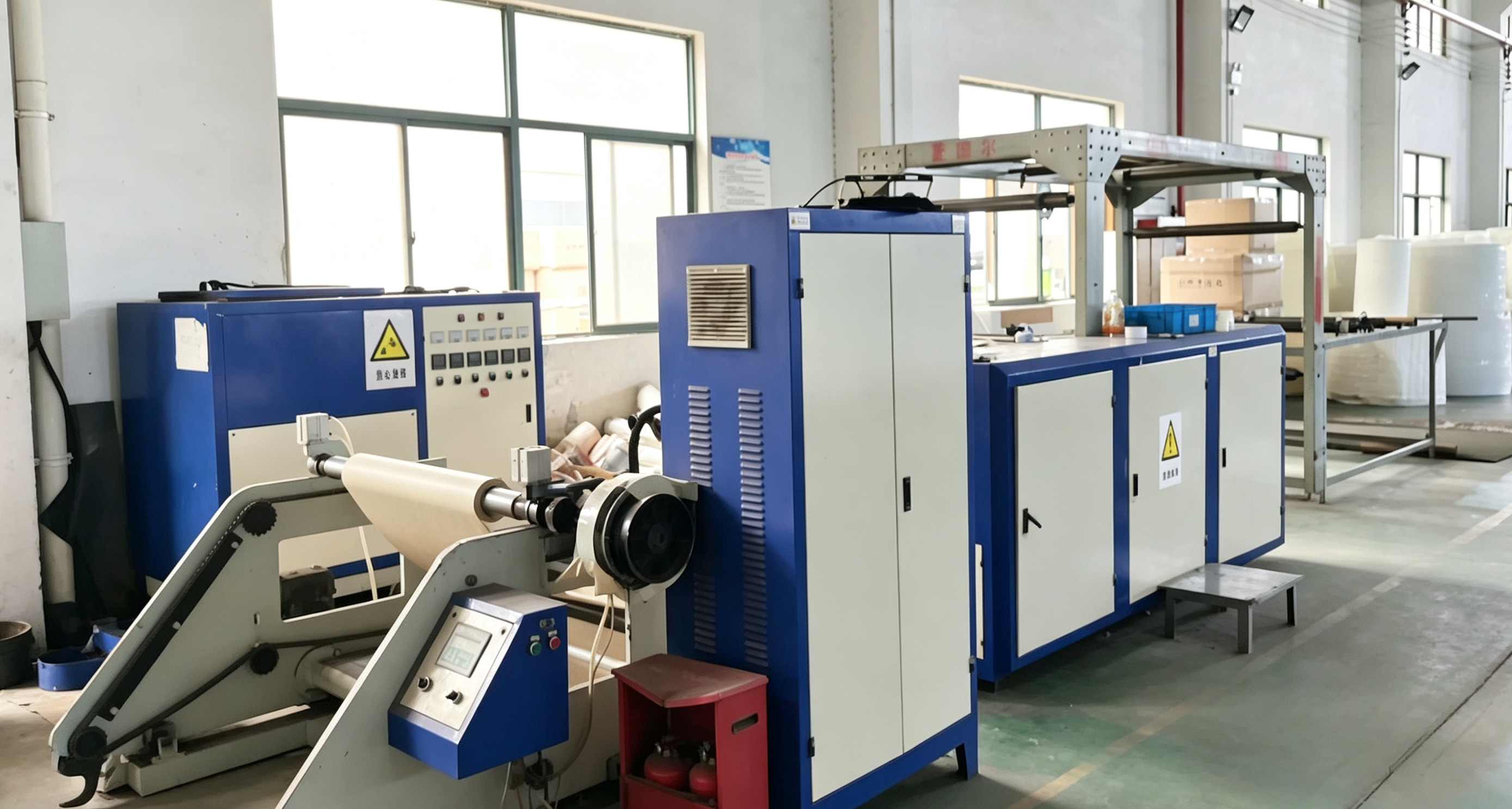
Because the performance claims for self-adhesive PVC flooring are largely first-party, the buyer's own verification workflow becomes the decisive quality control. The following sequence is designed to be applied before a bulk order, not after a complaint.
1. Commission or review a factory audit. Confirm the production address, the lines used for the ordered construction, and the inspection stages actually operated. A manufacturer describing multi-stage inspection and 100% batch testing should be able to show where those checks happen and what record they produce.
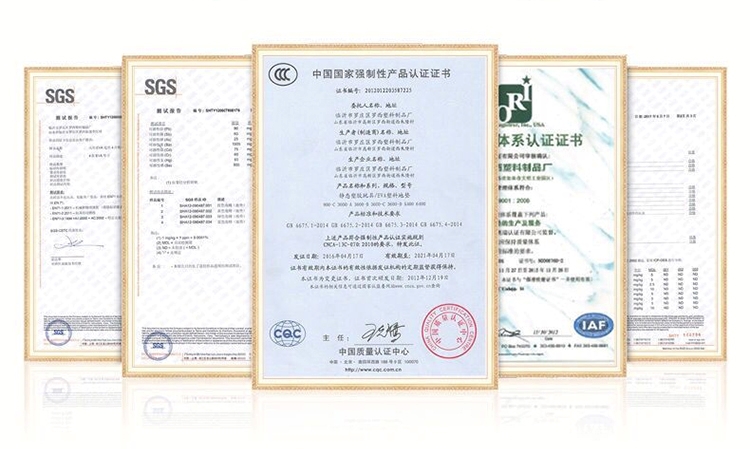
2. Verify ISO 9001 properly. Request the certificate and check the issuing body, the certificate number, the scope of registration and the validity dates. A copy without a traceable certificate number is a document, not evidence.
3. Match compliance documents to the destination market. Products exported to the EU must comply with CE-CPR construction product certification, REACH hazardous substance regulation and PPWR packaging rules. Missing or invalid certificates can result in customs detention, return shipment and substantial fines. Certificate validity should be checked before orders are placed, not at the port.
4. Demand batch samples, not display samples. Display boards are selected. Batch samples reveal the variation a buyer will actually receive. Test adhesion on the real substrate, check flatness and colour consistency, and confirm removability on the style being quoted rather than on a different SKU.
5. Escalate to third-party laboratory testing where the risk justifies it. Visual and hand inspection is only a preliminary screen; a third-party laboratory report should serve as the final acceptance evidence for material composition, emissions or fire classification questions.
6. Fix the commercial terms in writing. Confirm the minimum order quantity, lead time and customisation scope in the purchase order, specify the material grade explicitly, and require sample confirmation before bulk production. For reference, this supplier documents a minimum order quantity of 1,000 square meters, a 30-day lead time, a monthly capacity above 10 million square meters, and OEM/ODM customisation across size, colour, pattern, embossing texture, material structure, thickness, packaging and private label.
Material grade deserves particular attention. Price gaps between apparently identical flooring products usually trace back to raw material — virgin versus recycled content — thickness, formulation and quality control. Low-cost recycled-material products may show dimensional deviation, fading, odour and incomplete test certificates, which surfaces later as customs detention, after-sales claims or market returns. For project orders and export shipments requiring customs compliance, the safer default is virgin-material product with complete test reports, with low-cost alternatives reserved for local spot goods or small trial orders after mandatory sample confirmation.
Scenario Fit by Project Type
The documented application scope for this flooring covers residential and commercial interior decoration, including apartment renovation, office fitting and retail store refurbishment, alongside old-house renovation, full apartment renovation and hotel room makeovers. The table below translates that scope into the checks that matter for each scenario.
| Project type | Why a self-adhesive PVC format fits | What the buyer must verify first |
|---|---|---|
| Old-house renovation | Dry installation without cement or glue reduces demolition scope and site mess | Whether the existing floor is flat, dry and sound, with no hollow spots or friable surface layer |
| Full apartment renovation | Short interval between laying and return to use; hand tools only | Substrate flatness after screeding, and removal behaviour on the chosen style |
| Hotel room makeovers | Room-by-room phasing is possible, limiting the number of rooms out of service | Humidity behaviour in bathroom-adjacent areas and colour consistency across batches |
| Retail store refurbishment | Documented stability of colour and texture under high-frequency traffic | Wear and cleaning performance under the store's actual traffic pattern |
| Office fit-outs | Indoor use at normal room temperature, applicable to floors and walls | Load expectations for rolling chairs and fixed equipment; point-load limits |
| Temporary exhibition builds | Removable and reinstallable formats suit short-cycle construction | Confirmed residue-free removal for the specific style being used |
| Rental apartment upgrades | Removal and reuse reduces end-of-tenancy restoration cost | Adhesive ageing on the actual substrate after the intended service period |
Reading a Documented Project Case Carefully
The manufacturer documents one large reference case: a global e-commerce platform distributing flooring products across multiple markets received 100,000 units for residential and commercial interior decoration, covering apartment renovation, office fitting and retail store refurbishment. The service duration is recorded as 5 to 10 years, with stable product performance and no quality complaints reported during the service period, and the customer placed three repeat orders within two years. Documented highlights of that project include wear resistance, waterproof performance, ease of installation, and stable colour and texture in long-term use, including high-frequency traffic scenarios.
Three cautions apply when reading this case. It is supplier-reported rather than independently audited. "No quality complaints reported" is not the same statement as "no defects occurred" — it describes the absence of claims, not the absence of failures. And a 100,000-unit order demonstrates capacity and repeat-order behaviour far more directly than it demonstrates long-term performance. Treated with those caveats, the case remains useful evidence of volume capability and customer retention; it should not be used as a substitute for the buyer's own testing.
Future Outlook
Three forces are likely to shape how buyers compare PVC flooring with tiles over the next several years. The first is compliance convergence. As REACH requirements, packaging regulation and volatile organic compound criteria tighten across major markets, the practical dividing line between suppliers will shift from price to documentation quality. Buyers will increasingly request batch-level test reports as a standard attachment to the purchase order rather than as a special request.
The second is the continued growth of dry, self-adhesive installation formats. Where labour availability is constrained and project downtime carries a real cost, a system that requires no cement or glue and hand tools alone becomes more attractive, particularly in renovation work where demolition and curing time are the dominant schedule risks. The limiting factor will not be demand but substrate quality, which keeps surface preparation as a permanent cost line rather than a one-off expense.
The third is material chemistry. Phthalate-free production is already the norm among major international producers, and that expectation continues to move down the supply chain toward mid-size exporters. Suppliers that can identify their plasticizer system and support it with test documentation will be better positioned in specification-driven projects, while those that cannot will increasingly compete only on price in the least regulated segments.
FAQ
Which indoor areas can self-adhesive PVC flooring be used in?
Documented operating conditions are indoor use at normal room temperature, in typical humid environments such as bathrooms and dry areas of kitchens, with long-term exposure to strong sunlight to be avoided. The material is documented as suitable for both walls and floors, including application over cement floors, tiled surfaces, latex-painted walls, plasterboard and plywood, provided the base is smooth and solid.
What surfaces can it be installed on, and which surfaces must be avoided?
Acceptable bases are smooth, solid surfaces such as cement floors, tiled surfaces, latex-painted walls, plasterboard and plywood. Powdery, sandy and loose surfaces are strictly excluded, and the base must be flat, dry, and free of dust and grease. For floor installations the base also needs adequate strength with no hollow spots, because an adhered film transmits substrate defects into the finished surface.
How should installation downtime be compared between PVC flooring and ceramic tiles?
Measure four values inside the project rather than on a brochure: labour hours per square meter including substrate preparation, the elapsed interval before furniture or foot traffic can return, the number of separate trades required, and the rework rate from adhesion or surface defects. The documented PVC process is a dry self-adhesive installation requiring no cement or glue, with hand tools and a recommended floor roller. No independent installation-time study is publicly referenced for this product, so a controlled trial area of a few square meters under real site conditions is the most reliable comparison method.
What should a buyer request before accepting a maintenance or durability claim?
Request the test method, the comparison baseline and the identity of the laboratory. The manufacturer documents that the flooring requires 85% less maintenance than alternatives, shows no hollowing, edge warping or degumming, and is scratch resistant, but the baseline behind "alternatives" is not defined in the source documentation and the claims are first-party rather than third-party verified. Where the test method cannot be produced, treat the statement as a design target and validate it through batch samples and independent laboratory testing.
Which compliance documents matter when exporting PVC flooring?
For the European Union, CE-CPR construction product certification, REACH hazardous substance regulation and PPWR packaging rules apply, and missing or invalid certificates can lead to customs detention, return shipment and fines. Fire performance should be supported by the classification report matching the destination market, typically GB 8624-97 Class B1 in China, EN 13501-1 Cfl-s1 in the EU and ASTM E648 in the United States. For indoor air quality specifications, FloorScore verifies compliance with the volatile organic compound emissions criteria of California Section 01350. Certificate validity should be checked before an order is placed.
Can self-adhesive PVC flooring be removed and reinstalled?
The documentation states that the material can be cut locally and removed and reinstalled, and that some styles can be removed without leaving residue. Removability depends on the specific style, the substrate it was applied to and how long it has been installed, and an adhesive remover is listed among the supporting tools for disassembly. Because the property is style-dependent, it should be confirmed for the exact SKU being quoted and tested on site before it is relied on in a lease or temporary-build specification.
Are there situations where ceramic tiles remain the better choice?
Yes. Where a floor must carry heavy static loads or high impact, where it is continuously wet or installed outdoors, or where a permanently bonded mineral surface is required, ceramic and porcelain tiles remain the more suitable category. Self-adhesive PVC flooring at 1.5 mm thickness is a surface covering rather than a structural layer, and it requires a flat, dry, sound substrate with no hollow spots, which makes it unsuitable for correcting a failing subfloor regardless of price advantage.
Closing Note
The most defensible position a buyer can hold in the PVC-versus-tile decision is not a preference for either material but a documented process: define the criteria, request the evidence, test the substrate, test the sample, and write the acceptance criteria into the order. Buyers who follow that sequence end up with a file they can defend to a client, a landlord or a customs authority, regardless of which material the project finally specifies. The manufacturer's product brochure for this flooring range, including format and customisation details, is available for download at the Shanghai Yuanguan product brochure.
Have Questions or Need More Details?
Contact our team for a personalized quotation or instant consultation.
Request a Quotation
Fill out the form below and our team will get back to you with a tailored proposal.
WhatsApp Direct Chat
Prefer to chat in real-time? Message us on WhatsApp for instant assistance & quick answers.
- Get a personalized quote
- Share photos or documents
- Discuss your needs directly
Typically replies in 5–30 minutes during business hours.