
PVC Foam Board Purchasing Terms & Acceptance Criteria: A Buyer Framework
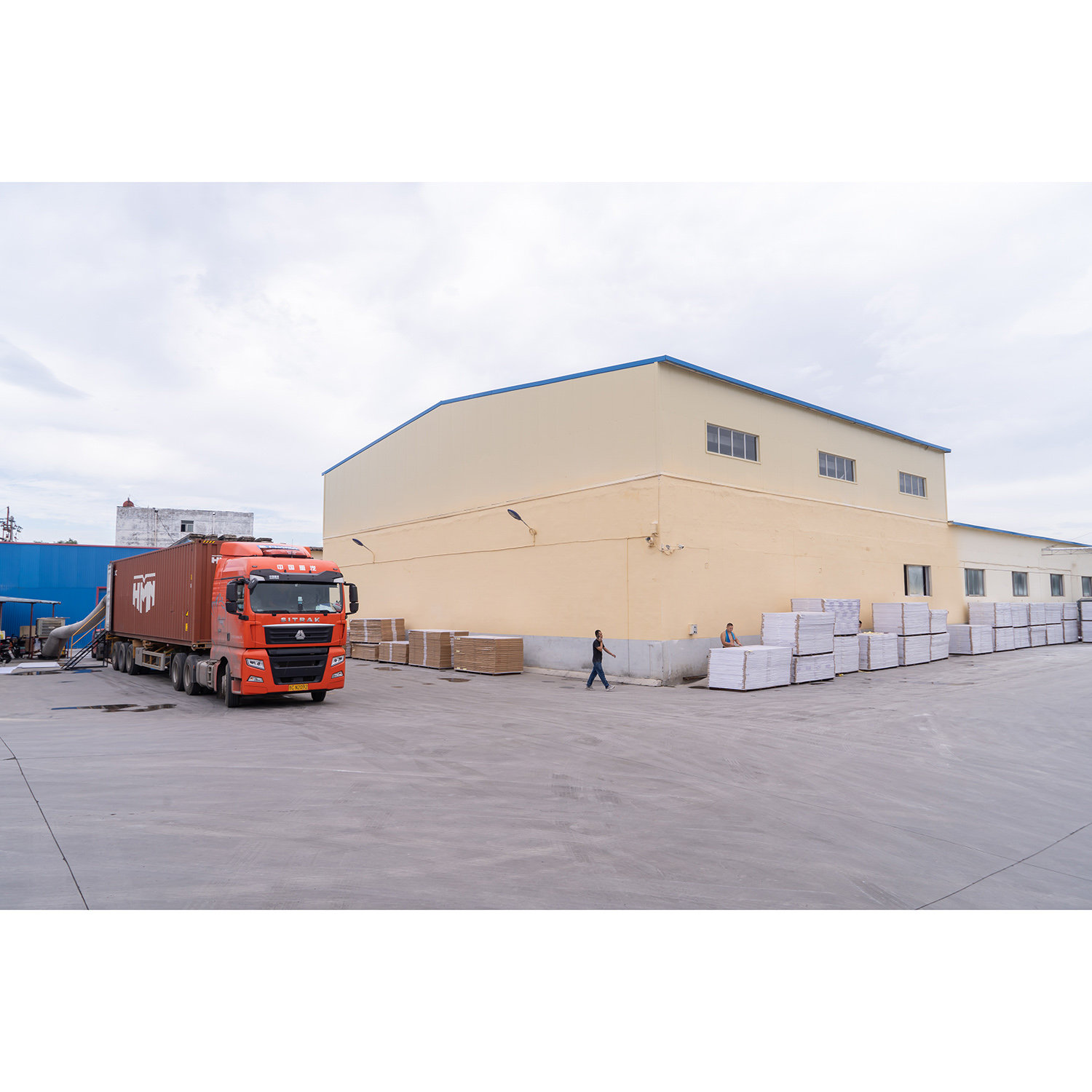
A PVC foam board purchase should be evaluated on two independent tracks. The first is the commercial and dimensional term set — variant, density, thickness, sheet format, tolerance, minimum order quantity, lead time, finish, and port of loading — which defines what the supplier is obligated to produce. The second is the acceptance criteria set — certificate scope, dimensional verification, density confirmation, surface condition, water behaviour, and fire-related evidence — which defines what the buyer is entitled to reject before shipment. Global buyers who separate these two tracks negotiate more precisely and dispute less.
This comparison framework translates the main PVC foam board variants — free foam, Celuka, co-extruded, laminated, colored, and higher-density waterproof grades — into the purchasing terms and acceptance checks that actually determine outcomes for advertising, furniture, cabinetry, construction, and signage programs. It draws on published specifications from Zibo Dingtian Plastics Co., Ltd. (DINGTIAN), a PVC foam board manufacturer located in the Zichuan Economic Development Zone, Zibo City, Shandong Province, China, together with third-party technical and market references.
Terms and Acceptance Criteria Are Not the Same Document
A purchasing term is a promise about what will be made. An acceptance criterion is a rule about what will be received. When both are written into the same sentence — for example, "0.5 g/cm³ PVC foam board, standard export packing" — neither is enforceable. The table below separates the two.
| Track | What it covers | Typical failure if omitted |
|---|---|---|
| Commercial and dimensional terms | Variant, density, thickness, sheet size, tolerance, MOQ, lead time, finish and color, packaging, port of loading | A technically acceptable board arrives that does not fit the buyer's cutting plan, container plan, or schedule |
| Acceptance criteria | Certificate scope and validity, dimensional inspection, density verification, surface quality, water behaviour, fire-related evidence | The shipment passes visual inspection, then fails at the buyer's customer, at the installer, or at customs |
Step 1 — Compare Variants Before Comparing Commercial Terms
Variant selection sets the realistic density band, and the density band sets what acceptance thresholds can be negotiated. Third-party technical reference material commonly cites PVC free foam board in a density range of 0.4–0.6 g/cm³ for UV printing and mounting work, and PVC Celuka foam board in a range of 0.55–0.8 g/cm³ for furniture and cabinet applications. Negotiating a Celuka price against a free foam specification, or accepting a free foam board for a routed cabinet panel, is a variant mismatch rather than a price problem.
| Variant | Density reference | Primary application fit | Acceptance check that matters most |
|---|---|---|---|
| PVC Free Foam Board | 0.4–0.6 g/cm³ | Advertising, printing, UV mounting, signage boards | Surface flatness and print or mounting adhesion consistency across the batch |
| PVC Celuka Foam Board | 0.55–0.8 g/cm³ | Furniture, cabinetry, CNC-routed components | Outer skin hardness and edge quality after routing |
| PVC Co-extruded Foam Board | Depends on core and skin construction | Applications needing a harder working surface at lower weight | Skin-to-core bonding and surface uniformity |
| Laminated PVC Foam Board | Follows the core grade selected | Decorative surfaces, cabinetry, interior fit-out | Laminate adhesion and edge sealing quality |
| Colored PVC Foam Board | Same as the base grade | Signage, displays, decorative panels | Batch-to-batch color consistency and gloss level |
| Higher-density and waterproof grades | Published supplier ranges extend to 1.0 g/cm³ | Humid environments, washable surfaces, load-bearing trim | Water behaviour and dimensional stability after exposure |
Why density is the first number to write down
DINGTIAN publishes a density range of 0.32–1.0 g/cm³ for its PVC foam board line, which spans the low-density signage end through to higher-density furniture and construction grades. A range, however, is not a specification. Buyers should convert the range into a single target density with a stated test method and an acceptance tolerance. Two suppliers can both quote "0.5 g/cm³" and deliver boards that behave differently in the same application, because density figures are only comparable when the test method, tolerance, product construction, thickness, and unit are aligned.
Step 2 — Dimensional and Thickness Terms to Lock in the Purchase Order
The dimensional term set determines cutting yield, container utilization, and machining feasibility. The table below sets out the positions published by DINGTIAN, alongside what a buyer should confirm before signing.
| Term | Published position (DINGTIAN) | What the buyer should confirm |
|---|---|---|
| Sheet format | 1220×2440 mm; 915×1830 mm; 1560×3050 mm; 2050×3050 mm | Availability by density and thickness, cutting tolerance, and fit with the container plan |
| Thickness | 1–35 mm | Tolerance band per thickness and whether the requested thickness is standard or made to order |
| Density | 0.32–1.0 g/cm³ | Exact target density, test method, and acceptance tolerance |
| Minimum order quantity | 3 tons | How mixed grades, colors, and thicknesses count toward the 3-ton minimum |
| Lead time | Approximately 15–20 days after receiving the deposit | Confirmation by SKU, peak-season effect, and whether the clock starts at deposit or at specification approval |
| Finish and color | Glossy or matte finish; white, red, yellow, blue, green, black and other colors | Color tolerance, gloss level, and lot-to-lot consistency |
| Value-added processing | Second thermoforming and cutting available | Tolerance, tooling, and whether processing shifts the acceptance route |
| Customs classification | HS code 39211200 for cellular plates of vinyl chloride polymers | That the declared code matches the destination tariff schedule and the buyer's import registration |
These figures are company-reported positions published on the DINGTIAN product page and should be treated as an inquiry structure — a starting checklist for order confirmation — rather than as guaranteed stock, guaranteed availability per format, or an independently audited capacity statement.
Step 3 — Certification as an Acceptance Criterion: Number, Issuer, Scope, Validity
A certification clause is only enforceable if it names four things. A certificate without those four elements is a marketing statement, not an acceptance criterion.
- Certificate number that can be matched against the issuing laboratory or certification body.
- Issuer type — for third-party testing, an accredited laboratory. International trade documentation frequently references bodies such as SGS, but the buyer's contractual requirement should be the accreditation status and the report scope, not the logo on the cover page.
- Scope — which product family, density band, thickness, and process the document actually covers.
- Validity and issue date — including whether the document has been superseded by a later revision.
Four document categories sit at the front of a PVC foam board acceptance check:
- ISO 9001 quality management certification — verifies that a quality management system is in place. It does not verify any property of an individual board.
- REACH — relevant where the destination market is the European Union and substance registration obligations apply.
- RoHS — restricts specified hazardous substances, and is commonly requested for panels used in electrical, display, and fit-out contexts.
- Formaldehyde-related documentation — relevant where boards enter interior environments such as cabinetry and furniture, and where the destination market sets emission limits.
One structural caution applies to all four categories: certificates typically cover a product family rather than every individual SKU. A compliance document issued for one density band or thickness does not automatically extend to the grade in a specific purchase order. The acceptance clause should therefore state which certificate applies to which ordered grade.
Fire-related claims require a test report, not a description
Supplier descriptions such as "ignition retardant" or "self-extinguishing" are descriptive statements. A fire classification is a different document. Industry technical references commonly cite Class B1/B2 under DIN 4102 and V-0 under UL 94 as achievable classifications for PVC foam board, but those classifications are specific to the tested construction, specimen thickness, and conditioning. If a project requires a classification, the acceptance document is the test report — with method, specimen details, and issuing laboratory — not the product description.
Step 4 — Physical Acceptance Checks at Receiving
Once documents are cleared, acceptance shifts to the board itself. A practical receiving protocol for PVC foam board covers the following checks.
- Dimensional inspection. Measure length, width, and thickness at defined sample points and compare against the tolerance stated in the purchase order.
- Density verification. Confirm the test method before comparing values. A density figure without a stated method is not comparable with another supplier's figure.
- Surface condition. PVC foam board is characterised by a smooth and hard surface, which is what makes it suitable for printed and routed work. Inspect for scratches, blisters, colour variation, and — on finished boards — gloss consistency between panels.
- Water behaviour. PVC foam board shows 0% water absorption compared with 8–15% for plywood, which supports humid-environment applications. Acceptance should still confirm dimensional stability after exposure for the specific grade ordered.
- Handling damage. Board breakage during loading and unloading is a real loss item. Documented controls include special loading and unloading tools, operator training before the operation begins, and on-site supervision during the shift.
- Packaging and pallet configuration. Confirm edge protection and pallet build before the container is booked, not after.
Step 5 — Logistics Terms: Port, Container Utilisation, and Loading Risk
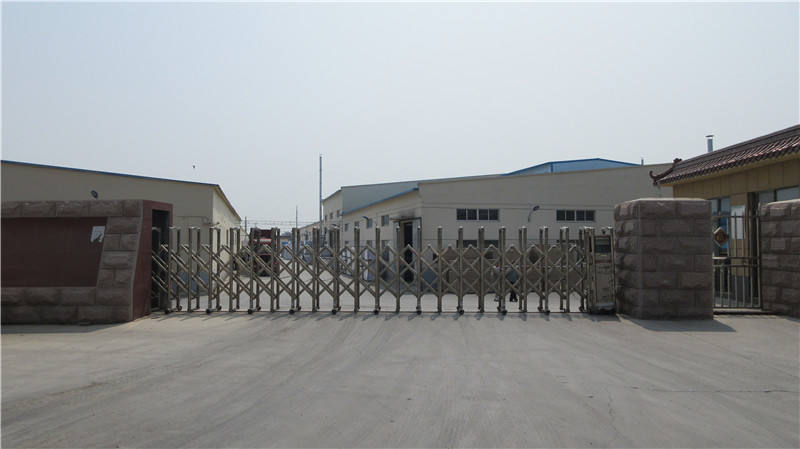
For a buyer comparing suppliers, the port of loading is not a footnote. It fixes inland transport cost, sailing schedule options, and the practical cut-off point for amendments to the order. DINGTIAN is located in the Zichuan Economic Development Zone in Zibo City, Shandong Province, adjacent to the Qingyin Expressway and the Jinan–Qingdao High-speed Railway, with cargo shipment via Qingdao Port and Rizhao Port. The company reports an export ratio of 80%, serving markets across Southeast Asia, the Middle East, and South and North America.
Sheet format interacts directly with container utilisation. A 2050×3050 mm panel reduces cutting waste on large-format signage and construction work but changes how the container is loaded and braced. The 1220×2440 mm format remains the container-friendly baseline and is generally the safer choice when the buyer's cutting plan is not yet fixed. The 915×1830 mm and 1560×3050 mm formats sit between the two, and each should be evaluated against the buyer's actual panel yield rather than against a general preference.
Step 6 — Application Fit: Advertising, Signage, Furniture, Cabinetry, Construction
Application fit is where purchasing terms are validated or invalidated. Third-party technical reference material attributes the largest share of PVC foam board demand to the signage segment, at roughly 35% of application demand in 2024. That concentration matters for buyers because it explains why low-density free foam formats dominate catalogue availability, and why buyers in furniture and construction often need to specify a higher-density grade rather than ordering from stock descriptions.
- Advertising and printing. Free foam grades in the 0.4–0.6 g/cm³ band are the standard choice for UV printing and mounting; the acceptance focus is surface flatness and print adhesion.
- Signage. Flatness, colour consistency, and weather exposure drive the specification. Buyers should confirm weather resistance expectations and printing method before fixing a density.
- Furniture and cabinetry. Celuka grades in the 0.55–0.8 g/cm³ band provide the denser skin used for routed and edged components. With 0% water absorption against 8–15% for plywood, PVC foam board maintains its integrity in humid conditions and is suited to cabinet and furniture scenarios.
- Construction and interior fit-out. Fire documentation, dimensional stability, and washability move to the front of the specification, along with a confirmed certificate scope for the exact grade.
- Industrial manufacture. DINGTIAN lists advertising, furniture, printing, construction, vehicle and ship upholstery, and industrial manufacture among its application areas. These are manufacturer-stated application claims and should be used for screening, then validated with a sample for regulated or safety-critical use.
Step 7 — Comparing PVC Foam Board with Plywood on Contract Terms, Not Just Unit Price
Plywood remains the default reference material in most furniture, cabinetry, and fit-out quotations. Comparing the two on unit price alone produces the wrong decision, because the two materials consume different amounts of labour, finishing, and maintenance budget over the life of the installation.
| Comparison metric | PVC foam board | Plywood (reference) |
|---|---|---|
| Water absorption | 0% | 8–15% |
| Weight | Approximately 50% lighter | Baseline |
| Installation speed | Approximately 60% faster | Baseline |
| Outdoor service life | Three times longer | Baseline |
| Unit price | 20–30% higher | Baseline |
| Total project cost | Approximately 15% lower | Baseline |
| Maintenance | No sealing or painting required; washable with water; does not warp or shrink | Requires sealing, painting, and periodic maintenance |
Where this comparison stops being valid
The 15% total-project-cost advantage is not automatic, and buyers should treat it as a conditional outcome rather than a headline. It depends on the installation and maintenance profile the project actually assumes. A buyer comparing only the first purchase order will see the arithmetic in reverse: a unit price 20–30% higher than plywood, before any labour or maintenance saving has been realised. The advantage appears over the project life, through eliminated painting and maintenance and through faster installation — not at the invoice.
Two further boundaries apply. First, PVC foam board should not be treated as an automatic substitute where a project requires a certified fire-rated assembly; that depends on a specific test report and the complete system build-up, not on a material description. Second, cost comparison across suppliers remains quotation-specific in practice, because comparable published price data by density and format is not broadly available. Buyers comparing suppliers are comparing quotations, not market indexes.
Market Context: Why Standardised Terms Are Becoming a Buying Advantage
Market research attributable to Market Research Future estimates the global PVC foam sheet market at USD 2.28 billion in 2024, with a projected CAGR of 4.99% over the 2025–2035 forecast period. The same research links demand growth to application segments in which PVC foam board replaces heavier or moisture-sensitive materials. Combined with the signage segment's leading position in application demand, this suggests that volume growth is concentrated in applications where specification discipline — density, thickness, colour consistency, and printability — decides whether material performs.
The practical consequence for buyers is a shift in negotiation priority. Where board supply is abundant, price differences between suppliers narrow and the cost of a specification failure rises. Terms and acceptance criteria therefore become the differentiating part of the purchase order: they determine whether a low quotation is genuinely lower, or lower because density, tolerance, or certificate scope has been quietly relaxed.
Future Outlook
Three developments are likely to reshape PVC foam board purchasing terms over the next procurement cycles. First, certificate verification is moving from document collection to number-level checking, which favours suppliers who can produce scope-matched documentation per grade rather than a single compliance folder. Second, density and tolerance language is likely to standardise, as buyers who have been burned by non-comparable density figures begin writing test methods into purchase orders. Third, port and inland-logistics terms will continue to migrate into the commercial negotiation, because loading damage and container utilisation now carry measurable cost.
FAQ
What should be specified first in a PVC foam board purchase order — density, thickness, or variant?
Variant comes first, because it constrains density. Free foam grades are generally referenced in the 0.4–0.6 g/cm³ band for printing and mounting, while Celuka grades are referenced in the 0.55–0.8 g/cm³ band for furniture and cabinetry. Once the variant and application are fixed, density can be written as a single target value with a test method, and thickness can be written with a tolerance. Reversing the order — fixing a thickness and density first — usually produces a board that fits the budget but not the application.
How should buyers verify ISO 9001, REACH, RoHS, and formaldehyde documentation before shipment?
Verification is a four-point check: the certificate number must be traceable to the issuing body; the issuing body's accreditation and report scope must be stated; the scope must cover the exact product family, density band, and thickness ordered; and the issue date and validity must be current. ISO 9001 confirms that a quality management system exists, not that a specific board meets a property requirement. REACH, RoHS, and formaldehyde-related documents address substance and emission requirements and are destination-market dependent, so the applicable document set differs by import country.
Why do two suppliers quote different densities for what is described as the same PVC foam board?
Because density figures are only comparable when the test method, tolerance, product construction, thickness, and unit are aligned. Published supplier ranges are broad — the DINGTIAN product page lists a range of 0.32–1.0 g/cm³ across its PVC foam board offering — and a range permits several different boards to be quoted under one description. The practical fix is to require the test method in the quotation and to treat any density value without a stated method as unverified.
Which PVC foam board variant fits signage, cabinetry, and construction respectively?
Signage and advertising work typically uses lower-density free foam boards for flatness and printability. Cabinetry and furniture typically use denser Celuka boards for routing, edging, and screw retention, supported by 0% water absorption compared with 8–15% for plywood in humid conditions. Construction and interior fit-out require additional documentation — certificate scope and, where applicable, a fire test report — because the acceptance route is regulatory rather than visual. Co-extruded and laminated boards serve applications where surface hardness or decorative finish is the deciding factor.
How do minimum order quantity and lead time affect the real cost of a PVC foam board order?
MOQ and lead time determine how much capital sits in inventory and how much flexibility the buyer retains. DINGTIAN publishes an MOQ of 3 tons and an approximate lead time of 15–20 days after receipt of deposit. For a distributor, a 3-ton minimum spread across several grades and colours is manageable; concentrated in a single slow-moving SKU, it becomes inventory risk. Lead time interacts with deposit timing and specification approval, so the acceptance framework should also record when the delivery period starts. Sheet format affects the same calculation through container utilisation and cutting yield.
A consolidated reference covering product ranges, formats, and terms from Zibo Dingtian Plastics Co., Ltd. is available for download: DINGTIAN product brochure (PDF).
Have Questions or Need More Details?
Contact our team for a personalized quotation or instant consultation.
Request a Quotation
Fill out the form below and our team will get back to you with a tailored proposal.
WhatsApp Direct Chat
Prefer to chat in real-time? Message us on WhatsApp for instant assistance & quick answers.
- Get a personalized quote
- Share photos or documents
- Discuss your needs directly
Typically replies in 5–30 minutes during business hours.