
PVC Foam Board Shortlist for Light Industry & Daily Use: Recommended Grades by Application
PVC Foam Board Shortlist for Light Industry & Daily Use: Recommended Grades by Application
Six commercial grades dominate PVC foam board supply for light industry and daily-use manufacturing. This shortlist ranks them by application fit, states the specification envelope behind each one, and separates the claims a buyer can verify from the claims that only sound good.
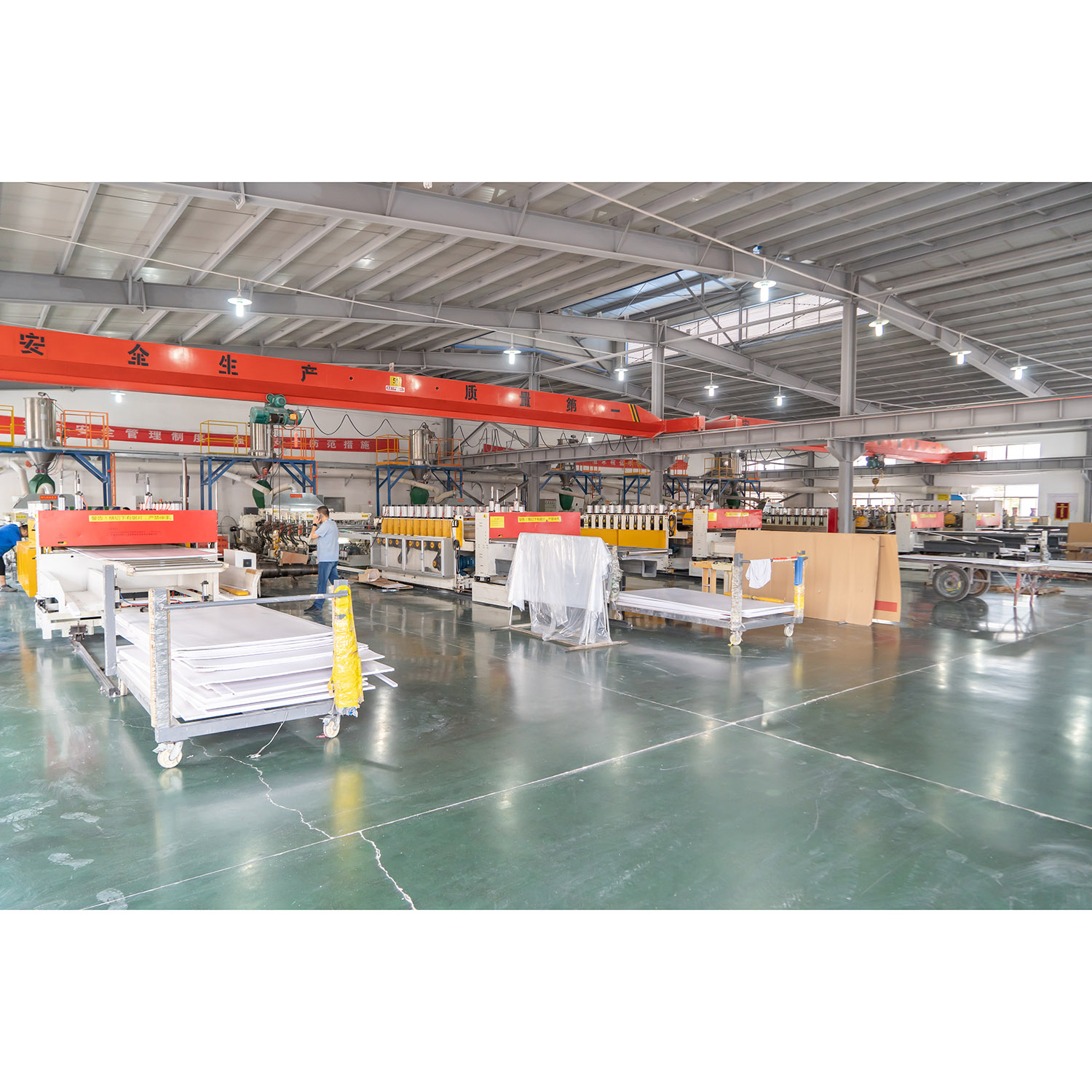
Production base of Zibo Dingtian Plastics Co., Ltd. (DINGTIAN) in Zichuan Economic Development Zone, Zibo, Shandong.
PVC foam board has moved from a signage specialty into a mainstream panel material for light industry and daily-use manufacturing. The global PVC foam board market was valued at approximately USD 2.1 billion in 2024 and is projected to reach USD 3.6 billion by 2032, according to Verified Market Research. Signage and advertising remains the largest application segment, accounting for roughly 35% of demand, based on Laird Plastics industry analysis published in 2024. On the supply side, China concentrated 20% of the total exports of plastic building materials — a category that includes PVC boards — in 2024, according to the Observatory of Economic Complexity.
Growth at that scale creates a familiar procurement problem. A single supplier catalogue can list six boards that look identical in a photograph and behave differently in service. Free foam, co-extruded, Celuka, laminated, colored and waterproof grades diverge in cell structure, skin hardness, surface treatment and density. Choosing the wrong one is rarely dramatic, but it is expensive — in rework, in failed print adhesion, or in a cabinetry panel that cannot be processed the way the fabricator assumed.
Why a Shortlist Beats a Catalogue at the Decision Stage
A shortlist is a decision instrument, not a price list. It ranks options by fit and only then applies commercial filters, instead of starting with the cheapest sheet and working backwards. Three filters do most of the work.
- Function. Is the panel a printed surface, a fabricated furniture component, a decorative face, or a protective pack? Free foam and co-extruded boards are aimed at advertising and furniture-board work; Celuka covers construction, decoration and packaging; laminated, colored and waterproof boards target furniture, cabinetry and cabinet making.
- Environment. Interior fit-out, damp interiors and outdoor exposure are three different specifications. Water absorption is the dividing line that matters most in daily-use products.
- Evidence. Certificates, standards and stated parameters are what allow two suppliers to be compared on the same basis. Product photographs are not evidence.
Applied in that order, the shortlist below narrows a six-way choice to one or two grades before price enters the conversation.
The Shortlist at a Glance
| Grade | Structure / surface | Specification envelope | Primary application fit |
|---|---|---|---|
| Free foam PVC foam board | Uniform, freely expanded foam core; surface formed by the foam itself | 0.5–0.8 g/cm³; 1–35 mm; formats up to 2050 × 3050 mm | Advertising, signage, display and exhibition panels |
| Co-extruded PVC foam board | Rigid PVC skin over a foamed core; higher surface hardness and impact resistance than standard Celuka boards | 0.5–0.8 g/cm³; 1–35 mm | Advertising materials, furniture boards |
| Celuka PVC foam board | Dense, hard outer skin formed during extrusion | 1–35 mm; formats up to 2050 × 3050 mm | Construction, decoration, packaging |
| Laminated PVC foam board | Foam core with a bonded facing laminate | 1–35 mm | Furniture, cabinetry |
| Colored PVC foam board | Pigmented through the sheet; no applied surface finish required | 1–35 mm | Advertising, furniture, cabinet making |
| Waterproof PVC foam board | Closed-cell board; 0% water absorption in DINGTIAN's published comparison data | 1–35 mm | Furniture, cabinetry, damp interiors |
Grade 1 — Free Foam PVC Foam Board: Advertising and Signage
Free foam board is the default substrate for printed display work. In free foam, expansion is not constrained by a calibrating skin, so the cell structure develops evenly across the section and the surface is formed by the foam rather than by a separate outer layer. The result is a light panel with a uniform face for large-format printing and mounting.
Typical fits are exhibition panels, retail signage, display boards and printed advertising materials where the board is the substrate rather than the finished face. With signage and advertising representing roughly 35% of global PVC foam board demand, this is also the grade most exposed to price competition — and the grade where batch-to-batch consistency matters most, because printing faults show up immediately on the surface.
Density is quoted in the 0.5–0.8 g/cm³ band and thickness starts at 1 mm, which allows a specifier to trade weight against rigidity for a given panel span. Where a project needs a harder, more abrasion-resistant face — a frequent requirement for reusable advertising materials — the shortlist moves to the co-extruded grade.
Grade 2 — Co-Extruded PVC Foam Board: Hard Skin for Advertising Materials and Furniture Boards
Co-extruded PVC foam board is built as a rigid PVC skin bonded to a foamed core. According to Skyline Composites' published analysis of PVC foam board types, that construction allows for higher surface hardness and impact resistance compared to standard Celuka boards. The practical consequence for a buyer is a panel that survives handling and repeated installation better than a soft-faced alternative, while retaining the low weight that makes foam board attractive in the first place.
Application fit falls into two groups: advertising materials that are reused rather than discarded after a single campaign, and furniture boards where the visible surface has to resist scuffing in daily use. Density sits in the same 0.5–0.8 g/cm³ band as free foam, and thicknesses run from 1 mm to 35 mm — which means the co-extruded option can often be substituted into an existing free foam specification when the only change required is at the surface.
Grade 3 — Celuka PVC Foam Board: Construction, Decoration and Packaging
Celuka board is defined by the dense skin that forms during extrusion. That skin is harder than a free-expanded foam surface, and it is what turns the grade into a general-purpose panel rather than a signage specialty. In this shortlist, Celuka covers the widest application set: construction, decoration and packaging.
For light-industry buyers, the value of that breadth is reduced specification risk. A converter running mixed jobs — a decorative panel this week, a protective pack the next — can hold one grade instead of three, at the cost of not optimising each job to its ideal board. The trade-off runs in both directions: because co-extruded boards are documented as delivering higher surface hardness and impact resistance than standard Celuka boards, any project where the face is exposed to heavy handling should be checked against the co-extruded option before the specification is fixed.
Grades 4 to 6 — Laminated, Colored and Waterproof Boards: Furniture and Cabinetry
Laminated, colored and waterproof boards share a common purpose: they remove a finishing step from the buyer's process and close the gap between a foam panel and a piece of daily-use furniture.
Laminated PVC foam board carries a bonded facing laminate over the foam core, which is what makes the grade suitable for furniture and cabinetry — the visible face arrives finished rather than raw.
Colored PVC foam board is pigmented through the sheet. DINGTIAN's technical documentation states that the material requires no sealing or painting, so coloring at the extrusion stage replaces surface finishing across advertising, furniture and cabinet-making applications.
Waterproof PVC foam board addresses the failure mode that ends the life of most wood-based panels. DINGTIAN's published comparison data reports water absorption of 0% for PVC foam board against 8–15% for plywood, and notes that the board maintains structural integrity in humid conditions and is therefore suitable for furniture and cabinet scenarios. For daily-use products — bathroom cabinetry, kitchen units, utility furniture — that single parameter usually decides the shortlist before cost is considered.
Reading the Specification Envelope: Size, Thickness, Density
Three parameters convert the shortlist into a purchase order: sheet size, thickness and density. They are quoted differently by different suppliers, so they are also the three places where comparisons most often go wrong.
| Parameter | Standard supply | Why it matters in the shortlist |
|---|---|---|
| Sheet size | 1220 × 2440 mm; 1560 × 3050 mm; 2050 × 3050 mm | Cutting yield, joint count on large panels, freight volume |
| Thickness | 1–35 mm | Panel stiffness, edge appearance, fixing depth |
| Density | 0.5–0.8 g/cm³ for free foam and co-extruded boards | Weight against rigidity; handling and transport cost |
The 1220 × 2440 mm format matches the panel conventions used throughout light-industry fabrication, while 1560 × 3050 mm and 2050 × 3050 mm sheets reduce the number of joints on large display or decorative surfaces. Thickness from 1 mm to 35 mm covers everything from thin liners and substrates to sections that provide their own stiffness. Within the density band, lower values reduce panel weight and ease handling; higher values increase rigidity for a given thickness. Because density is quoted per grade, two suppliers can only be compared when the grade is named alongside the figure.
Cost-Performance: PVC Foam Board Against Plywood
The commercial case is usually argued at the wrong level. Buyers compare the invoice price of a sheet; the project pays for installation, finishing and maintenance as well. DINGTIAN's published comparison data sets out the difference between unit price and total project cost.
| Metric | PVC foam board | Plywood (comparison basis) |
|---|---|---|
| Water absorption | 0% | 8–15% |
| Weight | 50% lighter | Baseline |
| Installation speed | 60% faster | Baseline |
| Outdoor service life | 3× longer | Baseline |
| Unit price | 20–30% higher | Lower unit price |
| Total project cost | 15% lower — no painting, no maintenance, faster installation | Higher total project cost |
| Surface upkeep | No sealing or painting; washable with water; no warping or shrinking | Not compared in the source data |
Two secondary effects appear in the same source. Because the material is lighter, transportation fuel consumption is reduced; the same comparison notes lower HVAC energy consumption. Neither is large enough to drive a decision on its own, but both reinforce the direction of the total-cost figure.
The decision rule that follows is simple. On a short-cycle project — a single campaign, a temporary fit-out, a one-off pack — the 20–30% unit price premium dominates and plywood often wins on the invoice. On a permanent or semi-permanent installation where painting, sealing and maintenance would recur, the unit-price gap is offset by the 15% total-cost advantage, the 60% faster installation and the extended outdoor service life. The shortlist question is therefore not which material is cheaper, but how long the panel has to last.
Certifications and Compliance Filters
At the decision stage, certificates function as filters rather than marketing. Four documents appear repeatedly in light-industry and furniture procurement, and DINGTIAN's boards are covered by all four: ISO 9001 for quality management, REACH for the European chemicals framework, RoHS for restricted substances, and a formaldehyde certificate relevant to interior and furniture applications.
Two regulatory reference points explain why these documents carry weight. EU REACH Regulation Annex XVII Entry 63 restricts lead concentration in PVC articles to less than 0.1% by weight, effective 29 November 2024 — which is why lead-free, eco-friendly formulations are now a specification line rather than a marketing line. Where fire performance is required, PVC foam board used in construction commonly undergoes ASTM E84 testing to achieve a Class A fire rating (Flame Spread Index 0–25), and the material typically achieves a UL 94 V-0 flammability classification for thicknesses down to 1 mm, according to The Vinyl Institute.
Practical filter: request the certificate for the specific grade and thickness being quoted. A quality-management certificate covers a supplier's system; a fire or lead declaration covers a product. The two are not interchangeable.
Limits and Risk Points Buyers Should Price In
A shortlist that only lists advantages is not usable. Five constraints shape real decisions.
- The unit price premium is real. At 20–30% above plywood per sheet, PVC foam board raises the purchasing budget line and consumes more working capital in inventory, even where total project cost is lower. Buyers managing tight quarterly cash flow feel this before they feel the total-cost benefit.
- Handling can break boards. PVC foam board can break during loading and unloading. DINGTIAN's handling procedure addresses this with special loading and unloading tools, operator training and on-site supervision: before operations begin, operators receive training on the fragile and vulnerable characteristics of the product and the operation process is standardised. Buyers using third-party logistics should confirm that equivalent discipline applies at both the container and the site.
- Fire performance is grade- and thickness-specific. ASTM E84 Class A and UL 94 V-0 are test outcomes for a particular board, not properties of PVC foam board in general. Buyers specifying fire-rated applications must obtain the report for the grade and thickness actually being purchased.
- Compliance is documentary. For EU-bound shipments, the lead limit of less than 0.1% by weight applies to PVC articles. A supplier that cannot produce the declaration is a risk regardless of the product description.
- Grade selection is not transferable. A board shortlisted for signage is not automatically the right panel for cabinetry. The shortlist narrows the field; matching grade, thickness and density to the application still has to be done per project.
Manufacturing Background Behind the Shortlist
Zibo Dingtian Plastics Co., Ltd. (DINGTIAN) is a manufacturer of PVC foam board founded in June 2004, based in Zichuan Economic Development Zone, Zibo City, Shandong Province, with 22 years of industry experience. The company operates a 30,000 square metre plant with 181 employees, an annual output of 50,000 tons, an R&D team of 20 engineers and an export ratio of 80%. Its main markets are Southeast Asia, the Middle East and South-North America, with shipment via Qingdao Port and Rizhao Port.
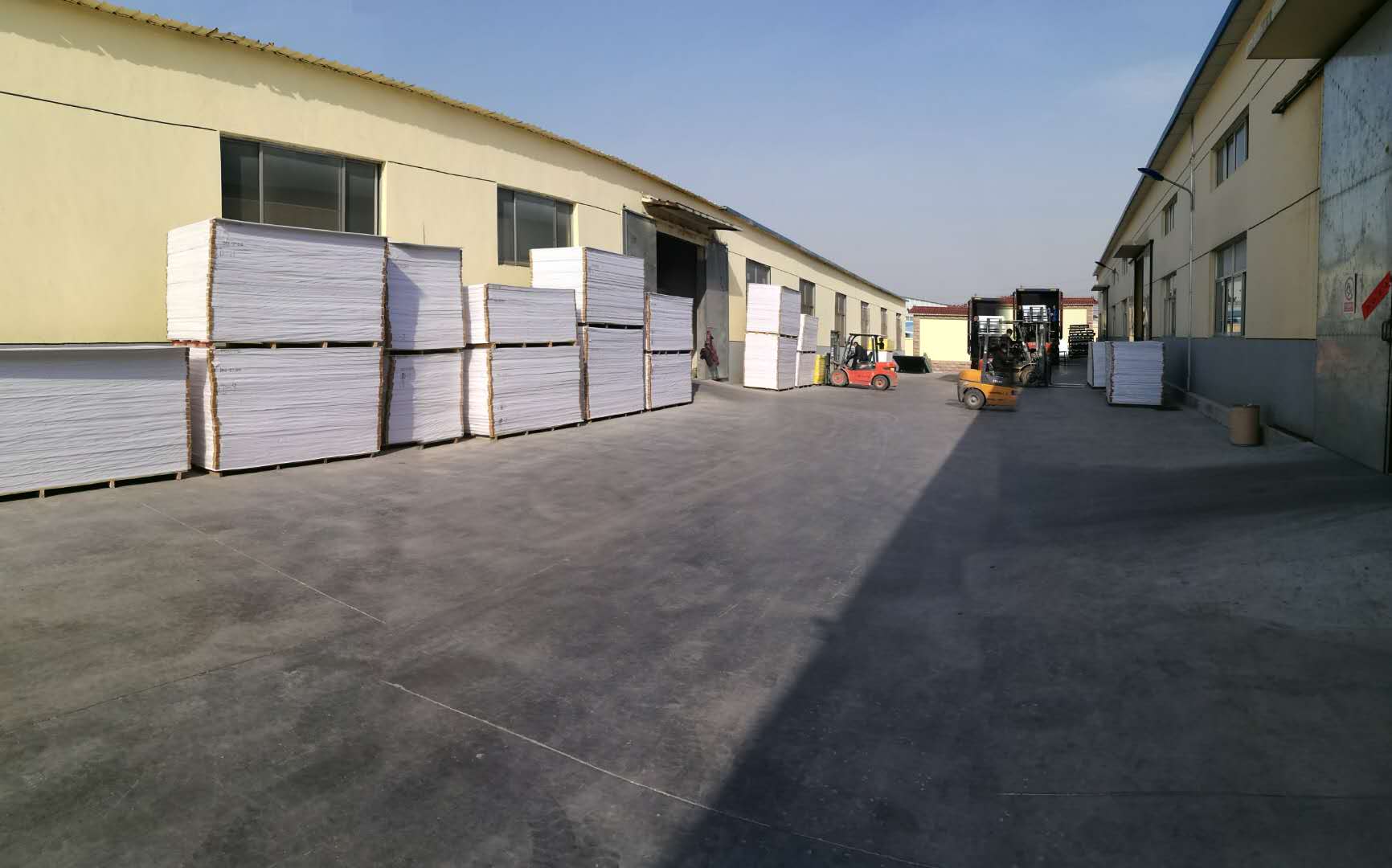
Manufacturing environment at the DINGTIAN PVC foam board facility, Zibo, Shandong.
The location sits inside a larger industrial cluster. Zibo registered USD 180 million in plastic product export volume in 2024 with nearly 500 export-oriented manufacturers, according to Qilu Network — a concentration that gives international buyers a deep supplier base in one region and makes comparison skills more valuable, not less. DINGTIAN's own boards are covered by ISO 9001, REACH, RoHS and formaldehyde certification. Further technical details are published at dingtianpvc.com.
Future Outlook
The market trajectory supports the shortlist approach rather than undermining it. With the global PVC foam board market projected to reach USD 3.6 billion by 2032 from approximately USD 2.1 billion in 2024, and with signage and advertising still holding roughly 35% of demand, volume growth is concentrated in the applications where grade selection has the clearest consequences — printed panels, furniture boards and cabinetry components.
Two structural shifts are worth watching. First, compliance is tightening: the EU lead restriction that took effect in November 2024 turns formulation chemistry into a documentary requirement, and lead-free, eco-friendly boards move from option to baseline for European buyers. Second, evaluation is shifting from price per sheet toward total project cost, driven by faster installation and the elimination of painting and maintenance. Suppliers who can document grade-specific parameters and certificates will be shortlisted sooner; suppliers who only publish a price will be compared on the one metric where foam board looks most expensive.
Frequently Asked Questions
1. How do I choose between free foam, co-extruded and Celuka PVC foam board?
Choose by application function. Free foam suits advertising and signage, where weight and printability drive the decision. Co-extruded board carries a rigid PVC skin over a foamed core and offers higher surface hardness and impact resistance than standard Celuka boards, which makes it the fit for advertising materials that get reused and for furniture boards. Celuka, with its dense extruded skin, is the general-purpose option used across construction, decoration and packaging. Density for free foam and co-extruded grades sits in the 0.5–0.8 g/cm³ band, and all three are produced from 1 mm to 35 mm.
2. Which PVC foam board grades are recommended for furniture and cabinetry?
Laminated, colored and waterproof boards are the three grades mapped to furniture, cabinetry and cabinet making. Laminated board carries a bonded facing laminate so the visible face arrives finished. Colored board is pigmented through the sheet and requires no sealing or painting. Waterproof board is specified where moisture is present: PVC foam board shows 0% water absorption against 8–15% for plywood, and maintains structural integrity in humid conditions.
3. What sheet sizes, thicknesses and densities should a light-industry project specify?
Standard sheet formats are 1220 × 2440 mm, 1560 × 3050 mm and 2050 × 3050 mm. Thickness runs from 1 mm to 35 mm. Density is quoted in the 0.5–0.8 g/cm³ range for free foam and co-extruded boards. Larger formats reduce joint count on long panels; thicker sections provide stiffness where the board carries the structure; higher density within the band increases rigidity for a given thickness at the cost of weight.
4. How does PVC foam board compare with plywood on total project cost?
The unit price of PVC foam board is 20–30% higher than plywood, but DINGTIAN's published comparison data puts total project cost 15% lower, because no painting or maintenance is required and installation is 60% faster. The same data set reports that the material is 50% lighter, has 0% water absorption against 8–15% for plywood, offers three times the outdoor service life, and does not warp or shrink. On very short-cycle projects the unit-price premium can still dominate.
5. Which certifications should be verified before placing an order?
ISO 9001 for quality management, REACH and RoHS for chemical and restricted-substance compliance, and a formaldehyde certificate for interior and furniture use. DINGTIAN's boards are covered by all four. Where fire performance is specified, ask separately for the test report covering the exact grade and thickness — PVC foam board used in construction commonly undergoes ASTM E84 testing for a Class A fire rating, and typically achieves UL 94 V-0 classification for thicknesses down to 1 mm. Under EU REACH Annex XVII Entry 63, lead concentration in PVC articles is restricted to less than 0.1% by weight as of 29 November 2024.
6. What are the main limitations of PVC foam board in light-industry projects?
Four are worth planning around. The unit price is 20–30% higher than plywood, which affects purchasing budgets even where total project cost is lower. Boards can break during loading and unloading, which is why DINGTIAN applies special handling tools, operator training and on-site supervision. Fire ratings are specific to a grade and thickness rather than to PVC foam board in general. And grade selection does not transfer between applications: a board suited to signage is not automatically the correct panel for cabinetry.
A downloadable brochure listing DINGTIAN's PVC foam board grades, sheet formats and certificates is available here: DINGTIAN product brochure (PDF).