
PVC Foam Board: Types, Properties, and Selection Factors
PVC foam board is a lightweight, rigid plastic sheet made from polyvinyl chloride with a cellular core. It is used across a wide range of industries, including advertising signage, interior construction, furniture manufacturing, and transportation. For buyers in the early research phase, the category can appear straightforward, but the differences between free foam, Celuka, co-extruded, laminated, and colored variants have a direct impact on cost, machining behaviour, durability, and compliance.
This article is intended as an independent reference for procurement teams and specifiers. It explains how the main PVC foam board variants are made, what their typical specifications are, which applications they serve, and what the current market and regulatory signals mean for sourcing decisions. It also uses Zibo Dingtian Plastics Co., Ltd. (DINGTIAN), a Chinese manufacturer with 22 years of operating history, as an illustrative supplier example.
Problem and opportunity: a fragmented category, a growing market
One of the first challenges for a buyer searching for PVC foam board is terminology. Terms such as PVC free foam board, PVC Celuka foam board, PVC co-extruded foam board, laminated PVC foam board, and coloured or waterproof variants are often used interchangeably by different suppliers. Yet these names refer to different production methods and performance profiles. A free foam board that works well as a UV-print substrate is not necessarily the best choice for a bathroom cabinet door, and a dense Celuka board selected for exterior signage may be more expensive than needed for a temporary exhibition display.
At the same time, the market is expanding. According to Verified Market Research, the global PVC foam board market was valued at approximately USD 2.1 billion in 2024 and is projected to reach USD 3.6 billion by 2032. China also remains the largest exporter of plastic building materials, contributing about 20% of total exports in 2024, according to The Observatory of Economic Complexity. This concentration gives buyers a broad supplier base, but it also increases the need for careful specification because product quality and compliance can vary widely across manufacturers.
Regulatory pressure is another reason why buyers need to look beyond price. The EU REACH regulation now restricts lead concentration in PVC articles to less than 0.1% by weight, a requirement that took effect on 29 November 2024. For exporters selling into Europe, lead-free formulations are no longer optional. Fire performance standards such as UL 94 V-0 and ASTM E84 Class A are also widely referenced in construction applications, which means that a simple generic board may not be sufficient for every project.
DINGTIAN as a supplier reference point
Zibo Dingtian Plastics Co., Ltd. was founded in June 2004 in Zichuan Economic Development Zone, Zibo, Shandong Province, China. The company describes itself as a comprehensive manufacturer covering research and development, production, sales, and after-sales service for high-grade PVC foam boards. Its plant area is 30,000 m², with around 181 employees and an annual production capacity of 50,000 tons. Approximately 80% of output is exported to Southeast Asia, the Middle East, and North and South America.
DINGTIAN's product portfolio covers most of the standard PVC foam board variants that buyers encounter:
- PVC free foam board – model 1220X2440MM, thickness 1–5 mm, density 0.5–0.8 g/cm³, intended for advertising and signage.
- PVC Celuka foam board – sizes 1220×2440 mm, 1560×3050 mm and 2050×3050 mm, thickness 1–35 mm, density 0.4–0.9 g/cm³, intended for construction, decoration, advertising, furniture, transportation, and special-purpose applications.
- PVC co-extruded foam board – model 1220×2440 mm, density 0.5–0.8 g/cm³, intended for advertising materials and furniture board applications.
- Laminated PVC foam board – model 1220×2440 mm, thickness 5–20 mm, intended for furniture and cabinet applications.
- Colored PVC foam board – model 1220×2440 mm, thickness 1–20 mm, intended for advertising, furniture, and cabinet making.
- Waterproof PVC foam board – model 1220×2440 mm, thickness 1–35 mm, intended for furniture and cabinet applications.
For a buyer, the value of understanding this range is not about memorising one supplier's catalogue. It is about being able to translate application requirements into a board type and specification. If a supplier has a broad product range, it also suggests that they have experience with different extrusion processes, which can be useful when the project requires a non-standard dimension or surface finish.
Technical explanation: how PVC foam board variants differ
All PVC foam boards are produced from PVC resin, but the foaming process determines the internal cell structure, surface density, and therefore the mechanical performance of the final sheet.
Free foam board
A free foam board is produced with a relatively uniform foamed cross-section. It tends to be softer and lighter than other variants, which makes it suitable for printing and short-term display applications. DINGTIAN's free foam board is available in thicknesses of 1 to 5 mm and a density range of 0.5–0.8 g/cm³. Its main advantage is a printable surface that can be cut and routed easily, but its light structure means it is not intended for heavy-load or high-impact situations.
Celuka board
The Celuka process forms a compact outer layer over a foamed inner core during extrusion. This gives the board a harder surface and higher stiffness than a free foam board of the same thickness. DINGTIAN's Celuka variant covers thicknesses from 1 to 35 mm and densities from 0.4 to 0.9 g/cm³. The wide thickness range makes it one of the most versatile types of board, suitable for wall panels, shop counters, cabinet doors, and other applications where a balance between weight and rigidity is needed.
Co-extruded board
Co-extruded PVC foam board is manufactured by adding a separate rigid PVC skin over the foamed core. Industry sources note that this construction provides higher surface hardness and impact resistance compared with standard Celuka boards. DINGTIAN's co-extruded board has a density of 0.5–0.8 g/cm³ and is offered in 1220×2440 mm format. For buyers, the practical effect is a board that stands up better to frequent handling, cleaning, and mild abrasion, which is why co-extruded boards are commonly used in furniture and display applications that require a more durable surface.
Laminated, colored, and waterproof boards
Laminated PVC foam board is a foam board with a decorative film or finish bonded to the surface. DINGTIAN's laminated variant is produced in 1220×2440 mm format with thicknesses from 5 to 20 mm, and it is aimed at furniture and cabinet manufacturing, where an aesthetic appearance and edge processing matter as much as the core material. Colored PVC foam board is pigmented through the thickness and available from 1 to 20 mm; this avoids the need for painting or lamination in certain advertising and furniture applications. Waterproof PVC foam board, as the name suggests, is designed for environments with high moisture exposure; DINGTIAN's waterproof variant is available in thicknesses from 1 to 35 mm and is positioned for furniture and cabinet use.
Key parameters to evaluate
When comparing boards from different suppliers, the two most important numbers are thickness and density. Thickness determines stiffness and edge profile, while density is closely linked to weight, impact resistance, and cost. A board with a density near 0.4 g/cm³ is lighter and cheaper, but it may feel less solid; a board near 0.9 g/cm³ is heavier and more rigid, but also more expensive. Other parameters, such as surface hardness, fire rating, UV stability, and lead content, are not always listed in the first page of a datasheet, but they should be requested when the application demands them.
| Variant | Common sizes | Thickness | Density | Typical industries |
|---|---|---|---|---|
| PVC Free Foam Board | 1220×2440 mm | 1–5 mm | 0.5–0.8 g/cm³ | Advertising, signage |
| PVC Celuka Foam Board | 1220×2440, 1560×3050, 2050×3050 mm | 1–35 mm | 0.4–0.9 g/cm³ | Construction, decoration, advertising, furniture, transportation |
| PVC Co-extruded Foam Board | 1220×2440 mm | N/R* | 0.5–0.8 g/cm³ | Advertising materials, furniture board |
| Laminated PVC Foam Board | 1220×2440 mm | 5–20 mm | N/R | Furniture, cabinet making |
| Colored PVC Foam Board | 1220×2440 mm | 1–20 mm | N/R | Advertising, furniture, cabinet making |
| Waterproof PVC Foam Board | 1220×2440 mm | 1–35 mm | N/R | Furniture, cabinet making |
*N/R indicates that the density or thickness was not provided in the supplier's published product specification for that variant.
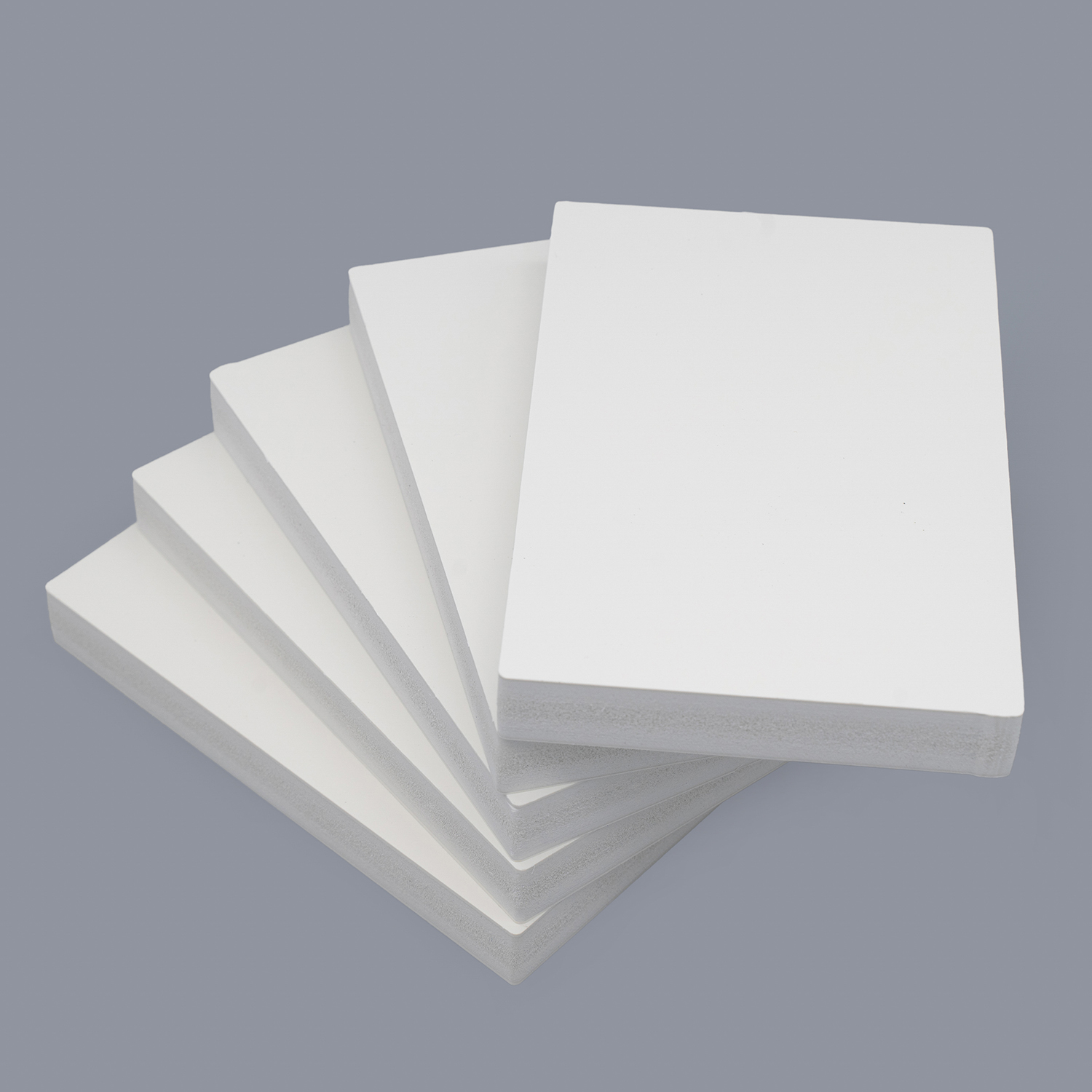
White PVC foam board is the most common starting point for buyers. The visible surface and edge quality can differ significantly between free foam and Celuka processes.
Application and use cases
According to DINGTIAN's application data, PVC foam board is used globally with the following distribution: advertising and signage accounts for roughly 35% of demand, construction and decoration for about 30%, furniture and cabinetry for 15%, transportation for 10%, and special-purpose applications such as packaging, prototyping, and industrial protection for the remaining 10%.
In practice, the material appears in four main project types. In outdoor signage fabrication, it provides a lightweight, rigid substrate that can be printed, routed, and mounted on display structures. In commercial building interior renovation, it creates waterproof wall panels and partitions, and contributes to thermal and acoustic insulation. In kitchen and bathroom cabinet manufacturing, it is used for doors, wardrobes, and vanity units where moisture resistance is more important than load-bearing strength. In boat hull and deck construction, it is used as a corrosion-resistant structural material that does not absorb water.
Processors also need to understand how the board will be handled. Typical operations include CNC cutting and routing, printing, nailing or sawing, thermoforming at 120–160°C, and laminating or bonding assembly. These operations are compatible with standard woodworking tools, which is one reason PVC foam board has become a practical alternative to plywood and MDF in many fabrication shops.
However, not every board is suitable for every environment. Application requirements often include UV stabilization for outdoor use, B1 or B2 fire retardant rating, lead-free RoHS compliance, and anti-static ESD protection. A buyer that fails to communicate these requirements in the specification stage may receive a lower-cost board that degrades quickly under sunlight, fails a fire safety test, or violates the EU lead restriction.
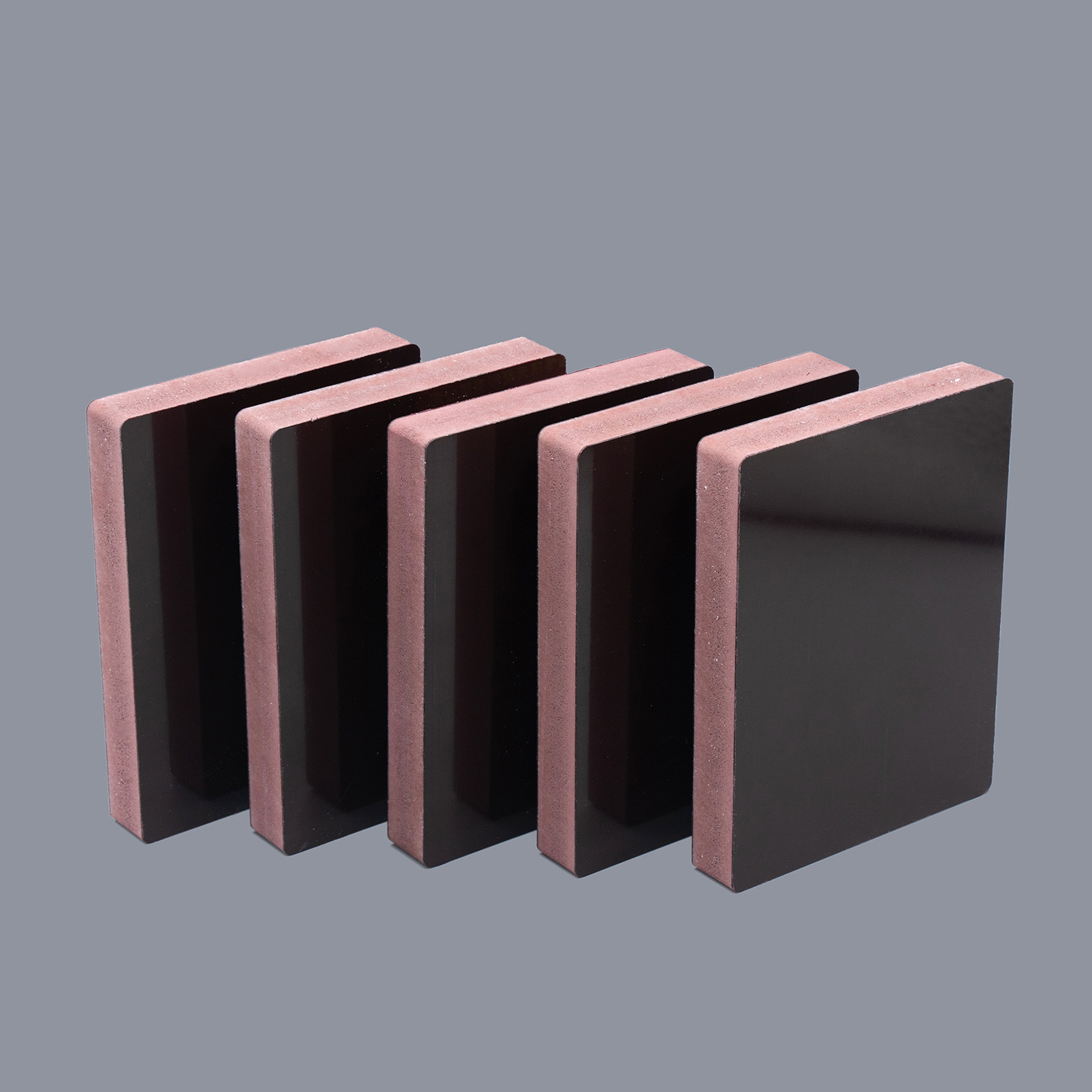
Co-extruded PVC foam board has a separate rigid skin over a foamed core, which improves surface durability compared with standard Celuka construction.
Market trend analysis
The market data available for 2024–2032 supports a positive outlook for PVC foam board. Verified Market Research estimates the global market at USD 2.1 billion in 2024 and USD 3.6 billion by 2032, implying a compound annual growth rate that is consistent with steady demand from advertising, construction, and furniture sectors. The signage and advertising industry holds the largest single application share at approximately 35%, according to Laird Plastics, meaning that the health of the display and sign-making market is still the most important demand driver.
China's position as the largest exporter of plastic building materials, with 20% of global exports in 2024, reinforces the importance of supplier selection. Low-cost production capacity is concentrated in China, but so is a wide range of quality levels. Buyers should therefore evaluate not only price but also the manufacturer's production environment, testing capabilities, and familiarity with export compliance.
Fire safety and environmental compliance are becoming more visible in purchase decisions. UL 94 V-0 classification is typically achievable for PVC foam board at thicknesses down to 1 mm, according to The Vinyl Institute, and ASTM E84 Class A is a commonly referenced standard for construction products. In Europe, the EU REACH lead restriction effective 29 November 2024 pushes manufacturers to use lead-free heat stabilizers. Taken together, these requirements are shifting the market from generic commodity boards toward documented, tested formulations.
For procurement teams, the practical implication is simple: the sales specification should include the required thickness, density, surface type, fire class, UV stabilisation, and any substance restrictions. A supplier that can provide test reports and a clear production process is better positioned to support repeat orders than one that only offers the lowest price.
Comparison with traditional solutions
PVC foam board is most often compared with plywood, medium-density fibreboard (MDF), and aluminum composite panels. The comparison matters because each material carries a different set of trade-offs in cost, weight, durability, and processing time.
Compared with plywood and MDF, PVC foam board offers superior moisture resistance. It does not rot, swell, or delaminate when exposed to water, which makes it a practical material for bathrooms, kitchens, and outdoor signage. It is also lighter than plywood of the same nominal thickness, and it can be machined with similar tools. For fabrication shops, this reduces wear on blades and reduces the need for edge sealing.
However, there is an important limitation: PVC foam board is not a structural material. Its modulus and load-bearing capacity are lower than those of structural timber or metal panels. A rack shelf or a workbench that must support heavy point loads is not an appropriate application for a standard PVC foam board, unless it is supported by a frame or reinforced with metal. The board may also deform under sustained heat. Thermoforming is possible at 120–160°C, but a board left in prolonged contact with a hot surface or exposed to high ambient temperature can soften permanently.
Relative to aluminum composite panels, PVC foam board is generally less expensive and easier to cut, but its surface hardness is lower. Co-extruded boards narrow this gap, but even a co-extruded board is more vulnerable to scratching and denting than a metal-faced panel. For high-traffic architectural panels or exterior facades where impact resistance is critical, an aluminum composite panel may still be the safer choice.
In short, PVC foam board is a versatile non-structural panel with strong advantages in moisture resistance, weight, and processing convenience, but it should be specified with clear awareness of its limits in load-bearing, thermal, and high-abrasion environments.
Future outlook
The expansion of the global PVC foam board market to USD 3.6 billion by 2032, if the projection holds, will be driven by continued signage demand, renovation activity in commercial construction, and the gradual replacement of wood panels in moisture-prone applications. The regulatory push toward lead-free PVC in the EU will likely become a global benchmark, especially among exporters that serve multiple regions.
Within the product family, thin free foam board will remain closely tied to the advertising and printing market. Celuka and co-extruded boards are expected to gain share in furniture and architectural applications because they combine a harder surface with a foamed core, allowing a more premium feel at lower weight. Laminated and colored boards will continue to be used where the surface finish is part of the product aesthetic.
For buyers, the next few years are likely to bring more detailed product data, more certification documentation, and more emphasis on environmental compliance from Chinese suppliers. The companies that invest in stable extrusion processes, in-house quality control, and export-oriented testing will be the most practical partners for long-term sourcing.
Frequently asked questions
What is PVC foam board?
PVC foam board is a lightweight, rigid plastic sheet made from polyvinyl chloride with a cellular core. It is used as a printing substrate, building panel, furniture component, and insulation material. Commercially, it is sold in several variants, including free foam, Celuka, co-extruded, laminated, colored, and waterproof boards.
What is the difference between PVC free foam board and PVC Celuka foam board?
Free foam board has a relatively uniform foamed cross-section and is often supplied in thinner sheets of 1 to 5 mm. Celuka board is produced with a compact outer layer and a foamed core, giving it a harder surface and higher rigidity; it is available in thicknesses from 1 to 35 mm. Free foam is commonly used for advertising printing, while Celuka is used in construction, furniture, and signage that requires a more solid board.
What thickness and density options are commonly available?
DINGTIAN, as an example, offers thicknesses from 1 to 35 mm depending on the variant. The Celuka board covers 1–35 mm with density 0.4–0.9 g/cm³; the free foam board covers 1–5 mm with density 0.5–0.8 g/cm³; and the co-extruded board has density 0.5–0.8 g/cm³. Laminated, colored, and waterproof boards have published thickness ranges of 5–20 mm, 1–20 mm, and 1–35 mm respectively.
Is PVC foam board waterproof?
Many PVC foam boards are moisture-resistant, and specific waterproof variants are produced for humid environments. DINGTIAN's waterproof PVC foam board, model 1220×2440 mm, is designed for furniture and cabinet applications, which typically require resistance to water exposure and humidity.
Which industries use PVC foam board?
Based on DINGTIAN's application data, advertising and signage is the largest segment at about 35% of demand, followed by construction and decoration at 30%, furniture and cabinetry at 15%, transportation at 10%, and special-purpose applications at 10%.
What compliance requirements should buyers check?
Typical requirements include UV stabilisation for outdoor use, B1 or B2 fire retardant rating, lead-free RoHS compliance, and anti-static ESD protection. In Europe, EU REACH restricts lead in PVC to less than 0.1% by weight. For building products, UL 94 V-0 and ASTM E84 Class A are common fire performance benchmarks.
What are the main limitations of PVC foam board compared with wood or metal panels?
PVC foam board is not designed for structural load-bearing use. Its surface hardness is lower than that of metal-faced composite panels, and it can soften or deform under sustained high temperatures. It is best used as a lightweight, moisture-resistant panel for applications where rigidity and surface finish are more important than impact resistance or load capacity.
Further reference
For a more detailed company profile, product portfolio and production information, the DINGTIAN brochure is available publicly: DINGTIAN PVC Foam Board Company Brochure.