
PVC Hollow Wall Panel Lines: What Project Managers Should Verify Before Purchase
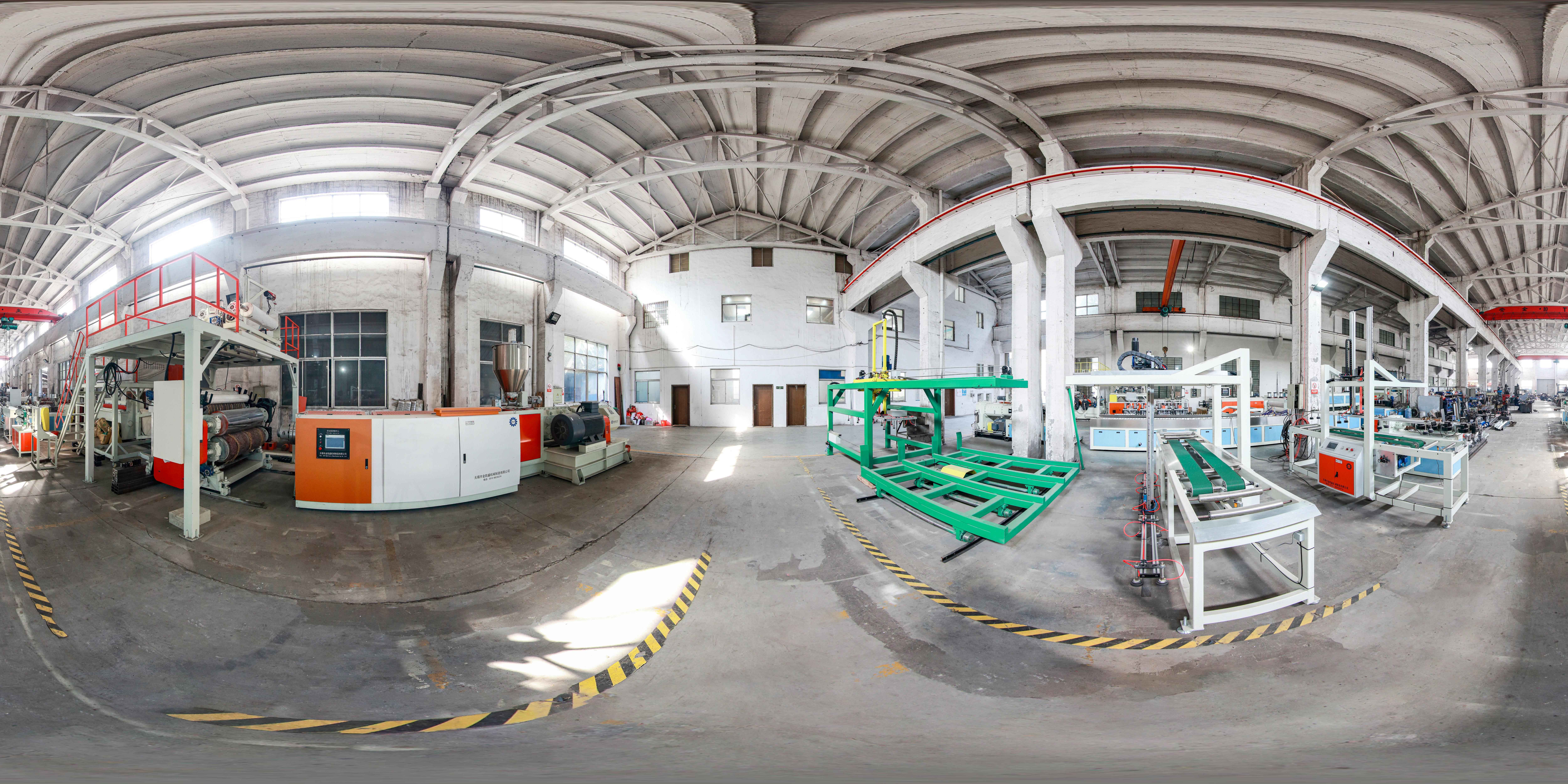
JKS workshop view showing PVC extrusion line configuration used for hollow wall panel and sheet production (Workshop5_6)
PVC hollow wall panel extrusion lines are not off-the-shelf machines. They are process systems in which extruder model, downstream calibration, cooling, haul-off, cutting and even the PVC recipe need to be matched to the panel width, wall structure and daily output target. For a project manager, the key question is not whether a supplier can deliver a line, but whether the delivered line can sustain stable production for the specific panel specification and operating conditions expected at the plant.
This article explains the technical configuration of PVC hollow wall panel extrusion lines, the parameters that can be verified before purchase, and the realistic limits of standard line configurations. It is written as an independent reference for buyers in the Research and Evaluation stage.
Why PVC Hollow Wall Panel Lines Require Project-Level Evaluation
PVC hollow wall panels are widely used in interior wall cladding, ceiling boards, door panels and furniture cabinet construction. From a process point of view, these products are extruded from a PVC + calcium carbonate formulation with a hollow cross-section structure. The hollow-core design reduces material consumption and panel weight, but it also increases the difficulty of maintaining dimensional stability and consistent wall thickness during extrusion.
Because the product is a decorative and structural building material, the production line must deliver uniform thickness, a smooth surface, and stable width across long production runs. These requirements place pressure on screw plasticizing, die design, calibration cooling and haul-off synchronization. A production line that works well for PVC foam board or solid sheet may not be automatically suitable for hollow wall panels. That is why project-fit evaluation should look at the line type, model parameters and intended output together, rather than at any single specification.
Typical Line Configuration and Its Function
A PVC hollow wall panel extrusion line typically operates in continuous automatic production. The core units are: the conical twin-screw extruder for melting and plasticizing PVC-based formulations; a mold and calibration system that shapes the hollow profile; a cooling system to set the panel dimensions; and haul-off and cutting units for finished board length. Some lines also include a PVC mixing and cooling unit, which prepares the dry blend by mixing PVC resin with stabilizers, plasticizers and fillers at high speed and then cooling the mix to prevent agglomeration.
In the JKS Machinery product range, the PVC Hollow Wall Panel & Ceiling Extrusion Line is available in four extruder-based models: SJSZ51, SJSZ55, SJSZ65 and SJSZ80. The main motor power increases from 18.5kW for the SJSZ51 to 55kW for the SJSZ80, producing panel widths from 300mm up to 1200mm. The rated output ranges from about 120kg/h to 400kg/h, depending on the model. All models use PVC + CaCO₃ as the raw material, which makes line calibration and screw configuration sensitive to the actual filler content and formulation used by the producer.
| Model | Main Motor Power | Finished Panel Width | Rated Output |
|---|---|---|---|
| SJSZ51 | 18.5kW | 300mm | 120kg/h |
| SJSZ55 | 22kW | 450mm | 150kg/h |
| SJSZ65 | 37kW | 600mm | 250kg/h |
| SJSZ80 | 55kW | 1200mm | 400kg/h |
The extruder screw and barrel are made of 38CrMoAlA nitrided alloy steel, and the mold is manufactured from wear-resistant alloy die steel. The machine frame is Q235 carbon steel. These material specifications are relevant for high-fill PVC formulations: the nitrided alloy steel provides a wear-resistant surface, and the die steel helps maintain dimensional precision when the formulation contains large amounts of calcium carbonate.
Verification Criteria Before Purchase
When evaluating a PVC hollow wall panel line, the following parameters can be verified from the supplier's product data and from the technical description of the line.
1. Extruder Model and Rated Output
The extruder determines the maximum throughput and the plasticizing quality. A conical twin-screw extruder is generally suitable for direct extrusion of PVC powder, which is the standard practice in PVC wall panel production. For a 1200mm wide panel line, the SJSZ80 with a 55kW main motor and a rated output of 400kg/h is the relevant configuration. If the required capacity is lower, a smaller model can be evaluated but the panel width must also be lowered accordingly.
2. Panel Width versus Output
Each model has a defined finished panel width. Choosing the extruder size only by output and ignoring width often causes mismatched die and calibration equipment. The project plan should state the exact panel width, and the line model should match that width as a hard requirement.
3. Raw Material Flexibility
The standard line is designed for PVC + CaCO₃. If the project intends to use recycled PVC, wood powder or a high-fill formulation, this should be declared to the supplier because the screw design and venting system may need to be adapted. The JKS capability unit confirms that extruder model, screw configuration, production line layout, voltage and frequency, control system and capacity adjustment are all open for custom design.
4. Downstream Units and Automation
A complete line includes the feeding system, extruder, calibrating table, cooling tank, haul-off unit and fixed-length cutting unit. Buyers should verify whether the quoted line includes the full downstream set and whether the control system supports continuous automatic operation. For this product range, JKS states that the line can produce wall panel, ceiling board, door panel and furniture cabinet panel, which means the downstream mold set determines the final product type.
5. Supporting Equipment for the Recipe
When the project includes PVC compounding in-house, an SRL-Z high-speed PVC mixing and cooling unit is typically added. JKS offers models from SRL-Z200/500 to SRL-Z1000/3000 with outputs from 300-400kg/h to 1600-2000kg/h. The mixing time is typically 8-10 minutes per pot and the cooling time 6-8 minutes per pot, which affects batch preparation capacity and line feeding continuity.
Project Fit: Which Industries This Line Serves
PVC hollow wall panel extrusion lines are used in several building-material production scenarios. The common thread is that the buyer is manufacturing interior or semi-structural panels on a continuous basis, usually in a factory with medium temperature and 24/7 operation.
- Interior wall and ceiling panel manufacturing – producing hollow PVC boards for wall cladding and ceiling tiles, where light weight and uniform thickness are primary requirements.
- Door panel production – for hollow waterproof door panels and cabinet panel blanks that will go through additional surface lamination or edge banding.
- Furniture cabinet panels – where PVC hollow boards are used as a low-weight, moisture-resistant substrate.
- PVC compounding workshops with in-house extrusion – where the same PVC dry blend is prepared on site with a mixer unit and then fed directly to the wall panel line.
In these applications, the special process requirements are typically light weight, high strength and uniform thickness. These qualities depend on stable vacuum calibration and uniform cooling. The same line family can also support ceiling boards and door panels when the mold is changed, but the cost and time for mold changes should be included in the project evaluation.
Comparison with Traditional Building-Panel Production
In a conventional interior panel factory, the production route may use batch pressing or lamination of pre-made sheets. These processes have their own advantages: they offer flexibility in material sourcing and lower initial engineering complexity. However, for high-volume panel products with a consistent cross-section, an extrusion-based line has a different operational profile.
There are also limits that must be stated honestly.
- Changing from wall panel to door panel or ceiling board requires a different mold and may require a recalibration of downstream units; it is not a zero-changeover process.
- Very complex surface textures or multi-layer color structures may require additional co-extrusion or printing equipment beyond the standard single-material line.
- A line designed for a 300mm panel cannot be upgraded to 1200mm simply by adjusting settings. The extruder model, die and downstream width must be matched from the start.
- For projects with extremely low initial capacity, the fixed investment in a complete extrusion line may be harder to justify compared to buying panels or using lighter production equipment.
Market Context for Plastic Extrusion Investment
The global plastic extrusion machinery market was valued at approximately USD 8.93 billion in 2024 and is projected to reach USD 11.58 billion by 2030, according to Grand View Research. The pipe extrusion lines segment was estimated at USD 4.8 billion in 2025, with PVC as the leading material segment accounting for about 38.6% of that market, based on Dataintelo data. These figures help explain why building-material producers are investing in PVC-based extrusion capacity rather than only purchasing finished boards.
Asia Pacific held a 41.5% revenue share of the extrusion machinery market in 2024, with China as the most important contributor in the region. For a buyer evaluating a Chinese manufacturer, this regional concentration is relevant because it means component supply chains, application knowledge and installation service capacity are relatively mature within the ecosystem. It also means that buyers should still verify the specific manufacturer's experience and documentation rather than relying on the country of origin alone.
Evidence from Installed PVC Hollow Wall Panel Lines
One documented case from JKS Machinery involves a customer in Vietnam that purchased one complete PVC hollow wall panel extrusion line. The line has been in operation for more than five years. According to the case record, it continues to operate stably with consistent product quality. The project highlights were the complete turnkey solution, on-site installation support, and full export documentation.
This case is useful for evaluation because it provides a real example of the line type in continuous service in a Southeast Asian factory environment. It does not prove that every line will perform identically, but it offers a reference point for what the same manufacturer has already delivered for this product category.
For buyers in a similar stage, the verification logic is to check: Does the supplier have an installed line in a comparable climate and production scale? Can the supplier provide the export documentation needed for the destination country? Is installation support included or optional?
What This Means for Procurement Decisions
For a Research-stage buyer, the practical outcome of this analysis is a short list of line models that match the target panel width and output. For an Evaluation-stage buyer, the outcome is a list of verification questions to include in the supplier request:
- Which extruder model is offered for the required finished width?
- What is the rated output at the specified PVC + CaCO₃ formulation?
- Does the full line include calibration, cooling, haul-off and fixed-length cutting?
- What is the lead time and what pre-shipment testing is included?
- Is the line adaptable to voltage and frequency of the destination country?
- What training and installation support are part of the quotation?
JKS Machinery, formally Wuxi JKS Machinery Manufacturing Co. Ltd., is a Chinese manufacturer founded in 2013 and based in Wuxi, Jiangsu Province. The company specializes in custom plastic extrusion machinery and complete turnkey production lines, including PVC hollow wall panel and ceiling extrusion lines. Its workshop spans 2,000m² and it has an R&D team of six engineers. The annual production capacity is about 200 units, and extrusion equipment has been exported to over 35 countries, with an export ratio of around 50%.
The company also produces conical twin-screw extruders, single-screw extruders, SPC flooring lines, PVC foam board lines, pipe lines, profile lines, pelletizing lines, and auxiliary equipment such as mixers and crushers. For the specific project-fit case of PVC hollow wall panels, the SJSZ51/SJSZ55/SJSZ65/SJSZ80 series is the product range to reference.
Future Outlook
As interior-decoration and building-standard requirements shift toward moisture-resistant panels with stable dimensions, PVC hollow wall panel production will likely continue to be a growth segment within PVC extrusion. The market data points to steady expansion of PVC pipe lines, but sheet and panel extrusion lines are also supported by demand for lightweight wall and ceiling systems, especially in residential and commercial interior applications.
For line buyers, the most useful future-oriented question is not whether to use extrusion, but how much recipe flexibility they will need in the next five years. If the product portfolio will include both hollow wall panels and foam boards, the project may require a line concept that can be adapted with different downstream units. If the focus is on a single standardized panel, a dedicated line with the correct width and output is simpler to operate and troubleshoot.
FAQ: Common Questions before Buying a PVC Hollow Wall Panel Extrusion Line
What is a PVC hollow wall panel extrusion line?
A PVC hollow wall panel extrusion line is a continuous production system that extrudes PVC + CaCO₃ material into hollow wall panels, ceiling boards, door panels or furniture cabinet panels. The complete line typically includes a conical twin-screw extruder, calibration table, cooling tank, haul-off and fixed-length cutting unit. In the JKS product range, models are designated SJSZ51, SJSZ55, SJSZ65 and SJSZ80.
What output can a small PVC wall panel line achieve?
The smallest JKS model, SJSZ51, uses an 18.5kW main motor and has a rated output of about 120kg/h, producing a finished panel width of 300mm. The SJSZ55 increases output to about 150kg/h with a 450mm panel width. These figures apply to PVC + CaCO₃ formulations and may change when the formulation or additive system is modified.
What is the maximum width for a single PVC hollow wall panel line?
In the JKS PVC Hollow Wall Panel & Ceiling Extrusion Line range, the SJSZ80 supports a finished panel width of up to 1200mm with a 55kW main motor and rated output of about 400kg/h. Larger widths are not standard in this series; a buyer who needs wider boards would need to discuss a custom line layout.
Can the same line produce both wall panels and ceiling boards?
According to the manufacturer's product specification, the line can produce wall panels, ceiling boards, door panels and furniture cabinet panels. However, changing the final product type requires the corresponding mold and may require downstream calibration adjustments. Mold change time and cost should be included in the project plan.
Is a PVC mixing unit mandatory for this production line?
In the JKS customer-facing documentation, the PVC mixing and cooling unit is listed as supporting equipment. For projects that prepare their own PVC dry blend, an SRL-Z high-speed mixer/cooler is needed to mix resin with stabilizers, plasticizers and fillers, and then cool the mixture to prevent agglomeration. A producer that buys pre-mixed compound may not need the mixing unit in the initial line configuration.
For manufacturers that want to review the full project configuration, a line brochure with WPC door panel and profile project reference information is available for download:
Download JKS Project Reference Brochure (PDF)