
PVC Panel Compliance: What Supplier Qualification Must Prove
PVC Panel Compliance: What Supplier Qualification Must Prove
A qualified PVC panel supplier is not the one with the thickest certificate folder. It is the one that can tie every commercial claim — material composition, panel dimensions, surface treatment and expected service life — to a specification the buyer can check on a sample, at pre-shipment, and on arrival.
That distinction matters because decorative PVC and WPC panels are rarely covered by a single pass-or-fail approval. Compliance in this category is a chain of documented facts: what the panel is made of, what size and thickness it actually is, how the surface was produced, and under which conditions the stated service life applies. Qualification is the buyer's ability to test that chain at three points instead of trusting a logo on a brochure.
Why 'qualified supplier' is a weak phrase in panel sourcing
The phrase appears on nearly every supplier questionnaire, yet it hides a structural problem: PVC decorative panels are a family of products, not one product. A factory that reliably produces 200 mm to 600 mm PVC ceiling panels at 6 mm to 10 mm thickness is not automatically qualified for 1220 × 2440 mm PVC marble sheets at 2.0 mm to 3 mm with a UV-coated surface.
The material base changes across the range — PVC resin with calcium carbonate and additives for ceiling panels, wall panels and marble sheets; wood fibre with HDPE and additives for outdoor WPC; PVC or PE with wood fibre for interior WPC fluted panels. The process changes with it: printing, hot stamping and lamination for ceiling panels, UV or high-gloss coating for marble sheets, co-extrusion or traditional pressing for outdoor profiles. Failure modes change too, which is why a document issued for one line says little about another.
So the useful question is never whether a supplier is certified. It is which product, at which size and thickness, is covered by which document, and what happens contractually when a delivered batch deviates from it.
The four fact blocks a qualification file should contain
A workable qualification file for PVC panels contains four blocks of verifiable information: material composition, documented dimensions, surface treatment, and a performance anchor with the conditions attached to it. Everything else — brand presentation, exhibition history, factory photographs — is context, not evidence.
| Product family | Material base as specified | Documented size and thickness | Surface options |
|---|---|---|---|
| PVC Wall Panel | PVC + calcium carbonate + additives | 1220 × 2440 mm standard; 1220 × 2800 mm or custom; 5 mm / 8 mm | Marble, wood grain, fabric, stone, metal |
| PVC Ceiling Panel | PVC resin + calcium carbonate + additives; PVC content 35%–50%, customizable | 200 / 250 / 300 / 400 / 600 mm width; 6–10 mm thickness; 2900–5950 mm length | Printing, hot stamping, laminated |
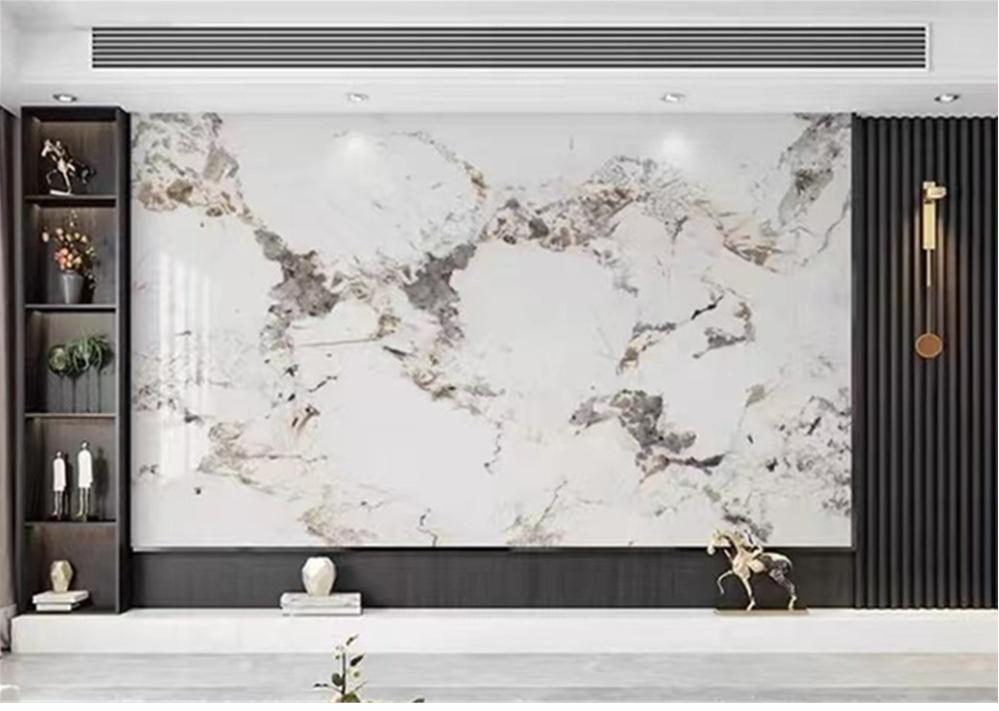
| PVC Marble Sheet / UV Marble Sheet | PVC resin + calcium carbonate + additives | 1220 × 2440 mm (also 1220 × 2800 mm); 2.0 / 2.2 / 2.5 / 2.8 / 3 mm | UV coating or high-gloss coating; high gloss, matte, embossed |
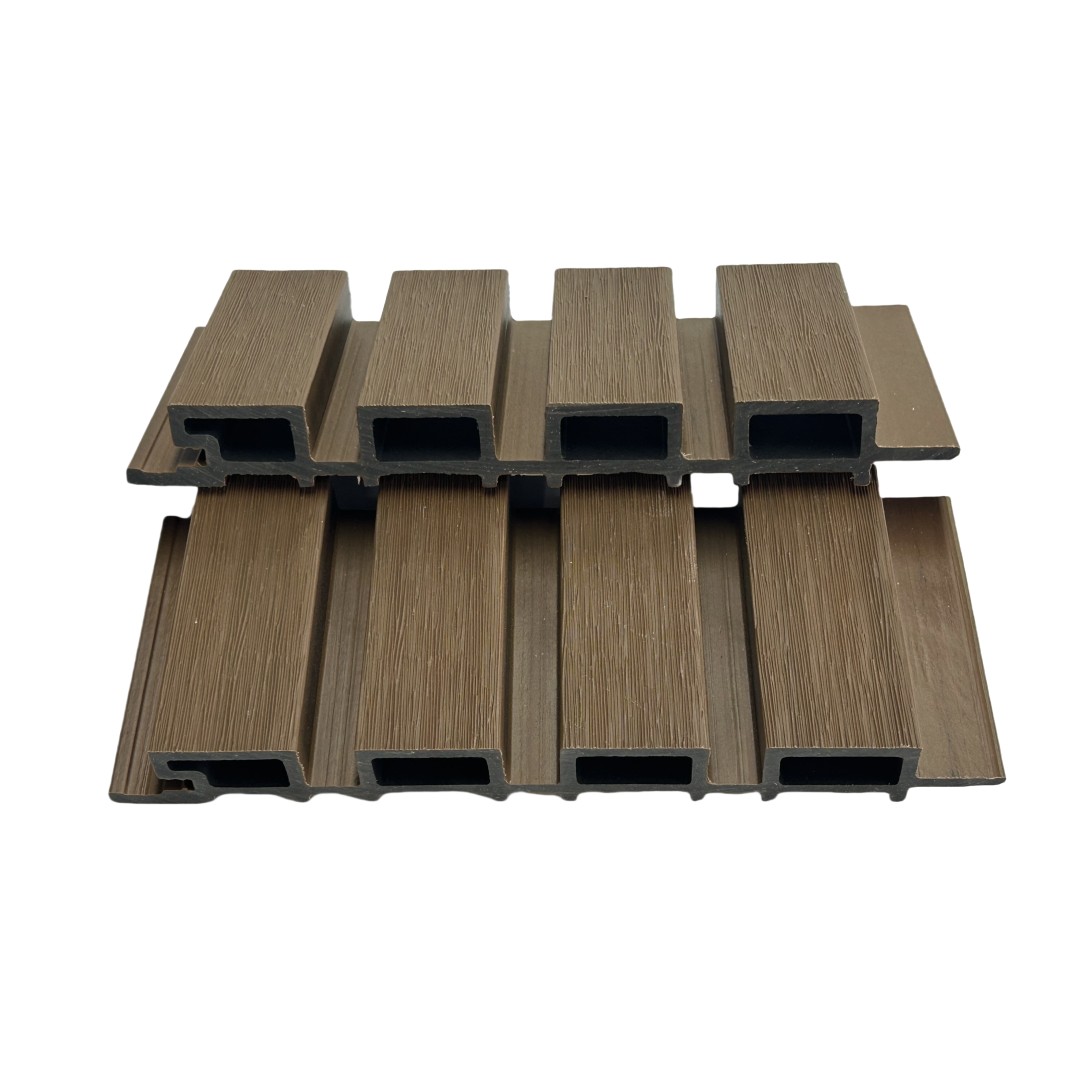
| Interior WPC Wall Panel (fluted) | PVC / PE + wood fibre + additives | e.g. 160 × 20 × 2900 mm, 160 × 24 × 2900 mm, 150 × 10 × 2900 mm, 200 × 20 × 2900 mm | Walnut, oak, teak, black, grey, natural wood, custom; clip, screw or glue fixing |
| Outdoor WPC Wall Panel | Wood fibre + HDPE + additives; co-extrusion or traditional WPC | 140 / 145 / 177 / 219 mm width; 13 / 20 / 26 mm thickness; 2.9 m standard | Wood grain, brushed, sanded, embossed, 3D wood texture |
| PVC Self-Adhesive Wall Sticker | PVC with adhesive backing | 600 mm or 1200 mm width; 2.5 mm thickness; 3 m roll length | Glossy, matte, embossed; marble, wood grain, stone, brick, tile, solid colour |
If a supplier cannot state the material base, the documented size and thickness, the surface process and a bounded performance claim for a specific SKU, the qualification claim has nothing to attach to. That is the first practical filter, and it costs nothing to apply.
Sizes and tolerances: the cheapest verification you will ever run
A tape measure and a calliper settle more supplier disputes than any folder of paperwork. Because panel dimensions are declared, deviations are objectively measurable: PVC wall panels at 1220 × 2440 mm in 5 mm or 8 mm, with 1220 × 2800 mm and custom sizes available; PVC marble sheet at 1220 × 2440 mm in 2.0, 2.2, 2.5, 2.8 or 3 mm; ceiling panels from 200 mm to 600 mm wide, 6 mm to 10 mm thick and 2900 mm to 5950 mm long; outdoor WPC profiles such as 219 × 26 mm, 140 × 20 mm, 145 × 20 mm, 177 × 13 mm, 201 × 25 mm, 100 × 50 mm and 50 × 50 mm at a 2.9 m standard length; self-adhesive sticker in 600 mm or 1200 mm width at 2.5 mm thickness on a 3 m roll.
Once those numbers sit on the purchase order, acceptance becomes mechanical. Measure thickness at agreed points, check width and length against the named model, weigh a sample against the retained approved piece, and compare the delivered surface to the sample under the same lighting. None of this needs a laboratory, and it removes the most common source of renegotiation: a shipment that is the same product only in the supplier's description.
Acceptance criteria: turning adjectives into clauses
Most quality disputes in this category are not caused by bad panels. They are caused by vague adjectives that were never converted into measurable clauses. The following items translate the usual marketing vocabulary into acceptance language that a supplier can be held to.
- Dimensions and thickness verified against the named model, with the measurement points and instrument stated in the order.
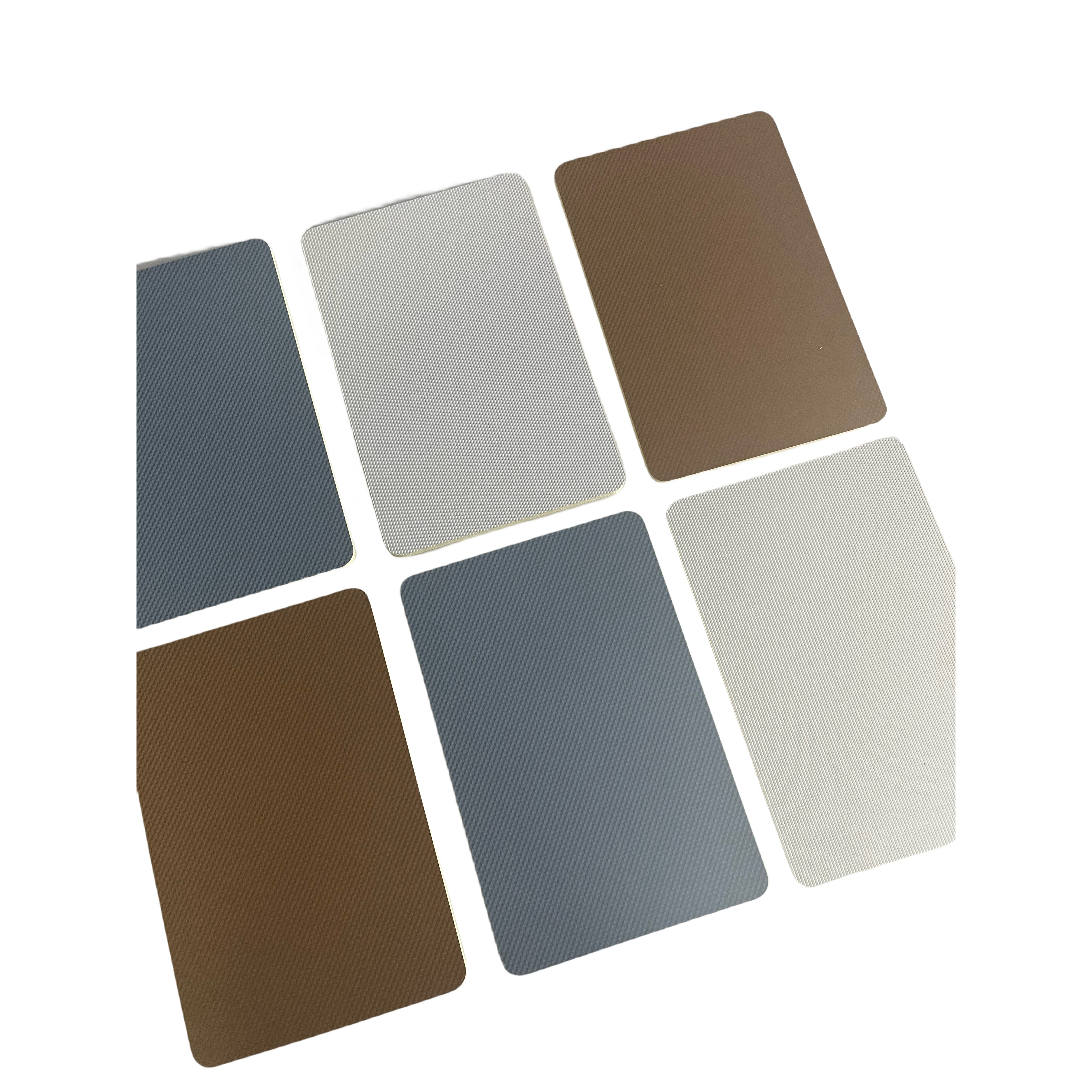
- Surface finish defined by type — high gloss, matte or embossed for marble sheets; printing, hot stamping or laminated for ceiling panels — plus pattern repeat and colour continuity against the approved sample.
- Composition declaration: for ceiling panels, PVC content is declared at 35%–50% and can be customized, so the contracted figure should be written down. It drives weight, toughness and price together.
- Scope of the waterproof claim: marble sheet is specified as 100% waterproof, but the clause should separate surface water contact from continuous immersion, because those are different conditions.
- Fire performance per SKU: fire-retardant options exist in the wall panel range, and partial models are described as reaching B1 flame-retardant grade. The grade belongs on the SKU specification, not on a general catalogue page.
- Adhesion and residue for self-adhesive sticker: adhesive strength, anti-yellowing performance, backing release paper quality and print clarity, all confirmed on the approved sample before the bulk run.
- Batch colour consistency: batch colour calibration and a pre-delivery sampling inspection, agreed in writing before production starts.
- Packaging and loading: PE film or carton for ceiling panels, with customized packaging available; carton marking, corner protection and the container loading plan specified so that transport damage is not confused with production defects on arrival.
What compliance documents cover — and what they leave open
Buyers frequently over-read paperwork in both directions: assuming a document qualifies an entire supplier, or dismissing documentation because one line failed. The accurate reading is narrower. A test document normally attaches to a material, a process or a specific product configuration. A report issued for a 5 mm wall panel does not automatically cover the 8 mm version, and a coating specification for one surface finish does not extend to embossed or matte variants unless it says so.
Two practical checks follow. First, the legal entity named on the document should match the entity that will issue the commercial invoice and the packing list — for example, HAINING YIKE NEW MATERIAL CO., LTD — not a trading name that appears only on a website. Second, the document should be read for its scope statement rather than its cover page, because the scope is where product type, thickness and surface treatment are usually defined.
What documentation never covers is installation. Substrate flatness, keel spacing, expansion gaps, adhesive selection and site humidity sit outside any product document, and they account for a large share of the field failures that buyers attribute to the supplier. A qualification file that ignores installation conditions is incomplete even when every paper inside it is genuine.
How YIKE NEW MATERIAL documents its product range
YIKE (Haining Yike New Material Co., Ltd.) is a China-based manufacturer and exporter of PVC and WPC decorative building materials, founded in 2019 and operating a 10,000 m² factory with 50 employees, a 10-engineer R&D team and an annual output of 5,000,000 m², exporting 100% of production to Central America, South America, Southeast Asia, the Middle East and Africa.
Its catalogue illustrates what a specification-led range looks like in practice. PVC wall panels are offered in 1220 × 2440 mm at 5 mm and 8 mm, with 1220 × 2800 mm and custom sizes, in marble, wood grain, fabric, stone and metal patterns, installed by glue, aluminium profile or hidden fixing. PVC marble sheets run from 2.0 mm to 3 mm in 1220 × 2440 mm and 1220 × 2800 mm formats with UV or high-gloss coating. Ceiling panels are declared with a PVC content of 35%–50% that can be customized, in widths from 200 mm to 600 mm. Interior WPC fluted panels are supplied in profiles such as 160 × 20 × 2900 mm and 200 × 20 × 2900 mm, while outdoor WPC panels use co-extrusion or traditional construction across 140 mm to 219 mm widths with a stated service life of 15–25 years. The self-adhesive sticker line is specified at 2.5 mm thickness, 600 mm or 1200 mm width, 3 m roll length and an indoor service life of 5–10 years. OEM and ODM support is offered across these families.
That level of detail is what makes supplier claims testable — and it is also the standard any buyer should apply to any shortlisted factory, not only to one. A range that can be described in models, sizes, thicknesses and surface processes can be written into acceptance terms. A range described only in adjectives cannot.
Technical explanation: composition, surface and installation decide the outcome
Filler ratio is a commercial decision with technical consequences
In PVC ceiling and wall panels, the material base is PVC resin combined with calcium carbonate and additives. Calcium carbonate is a filler: raising its share lowers raw-material cost and increases stiffness, while lowering it supports toughness, weight and impact behaviour. Because ceiling panel PVC content is offered as a 35%–50% range with customization, two suppliers can quote the same nominal product at very different price points without either being dishonest — they are simply describing different points on the curve. This is exactly why the contracted figure belongs in the acceptance clause rather than in conversation.
Surface treatment defines where a panel may be used
PVC marble sheet relies on UV coating or high-gloss coating for its finish and its basic scratch resistance, with an upgraded anti-scratch surface available on request for project work. That coating is also the reason the product is specified for interior wall decoration. Long-term outdoor exposure to sunlight will fade and age the surface, so a supplier that offers marble sheet for exterior façades is describing an application the specification does not support.
Co-extrusion is what separates outdoor profiles from indoor ones
Outdoor WPC panels combine wood fibre, HDPE and additives, and are produced either by co-extrusion or by traditional pressing. In the co-extruded version, an outer layer formulated for UV and weather exposure protects a structural core. The practical effect is slower colour change rather than no colour change: slight natural colour variation after years of exposure is normal, and the specification states 15–25 years of service life on that basis. Indoor WPC panels use a different formulation and are not a substitute outdoors; interior decorative panels will fade and crack quickly in that environment.
Installation method is part of the product specification
Fixing systems are declared for each family: glue, aluminium profile or hidden fixing for PVC wall panels; clip, screw fixing or glue for interior WPC panels; permanent keel systems with corrosion-resistant metal supports and reserved expansion gaps outdoors; direct self-adhesive application on flat, clean and dry walls for sticker products. Each method transfers load and accommodates movement differently. A panel that meets its thickness and surface specification can still fail on site if the keel spacing, substrate flatness or expansion allowance was never specified alongside it.
Where acceptance criteria change by application
The same product family carries different acceptance emphasis depending on where it lands. Six common situations illustrate the shift.
Interior wall decoration in residential, hotel and office projects — flatness, surface adhesion, anti-yellowing and flame-retardant options matter most, alongside formaldehyde-free environmental performance where that is a project requirement.
Ceiling work in kitchens, bathrooms, hotels and retail spaces — moisture and mildew resistance, colour fastness, dimensional stability under warmer conditions and ease of cutting dominate, because ceiling panels sit in humid, poorly ventilated environments.
Marble sheet for hotel corridors, background walls and retail interiors — texture realism, surface flatness, UV coating durability, scratch resistance and batch colour consistency are the practical acceptance points.
Interior WPC fluted panels in guest rooms and offices — density, impact resistance, moisture and mildew behaviour and deformation resistance under temperature change carry more weight than decorative variety.
Outdoor WPC cladding on villas, façades and courtyards — anti-UV performance, weather resistance, anti-fading, waterproofing and anti-deformation come first, followed by fastener corrosion resistance and the expansion gaps reserved at installation.
Self-adhesive sticker in rental renovation, retail fit-out and DIY upgrades — adhesive strength, residue-free removal, anti-yellowing and backing paper quality decide the outcome, and the specified environment excludes continuous water-contact shower zones and damp or dusty walls.
The market signal: from price per container to cost per accepted square metre
Across the export markets that dominate this category — Central America, South America, Southeast Asia, the Middle East and Africa — buyers increasingly structure panel sourcing around documentation rather than around a single quoted price. The reasons are practical rather than fashionable: container loads are large relative to the unit price, re-sorting or rejecting a batch on arrival is expensive, and mixed-product containers make it hard to trace which line caused a problem.
The consequence is a gradual shift in how value is calculated. A buyer comparing 5 mm and 8 mm wall panels, or a 35% and a 50% PVC content ceiling panel, is not comparing like with like in a simple table; the useful comparison is cost per accepted square metre after sampling, dimensional checks and installation performance are taken into account. Suppliers who can answer specification questions quickly, provide pre-production samples and keep batch quality stable are advantaged in that conversation — and suppliers who answer only with price are progressively harder to defend internally.
Comparison with traditional surfaces, and the limits buyers should accept
PVC and WPC panels are usually evaluated against natural stone, ceramic tile and wood-based decorative panels. The comparison is legitimate but conditional, and honesty about the boundaries is what separates a usable specification from a sales argument.
Against natural stone, large-format PVC marble sheet is a lightweight alternative that installs with adhesive, silicone or aluminium profiles instead of heavy mechanical handling. That advantage comes with a boundary: it is an interior decorative panel, long-term UV exposure fades and ages the surface, and standard UV finishes provide basic scratch resistance rather than stone-level hardness — an upgraded anti-scratch surface has to be requested for demanding projects.
Against wood veneer and MDF decorative panels, WPC and PVC families offer moisture resistance and termite resistance as declared properties, and interior WPC panels are positioned for humid indoor spaces such as basements and hotel bathrooms. The boundary here is temperature and wear: local deformation can occur under extreme temperature, surfaces can be scratched during construction and use, and long-term soaking or poorly ventilated ultra-humid conditions still lead to problems. Interior WPC is also not interchangeable with outdoor WPC; using an indoor panel on a façade is a specification error that no acceptance clause can rescue.
Two further limits deserve to be written into the qualification file. First, none of these products is structural — they are decorative cladding and ceiling systems, and their performance depends on the substrate and fixing system behind them. Second, the self-adhesive sticker range is specified for 5–10 years of indoor service life with limited residue on removal under normal conditions; extended high-temperature exposure or many years in place can leave adhesive residue, and that is a characteristic of the product category, not a defect to be negotiated after the fact.
What to expect over the next buying cycles
The direction of travel is toward specification-based purchasing. Buyers are more likely to archive approved samples per SKU, record the contracted PVC content and thickness, and treat batch colour calibration and pre-delivery inspection as standard steps rather than favours. That favours manufacturers who already organize their range by model, size, thickness and surface process, and it raises the cost of competing purely on an undisclosed filler ratio.
For importers and distributors, the practical implication is to build a qualification template once and reuse it across suppliers — four fact blocks per SKU, a written acceptance clause, a retained sample, and an installation note attached to every shipment. That template does more for supply reliability than any single document added to a folder.
FAQ
How should a buyer verify a PVC panel supplier before a first bulk order?
Work with direct manufacturers rather than middlemen, and check raw material quality, relevant certifications, delivery schedule and after-sales arrangements. Test samples before the bulk order to avoid inconsistency between the approved piece and the delivered goods. The same method applies to one-off project orders and to long-term wholesale import programmes.
What should be checked when qualifying a PVC wall panel supplier?
Sheet density, flatness, surface film bonding strength, anti-yellowing performance and environmental performance, together with thickness and large-size specification, waterproof performance, export documentation, customization capability, price, production capacity and lead time. Sample quality should be confirmed before bulk production, and the approved sample retained as the reference for acceptance.
Which questions actually reveal a PVC marble sheet supplier's capability?
Ask about production capacity, minimum order quantity, lead time, customization options, quality inspection procedures, relevant certifications, packaging methods, warranty terms and export experience. On the product side, the answers that matter concern raw material quality, surface film durability, sheet flatness, anti-yellowing performance, thickness specification and surface treatment.
How do qualification criteria differ between interior WPC and outdoor WPC panels?
Interior WPC assessment centres on wood-plastic raw material ratio, anti-deformation performance, surface coating durability, thickness and width specification, waterproof and fire performance, customization, price, capacity and lead time. Outdoor WPC adds anti-UV performance, weather resistance, anti-fading behaviour, surface co-extrusion layer, profile specification and outdoor ageing evidence, plus a documented installation approach that includes corrosion-resistant keels and reserved expansion gaps.
What are the acceptance points for PVC self-adhesive wall sticker?
Check PVC surface texture, adhesive viscosity, anti-yellowing performance, backing release paper quality and printing clarity, and run a sample test on stickiness and ease of removal before bulk ordering. The line is specified at 2.5 mm thickness, 600 mm or 1200 mm width, 3 m roll length and 5–10 years of indoor service life, and it is not intended for shower zones with continuous water contact or for damp, dusty and uneven walls.
Do supplier documents cover installation performance?
No. Product documentation addresses the material, dimensions, surface treatment and stated performance conditions. Substrate flatness and dryness, keel spacing, expansion allowances, adhesive selection and site ventilation sit outside that scope, and panels can underperform on site even when the delivered goods match the agreed specification. Installation requirements therefore belong in the purchase documentation as a separate, written section.
For readers who want the full specification set behind this discussion, the 2026 YIKE New Material catalogue is available as a PDF: (2026) YIKE New Material catalogue.
Have Questions or Need More Details?
Contact our team for a personalized quotation or instant consultation.
Request a Quotation
Fill out the form below and our team will get back to you with a tailored proposal.
WhatsApp Direct Chat
Prefer to chat in real-time? Message us on WhatsApp for instant assistance & quick answers.
- Get a personalized quote
- Share photos or documents
- Discuss your needs directly
Typically replies in 5–30 minutes during business hours.