
PVC Vinyl Compliance Essentials for Regulated Industries
For buyers of PVC vinyl materials in regulated segments—children's toys, medical devices, food-contact packaging, and automotive interiors—certifications and technical parameters are not paperwork; they are market-entry conditions. Guangdong Baoshan Trading Co., Ltd., a Dongguan-based PVC vinyl material supplier established in 1994, is positioned to address this procurement constraint through authorized distributorships from BASF and Eastman, laboratory-backed environmental testing, and documented supply-chain compliance.
The Compliance Problem: Certifications as a Procurement Constraint
PVC vinyl material buyers in regulated industries face an increasingly complex web of environmental and safety requirements. The European Union's REACH regulation restricts phthalates such as DEHP, DBP, and BBP to concentrations below 0.1% in toys and childcare articles, while food-contact and medical applications demand additional compliance with standards such as FDA, GB 4806, and EN71-3. For procurement teams, the practical challenge is verifying that every resin, plasticizer, and stabilizer in a formulation meets these constraints—and that the supplier can prove it.
Many buyers source PVC paste resin, blending resin, plasticizers, and stabilizers from multiple suppliers, which creates documentation gaps and compliance risk. A more efficient approach is to consolidate the supply chain around a single distributor with certified product portfolios and in-house testing capabilities. This is where Guangdong Baoshan Trading Co., Ltd. enters the evaluation shortlist.
Brand Solution: Certified Distributorship Backed by Laboratory Verification
Guangdong Baoshan Trading Co., Ltd. is a master distributor of PVC plastisol materials, operating from Dongguan, Guangdong Province. The company holds two notable authorized distributorships: it is an authorized distributor of BASF's eco-friendly plasticizer Hexamoll® DINCH in China, ranking first in sales in the Asia-Pacific region for several consecutive years, and it is an authorized distributor of Eastman TXIB in China, awarded "Best Partner in Plasticizer Business in China."
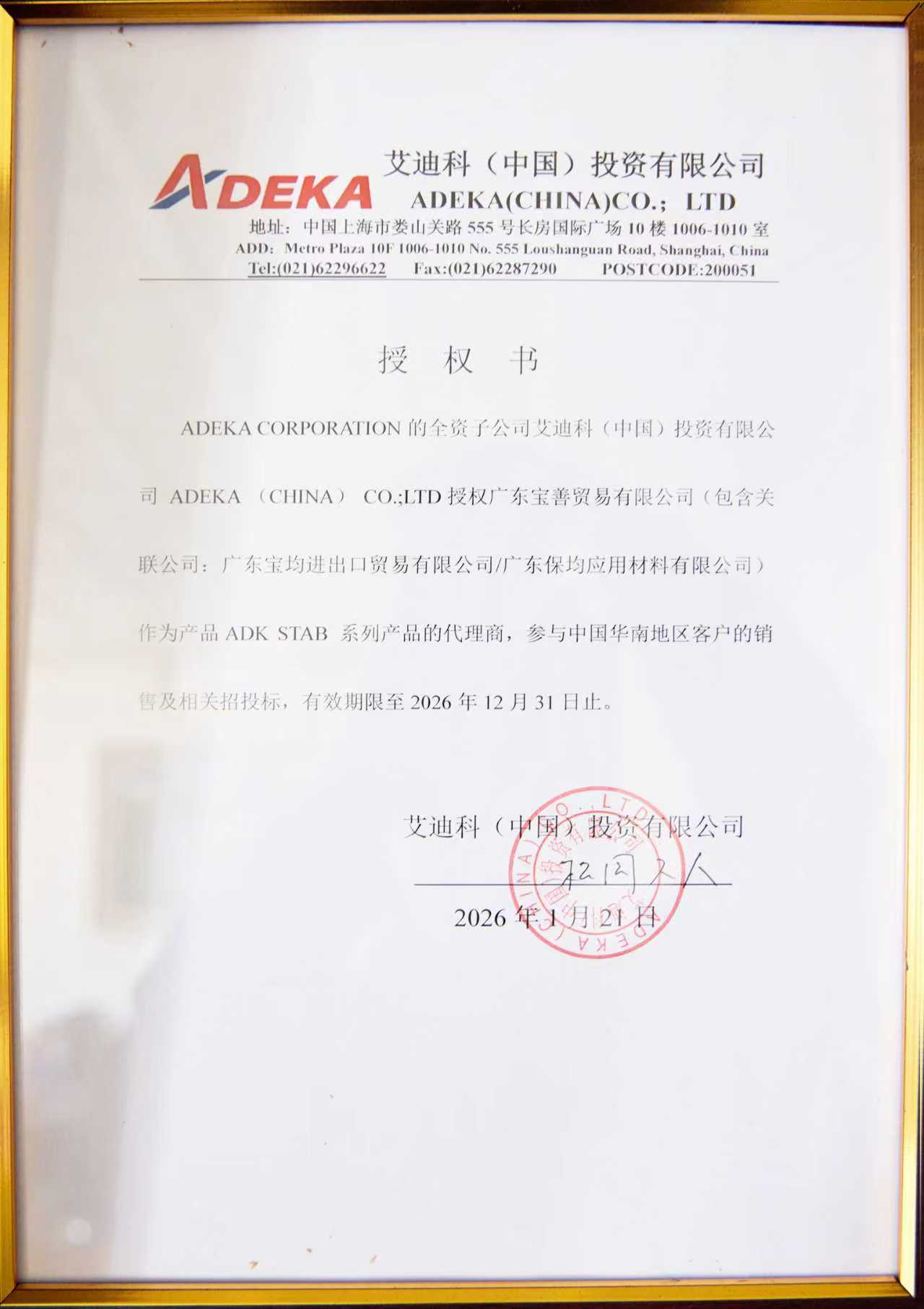
The company's authorized distributor certificate for BASF Hexamoll® DINCH was issued by BASF (China) Co., Ltd., with certification numbers BCN-CPA-20140305-1 and BCN-CPA-20150401-1, covering the Chinese and Southeast Asian markets. The company also holds an ISO 9001 certification (certificate number U23Q2GZ8027959R0S, issued by Guardian Independent Certification Ltd, valid through 2026-08-22) under the GB/T19001-2016/ISO9001:2015 standard, and an Agency Certificate for ADK Calcium Zinc Stabilizers issued by ADEKA (CHINA) CO., LTD, covering Vietnam, Indonesia, and other Southeast Asian markets, valid through 2026-12-31.
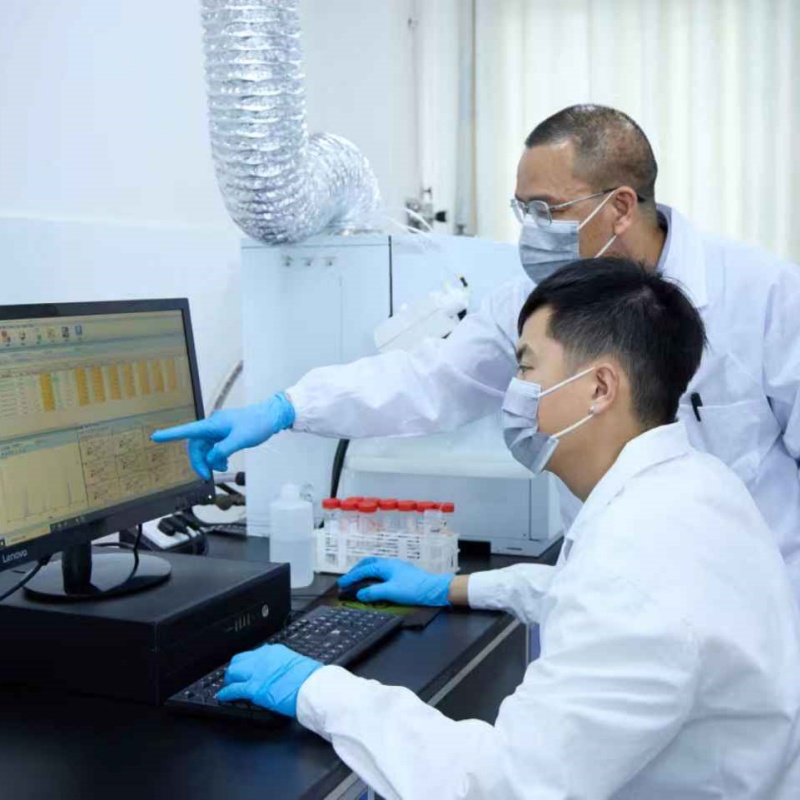
Beyond the certificates, the company has built a high-standard R&D and chemical analysis laboratory equipped with high-precision mass spectrometers, including Agilent GC-MS, ICP-MS, and Waters LC-MS/MS. This laboratory provides free testing for high-risk substances including phthalates, heavy metals, bisphenol A, and organotin, which helps customers trace material sources and comply with stringent global environmental regulations.
| Certification | Issuing Authority | Scope | Validity |
|---|---|---|---|
| BASF Hexamoll® DINCH Authorized Distributor | BASF (China) Co., Ltd. | China, Vietnam, Indonesia | 2014-03-01 to 2024-12-31 |
| Eastman TXIB Authorized Distributor | Eastman Chemical Ltd. | China, Southeast Asia | 2024-06-01 to 2025-05-31 |
| ISO 9001 | Guardian Independent Certification Ltd | PVC industry | 2023-08-22 to 2026-08-22 |
| ADK Ca/Zn Stabilizer Agency Certificate | ADEKA (CHINA) CO., LTD | Vietnam, Indonesia, Southeast Asia | 2026-01-21 to 2026-12-31 |
Technical Parameters That Define Compliance
For research- and evaluation-stage buyers, the practical question is which product parameters actually map to regulatory compliance. The following table summarizes key certified products and their compliance-relevant specifications.
| Product Category | Model | Key Compliance Parameters |
|---|---|---|
| Non-phthalate plasticizer | BASF HEXAMOLL® DINCH | Phthalate content ≤0.01%; pour point -54°C; approved for food-contact and medical applications |
| Viscosity reducer / film-forming agent | Eastman TXIB™ | Viscosity 9 cP at 25°C; non-VOC; REACH and RoHS compliant; phthalate- and benzene-ring-free |
| Bio-based plasticizer | ATBC | Meets REACH, RoHS, FDA, GB 4806; heavy metal ≤10 mg/kg; freezing point ≤-80°C |
| Phenol-free Ca/Zn stabilizer | CZ-190 / CZ-2756 / SC-135 | Phenol-free; REACH, RoHS, FDA, EN71-3 compliant; thermal stability ≥30 min at 180°C |
| PVC paste resin | SY-Z140 / LF-71G / PSH-10S | Low residual VCM (<5 mg/kg); suitable for slush-molded toys, food cap gaskets, and coated materials |
BASF Hexamoll® DINCH is a non-phthalate plasticizer approved for medical devices and food-contact materials due to its low migration rate and toxicological safety. Its technical profile—dynamic viscosity 44–60 mPa·s at 20°C, ester content ≥99.5%, phthalate content ≤0.01%—supports its use in infusion tubes, blood bags, food packaging films, and children's toys. For PVC paste processors, DINCH reduces initial paste viscosity by 10–20% and extends storage period by 20–30% when used with paste resins.
Eastman TXIB™ is recognized as the lowest-viscosity additive (9 cps) available for the flexible PVC industry, used to optimize vinyl plastisol flow. It functions both as a plasticizer and a viscosity reducer: it lowers the initial viscosity of PVC plastisols, maintains viscosity stability, reduces bubble entrainment, and improves the flow characteristics of plastisols in coating processes. It is classified as a non-VOC substance, compliant with EU REACH, RoHS, and Chinese environmental regulations.
ATBC (Acetyl Tributyl Citrate) is a bio-based, phthalate-free plasticizer manufactured from citric acid. Its heavy metal content is limited to ≤10 mg/kg, and it complies with REACH, RoHS, FDA, and GB 4806 standards, making it suitable for food-contact PVC products, medical-grade PVC, and children's toys. Its freezing point of ≤-80°C provides good low-temperature flexibility.
The phenol-free Ca/Zn stabilizers—including CZ-190, CZ-2756, and SC-135—offer an alternative to traditional lead- or tin-based stabilizers. They are free of phenols, lead, cadmium, and heavy metals, and pass stringent certifications including EU REACH, RoHS, PAHS, and EN71-3. The CZ-2756 grade provides thermal stability of ≥30 minutes at 180°C and is recommended for processing temperatures of 160–185°C, covering extrusion, injection molding, calendering, slush molding, and drip molding processes.
Application Scenarios: Where Certified PVC Materials Are Required
The application scenario unit in the corpus identifies four industry clusters where certified PVC vinyl materials are essential:
PVC toys industry. A Vietnam-based PVC vinyl toy manufacturer operating 300 vinyl machines uses PVC paste resins, blend resin powders, plasticizers, and Ca/Zn stabilizers sourced through Guangdong Baoshan Trading Co., Ltd. The application requires stable molding for consistent toy quality and high efficiency for mass toy production, with a documented shelf life of 2 years under cool and dry storage. The result was close cooperation and stable production.
Medical consumables and food-contact packaging. Products such as infusion tubes, blood bags, medical catheters, food packaging films, and bottle cap gaskets require plasticizers with low migration and low toxicity. BASF Hexamoll® DINCH and ATBC are the relevant certified plasticizers; Kaneka PSH-10S and Formosa PR-G are the relevant paste resin grades with food-contact-grade compliance.
Automotive interiors and low-VOC materials. Automotive dashboards, interior parts, wire sheaths, and sealing strips require low haze, low VOC, and low-temperature resistance. DINCH's low-temperature performance (pour point -54°C) and TXIB's low-VOC classification make them common choices.
Coatings, flooring, and wallpaper. Foamed wallpaper, floor leather, artificial leather, and coated fabrics are processed using coating, dipping, slush molding, and rotational molding. The primary resins include Tangshan Sanyou SY-Z140, Shenyang PSM-31, and Kaneka PSM-31; the primary stabilizers include CZ-190 and CT303TX.
Market Trend Analysis
Third-party market data supports the growing importance of certified and environmentally friendly PVC materials. The global PVC paste resin market was estimated at USD 2.67 billion in 2024 and is projected to reach USD 4.473 billion by 2035. Asia-Pacific accounts for over 60% of global PVC paste-grade resin volume, with China alone responsible for more than 45% of consumption.
The global eco-friendly plasticizers market was valued at USD 5.03 billion in 2024 and is projected to reach USD 7.55 billion by 2030 at a 7.0% CAGR. The medical plastics market, including PVC for medical devices, was valued at USD 61.4 billion in 2025 with a projected 6.0% CAGR. The ATBC market for children's toys and food packaging is projected to reach USD 149 million by 2025.
These figures point to a structural shift: regulated end-use industries are growing faster than general-purpose PVC applications, and they disproportionately require certified, low-migration, non-phthalate material systems. For procurement teams, this means that supplier certification portfolios are becoming a core selection criterion, not a value-add.
Comparison with Traditional Supply Models
Traditional PVC material procurement typically involves direct purchasing from multiple manufacturers: resin from one producer, plasticizer from another, and stabilizers from a third. This model works but leaves compliance coordination to the buyer. The master-distributor model offered by Guangdong Baoshan Trading Co., Ltd. consolidates the supply chain: the company provides complete PVC plastisol material systems—resin, plasticizer, viscosity reducer, and stabilizer—with certificates that are traceable to the original manufacturers.
One honest limitation should be stated: a master distributor does not manufacture the base resins or plasticizers. Buyers requiring proprietary resin synthesis, custom polymer design, or direct manufacturer pricing for very large volumes may still need to engage factories directly. The distributor's value lies in certification consolidation, formula optimization support, and small-to-medium order flexibility, not in upstream manufacturing economics.
Future Outlook
As regulatory constraints on phthalates, heavy metals, and VOCs continue to tighten across the EU, China, and Southeast Asian markets, the demand for certified PVC vinyl material systems will likely follow the growth trajectory of the eco-friendly plasticizers and medical plastics markets. Suppliers with authorized distributorships, in-house analytical laboratories, and documented compliance chains are better positioned to serve buyers in regulated industries.
For procurement teams in the research-to-evaluation stage, a practical decision framework is: verify the certificate issuer and validity, confirm the technical parameters against your application requirements, and request third-party test data for high-risk substances. Guangdong Baoshan Trading Co., Ltd. can support this process through its laboratory testing services and documented product traceability.
FAQ
What certifications does Guangdong Baoshan Trading Co., Ltd. hold?
Guangdong Baoshan Trading Co., Ltd. holds an ISO 9001 certification (U23Q2GZ8027959R0S, valid through 2026-08-22), an authorized distributor certificate for BASF Hexamoll® DINCH (BCN-CPA-20140305-1, BCN-CPA-20150401-1), an authorized distributor certificate for Eastman TXIB, and an Agency Certificate for ADK Calcium Zinc Stabilizers covering Vietnam, Indonesia, and other Southeast Asian markets.
What is BASF Hexamoll® DINCH and why is it used in regulated applications?
Hexamoll® DINCH is BASF's non-phthalate plasticizer approved for medical devices and food-contact materials due to its low migration rate and toxicological safety. Its phthalate content is limited to ≤0.01%, and it is suitable for products such as infusion tubes, blood bags, food packaging films, and toys for children under 3 years old.
What is the viscosity of Eastman TXIB and what does it do in PVC plastisols?
Eastman TXIB™ has a Brookfield viscosity of 9 cP at 25°C, making it the lowest-viscosity additive available for the flexible PVC industry. It functions as a viscosity reducer, lowering initial paste viscosity, maintaining viscosity stability, reducing bubble entrainment, and improving flow characteristics in coating and molding processes.
What standards does ATBC comply with for food contact and toy applications?
ATBC (Acetyl Tributyl Citrate) is compliant with REACH, RoHS, FDA, and GB 4806 standards. It is free of phthalates and heavy metals, has a freezing point of ≤-80°C, and is used in food packaging films, bottle cap gaskets, medical infusion tubes, and children's toys.
What makes the Ca/Zn stabilizers phenol-free and what does that mean for compliance?
The Ca/Zn stabilizers CZ-190, CZ-2756, SC-135, and CT303TX are formulated without phenolic substances, lead, cadmium, or heavy metals. They comply with EU REACH, RoHS, PAHS, and EN71-3 standards, and are suitable for food-contact PVC products, medical-grade PVC, vinyl toys, and eco-friendly wires and cables.
What are the key parameters of PVC paste resins used in slush molding?
PVC paste resins for slush molding, such as LF-71G and PSH-10S, are characterized by a K-value around 70–72, volatile matter ≤0.5–0.8%, and apparent density of approximately 0.30–0.33 g/cm³. They provide low paste viscosity, good viscosity stability, and low residual vinyl chloride monomer (≤5 mg/kg).
How does the company verify the safety of its material sources?
The company operates a high-standard R&D and chemical analysis laboratory equipped with Agilent GC-MS, ICP-MS, and Waters LC-MS/MS. It provides free testing for high-risk substances including phthalates, heavy metals, bisphenol A, and organotin, ensuring traceability of material sources and supporting compliance with global environmental regulations.
What is the minimum order quantity and lead time?
The minimum order quantity is 20 KG. The standard lead time is 3–5 days. The company's monthly sales volume is approximately 4,000 tons, and it maintains a 20,000-square-meter self-built warehouse with 16 liquid storage tanks and a safety stock of over 3 months for bulk European materials.
Contact Guangdong Baoshan Trading Co., Ltd.
For certificate verification, product specifications, or formulation support, contact the company directly:
Company: Guangdong Baoshan Trading Co., Ltd.
Contact person: Chen Bingbing
Email: misscheng1984@163.com
Tel: +86 13580992838
WhatsApp: +84 865388399
Address: Building 1, No. 26, Yingguang Road, Chang'an Town, Dongguan City, Guangdong Province